

Description
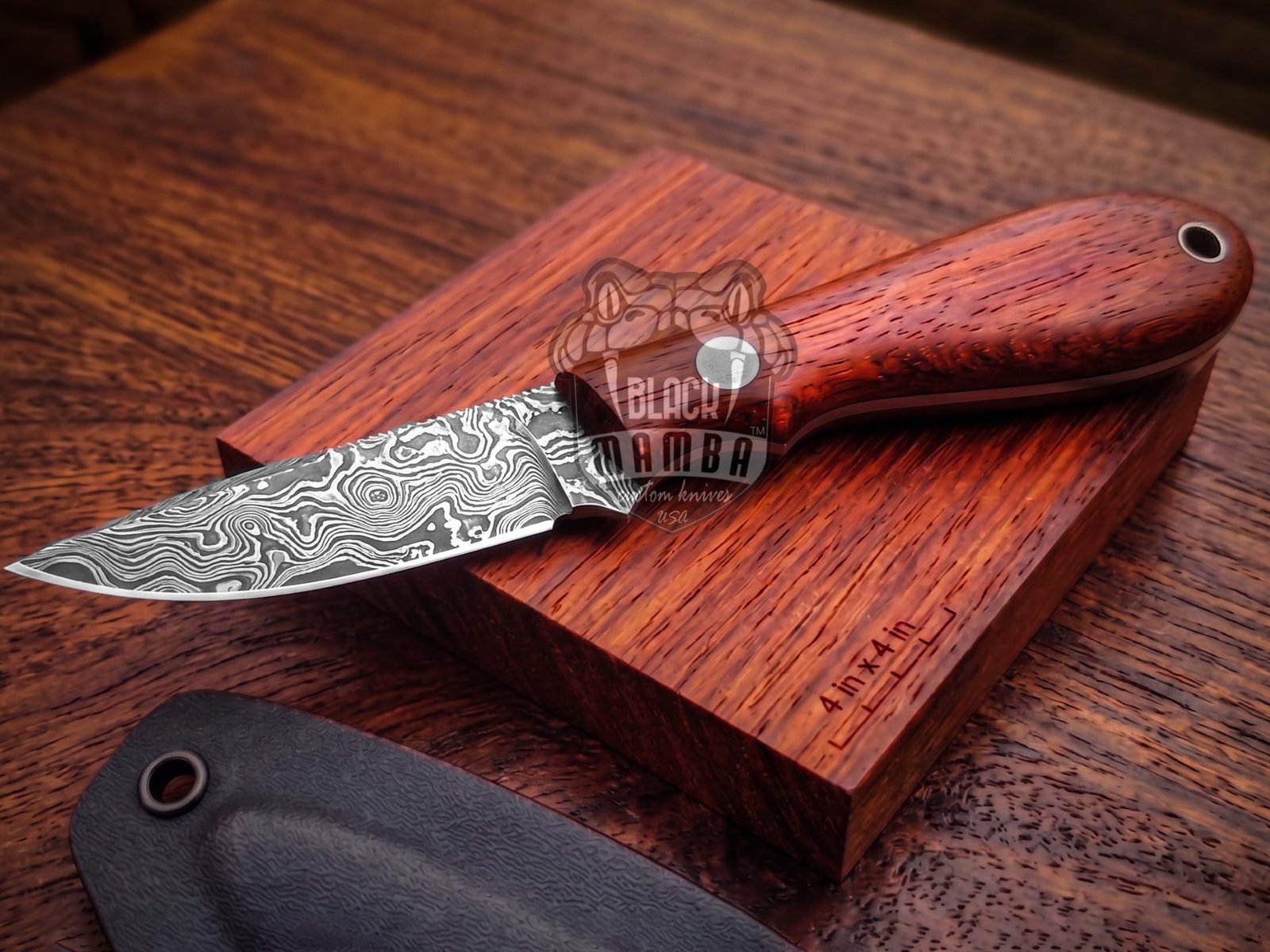
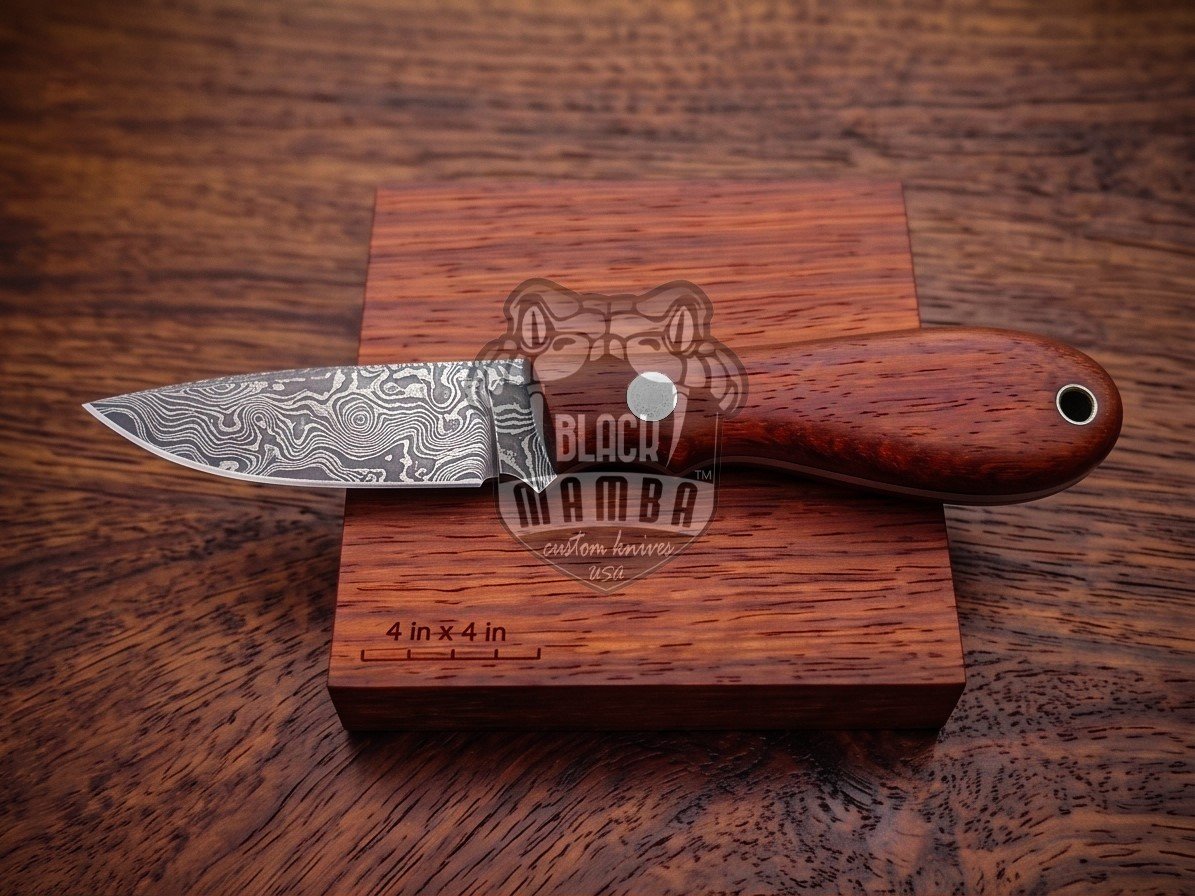
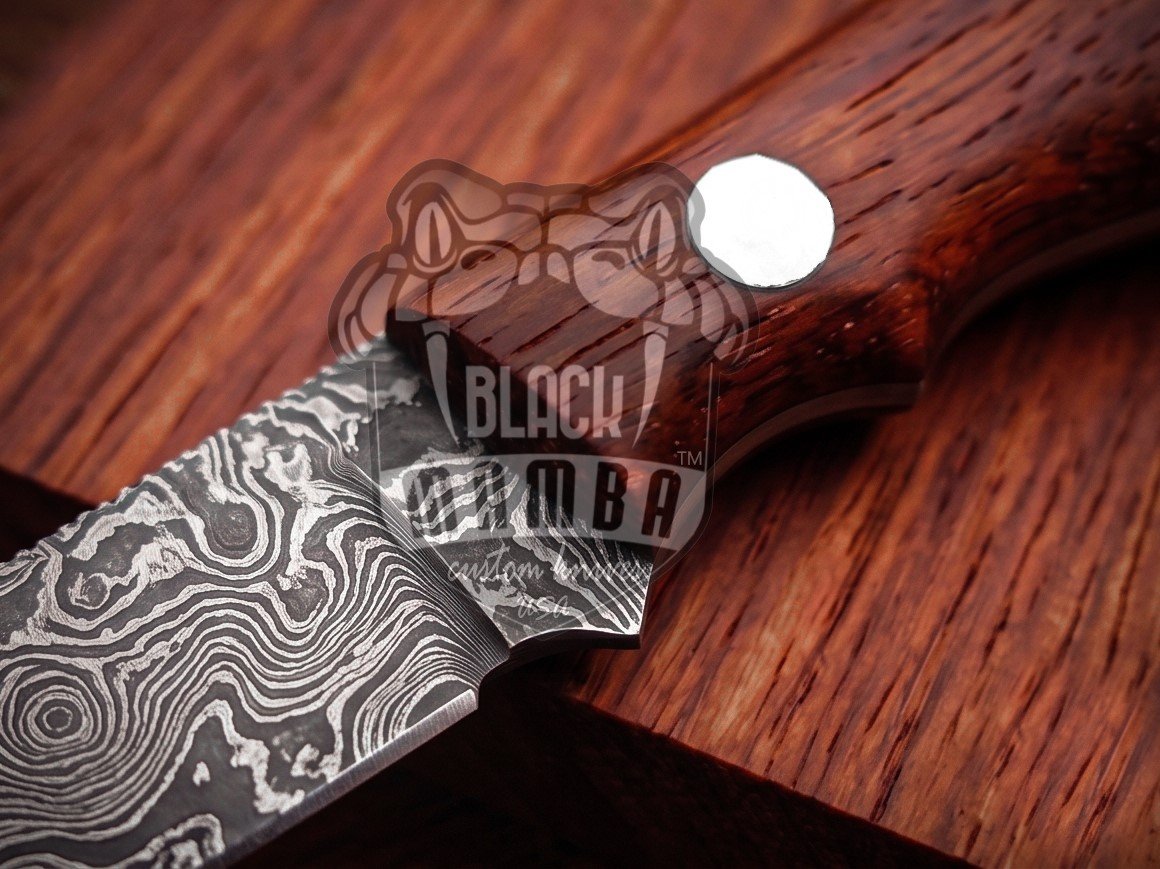
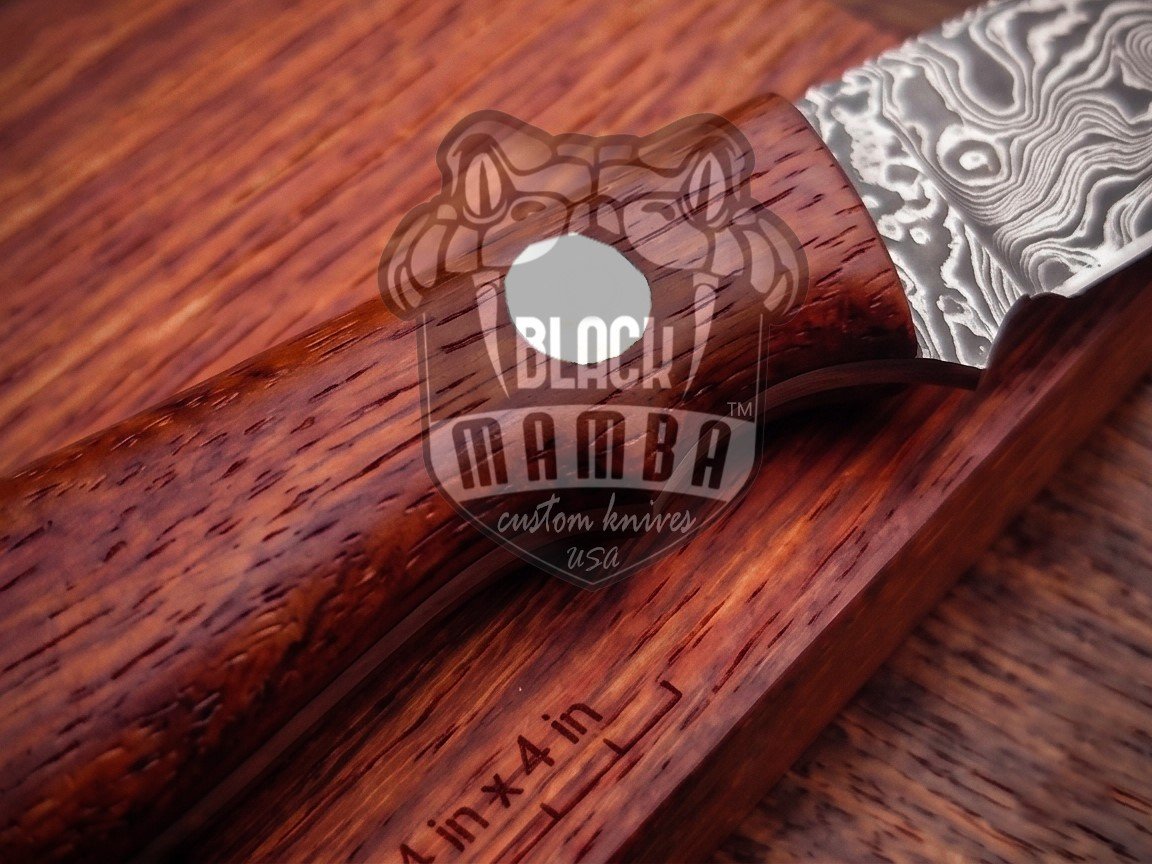
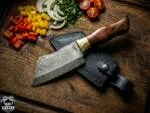
The same short Damascus kitchen knife in padauk, the orange-red African hardwood that arrives almost fluorescent and settles into a deep brick color over a year.
| Overall length | 7 inches |
| Blade length | 3 inches |
| Handle length | 4 inches |
| Steel | 1095 + 15N20 Damascus |
| Hardness | 58–60 HRC, oil tempered |
| Handle | Paddock Wood & Steel pins |
| Included | Black moulded belt sheath |
Chosen for: fudge, brownies, hard cheese and butter. Anything soft enough that a long blade would drag through it and leave a torn face rather than a cut one.
Padauk changes color, and quickly
Fresh padauk is bright orange. Exposed to light it oxidizes toward red-brown over months, then to a settled deep brown. Nothing is going wrong; it is the timber doing what padauk does. If you want to slow it, keep the knife out of direct sun and oil the scales, which shields the surface. If you like the darker end, leave it on the counter and it will get there faster.
Straight grain, and why it suits a small handle
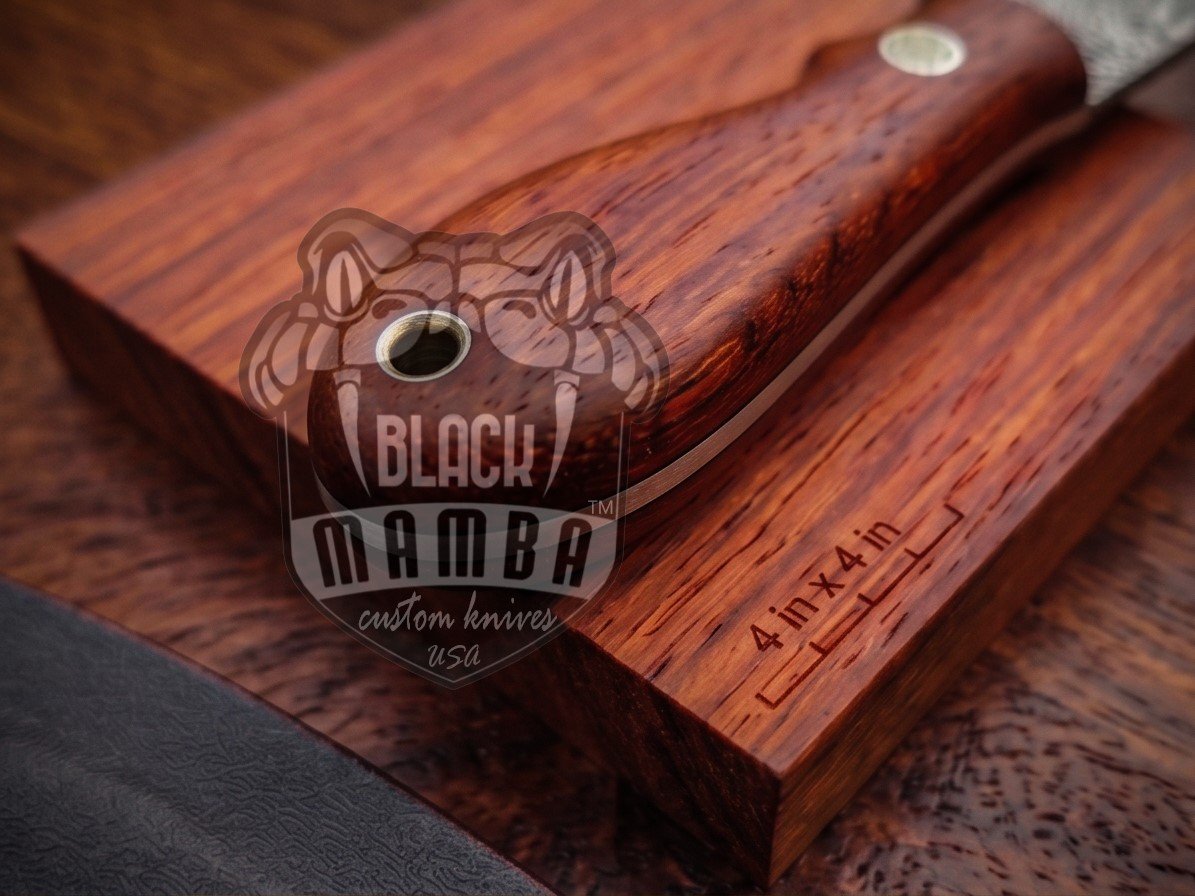
Unlike the burl and figured woods on our display knives, padauk here is straight-grained and interlocked. That makes it stiff along its length and very hard to split, which matters on a handle this short, where there is little material between the pin holes and the edges of the scale. The steel pins run right through and are sanded flush.
Keeping carbon steel bright
Carbon Damascus in a kitchen will pick up spotting if it sits wet, and the sugar in fudge accelerates it. The honest answer is that it will always want more attention than a stainless knife. Do Damascus knives rust sets out what to expect, and removing rust from a knife covers the fix if you catch it late. For a small Damascus blade built for game rather than dessert, see the buffalo horn skinner.
A note on the pattern
The Damascus on this one runs in broad contour lines rather than tight rings, the result of grinding a flatter billet with fewer distortions worked into it. On a three inch blade that suits the size: a tight raindrop pattern crowds badly at this scale and reads as noise, where wide bands stay legible from arm’s length.
Care: hand wash, dry immediately, oil the blade. Padauk is oily by nature and needs less feeding than oak or walnut, so twice a year is plenty. Do not soak it and do not leave it in a sink; standing water gets behind the scales at the pin holes, which is the one place a small handle is vulnerable.
FAQs
Why has the handle gone darker than the photograph? Padauk oxidizes in light. Every one of these darkens, at different rates depending on where it is kept.
Is it too small for general kitchen use? It is a paring-size knife. It will do small jobs well and large jobs badly.
Will the Damascus pattern fade with washing? No. The etch runs into the steel, not across the surface.
Model: BMK-1103

Tyrone Richardson –
This knife completely won me over the moment I picked it up. Cool knowing this was handmade right in Memphis and shipped out fast.
Tyler Cole –
Ordered late at night on a whim and woke up glad I did. Has become my main prep knife in the kitchen since it arrived. Can’t recommend this enough. This is why Black Mamba Knives is my go to for anything knife related.
Timothy Moore –
This is the kind of knife you show off without even meaning to. This is my new favorite in the collection.
Tyler Lee –
This knife is really solid. No question about it. Slices through everything like butter, no sawing needed. 10/10 would buy again.
Trevor Clark –
Absolutely really impressed by this knife. Definitely bookmarking this shop for future orders.
Patricia Campbell –
Absolutely seriously impressed by this knife.