

Description
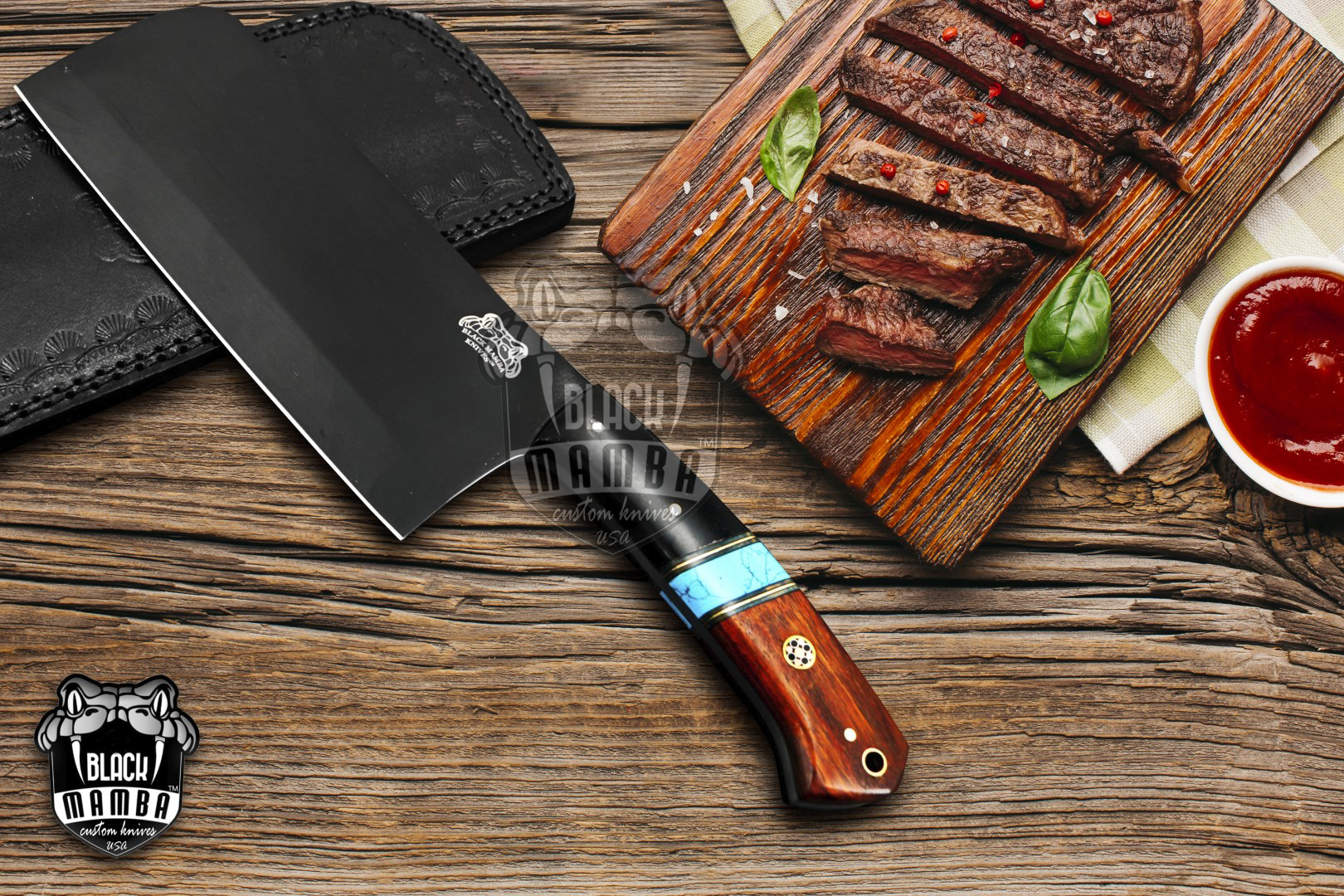
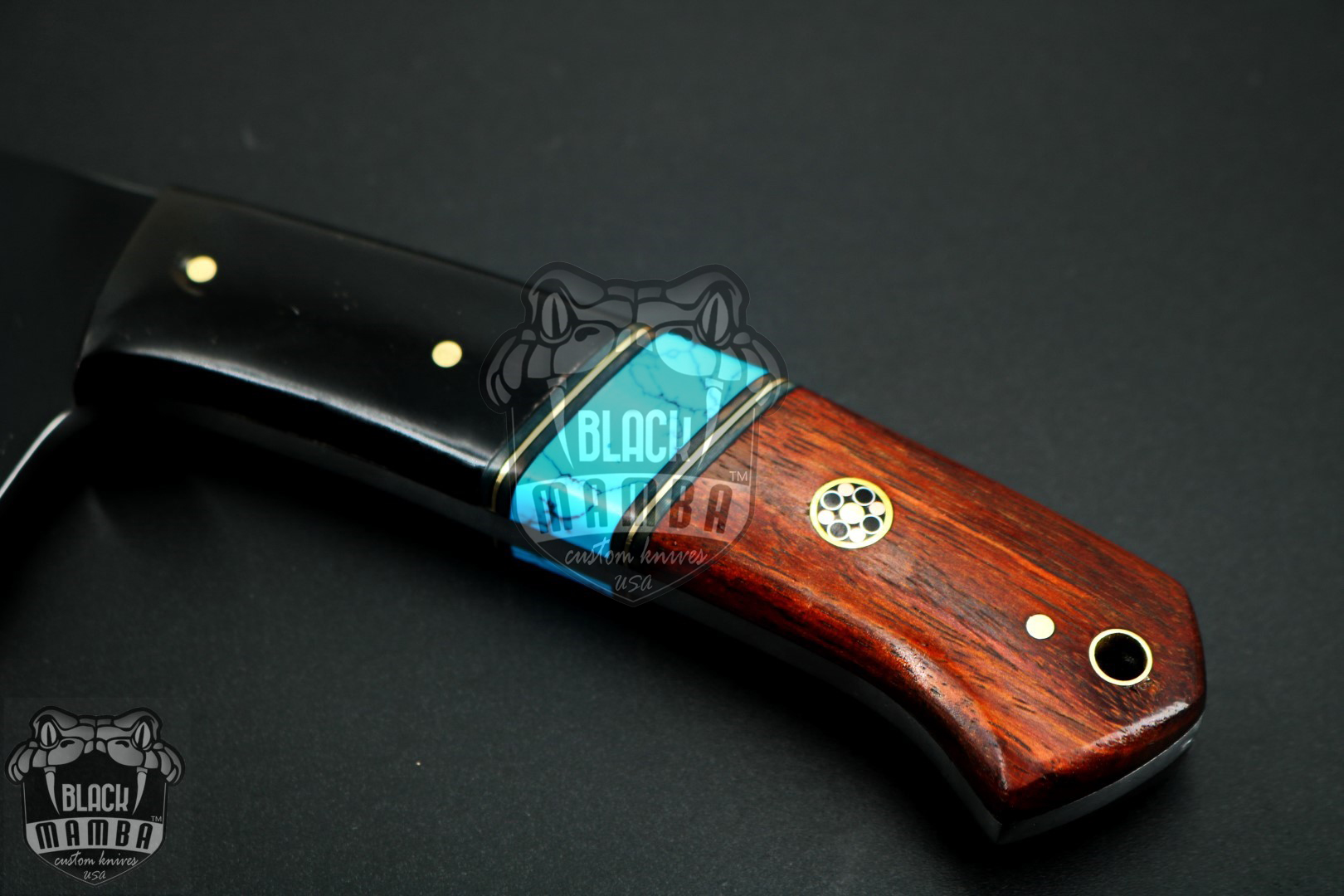
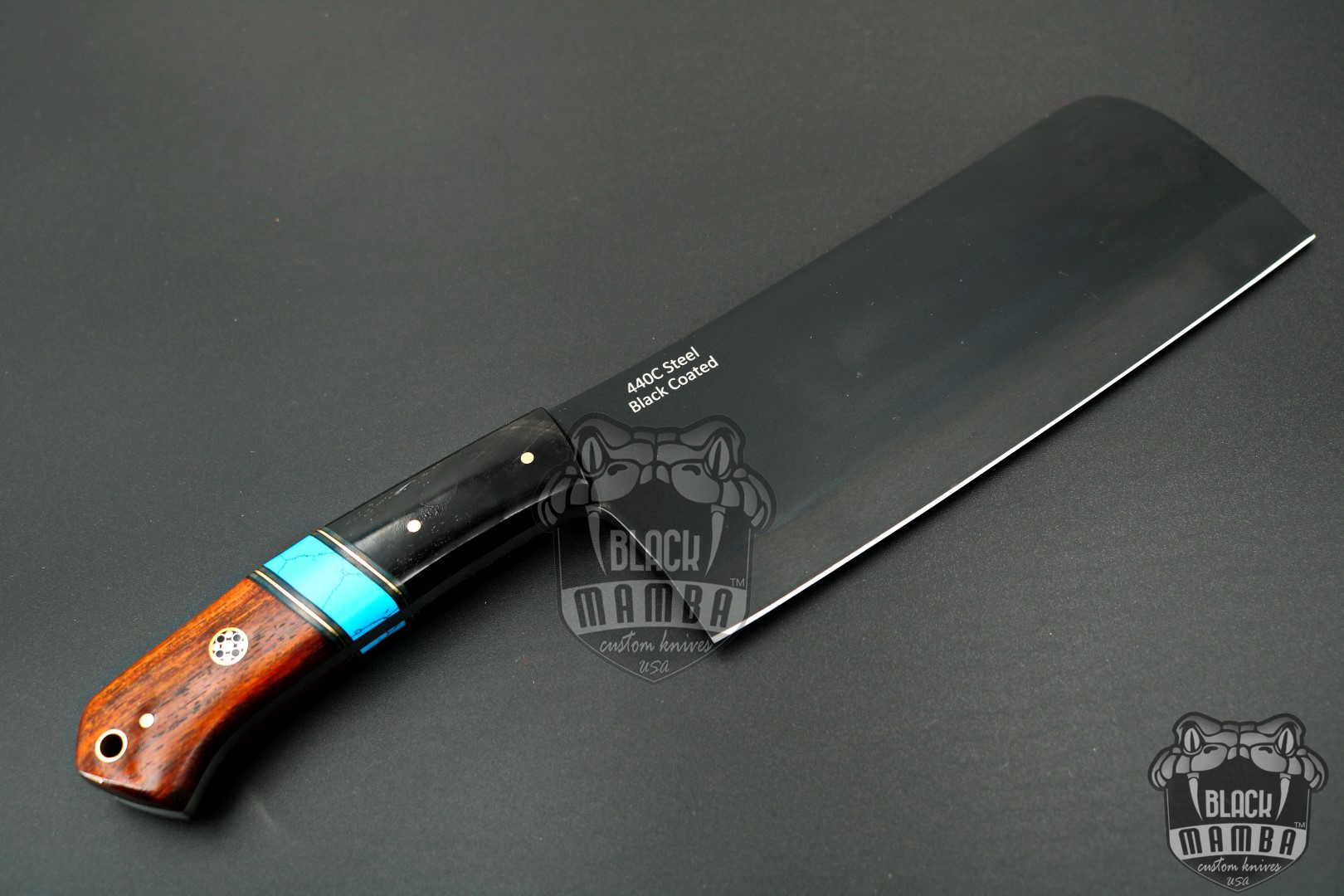
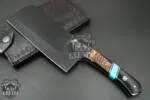
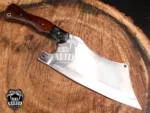
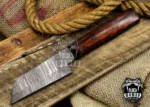
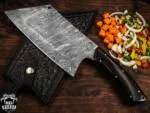
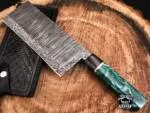
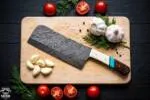
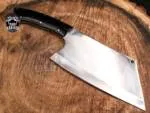
The African Buffalo is a twelve-inch cleaver with a black-coated 440C blade and a horn handle banded in turquoise, built for the heavy end of butchery.
| Overall length | 12 inches |
| Blade length | 7 inches |
| Handle length | 5 inches |
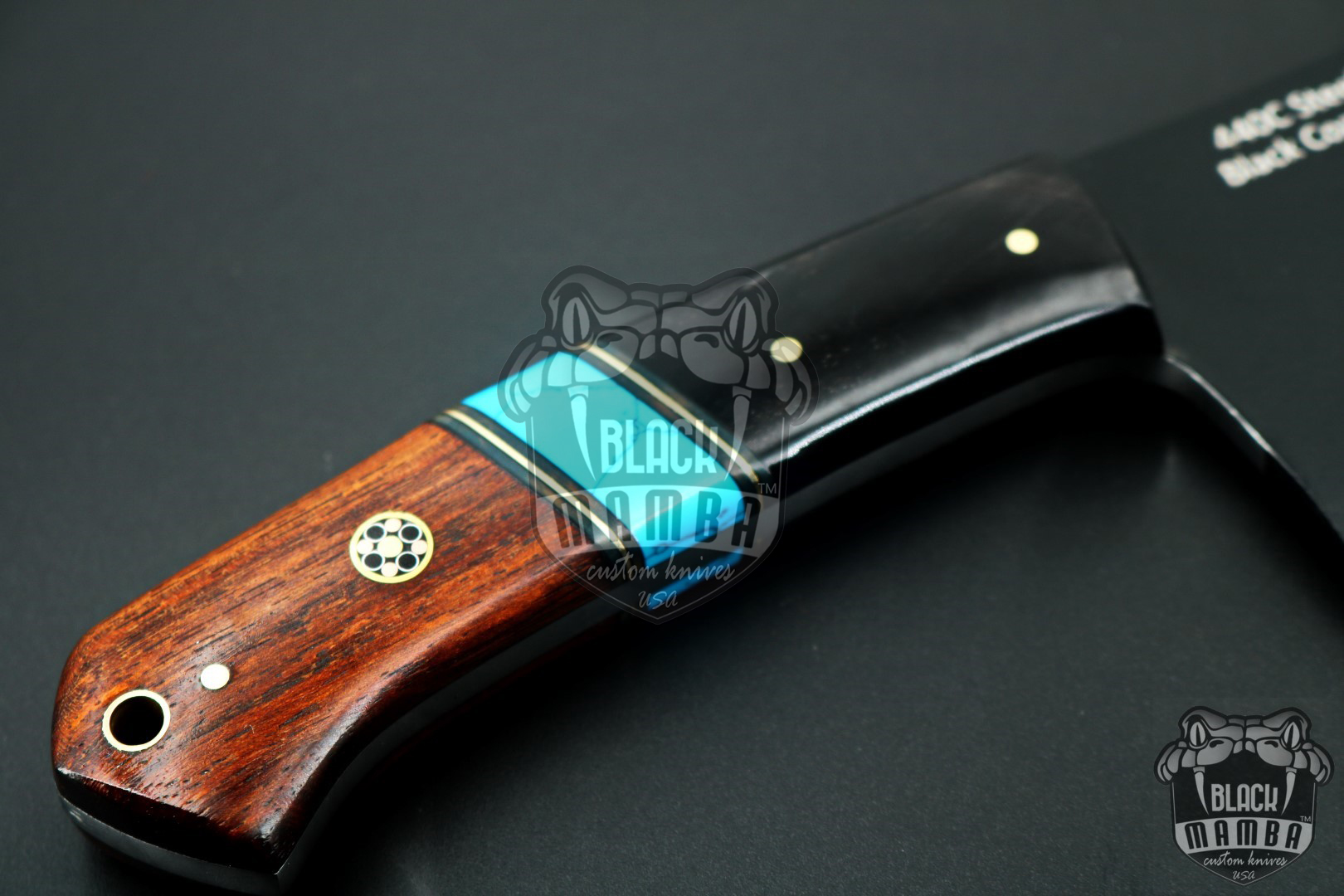
| Handle | Horn banded with turquoise |
| Steel | 440C stainless steel |
| Weight | 16.5 oz |
| Included | Hand-stitched leather sheath |
Where it earns its place: breaking down primals, portioning through joints, and the flat-of-the-blade work that a thin chef’s knife has no business doing.
Sixteen and a half ounces is the tool
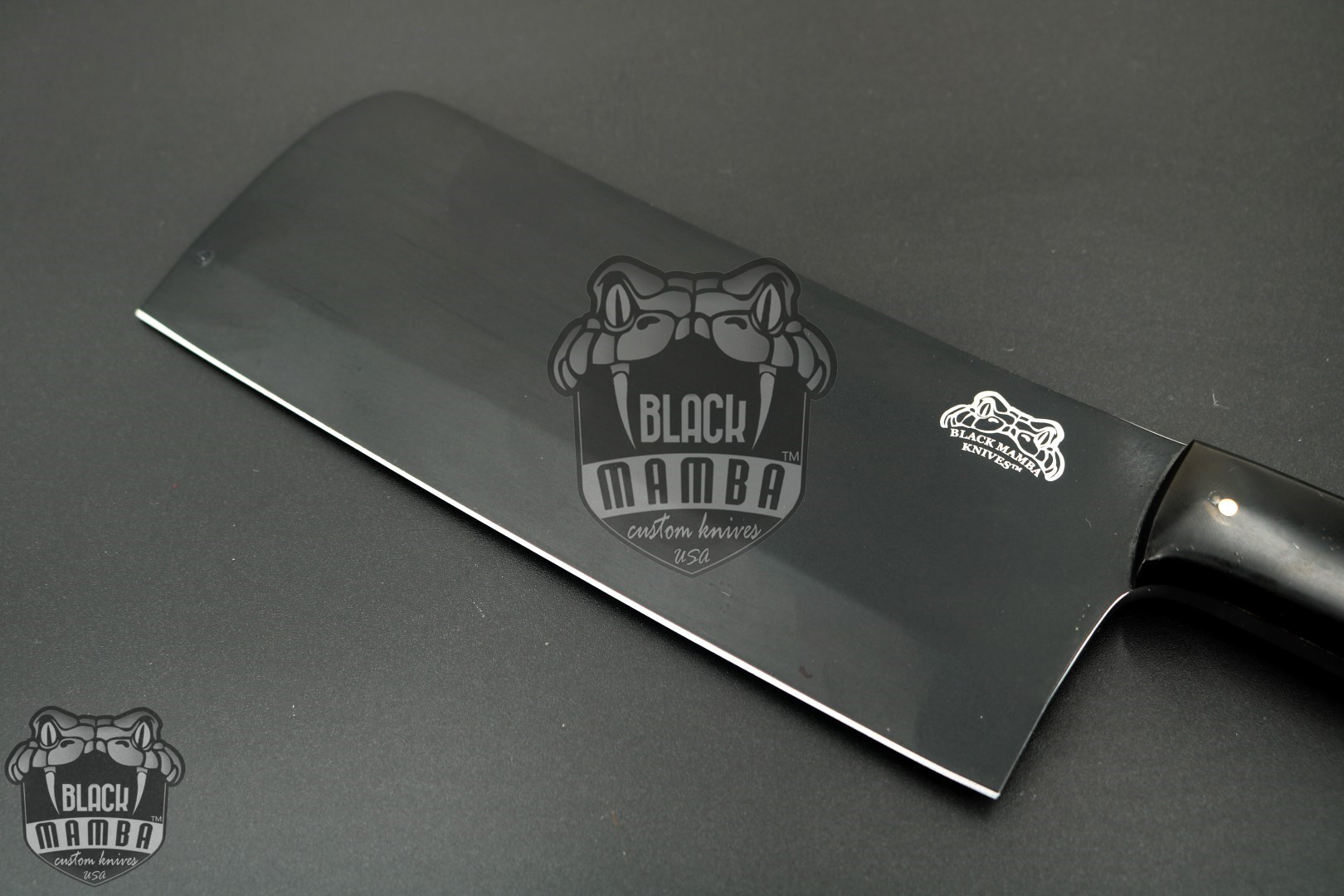
Weight is the whole argument for a cleaver. At 16.5 ounces with a seven-inch edge, this one does its cutting by falling rather than by being pushed, which is easier on your wrist and much safer than forcing a lighter knife through a joint. Let it drop and guide it. The flat slab of the blade also gives you a press for garlic and a scoop for moving a board’s worth of prep into a pan, which is why cleavers end up out on the bench more than their owners expect.
The coating, and what it is for
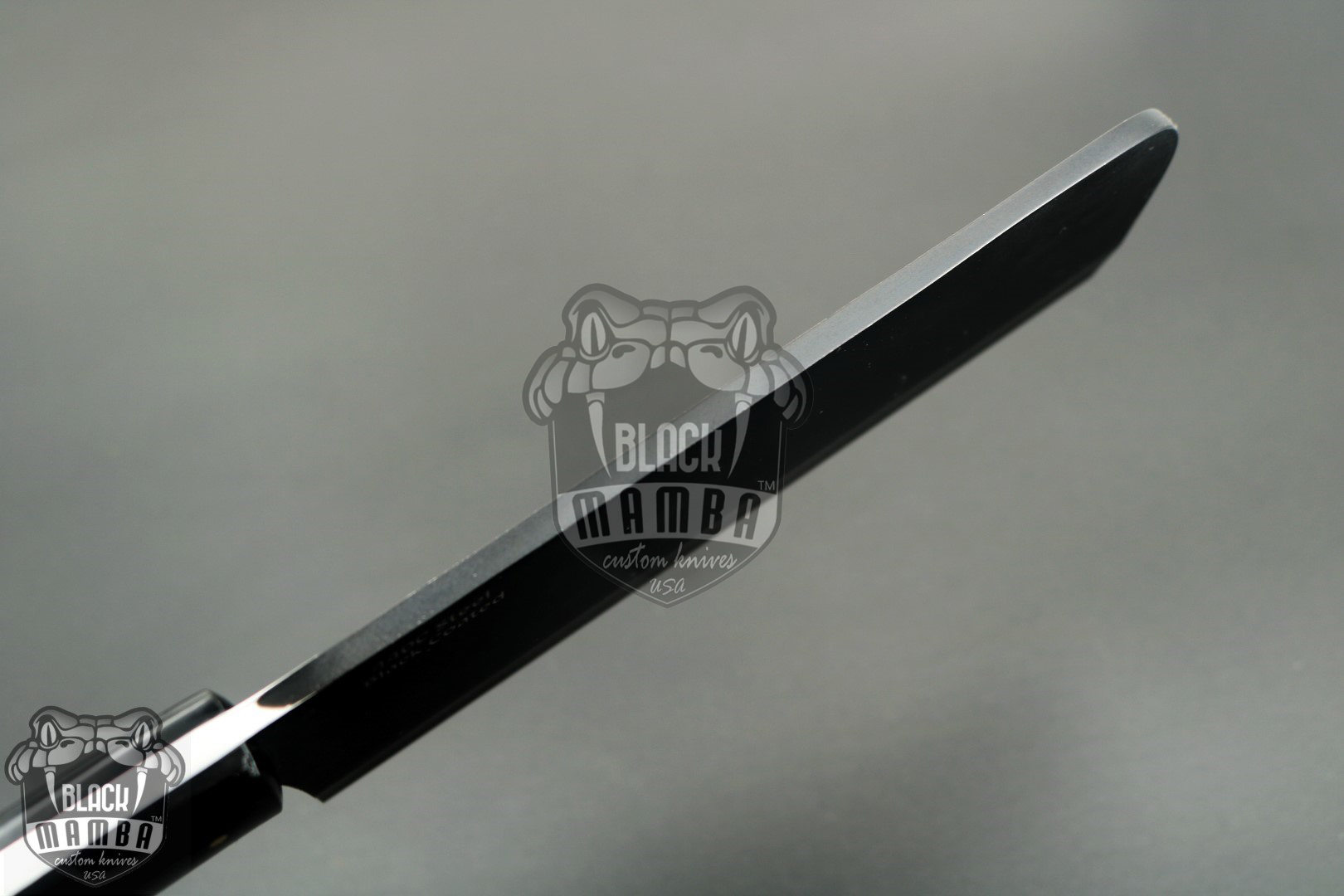
The blade is black-coated over 440C. The coating is a sacrificial surface: it reduces food sticking to the flat, and it takes the scratches that would otherwise land on the steel. It will wear at the edge bevel first, because that is the part you sharpen, and a bright line appearing along the edge is normal rather than a fault. The handle is buffalo horn with a turquoise band and a brass spacer, finished with a mosaic pin and a lanyard hole through the butt.
Kitchen care for this one
440C is stainless and forgiving, but this knife has a horn handle, and horn is the part that will not tolerate carelessness. Hand wash only, in warm water, and dry it straight away. Never leave it soaking in a sink, and keep it out of the dishwasher entirely, where heat will lift and crack horn long before it troubles the steel. Do not use an abrasive cream on the black coating. A whetstone at the existing angle is all the edge needs; a pull-through sharpener will chew the coating off the bevel. If you want the same knife with a patterned blade, there is an African Buffalo in Damascus.
Questions from the kitchen
Can it go through bone? Poultry and small joints, yes. It is not a bone saw and beef femur will damage the edge.
What edge angle is it ground to? A stouter angle than a chef’s knife, deliberately. Our notes on kitchen bevels explain why.
Stainless or carbon for a kitchen? We compare them here. This one is stainless.
Model: Bmk-703
Diego Jefferson –
Got this as a groomsman gift and it exceeded what I expected. You can tell it’s real American craftsmanship out of Memphis. Shipping was quick too. Already thinking about what to order next from this company.
Daniel Robinson –
Absolutely pleasantly surprised by this knife. Love that this comes out of Memphis and still ships worldwide this quickly.
Natalie Diaz –
Bought this on a whim and it turned out to be one of my favorite purchases this year. Steel has a gorgeous pattern that looks different in every light. This maker clearly takes pride in their work.
Steven Moore –
Kept picking this knife up just to admire it after it arrived. Weight and balance make it feel like a real working knife not some cheap import. Will definitely order again for another one.
Malik Gomez –
This knife punches way above its price point. This is exactly why I keep coming back to this shop.
Amanda Hughes –
Good quality knife for the price. Good product. Just not quite perfect. Nice that it’s US made out of Memphis with solid shipping times.