
Description
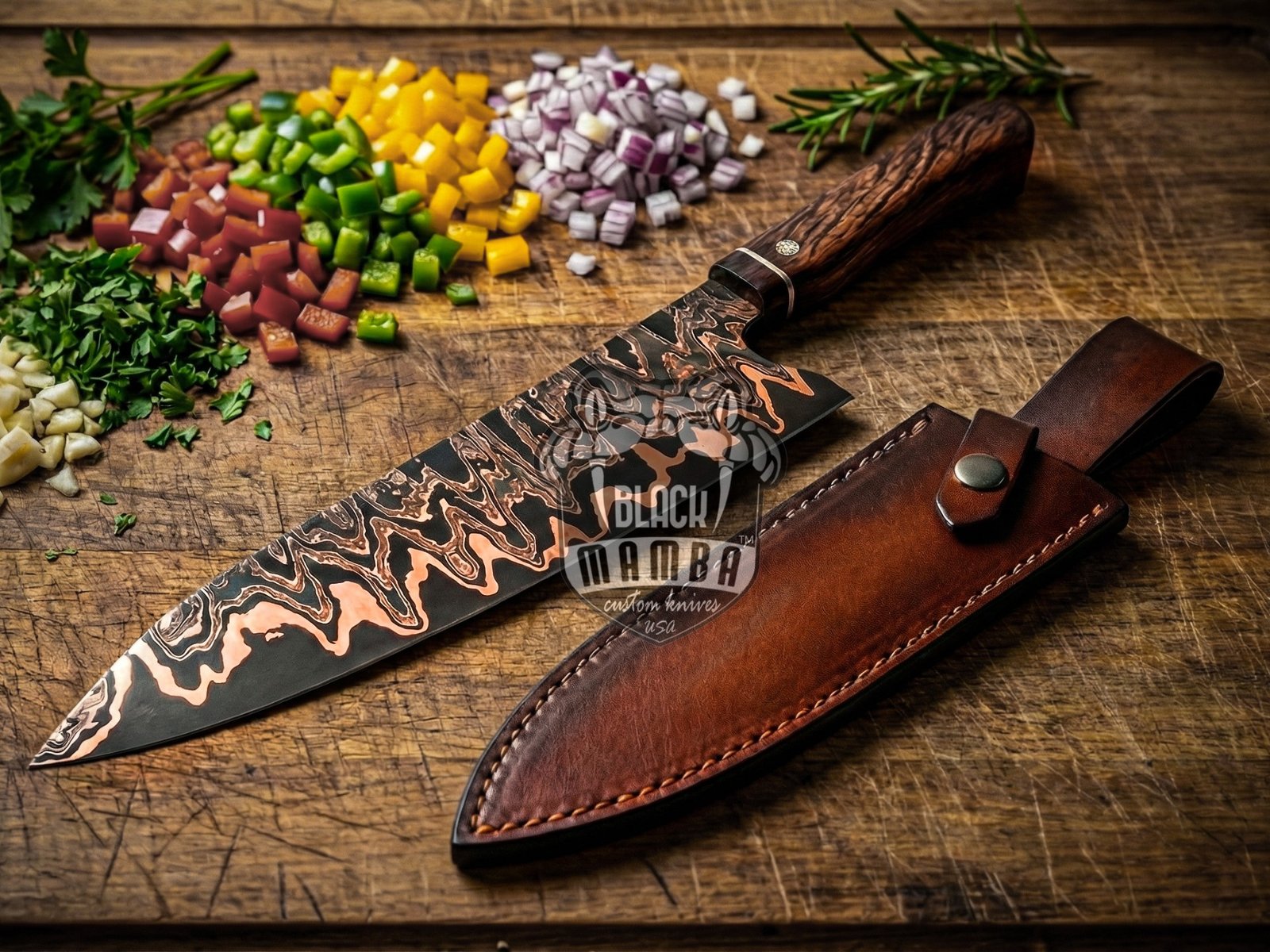
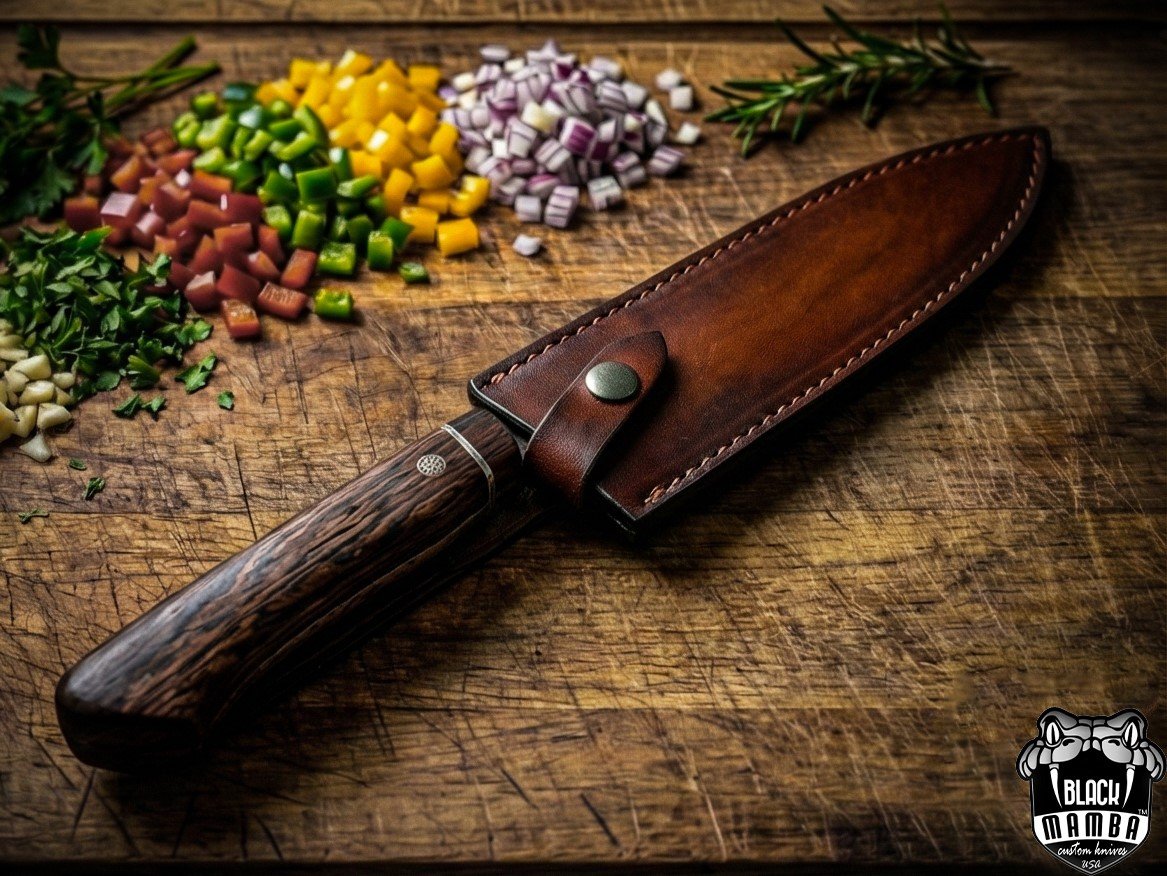
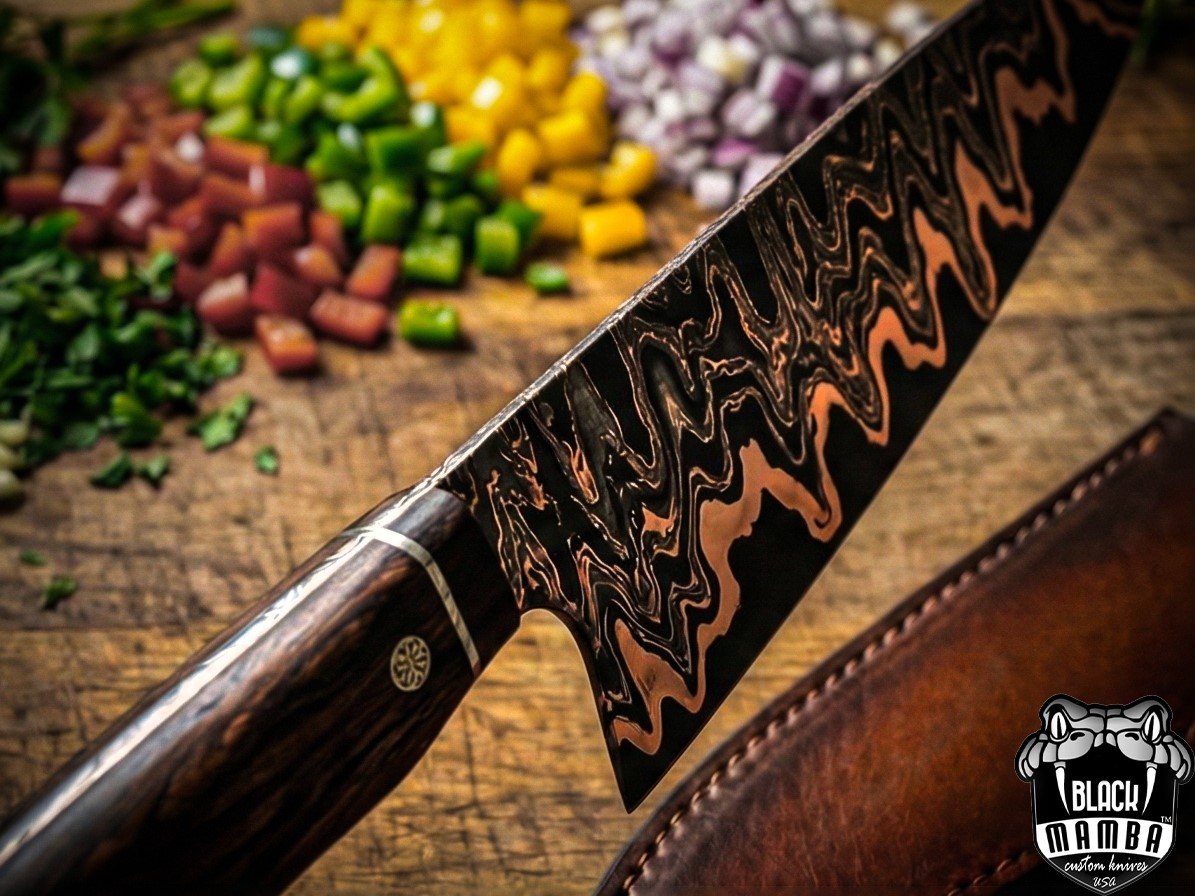
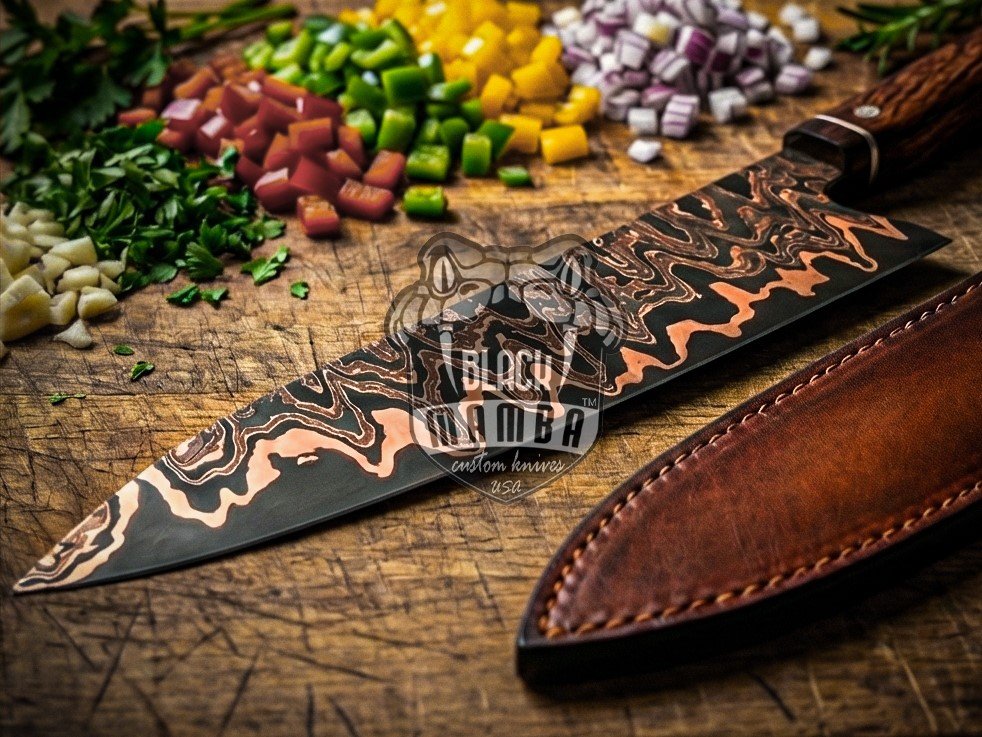
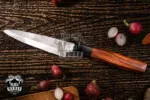
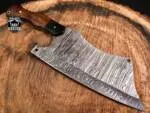
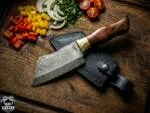
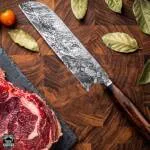
A thirteen inch chef knife with a copper Damascus face, cut down to an eight inch edge and a five inch handle. It is meant to do the prep work, not sit in a block looking expensive.
| Overall length | 13 inches |
| Blade length | 8 inches |
| Handle length | 5 inches |
| Steel | 1095 + 15N20 Damascus |
| Hardness | 58–60 HRC, oil tempered |
| Handle | Rose Wood with Copper Spacer Rose Wood Bolster |
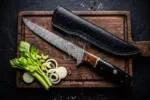
| Included | Hand-stitched leather sheath |
Put to work on: boards of onion, herbs, peppers and garlic. The belly is long enough for a rocking cut and the tip drops low enough to cut through to the board without lifting your wrist.
The bevel and why it matters here
A chef knife lives or dies on its bevel angle. Too obtuse and it wedges in a dense onion; too acute and the edge folds on a cutting board. This blade is ground for the middle of that range, which is the compromise every western chef knife makes. We set out the whole argument in chef knife bevels explained, using this knife as the worked example.
Carbon Damascus in a kitchen
1095 and 15N20 are both carbon steels. That buys you an edge that goes sharper and comes back faster than stainless, and it costs you a blade that reacts to acid. Cut a lemon and leave it, and you will see a grey bloom on the flat within the hour. It is harmless and it wipes off, and over months it settles into an even patina that resists worse corrosion. Carbon versus stainless in the kitchen covers the trade honestly.
Handle and balance
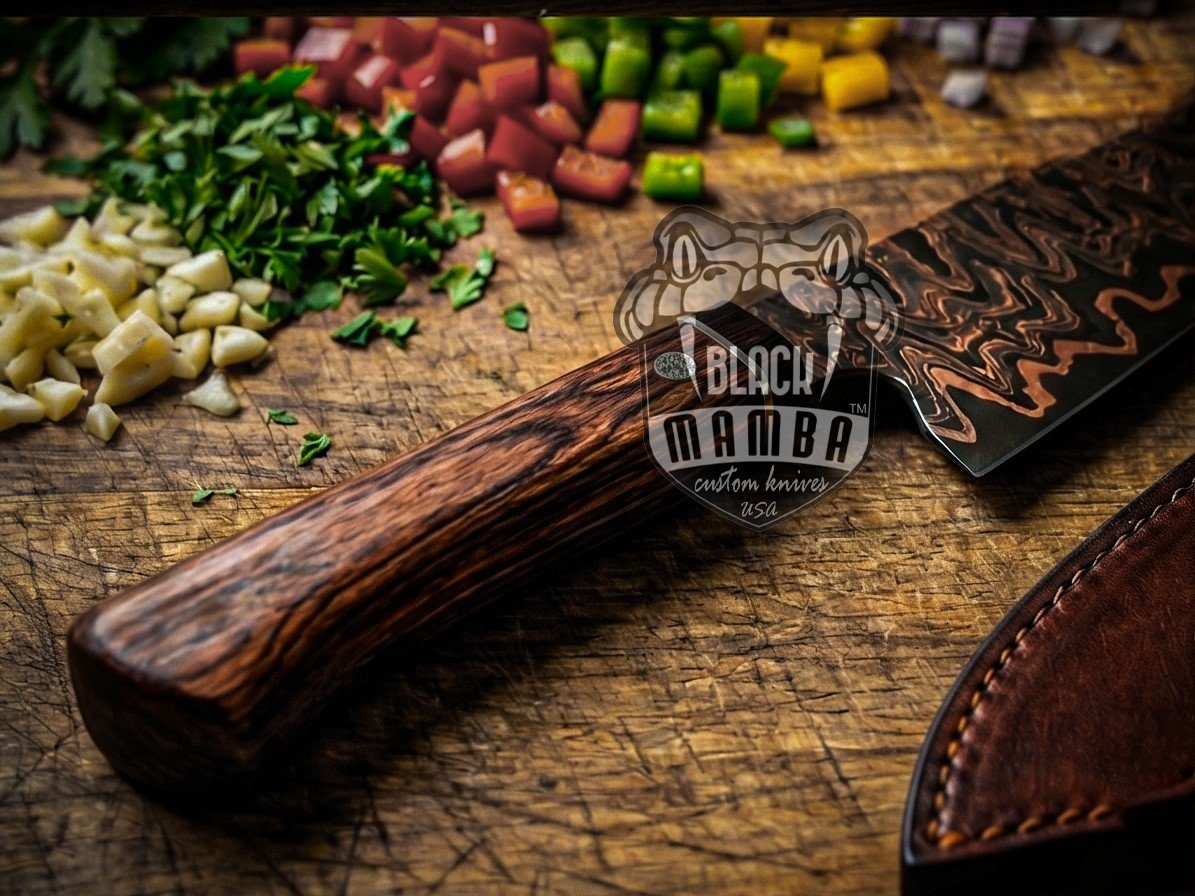
Rosewood scales with a copper spacer and a contrasting bolster of the same timber, pinned with a mosaic rosette. The weight sits just forward of your index finger, so the knife falls through a cut rather than needing to be pushed. For heavier jobs the blade is not made for, the Damascus cleaver is the right tool.
Seven inches on a home board
Seven inches is the length most home cooks actually use. Eight and nine inch chef knives dominate the shelves, but they need a board wider than most kitchens own before the tip stops running off the edge. This one clears a standard board comfortably.
Care: hand wash, dry immediately, never the dishwasher. Detergent and heat will strip the finish off the handle and rust the flat in a single cycle. Wipe the blade between acidic ingredients. Once a month, a thin film of food-safe mineral oil on the steel and the wood keeps both stable.
FAQs
Will it rust on me? It will patina, which is the surface going grey and stable. Rust is orange and only shows up if the blade is left wet.
Can I put it in the dishwasher? No. Nothing about a wooden-handled carbon knife survives a dishwasher well.
How often does it need sharpening? With daily home use, a strop or honing rod weekly and a proper sharpening two or three times a year.
Model: BMK-805A
Mark Long –
Photos don’t do this knife justice at all. Handle stays comfortable even after prepping a big meal. Can’t say enough good things about this purchase.
Gregory Walker –
This is one of those purchases that just makes you smile. Slices through everything like butter, no sawing needed. Made in the USA and shipped worldwide with no issues on my end. This one’s a keeper for sure.
Emma Mitchell –
Wasn’t expecting to be this impressed but here we are. Edge held up great through a full week of daily cooking. Already telling my friends to check this out.
Dennis Cruz –
Can’t stop showing this off to everyone who comes over. Cleans up easy and hasn’t shown any rust or staining. Couldn’t be happier with this.