
Description
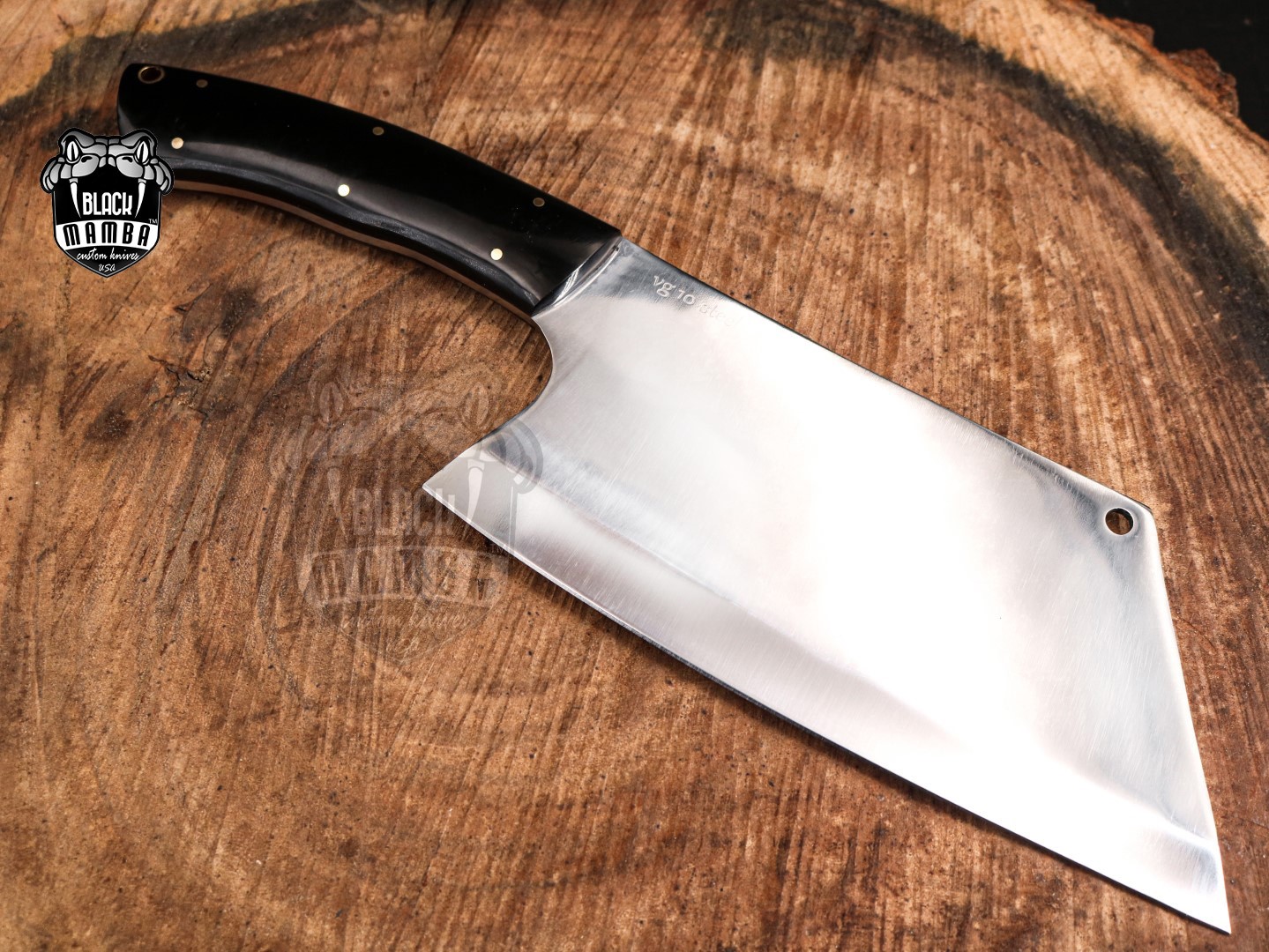
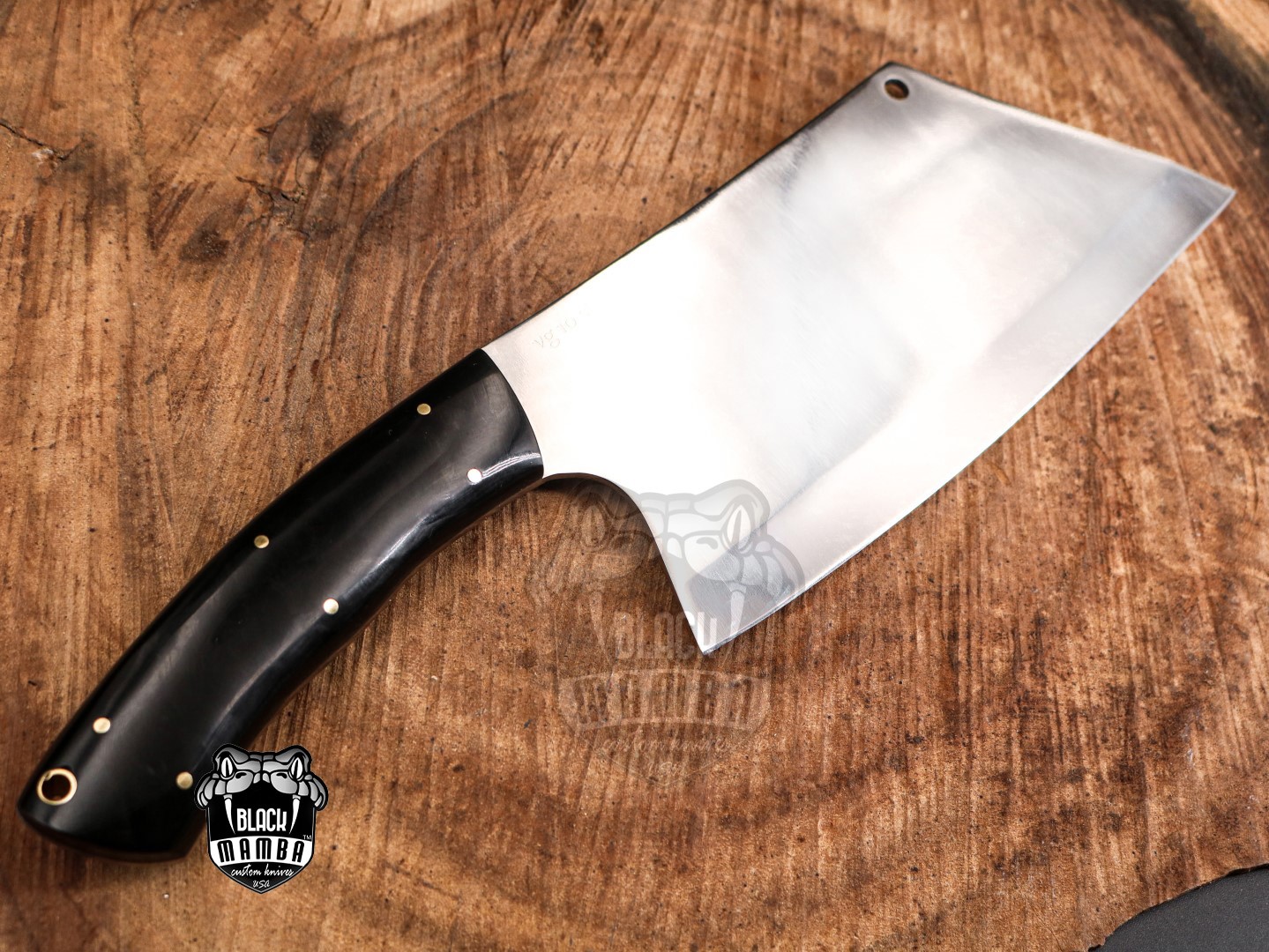
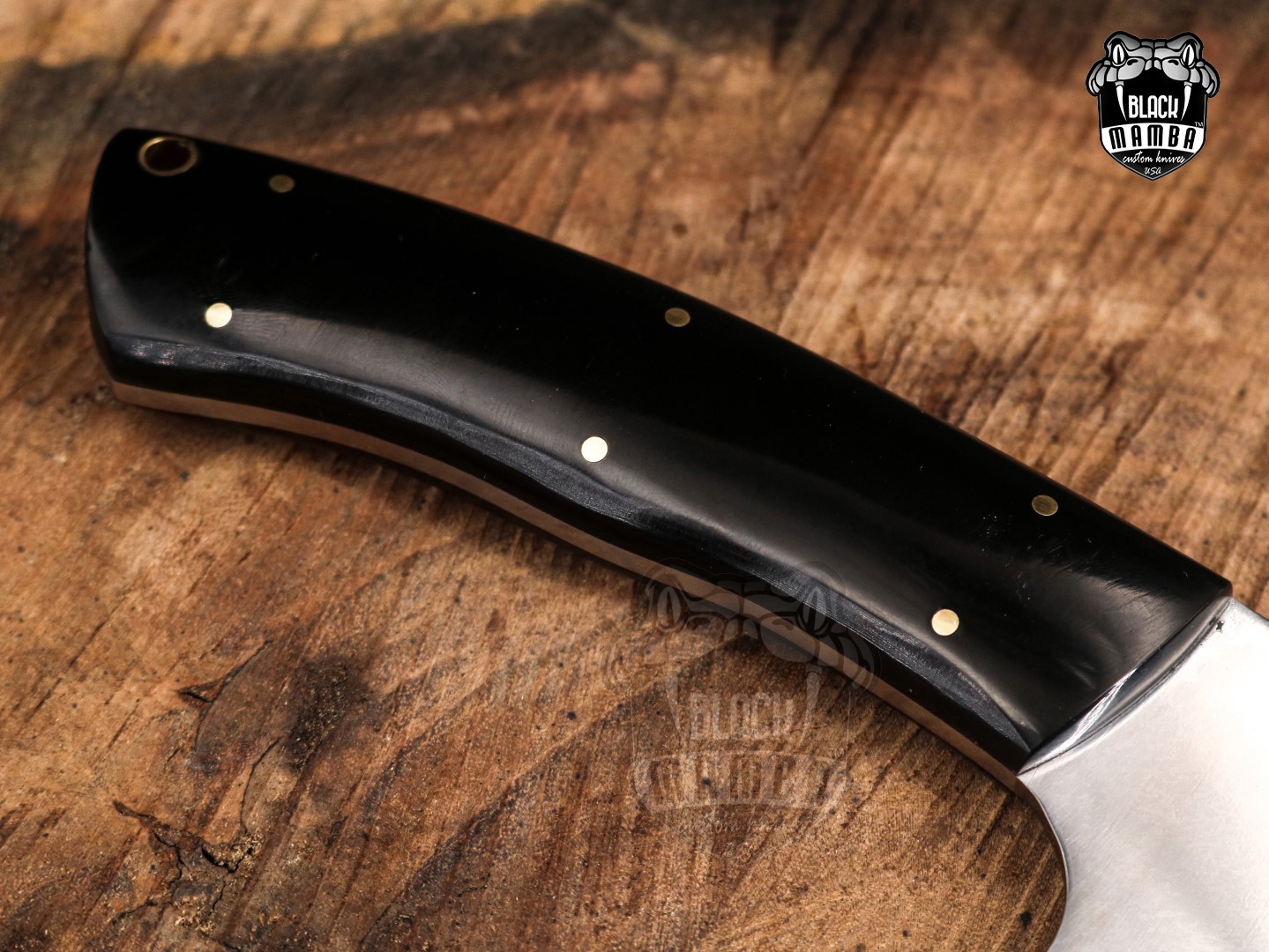
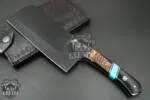
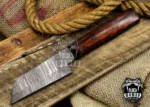
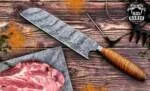
Eight inches of cleaver blade, seventeen ounces of it, on a three-inch buffalo horn handle. This is a knife you swing, not one you steer.
| Overall length | 13 inches |
| Blade length | 8 inches |
| Handle length | 5 inches |
| Steel | 1095 + 15N20 Damascus, 352 layers |
| Hardness | 58–60 HRC, oil tempered |
| Weight | 17 oz |
| Handle | Buffalo Horn Handle |
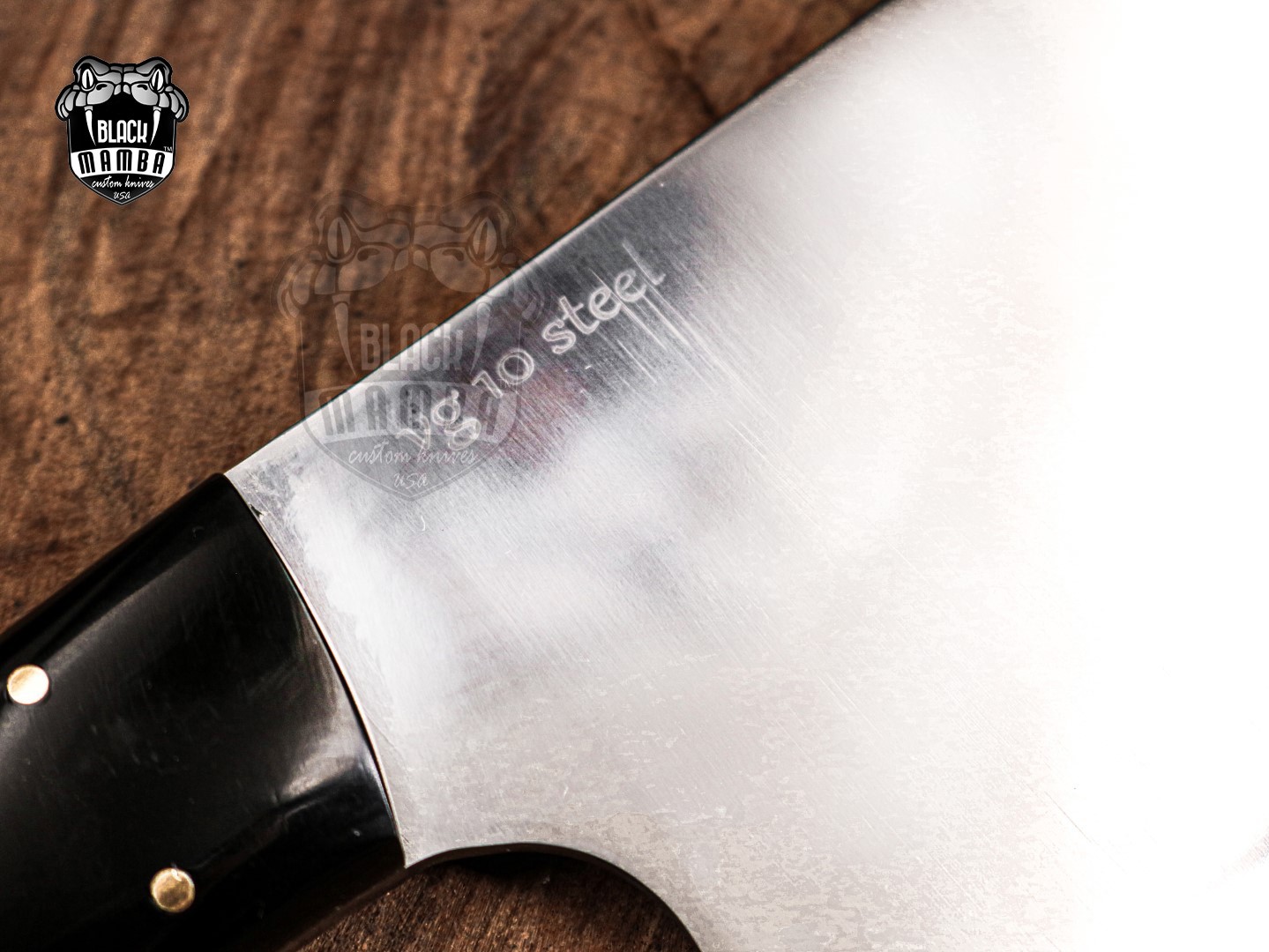
| Pattern | Mirror shine Blade Super Steel VG10 |
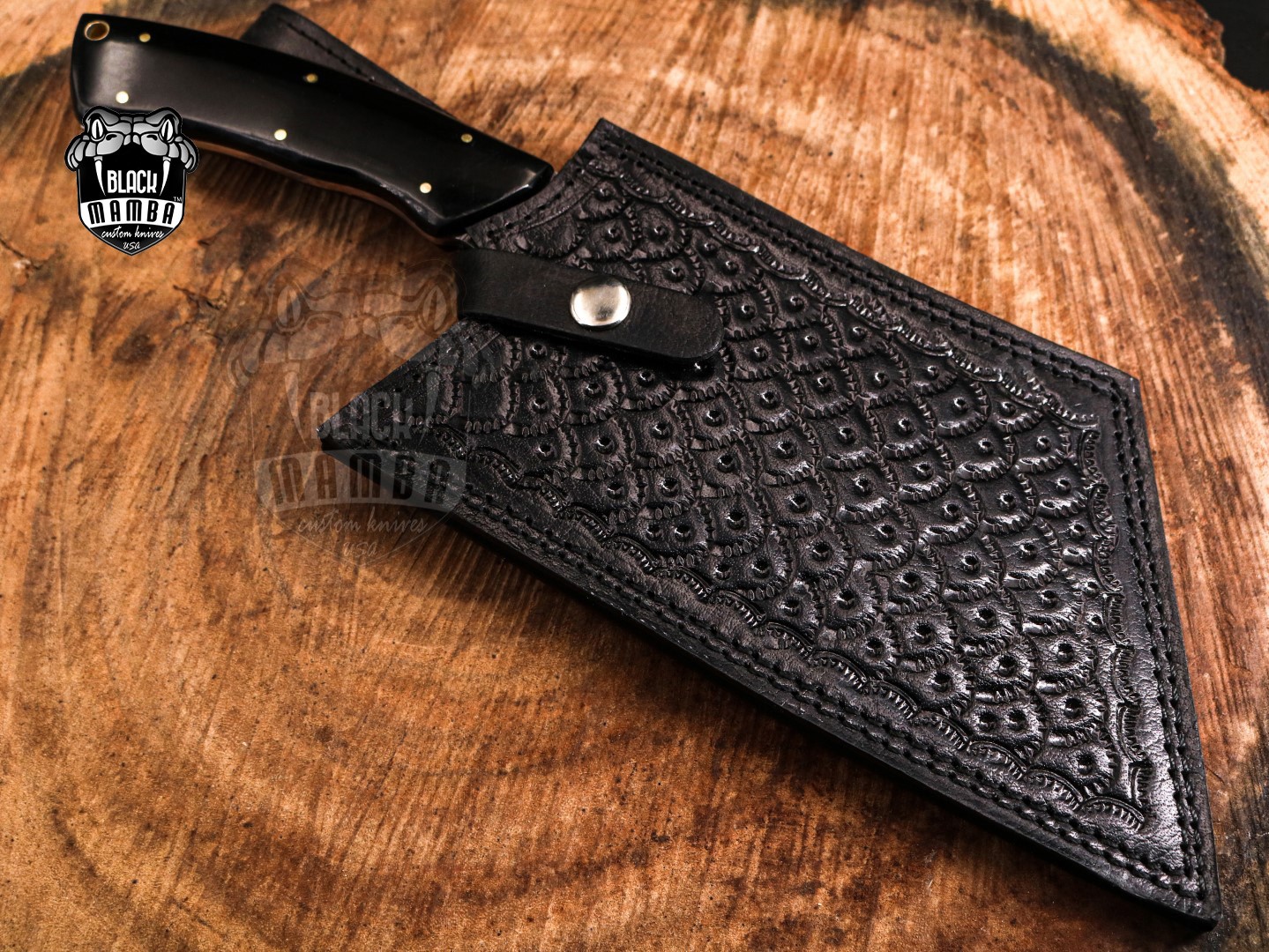
| Included | Hand-stitched leather sheath |
Made for: heavy protein work. Breaking down a shoulder, portioning ribs, going through poultry joints, quartering squash that turns a chef’s knife into a wedge. The mass is doing the cutting. You set the edge where you want it and let the weight fall, which is far safer and far more accurate than forcing a lighter blade through the same job.
What a short handle on a heavy blade means
Three inches of handle against eight inches of blade puts the balance point well forward. That is deliberate and it is what makes the chop effortless. It also means there is not much handle to hold, so a full four-finger grip is tight and gloved hands will find it tighter still. Anyone with large hands should look at the photographs carefully before ordering. And because the balance sits ahead of your fist, this blade is genuinely poor at fine work. Do not try to dice a shallot with it.
Buffalo horn, and how it ages
Horn is a natural material, so no two handles match. Expect variation in the color and in the depth of the grain, from near-black through to streaked amber. It warms to the hand faster than metal and grips better than polished wood when wet. It also moves. Horn dries out in a hot kitchen and can develop fine surface cracks over years if it is left near a stove or run through hot water. Keep it away from heat, never soak it, and wipe a little mineral or camellia oil into the horn once or twice a year. Treated that way it will outlast the person who bought it.
Edge care on a cleaver
Cleaver edges get chipped, not dulled. The usual cause is bone contact at the wrong angle or a stray strike against a ceramic plate. Use an end-grain or plastic board and nothing harder. When it does need work, keep the angle a little more obtuse than you would on a slicer — a cleaver wants a durable edge more than a keen one. Dry it immediately after washing, by hand, always. The explanation of chef knife bevels covers what angle to aim for.
Before you buy
Can I chop through bone with it? Poultry and rib bones, yes. Beef leg bone, no. That job needs a bone saw.
Is it dishwasher safe? No. Heat and detergent will ruin the horn and mark the blade.
Is there a stainless version? There is a 440c cleaver in the same family, the 440c African Buffalo cleaver, if low maintenance matters more to you than the forged finish.
Does it come with a sheath? Yes, hand-stitched leather, as listed above.
Model: BMK-806A

Jack Ward –
This knife is outstanding. No question about it. Sheath snaps shut securely and doesn’t feel flimsy at all. Already telling my friends to check this out. Ordered from Black Mamba Knives before and the quality stays consistent every time.
Brenda Richardson –
Set my expectations low going in and this blew right past them. Fit and finish is museum quality. You can tell real craftsmen made this by hand. Took it out camping right away and it handled everything I threw at it. Weight and balance make it feel like a real working knife not some cheap import. Beyond happy with how this turned out.
Jason Cruz –
Was nervous ordering something like this online but so glad I did. Every piece of the fit and finish looks hand checked before it shipped. Steel has a gorgeous pattern that looks different in every light. Edge retention has been great even after regular use in the field. Black Mamba Knives has earned a repeat customer with this one. This is my new favorite in the collection.
Deborah Torres –
Exceptional craftsmanship on this one. Every piece of the fit and finish looks hand checked before it shipped. Edge retention has been great even after regular use in the field. This is going straight into my daily rotation.
Alan Robinson –
My uncle was speechless when I showed them this knife. Fit and finish is museum quality. You can tell real craftsmen made this by hand. Handle has a great grip even with wet or gloved hands. This is going straight into my daily rotation.
Kenneth Richardson –
Wasn’t expecting to be this impressed but here we are. Black Mamba Knives is quickly becoming my go to shop for knives. Pommel and guard are solid, no wobble anywhere on the knife. This is exactly why I keep coming back to this seller.