
Description
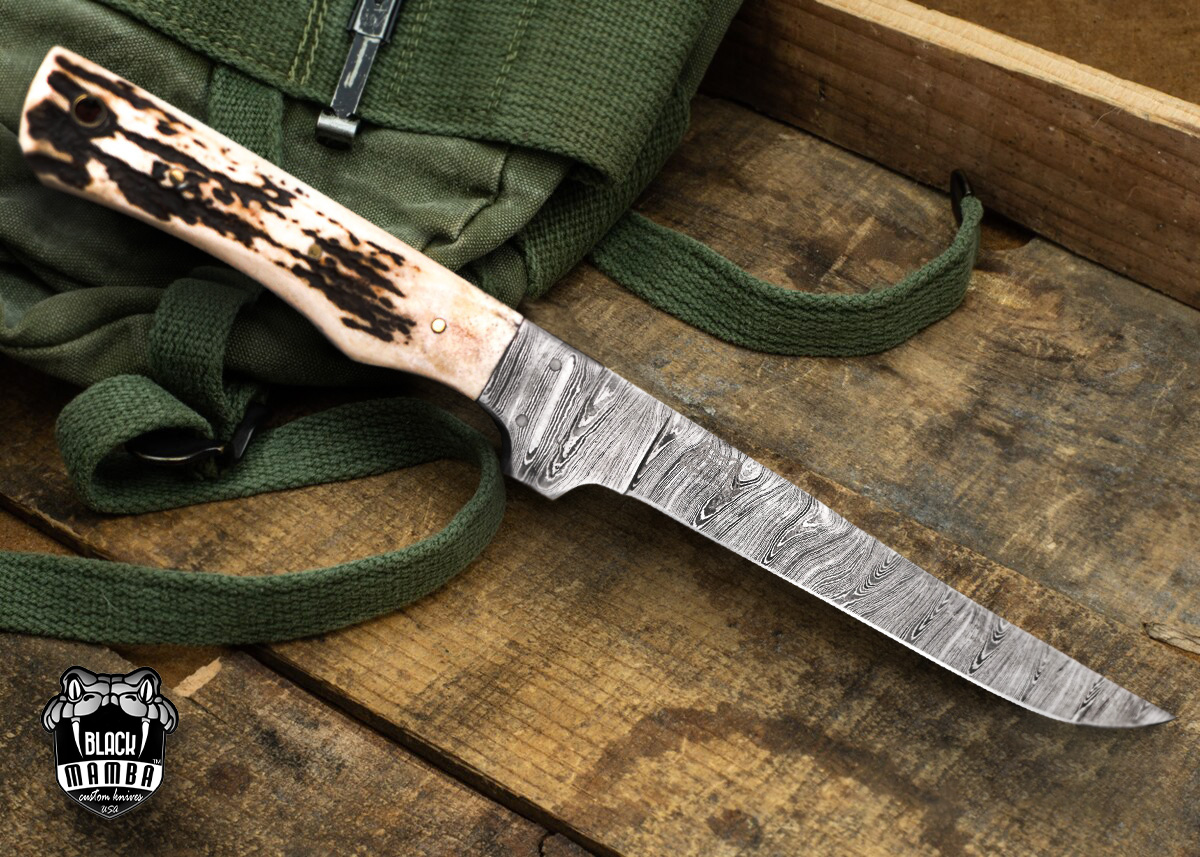
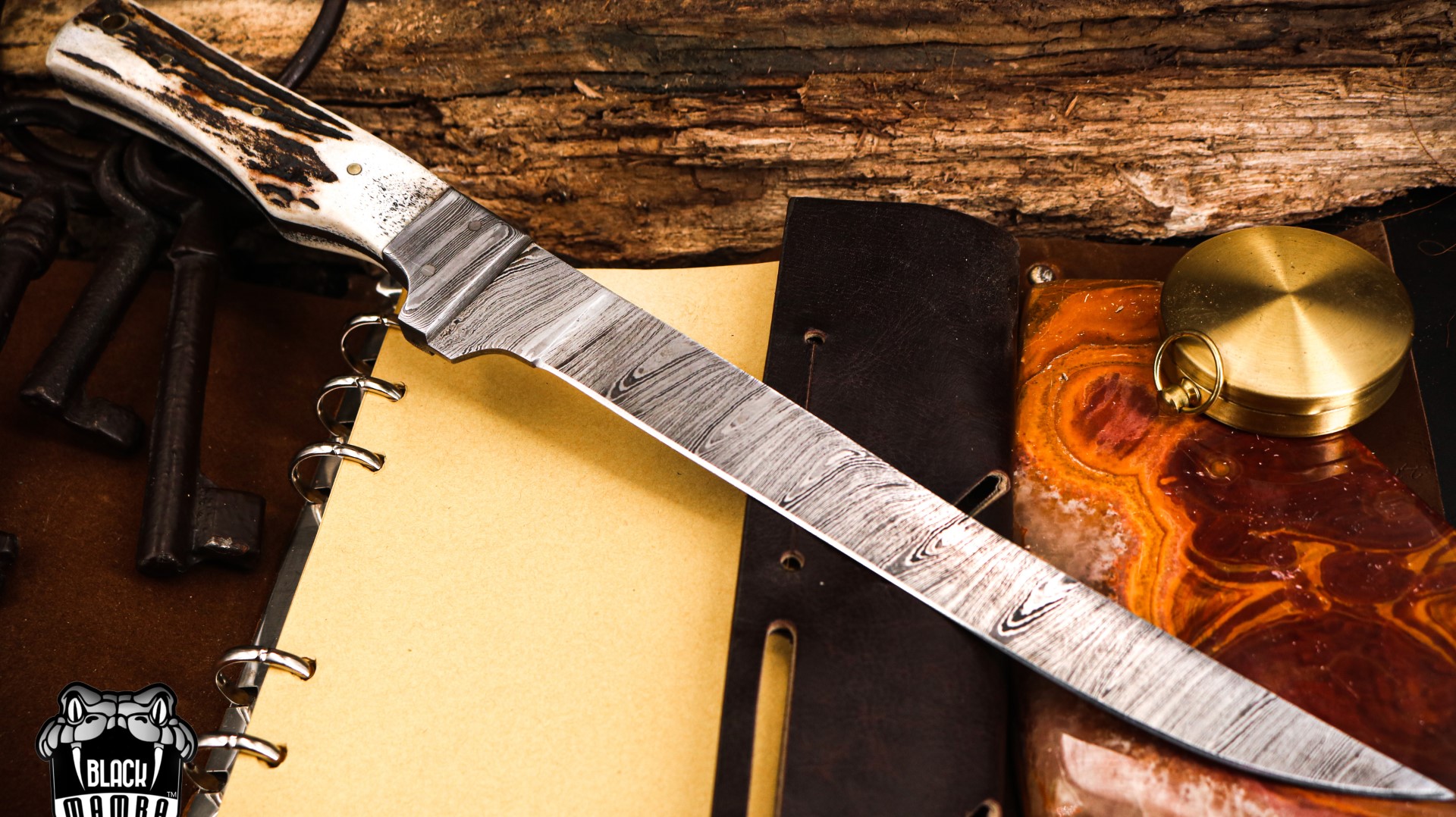
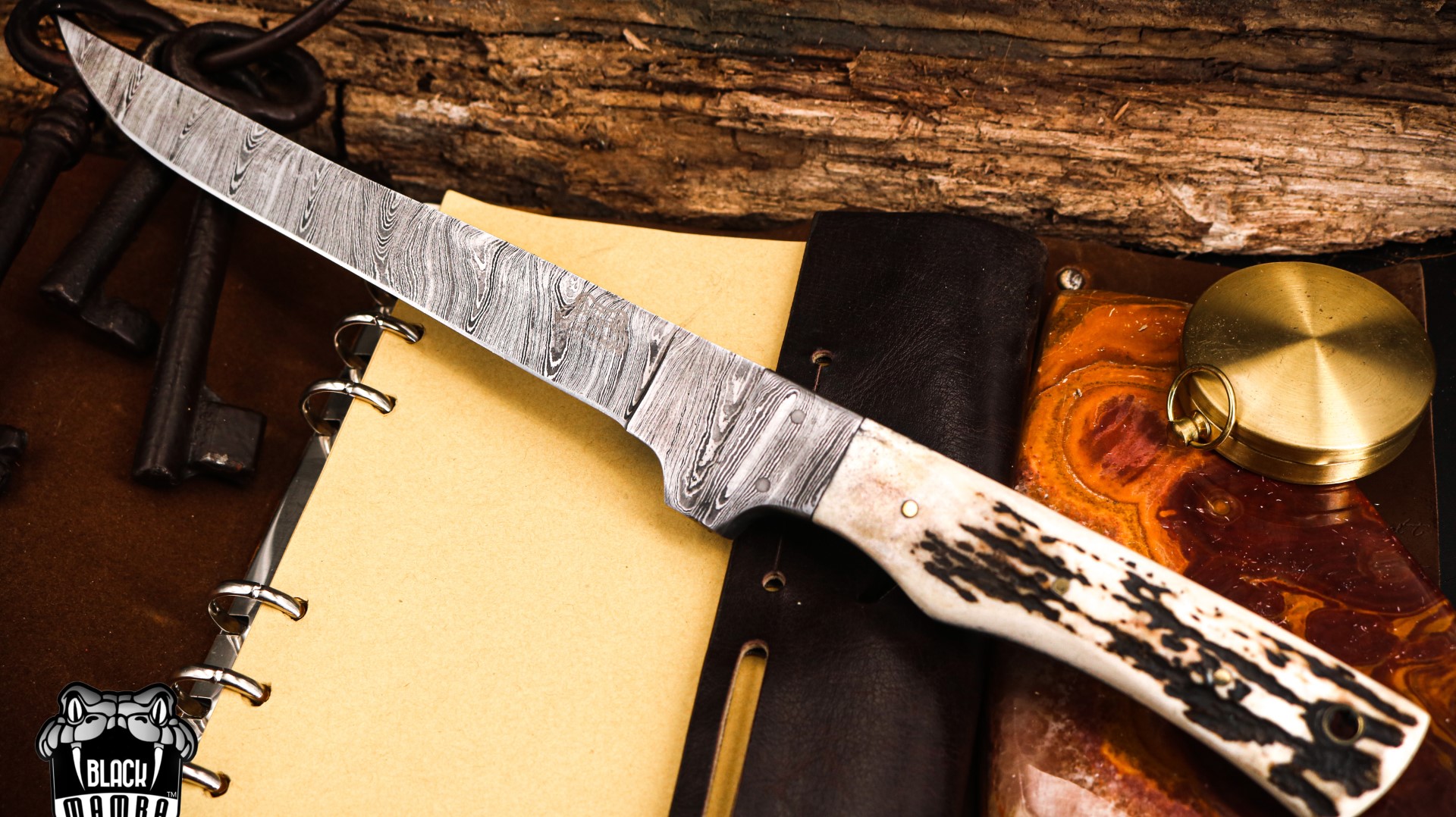
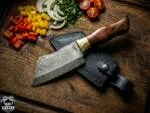
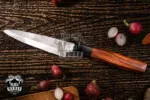
Seven inches of edge, and a handle just long enough to keep your fist off the board. That ratio is the whole argument for this knife.
| Overall length | 12 inches |
| Blade length | 7 inches |
| Handle length | 5 inches |
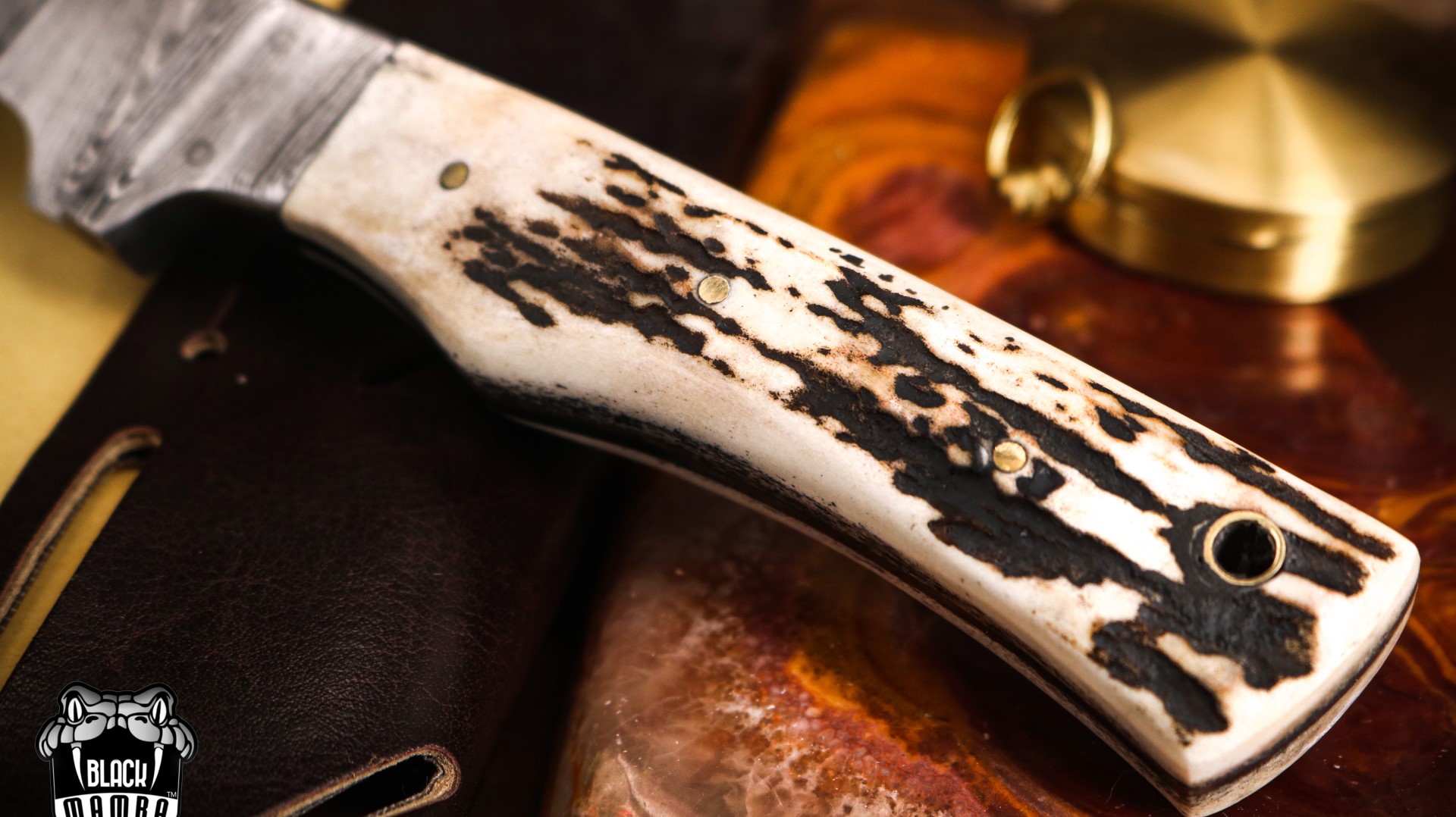
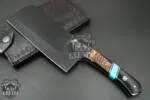
| Handle | Stag antler |
| Steel | 1095 + 15N20 Damascus, 352 layers |
| Hardness | 58–60 HRC, oil tempered |
| Pattern | Wind & Mix twist Fire pattern feather rain drop ladder Damascus Blade |
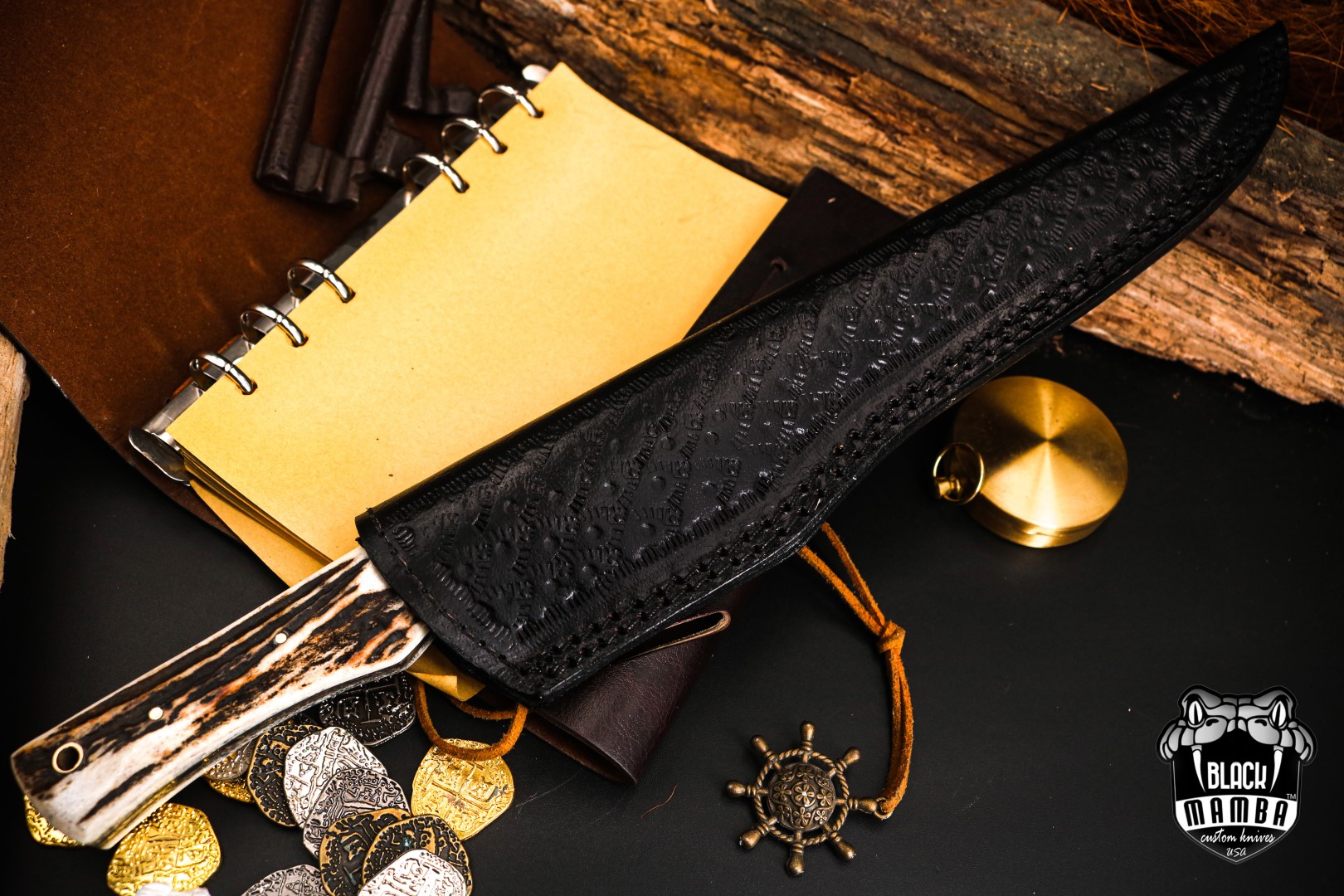
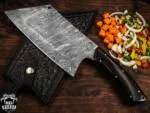
| Included | Hand-stitched leather sheath |
Where it earns its keep: long, unbroken strokes. A seven-inch edge takes a whole side off a fish, or runs the length of a roast, in one pass instead of three. Fewer passes means a cleaner face on the cut and less torn flesh. If you portion fish or slice cooked meat often, this is the shape that does it.
The cost of a long blade
Length buys reach and gives up control. Peeling a shallot or trimming around a small joint asks for something half this size, and you will feel the difference every time you try. Storage is the second cost: a seven-inch blade will not sit in most drawer inserts without the tip standing proud. Use the sheath it ships with, or a magnetic bar on the wall. If most of your cutting is short and fiddly, a shorter eight-inch fillet knife suits you better.
Reading the surface
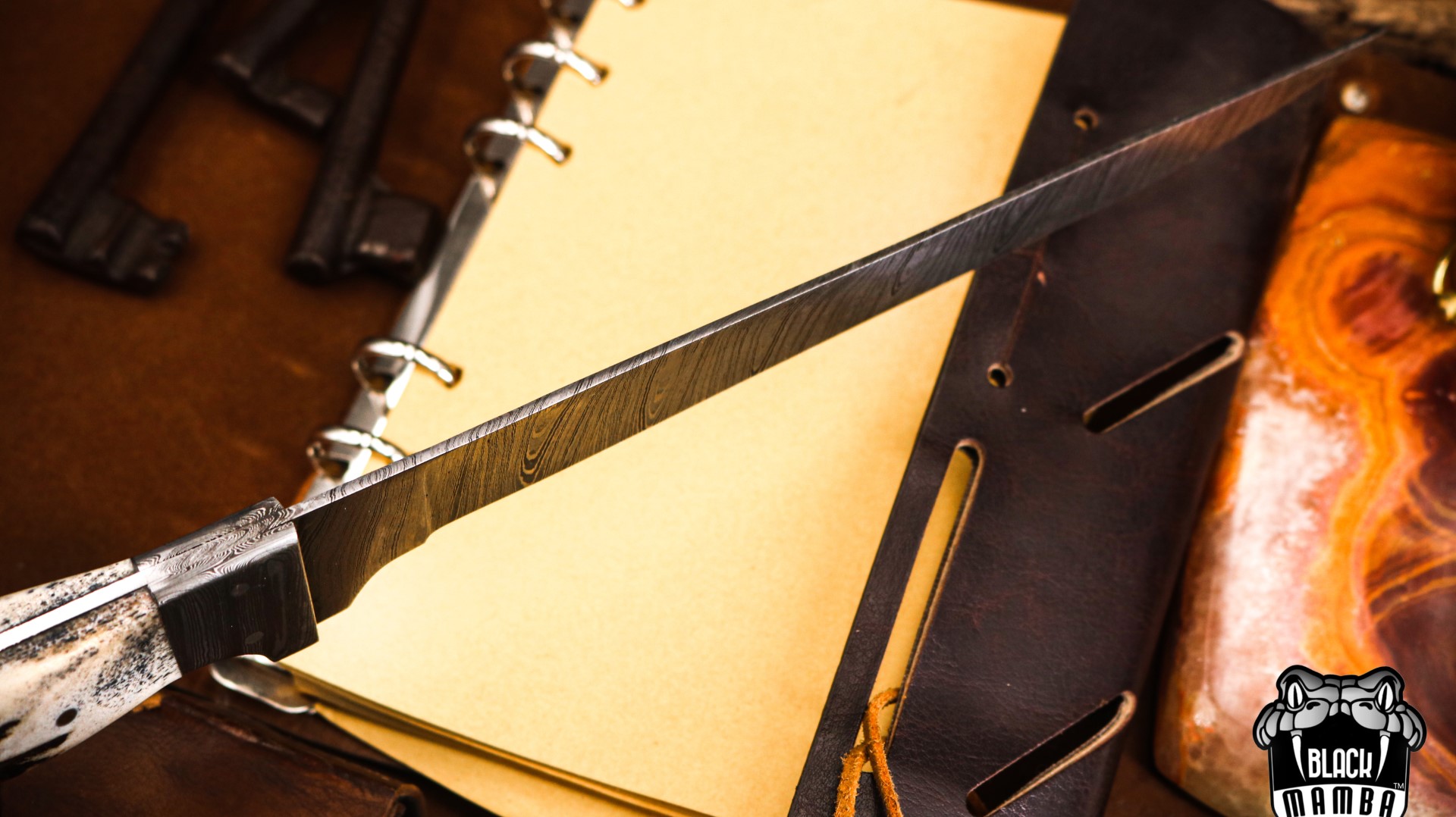
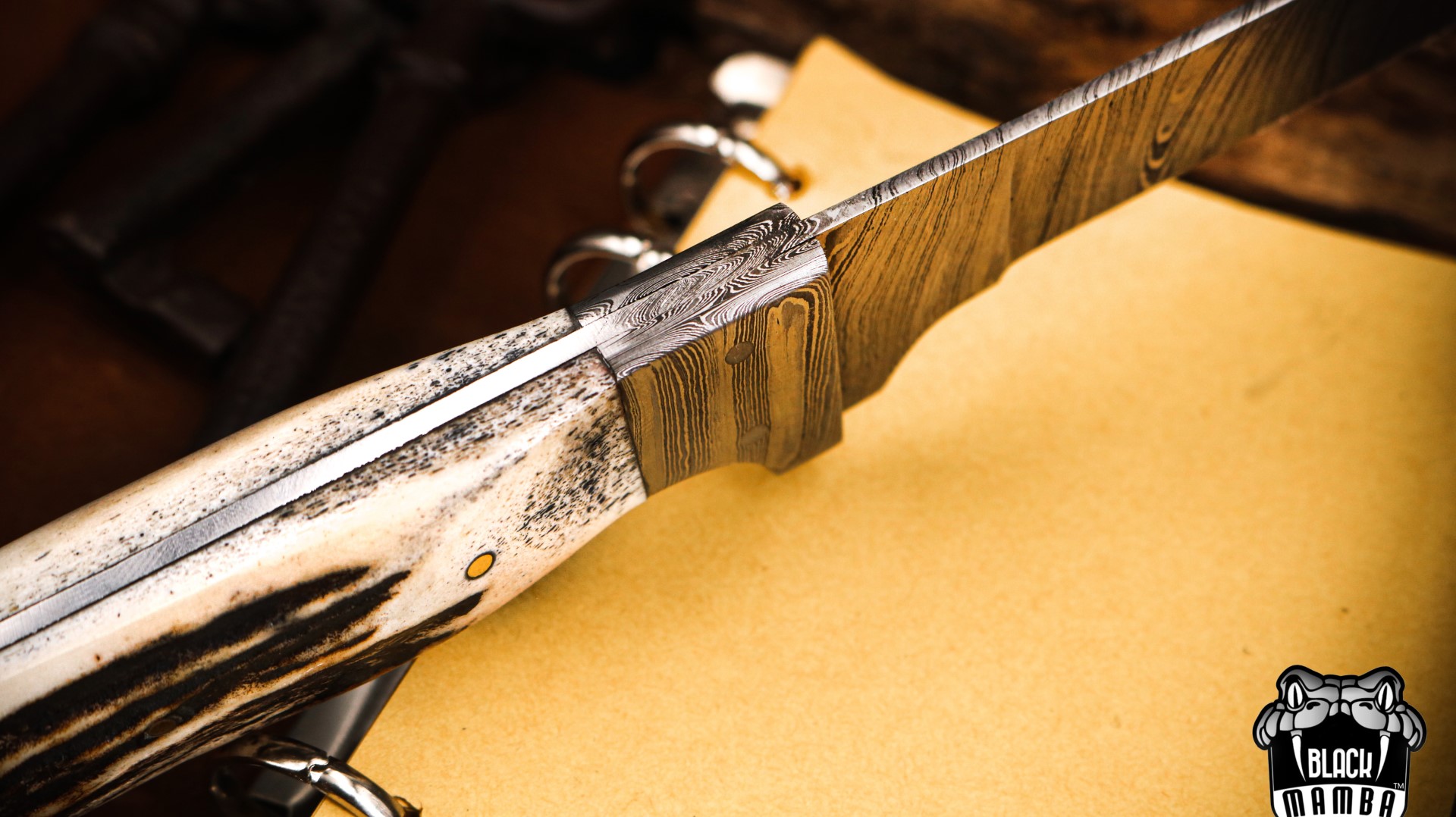
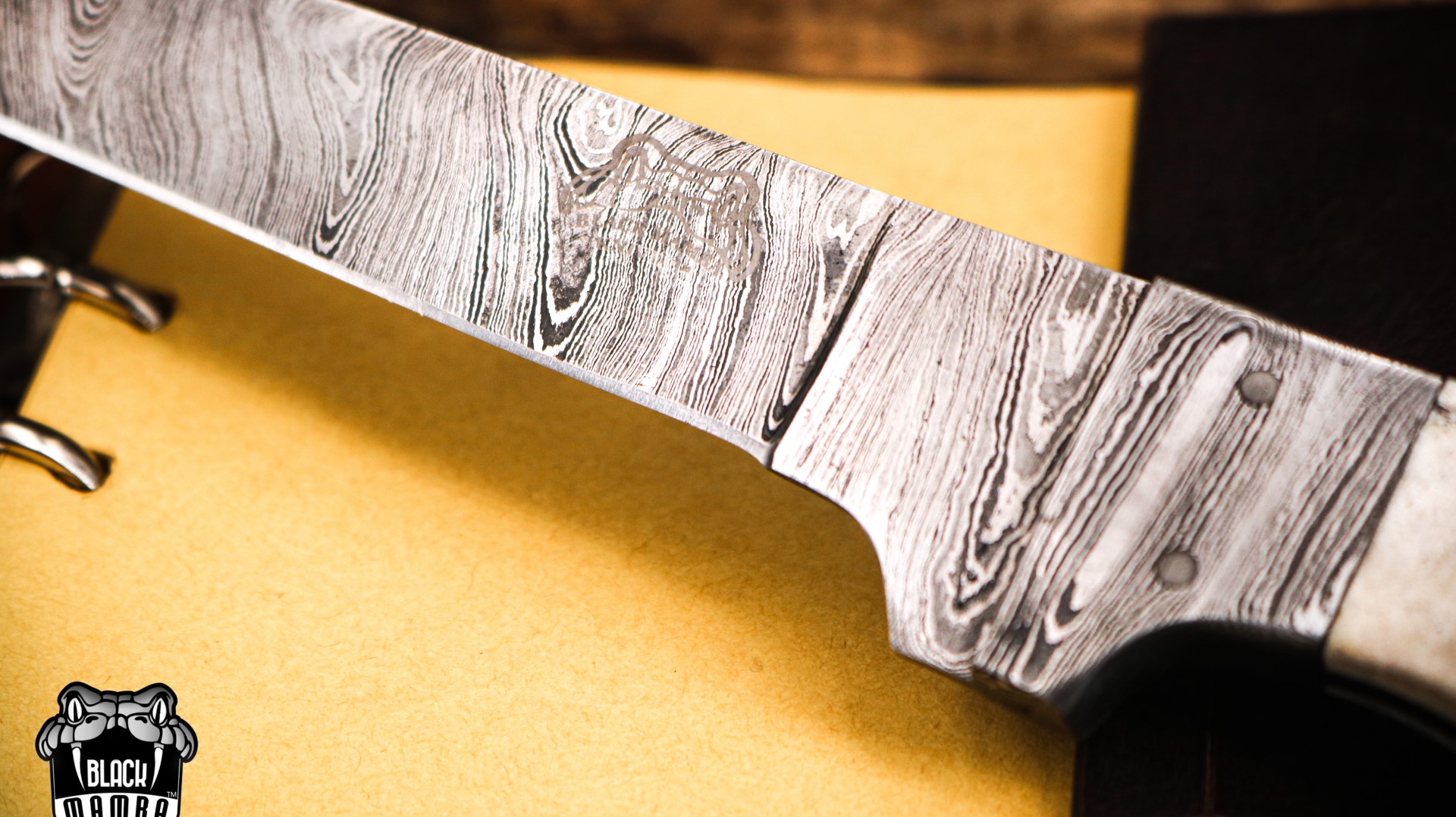
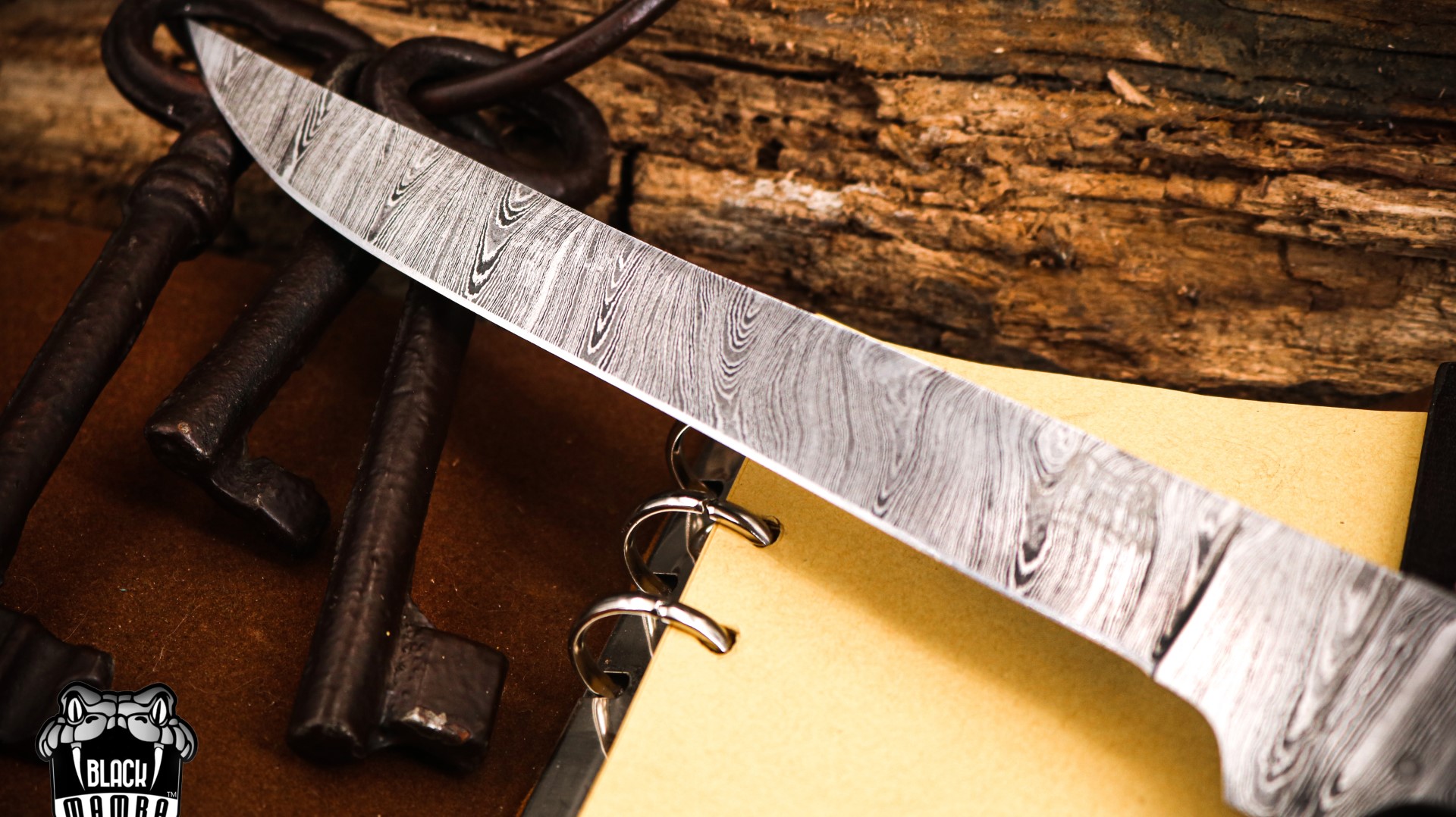
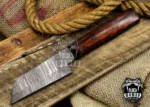
The billet is 1095 and 15N20 at 352 layers. Those two steels take the etch to different depths, which is why the figure sits in the metal rather than on top of it. The pattern cell above names several families at once, so expect your blade to favor one of them rather than show all four. No two billets draw out the same. If you want one specific look, tell us before you order, not after it ships.
Living with carbon steel
Both steels here are plain carbon. They darken, and acid darkens them fastest. Citrus, tomato, brine and onion all leave marks if you let them sit. Rinse and dry the blade between tasks, not at the end of the session. A gray patina is normal and slows further corrosion. Orange rust is not, and a green scouring pad lifts it in seconds. Nothing about this knife survives a dishwasher. The Damascus knife care guide covers the rest if carbon steel is new to you.
Before you order
Does the sheath hurt the blade? Over months, yes. Tanned leather holds moisture and traces of acid. Carry it in the sheath, store it out of the sheath.
How is this different from a boning knife? A boning knife is shorter and stiffer, for working around joints. This one is made to slice along a bone rather than through one. The boning versus fillet comparison sets out where each wins.
Can it go in a knife block? Only a block with a slot deep enough. Measure first.
Can I have it engraved? Yes. Add it at checkout before you pay.
Model: Bmk-713
Jackson D. (verified owner) –
“I’ve recommended this Damascus knife to all my friends. It’s a reliable tool that enhances any kitchen.”
Olivia P. (verified owner) –
“This Damascus knife is a conversation starter every time I have guests over. It’s a functional work of art that I’m proud to display.”
Daniel G. (verified owner) –
“I’m a home cook, and this Damascus knife has made a world of difference in my kitchen. It’s sharp and reliable.”
Isabella D. (verified owner) –
“I received this Damascus knife as an anniversary gift, and it’s become a symbol of our shared love for cooking.”
Ethan R. (verified owner) –
“This Damascus knife has improved my cooking experience. It’s sharp, well-balanced, and a joy to use.”
Mia H. (verified owner) –
“I’m impressed with the craftsmanship of this Damascus knife. It’s a testament to quality and attention to detail.”
Christine Sanchez –
Ordering again from this company the second I finish writing this review. Can’t wait to see what else this maker has to offer.
Dennis Wright –
Couldn’t ask for a better knife honestly. No hesitation recommending this to anyone looking. Good to know real Memphis craftsmen are behind this, and shipping was quick too.
Craig Lee –
This knife completely won me over the moment I picked it up. Weight and balance make it feel like a real working knife not some cheap import. Good to know real Memphis craftsmen are behind this, and shipping was quick too. Blade holds a razor edge right out of the box. Edge retention has been great even after regular use in the field. This company nailed it with this one.
Dustin Cook –
This showed up faster than expected and looked incredible. Sheath snaps shut securely and doesn’t feel flimsy at all. This maker clearly takes pride in their work. Proud to support American made goods out of Memphis with this purchase.
Devin Walker –
This knife is outstanding. No question about it.
Daniel Ross –
Best knife I’ve ever owned. Hands down. Steel has a gorgeous pattern that looks different in every light. Weight and balance make it feel like a real working knife not some cheap import. Worth every penny.