

Description
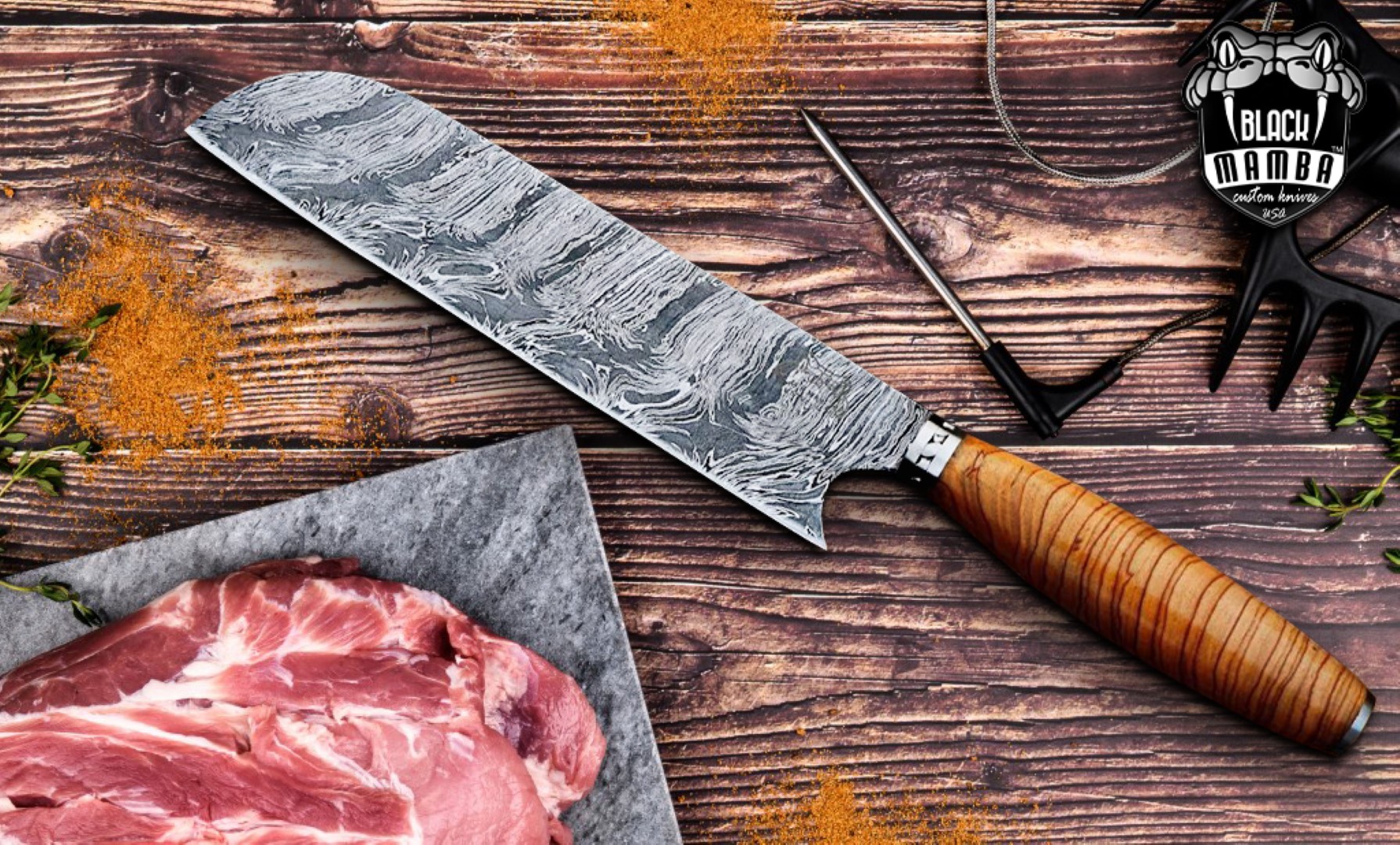
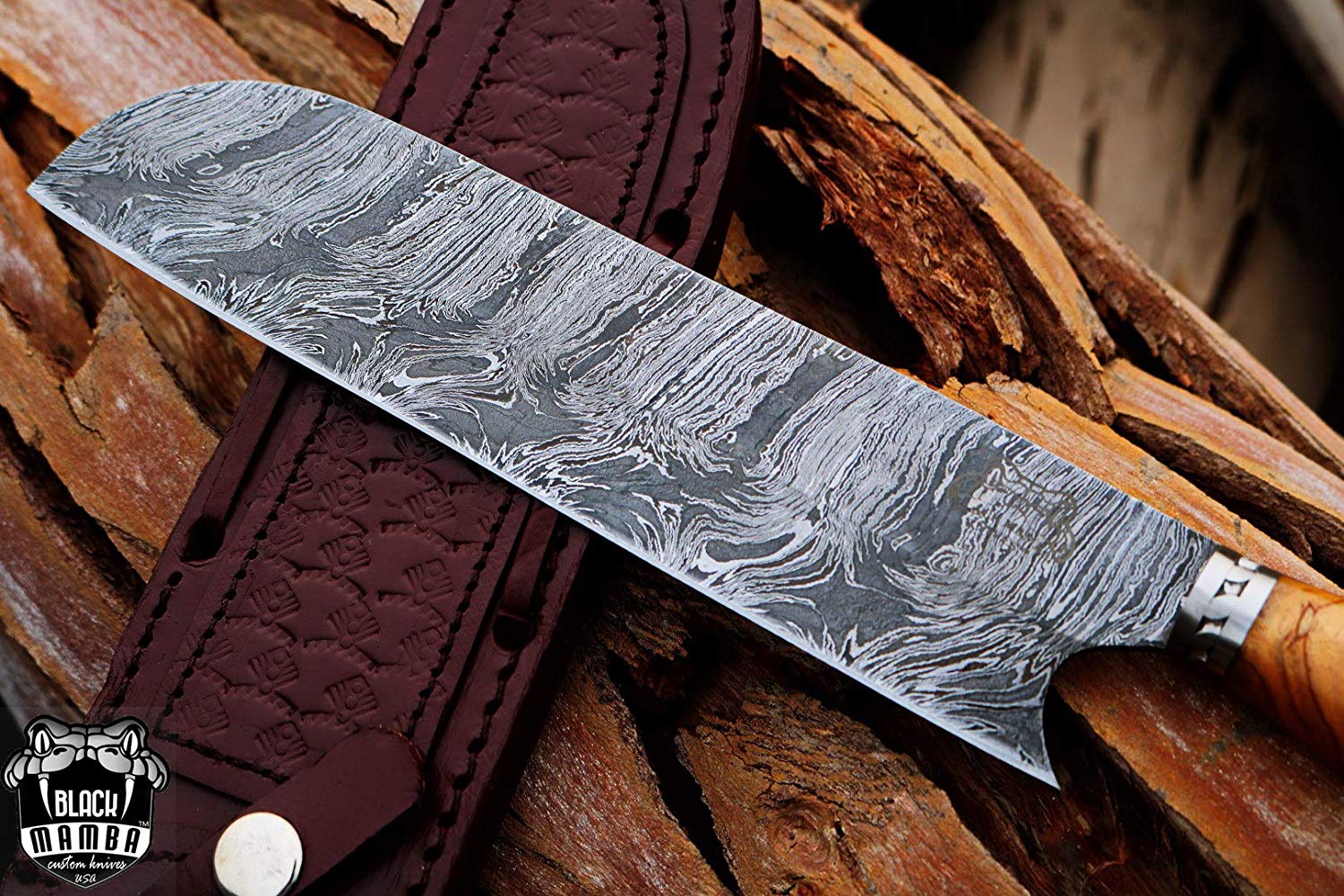
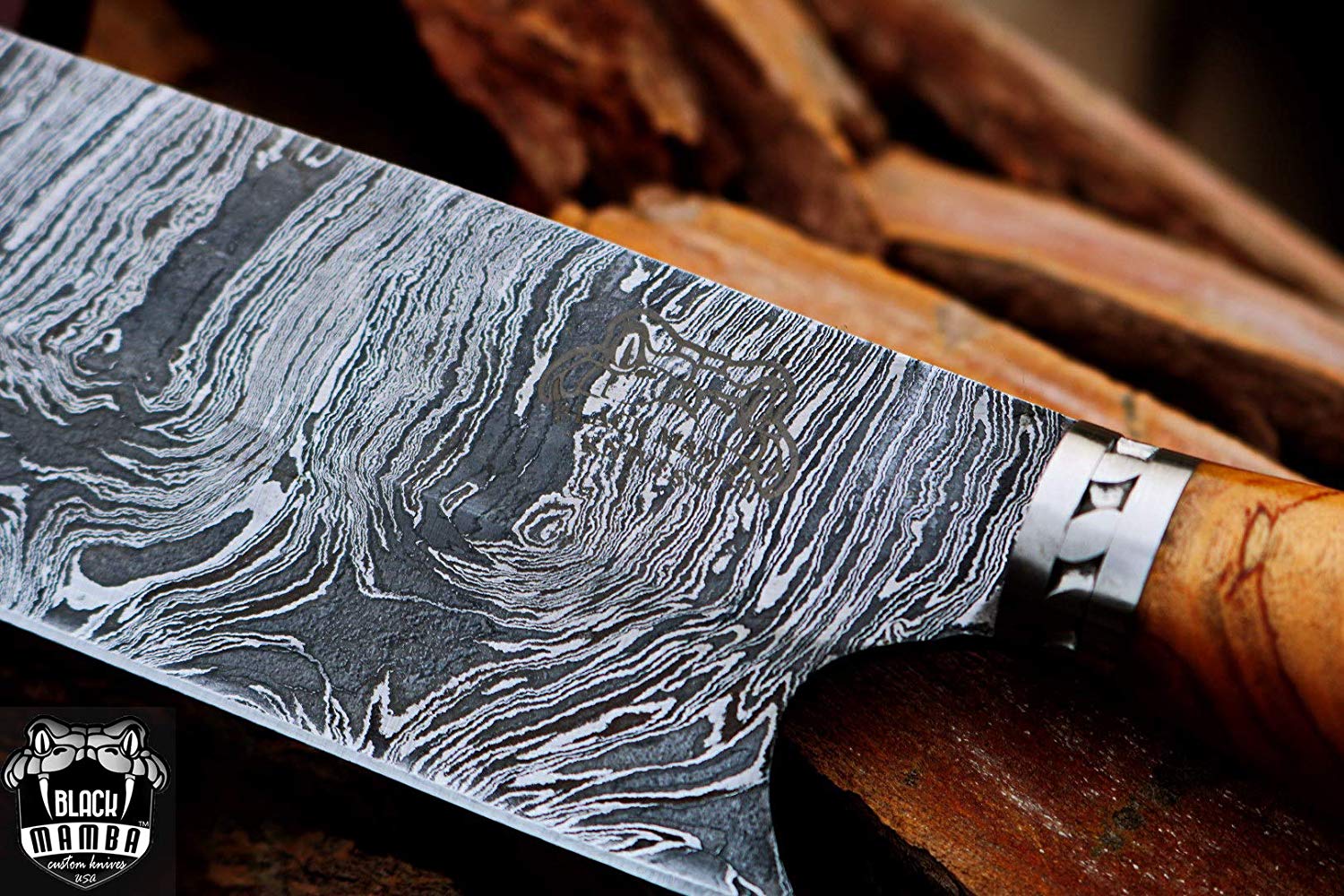
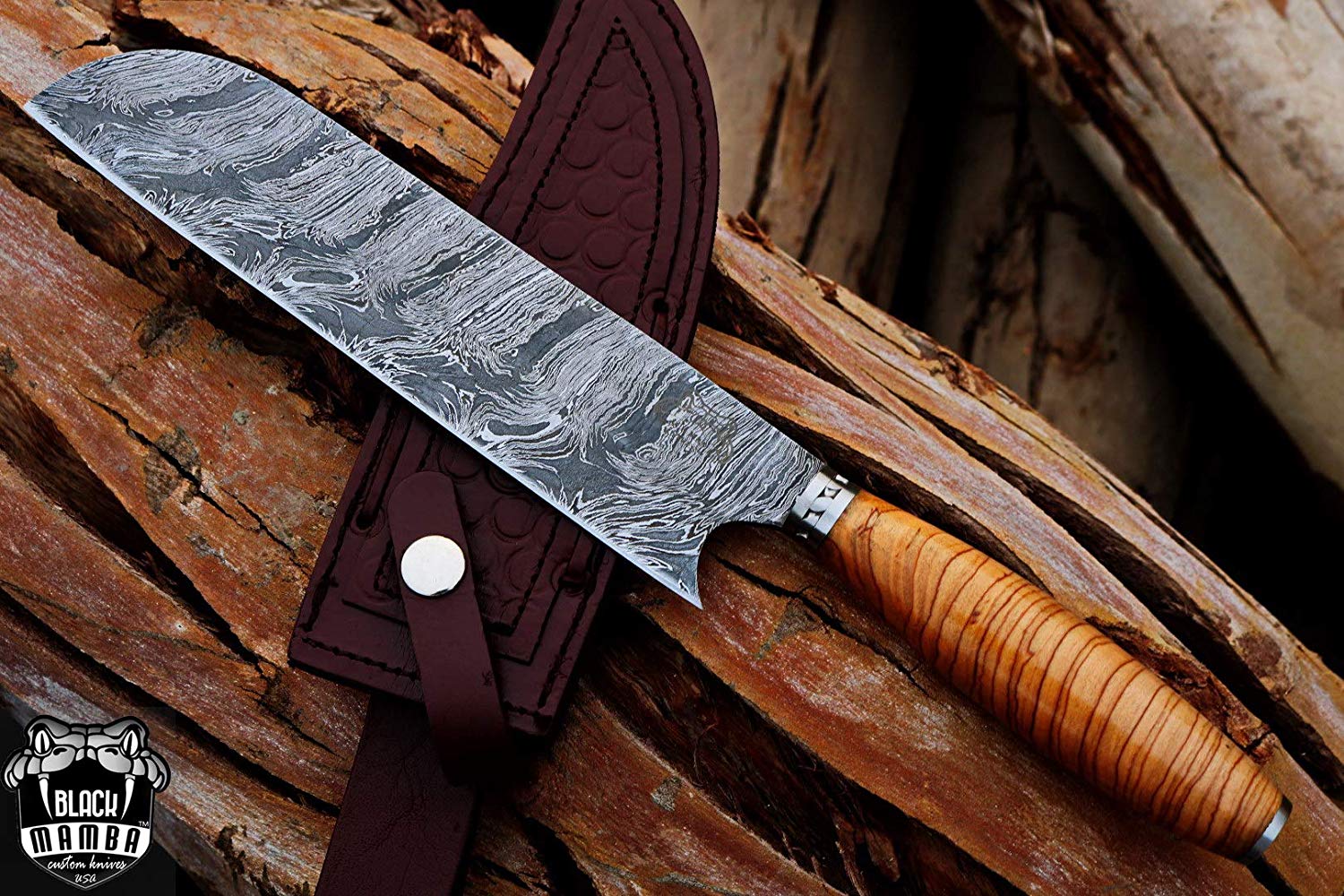
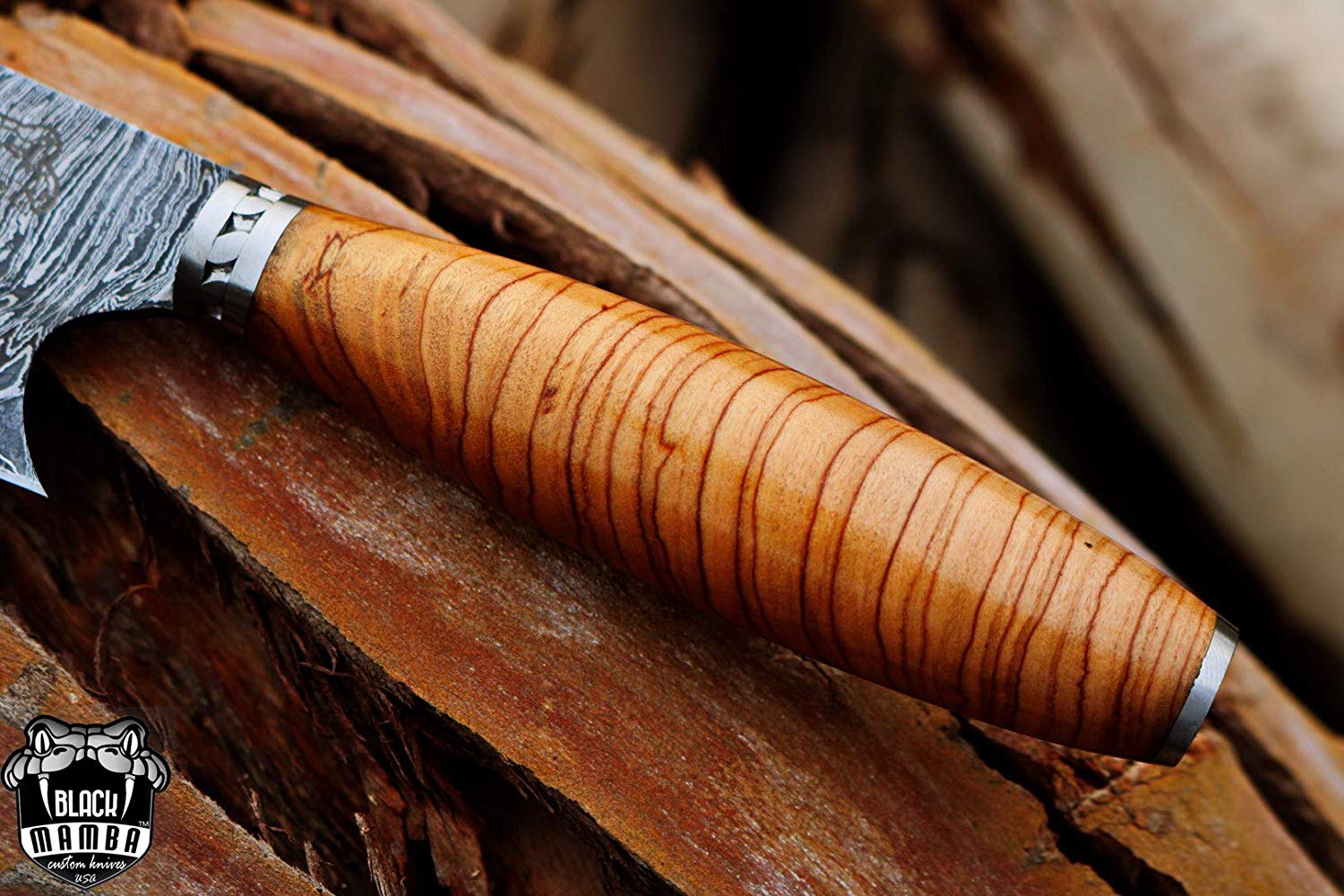
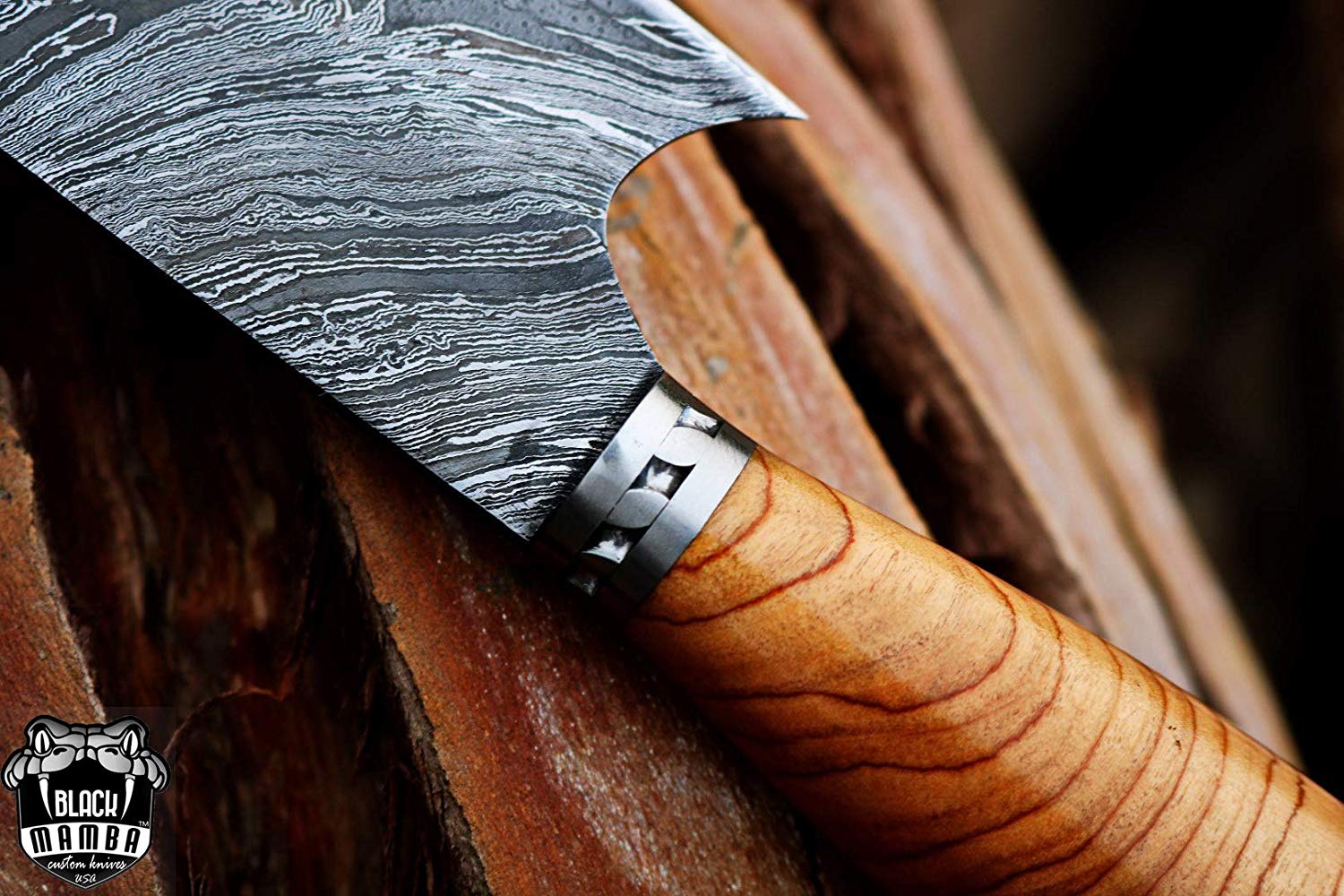
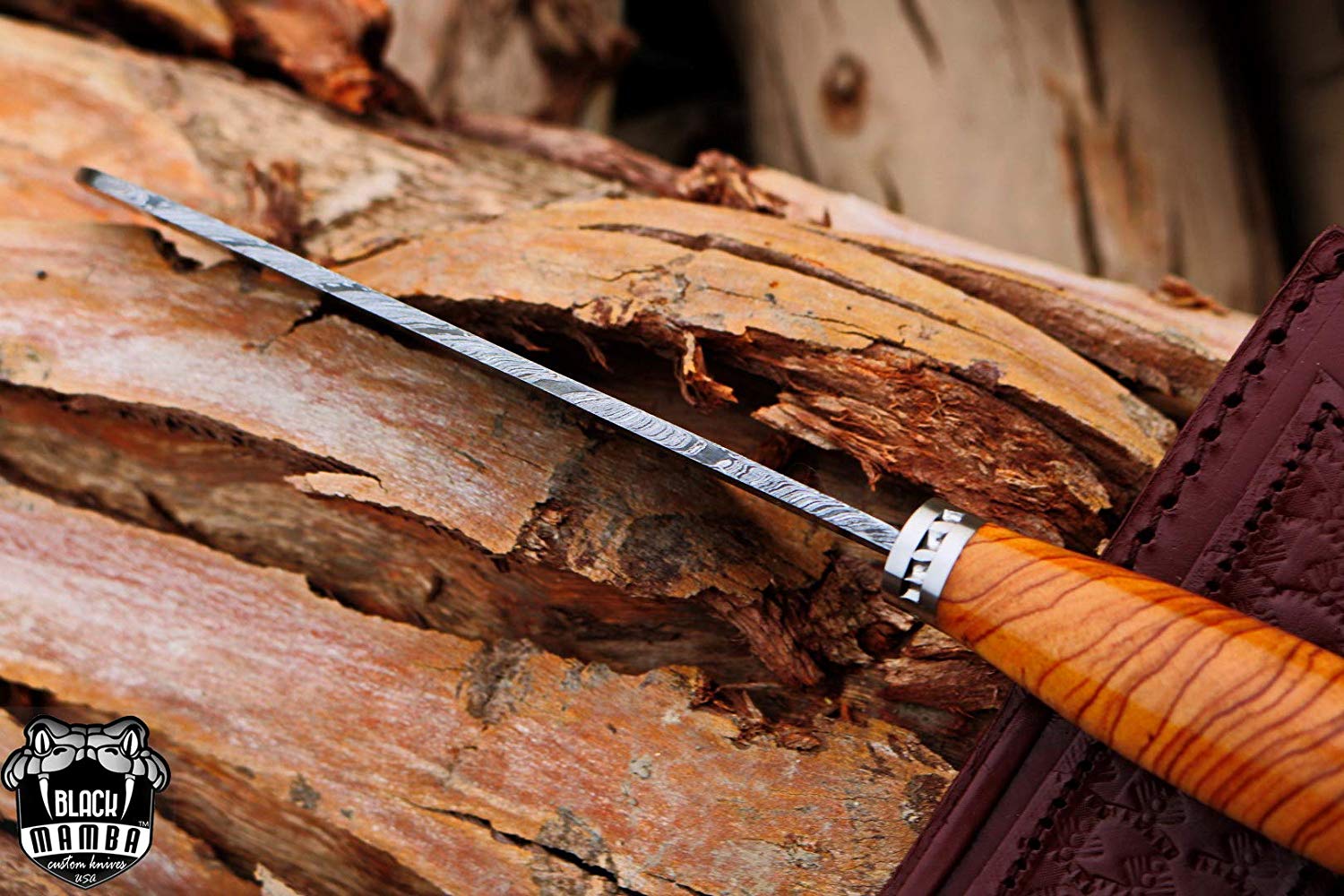
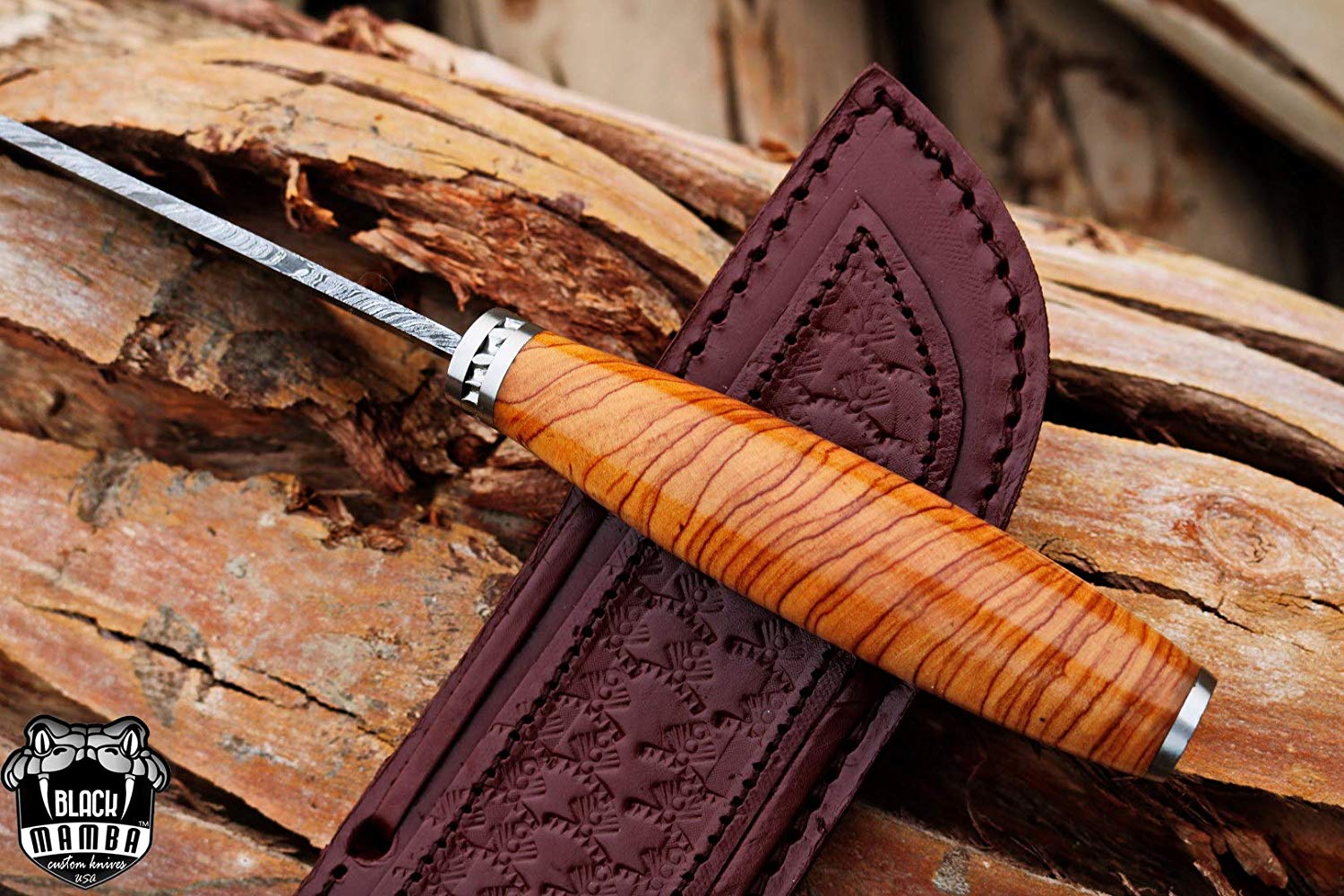
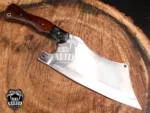
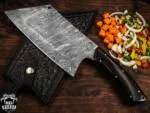
Eight inches of Damascus in a tall, flat-edged kitchen profile, set into a round tapered light wood handle.
| Overall length | 13 inches |
| Blade length | 8 inches |
| Handle length | 5 inches |
| Handle | Round tapered light wood |
| Steel | 1095 + 15N20 Damascus, 352 layers |
| Hardness | 58–60 HRC, oil tempered |
| Weight | 10 oz |
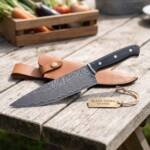
| Included | Hand-stitched leather sheath |
Kitchen role: the knife you reach for when there is a lot to cut and none of it is delicate — roots, brassicas, melons, large joints of meat off the bone.
A deep blade with a flat edge
The edge runs level from bolster to the squared front, with a small relief notch behind it. That is a chopping geometry. You cut straight down, the food falls apart cleanly, and the depth of the blade keeps your knuckles clear and gives you a surface to sweep with. Rocking does not work — there is no curve to rock on — and the blunt front end means you cannot pierce, trim or fillet with it. Pair it with something small and pointed rather than expecting it to do everything.
A round handle behaves differently
The handle is turned round and tapers toward the butt rather than being flat-sided like most Western kitchen knives. Round handles let you rotate the blade in your hand freely, which suits people who change grip often. They also give you no tactile cue about which way the edge faces, so you learn to check by feel of the taper. The light wood shows kitchen stains more than a dark handle would; wash and dry it rather than letting it soak.
Ten ounces and what that buys
Ten ounces on a 13 inch knife is enough mass that gravity does most of the cutting on a hard vegetable. You guide it rather than force it. That is easier on your wrist over a long prep session and harder work if you are doing fine, repetitive slicing at speed. Our comparison of honing against sharpening explains how to keep an edge like this keen between stone sessions.
Care: Hand wash, dry immediately, and never leave it in the sink. Carbon steel darkens against acidic food, which is normal and protective, but standing juice causes pits, so wipe as you go. Oil the blade monthly with a food-safe mineral oil and put a little on the wooden handle at the same time. Store it on a magnetic strip or in a block rather than loose in a drawer, where the edge takes damage. The reasoning behind carbon over stainless is set out in our kitchen steel comparison.
FAQs
Why is the front of the blade square? It is a vegetable profile, not a chef knife point. The square end is what lets the whole edge meet the board at once.
Is the handle sealed? It is finished, but wood is wood. Keep it out of standing water and re-oil it a couple of times a year.
What if I want a pointed kitchen knife instead? The Siamese kitchen knife has the tapered tip this one leaves out.
Made in the USA. Leaves Tennessee with its sheath, and is warranted for life.
Model: BMK-113-OL

Trevor Simmons –
Was nervous ordering something like this online but so glad I did. Slices through everything like butter, no sawing needed. Love that this comes out of Memphis and still ships worldwide this quickly. This is the kind of purchase that makes online shopping worth it.
Gary Ramos –
Decent buy overall, a couple small nitpicks aside. Cuts well though it needed a quick touch up on the edge. Minor nitpicks aside, good quality knife.
Benjamin Mendoza –
Ended up ordering a second one after how happy I was with the first. Has become my main prep knife in the kitchen since it arrived. Cleans up easy and hasn’t shown any rust or staining. Edge held up great through a full week of daily cooking. This is the kind of purchase that makes online shopping worth it.