

Description
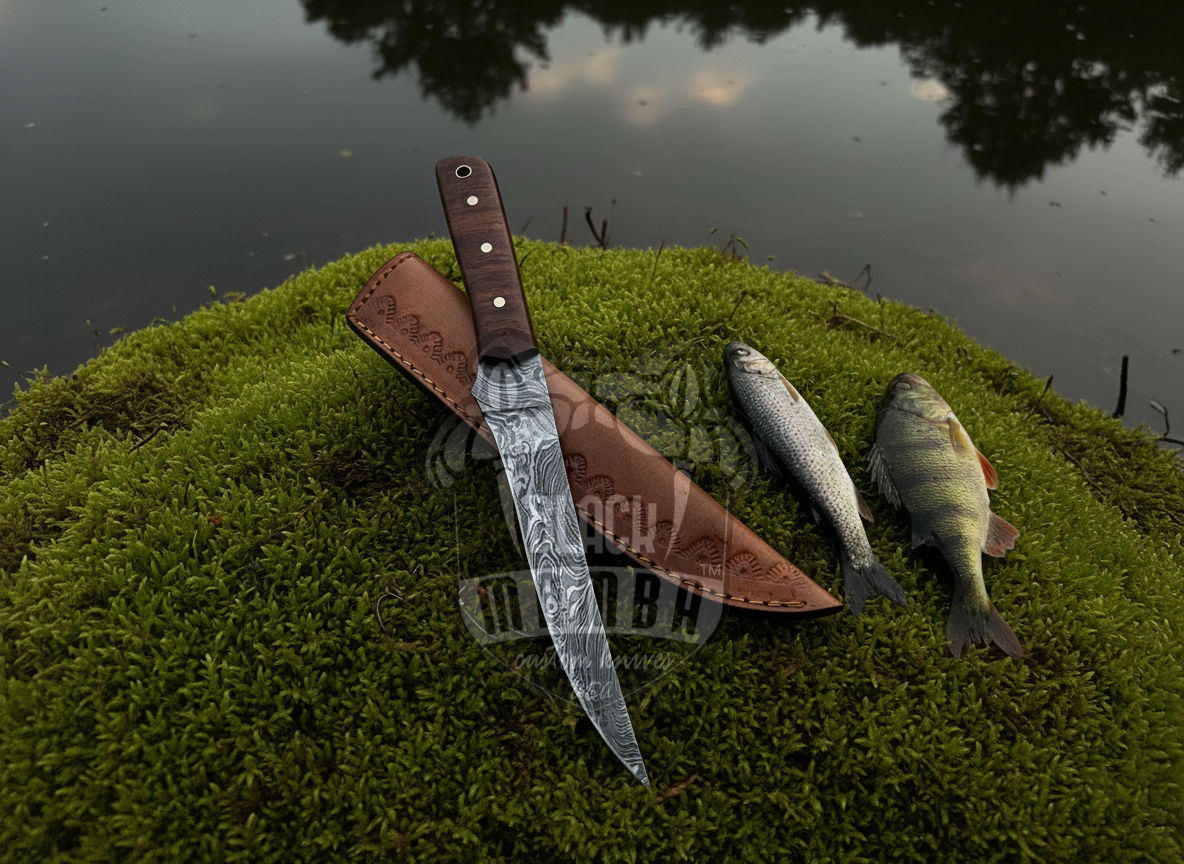
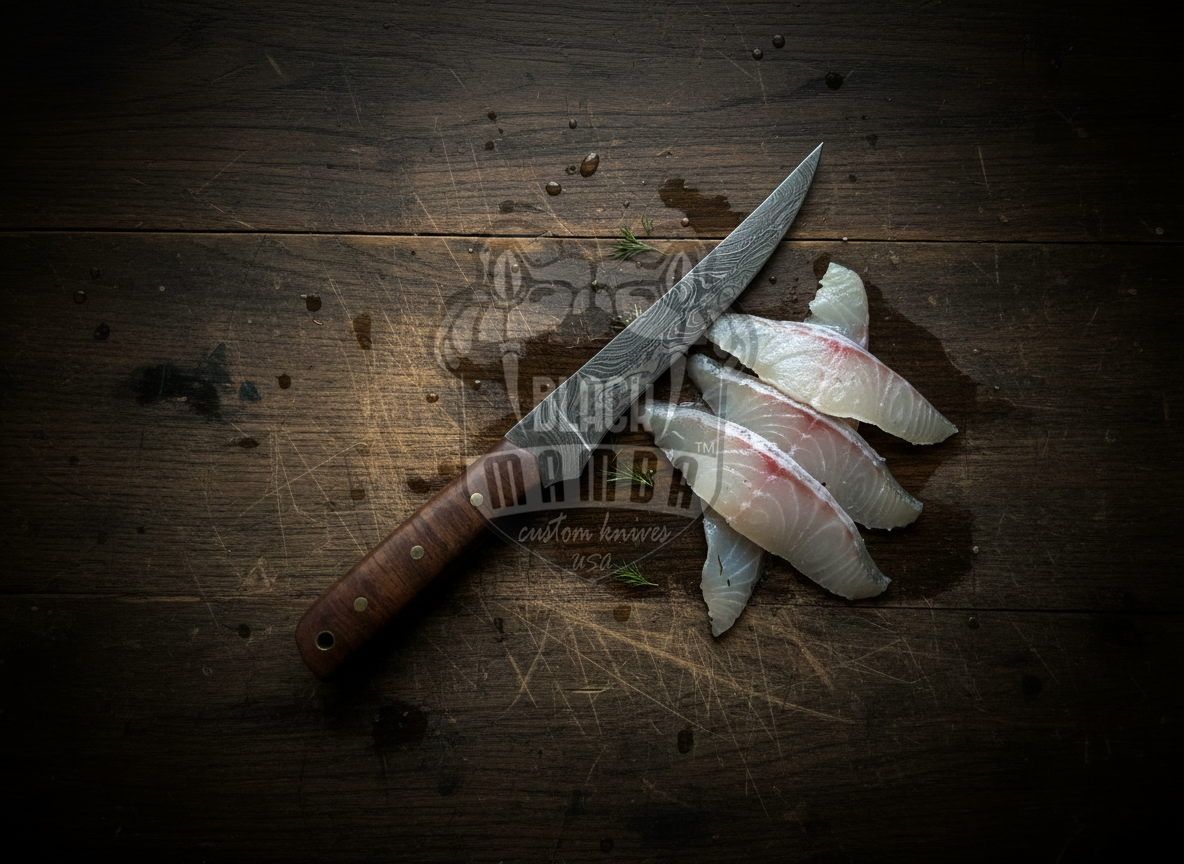
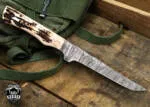
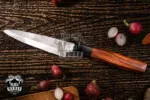
Six and a half inches of narrow, flexible Damascus ground for one job: getting fillets off a fish.
| Overall length | 11 inches |
| Blade length | 6.5 inches |
| Handle length | 4.5 inches |
| Steel | 1095 + 15N20 Damascus |
| Hardness | 58–60 HRC, oil tempered |
| Handle | Damascus Steel with mix twist pattern |
| Included | Hand-stitched leather sheath |
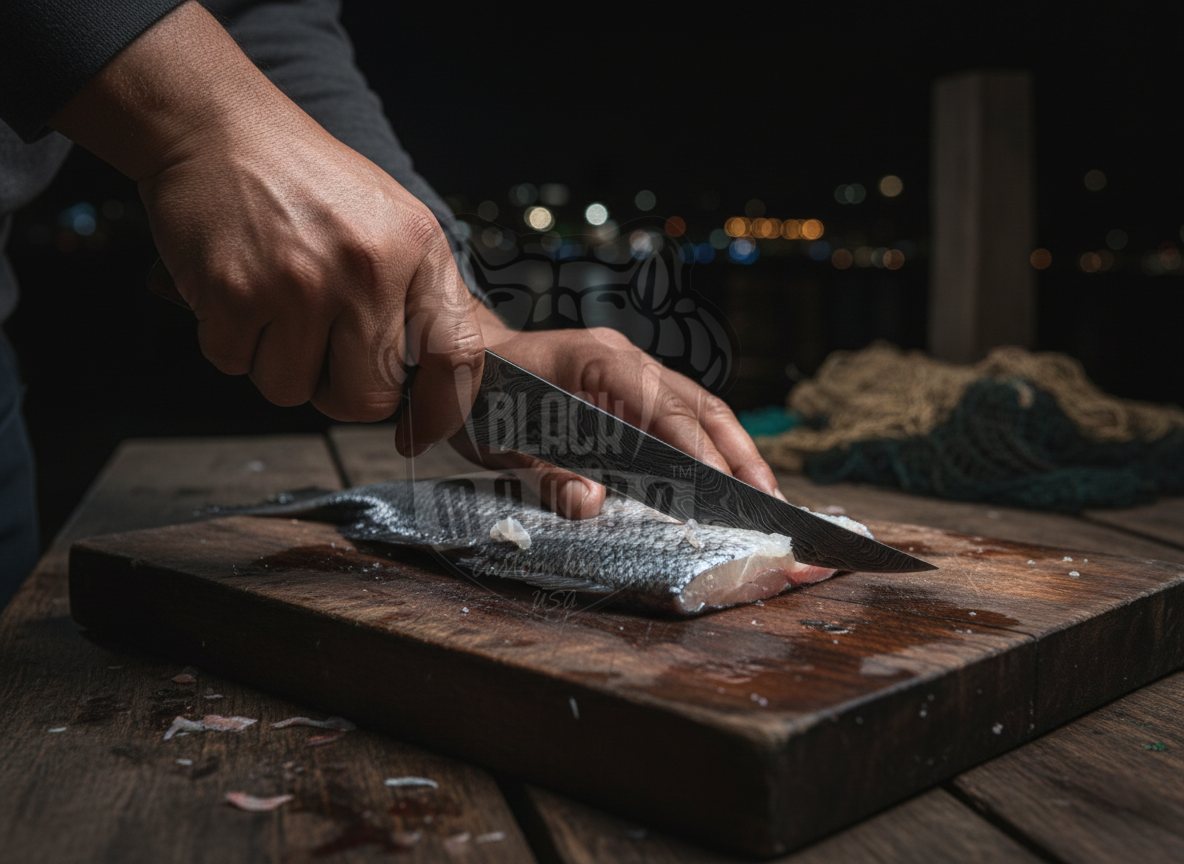
Meant for: the bank, the dock and the cleaning table. A long thin blade with an upswept tip that rides the rib cage and lifts a clean fillet without tearing it.
Care: Rinse it in fresh water as soon as you are done, dry it fully, and put a light coat of oil on it. Fish slime and salt are hard on high-carbon steel. Never leave it wet in the sheath overnight.
FAQs
How flexible is the blade? Enough to follow a rib cage, not so much that it wanders off line under pressure. That is the balance a fillet blade is ground for, and it is why the stock is thin through the whole length rather than just behind the edge.
What angle should I sharpen it at? Around 15 to 17 degrees per side. A fillet edge is thin by design, so keep the angle shallow and touch it up often.
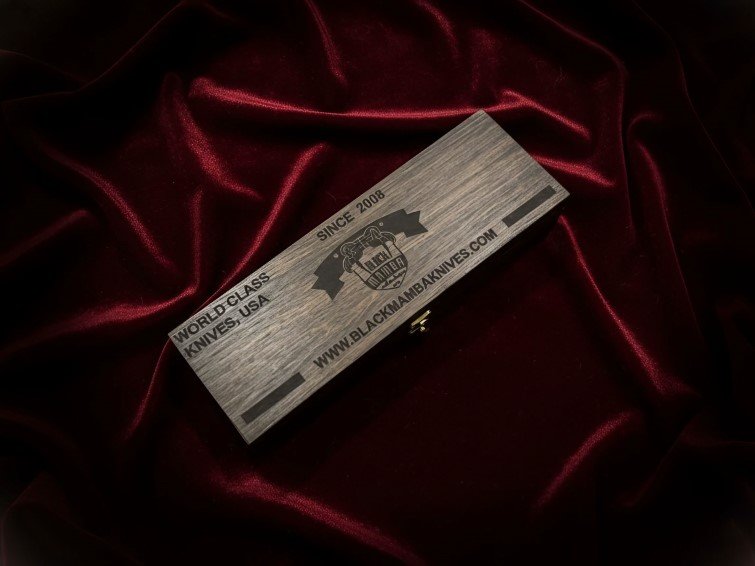
Does it come with a sheath? Yes, a hand-stitched tooled leather sheath is included, along with a gift-ready box.
What the shape does
A fillet blade is long, narrow and thin so it can travel a long way in one stroke without the resistance a thick blade creates. The upswept tip lets you start the cut behind the head and stay along the spine. The whole point is a single unbroken pass. Our comparison of a boning knife versus a fillet knife explains where the two diverge.
The pattern in the steel
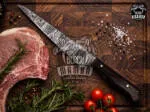
This is a mix twist pattern, forged from 1095 and 15N20 and etched so the nickel-bearing layers stay bright against the darker carbon steel. On a blade this narrow the twist reads as long parallel waves rather than a swirl, because there is very little width for the figure to spread into. The etch is deep enough that you can feel the layer boundaries with a thumbnail, which is the simplest test there is.
Keeping the edge
A working fillet knife gets used far more often than it gets sharpened, so the useful skill is knowing when a few passes on a rod will bring it back and when it needs a stone. Our page on how to sharpen a knife covers both. A fillet edge dulls against bone and scale rather than against flesh, so almost all the wear lands in the first inch behind the tip. Work there first and you save yourself the rest. If you want mass instead of finesse for the same table, the Iron Cleaver Hunter is built the opposite way.
Model: BMK-888


Mary Moore –
Got this as a Christmas present and it exceeded what I expected. Black Mamba Knives has earned a repeat customer with this one. Blade holds a razor edge right out of the box. Already added a few more items from this maker to my cart.
William Cooper –
No regrets on this purchase at all. Came in a nice gift box which made it feel even more special. Definitely bookmarking this store for future orders.
Caleb Wood –
Knew this knife was special the second I opened the box. Fit and finish is museum quality. You can tell real craftsmen made this by hand. Handle feels amazing and the balance is perfect. 10/10 would buy again. You can tell it’s real American craftsmanship out of Memphis. Shipping was quick too.
Cynthia Nguyen –
Absolutely completely satisfied by this knife. Highly recommend this one.
Colton Gray –
Got this as a hunting trip and it exceeded what I expected. Would send this as a gift again in a heartbeat.
Anna Turner –
This knife is awesome. No question about it. Already telling my friends to check this out. Black Mamba Knives is quickly becoming my go to shop for knives.
Cynthia Alexander –
Wasn’t sure what to expect but this knife nailed it. Fit and finish is museum quality. You can tell real craftsmen made this by hand. Already telling my friends to check this out.
Elizabeth Roberts –
I collect knives and this one is exceptional. Ordered from Black Mamba Knives before and the quality stays consistent every time. Blade geometry makes it glide through cuts with barely any effort. Beyond happy with how this turned out.
Gary Bishop –
Perfect gift. Perfect quality. No complaints. Edge retention has been great even after regular use in the field. Already added a few more items from this seller to my cart.
Ronald Turner –
Genuinely blown away with how this turned out. Leather sheath is thick and well stitched. Not the cheap stuff you usually get. Worth every penny.