
Description
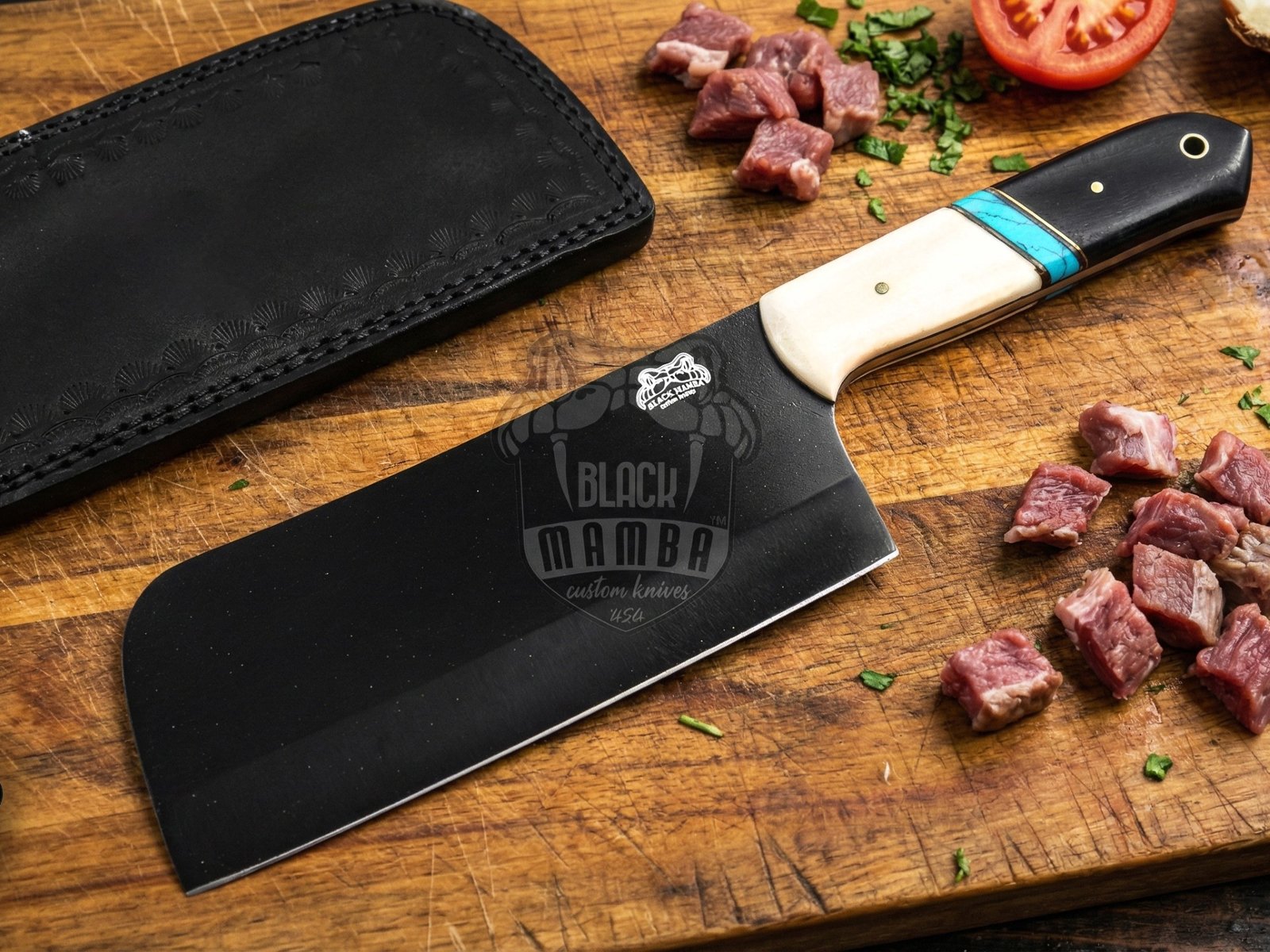
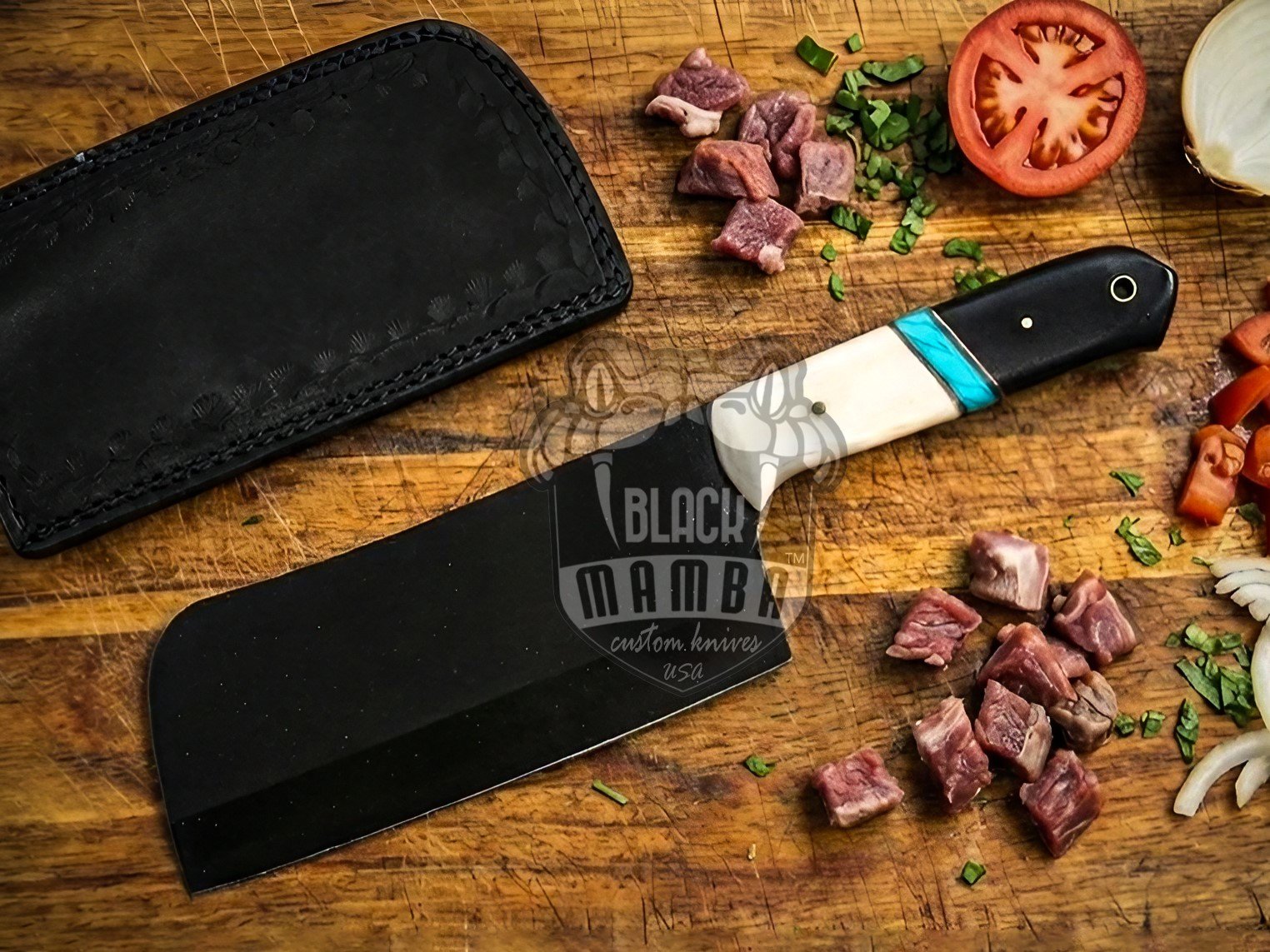
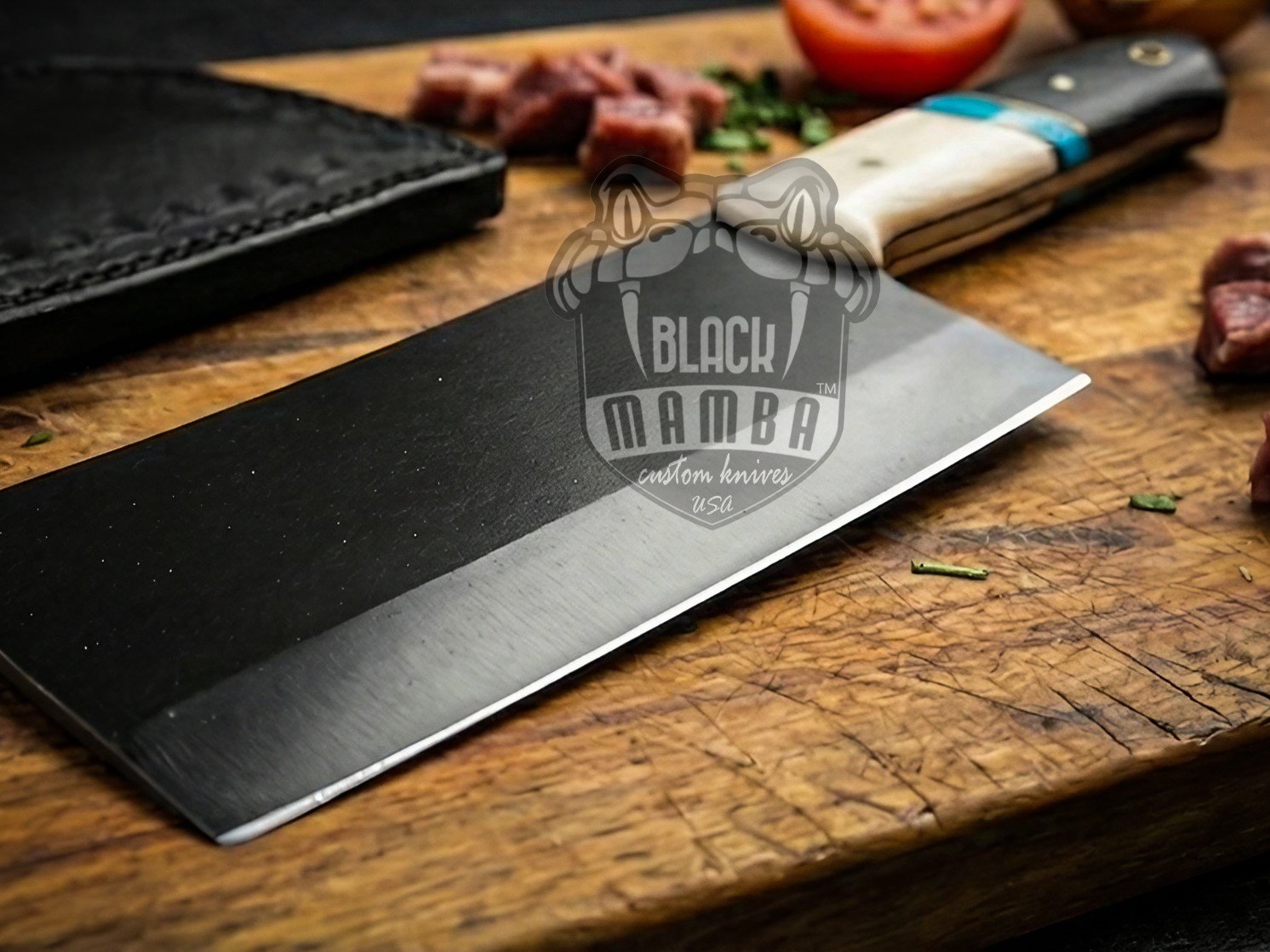
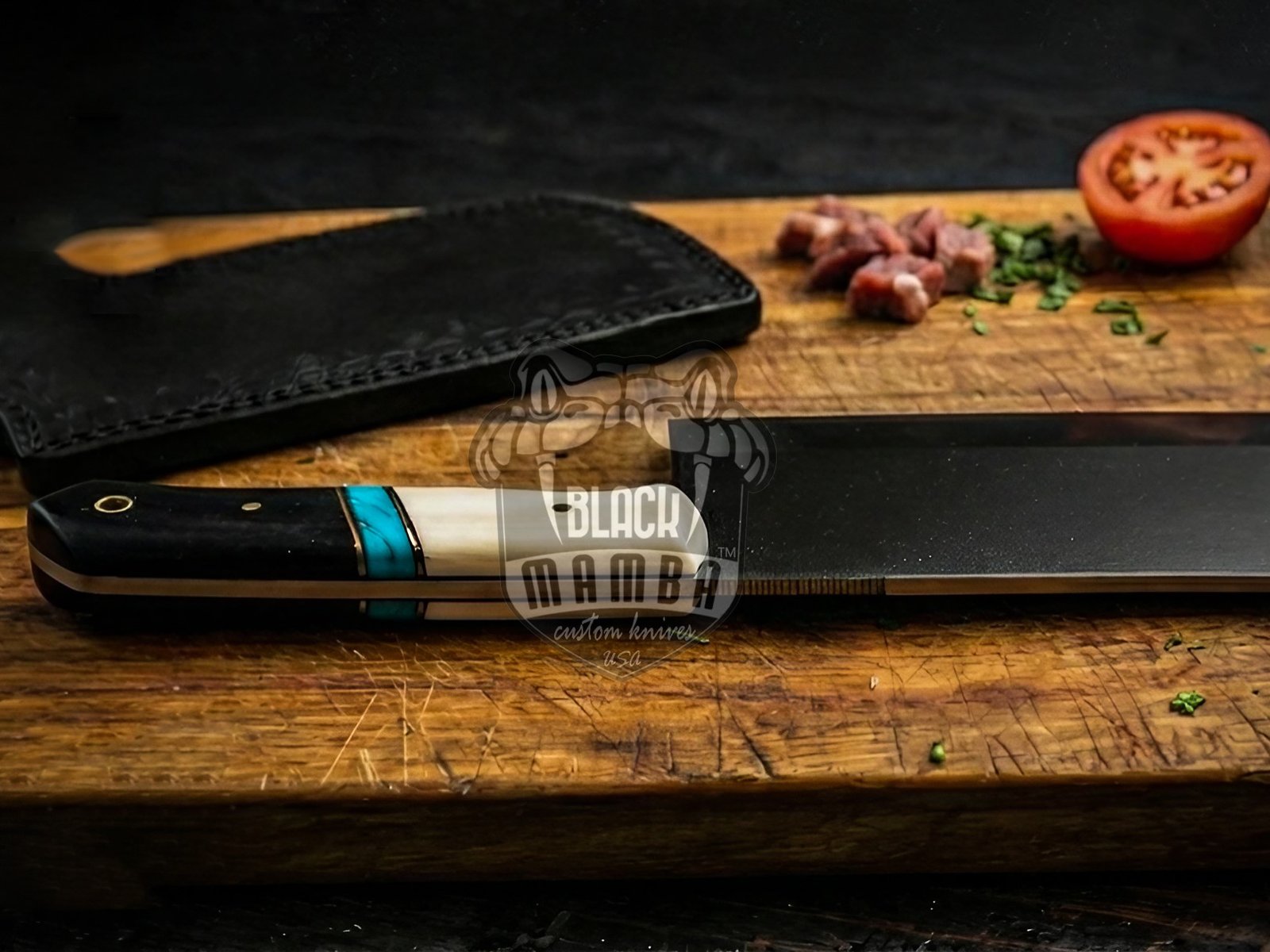
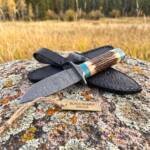
Twelve inches long, a seven inch blade, and sixteen and a half ounces of 440C under a black coating. The Panda takes its name from the handle: white bone against dark horn with a turquoise spacer between them.
| Overall length | 12 inches |
| Blade length | 7 inches |
| Handle length | 5 inches |
| Handle | White bone and dark horn with a turquoise spacer |
| Steel | 440C stainless steel |
| Weight | 16.5 oz |
| Included | Hand-stitched leather sheath |
At home doing: breaking down poultry, portioning larger cuts, going through joints and small bones, and the heavy prep work that ruins a thin chef’s knife. This is a cleaver in the western butchering sense rather than a Chinese vegetable cleaver, and it is thicker and heavier than the latter.
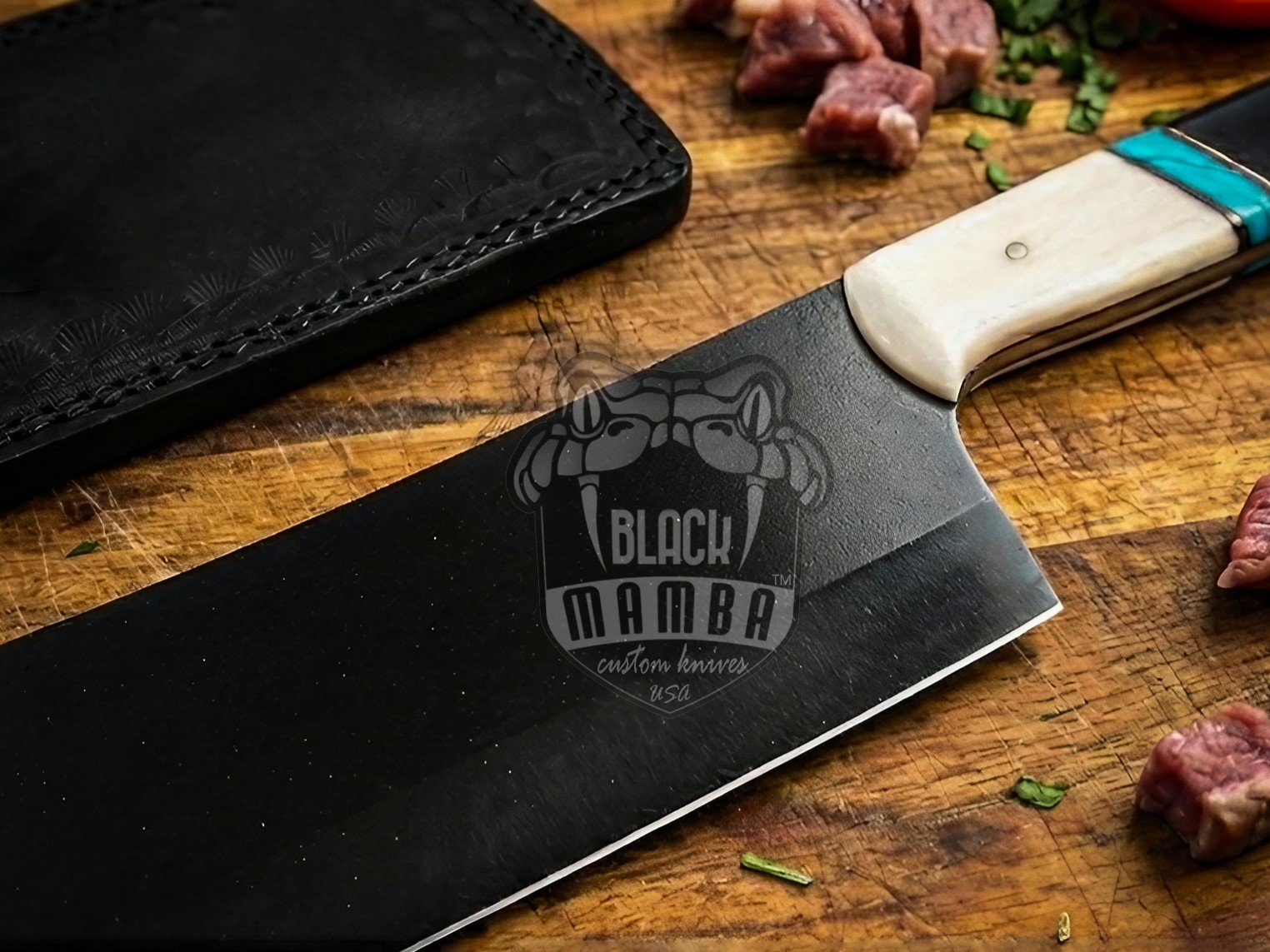
Care: hand wash and dry it immediately. A dishwasher will attack the coating, loosen the handle materials and dull the edge in a single cycle. The black coating protects the flats but the sharpened edge is bare steel, so that thin bright line along the bottom is where any corrosion will start. Bone and horn should never be soaked; wash the blade and wipe the handle rather than submerging the whole knife. 440C is stainless enough that a splash of tomato or lemon will not mark it, which is a real advantage in a kitchen knife.
What sixteen and a half ounces does
Weight is the whole argument for a cleaver. You are not pressing the knife through a joint, you are letting it fall and getting out of the way. That means less effort and far more control than sawing at something with a lighter blade. It also means this is genuinely tiring to use for fine work, awkward for anything delicate, and dangerous to use when you are tired. It is a specialist, not a general kitchen knife.
The coating, and what happens to it
A black coating on a kitchen blade is cosmetic and mildly protective. It will wear. Contact with a cutting board, a steel and the inside of a knife block all abrade it, and after a year of real use you should expect the coating around the edge and the tip to show bright steel through it. This is normal and does not affect how the knife cuts. If you want a finish that improves rather than wears, a forged Damascus cleaver takes a different approach entirely.
Edge geometry on a chopper
A cleaver edge is ground more obtusely than a slicing knife on purpose. A thin acute edge chips when it meets bone; a thicker one survives. Do not try to sharpen this to the same angle as a paring knife, because you will spend the rest of its life repairing the damage. How kitchen bevels differ by job covers the reasoning, and carbon against stainless in the kitchen is worth reading if you are deciding between this and a carbon blade.
Kitchen questions
Will it go through beef bone? Poultry and small bones, yes. Large weight-bearing beef bone will damage any kitchen cleaver; that is a job for a saw.
Is the handle food safe? Bone and horn are fine in a kitchen provided they are washed and dried rather than soaked.
Does it come with a sheath? Yes, a hand-stitched leather sheath, which is also the safest way to store it if you do not have a magnetic rack.
Model: Bmk-704


Donald Peterson –
So happy I finally pulled the trigger on this one. Cool knowing this was handmade right in Memphis and shipped out fast. Handle feels amazing and the balance is perfect. This seller just earned a repeat customer.
Robert Ramos –
Amazing craftsmanship on this one.
Todd Cook –
No regrets on this purchase at all.
Marco Carter –
So happy I finally pulled the trigger on this one. Blade holds a razor edge right out of the box. Weight and balance make it feel like a real working knife not some cheap import. This one’s a keeper for sure.
Jennifer Stewart –
Feels way more premium than the price suggests.
Lisa Adams –
My son was speechless when I showed them this knife. I keep coming back to Black Mamba Knives because it’s always this good. Handle has a great grip even with wet or gloved hands. Proud to support American made goods out of Memphis with this purchase. This is the kind of purchase that makes online shopping worth it.