
Description
Grey on black
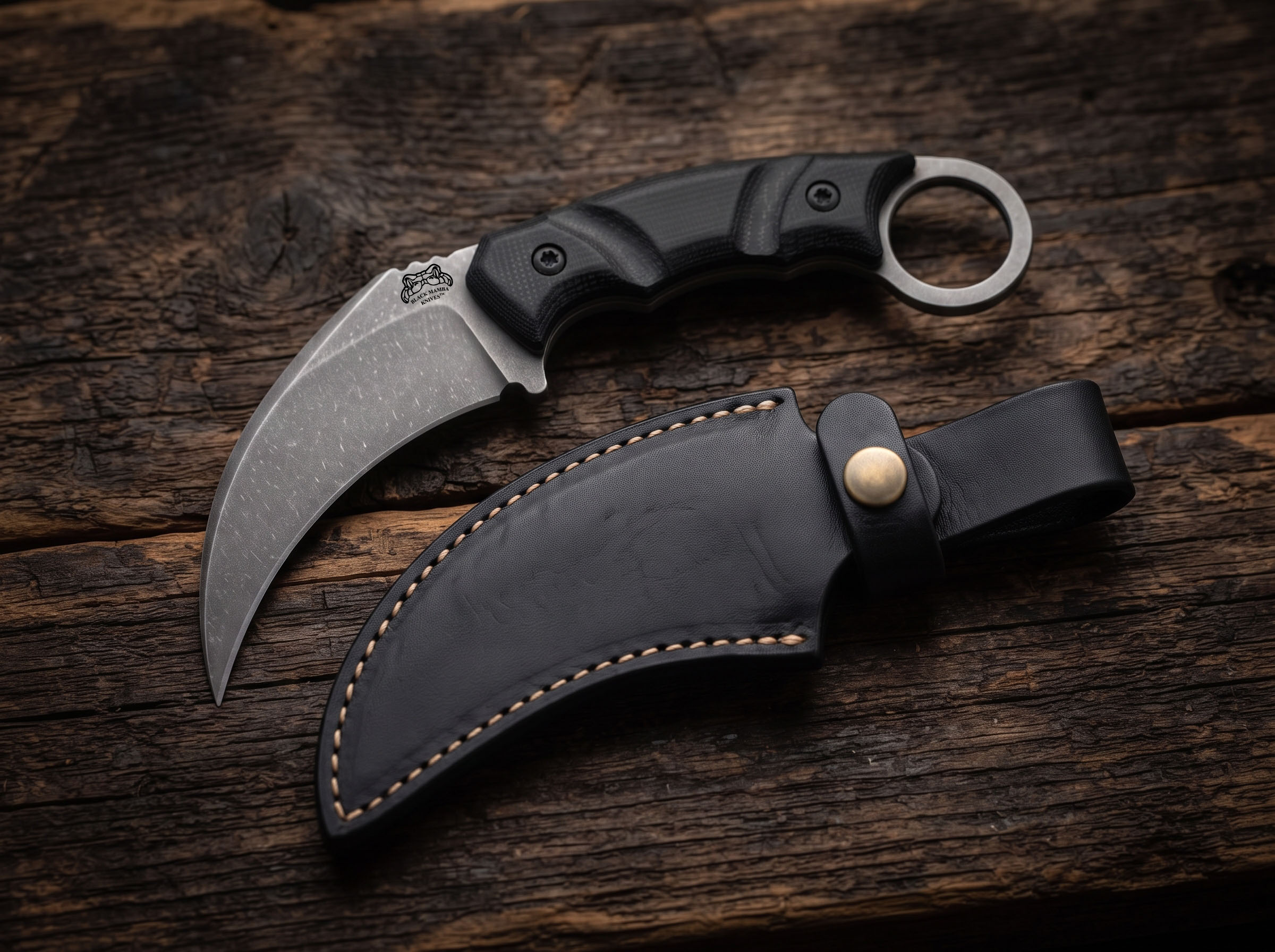
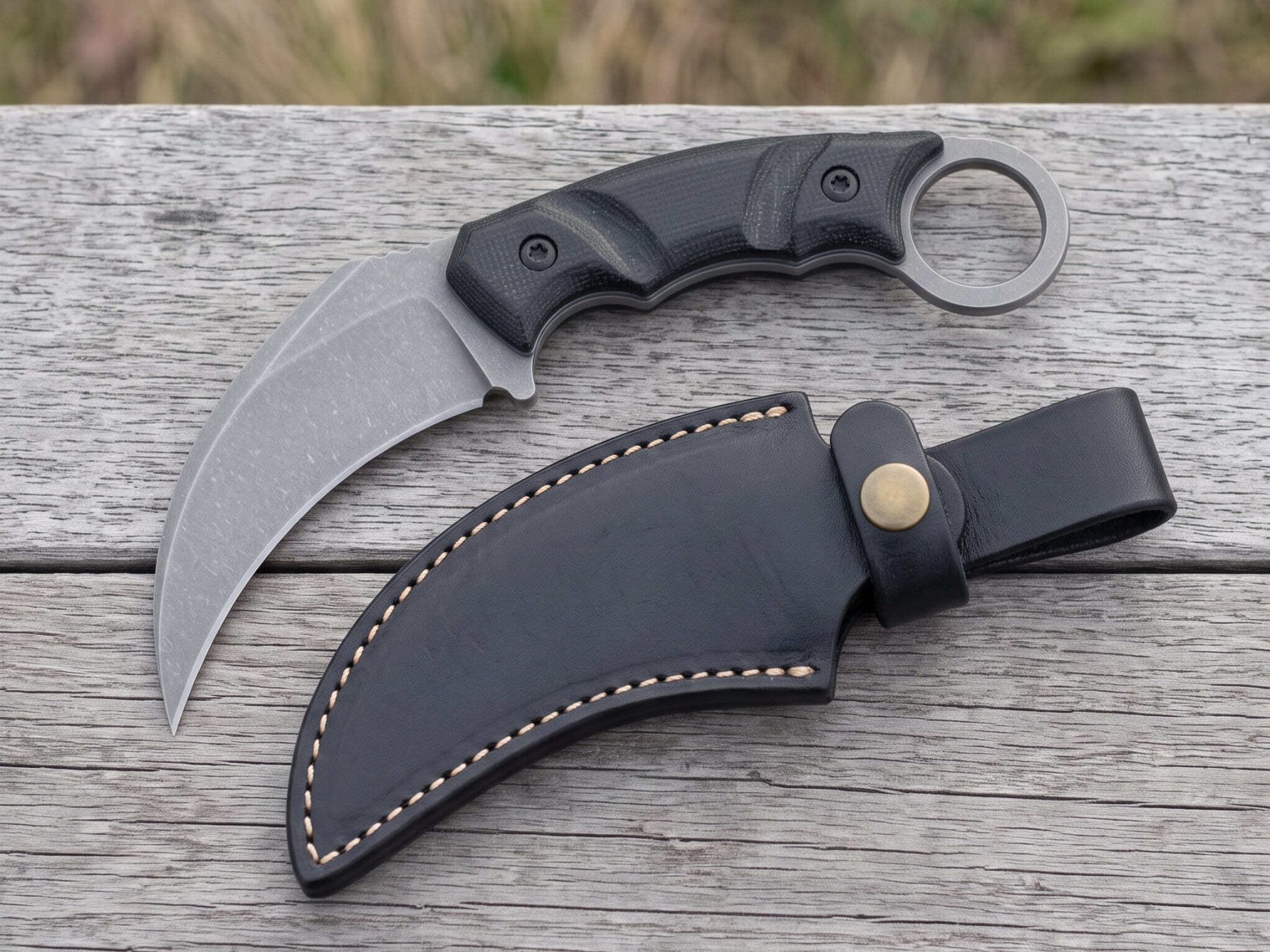
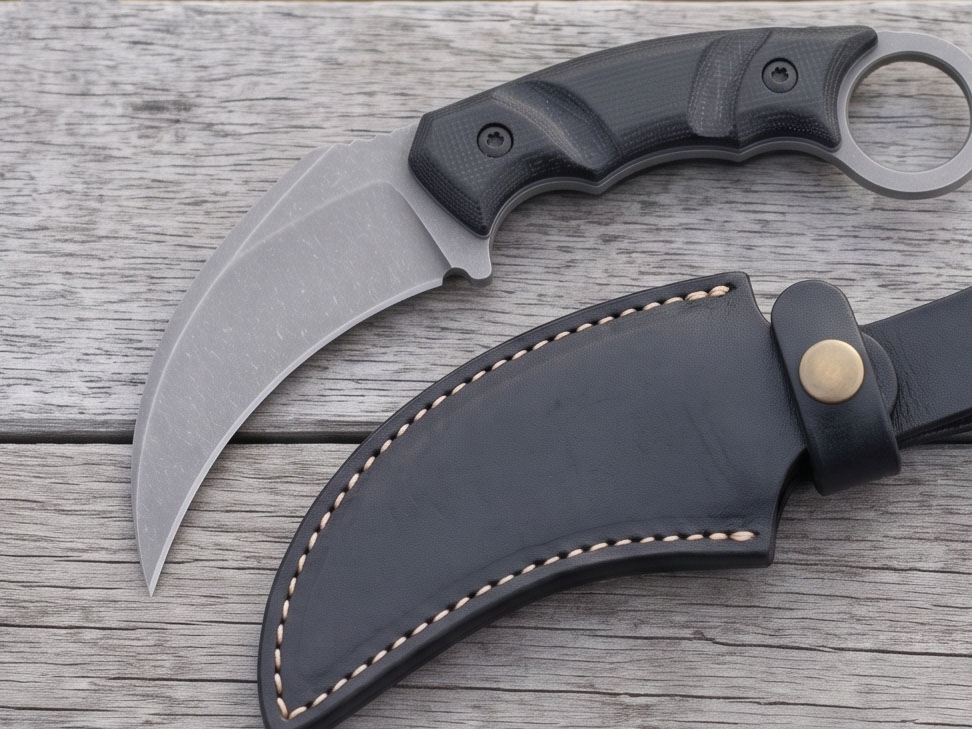
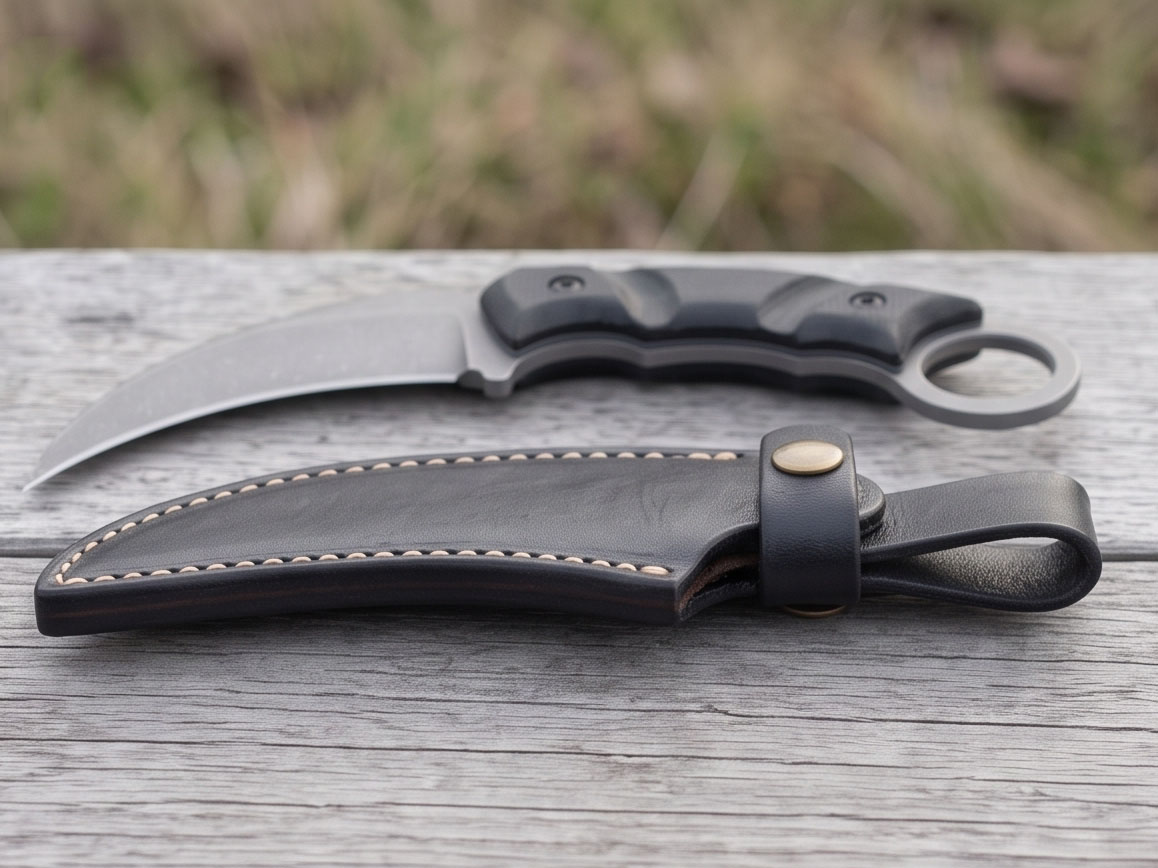
Shadowstone is deliberately dull. The blade is tumbled to a soft, cloudy grey that throws back almost nothing, the scales are black and finely textured, the fasteners are black torx, and the leather is black with cream stitching as the single concession to contrast. It is a karambit for somebody who wants a serious cutting tool without the jewellery.
That grey comes from stonewashing. Finished blades go into a tumbler with abrasive media and turn over each other for hours until the surface is covered in tiny random facets. The effect is practical rather than cosmetic: a stonewashed blade is glare-free, it hides the scuffs that everyday work inevitably puts on steel, and small scratches simply blend into the background pattern instead of standing out as a bright line. Two years of hard use and it looks much the same as the day it arrived.
| Overall Length | 8.7 inches |
|---|---|
| Blade Length | 3.6 inches (measured along the curve) |
| Blade Steel | D2 tool steel |
| Blade Finish | Stonewashed matte gray, non-reflective |
| Blade Style | Curved karambit hawkbill |
| Handle Material | Black canvas Micarta, contoured |
| Finger Ring | Black coated steel finger ring, integral |
| Fittings | Black screw hardware |
| Tang | Full tang |
| Sheath | Handmade black leather belt sheath with brass stud (included) |
D2 and what it is good at
D2 is a high-carbon, high-chromium tool steel developed for punches and dies, which means it was designed from the start to keep a cutting geometry under heavy abrasive load. It carries a lot of hard chromium carbides, so an edge in this steel outlasts a simple carbon blade by a wide margin on cardboard, rope, tape and hide. The trade is that it is stubborn on the stones and, at around twelve percent chromium, only semi-stainless — it resists moisture well but will spot if you leave it wet. If steel choice is the thing you are stuck on, the comparison of Damascus, D2 and 440C is worth ten minutes.
Handle and ring
The black composite scales are milled with a shallow palm swell and two raised contour ridges that give the thumb and the heel of the hand something positive to press against. The surface texture is fine and slightly abrasive, the kind that gains rather than loses grip when your hands are damp, and the material is completely indifferent to weather, sweat and solvents. Two black fasteners per side hold everything to the tang, so the scales come off for cleaning if the knife ever gets truly filthy.
The finger ring is cut from the tang itself, not attached to it. That is the load-bearing part of a karambit and it should never be a separate component. With a finger through it you can pull hard on a stubborn cut without any risk of the handle sliding, and you can open your hand completely while the knife stays hooked on.
The curve at work
Everything about this shape is optimised for the pulling stroke. Hook a length of rope, strapping, tarp, hose or heavy card, draw the knife toward you, and the material gets funnelled into the deepest part of the belly where the leverage is greatest. It is the fastest thing in the drawer for opening bales and boxes and the worst thing in the drawer for slicing an apple. Sharpen the inside of the arc with a round rod or the corner of a stone, taking short overlapping sections.
The sheath
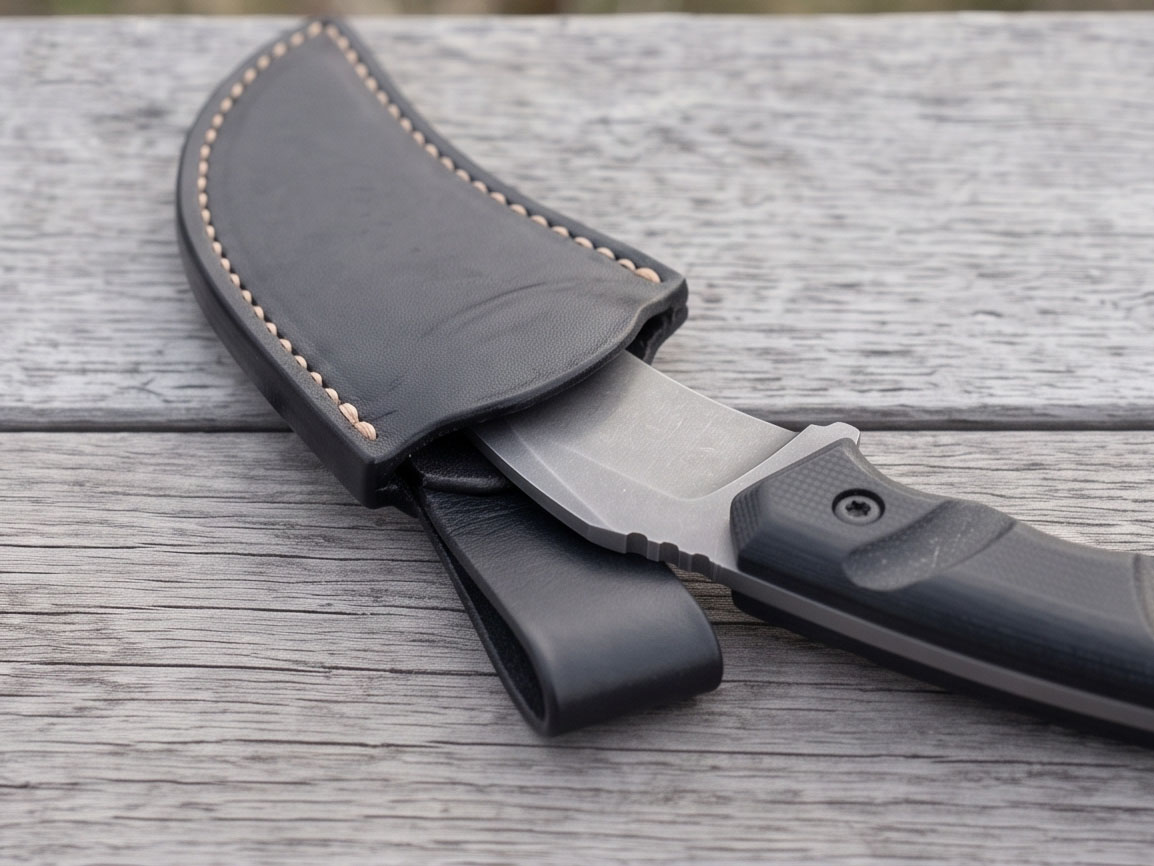
Black veg-tan leather, wet formed to this blade so the knife seats with an audible click, hand stitched in bone thread, brass stud on the retaining strap, wide belt loop behind. It is stiff out of the box and settles within a fortnight.
Upkeep
Warm soapy water and a cloth, dried properly, then a thin smear of oil on the flats every few weeks or immediately after anything salty. Do not attack the stonewash with a wire brush or a polishing compound; it is a surface and it can be rubbed off. Keep the knife out of its leather when it is not being carried. A few passes on a medium ceramic before the edge is truly gone will save you a long session later — see what a honing rod actually does if you have never been clear on the distinction.
Made in Memphis
Profiled, ground, hardened, tumbled, handled and sheathed by our own people in Tennessee, then edge tested before it goes in the box. If you like the build but want brass and olive instead of monochrome, the Verdant Reaper is the same knife in a warmer suit. Presentation boxing costs nothing if you mention it while ordering. Faults stay covered for as long as the knife exists, and over 2,000 verified five-star reviews back that up.
Model: BMK-1188
Reviews
There are no reviews yet.