
Description
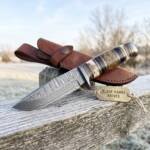
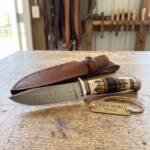
The Persian shape is old and it is not decoration. An upswept point and a curved edge were arrived at by people who spent their lives cutting, and once you have used one you understand why the shape survived.
| Overall length | 9 inches |
| Blade length | 4.5 inches |
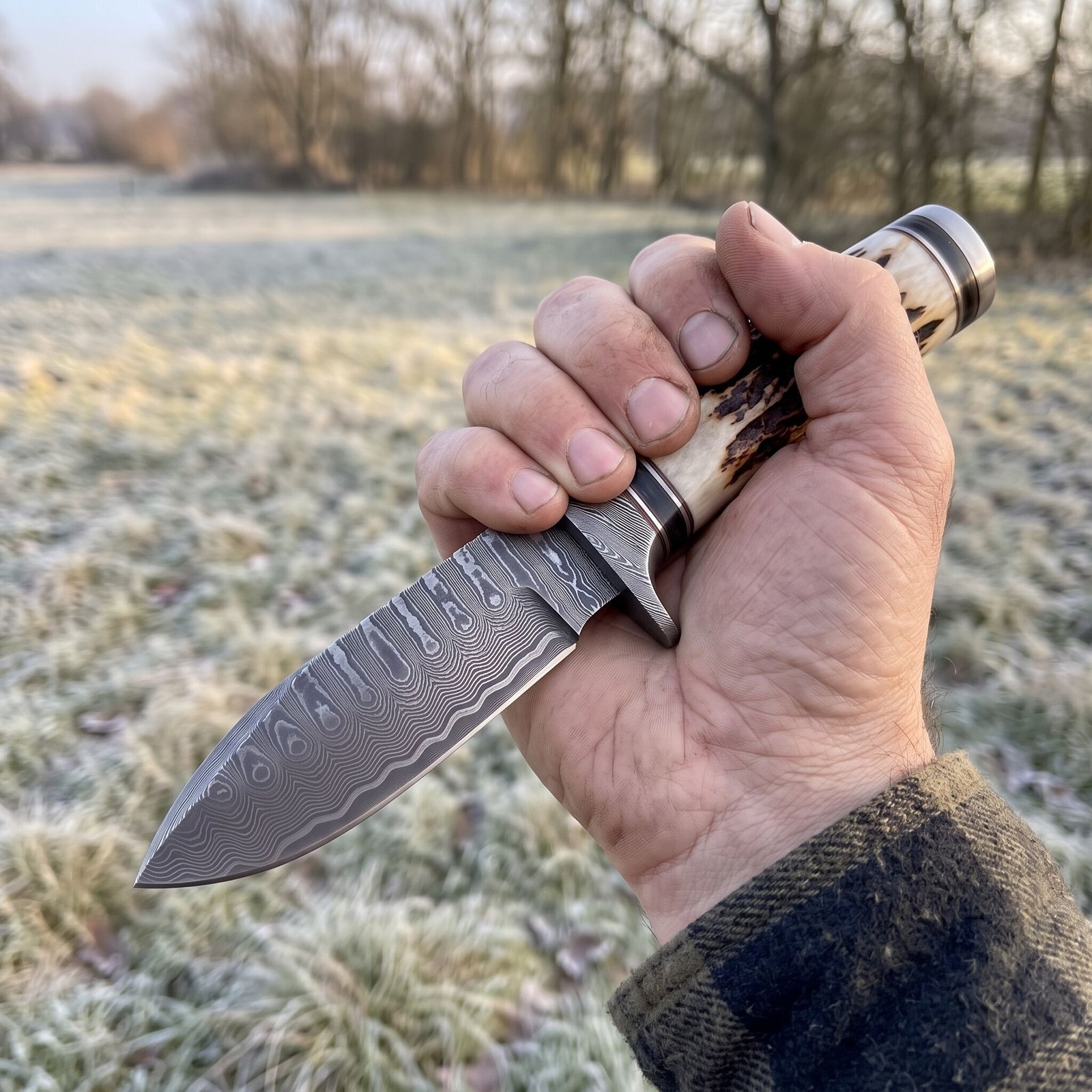
| Handle length | 4.5 inches |
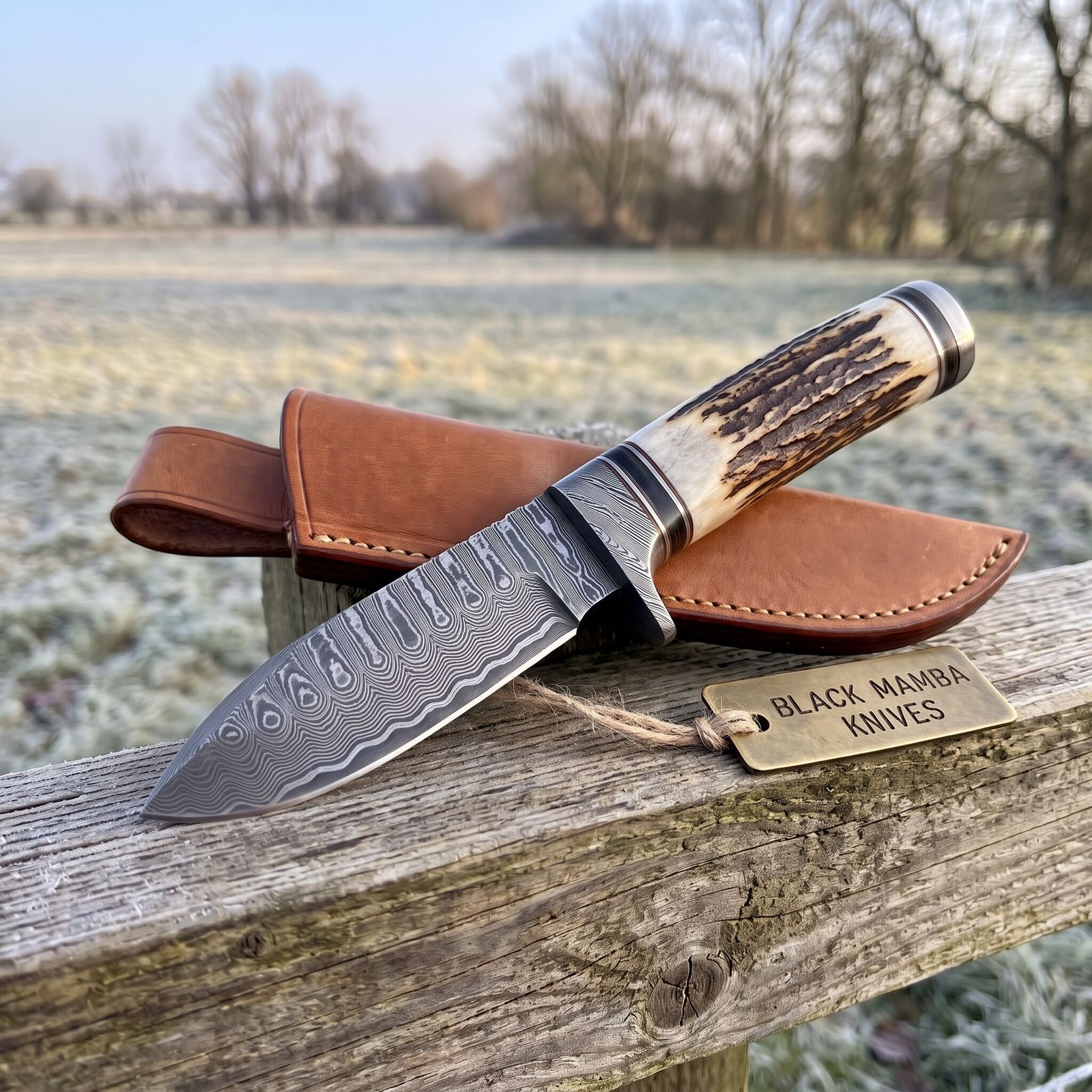
| Knife type | Drop point fixed blade hunting knife |
| Steel | 1095 + 15N20 Damascus, 352 layers |
| Pattern | Layered Damascus pattern, forged and acid etched |
| Hardness | 58 to 60 HRC, oil tempered |
| Guard | Damascus steel bolster |
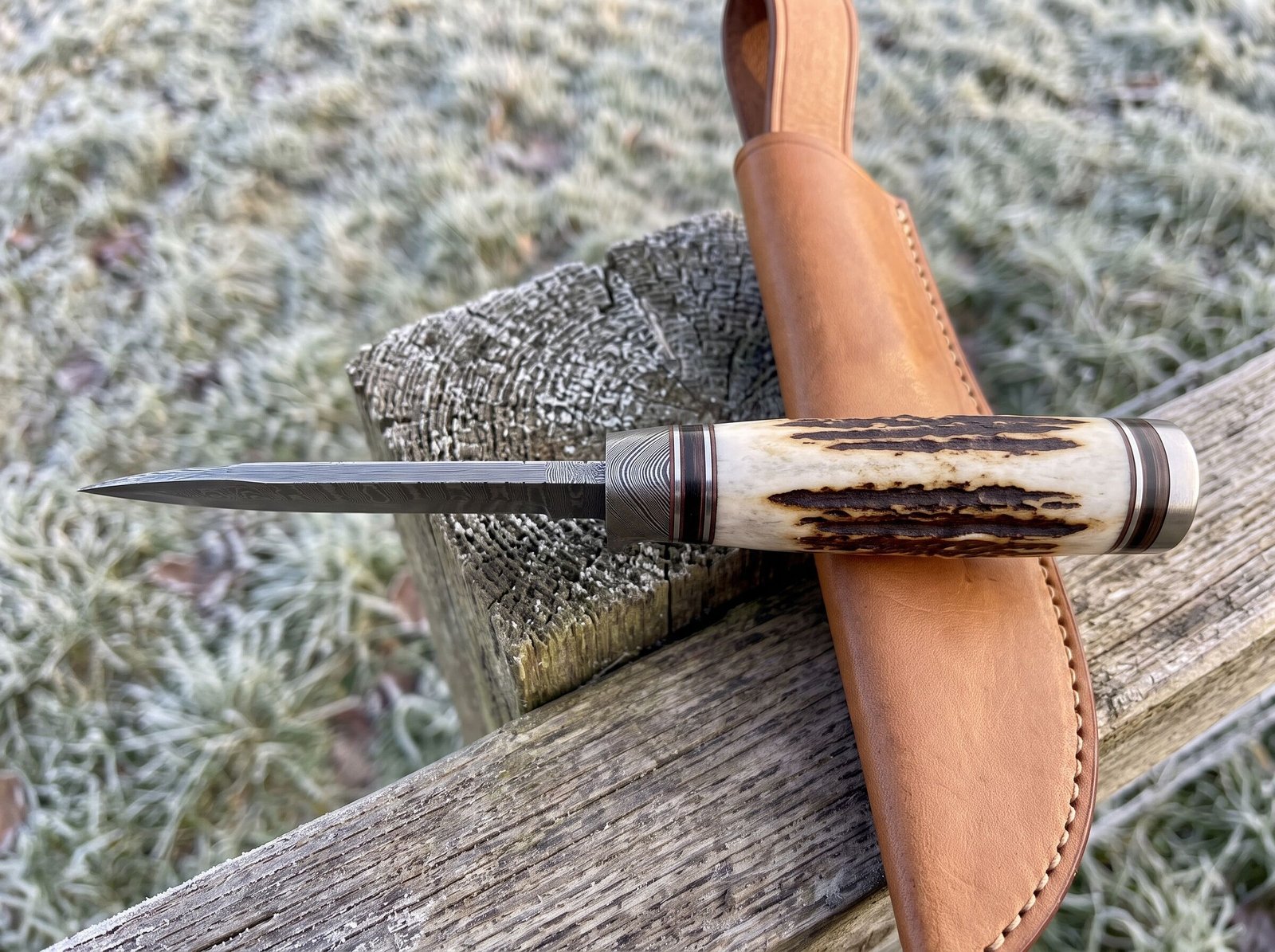
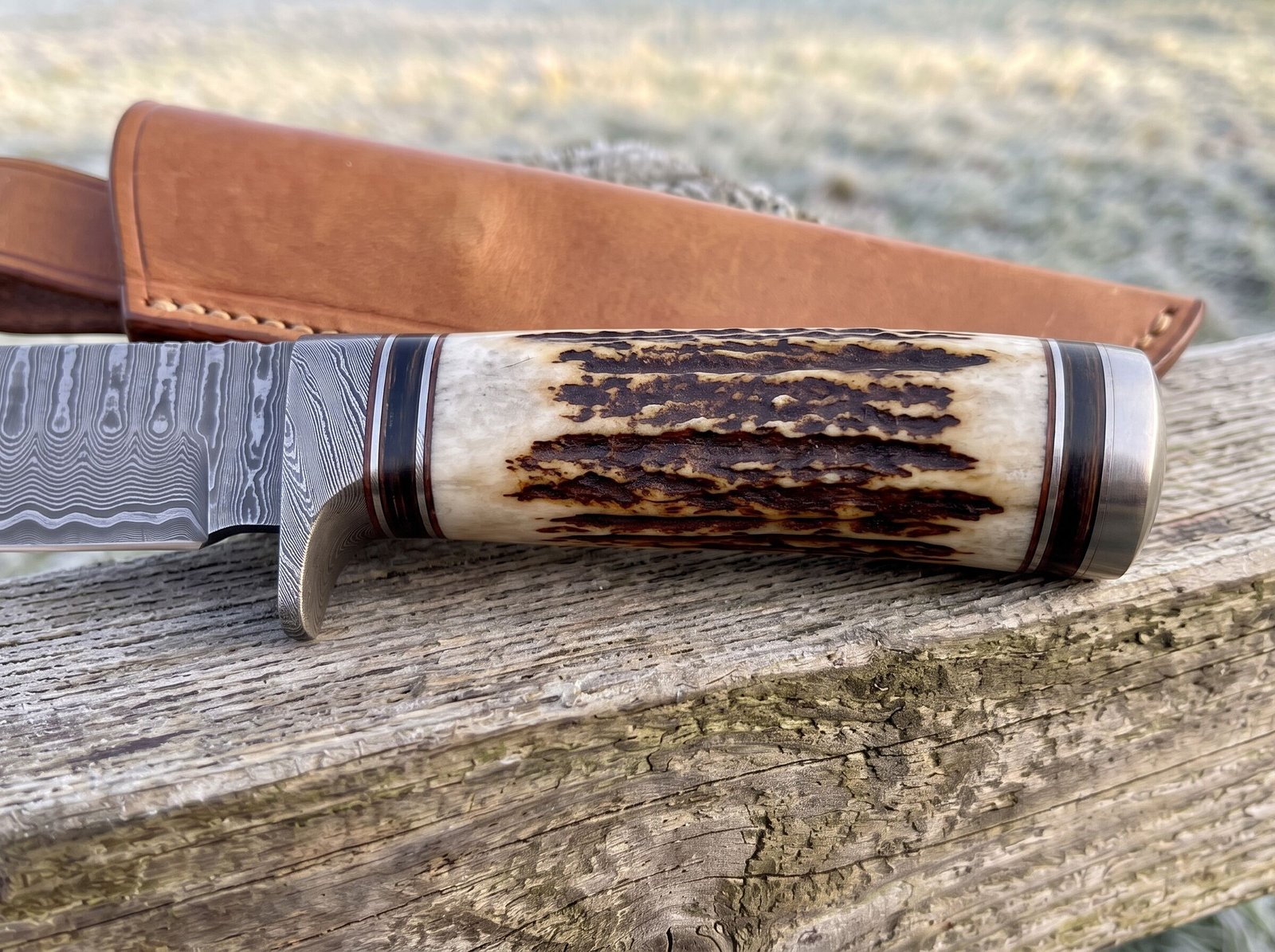
| Handle | Natural stag antler with buffalo horn spacers |
| Weight | 10.5 oz |
| Included | Hand stitched tan leather sheath |
What a curved edge does differently
A straight edge cuts by pressing down. A curved one cuts by sliding, because as you draw it the contact point travels along the arc and every fraction of the stroke presents fresh steel at a slightly different angle. On hide, on meat, on rope, that means you push less hard and cut cleaner. The upswept tip keeps the point away from what is under the skin while you work, which is the whole reason skinners are shaped this way. What it will not do is drill, notch or carve. A recurve tip is bad at anything requiring a downward point, and you should own something else for those jobs.
Who reaches for it: hunters who skin more than they bone, and collectors who wanted the Persian profile in a knife they could actually take out. Ten and a half ounces of it, balanced at the Damascus bolster.
Stag, and what happens to it
Stag antler is dense on the outside and open on the inside, and the natural color and ridges of this handle sit in that outer layer. Hands wear it. Over the years the high points of the ridges wear smooth and pale while the valleys stay darker, and the handle gains a depth it did not have new. That is the good version of aging. The bad version comes from water. Antler that gets soaked swells, dries unevenly and can lift against its pins, so the single rule with a stag handle is that it never goes in a sink.
What it needs from you: the blade and the bolster are the same high-carbon Damascus and take the same treatment, dry them, oil them, and let a patina form rather than scrubbing it back. The buffalo horn spacers between antler and steel are keratin and hate heat; keep the knife out of a car window in summer or those thin layers can check. If the antler goes dull, a small amount of paste wax buffed off with a cloth is enough, once a year. Hang it or lay it in a drawer, not sealed inside the leather.
Before you commit
Is the antler dyed? No. It is natural shed antler and the color is its own. The material underneath is bone, not plastic, and it is described in the specification.
Is a knife like this actually worth the money? Are Damascus knives worth it answers that honestly, including the cases where the answer is no.
Same handle, folding? The Queen Snake stag antler folder puts the material in a pocket knife instead. For shape theory, see the skinning knife guide.
Model: BMK-111A
Ken Martin (verified owner) –
I have just purchased my BUFFALO YUMA BMK knife- one KaBar and three Persian Yumas. I’ve got to say, these knives are pure works of art. The Damascus blades are outstanding and Mark also puts a lot of effort in the scales. I have been a collector for 42 years and own 954 knives. I will be buying more of these as they enhance my collection. I have read some other reviews and understand they are as functional as they are great looking. I am a big fan of Damascus blades and I can say these are second to none. Mark has hit the “Mark” when it comes to making a great knife. If you want a great knife and great service from Mark, you gotta get a BMK knife-you will not be disappointed.
Samuel D.: (verified owner) –
“My Damascus knife has transformed my cooking experience. Its sharpness and craftsmanship are simply outstanding, and it’s a conversation starter in my kitchen.”
Olivia J.: (verified owner) –
“I’m a culinary instructor, and my Damascus knife is a teaching tool I can’t do without. Its sharpness and balance make it perfect for demonstrating knife techniques to my students.”
Jessica M.: (verified owner) –
“I’m an outdoor enthusiast, and my Damascus knife is an essential part of my outdoor adventures. Its sharpness and durability make it a reliable companion in the wilderness.”
William R.: (verified owner) –
“The Damascus knife I own is a true work of art and function. Its sharpness and the mesmerizing patterns on the blade never cease to amaze me.”
Emily S.: (verified owner) –
“As a professional chef, my Damascus knife is my most trusted tool. Its sharpness and balance give me the control I need to execute intricate culinary techniques.”
Daniel K.: (verified owner) –
“My Damascus knife is a culinary marvel. Its sharpness and precision are unmatched, allowing me to effortlessly create culinary wonders in my kitchen.”
Olivia B.: (verified owner) –
“I’m an outdoor enthusiast, and my Damascus knife is a dependable companion on my hiking and camping trips. Its sharpness and durability make it an essential tool for various tasks in the wilderness.”
Samuel H.: (verified owner) –
“I’m a food critic, and I’ve dined at some of the finest restaurants. The Damascus knife I use at home rivals the quality of knives I’ve encountered in top-notch establishments. It’s truly exceptional.”
Jessica C.: (verified owner) –
“I’m a culinary artist, and my Damascus knife is a masterpiece in itself. Its sharpness and precision allow me to create intricate and visually stunning culinary art.”
William E.: (verified owner) –
“I’m an outdoor enthusiast, and my Damascus knife is an indispensable tool on my hiking and camping trips. Its sharpness and durability make it the ideal companion for various tasks in nature.”
Emily V.: (verified owner) –
“The Damascus knife I received as a gift has quickly become the star of my kitchen. Its sharpness and the artistry of its blade patterns make it a constant source of inspiration in my culinary adventures.”
Carol Barrett –
Been eyeing this knife for forever it feels like and it did not disappoint. Can’t wait to see what else this maker has to offer.
Wyatt Harris –
Feels way more premium than the price suggests. Exactly the kind of quality that keeps me coming back. I keep coming back to Black Mamba Knives because it’s always this good.
Thomas King –
I collect knives and this one is phenomenal. Every piece of the fit and finish looks hand checked before it shipped. Will definitely order again for another one.
Hannah Ward –
Feels way more premium than the price suggests. Edge retention has been great even after regular use in the field. Took it out camping right away and it handled everything I threw at it. Leather sheath is thick and well stitched. Not the cheap stuff you usually get. Already added a few more items from this company to my cart.
Jennifer Jackson –
Couldn’t ask for a better knife honestly. Handle has a great grip even with wet or gloved hands. Worth every penny.
Sandra Flores –
This knife punches way above its price point. Steel has a gorgeous pattern that looks different in every light. Exactly the kind of quality that keeps me coming back. Made in the USA right in Memphis, and it shipped worldwide without any long wait.
Michael Gray –
Everyone who’s seen this knife has asked where I got it. Every piece of the fit and finish looks hand checked before it shipped. Pommel and guard are solid, no wobble anywhere on the knife. This is my new favorite in the collection.
Scott Fox –
This knife looks even better in person than in the listing photos. Every piece of the fit and finish looks hand checked before it shipped. Made in the USA and shipped worldwide with no issues on my end. Exactly the kind of quality that keeps me coming back.
Gary Johnson –
Feels way more premium than the price suggests. Fit and finish is museum quality. You can tell real craftsmen made this by hand. Couldn’t be happier with this.
Pamela Cole –
Set my expectations low going in and this blew right past them. This seller clearly takes pride in their work. Black Mamba Knives has earned a repeat customer with this one.