
Description
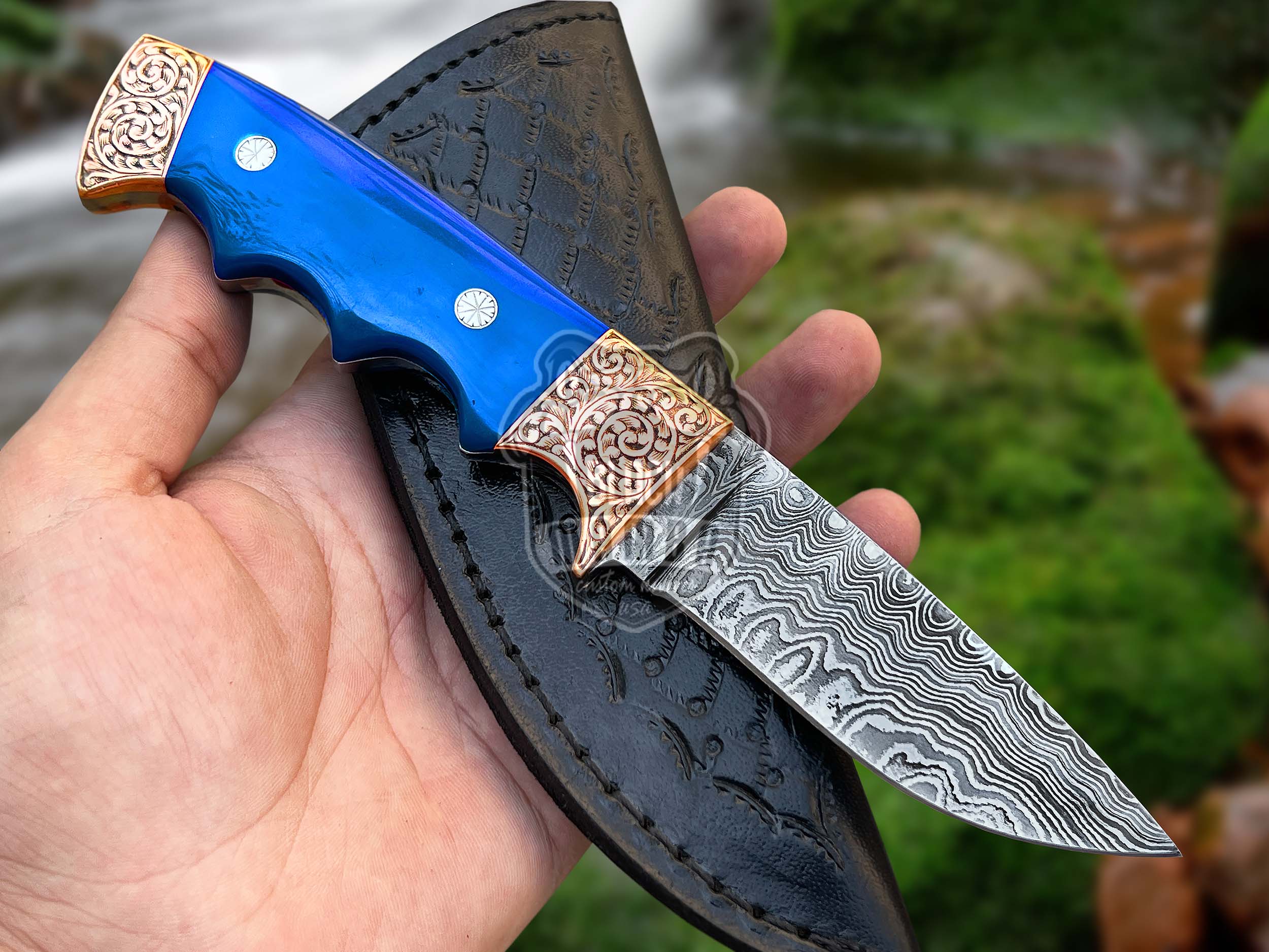
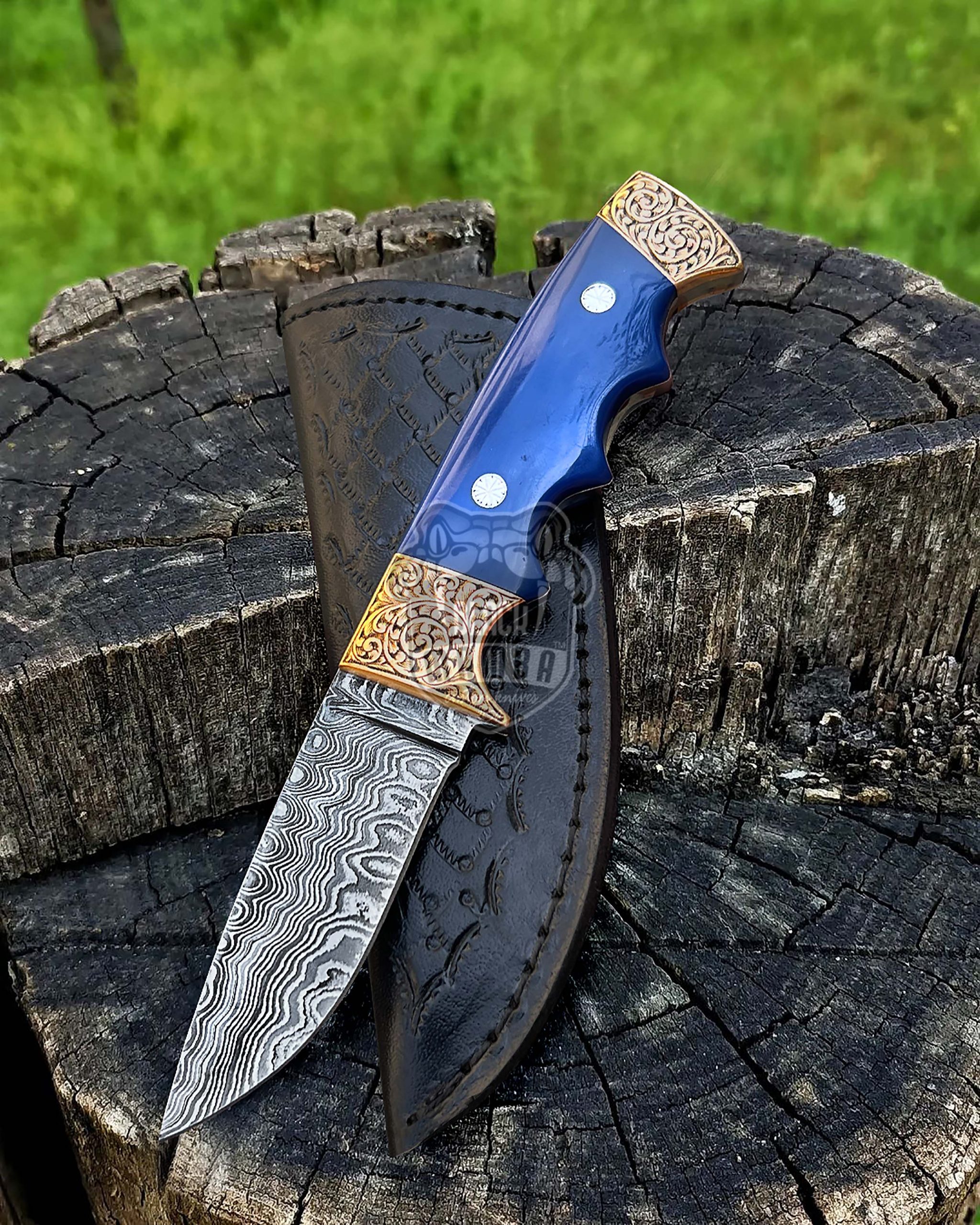
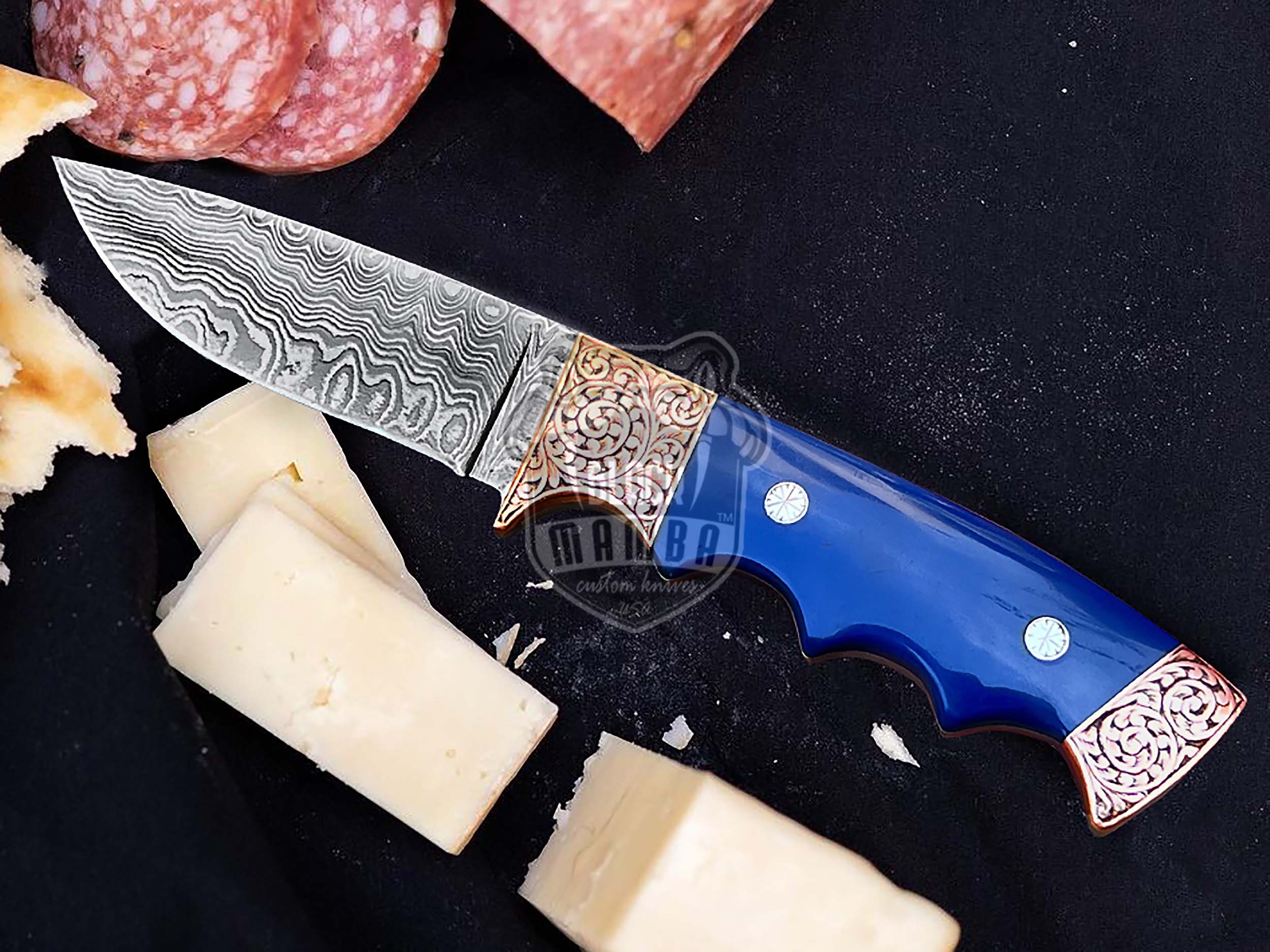
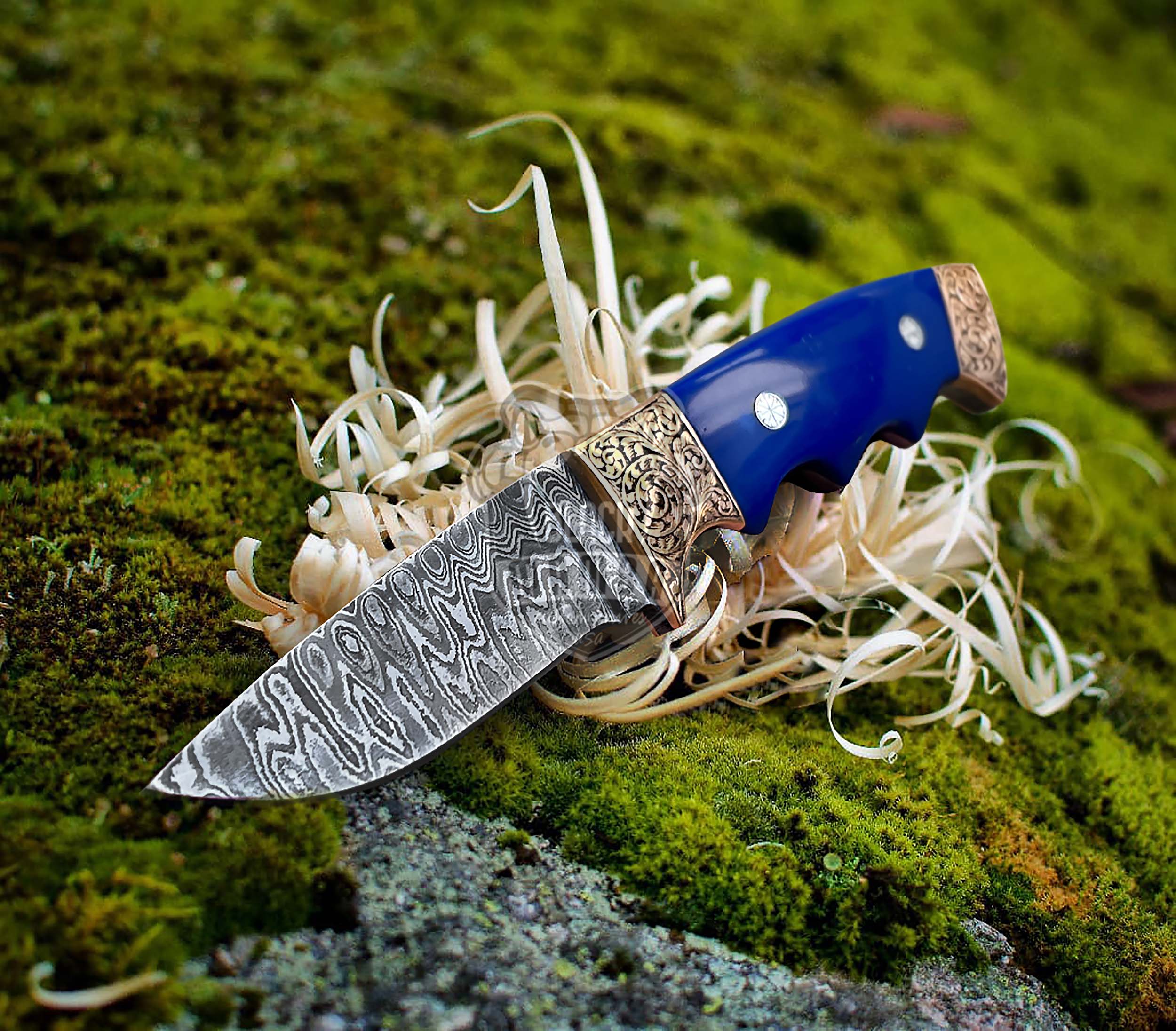
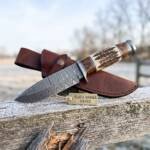
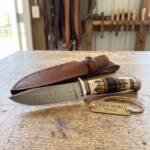
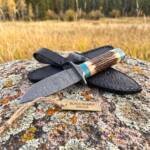
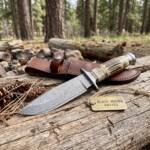
Cobalt blue bone between engraved copper bolsters, on an eight inch hunter with a genuinely layered blade.
| Overall length | 8 inches |
| Blade length | 3.6 inches |
| Handle length | 4.4 inches |
| Steel | 1095 + 15N20 Damascus, 352 layers |
| Hardness | 58–60 HRC, oil tempered |
| Weight | 8.9 oz |
| Handle | Camel Bone Handle + Copper Engraved |
| Included | Hand-stitched leather sheath |
The job it does: field dressing and camp work, in a knife that looks like a display piece. Three point six inches of drop point is the size most hunters end up preferring — long enough to work a deer, short enough to control near a hide. Eight point nine ounces gives it real presence in the hand.
The pattern is real
Look along the blade and the banding runs in tight repeating waves from spine to edge, distorting where the grind cuts across the folds. That distortion is the proof: an etched-on imitation stays uniform because it is printed on a flat surface, while a genuine billet shows the pattern bending wherever material was removed. Sharpening this blade exposes new layers rather than removing the figure.
Bone and copper
The handle is bone, dyed through to a deep blue and polished, with pin rosettes set into the scales. Bone is dense, takes dye without going plastic-looking, and stays cold and grippy in wet weather where a polished wood handle would slide. Front and rear it is capped with copper bolsters cut with deep scrollwork, and copper is the interesting choice here: it will not stay bright. It tones down to a warm brown over a season or two, and the engraved recesses darken first, which throws the pattern into relief. The pin rosettes are structural as well as ornamental: they spread the load of each fastener across a wider area of the scale, and that is what keeps a dyed bone handle from cracking around its pins over years of hard carry.
Carrying it
The included sheath is hand-stitched and tooled, with a retention strap over the handle. At nearly nine ounces you will notice it on a belt, which is the honest trade for a knife with this much bolster material. Set it on the strong-side hip rather than at the back, where the handle falls straight under your hand as you reach and the strap clears your thumb in one movement.
Care: this is high-carbon steel and it will rust if neglected. Clean and dry the blade after field use, then oil it before it goes away. If you want the copper bright, a metal polish brings it back; if you like the tone, leave it. Do not store the knife in the sheath long term, because tanned leather holds acid and moisture against steel. Bone is stable but should not be soaked or left in a hot vehicle.
FAQs
Will the blue fade? The dye goes through the material rather than sitting on the surface, so it holds.
Is the copper solid? Yes, engraved copper bolsters, not plated steel.
Is it a working knife or a collector piece? Both. It is built to be used, and finished to be kept.
Read the Damascus hunting knife guide, check Damascus knife care, or commission a custom hunting knife to your own spec.
Model: BMK-50
Oliver P. (verified owner) –
“This Damascus knife is worth every penny. It’s not just a knife; it’s an investment in quality and craftsmanship.”
Sophia D. (verified owner) –
“I received this Damascus knife as a gift, and it’s become my go-to tool in the kitchen. It’s sharp, beautiful, and adds elegance to my cooking.”
Grace W. (verified owner) –
“I bought a Damascus knife for my husband, and he’s thrilled with it. It’s sharp, well-crafted, and a pleasure to use.”
Noah L. (verified owner) –
“This Damascus knife is a conversation starter every time I have guests over. It’s a functional work of art that I’m proud to display.”
Paul Peterson –
This is exactly what I wanted and then some. Came in a nice gift box which made it feel even more special. This one’s a keeper for sure. Cool knowing this was handmade right in Memphis and shipped out fast.
Matthew Sanchez –
Bought this on a whim and it turned out to be one of my favorite purchases in a long time. Steel has a gorgeous pattern that looks different in every light. This has quickly replaced my old go to knife for field dressing. Already planning my next pickup from this seller.
Dennis Marsh –
It’s alright. Not great not bad. Handle material felt a bit different than pictured. Could go either way on recommending this.
Dustin Clark –
This showed up faster than expected and looked incredible. Leather sheath is thick and well stitched. Not the cheap stuff you usually get. So worth it.