
Description
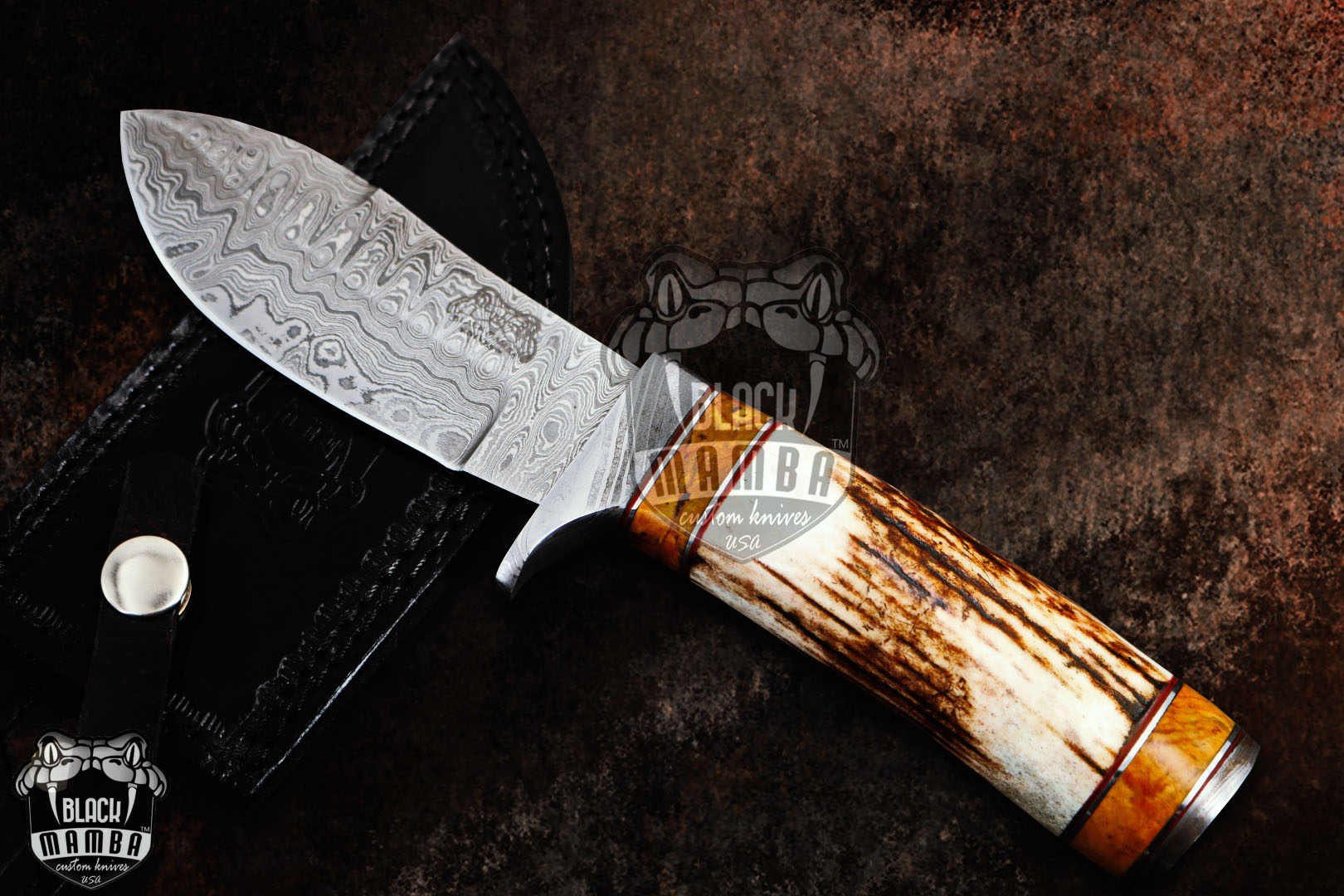
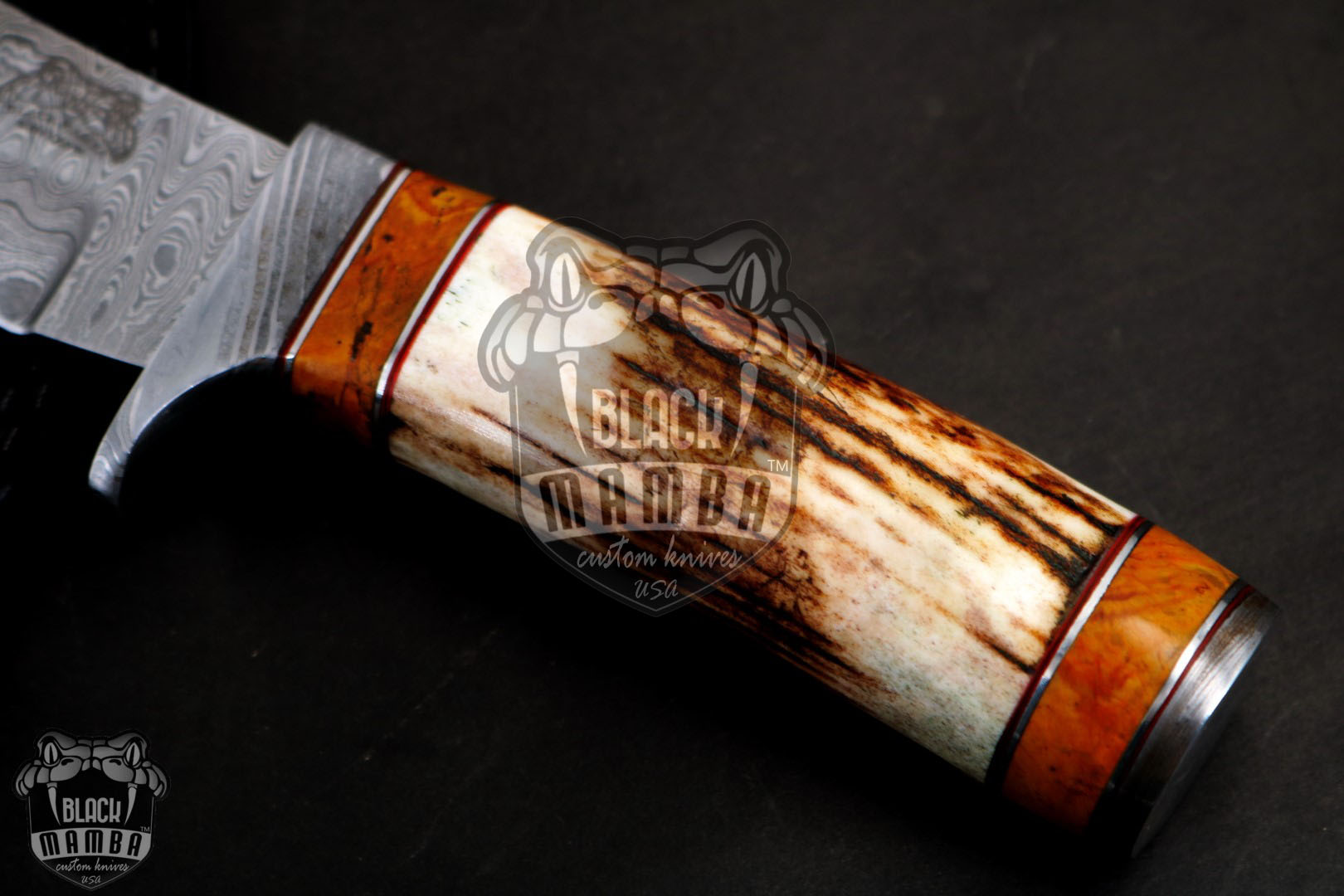
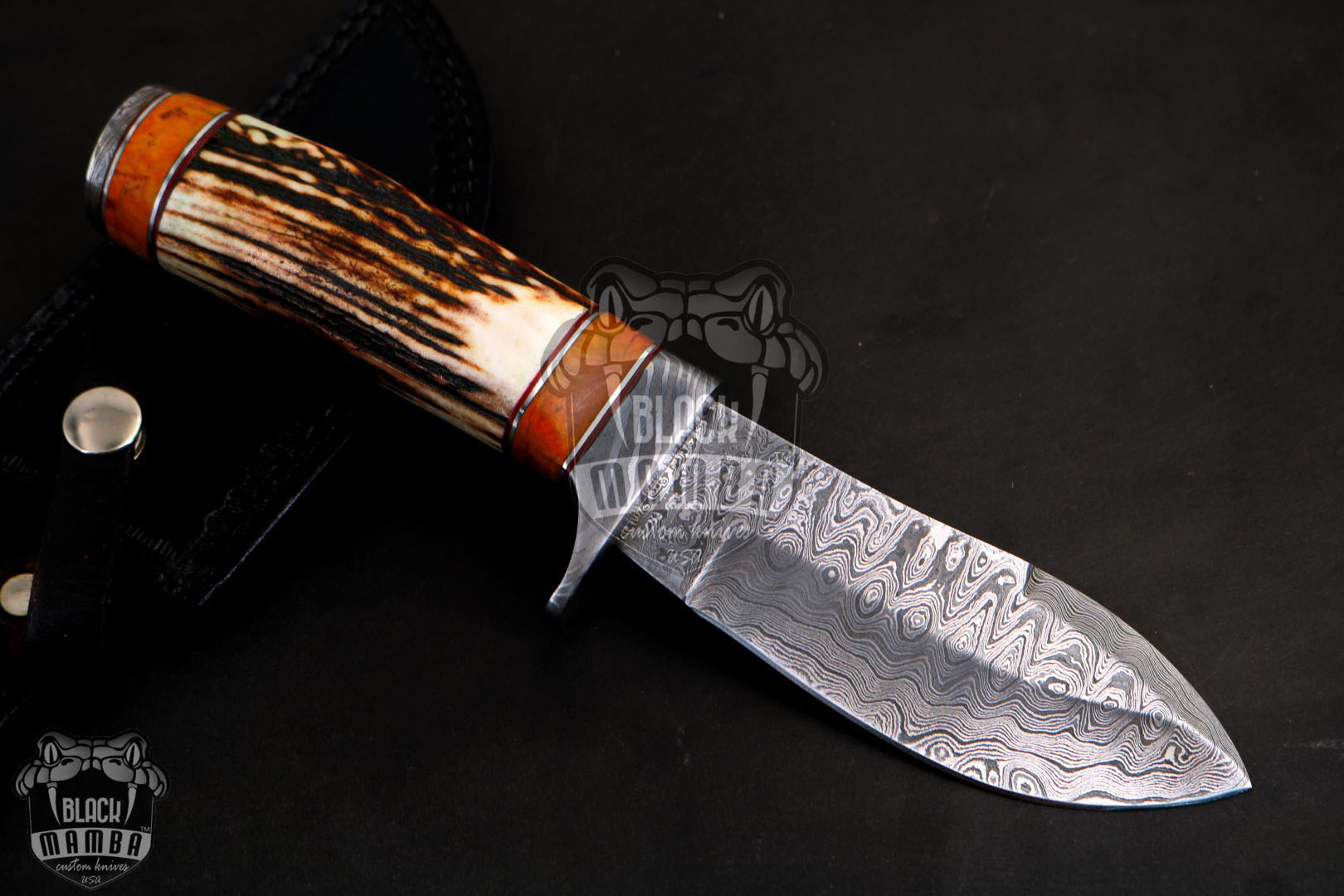
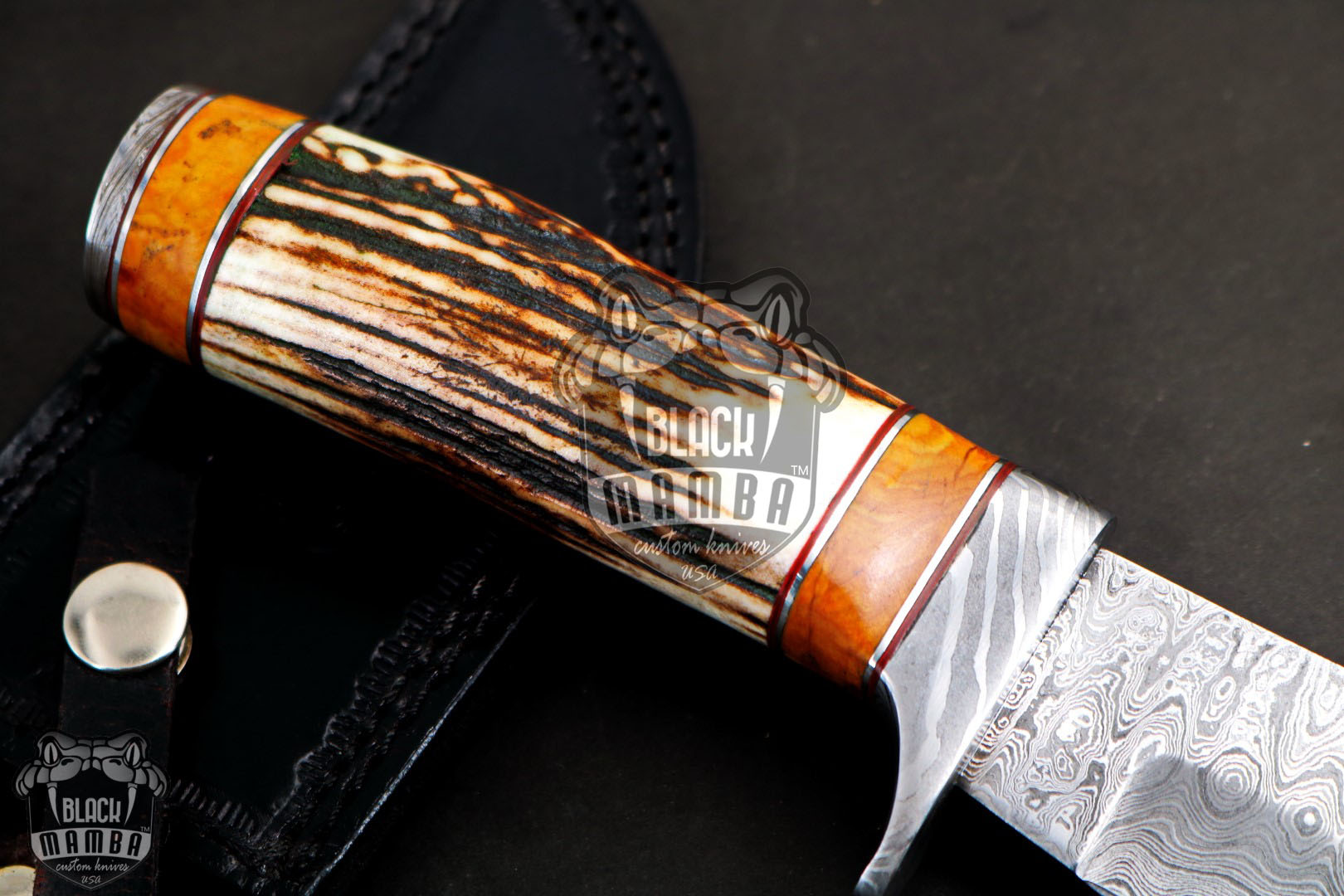
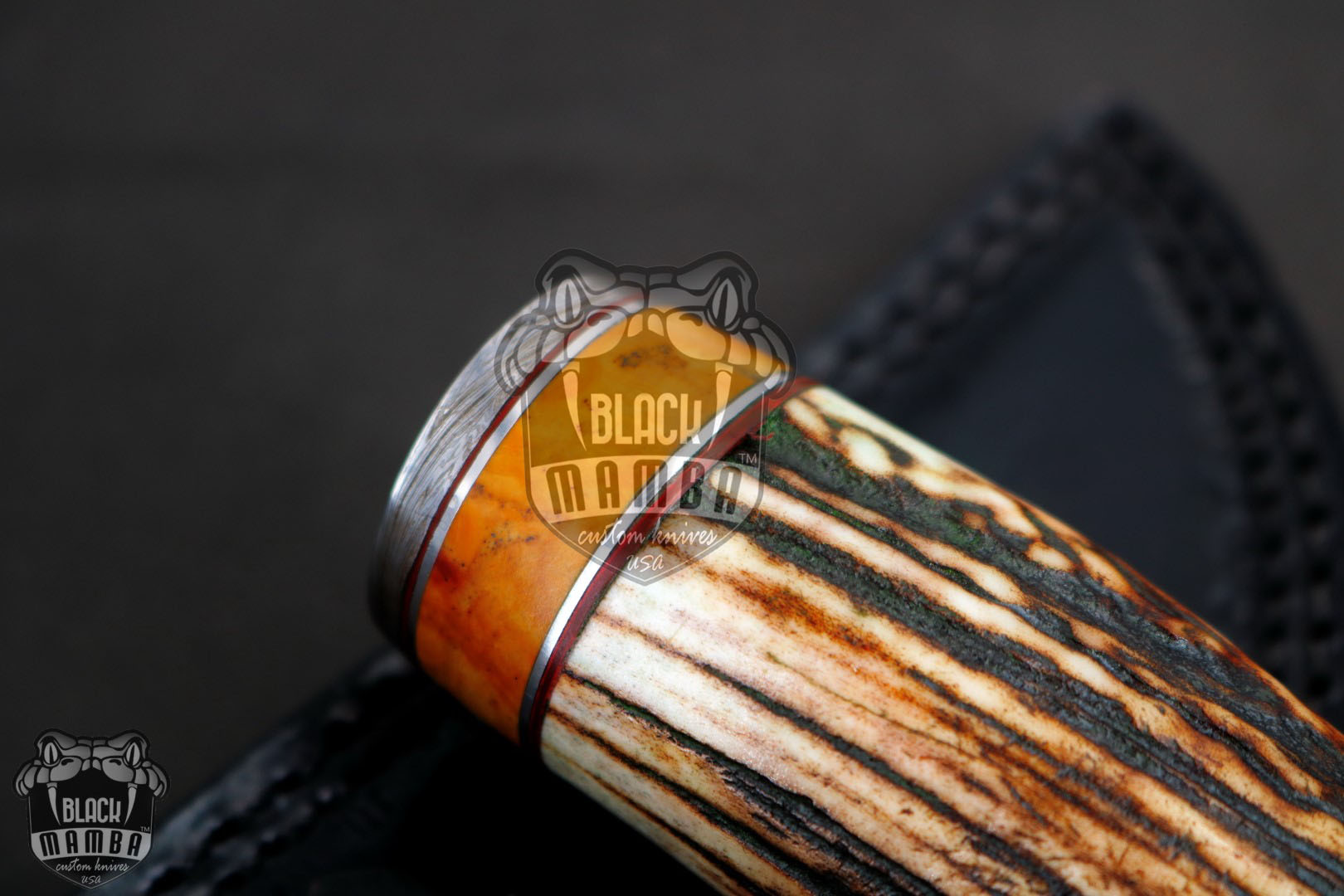
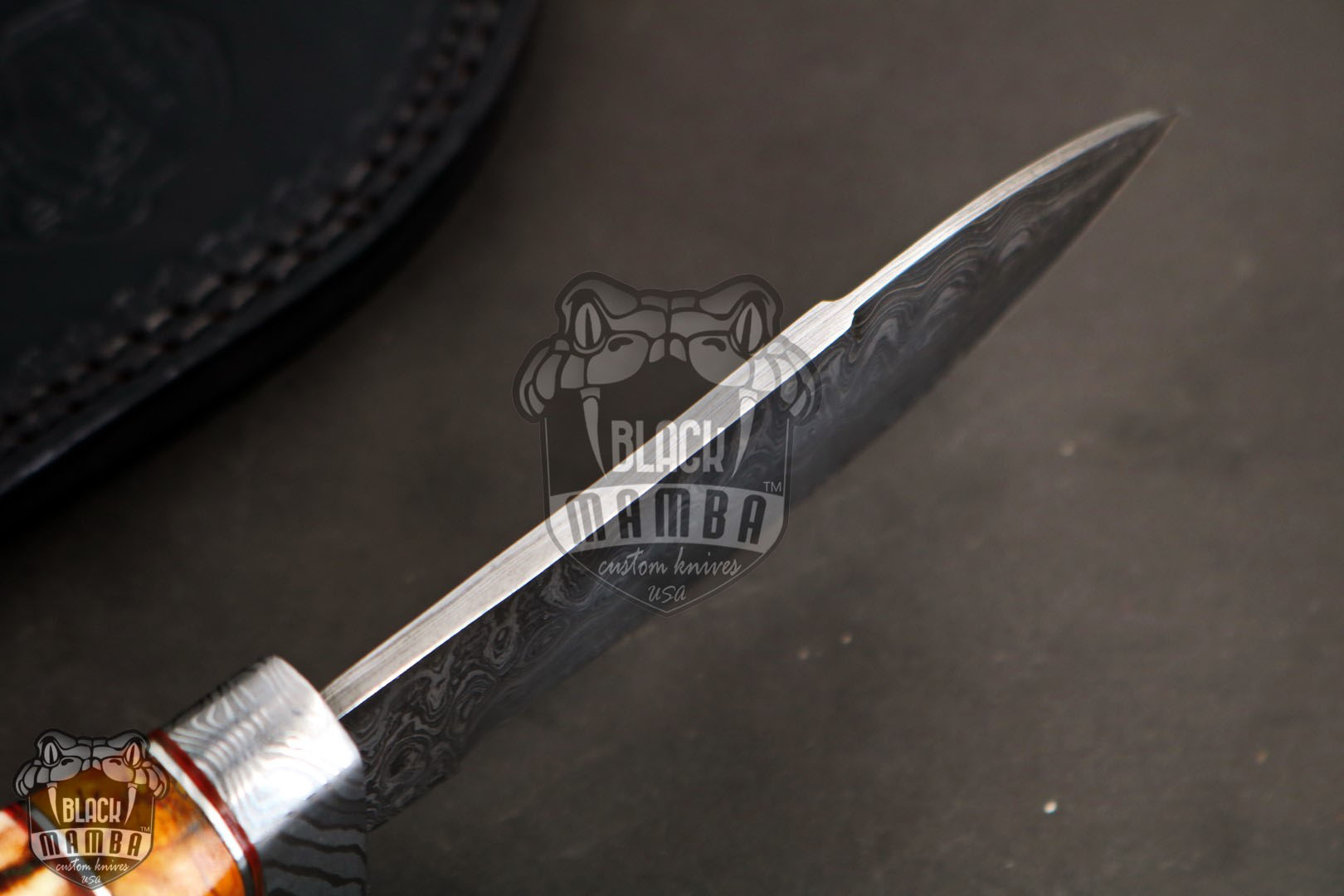
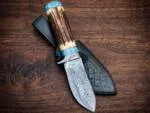
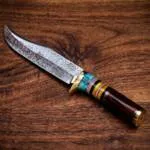
Brown calcite between antler and steel. Calcite is a mineral, not a resin and not a dyed bone, and cutting it into spacers thin enough to sit in a handle stack is fussy work that a lot of makers will not take on.
| Overall length | 9 inches |
| Blade length | 4.5 inches |
| Handle length | 4.5 inches |
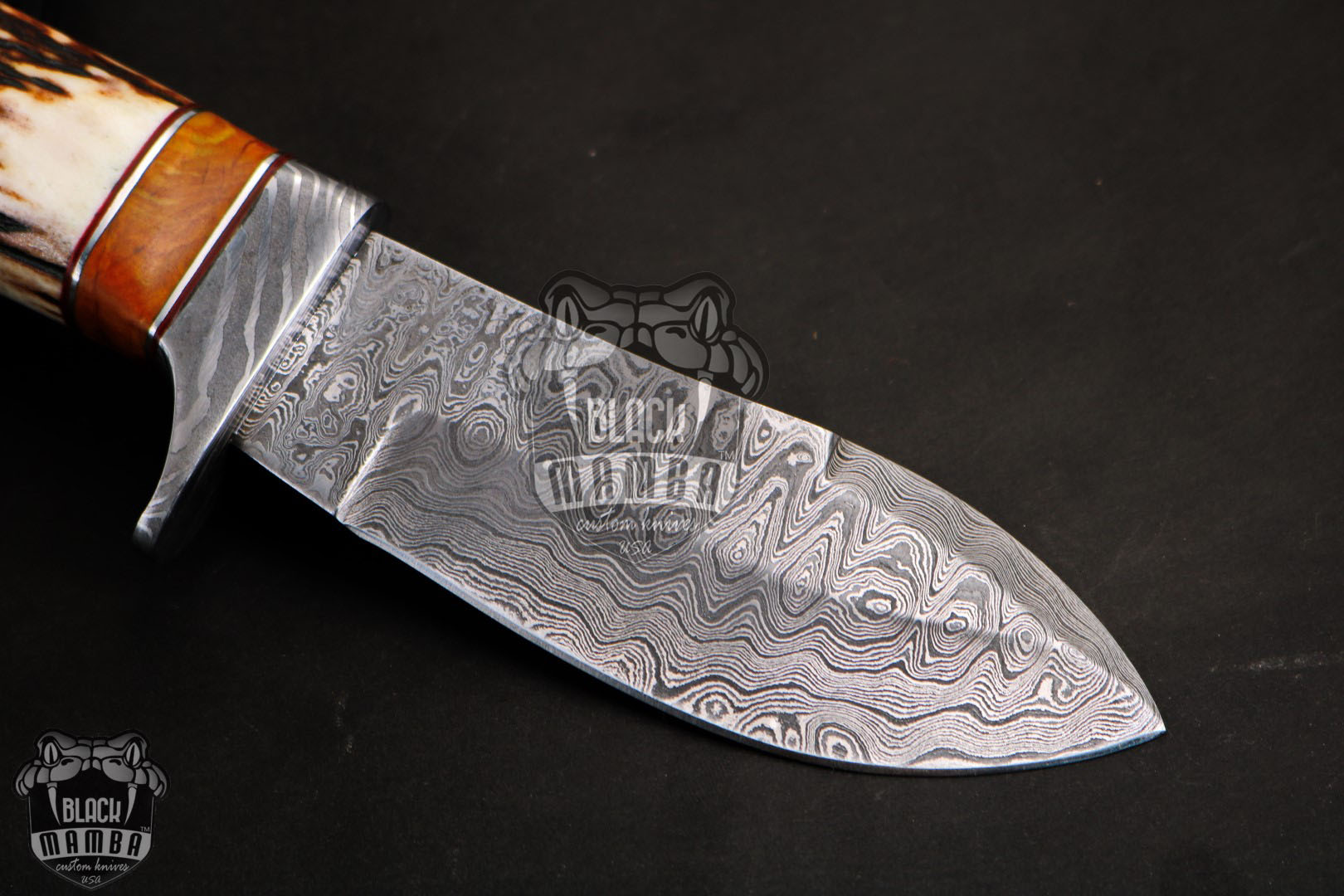
| Steel | 1095 + 15N20 Damascus, 352 layers |
| Hardness | 58–60 HRC, oil tempered |
| Weight | 10.5 oz |
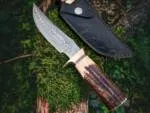
| Handle | Stag antler with Brown Calcite gem stone spacers and Damascus steel bolster |
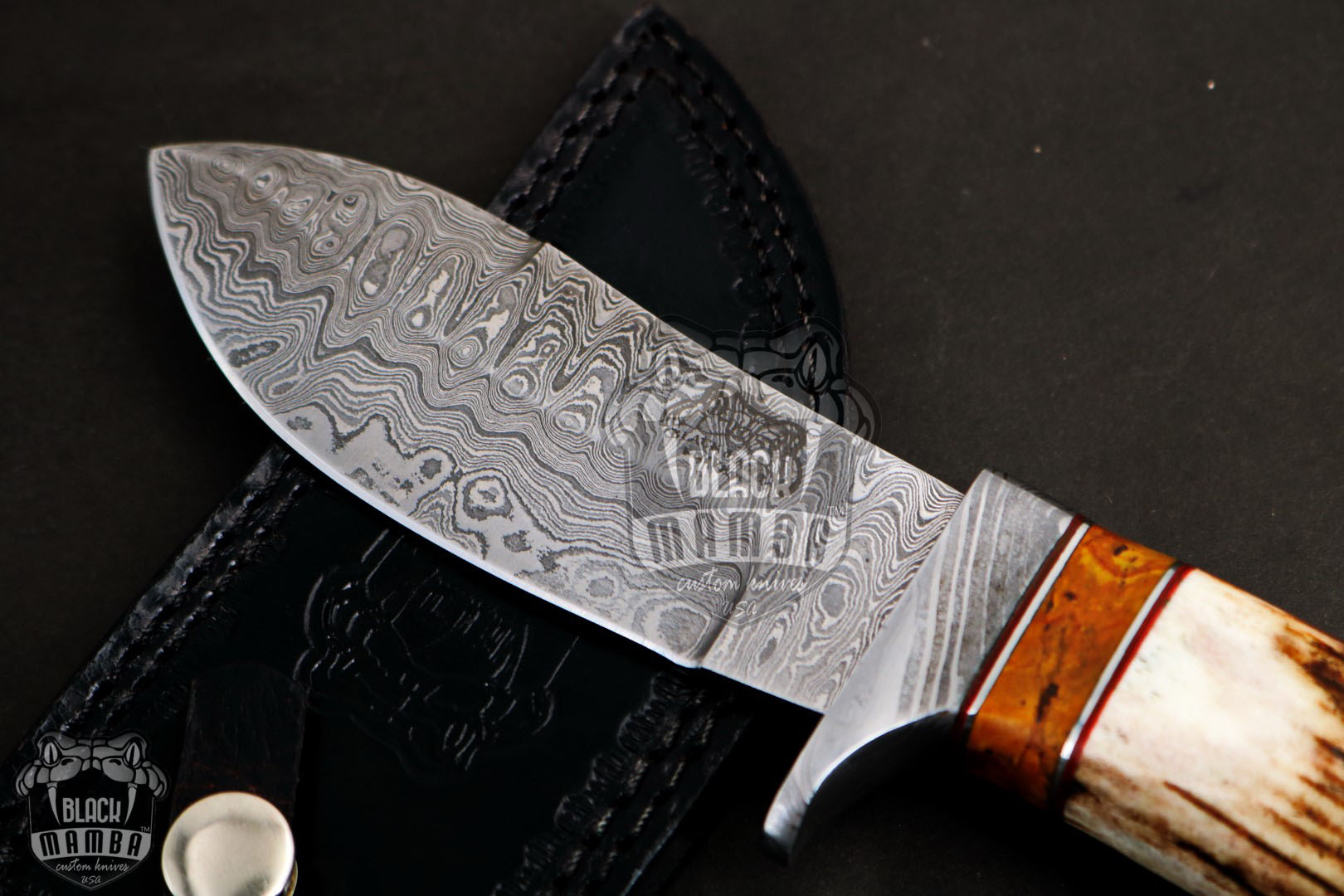
| Pattern | Wind & Mix twist Fire pattern Damascus Blade, Extreme custom Brass File-work |
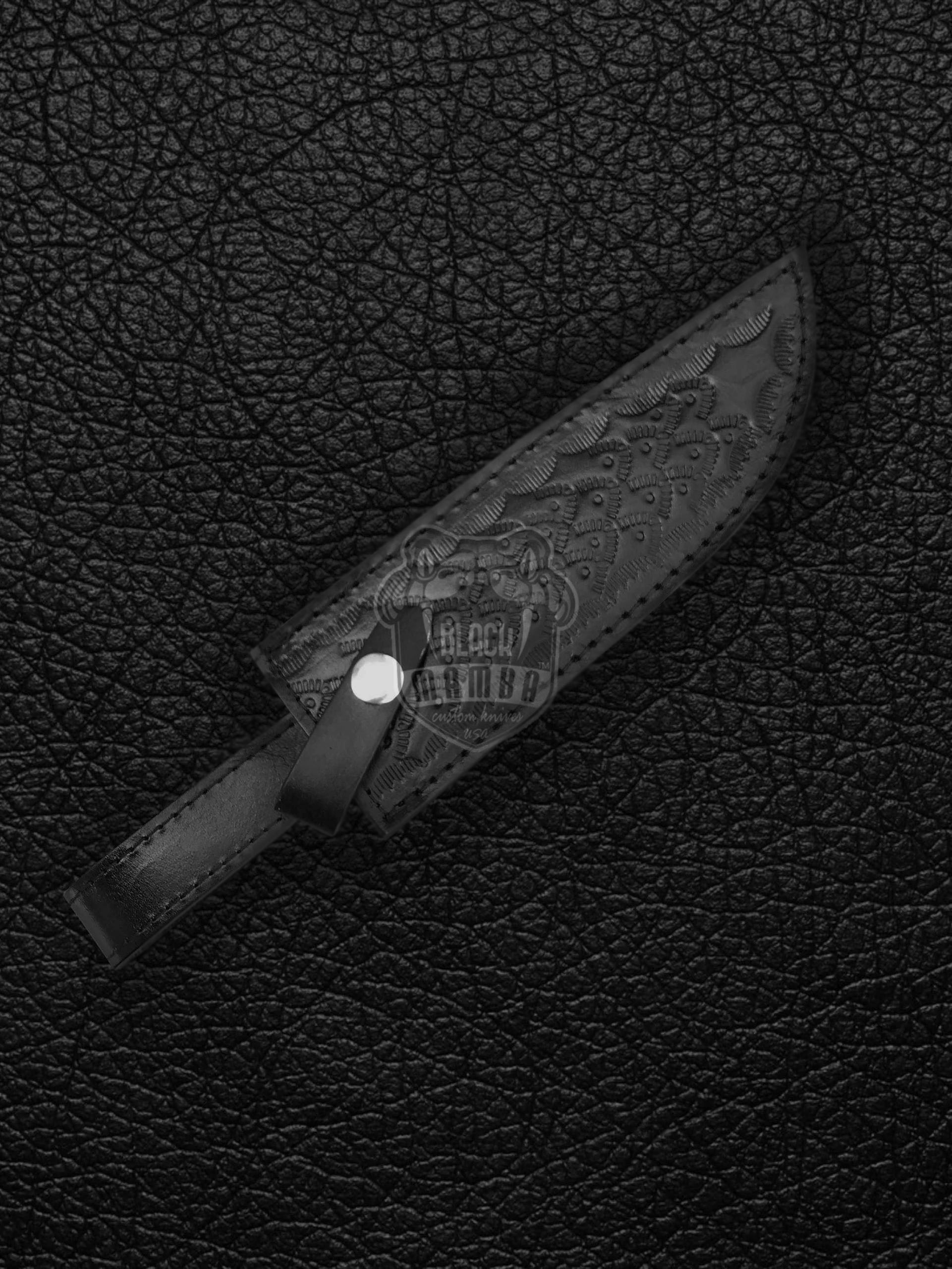
| Included | Hand-stitched leather sheath |
Its brief: a display-grade hunting knife that is still built to be used. Ten and a half ounces with a four-and-a-half inch edge, so it has the mass for jointing and the curve for skinning, and the handle stack is the reason most people pick this one over its plainer relatives.
The mineral in the handle
Calcite is soft. On the mineral hardness scale it sits around three, which puts it below a copper coin and well below glass. In a handle that is fine, because the spacers are sandwiched between antler and metal and nothing touches them in normal use. It matters when you clean the knife. Anything abrasive will scratch those bands, and anything acidic — vinegar, lemon, descaler, some kitchen cleaners — will etch them, because calcite is calcium carbonate and acid dissolves it. Water and a cloth is the entire approved cleaning method for that part of the knife.
What the layer count is and is not
The specification records a folded billet of two steels. High layer counts make a finer, tighter figure in the finished blade, and they are an indication of how many folding and drawing cycles went into the bar. They are not a measure of cutting performance. A blade with a quarter of the layers, ground the same and heat treated the same, cuts the same. Buy layers for how they look, and buy heat treatment for how the knife works. We wrote out the arithmetic in what the layer count actually means.
Keeping it in one piece: the blade and its Damascus bolster are high-carbon and want the ordinary discipline — dried after use, a light film of oil before it goes away, patina left alone. The antler wants to stay out of water. The calcite wants nothing at all except to be left dry and untouched by chemicals. That combination means this is a knife you clean with a damp rag and never at a tap, and it should be stored outside its sheath so that nothing is held wet against anything else.
Reasonable questions
Will the spacers chip? Not in use. They can if you drop the knife handle-first onto stone, and a chipped mineral spacer cannot be filled invisibly.
Is it hand forged or cut from a bought bar? Forged and finished here. How Damascus steel knives are made covers the sequence.
Anything smaller with a horn handle? The Hornback buffalo horn skinner is a pocket-sized version of the same idea.
Model: BMK-111-b-c
Emily H. (verified owner) –
“This Damascus knife is a kitchen masterpiece. It’s not only sharp but also beautifully crafted. A true work of culinary art!”
Jacob R. (verified owner) –
“I purchased a Damascus knife for my wife, and she loves it. The intricate pattern on the blade adds a touch of elegance to our kitchen.”
Natalie D. (verified owner) –
“This Damascus knife is not just a tool; it’s a piece of artistry. It’s made slicing and dicing in the kitchen a true pleasure.”
Ronald Gutierrez –
Not going to lie. This exceeded my expectations by a lot. Fit and finish is museum quality. You can tell real craftsmen made this by hand. Weight and balance make it feel like a real working knife not some cheap import. Every piece of the fit and finish looks hand checked before it shipped. Would not hesitate to order again. Nice to support a Memphis based knife maker, shipping was fast even internationally.
Chloe Morales –
This is one of those purchases that just makes you smile. Made in the USA right in Memphis, and it shipped worldwide without any long wait.
Dustin Campbell –
A bit disappointed with this one honestly. Leather sheath was thinner than shown in the pictures. Blade arrived with a couple small nicks in the edge. Black Mamba Knives usually does better than this in my experience. Probably won’t be ordering again.
Frank Hayes –
Perfect gift. Perfect quality. No complaints. Fit and finish is museum quality. You can tell real craftsmen made this by hand. This will not be my last order from this store.
Alejandro Jackson –
Absolutely thoroughly impressed by this knife. Leather sheath is thick and well stitched. Not the cheap stuff you usually get. Handle has a great grip even with wet or gloved hands. This has quickly replaced my old go to knife for field dressing. This will not be my last order from this shop.
Anthony Diaz –
Would call this a solid pickup for the price. Black Mamba Knives usually delivers solid quality and this was no exception. Sheath is nice. Wish it had more padding but it does the job. Blade holds up well, edge retention could be slightly better. Good product. Just not quite perfect.
Paul Green –
Turned out better than I expected going in. Been ordering from Black Mamba Knives for a while now and this fits the pattern. Minor nitpicks aside, good quality knife.
Linda Wright –
My father in law couldn’t stop talking about this after I unboxed it. Blade holds a razor edge right out of the box. 10/10 would buy again.
Nicole Robinson –
Wasn’t expecting to be this impressed but here we are. 10/10 would buy again.
David Cox –
Not going to lie. This exceeded my expectations by a lot. Sheath snaps shut securely and doesn’t feel flimsy at all. Can’t recommend this enough.
Christine Campbell –
Stellar quality for the price point. Telling everyone I know to check this maker out.
Barbara Moore –
Best knife I’ve ever owned. Hands down. Edge retention has been great even after regular use in the field. Came in a nice gift box which made it feel even more special. Beyond happy with how this turned out.