
Description
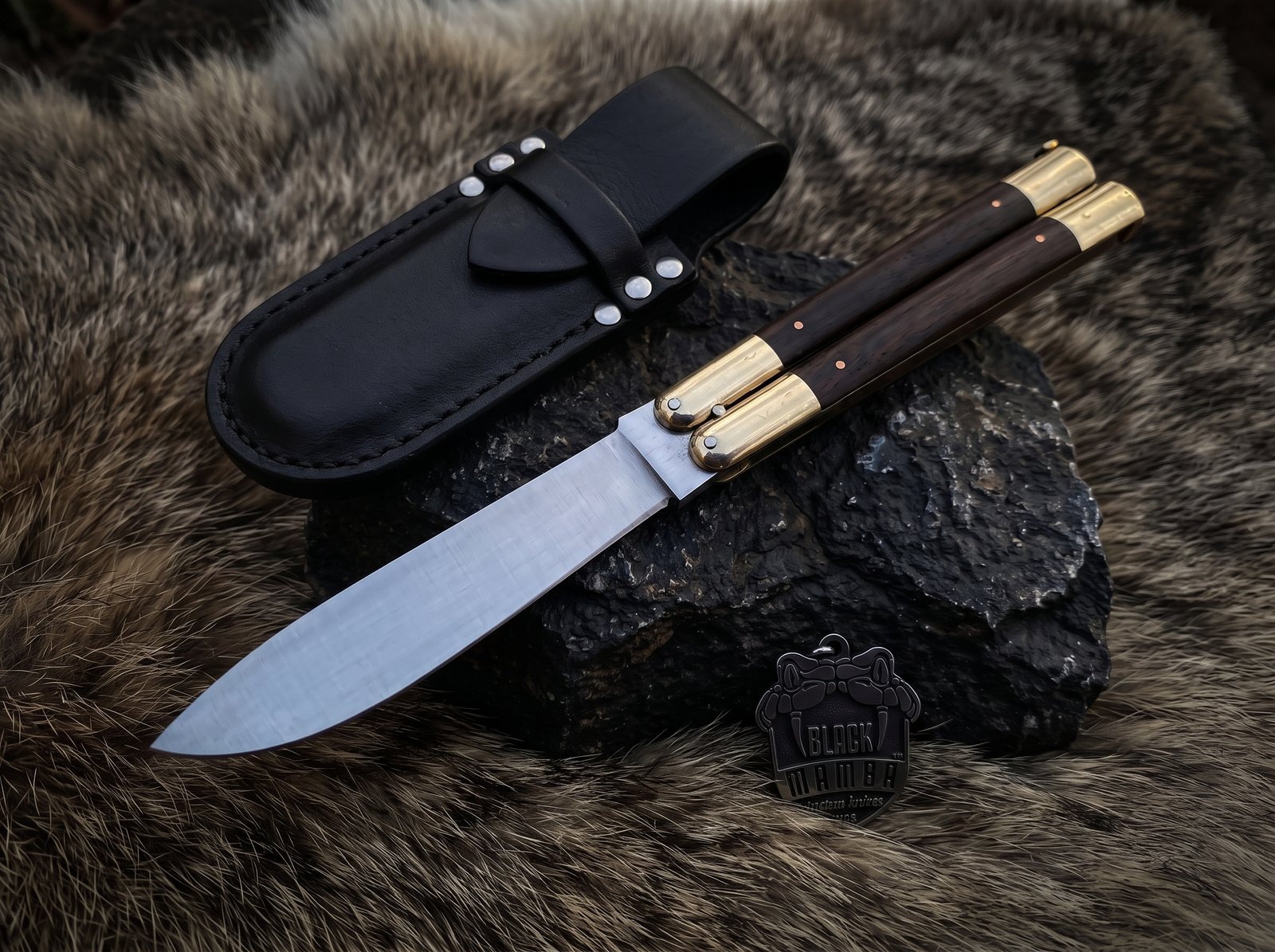
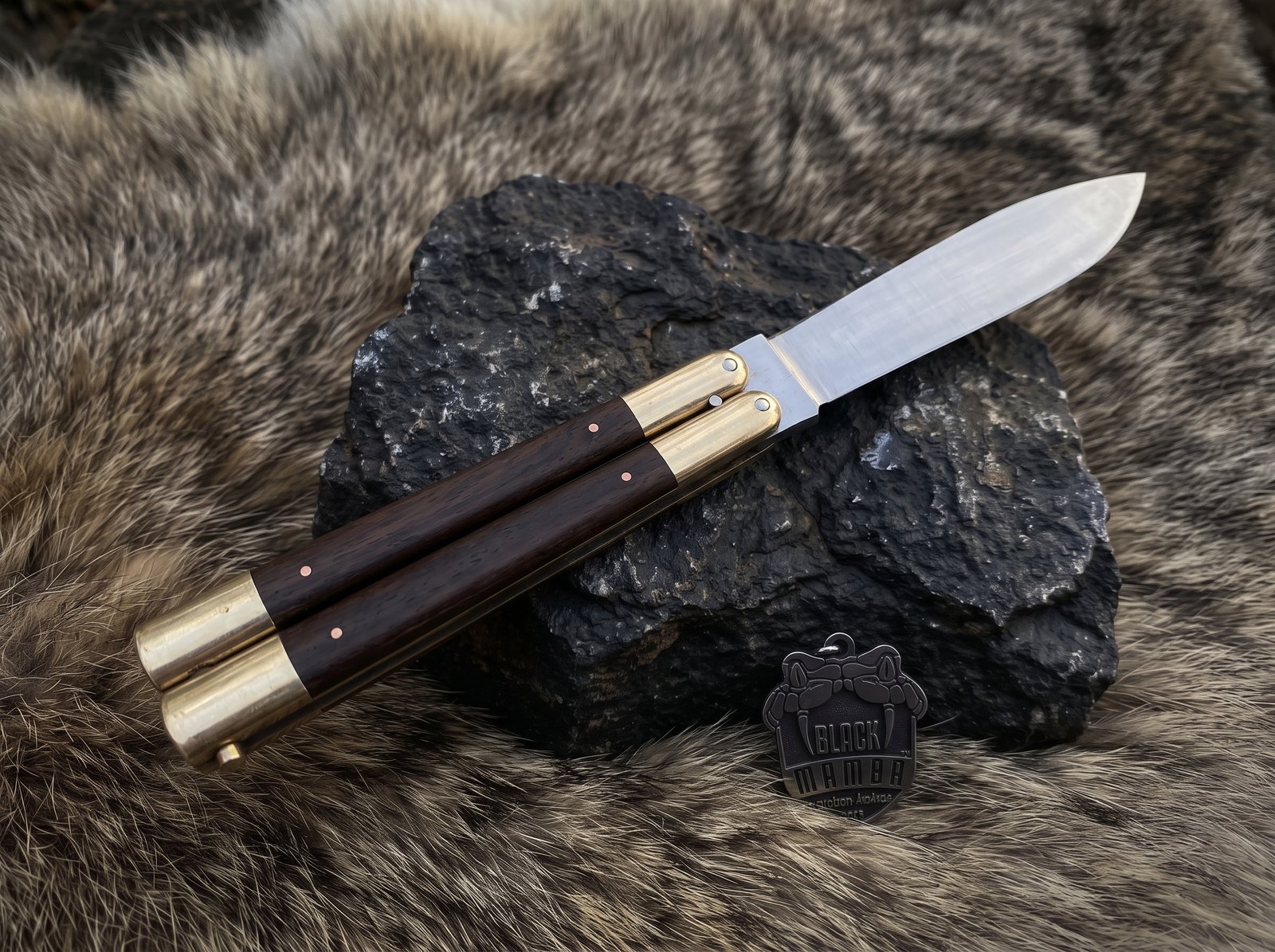
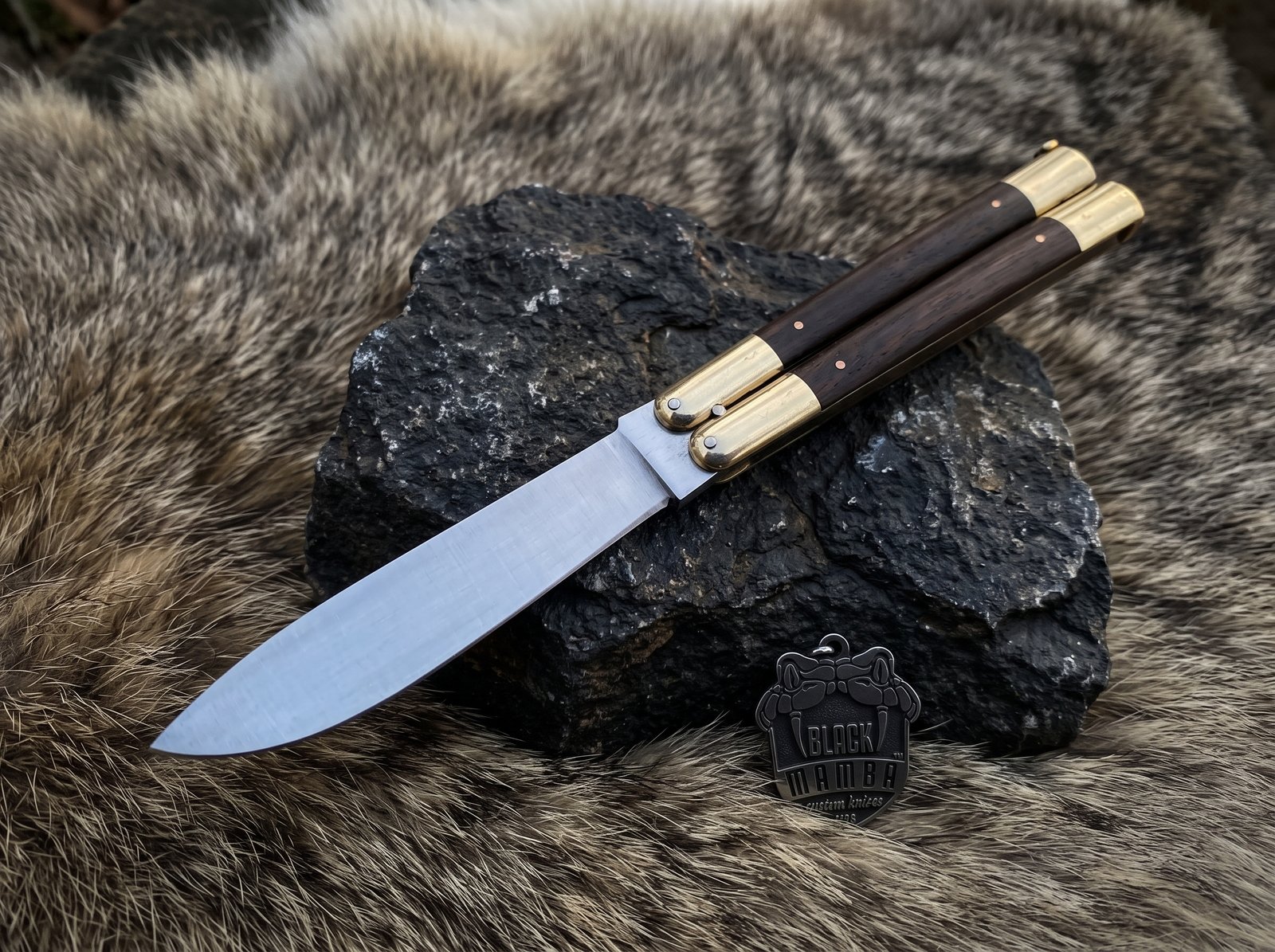
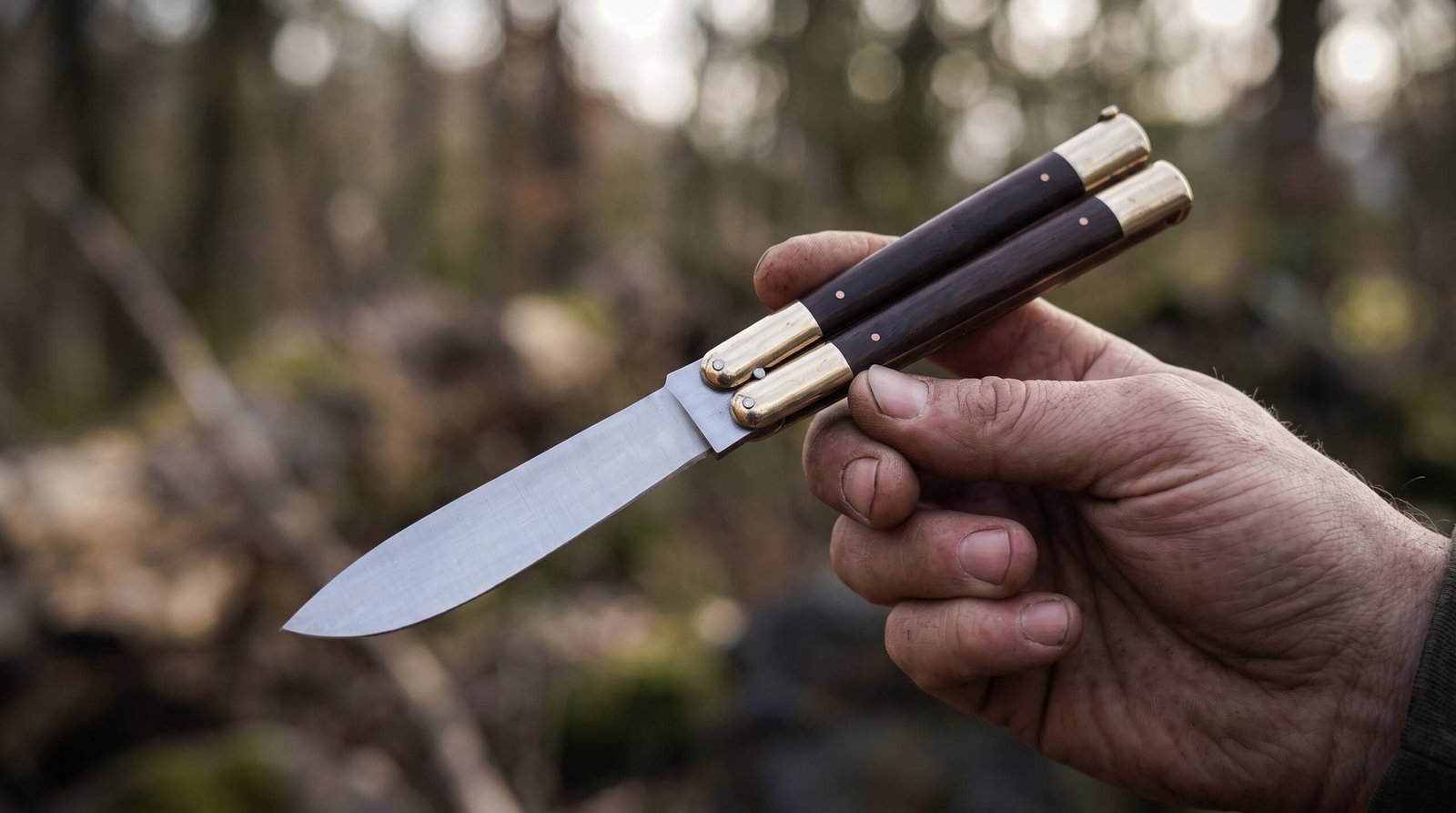
Kamagong is dense enough that a block of it sinks in water. Set into brass channels, it gives this balisong a handle that weighs more than its size suggests and warms to the hand far faster than bare metal does.
| Overall length | 9.1 inches |
| Blade length | 4.4 inches |
| Handle length | 4.7 inches |
| Steel | High carbon steel |
| Hardness | 58–60 HRC, oil tempered |
| Handle | – Brass with Kamagong Wood Inserts |
Good for: learning the format on something that will survive the learning. At 9.1 inches open with a 4.4 inch blade, this is full-size, and the brass is thick enough that dropped handles dent rather than crack.
Kamagong, and why it is used here
Kamagong is Philippine ironwood, and the balisong is a Philippine design, so the pairing is not decorative. The wood is tight-grained and oily. It resists splitting along the channel where a softer timber would eventually check, and it does not telegraph cold the way an all-metal handle does in November. Over a few years of handling it goes darker and slightly glossy at the contact points, which is the only maintenance record it keeps.
Brass channel handles
Channel construction means each half is a folded or milled trough with the insert bedded inside, rather than two flat slabs pinned around a spacer. It is heavier and it is stronger, and it puts the mass where the handle meets the pivot. The result is a knife with real momentum in a rollover. Our guide to channel, sandwich and skeletonized handles explains what you give up in speed.
Living with 9.1 inches
Full-size balisongs are easier to learn on than short ones. The extra length slows the rotation down, gives you more time to catch a handle, and makes a mistimed grab less likely to end in a cut. The tradeoff is pocket carry, which becomes awkward past about eight inches. If you want a shorter one, look for something under seven inches open.
Routine care: Wipe the blade dry when you finish handling it and put a light oil on the bare steel before it goes away. A drop of oil in each pivot, worked in by flipping, keeps the action even; wipe the excess off the brass, where it collects dust. The kamagong needs nothing. If the wood ever looks chalky, a fingertip of oil restores it.
Practical questions
Is this a good first balisong? It is a reasonable one. Full length, forgiving weight, and a handle that survives drops. Beginners usually want a trainer with a dull blade first, and the Trainer Blade option on this page is this same knife with a blunt edge. The history of the balisong is worth reading if you are new to the format.
Does the wood ever come loose? The inserts are bedded and pinned into the channel. Loosening would take real abuse.
What is the difference from the ebony version? Ebony is darker, slightly lighter in weight, and finer grained. The brass balisong with ebony inserts is the same build in the other wood.
Model: BMK-424
Looking for more styles? Take a look at the full Filipino balisong collection.
Noah B. (verified owner) –
The butterfly knife I acquired from this shop is a true work of art. The design is exquisite, and it feels fantastic in my hand. I’m proud to own it.
Daniel S. (verified owner) –
The butterfly knife I purchased is now the centerpiece of my collection. The steel adds a touch of elegance, and it flips open effortlessly. A great find!
Grace L. (verified owner) –
I’m building a collection of unique blades, and the one I bought here fits perfectly. It’s a gorgeous piece that I’m proud to display. Exceptional craftsmanship!
Francqois Fidel Herraero (verified owner) –
Excellent quality work; the product, but also the package that comes with it and the information that accompanies it.
François Fidel Herrero Davis (verified owner) –
Product of excellent quality and great service.
Excellent knife, great sheathe and the box is great too
Carol Miller –
Ordering again from this store the second I finish writing this review. Love that this comes out of Memphis and still ships worldwide this quickly.
Colton Wright –
Ordered late at night on a whim and woke up glad I did.
Elizabeth Hall –
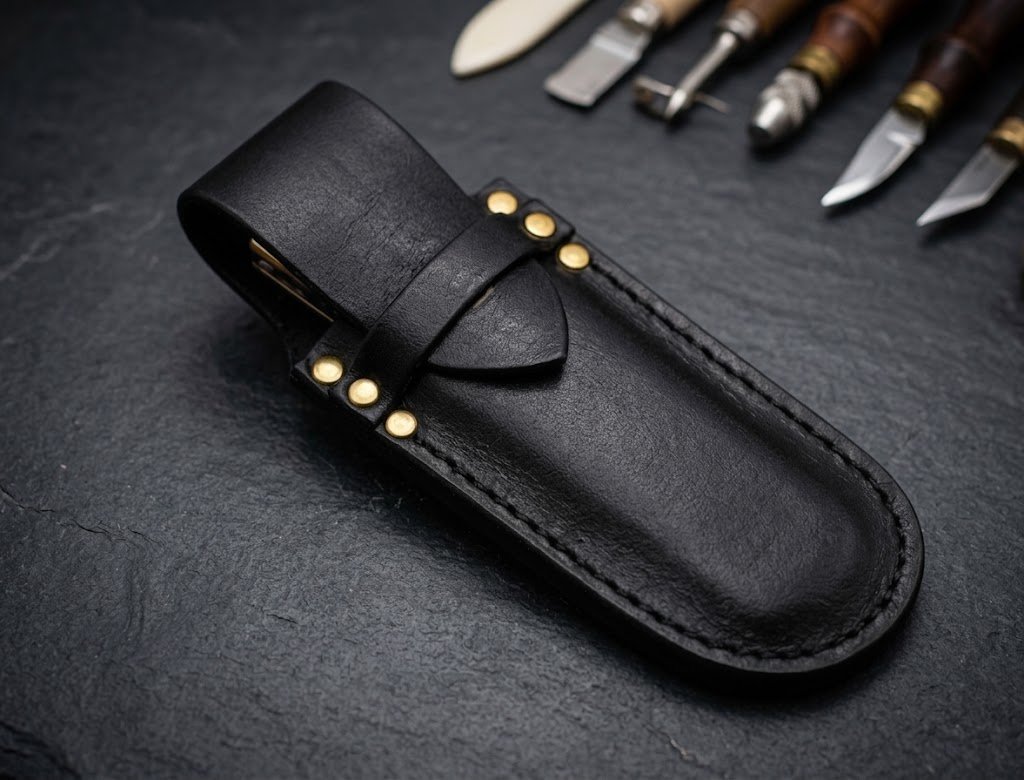
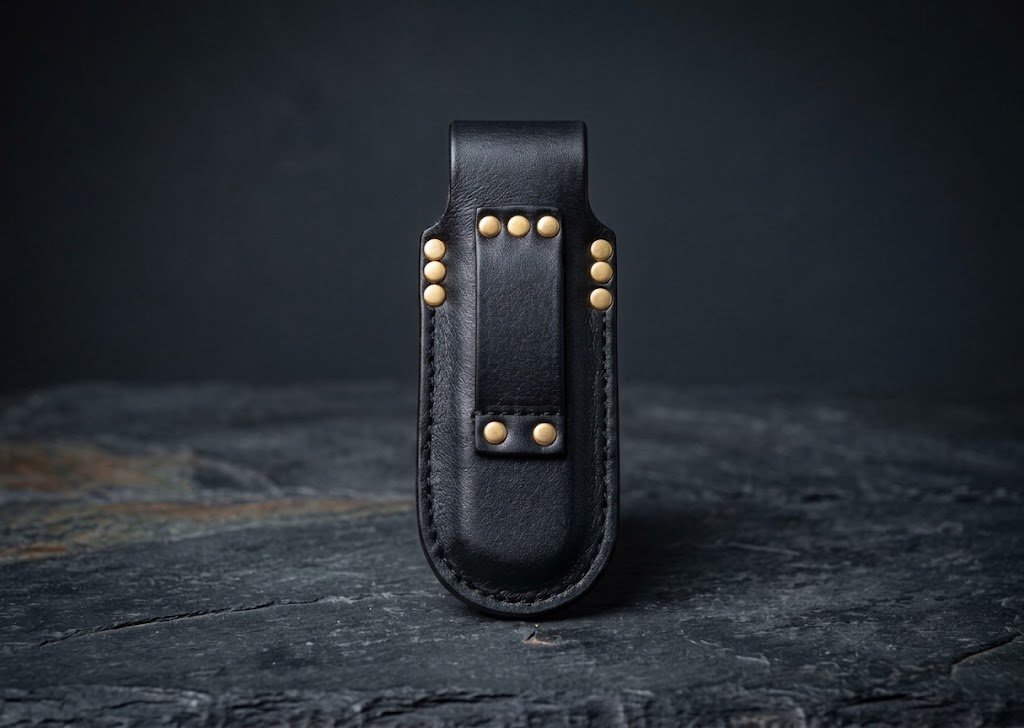
This seller clearly knows what they’re doing with quality like this. Weight is perfectly balanced for flipping. Comes with a nice pouch which is a nice touch. Shipping was fast and everything arrived well packaged.
Shane Campbell –
Honestly one of my better purchases in a while. Pivots feel dialed in with zero blade play. This flips cleaner than knives twice the price. Exactly the kind of quality that keeps me coming back.
Samantha Hunt –
This turned out to be way better than I thought it would be. Good to know real Memphis craftsmen are behind this, and shipping was quick too. Pivots feel dialed in with zero blade play. Weight is perfectly balanced for flipping. Would send this as a gift again in a heartbeat.
Ronald Foster –
Feels way more premium than the price suggests. This company just earned a repeat customer. You can tell it’s real American craftsmanship out of Memphis. Shipping was quick too.
Susan Wright –
Superb craftsmanship on this one. Blade came shaving sharp straight out of the box. This is going straight into my daily rotation.
DeShawn Cook –
Ordering again from this seller the second I finish writing this review. Black Mamba Knives keeps setting the bar higher with each order. This flips cleaner than knives twice the price. Highly recommend this one.
Mary Collins –
Wish I had gone with a different shop for this one.
Karen Myers –
Wasn’t sure what to expect but this balisong nailed it. Blade came shaving sharp straight out of the box. Happy customer here, through and through.