
Description
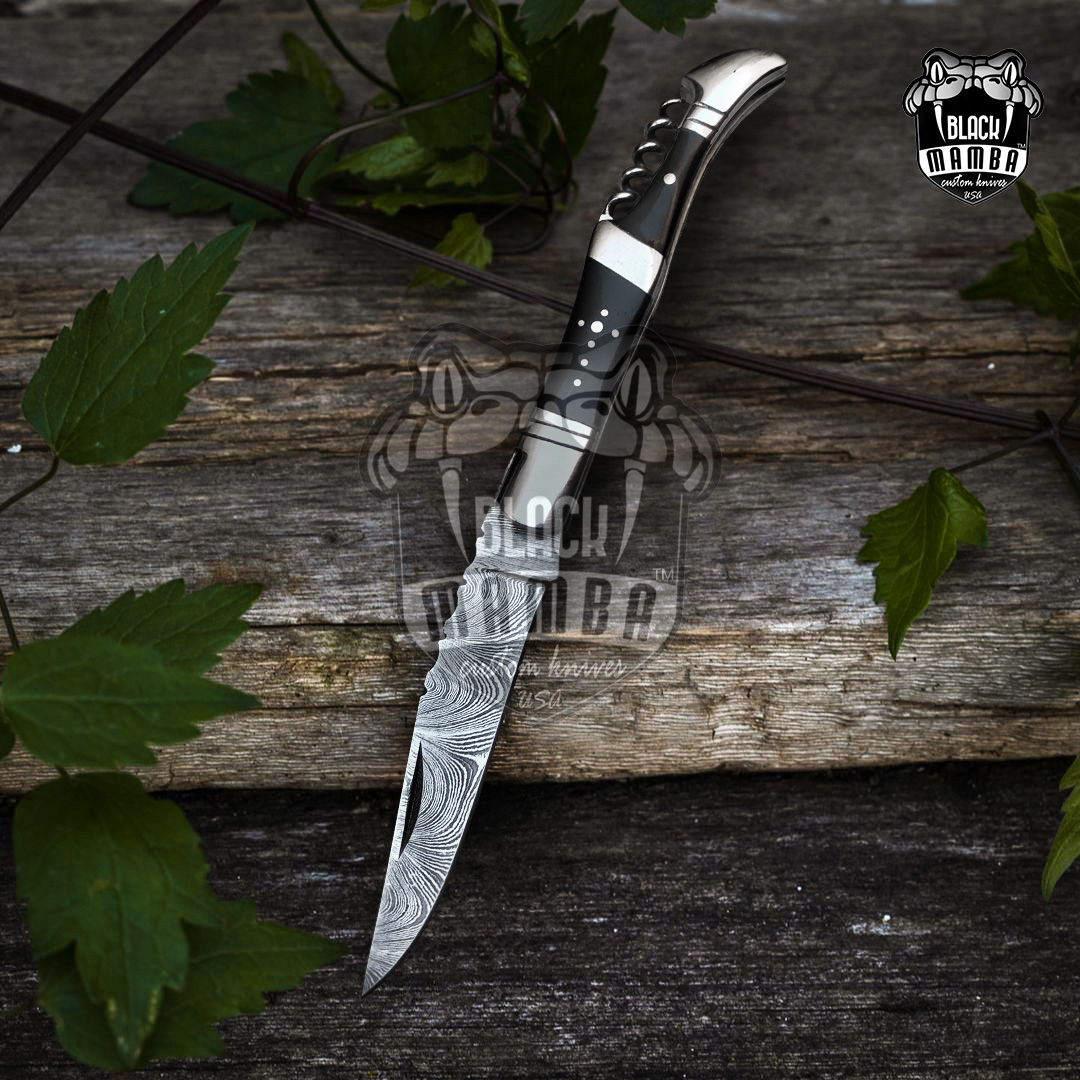
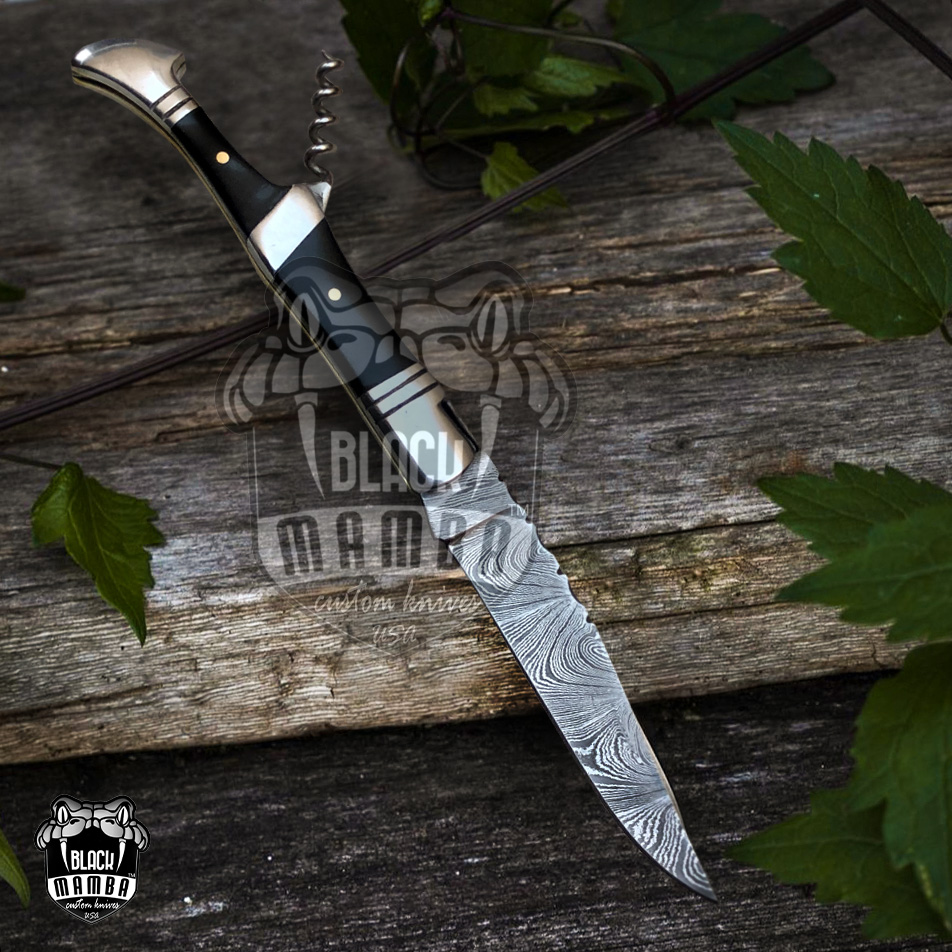
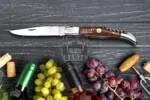
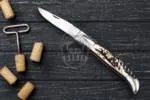
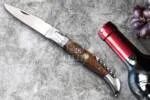
A Laguiole is a shape with rules, and this one keeps them: slim bolsters, a black horn handle, a decorated spring, and a blade that tapers to a fine point.
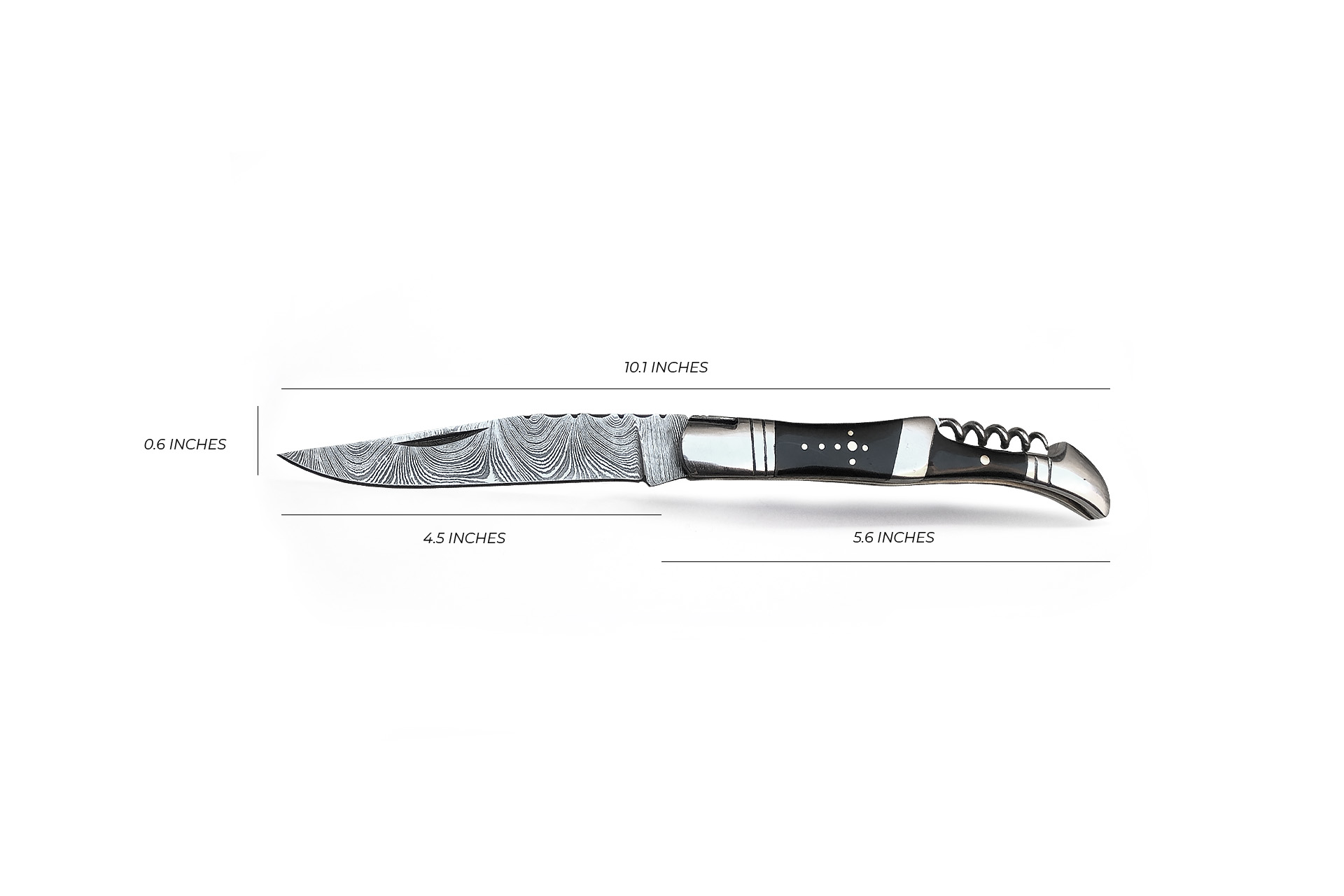
| Overall length | 7.5 inches |
| Blade length | 3.5 inches |
| Handle length | 4 inches |
| Handle | Black horn with inlaid pin work and polished bolsters |
| Steel | 1095 + 15N20 Damascus, 352 layers |
| Hardness | 58–60 HRC, oil tempered |
| Weight | 2.5 oz |
| Pattern | Wind & Mix twist Fire pattern Damascus Blade |
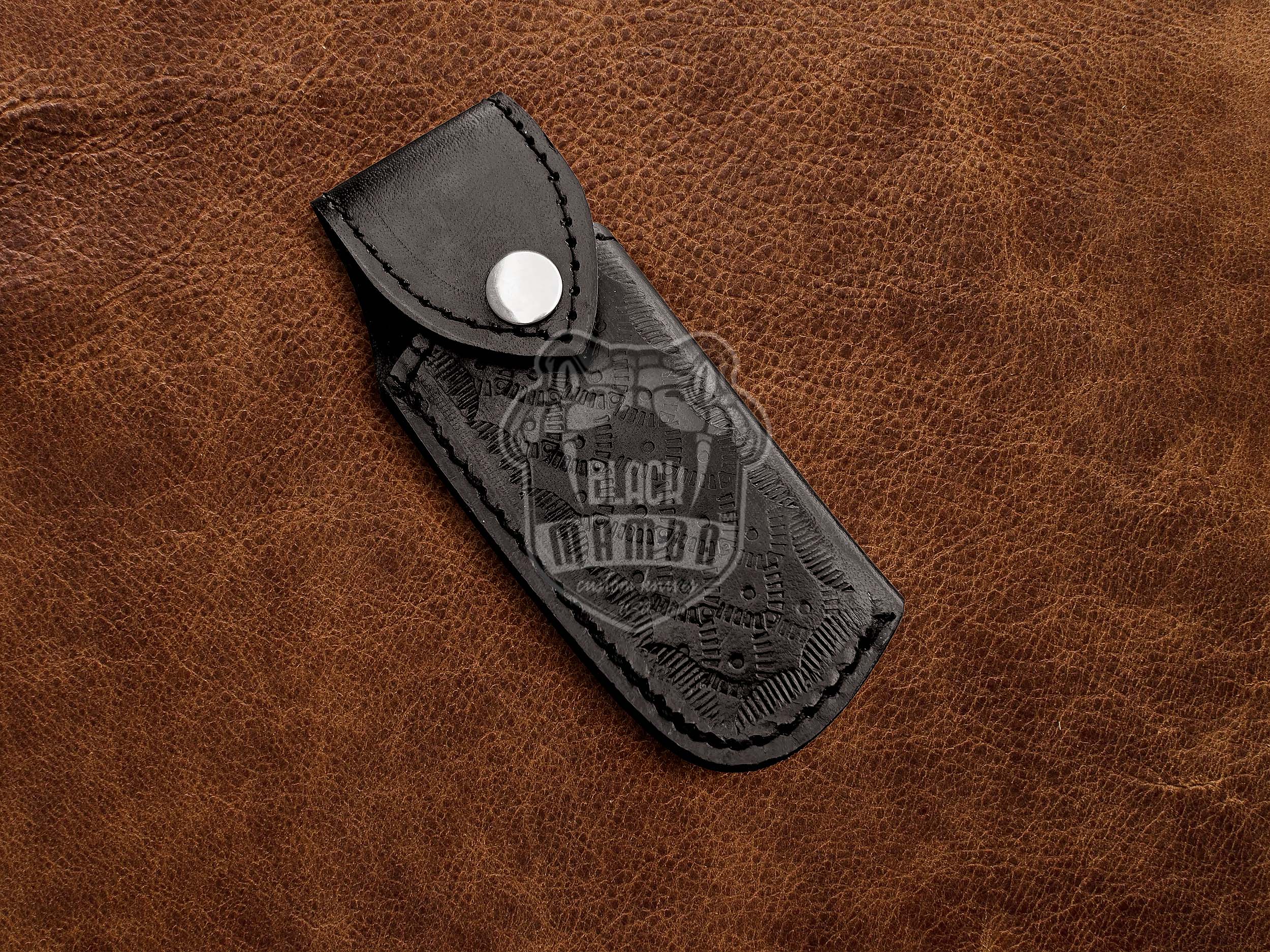
| Included | Hand-stitched leather sheath |
Suited to: the table and the pocket. Cheese, charcuterie, an apple, a steak at a long lunch. It is a gentleman’s folder and a steak knife in the same object.
How a Laguiole opens and closes
Traditional Laguiole knives are held open by a back spring rather than a lock, and it is worth handling this one as though that is true: close it with your fingers clear of the path of the edge, and do not use it for anything that could drive the blade backward into your hand. Within that limit it is a very pleasant knife to use, because a spring gives a smooth, weighted action that a lock never quite matches. Read our Laguiole knives guide for the history behind the pattern.
The bee and the spine
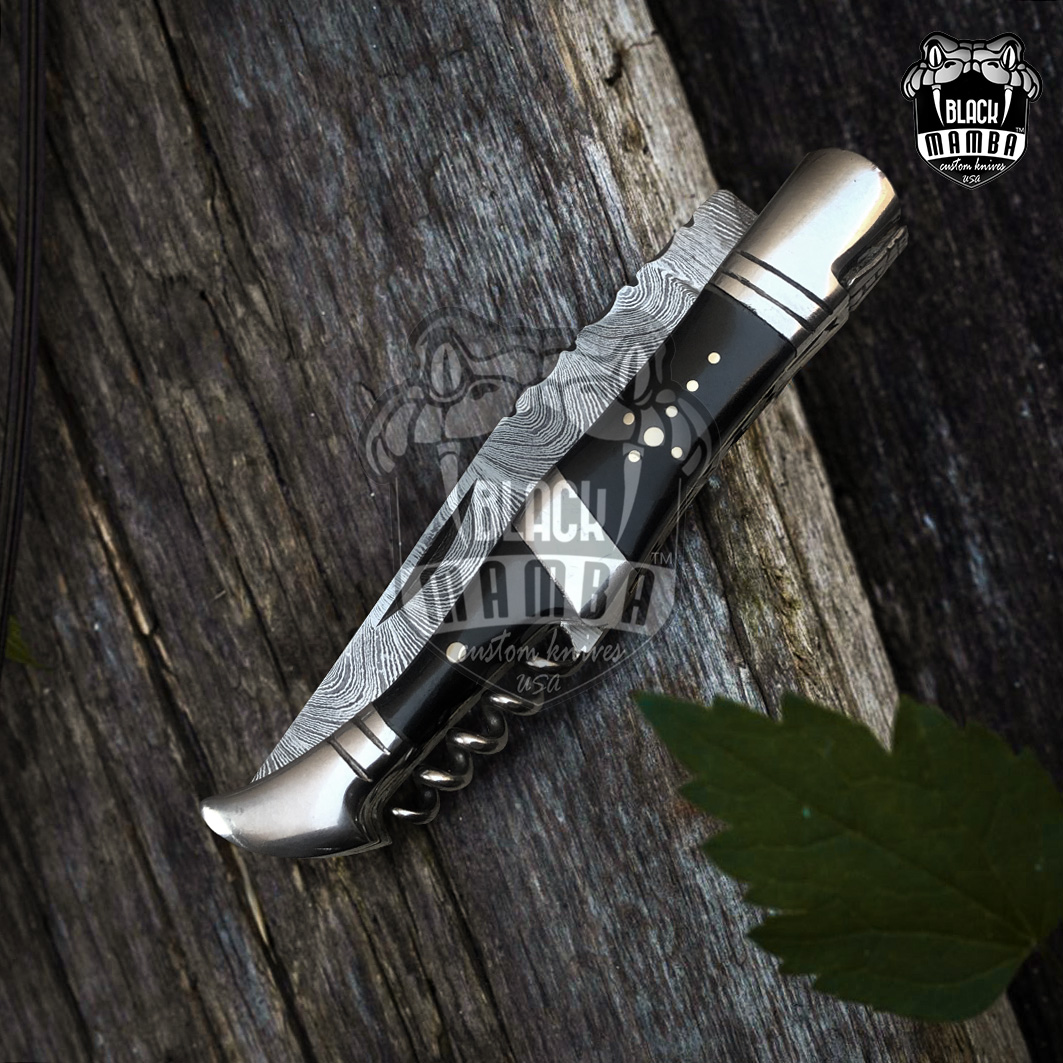
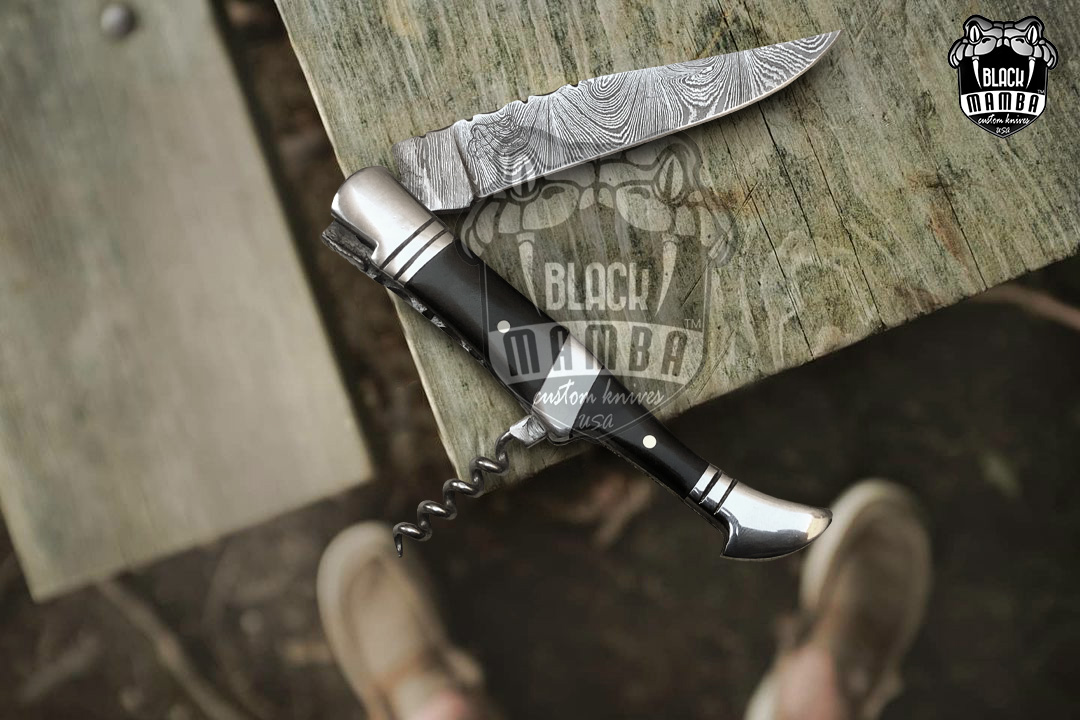
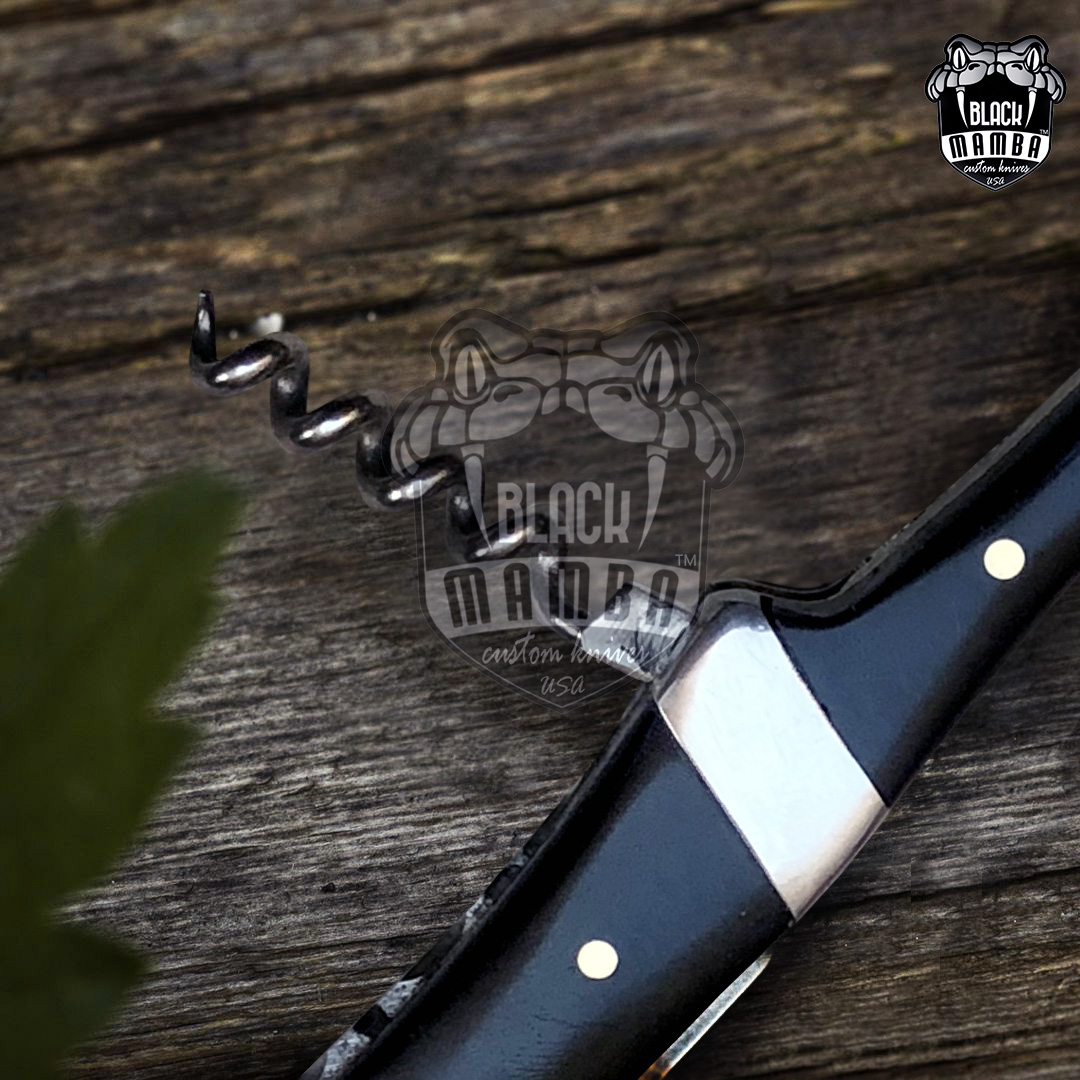
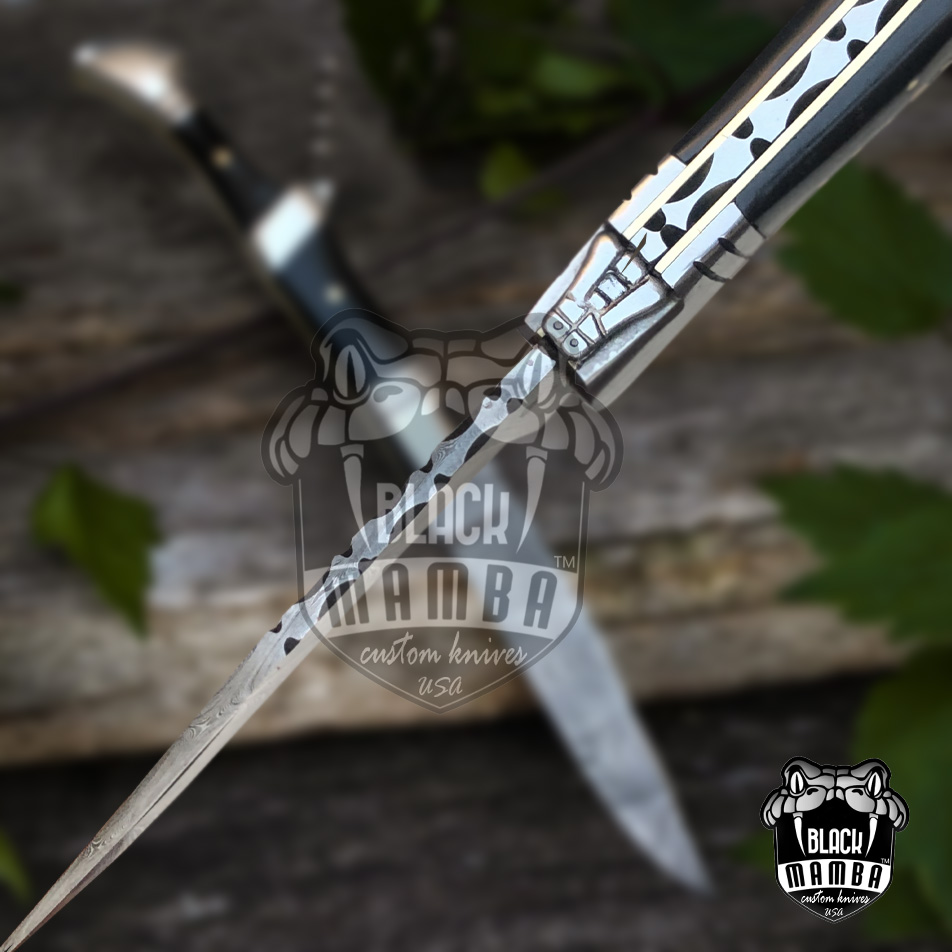
The raised piece at the heel of the spring is the bee, and on a Laguiole it is the maker’s signature rather than a functional part. Here it is forged as one piece with the spring instead of soldered on afterward, which is the harder way to do it. The spring itself is decorated along its length. The handle is black horn with inlaid pin work in a pattern, capped at both ends with polished bolsters.
Two and a half ounces
This knife weighs 2.5 ounces and closes to four inches. It disappears in a jacket pocket, which is the point of the pattern — it was designed to be carried all day by people who used it at every meal. If you want the same pattern as a matched table piece, the French Riviera steak knife and the stag horn Laguiole are built on the same lines.
Care: high-carbon Damascus dislikes sitting wet, so dry it after food and especially after fruit — acid marks it quickly. A drop of light oil in the pivot once in a while keeps the action smooth, and one wipe along the blade with the same oil before storage is enough. Horn is a natural material: keep it out of standing water and away from radiators and car dashboards, because heat and prolonged wet are what make horn shrink and lift at the bolster.
FAQs
Does the blade lock open? Treat it as a traditional spring-held folder and close it deliberately, fingers clear of the edge.
What is the handle made of? Black horn with inlaid pin decoration and polished bolsters at each end.
Can I use it as a steak knife? Yes. That is one of the jobs the pattern was designed around.
Model: BMK-506
Buying for groomsmen? This knife also comes as a matched set of 6, 15% less than buying six singly, and each one can carry its own engraved name.


Oliver P.: (verified owner) –
“I’ve been a collector of knives for years, and this Damascus folding pocket knife is a standout piece in my collection. The craftsmanship and performance are exceptional.”
Ella S.: (verified owner) –
“I bought this pocket knife for my husband, who’s an outdoor enthusiast. He’s been using it on our camping trips, and it’s become an indispensable tool.”
Oliver H. (verified owner) –
“I was looking for a unique gift, and this Damascus knife was perfect. The recipient was delighted with its sharpness and craftsmanship.”
Sophie T: (verified owner) –
“This pocket knife has a special place in my heart as a family heirloom. It’s beautifully crafted and carries sentimental value.”
Lucas K.: (verified owner) –
“I use this pocket knife for everyday tasks, and it’s proven to be reliable and sharp. The Damascus steel is a nice touch.”
Ava D.: (verified owner) –
“I’m a chef, and I appreciate a quality knife. This pocket knife’s sharpness and precision make it a valuable tool in my kitchen.”
Jason B. (verified owner) –
Olivia Lopez –
This knife is really solid. No question about it. Edge held up great through a full week of daily cooking. This one’s a keeper for sure.
Sergio Davis –
This turned out to be way better than I thought it would be. Cleans up easy and hasn’t shown any rust or staining. If you’re on the fence just get it. You won’t regret it. Love that this comes out of Memphis and still ships worldwide this quickly.
Rafael Castillo –
This knife is reasonably good. Just a couple small things kept it from 5 stars. Minor nitpicks aside, good quality knife.
Wayne Morgan –
Showed up right on time and looked even better than the photos. Has become my main prep knife in the kitchen since it arrived. Handle stays comfortable even after prepping a big meal. This shop just earned a repeat customer.
Benjamin Cooper –
Ordered late at night on a whim and woke up glad I did. Cleans up easy and hasn’t shown any rust or staining. This is my new favorite in the collection.
Derek Gutierrez –
Kept picking this knife up just to admire it after it arrived. This store just earned a repeat customer.
Marcus Patel –
Mostly happy with this one, just a small gripe or two.
Betty Bailey –
This knife looks even better in person than in the listing photos. Balance in hand is perfect for detail work at the cutting board. Has become my main prep knife in the kitchen since it arrived. Already thinking about what to order next from this maker.
Karen Hill –
This knife looks even better in person than in the listing photos. Edge geometry makes thin slicing so much easier than my old knife. This is exactly why I keep coming back to this shop. Made in the USA and shipped worldwide with no issues on my end.
Chloe Alvarez –
Did not expect this level of quality for the price. I keep coming back to Black Mamba Knives because it’s always this good.
Sergio Barrett –
My son was speechless when I showed them this knife. This will not be my last order from this company.
Stephanie Myers –
This knife is top notch. No question about it. Black Mamba Knives keeps setting the bar higher with each order.
David Castillo –
Wasn’t sure what to expect but this knife nailed it. Balance in hand is perfect for detail work at the cutting board. Slices through everything like butter, no sawing needed. Edge geometry makes thin slicing so much easier than my old knife. Can’t wait to see what else this store has to offer.
Travis Long –
Ordering again from this maker the second I finish writing this review. Edge held up great through a full week of daily cooking. This is going straight into my daily rotation.
Wayne Fox –
Been eyeing this knife for a while and it did not disappoint.
Alejandro Davis –
This thing is a beast in the best way. Cleans up easy and hasn’t shown any rust or staining. 10/10 would buy again.
George Torres –
Wasn’t expecting to be this impressed but here we are. Cleans up easy and hasn’t shown any rust or staining. Slices through everything like butter, no sawing needed. Beyond happy with how this turned out.
Ashley Campbell –
This thing is a beast in the best way. Already thinking about what to order next from this store.
Jerome Long –
Top notch craftsmanship on this one. So worth it.
Anna Ramos –
My whole family passed this knife around at dinner just to look at it. Balance in hand is perfect for detail work at the cutting board. 10/10 would buy again.
Michael Rogers –
Got this for Father’s Day and now I want one for myself too. Cleans up easy and hasn’t shown any rust or staining. Love it.
Xavier Cook –
Decent buy overall, a couple small nitpicks aside. Good in the kitchen, wish the blade held its edge a bit longer. Minor nitpicks aside, good quality knife.
Katherine Marsh –
Stellar craftsmanship on this one. Edge held up great through a full week of daily cooking. Highly recommend this one.
Marco Scott –
Phenomenal craftsmanship on this one. Handle stays comfortable even after prepping a big meal. This company just earned a repeat customer.
Mary Freeman –
Overall a good buying experience. Cuts well though it needed a quick touch up on the edge. Good product. Just not quite perfect.