
Description
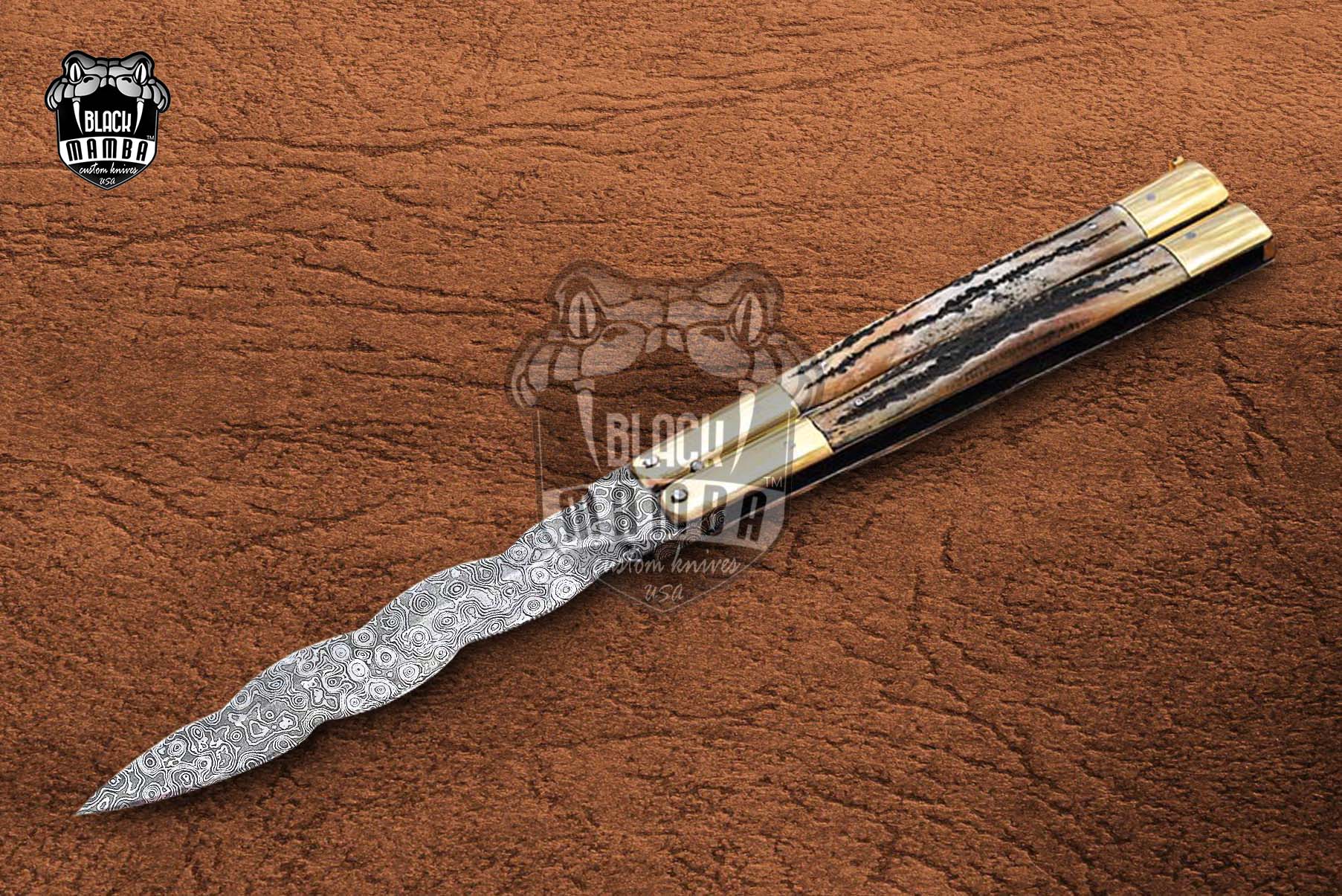
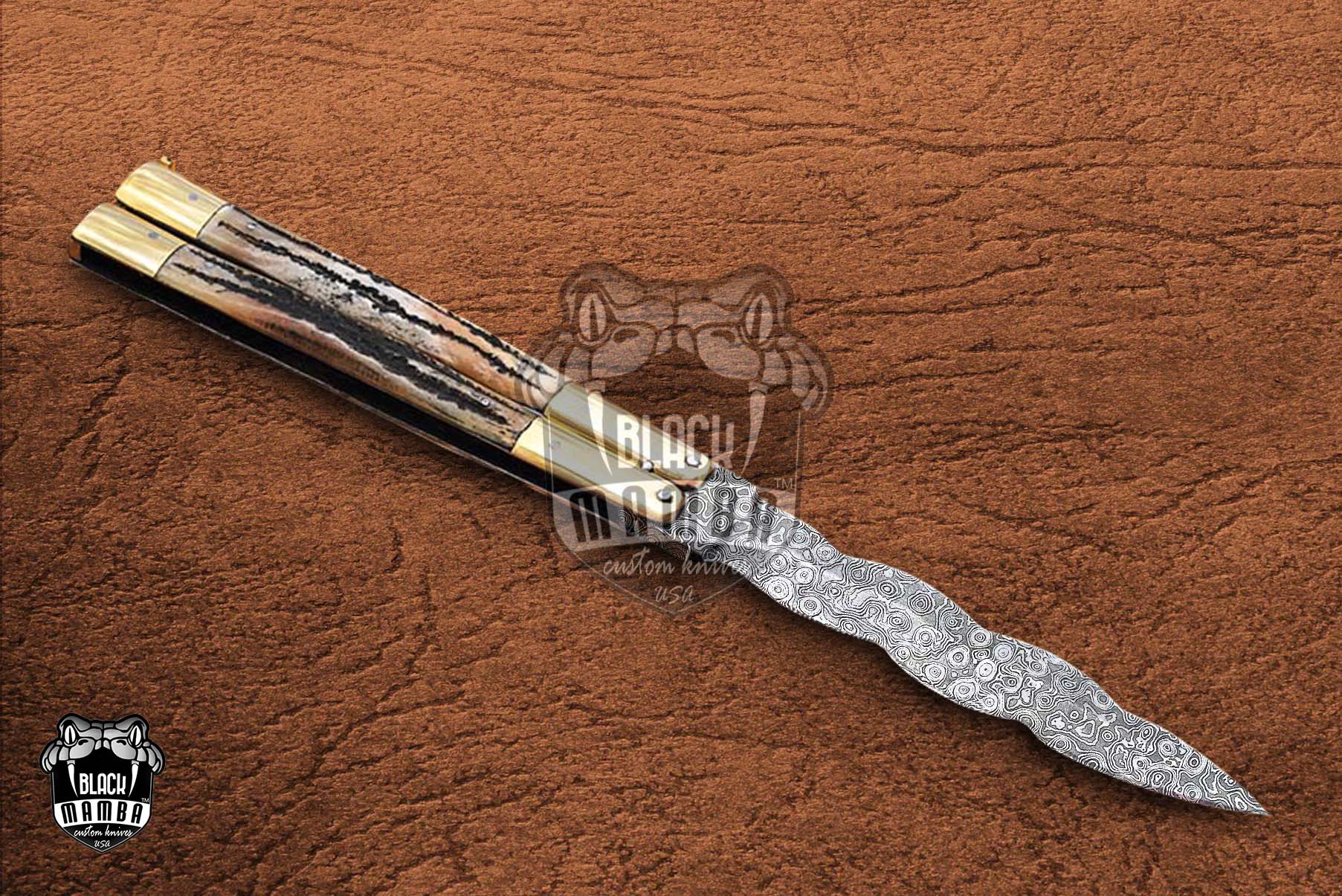
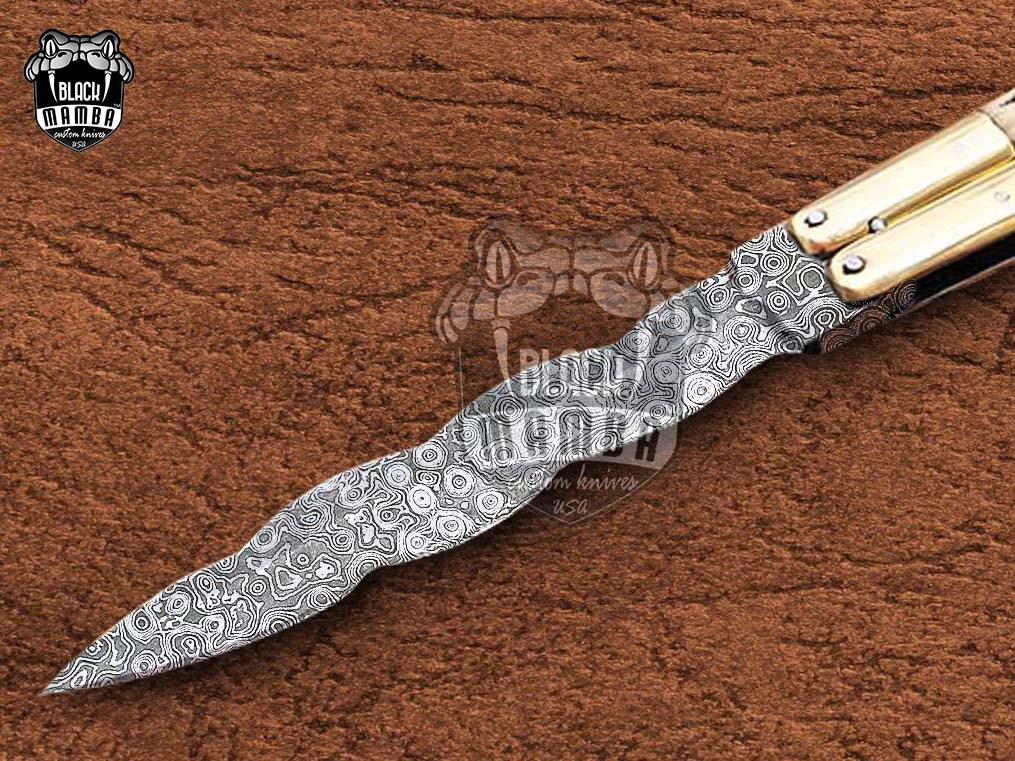
The blade on DB-10 waves. It is a serpentine profile rather than a straight one, and the raindrop Damascus running through it bends with the curves, so the pattern reads as a series of stacked arcs instead of parallel bands.
| Overall length | 11.4 inches |
| Blade length | 5.5 inches |
| Handle length | 5.9 inches |
| Steel | 1095 + 15N20 Damascus, 352 layers |
| Hardness | 58–60 HRC, oil tempered |
| Weight | 7.2 oz |
| Handle | Brass with red dragon inlay |
Who flips this: flippers who want a traditional Batangas balisong rather than a modern trainer-derived one. At 11.4 inches open and 7.2 ounces this is a heavy knife by flipping standards. It swings slower and with more authority than a light channel-construction balisong, and it rewards deliberate technique over speed.
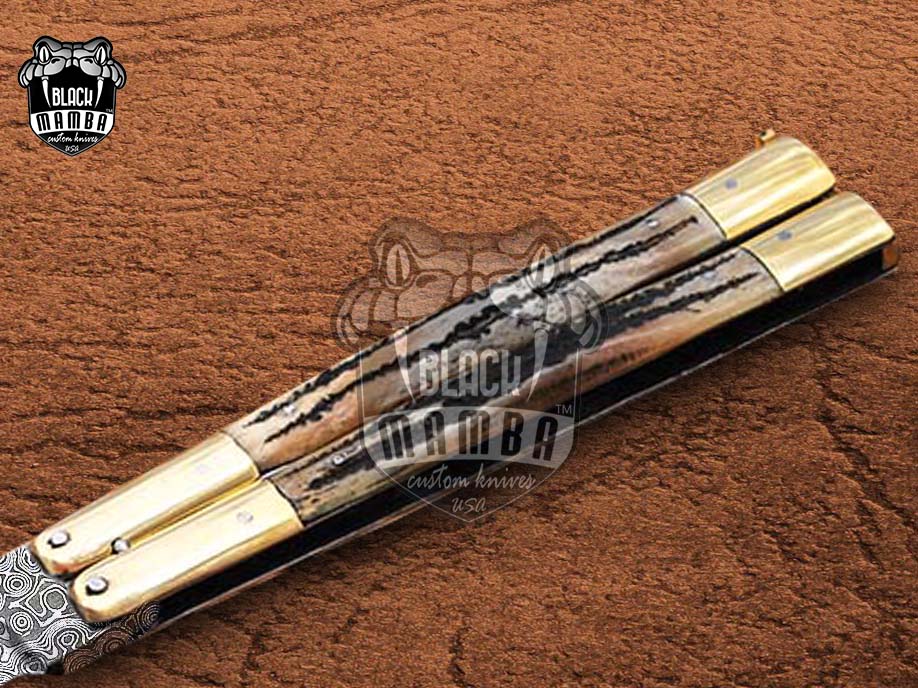
Brass handles with stag inlay
The handles are solid brass with natural stag antler set into the outer faces. Brass is what gives this knife its weight and its momentum through a rotation, and the stag panels are there so your fingers have something with grip and warmth rather than bare cold metal. The antler is natural — the ridged bark texture and the dark and cream banding differ on every knife because they came off different pieces.
Why the wavy blade changes how it handles
A serpentine edge puts the widest points of the blade at intervals rather than in one place, which shifts the balance slightly toward the middle of the blade compared to a straight spear point of the same length. It also means the edge presents to a cut at varying angles, which is why kris-style blades slice aggressively. Practically, for a flipper, it means you should learn where the sharp sections sit before you attempt anything that involves catching the blade.
Traditional construction
This is the Filipino Batangas pattern, built with pinned pivots and a latch rather than modern bearings and hardware. It is a knife assembled the way these were assembled before they were a trick medium.
Care: the pivots are the whole knife. Keep them clean and give each one a single drop of light oil when the action starts feeling gritty, not when it starts feeling slow — grit is what wears a pinned pivot out. Brass will tarnish and darken with hand contact, which most owners prefer; if you polish it, keep the compound off the stag, which is porous and will hold it. The etched blade is carbon steel underneath, so wipe it dry after handling, and never leave this knife in a car in summer, because heat is what cracks antler.
Questions from flippers
Is this a live blade? Yes, the Live Blade arrives sharpened. Learn your openings on a trainer first, which you can get by picking the Trainer Blade option on this page. Butterfly knife tricks for beginners starts at the right place.
Is the action smooth out of the box? It is a pinned traditional build, so it breaks in rather than arriving broken in. Expect it to loosen over the first few hundred rotations. Balisong construction explained covers what is happening inside the handles.
Why is it so much heavier than my trainer? Solid brass handles. For the same construction with bull horn panels instead of stag, see DB-31 with brass and bull horn.
Model: BMK-DB-10
Want a different handle or blade? Browse all of our balisong knives for sale.
Jonathan G. (verified owner) –
Nice knife
Aaron Gonzalez –
This balisong is beautifully made. No question about it. Blade came shaving sharp straight out of the box. This is the kind of purchase that makes online shopping worth it.
Thomas Wood –
Ordering again from this shop the second I finish writing this review. Weight is perfectly balanced for flipping. Happy customer here, through and through.
Elizabeth Reyes –
Wasn’t expecting to be this impressed but here we are. This flips cleaner than knives twice the price. Can’t wait to see what else this store has to offer.
Wyatt Clark –
My son was speechless when I showed them this balisong. Handles have a great grip even during fast flips. Nice to support a Memphis based knife maker, shipping was fast even internationally. Latch snaps shut clean every time. This shop clearly takes pride in their work.