
A gut hook is a small sharpened notch ground into the spine of a hunting knife. Hooked under the hide and pulled, it opens the belly along a controlled line without the point dipping into the stomach or intestines. Done with a plain blade that takes care and a steady hand; done with a hook it takes one movement.Who actually needs one. If you field dress several animals a season it will save time and mess. If you take one deer a year, an ordinary drop point does the job and is easier to sharpen. We would rather say that than sell you the wrong knife.Ours. Built in three steels: hand-forged 1095 and 15N20 Damascus, D2 tool steel, and hand-forged high carbon, all at 58 to 60 HRC, full tang, with stag, buffalo horn, camel bone, Micarta, stacked leather or wood handles and a fitted leather sheath. The hook is ground and finished by hand, which is the part cheap gut hooks get wrong.
-
Chalk Meadow Handmade D2 Steel Gut Hook Hunting Knife with Camel Bone Handle, Brass Bolster & Leather Sheath | Traditional Hunting Gift | BMK-1177
Original price was: $142.00.$114.00Current price is: $114.00. -
Slatra Damascus Gut Hook Knife 8.7 Inches Long 4.6 Inches Blade 5.6 Ounce Damascus Hunting Fixed Blade Knife Damascus Hand Made World Class Knives USA Made | BMK-163
Original price was: $151.00.$121.00Current price is: $121.00. -
Sagebrush Handmade D2 Steel Stonewashed Gut Hook Hunting Knife with Sage Green Micarta Handle & Leather Sheath | All Weather Hunting Gift | BMK-1174
Original price was: $131.00.$105.00Current price is: $105.00. -
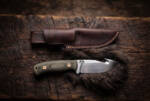
Nightfall Handmade D2 Steel Black Oxide Gut Hook Hunting Knife with Olive Micarta Handle & Leather Sheath | Tactical Hunting Gift | BMK-1180
Original price was: $138.00.$110.00Current price is: $110.00. -
BLACK MAMBA KNIVES Cocoa Ferret 4.3″ Closed 3.2″ Blade Pocket Knife Hunting Knife Wenge Wood Handle with Damascus Bolsters | BMK-449
Original price was: $164.00.$131.00Current price is: $131.00. -
Blackthorn Handmade D2 Steel Satin Gut Hook Hunting Knife with Buffalo Horn Handle, Brass Spacer & Leather Sheath | Classic Hunting Gift | BMK-1167
Original price was: $136.00.$109.00Current price is: $109.00. -
Chihuahuan Snake 8.7 Inches Long 4.6 Inches Blade 5.6 Ounce Damascus Gut Hook Hunting Fixed Blade Knife Damascus Hand Made World Class USA Made | BMK-167
Original price was: $206.00.$165.00Current price is: $165.00. -
Fernline Handmade D2 Steel Satin Gut Hook Hunting Knife with Olive Green Micarta Handle & Leather Sheath | All Weather Hunting Gift | BMK-1166
Original price was: $129.00.$103.00Current price is: $103.00. -
Pine Marten Pine Cone Beautiful Skinner Knife Perfect for Hunting Hand Forged Steel Knife Best Quality Knife Gift USA Made | BMK-220
Original price was: $129.00.$103.00Current price is: $103.00. -
Grove Serpent Handmade Damascus Gut Hook Hunting Knife with Olive Wood Handle, Stainless Bolster & Leather Sheath | Hunting Collector Gift | BMK-1171
Original price was: $171.00.$137.00Current price is: $137.00. -
Dunewalker Handmade D2 Steel Stonewashed Gut Hook Hunting Knife with Coyote Tan Micarta Handle & Leather Sheath | Backcountry Hunting Gift | BMK-1170
Original price was: $133.00.$106.00Current price is: $106.00. -
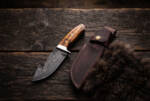
Hornback Skinner | Damascus Small Skinning Knife with Buffalo Horn Handle & Leather Sheath | BMK-644
Original price was: $131.00.$105.00Current price is: $105.00. -
Coyote Ripple Handmade Damascus Gut Hook Hunting Knife with Coyote Tan Micarta Handle & Leather Sheath | Field Dressing Collector Gift | BMK-1162
Original price was: $173.00.$138.00Current price is: $138.00. -
Plains Hawk Native American Custom Hunting Skinner Knife Twist Damascus Stag Antler Brass Guard Camping Knife Gift USA Made | BMK-230
Original price was: $186.00.$149.00Current price is: $149.00. -
Harvest Moon Handmade D2 Steel Gut Hook Hunting Knife with Olive Wood Handle, Brass Bolster & Leather Sheath | Field Dressing Gift | BMK-1159
Original price was: $138.00.$110.00Current price is: $110.00. -
Redvein Handmade D2 Steel Satin Gut Hook Hunting Knife with Black Micarta Handle, Red Liners & Leather Sheath | Everyday Hunting Gift | BMK-1172
Original price was: $129.00.$103.00Current price is: $103.00. -
Honey Vein Handmade Damascus Gut Hook Hunting Knife with Stabilized Maple Burl Handle, Stainless Bolster & Leather Sheath | Collector Hunting Gift | BMK-1163
Original price was: $181.00.$145.00Current price is: $145.00. -
Grey Stalker Handmade D2 Steel Satin Gut Hook Hunting Knife with Walnut Wood Handle, Stainless Bolster & Leather Sheath | Deer Hunting Gift | BMK-1161
Original price was: $129.00.$103.00Current price is: $103.00. -
Blaze Hollow Handmade D2 Steel Stonewashed Gut Hook Hunting Knife with Black & Orange Micarta Handle & Leather Sheath | High Visibility Hunting Gift | BMK-1164
Original price was: $133.00.$106.00Current price is: $106.00. -
Goldleaf Handmade D2 Steel Satin Gut Hook Hunting Knife with Stabilized Maple Burl Handle, Stainless Bolster & Leather Sheath | Hunting Gift | BMK-1173
Original price was: $139.00.$111.00Current price is: $111.00. -
Old Guard Handmade D2 Steel Gut Hook Hunting Knife with Stacked Leather Handle, Brass Guard & Pommel | Traditional Hunting Gift | BMK-1168
Original price was: $141.00.$113.00Current price is: $113.00. -
Vermillion Coil Handmade Damascus Gut Hook Hunting Knife with Rosewood Handle, Brass Bolster & Mosaic Pins | Collector Hunting Gift | BMK-1179
Original price was: $187.00.$150.00Current price is: $150.00. -
Thicket Warden Handmade D2 Steel Gut Hook Hunting Knife with Olive Wood Handle, Spine Jimping & Leather Sheath | Deer Hunting Gift | BMK-1175
Original price was: $132.00.$106.00Current price is: $106.00. -
Ashen Oak Hand Forged High Carbon Steel Gut Hook Hunting Knife with Oak Wood Handle & Leather Sheath | Blacksmith Field Dressing Gift | BMK-1160
Original price was: $123.00.$98.00Current price is: $98.00. -
Moss Creek Handmade D2 Steel Stonewashed Gut Hook Hunting Knife with Olive Green Micarta Handle, Spine Jimping & Leather Sheath | Backcountry Gift | BMK-1178
Original price was: $132.00.$106.00Current price is: $106.00. -
Royal Stag Handmade Damascus Gut Hook Hunting Knife with Genuine Stag Antler Handle, Brass Bolster & Leather Sheath | Trophy Hunting Collector Gift | BMK-1165
Original price was: $202.00.$162.00Current price is: $162.00. -
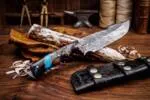
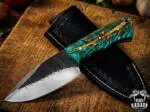
Turquoise Sea Damascus Knife 8 Inches Long 4 Inches Blade 12 Ounce Damascus Hunting Skinner Knife Hand Made World Class Knives | BMK-637
Original price was: $239.00.$191.00Current price is: $191.00.
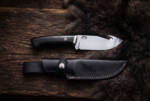
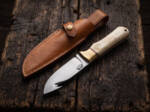
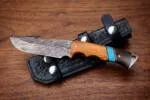
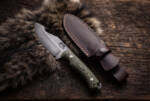
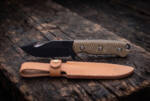
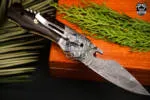
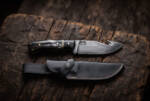
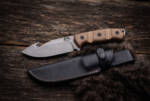
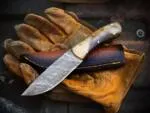
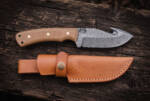
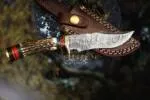
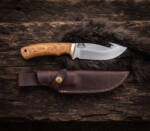
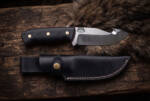
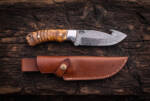
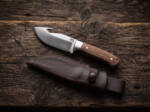
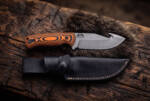
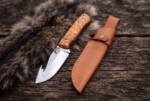
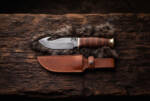
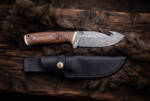
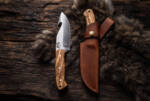
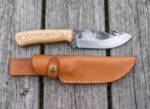
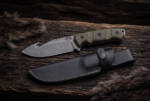
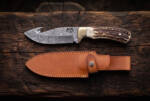
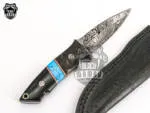
How do I sharpen a gut hook? Not on a bench stone. Use a round file, a ceramic rod or a tapered sharpener that fits inside the curve, and work from the inside out.Does the hook get in the way? Slightly, when batoning or doing fine tip work. It is a trade, which is why most hunters own one knife with a hook and one without.Is it legal everywhere? It is treated as an ordinary fixed blade. Length rules still apply and vary by state, so check your local law.
Gut Hook vs Skinner vs Caping Knife
| Blade | What It Does Best | When To Carry It |
|---|---|---|
| Gut Hook | Opens the hide in one controlled pull, no punctured stomach | Deer, elk and hog field dressing |
| Skinner | Deep-belly blade separates hide from carcass fast | Processing after the field dressing |
| Caping Knife | Fine detail work around head and shoulders | Trophy work |
Forged in Memphis, USA
Every gut hook knife here is made in our Memphis workshop and shipped with a hand-stitched leather sheath. The Damascus models are hand-forged from 1095 and 15N20 high-carbon steel (352 layers); the rest are ground from D2 tool steel or hand-forged high carbon steel. All are hardened to 58 to 60 HRC. The field-dressing skinners in this collection pair with the gut hooks or browse our full Damascus skinning knives, cowboy and bull cutter knives, and Damascus bowie knives.
FAQs
What is a gut hook knife used for? Field dressing game, the hook slips under the hide and unzips the belly in one pull without the point nicking the organs underneath. Cleaner meat, faster work.
Do I need a gut hook for deer hunting? Need is a strong word but once you have opened a deer with one in fading light, going back feels like a downgrade. It removes the single riskiest cut of the whole job.
How do you sharpen a gut hook? With a small round file or a fine ceramic rod worked inside the hook, a flat stone never reaches it. See our sharpening guide for the rest of the blade.
Are these real Damascus steel gut hook knives? The ones listed as Damascus are, 1095 and 15N20 high-carbon steel folded to 352 layers with the pattern running through the blade, hardened to 58 to 60 HRC in our Memphis workshop. This collection also includes D2 tool steel and hand-forged high carbon models; the blade steel is stated on every product page.
Does a gut hook knife come with a sheath? Yes, every fixed blade ships with a hand-stitched leather belt sheath.
Just added to this collection: Nightfall D2 Steel Black Oxide Gut Hook Hunting Knife, Vermillion Coil Damascus Gut Hook Hunting Knife, Moss Creek D2 Steel Stonewashed Gut Hook Hunting Knife and Chalk Meadow D2 Steel Gut Hook Hunting Knife.
How the hook is actually used
Roll the animal onto its back and find the breastbone. Make a small starting cut through the hide only, then turn the knife over, drop the hook into that cut and pull toward the tail. The hook rides under the hide and lifts it away from the stomach wall as it goes, so the edge inside the curve is cutting hide from below instead of you pushing a point down into the paunch. Keep the pull steady and let the curve set the depth. That is the whole trick, and it is why a hook opens an animal faster than a plain blade for anyone who has not done it a hundred times.
When a gut hook is the wrong knife
Be honest about how often you field dress. If it is once or twice a season, a plain hunting knife with a four inch drop point will do the same job and will be better at every other task you ask of it. The hook adds a notch that has to be sharpened with a round file or a tapered rod, it catches on cloth and sheath leather, and on a small blade it eats working edge length. Buy one because you dress a lot of game, not because it looks serious on the page. If you are mostly processing after the field work, a skinner is the better buy, and the full range sits in fixed blade knives.
Sharpening the curve
A round file or a tapered ceramic rod is the only tool that fits inside the hook. Work from the inside of the curve outward, a few light passes each time, and stop before you round the tip of the hook over. The main edge sharpens normally on a stone. Most people leave the hook far too long between touch ups because it does not feel dull in the hand, so check it at the start of the season rather than in the field.
Buying for a wedding party? The groomsmen knife sets come as six matched knives, 15% less than buying them singly, and each one can carry its own engraved name.
