
Description
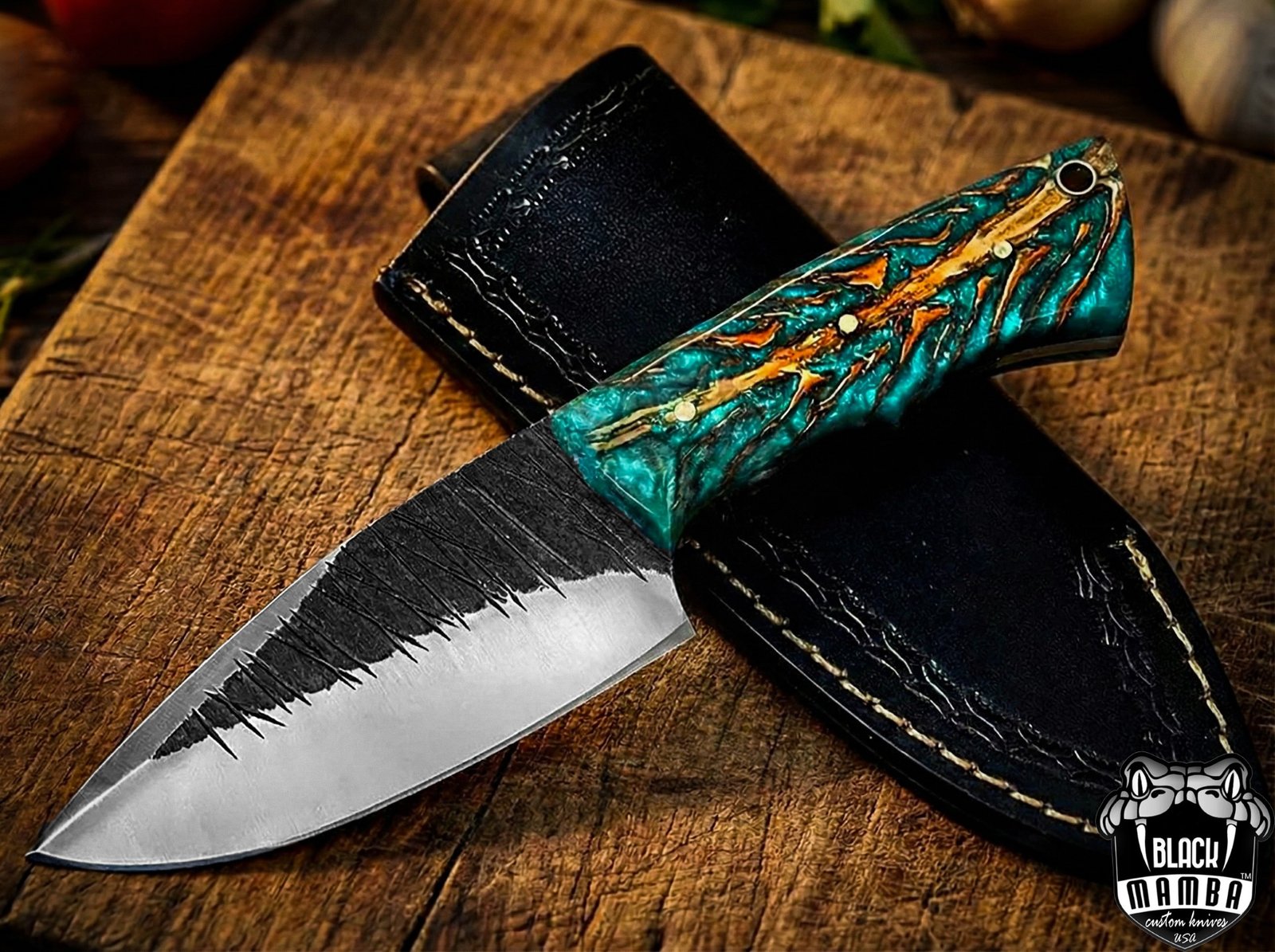
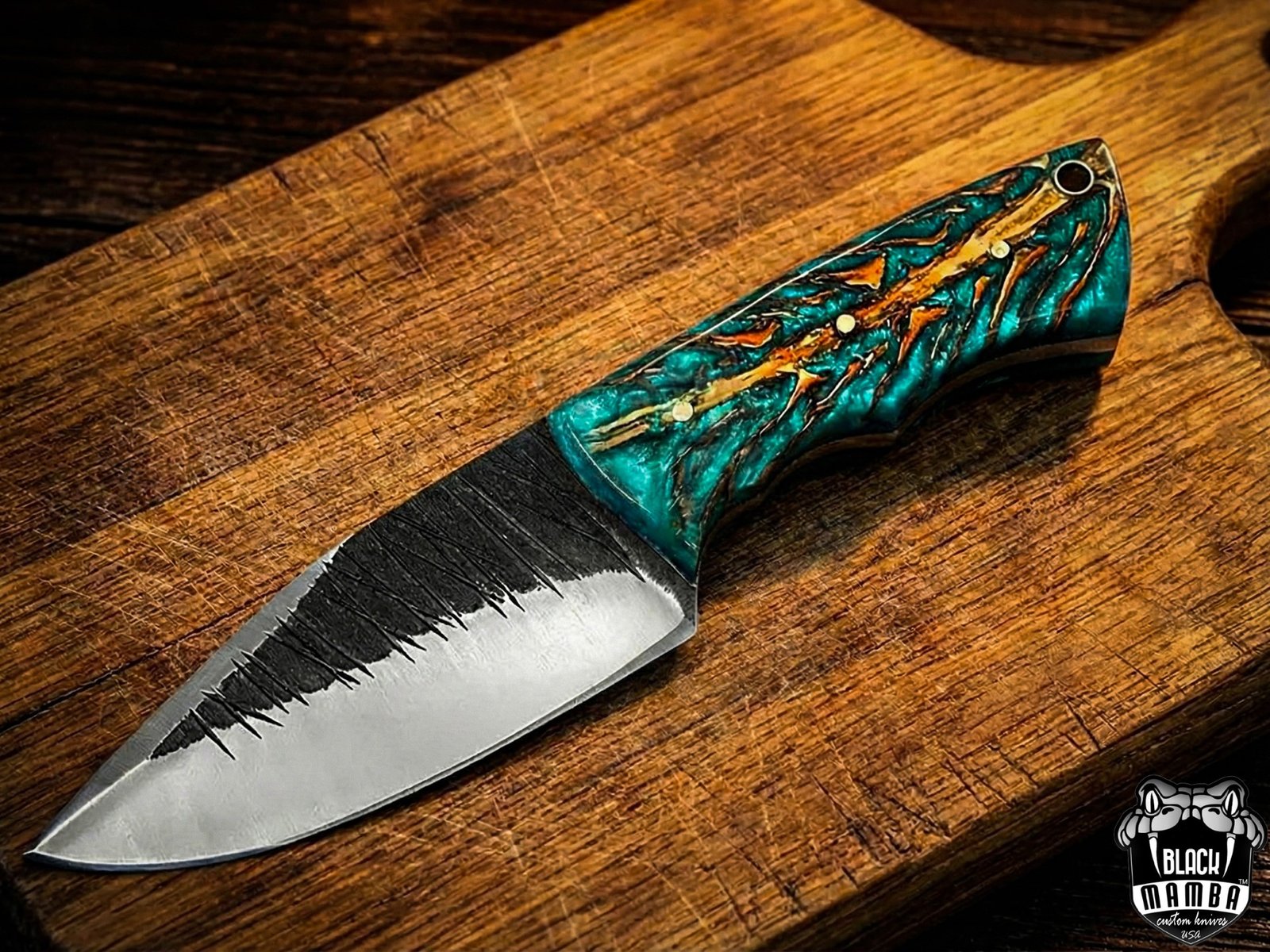
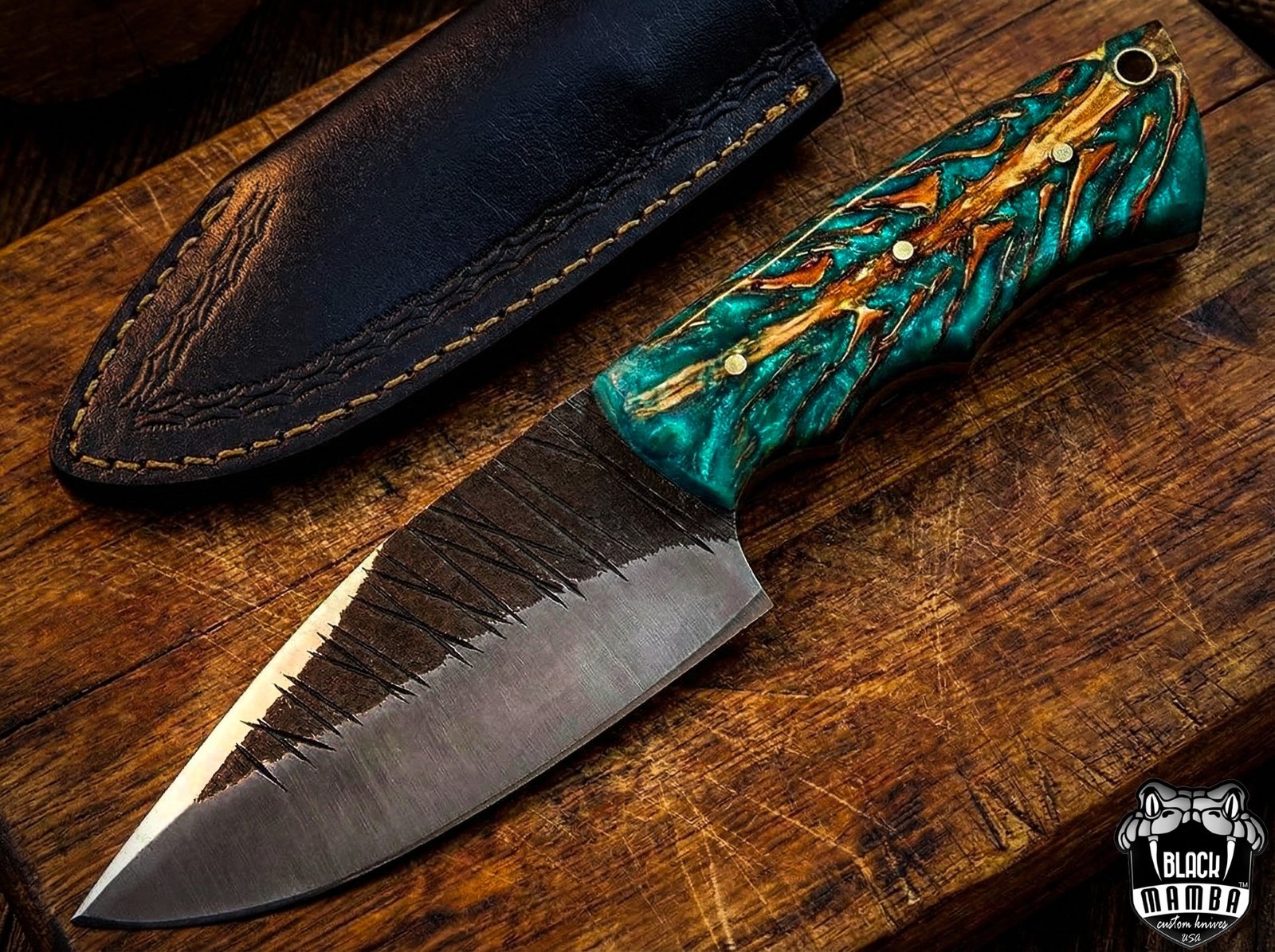
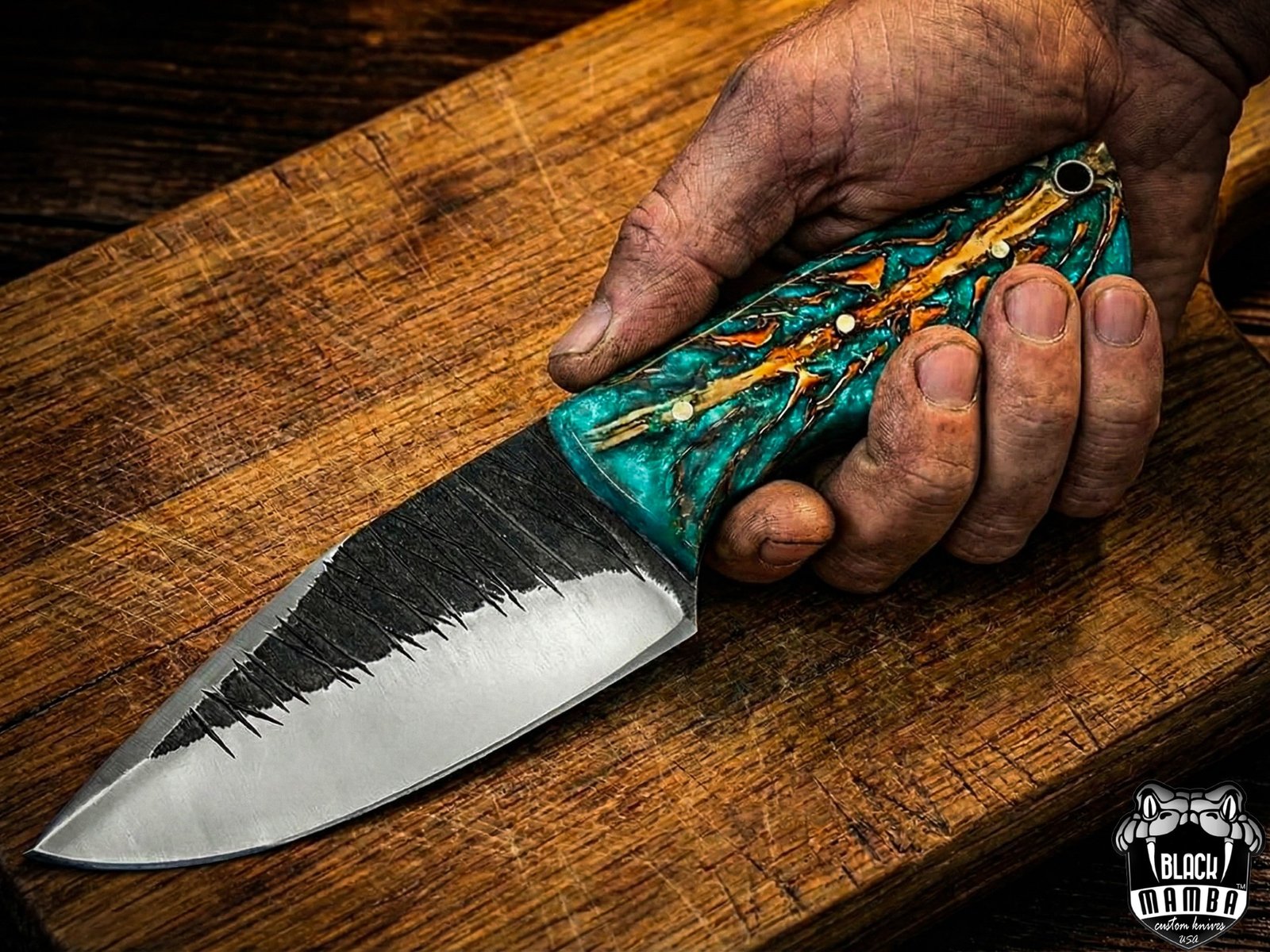
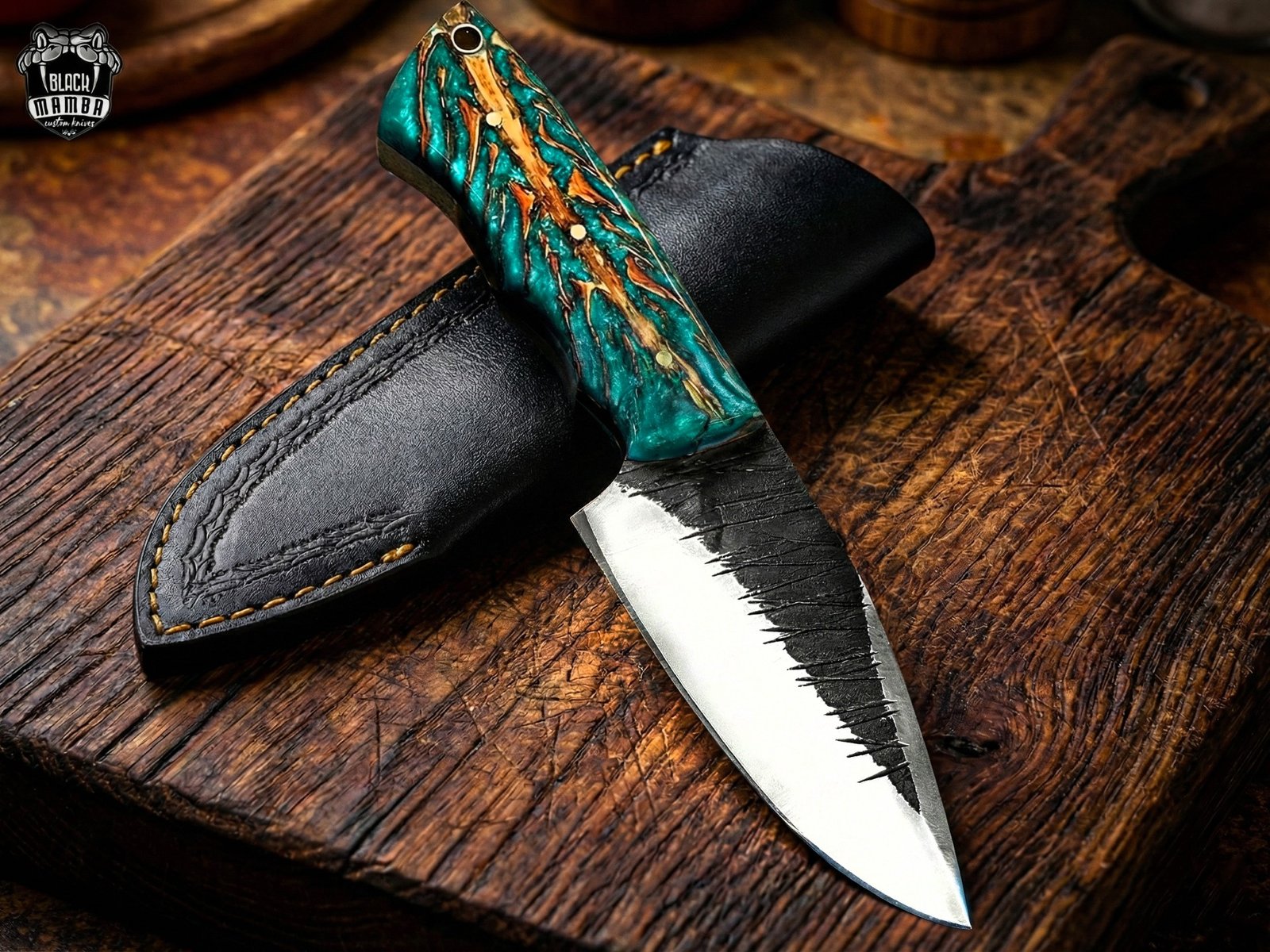
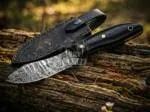
The handle on this one is a real pine cone, sectioned and cast in clear resin, and it is the first thing anybody notices. Underneath the novelty sits a plain, well-proportioned skinner: eight inches overall, four inches of blade, four inches of handle, five and a half ounces.
| Overall length | 8 inches |
| Blade length | 4 inches |
| Handle length | 4.0 inches |
| Steel | 1095 + 15N20 Damascus, 352 layers |
| Hardness | 58–60 HRC, oil tempered |
| Weight | 5.6 oz |
| Handle | Resin Pine Cone |
| Pattern | Wind & Mix twist Fire pattern Damascus Blade, Extreme custom Brass File-work |
| Included | Hand-stitched leather sheath |
On the job: deer and hog, mostly. A four-inch blade with belly is the standard size for opening a hide and working it off without punching through. The even four-and-four split puts the balance near your index finger, which is where you want it for long, shallow strokes where you watch the tip rather than the handle.
There is no gut hook on this knife
It is filed under skinning and gut hook knives on this site, so let us be plain: the table above shows a plain blade. If you specifically want the hook for opening a body cavity without nicking intestine, this is not the model. A purpose-built gut hook hunter is, and our gut hook guide explains when the feature earns the extra sharpening hassle and when it just gets in the way.
Cast pine cone: durable, and not what you expect
Resin-cast botanicals are harder and heavier than the wood they replace. The cone is inert once it is in resin. It will not rot, swell or dry out, and the block around it is waterproof. What resin does badly is heat and impact. Leave it in a hot car and it can haze; drop it on concrete and it chips at an edge rather than denting the way wood does. It also polishes to a gloss, so wet hands find it slicker than antler.
Sharpening a skinner
The belly does the work and gets neglected, because it is the hardest section to keep flat against a stone. Roll the knife as you push, holding the same angle from heel to tip. Hollow the belly out with careless strokes and the knife stops tracking a hide cleanly. Our skinning knife guide covers the stroke.
After every use: this steel and animal fat do not get along for long. Blood is salty and mildly acidic and will etch a mark into a carbon blade overnight. Wash with warm water and dish soap in the field if you can, dry it fully, then put a light oil on before it goes away. The resin handle can go under the tap without a second thought. Store the blade out of the leather sheath, which stays damp longer than you would guess.
Questions from hunters
Will it do a whole deer without stopping? Yes, if it starts genuinely sharp. Expect to strop it once partway through a large hog.
Is every pine cone different? Yes. Cone shape, scale spacing and the depth of the amber tone are set by the cone, so no two handles match.
Can the resin be repaired if it chips? Small chips sand and re-polish. A large break means a rehandle, which we can quote.
Model: BMK-878
Robert (verified owner) –
The knife came super sharp out of the box. This was my first purchase thru the company and at the moment it will not be my last. The knife is truly a beauty!
Dennis LaFazia (verified owner) –
Dennis Mitchell –
Got this for a groomsman gift and now I want one for myself too. Blade geometry makes it glide through cuts with barely any effort. Sheath snaps shut securely and doesn’t feel flimsy at all. Worth every penny.
Dustin Simmons –
This thing is a beast in the best way. Blade geometry makes it glide through cuts with barely any effort. 10/10 would buy again.
Dustin Allen –
Bought this on a whim and it turned out to be one of my favorite purchases in a long time. Black Mamba Knives’ attention to detail is honestly unmatched.