


Description
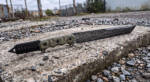
First light, a long walk in, and an animal down in country where nothing is flat. That is the job Dunewalker was drawn around. The blade is stonewashed to a matte grey so it throws no light back at anything watching, the coyote tan Micarta is contoured to fill a cold hand, and the hardware is dark screw work rather than peened pins, so the whole knife reads quiet from six feet away.
The finish is not cosmetic
A stonewash is exactly what it sounds like: finished blades are tumbled with abrasive media until the surface takes on a fine, random texture. Three things follow. It kills reflection, which matters on open ground. It hides the small scratches that any working blade collects, so the knife looks the same after a season as it did in the photograph. And the microscopic roughness holds a trace of oil against the steel, which is a quiet advantage on a semi-stainless alloy like D2.
| Overall Length | 9 inches |
|---|---|
| Blade Length | 4.5 inches |
| Handle Length | 4.5 inches |
| Blade Steel | D2 tool steel |
| Blade Finish | Stonewashed matte gray with spine jimping |
| Blade Style | Drop point with integral gut hook |
| Handle Material | Coyote tan canvas Micarta, contoured |
| Fittings | Black screw hardware, lanyard hole |
| Tang | Full tang |
| Sheath | Handmade black leather belt sheath with stud closure (included) |
D2, plainly
Just over a percent and a half of carbon and around twelve percent chromium give D2 its character: hard, wear resistant, and stubborn about giving up an edge. Hunters notice it most on the second and third animal of a season, when a stainless blade would already be sliding rather than cutting. It is not immune to rust, and pretending otherwise would be dishonest — the chromium is locked up in carbides rather than free in the matrix. Dry it, oil it occasionally, and it will outlast you. If one ever does pick up a spot, our rust removal walkthrough deals with it in about five minutes.
In the hand
The scales are canvas Micarta in coyote tan, contoured rather than flat, with a palm swell in the middle and a slight flare at the rear so the knife cannot walk forward under a hard pull. Micarta is layered fabric in resin — waterproof, chemically inert, dimensionally stable, and grippier wet than dry. The screw hardware means the scales can be taken off and the tang cleaned properly at the end of a season, which nobody does with pinned scales because they cannot.
Hook, grind and spine
The gut hook is cut into the spine and dressed inside the curve by hand so it opens hide in one steady pull rather than dragging. Ahead of it, a drop point with a flat grind and a broad belly does the skinning; jimping on the spine at the ricasso gives your thumb somewhere positive to sit for close work around joints. A knife with this profile does double duty as a skinner — our skinning knife guide covers where the two jobs overlap.
Out of our Memphis shop
Cut, hardened, ground and finished in Memphis, Tennessee, then fitted with a black leather belt sheath that is formed wet around this blade, stitched, and closed with a snap strap. Nothing about it is drop shipped and nothing about it is anonymous.
Honest maintenance
The routine is short. Get it dry, especially in the hook. Once a season, back the screws out, clean under the scales, and put them back with a drop of thread locker. A light film of oil before storage handles the rest. Micarta cleans with soap and water; the sheath wants to dry slowly at room temperature if it gets soaked, and the knife should not live inside it. Touch the main edge up on a fine ceramic and use a tapered rod for the hook. If you want the same recipe in olive green, look at Moss Creek.
Model: BMK-1170
Stephen Jefferson –
Ended up ordering a second one after how happy I was with the first. Handle feels amazing and the balance is perfect. Zero complaints from me on this purchase.
Melissa Carter –
Feels way more premium than the price suggests. Handle feels amazing and the balance is perfect. 10/10 would buy again.
Sophia Martin –
This knife punches way above its price point. Black Mamba Knives’ attention to detail is honestly unmatched.
Amy Miller –
Photos don’t do this knife justice at all. Couldn’t be happier with this.