
Description
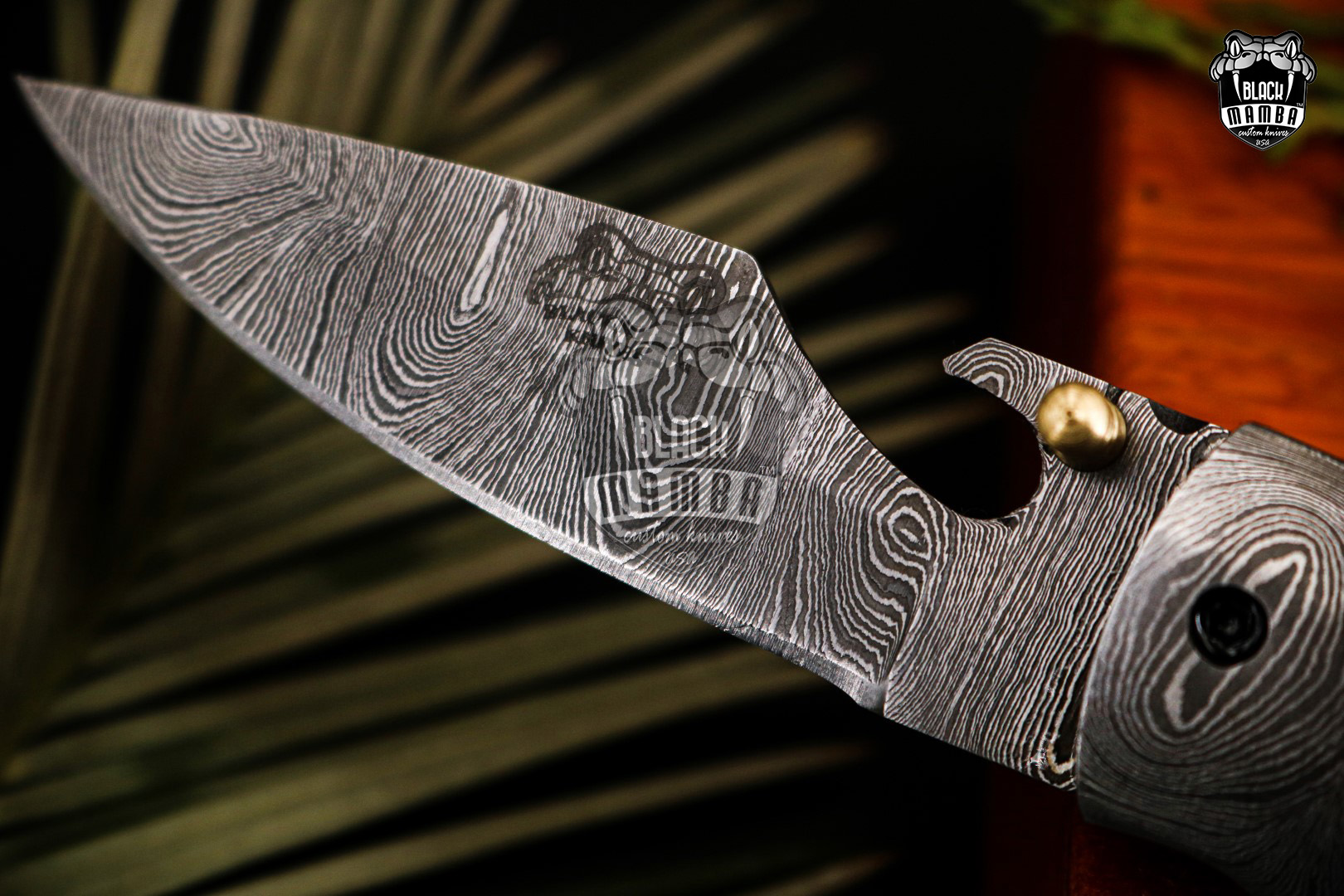
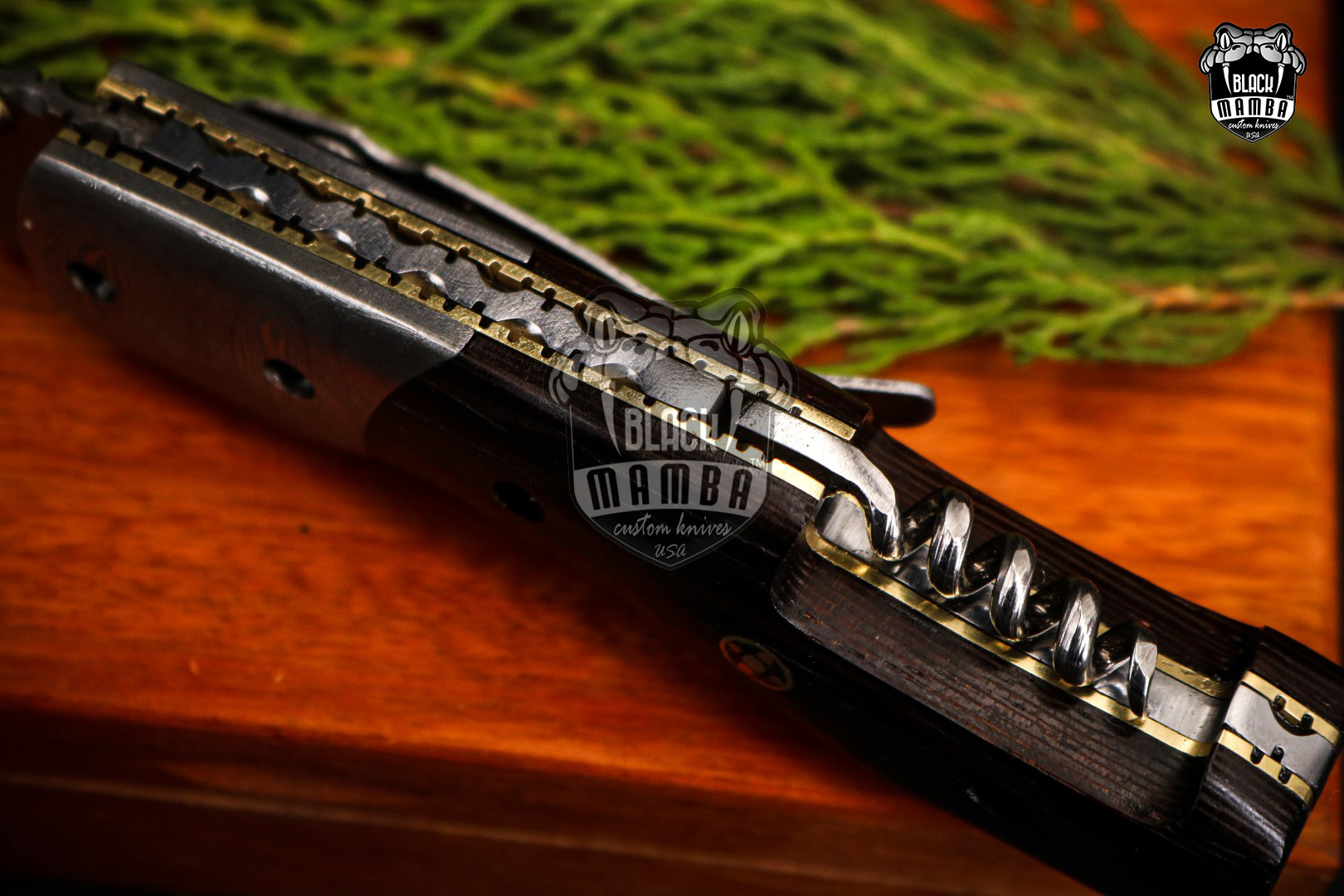
This folder carries a gut hook cut into the spine behind the point, which is a rare thing to find on a knife that folds into a pocket.
| Overall length | 9 inches |
| Blade length | 4 inches |
| Handle length | 5 inches |
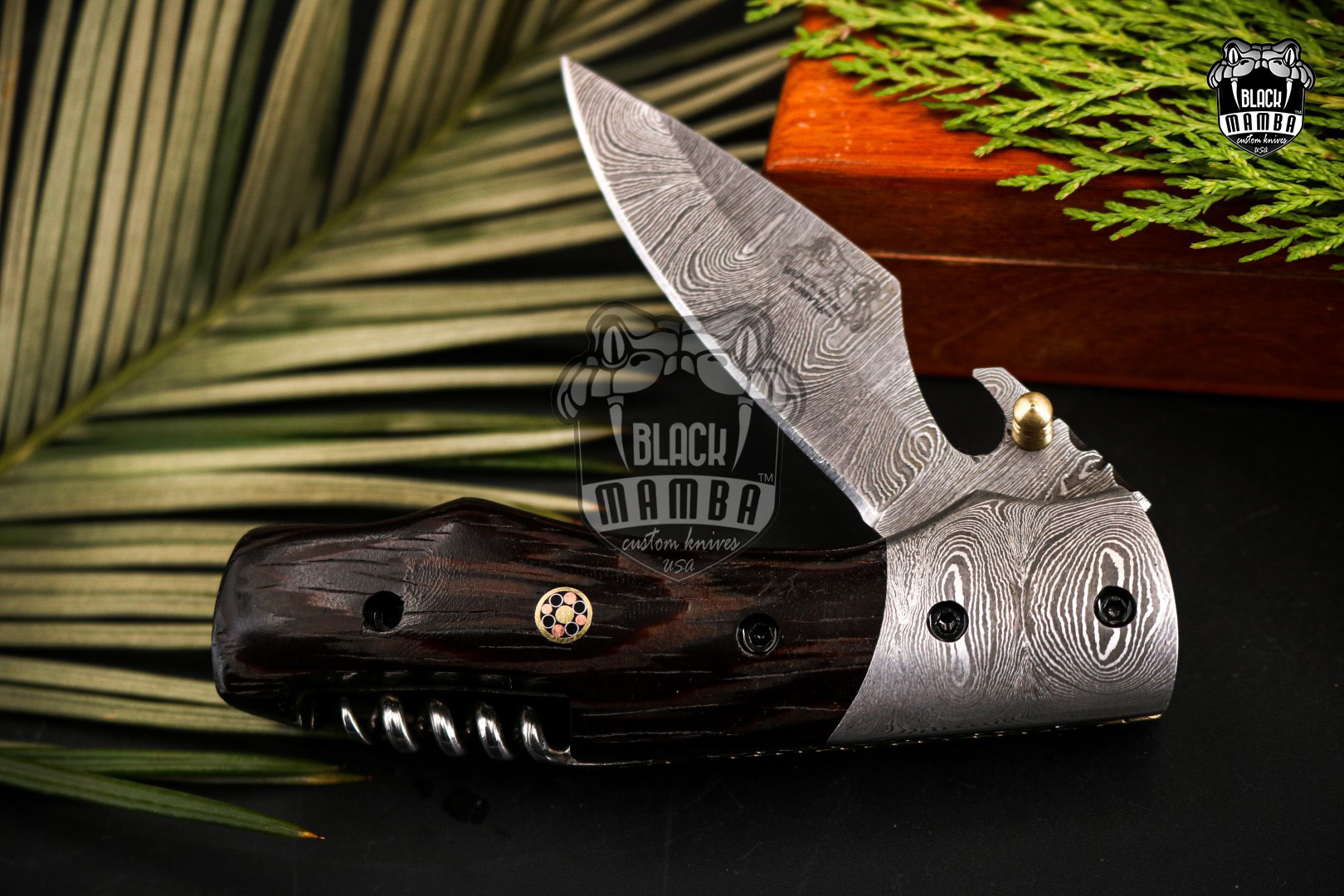
| Steel | 1095 + 15N20 Damascus, 352 layers |
| Hardness | 58–60 HRC, oil tempered |
| Weight | 8.5 oz |
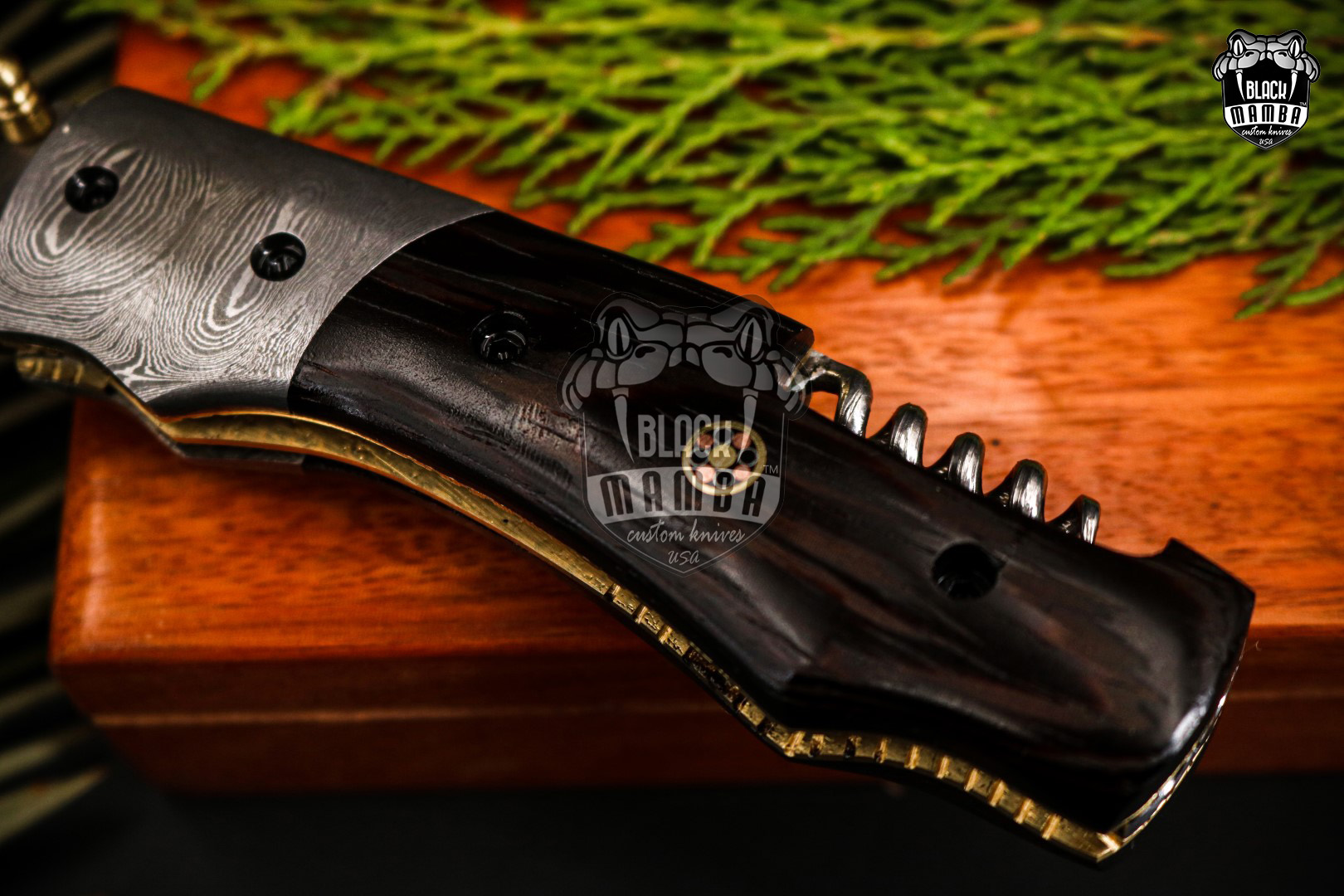
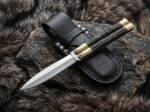
| Handle | Wenge wood handle with Damascus bolster |
| Pattern | Wind & Mix twist Fire pattern Damascus Blade, Extreme custom Brass File-work |
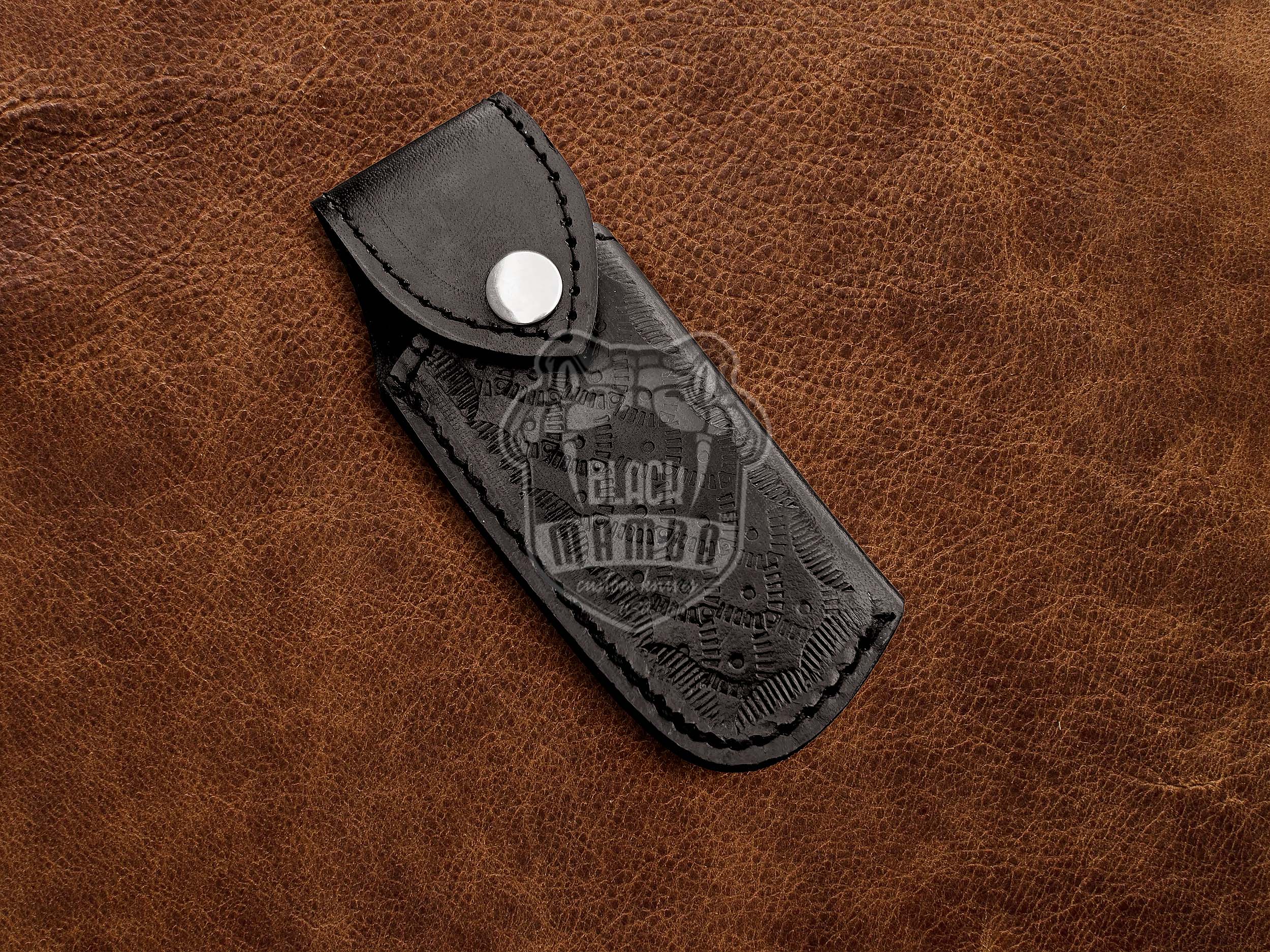
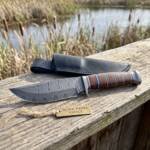
| Included | Hand-stitched leather sheath |
Who buys this: hunters who do not want a fixed blade on the belt all season. The hook opens a hide from the inside without the point ever touching what is underneath, and then the knife folds away. Nine inches open, 4 inches of blade, 8.5 oz.
How the hook is used
You make a small starting cut, slide the hook in with the sharpened inside curve facing forward, and pull. The blunt outer edge rides against the animal while the inner curve does the cutting, which is the entire reason the feature exists — it separates hide from viscera without a puncture. It takes about ten seconds to learn and saves a ruined carcass. Our gut hook guide covers the technique and how to sharpen the hook itself.
Wenge
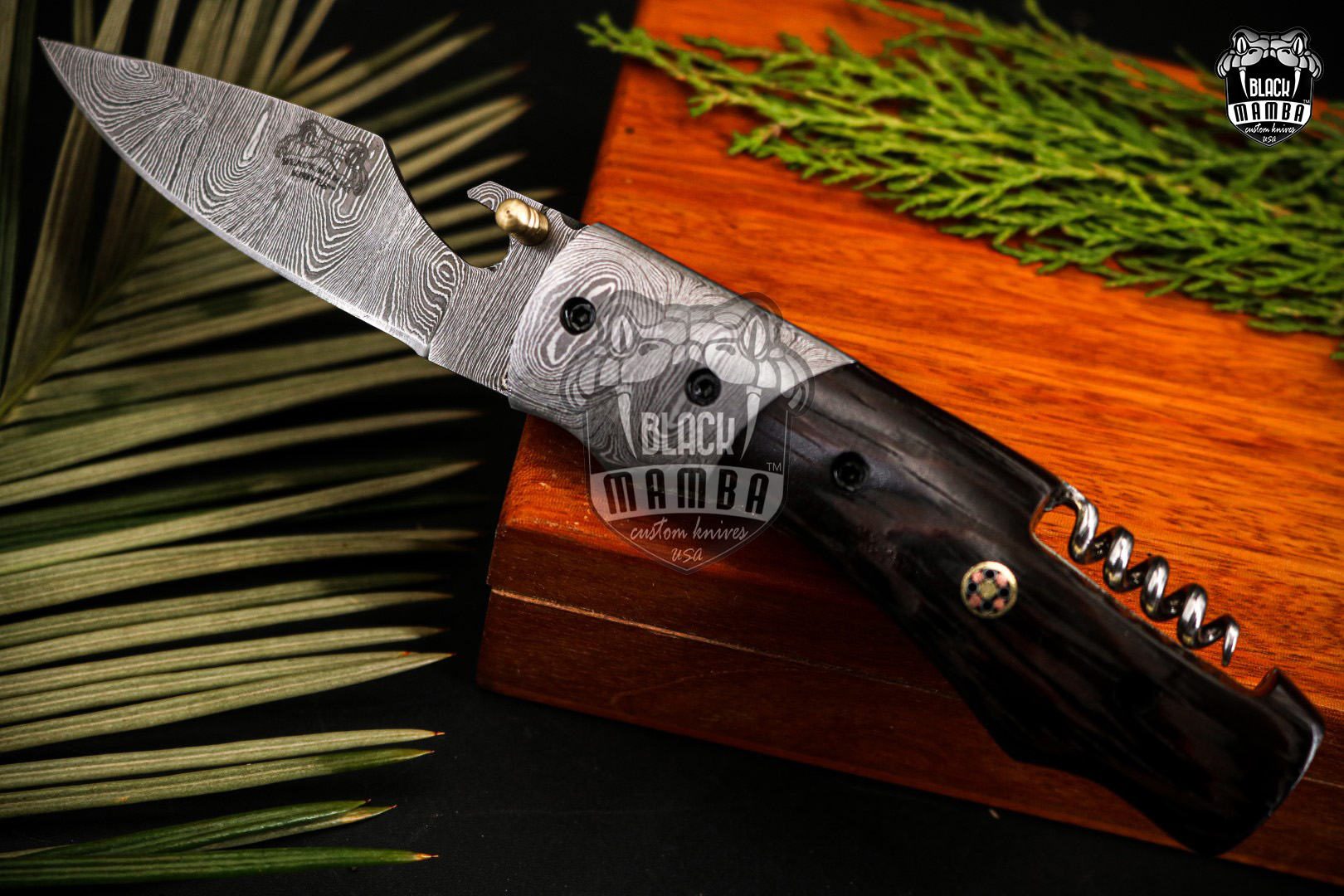
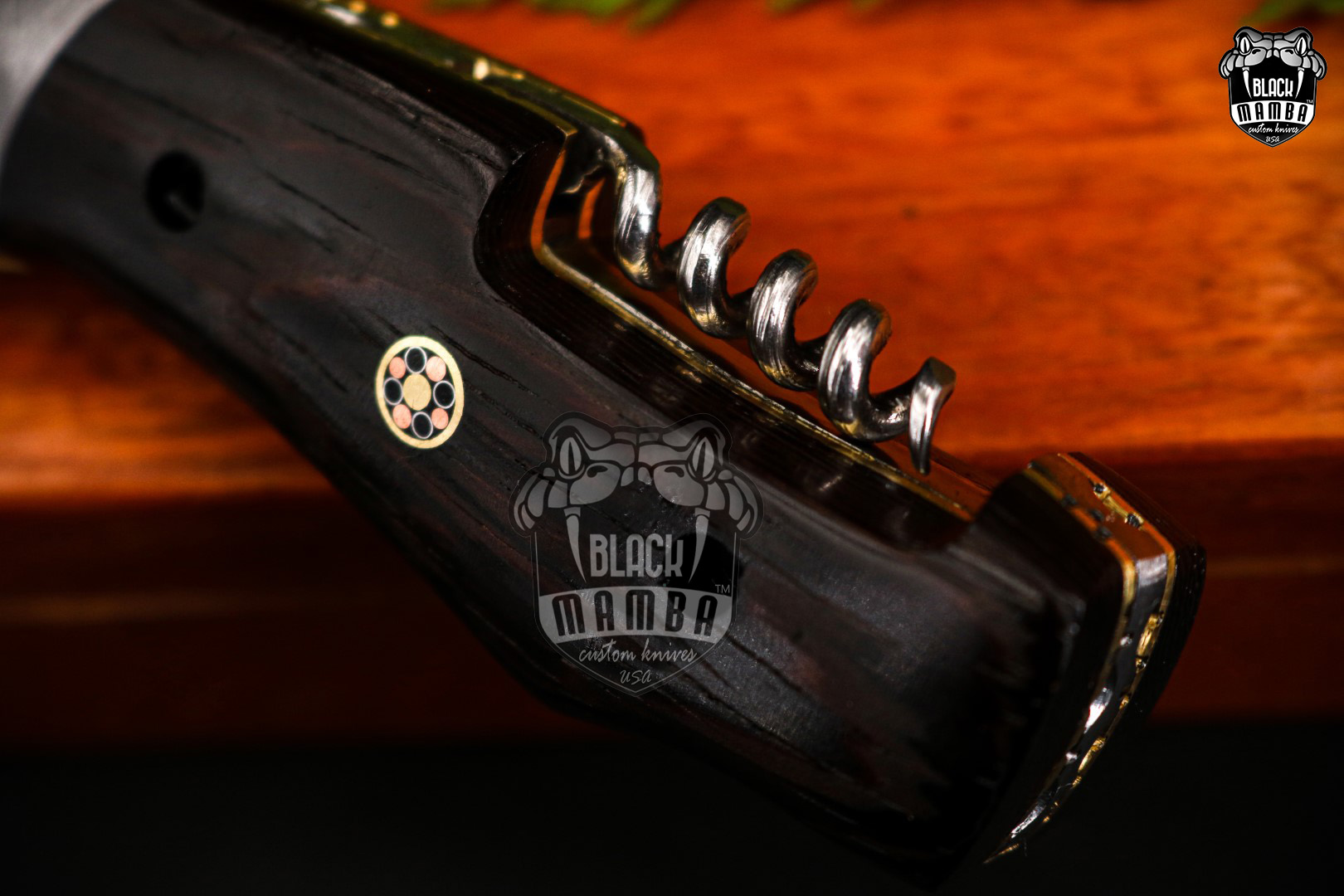
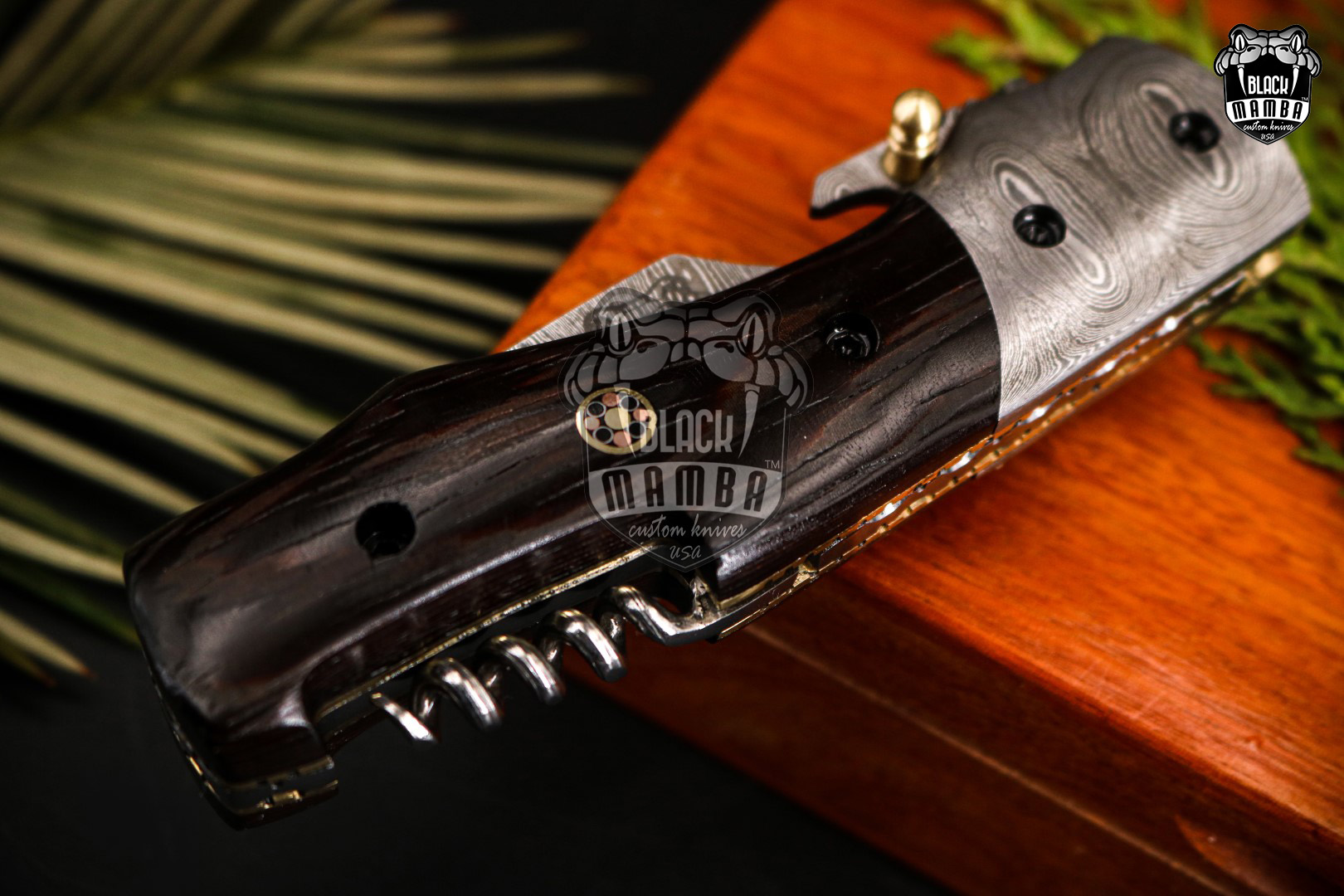
Wenge is a dense African hardwood with a coarse, straight grain and a very dark brown color streaked with near-black. It is hard, it resists denting, and the open grain gives a little natural grip. Against the Damascus bolsters it reads almost black, which is why this knife looks plainer in the hand than the specification suggests.
Blade and clip together
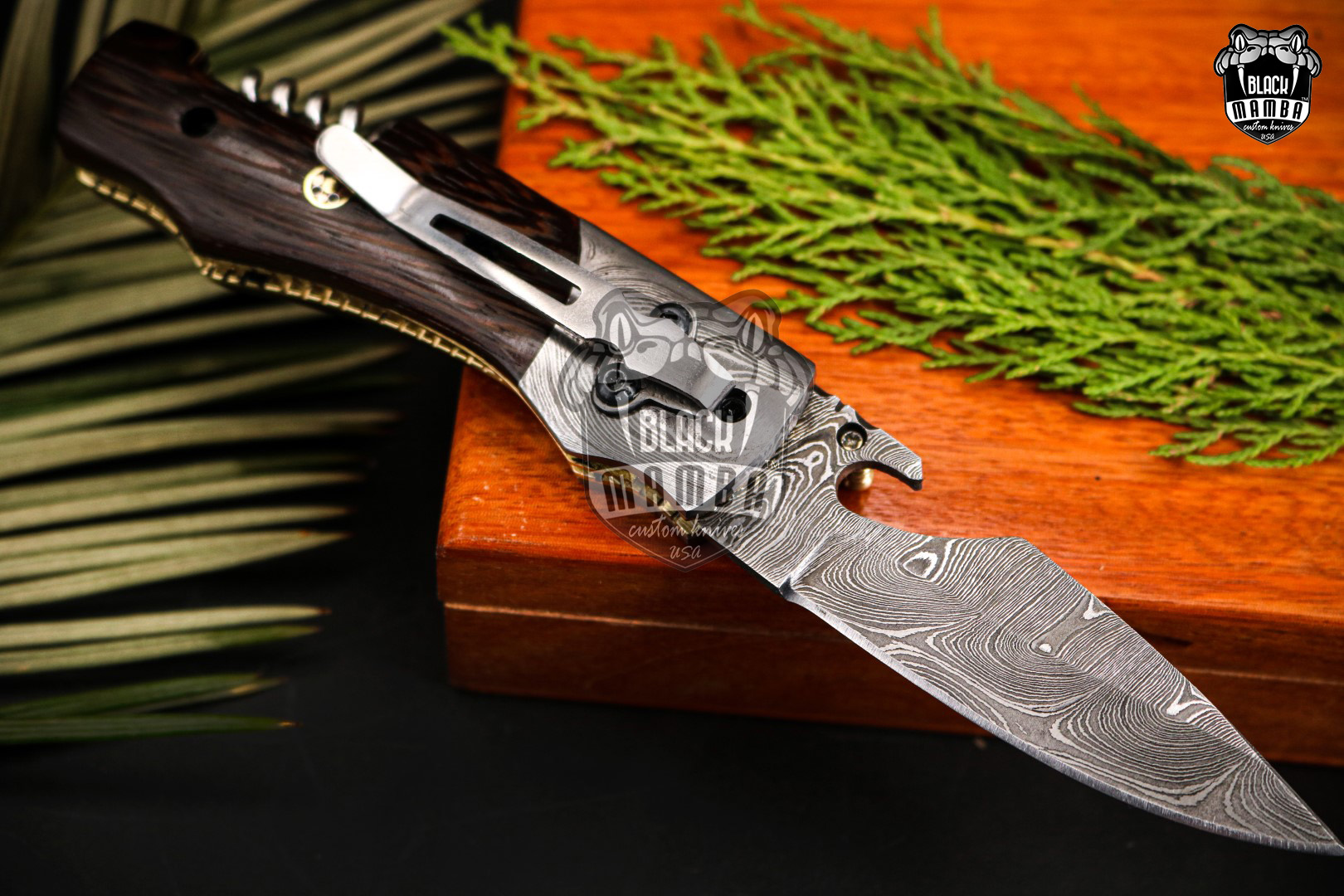
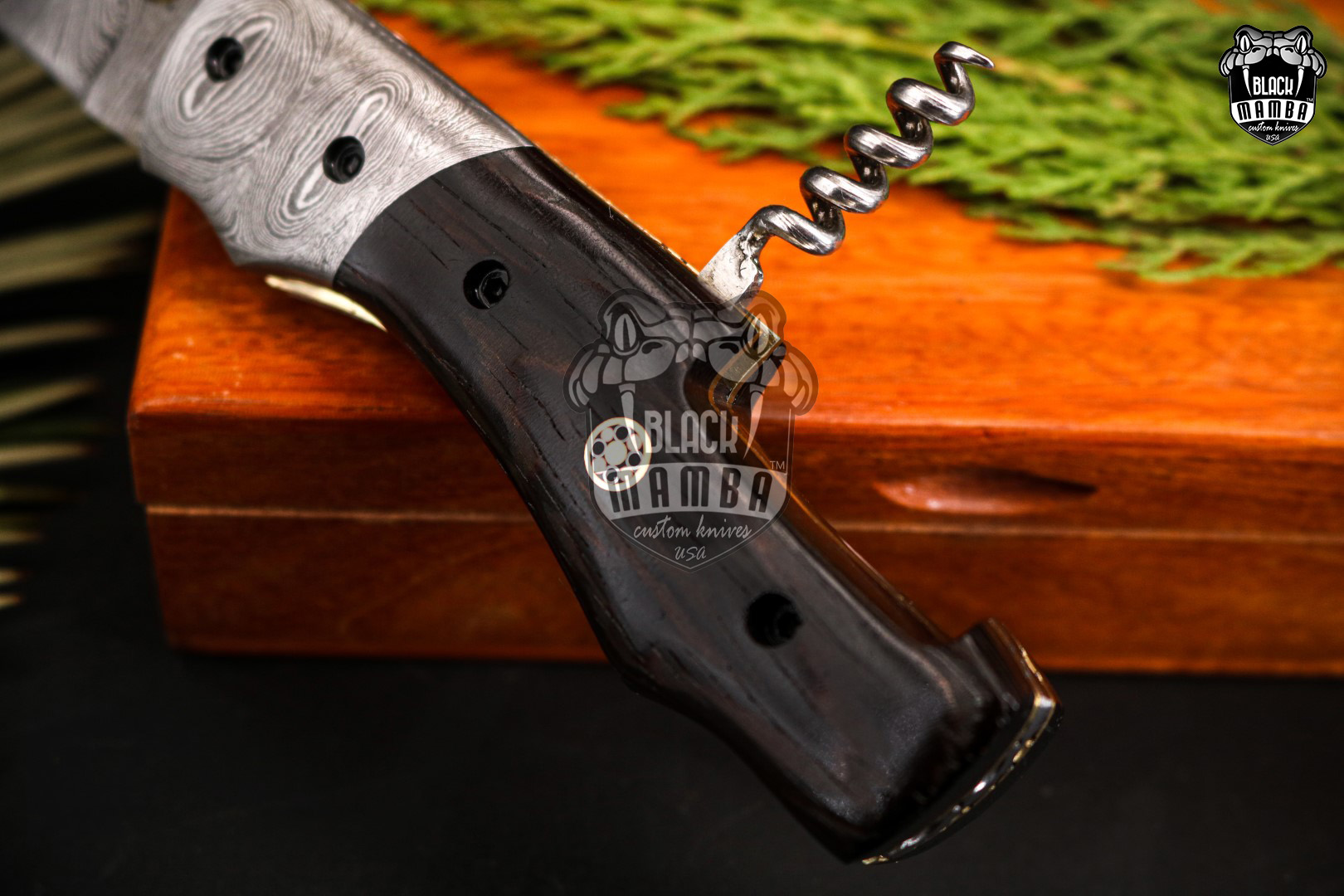
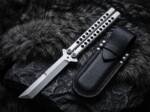
Four inches of edge with a clip on the handle is a genuinely field-capable combination: enough blade for caping and quartering, and it stays put when you are moving through brush. The pocket clip is visible in the photographs.
Carrying it in the field
The pocket clip is the reason this works as a season-long knife. A fixed blade on a belt catches on packs, seat belts and brush; a clipped folder rides against the seam and stays out of the way until you need it. At 8.5 oz you will know it is there, which on a hunting knife is arguably a feature.
Damascus bolsters
The bolsters are pattern-welded steel rather than brass, so the figure carries from the blade into the fittings and the dark wood sits between two areas of etched pattern. It is a quieter combination than it sounds.
Care: field use is hard on a carbon blade. Clean it the same day, dry it properly including the pivot and the inside of the hook, and oil both. Wenge takes an occasional wipe of the same oil and needs nothing else. Blood and fat left overnight will mark the steel.
FAQs
How do I sharpen the hook? With a round file or the tip of a ceramic rod, working only the inside curve.
Is the main edge usable for skinning too? Yes. The skinning knife guide explains when a dedicated skinner is worth carrying as well.
What if I want a full-size fixed blade instead? Look at the 12 inch Banded Flying Snake.
Model: BMK-868
Billy G. (verified owner) –
Beautiful craftsmanship. Fantastic knife
Lisa Scott –
Got this as an anniversary gift and it exceeded what I expected. Scales feel great in hand and don’t feel slippery at all. Already planning my next pickup from this shop.
William Taylor –
Seriously nice quality for the price point.
Grace Smith –
This blade came razor sharp right out of the box. This has become my daily carry piece without question. If you’re on the fence just get it. You won’t regret it.
Marco West –
Ended up ordering a second one after how happy I was with the first. Lockup is rock solid with no wiggle in any direction. This is the kind of purchase that makes online shopping worth it.
John Hayes –
Middle of the road experience with this one. Made in the USA in Memphis, shipped worldwide, arrived in a reasonable time. Might work fine for casual use.
Margaret Castillo –
My skepticism about ordering online disappeared the second this arrived. Liner lock is tight with zero blade play. Would send this as a gift again in a heartbeat. Good to know real Memphis craftsmen are behind this, and shipping was quick too.
Aaron Sullivan –
Knew this pocket knife was special the second I opened the box. Ordered from Black Mamba Knives before and the quality stays consistent every time. Already thinking about what to order next from this shop.
John Castillo –
Got this for Father’s Day and now I want one for myself too. Blade centering is perfect right out of the box. Already planning my next pickup from this seller.