
Description
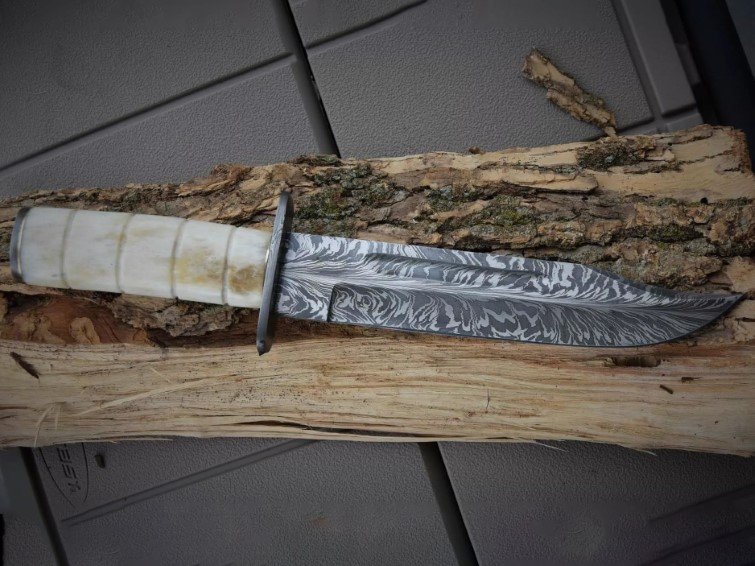
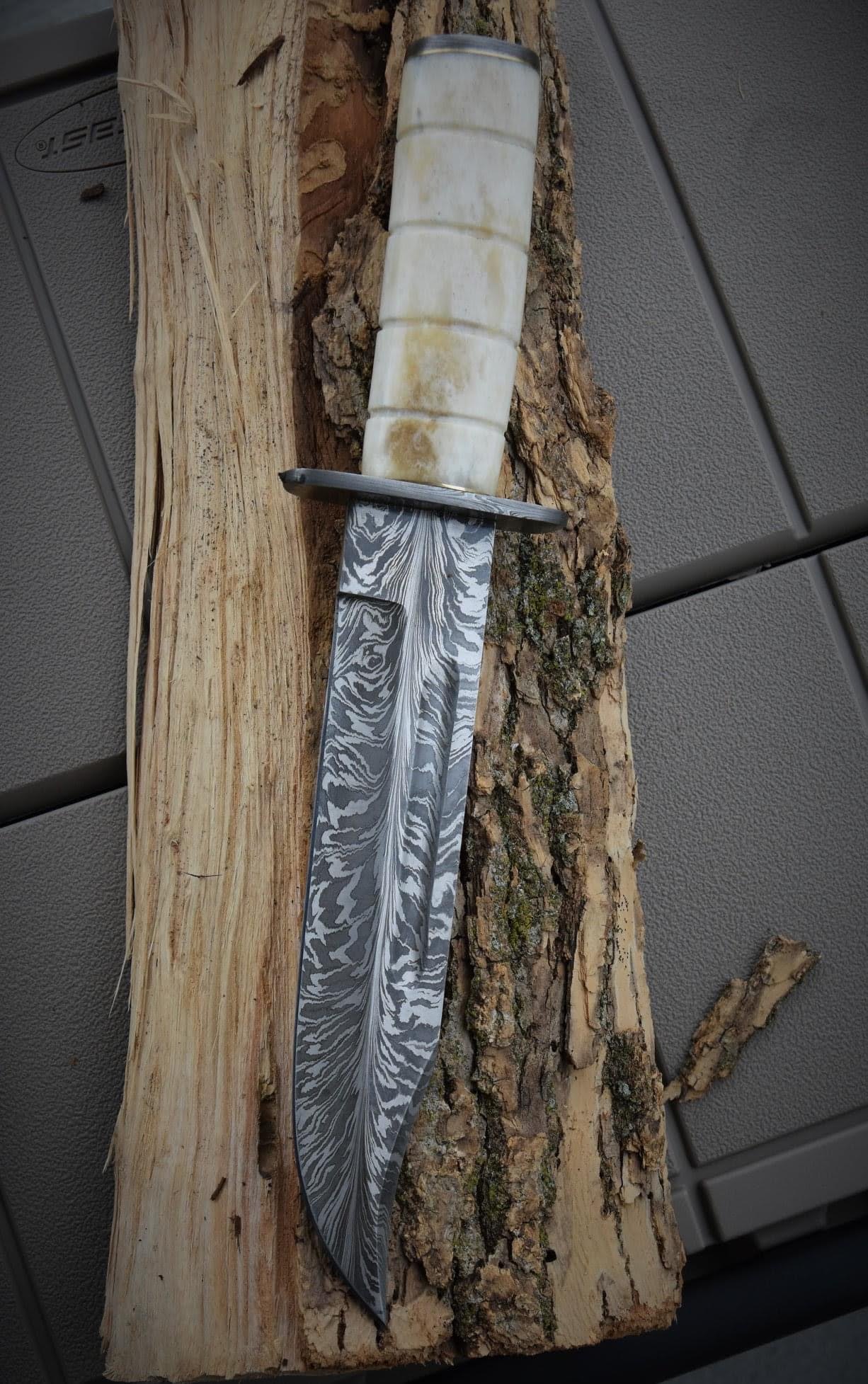
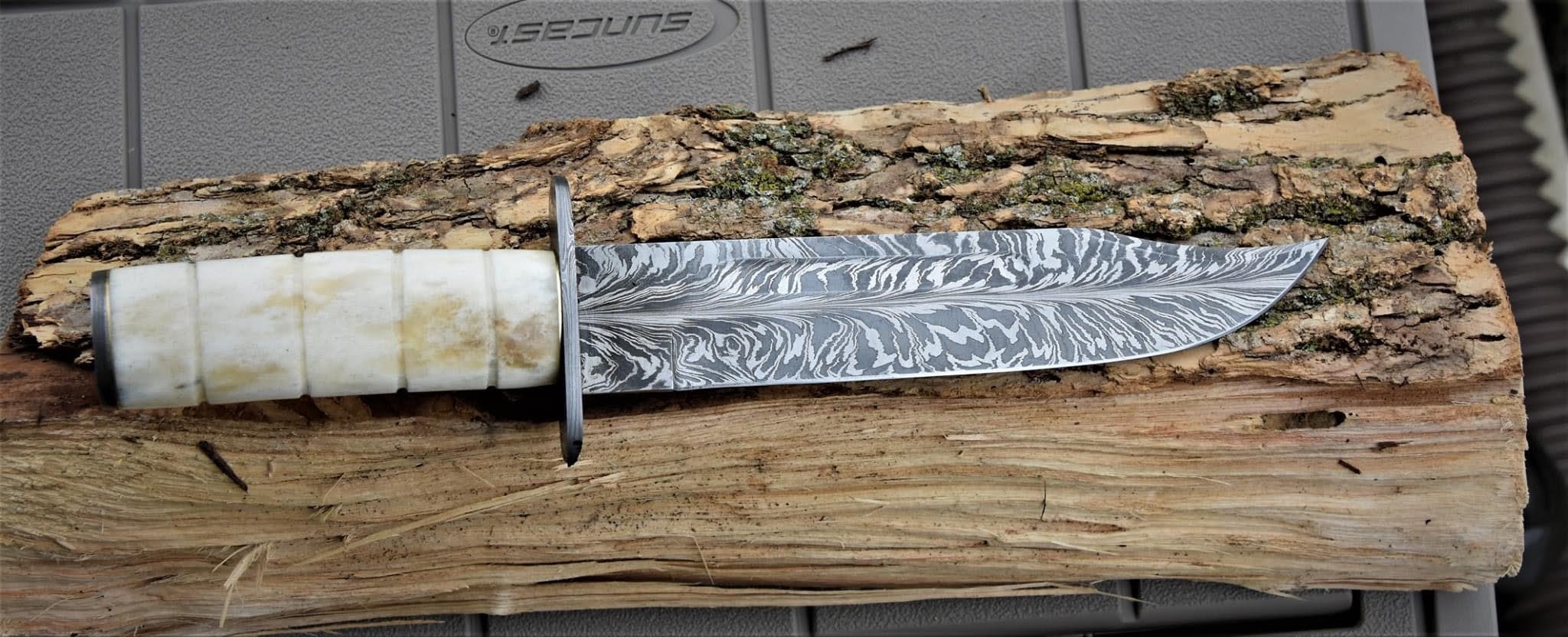
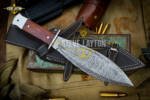
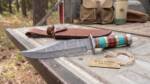
This is our take on the fighting-knife silhouette the US military made famous: a seven-inch clip point, a five-inch grip, and camel bone scales that no two knives share. The bone is cut and fitted by hand, so grain, color and the exact line where scale meets bolster differ from one piece to the next.
| Overall length | 12 inches |
| Blade length | 7 inches |
| Handle length | 5 inches |
| Handle | Camel bone scales |
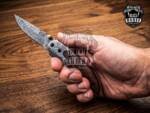
| Steel | 1095 + 15N20 Damascus, 352 layers |
| Hardness | 58–60 HRC, oil tempered |
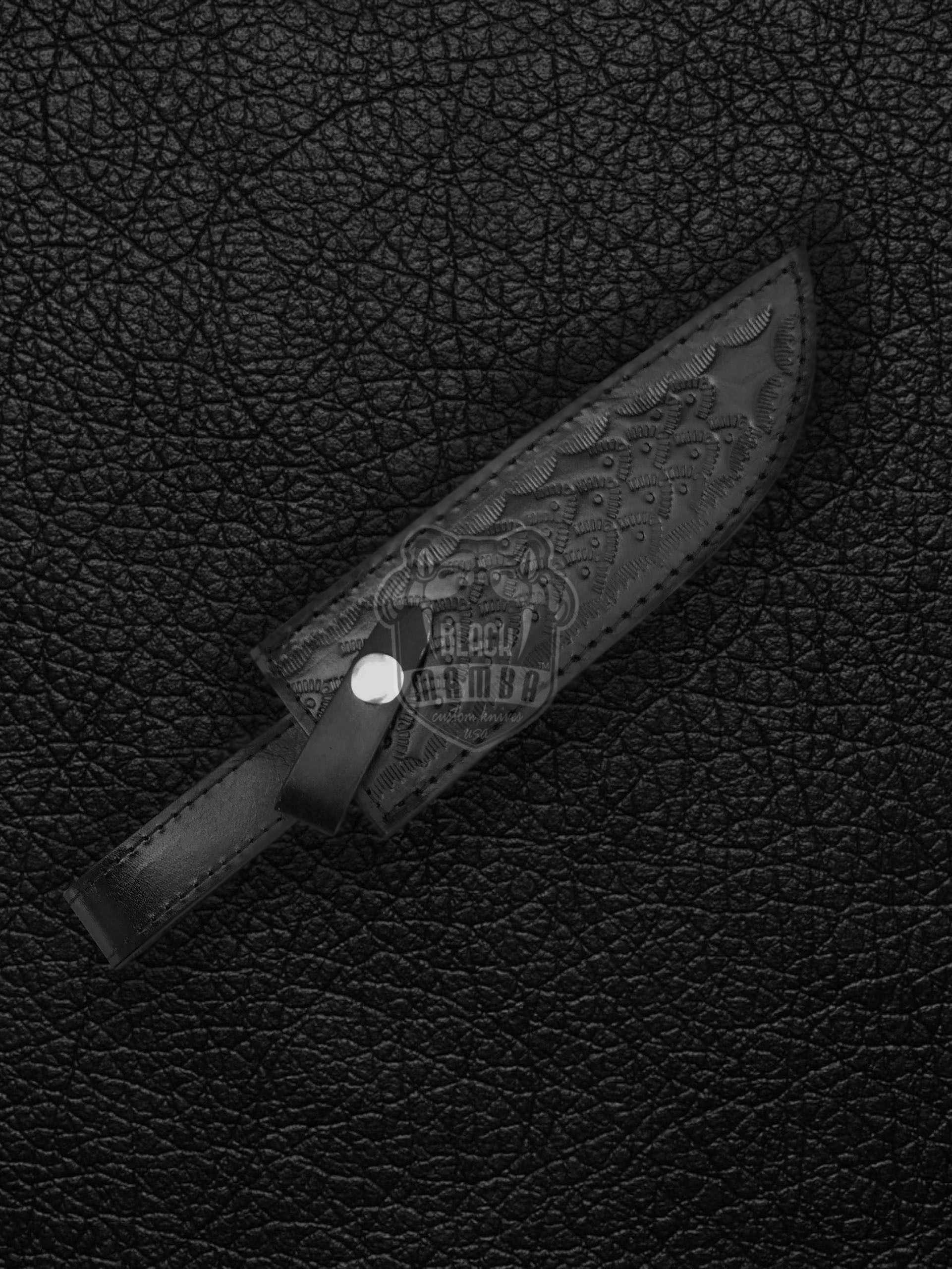
| Included | Hand-stitched leather sheath |
Built for: people who want the Ka-Bar shape without the factory finish. The clip point drops the tip low for piercing and leaves a long, flat belly for skinning and slicing. Camp work suits it. So does a wall rack. What it is not is a pry bar, because a clip point removes steel from the spine near the tip, and that is precisely where a knife snaps if you twist it in a stump.
How camel bone ages
Camel bone is denser than most bovine bone and takes a polish well. Over a few seasons of handling it warms from bright cream toward a soft amber, and the pores pick up oil from your hands. That is normal and most owners like it. What bone does not tolerate is soaking or a dishwasher: it swells, then shrinks back unevenly, and can split around the pins. Keep it dry and it will outlast you.
The weight question
At twelve inches overall this sits in the middle of the range, long enough to chop light brush and short enough to control for detail work. If you have handled a full-size camp chopper, this will feel quick. If you normally carry a folder, it will feel substantial for the first hour and then stop registering.
Care
Both steels in this blade are carbon steels with no chromium to speak of. They spot if you leave them wet. Take the moisture off the moment you finish cutting, then put a thin film of mineral oil or museum wax on before it goes away. Never store the knife inside the leather, because vegetable-tanned hide holds damp against metal. Sharpen on a fine stone at the angle it arrived with. The pattern is structural rather than a surface treatment, so grinding will not erase it. For the full method, read our Damascus knife care guide.
FAQs
How close is this to a military-issue Ka-Bar? The profile is the reference point, not a copy. Ours is pattern-welded rather than monosteel, the bolster and scales are different, and there are no contract markings anywhere on it. If the history interests you, our KA-BAR knife guide covers markings and dating.
Will the camel bone yellow? Slowly, and unevenly. Treat that as patina rather than as damage.
Is this too much knife for a pocket? Far too much. It rides in a sheath. If you want something that lives in a pocket, look at a small folder such as the Dart Fog pocket knife instead.
Model: BMK-1006-L1

Grace Diaz –
This is the kind of knife you show off without even meaning to. This has quickly replaced my old go to knife for field dressing. This store nailed it with this one.
Laura Nguyen –
So happy I finally pulled the trigger on this one. Beyond happy with how this turned out.
Dennis Hill –
Ended up ordering a second one after how happy I was with the first. This company nailed it with this one.
Trevor Cox –
Couldn’t ask for a better knife honestly. Took it out camping right away and it handled everything I threw at it. No hesitation recommending this to anyone looking.
Travis Nelson –
This knife is a genuine work of art. Sheath snaps shut securely and doesn’t feel flimsy at all. 10/10 would buy again.
Edward Sullivan –
Perfect gift. Perfect quality. No complaints. Made in the USA right in Memphis, and it shipped worldwide without any long wait. Beyond happy with how this turned out.
Malik Vance –
This knife has quickly become my favorite piece in the collection. Took it out camping right away and it handled everything I threw at it. Can’t say enough good things about this purchase.
Laura Gray –
This knife is impressively made. No question about it. Handle has a great grip even with wet or gloved hands. Zero complaints from me on this purchase.
Richard Rodriguez –
So happy I finally pulled the trigger on this one. Every piece of the fit and finish looks hand checked before it shipped. Came in a nice gift box which made it feel even more special. Can’t say enough good things about this purchase.