
Description
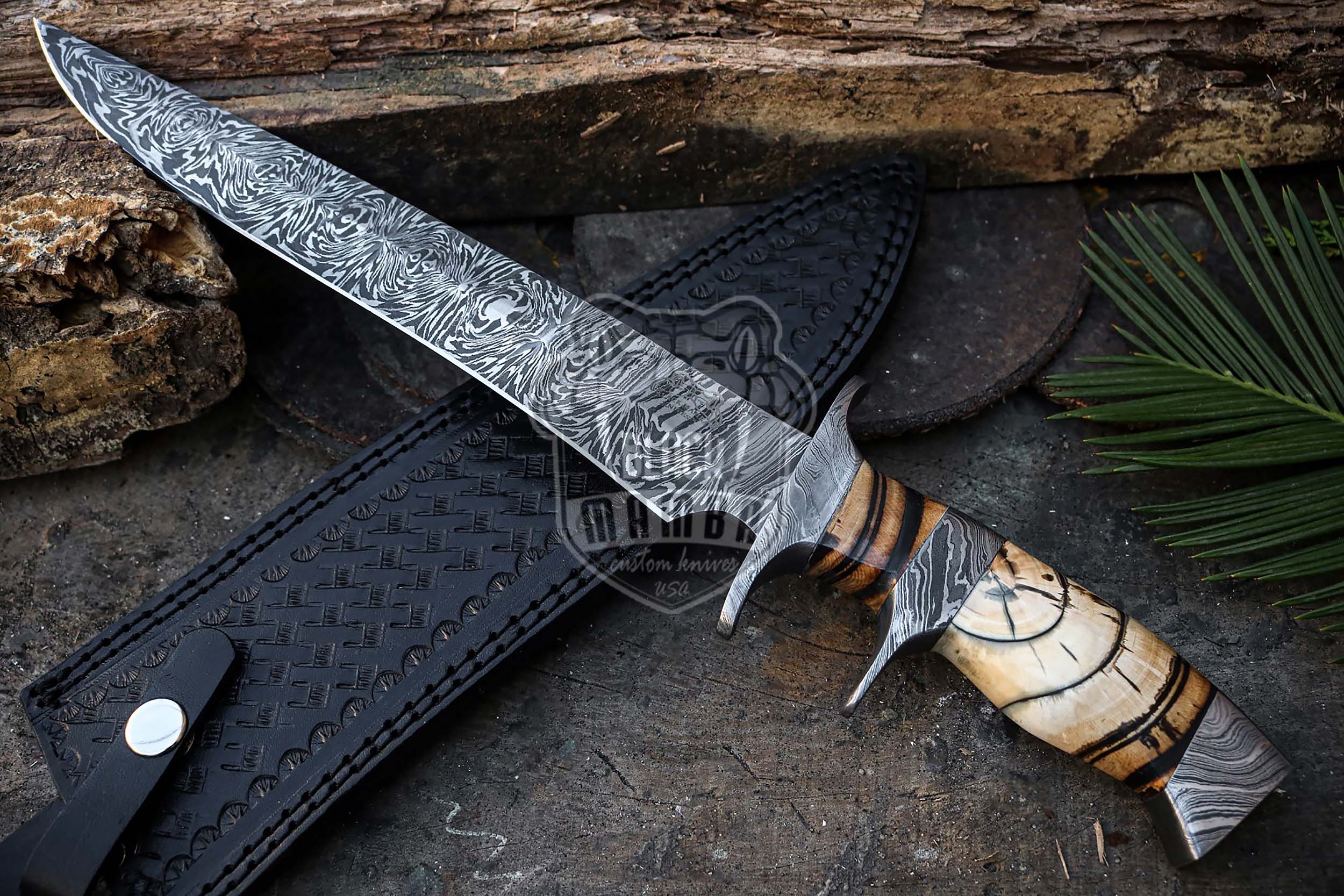
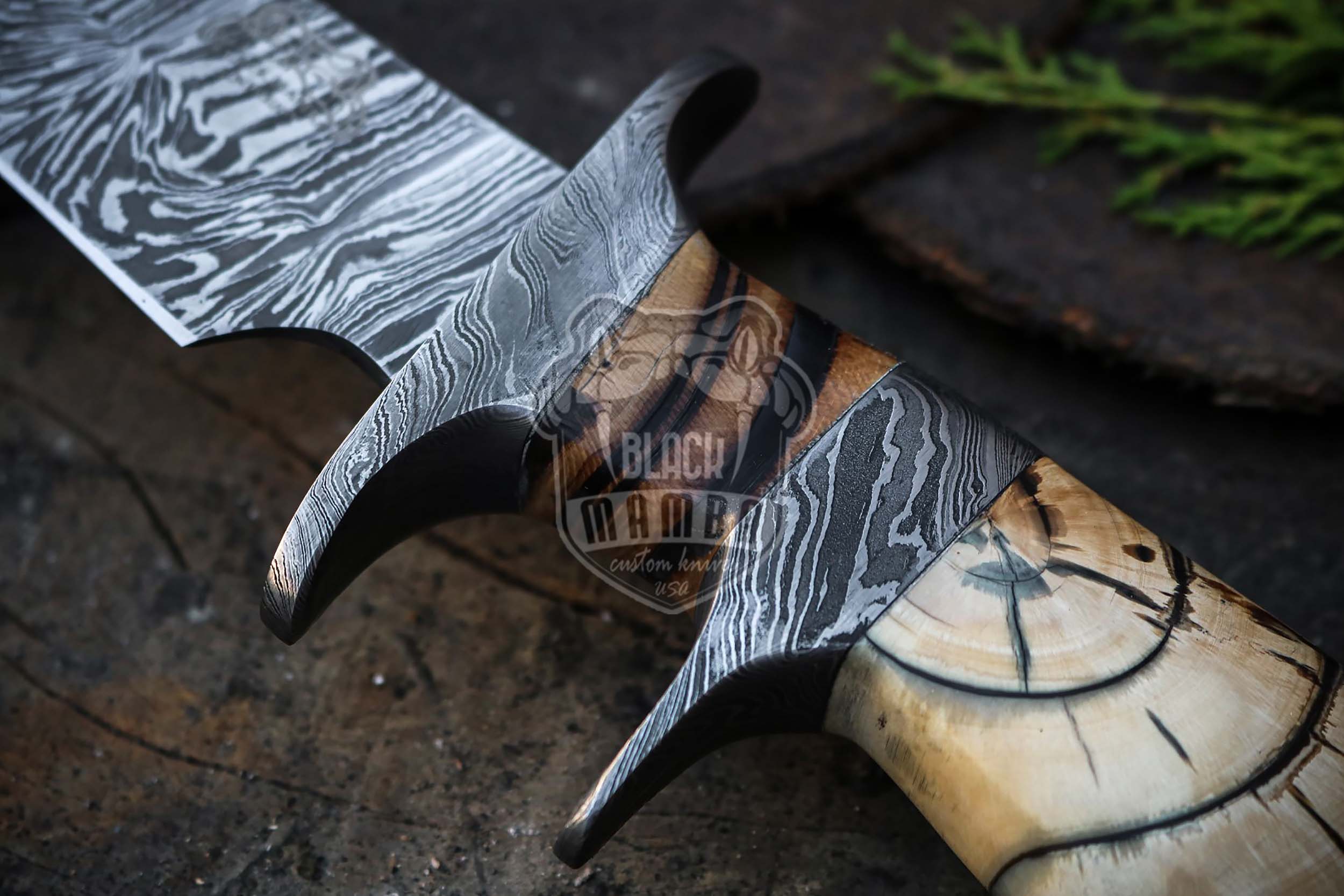
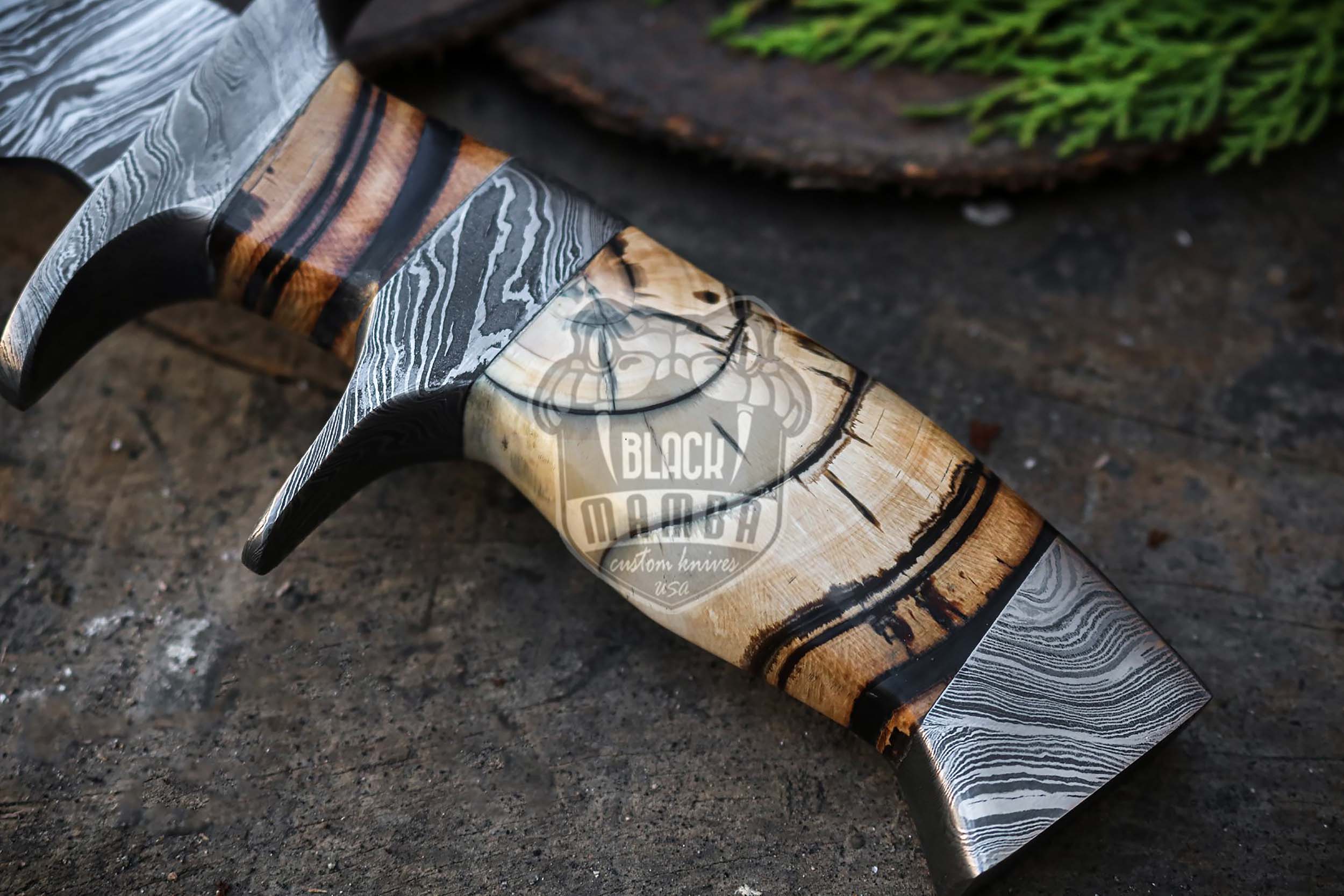
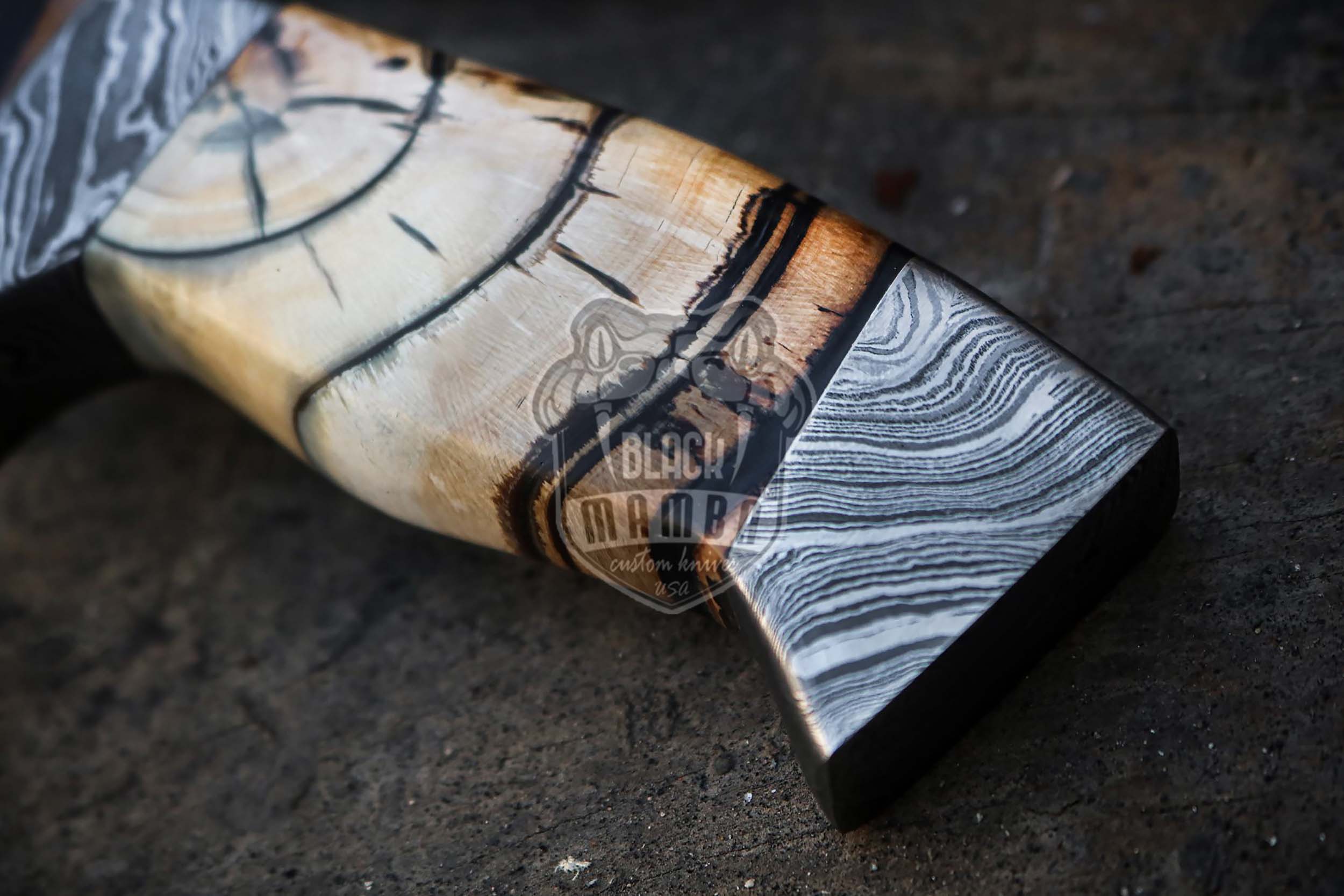
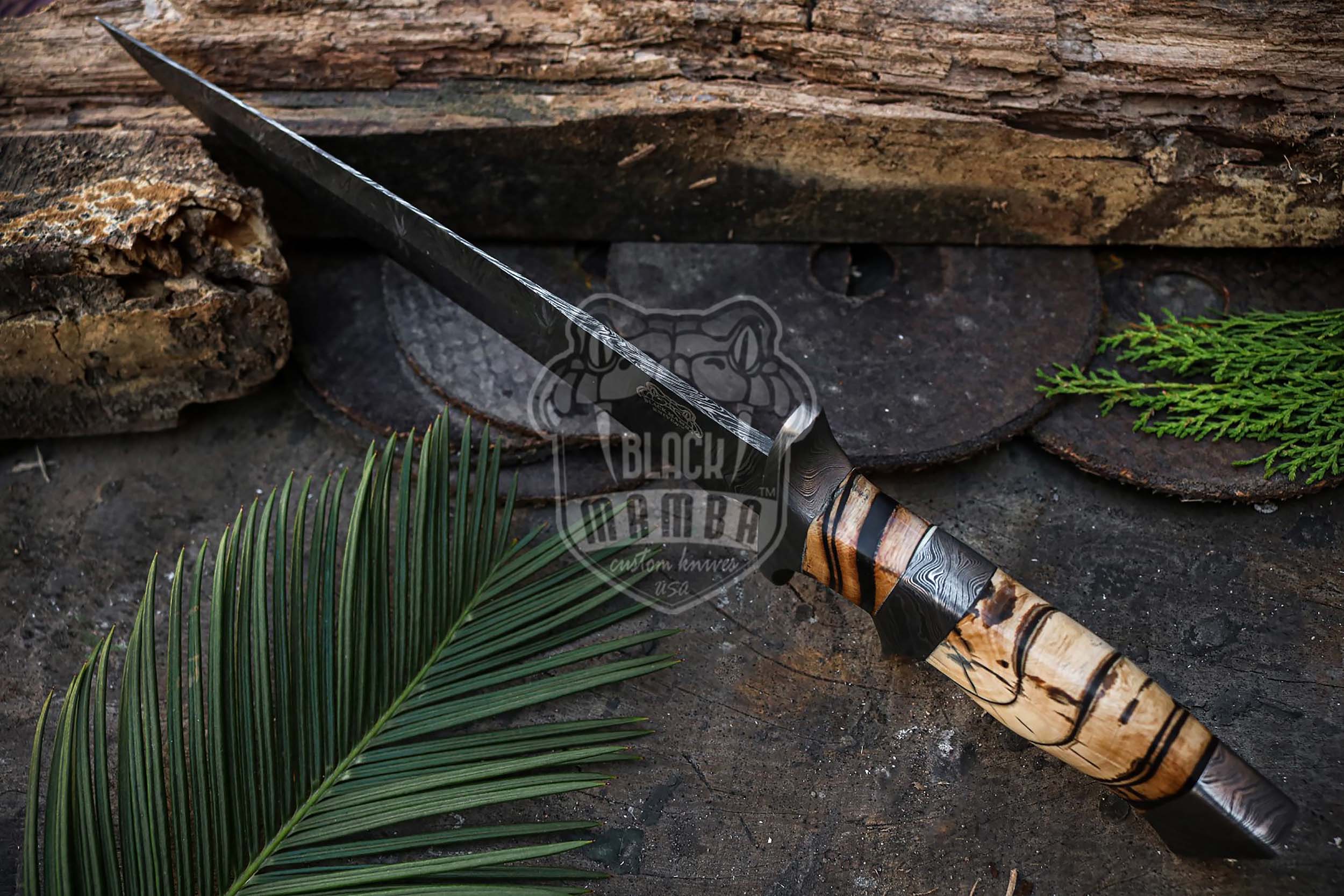
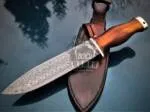
The pale banded material in this handle came out of the ground, not off an animal — it is fossil mammoth, and the dark growth rings running through it are roughly fifteen thousand years old.
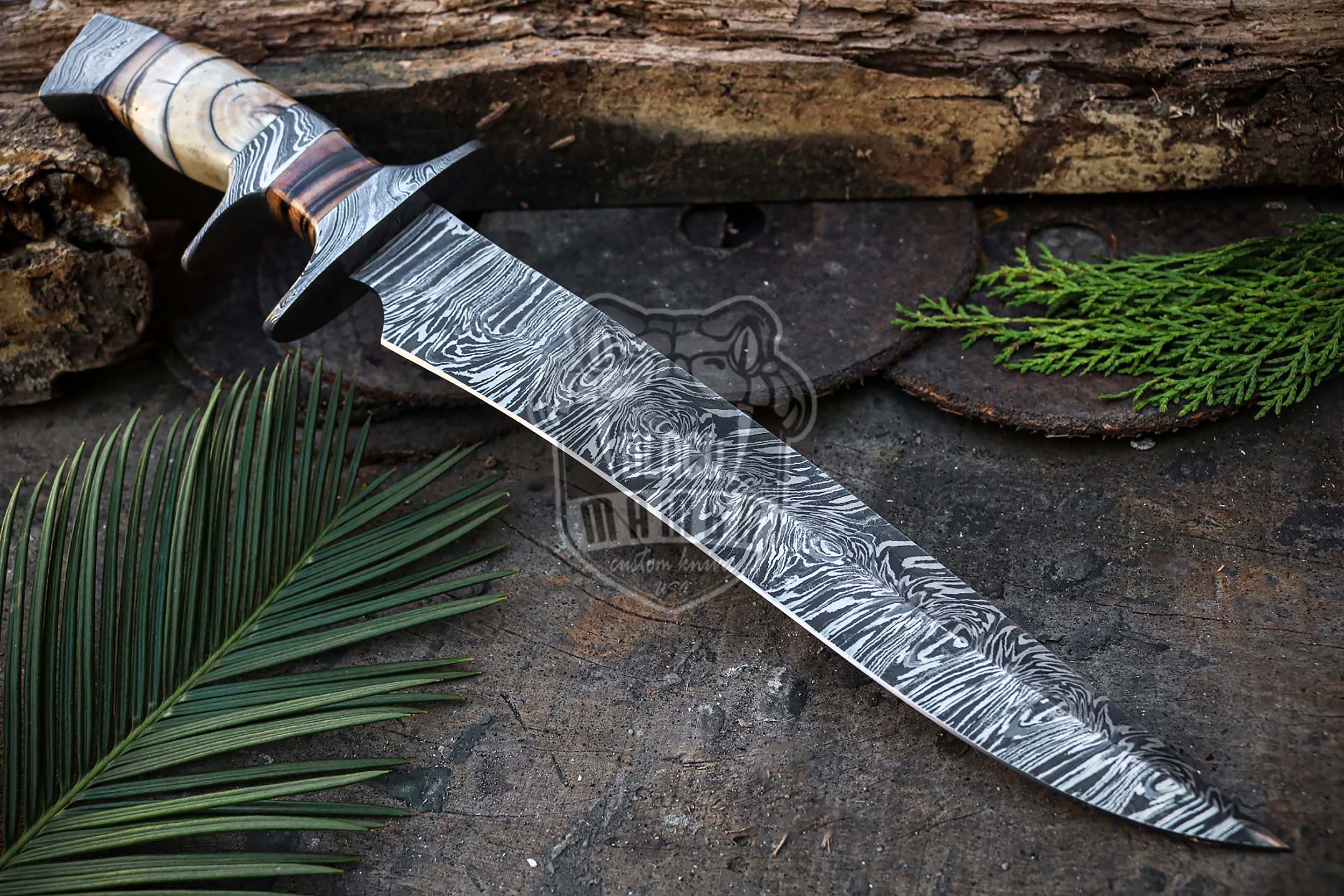
| Overall length | 17 inches |
| Blade length | 11 inches |
| Handle length | 6 inches |
| Steel | 1095 + 15N20 Damascus, 352 layers |
| Hardness | 58–60 HRC, oil tempered |
| Handle | Mammoth Handle |
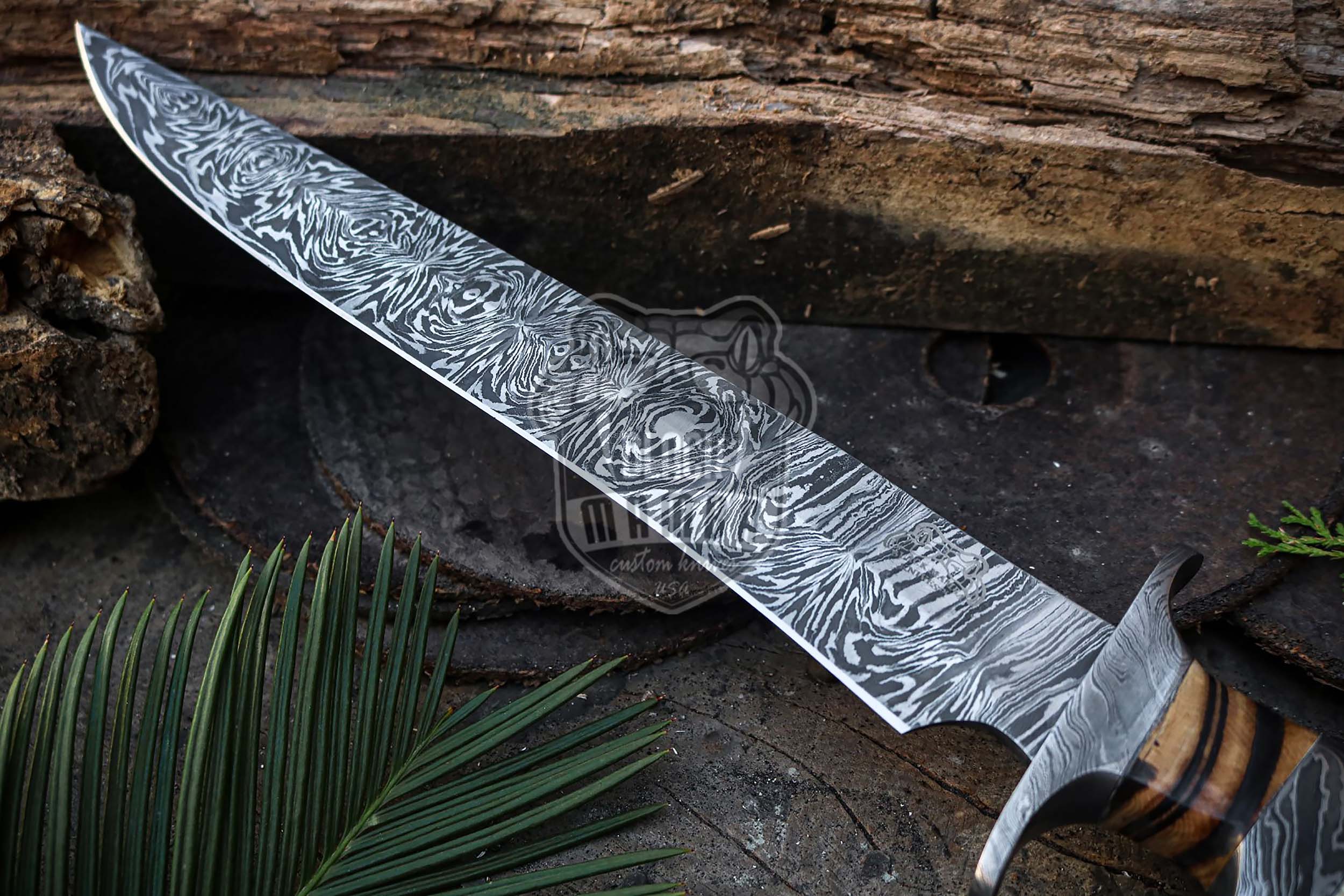
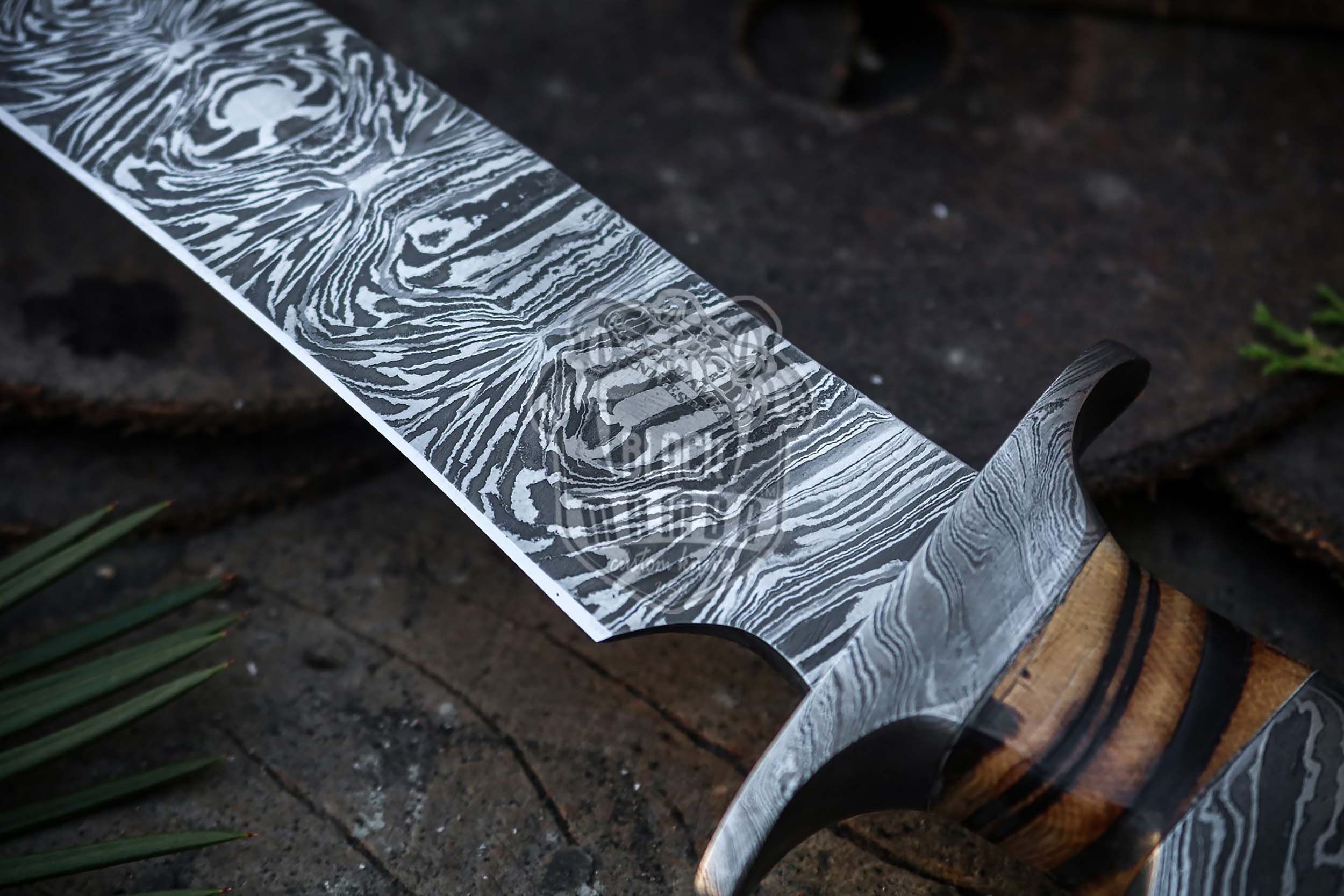
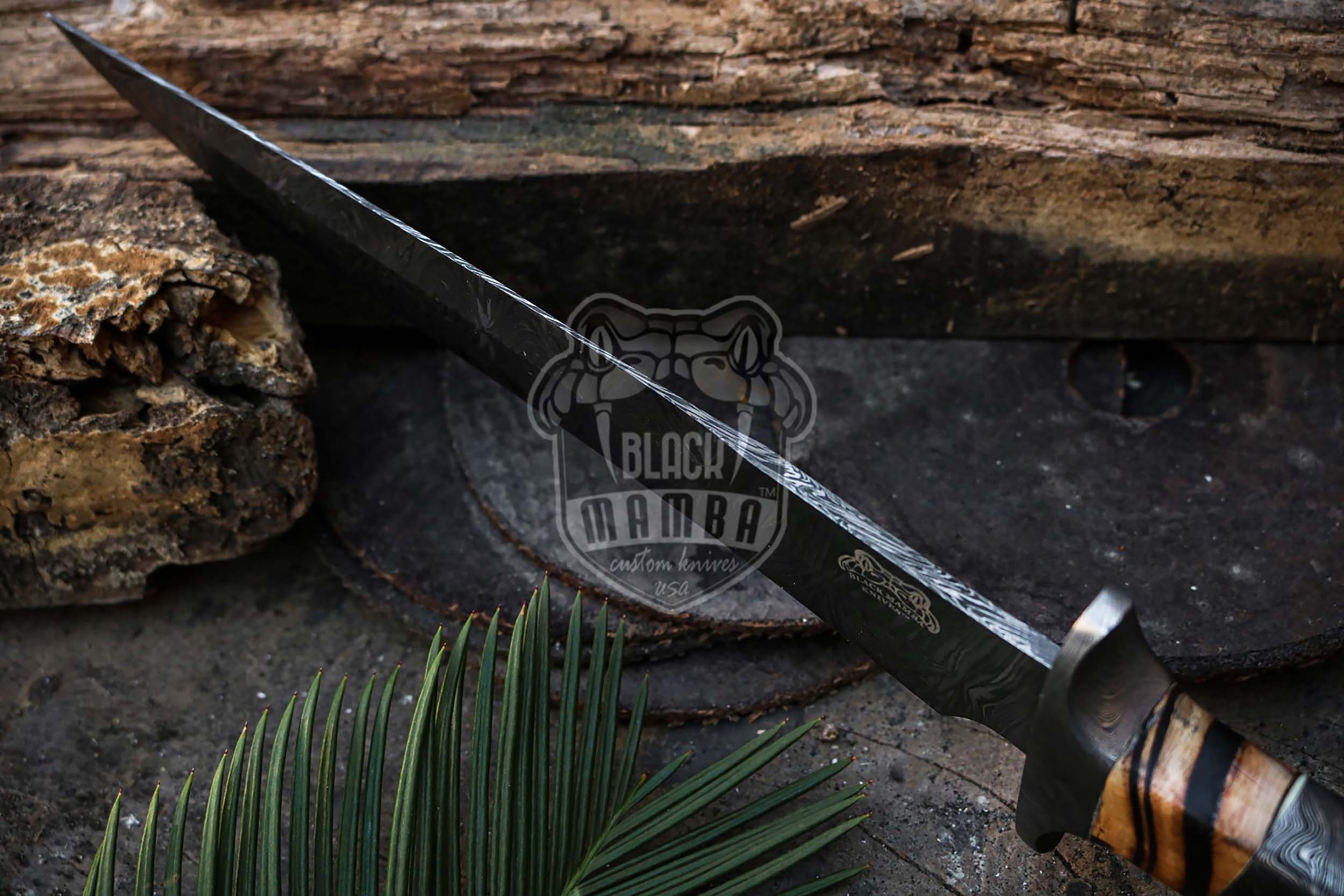
| Pattern | Feather and twist Damascus, deeply etched |
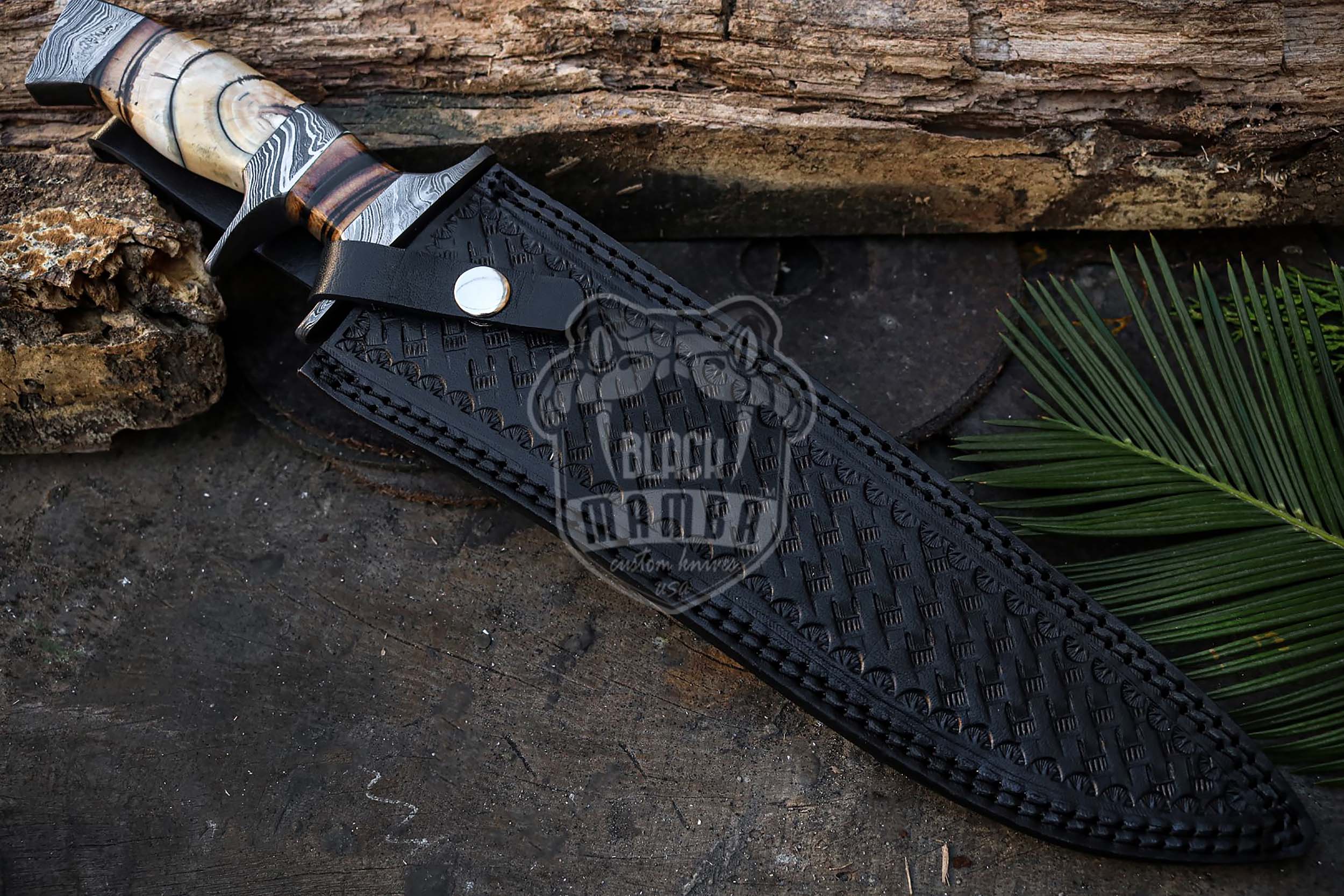
| Included | Hand-stitched leather sheath |
Belongs to: collectors, and to anyone building a display piece around a single object. Seventeen inches with an eleven inch blade is well past working size; this is a knife you hang, hand round, and occasionally take outside because you want to.
Fossil ivory and what it demands
Mammoth is neither stone nor bone. It is dentine that spent millennia absorbing minerals from soil, which leaves it dense, layered and slightly porous — and unlike stabilized wood it moves with humidity. A very dry room can raise fine surface checks; a damp one darkens it. Ordinary indoor air and no direct sunlight is the middle ground, since sun fades the contrast between the cream layers and the dark ones. Every piece is a section through a tusk or a molar, so your banding will not repeat the photograph.
The clip point at eleven inches
A long clip means a lot of blade forward of the balance point, and the sharpened clip itself thins the last third for penetration. At this length that combination is dramatic and impractical in equal measure. It swings hard and it will chop, but eleven inches of edge is more than anyone controls precisely, and the tip is fine relative to the mass behind it. For a clip point at a size you would actually carry, compare the twelve inch Yakushima bowie, which is the same idea scaled down to a working knife.
Where the money goes
Three things account for the price. Fossil material is bought by weight and cannot be reordered once a block is used up. A blade this long means a much larger billet and a longer forge cycle, with more chances to lose the whole piece to a delamination. And the guard and butt cap are patterned steel rather than brass, which is far more work than a cast fitting. Our explainer on Damascus knife pricing breaks down what actually drives the numbers.
Care that this one needs
Two materials, two rules. The blade carries high carbon and wants drying, a light film of oil, and storage outside the leather. The handle is fossil ivory: keep it away from heat and solvents, wipe it with a barely damp cloth and nothing stronger, and if it looks thirsty rub in a trace of mineral oil with a fingertip rather than a wax. Keep the whole knife away from standing water. Hang it or lay it flat rather than standing it point-down, since 17 inches puts real weight on a tip. Full tang construction carries that weight — our full tang guide explains why that matters at this size.
Questions buyers ask
Is fossil mammoth legal to own? Yes — an extinct species, not covered by modern ivory restrictions, though a few states set their own rules worth checking.
Will the handle chip? It can if you drop it on a hard floor. Treat it as you would a piece of polished stone.
Can it be sharpened conventionally? Yes, on a bench stone. Support the blade along its length rather than working freehand over a sink.
Model: BMK-130
Mia G. (verified owner) –
“I’ve been cooking for years, and this Damascus knife has made meal preparation a breeze. It’s a true kitchen gem.”
Samuel D. (verified owner) –
“As a chef, I’m picky about my tools, and this Damascus knife is a winner. It’s sharp, well-balanced, and a joy to use.”
Pat Kelly –
Good quality.
Anthony Turner –
Not going to lie. This exceeded my expectations by a lot. Leather sheath is thick and well stitched. Not the cheap stuff you usually get. Can’t say enough good things about this purchase.
Malik Hunt –
This knife has quickly become my favorite piece in the collection. Steel has a gorgeous pattern that looks different in every light. This is why Black Mamba Knives is my go to for anything knife related. Blade holds a razor edge right out of the box. Already added a few more items from this seller to my cart.
Ronald Hayes –
Absolutely beyond happy by this knife. Not my first order from Black Mamba Knives and it won’t be my last.