

Description
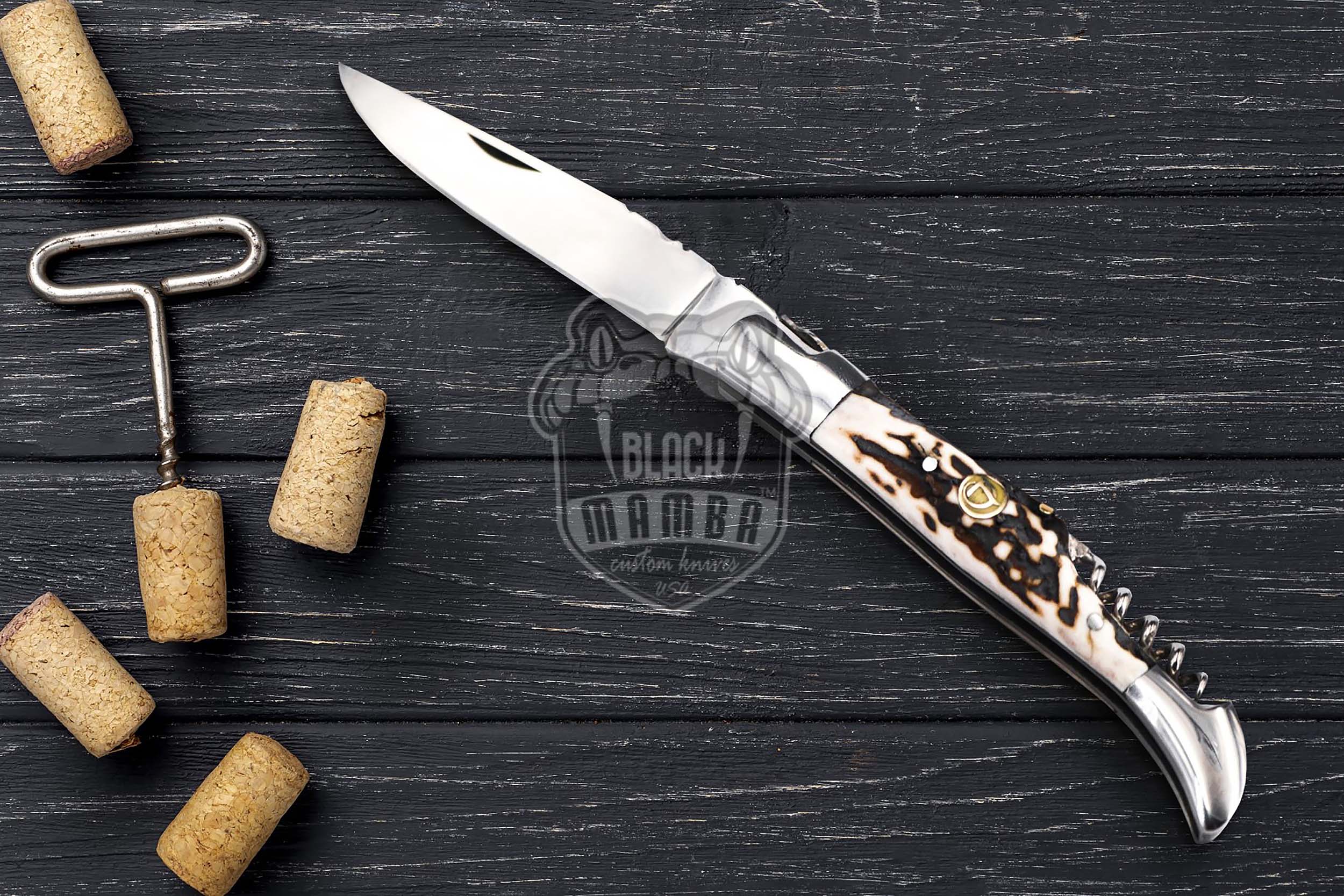
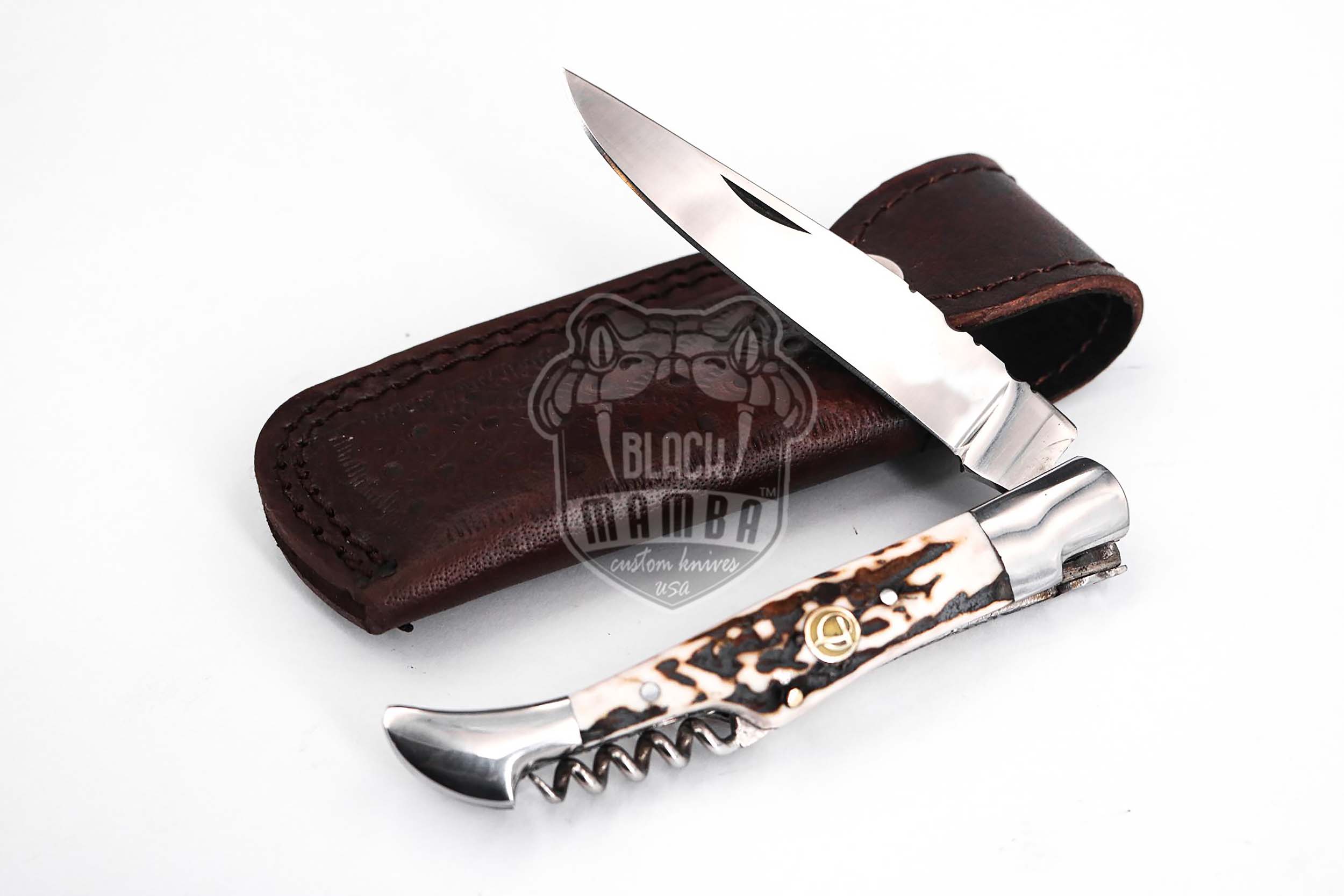
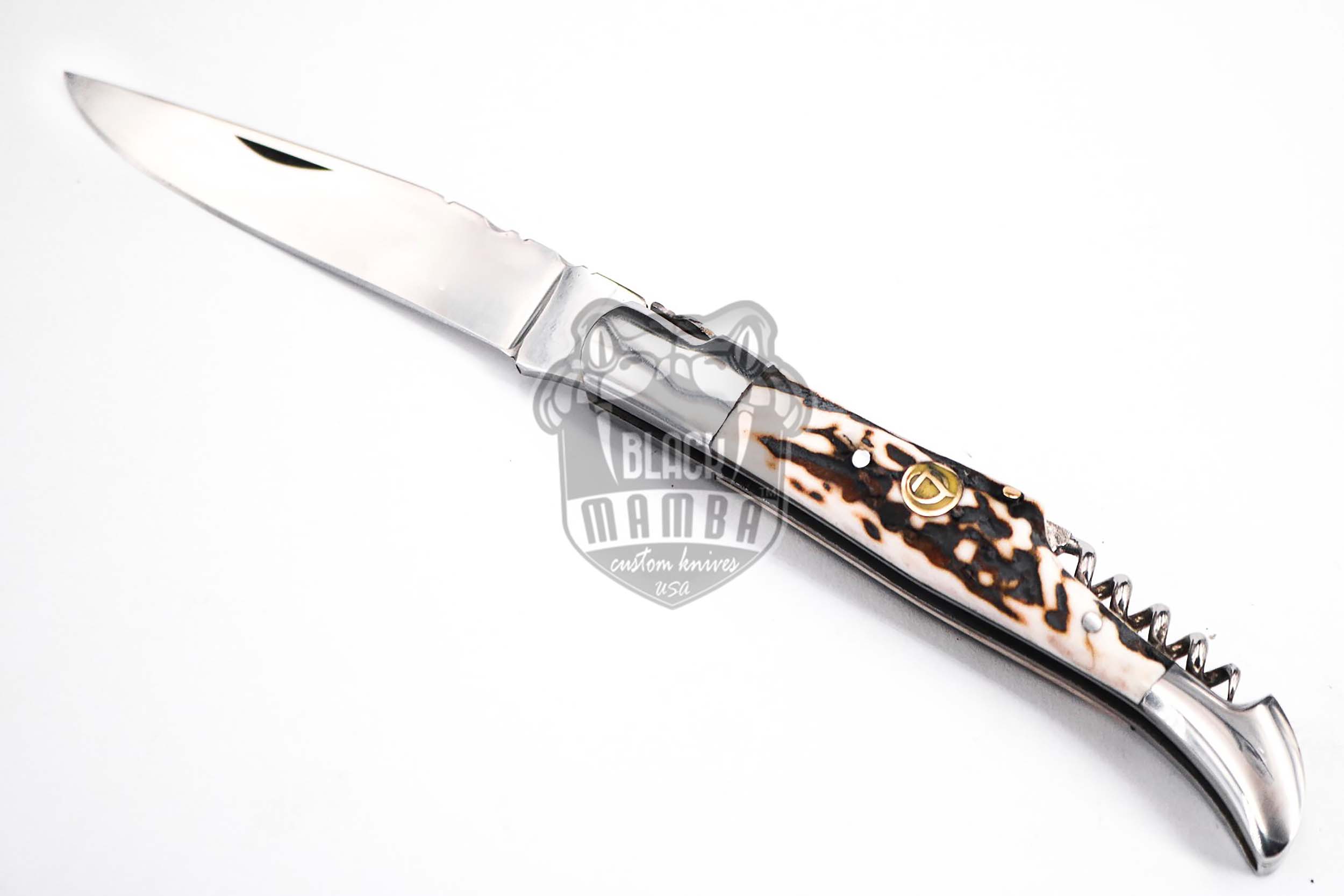
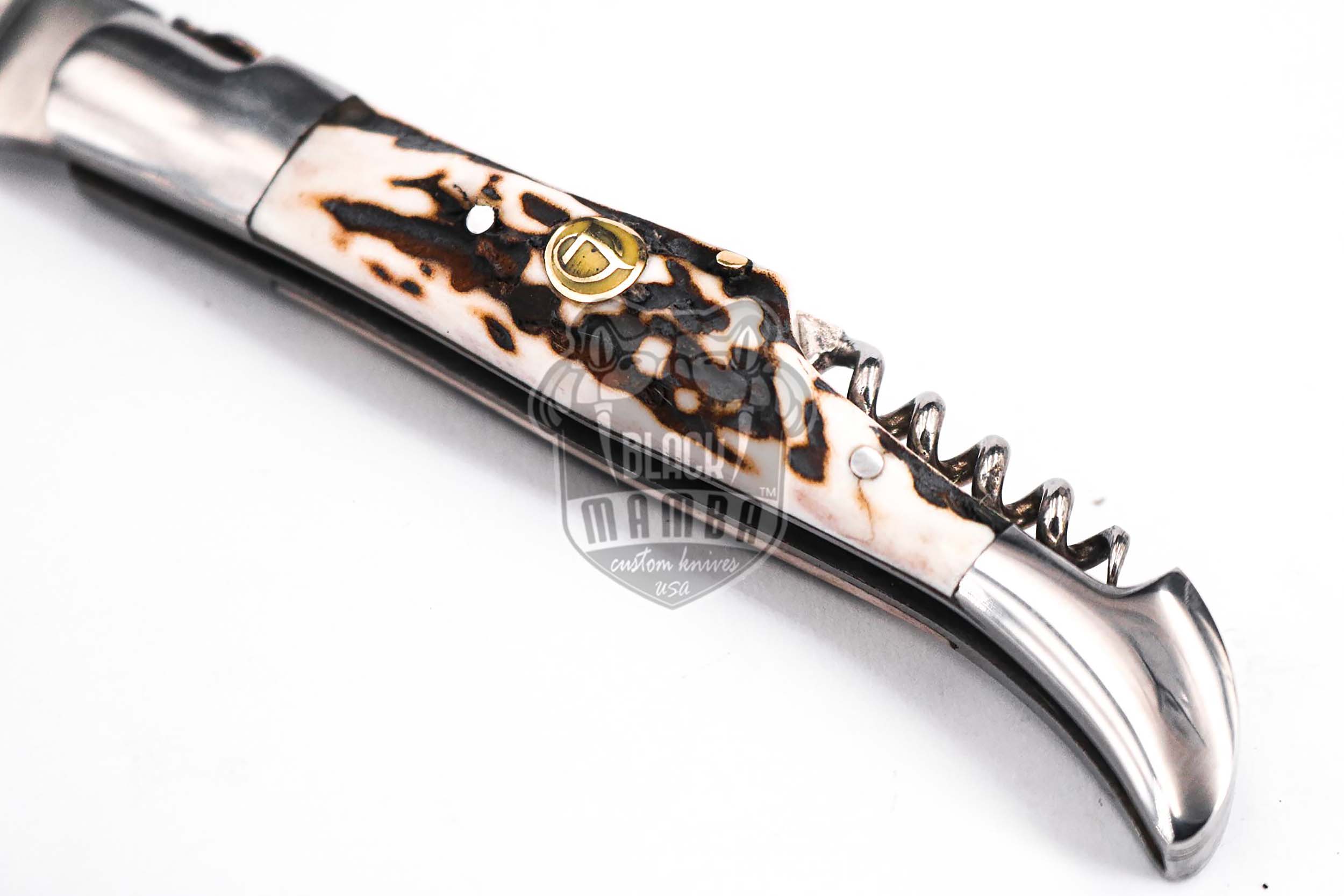
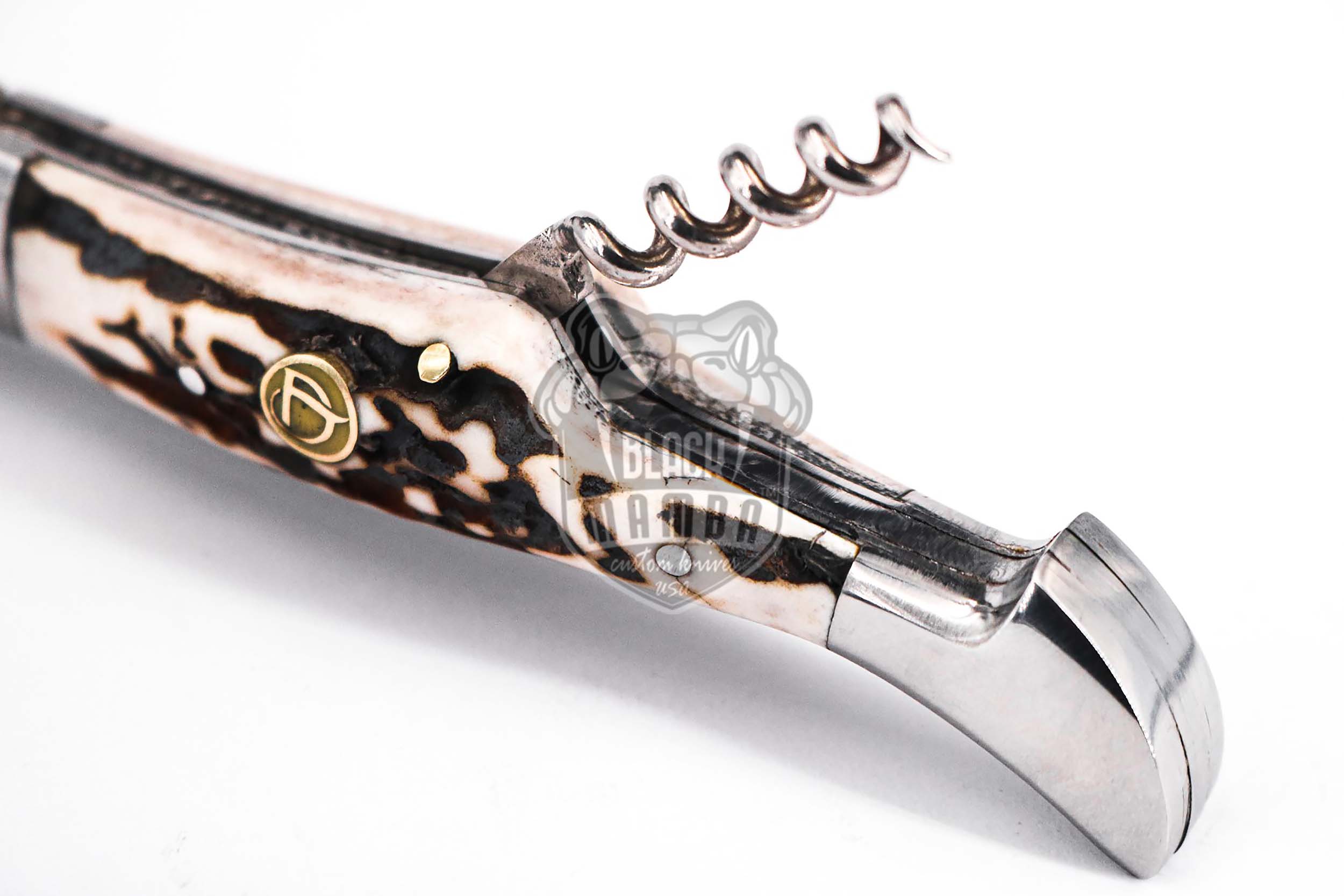
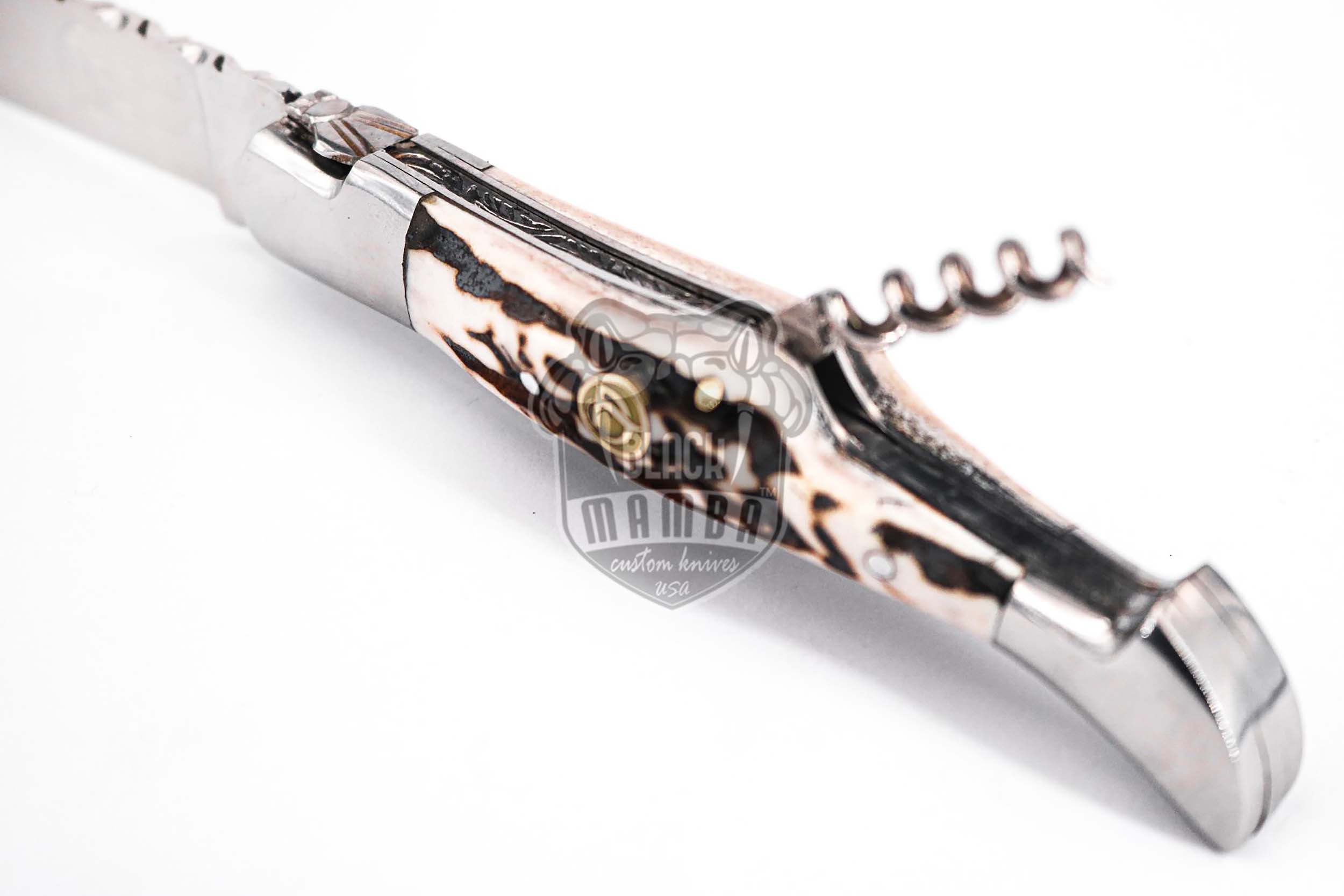
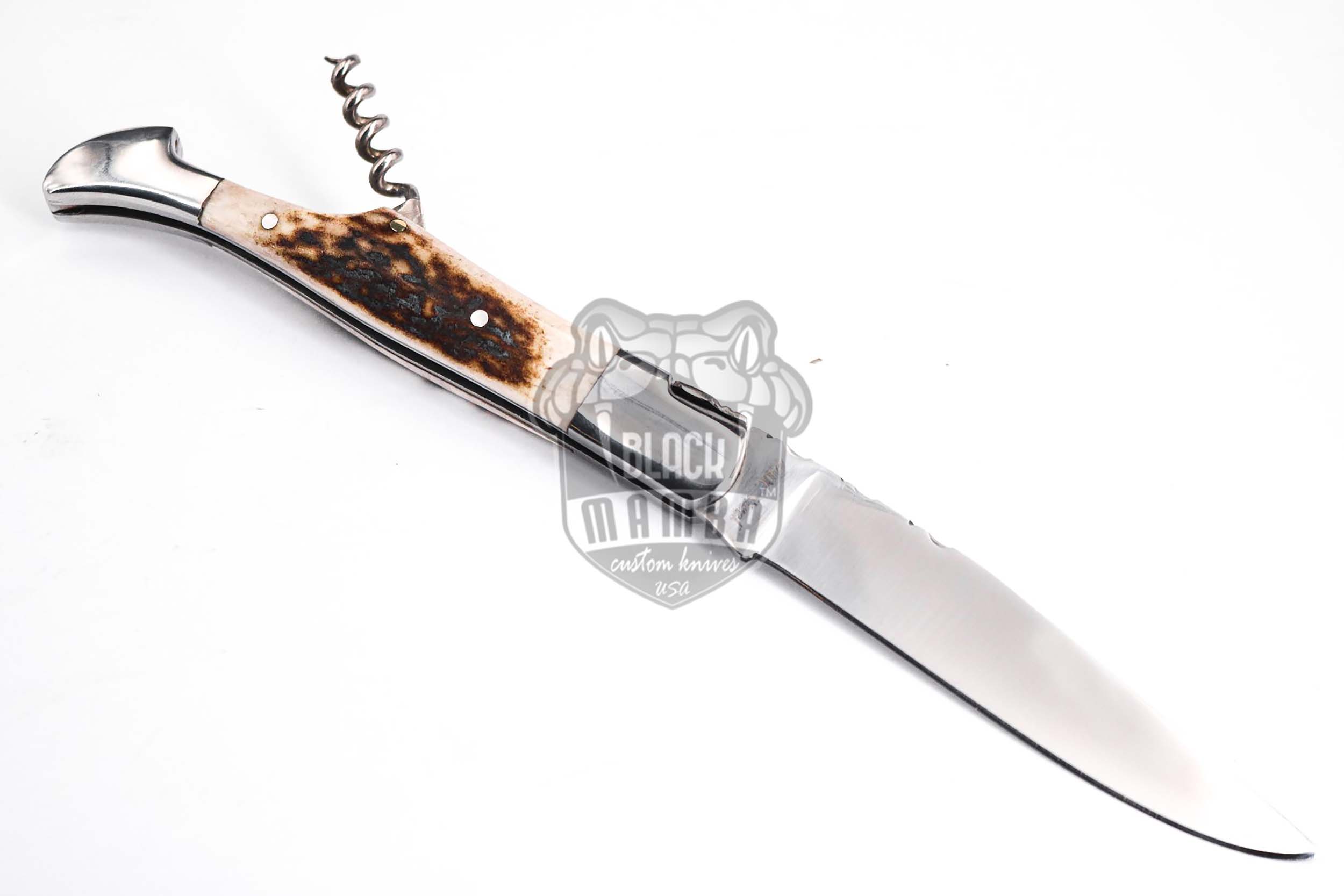
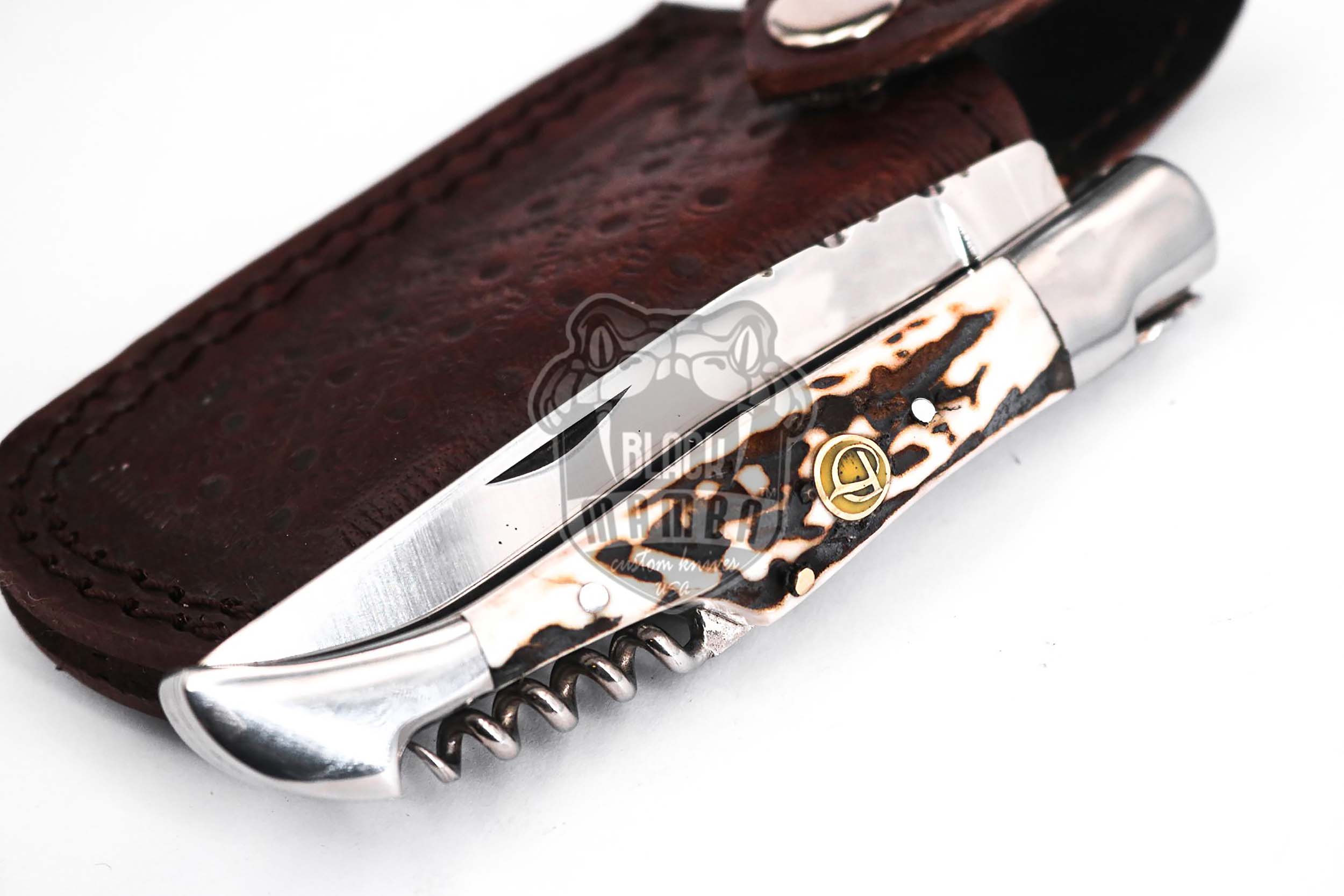
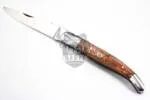
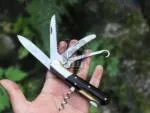
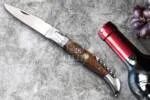
Stag horn on the handle — cream, ridged and mottled with dark bark — set against a bright spring and a folding worm.
| Overall length | 10 inches |
| Blade length | 4.5 inches |
| Handle length | 5.5 inches |
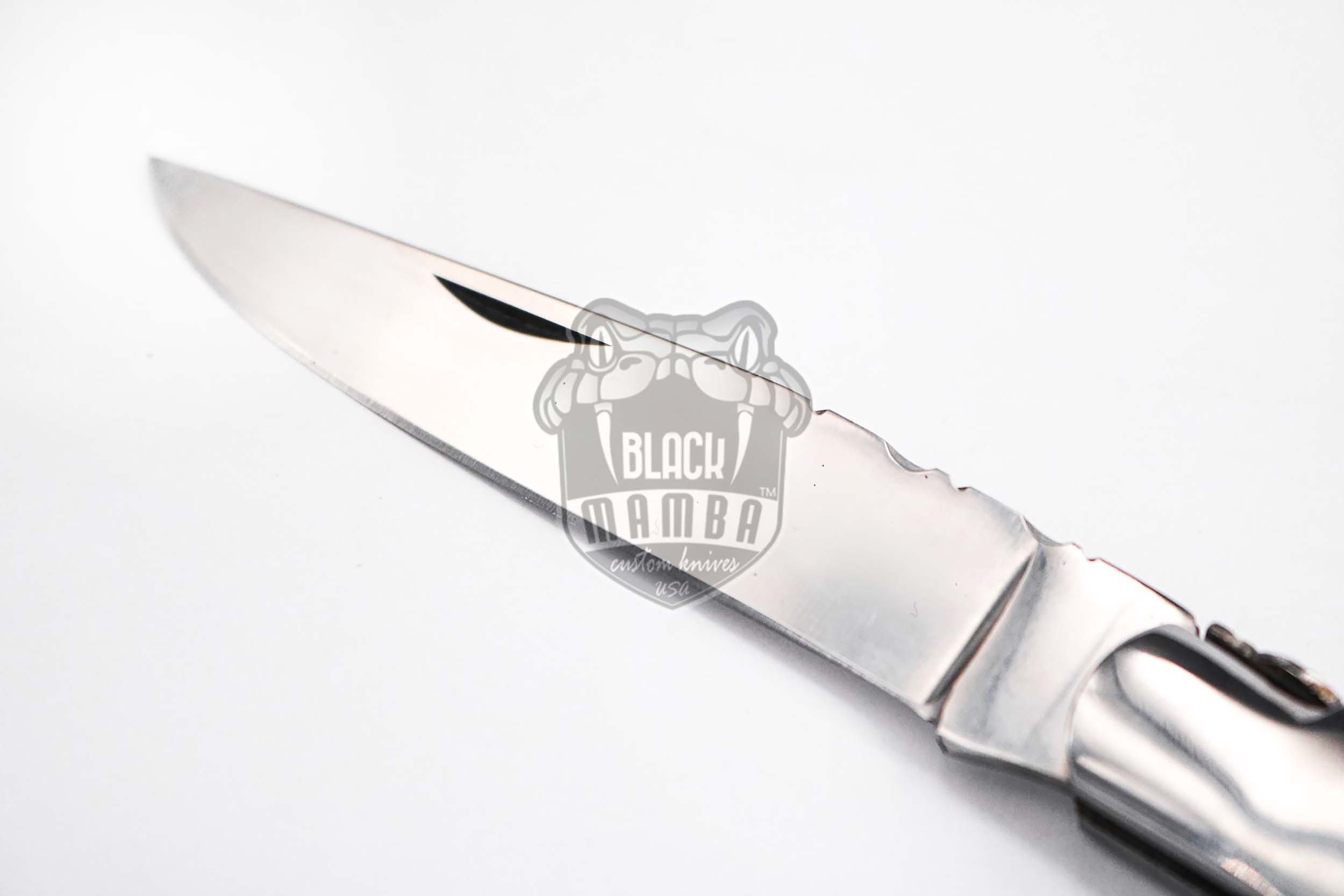
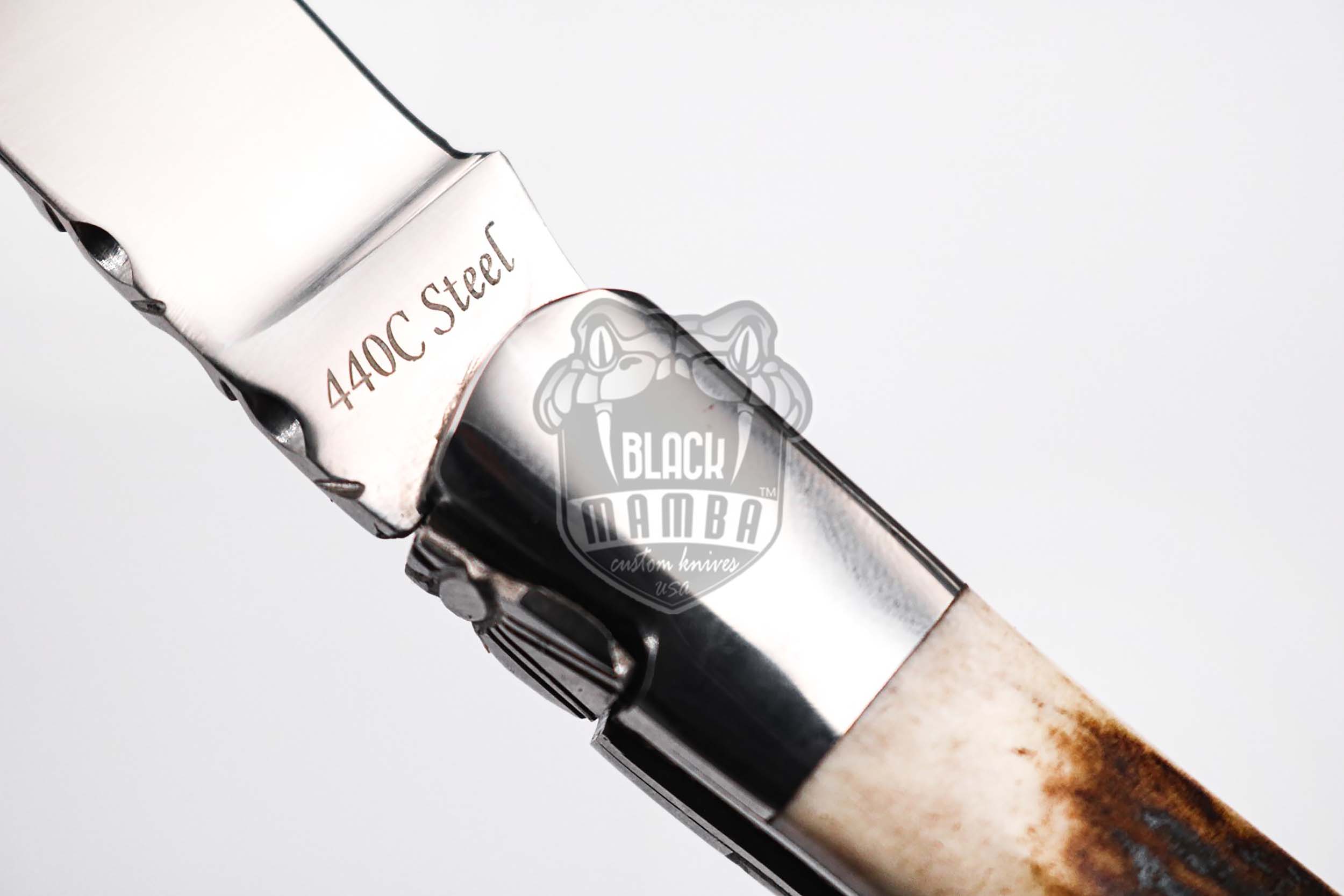
| Steel | High carbon steel |
| Hardness | 58–60 HRC, oil tempered |
| Weight | 3.5 oz |
| Handle | Stag Horn |
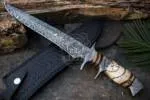
| Included | Hand-stitched leather sheath |
Chosen by: people who want the handle to be the reason. Stag is the one material in this range that nobody mistakes for anything else, and it is the one that photographs least well and looks best in person. Open, it spans 10 inches; the blade accounts for 4.5, the whole knife for 3.5 ounces.
Stag at a dinner table
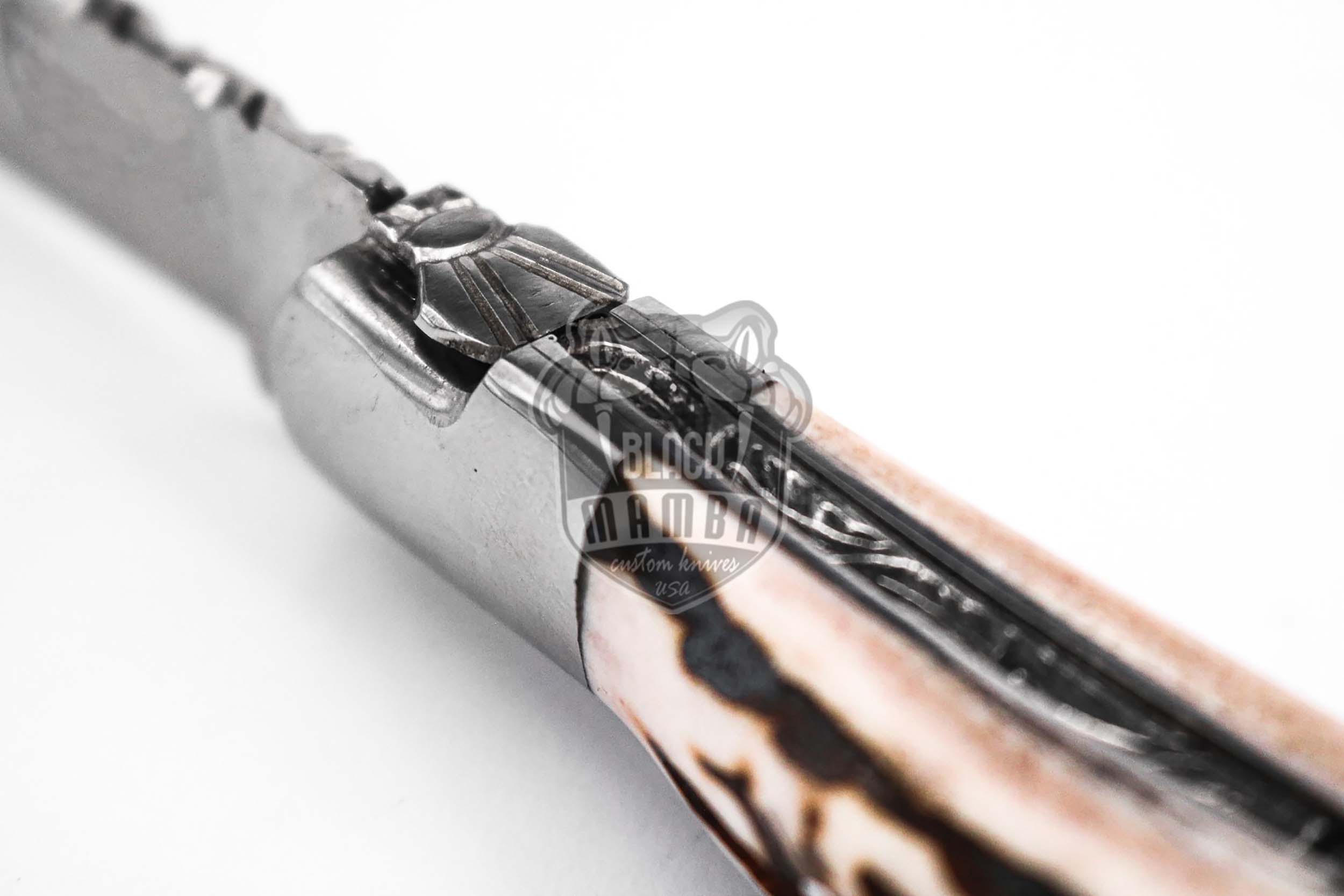
Antler is porous and lightly textured, and both properties work in your favor while eating. A greasy hand slips on polished timber and does not slip on stag. The dark bark patches are the weathered outer surface left deliberately unsanded, and they sit slightly proud of the cream areas, which is where the grip comes from. Over years the cream ages toward ivory and then toward a warm old-piano color, and the contrast with the bark increases rather than fades. No two scales are cut from the same place on the same antler, so the pair on your knife will be close without being identical. That mismatch is the surest tell for real stag: molded imitations come out perfectly matched and perfectly regular, and they look it from across a table.
What the material asks of you
Stag is more demanding than wood. It will absorb water if you soak it and can develop hairline checks if it dries out in a hot car or by a stove. Neither is likely with normal use, but both are avoidable: wash it quickly, dry it properly, and keep it at room temperature. If it ever looks chalky, warm a trace of mineral oil in your fingers and work it into the surface.
Blade, worm and spring
The blade and the corkscrew pivot from opposite ends of the same handle and are both held by a single flat spring. The bee is formed at the rear where that spring exits, standing bright against the horn. Because the spring has to serve two tools, the action on a sommelier pattern is firmer than on a blade-only Laguiole — that is by design, not stiffness to be worked out.
Care: hand wash the blade only, dry it at once, and dry the horn with a cloth rather than leaving it to air. Keep the pivot free of grit. Put it away shut, bone-dry and outside the sheath. Keep it clear of sustained heat.
FAQs
Is the stag real? Yes, natural antler, which is why the figure and color vary knife to knife.
Will the two sides match? Closely, but never exactly. Natural material never does.
Where is it made? Memphis, Tennessee.
See our American made knives, read cleaning a folding knife, or look into multi blade pocket knives if you like two tools in one handle.
Model: BMK-615



Olivia S. (verified owner) –
I received these Laguiole Steak Knives as a gift, and they’re now my go-to for all my steak dinners. They feel great in hand, and the blades are impressively sharp.
Olivia S. (verified owner) –
I received these Laguiole Steak Knives as a gift, and they’re now my go-to for all my steak dinners. They feel great in hand, and the blades are impressively sharp.
Samantha Chavez –
Couldn’t ask for a better knife honestly. Edge held up great through a full week of daily cooking. This will not be my last order from this maker.
Anthony Anderson –
This knife has already earned a permanent spot in my collection. Slices through everything like butter, no sawing needed. This store just earned a repeat customer.
Sandra Allen –
This is the kind of knife you show off without even meaning to. Has become my main prep knife in the kitchen since it arrived. This store clearly takes pride in their work.
Susan King –
Didn’t think a knife at this price could feel this premium. Balance in hand is perfect for detail work at the cutting board. Edge geometry makes thin slicing so much easier than my old knife. Love it.
Jack Gray –
This knife punches way above its price point. Handle stays comfortable even after prepping a big meal. Edge held up great through a full week of daily cooking. Can’t say enough good things about this purchase.
Kimberly Cole –
Did not expect this level of quality for the price. Edge held up great through a full week of daily cooking. Balance in hand is perfect for detail work at the cutting board. So worth it.