

Description
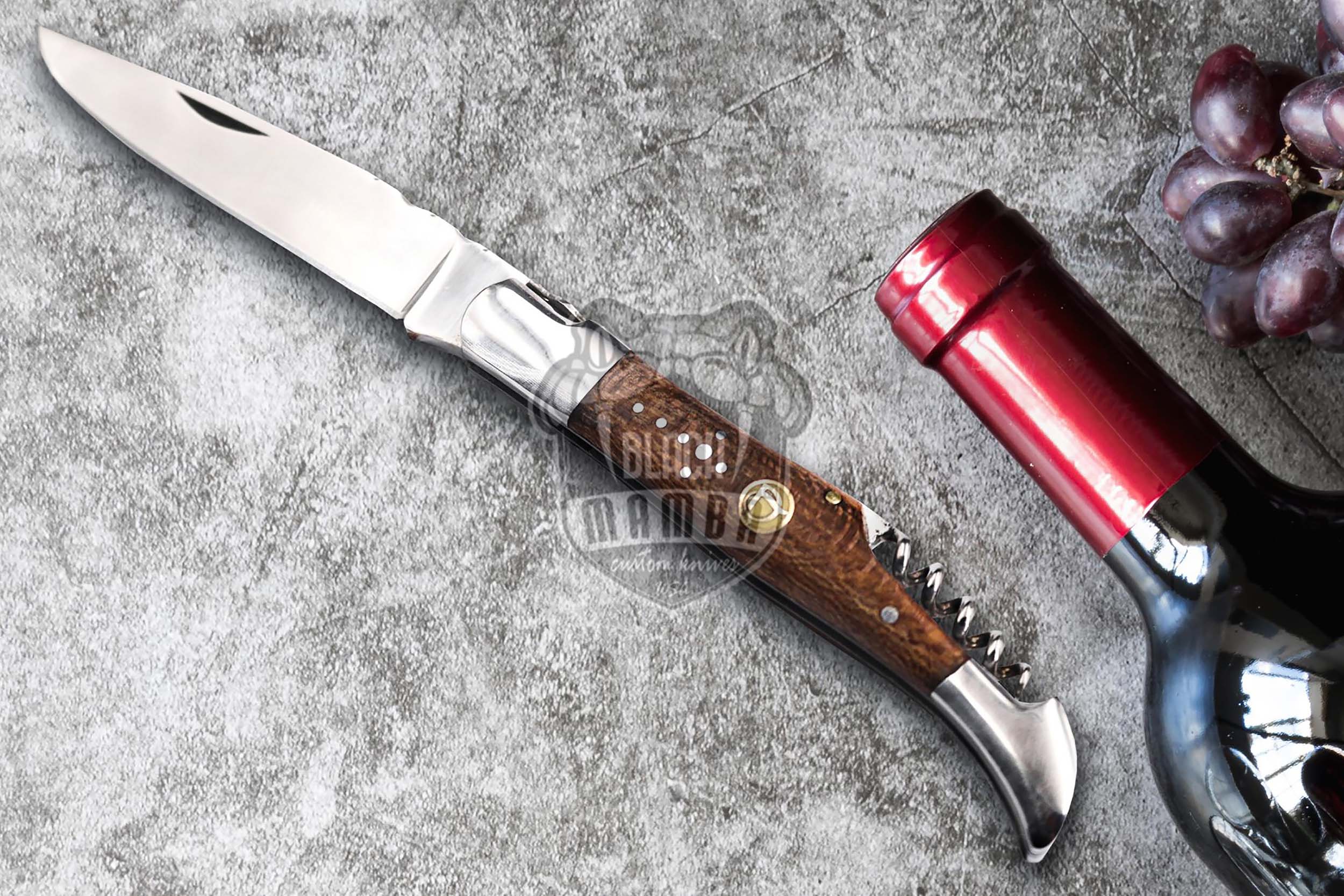
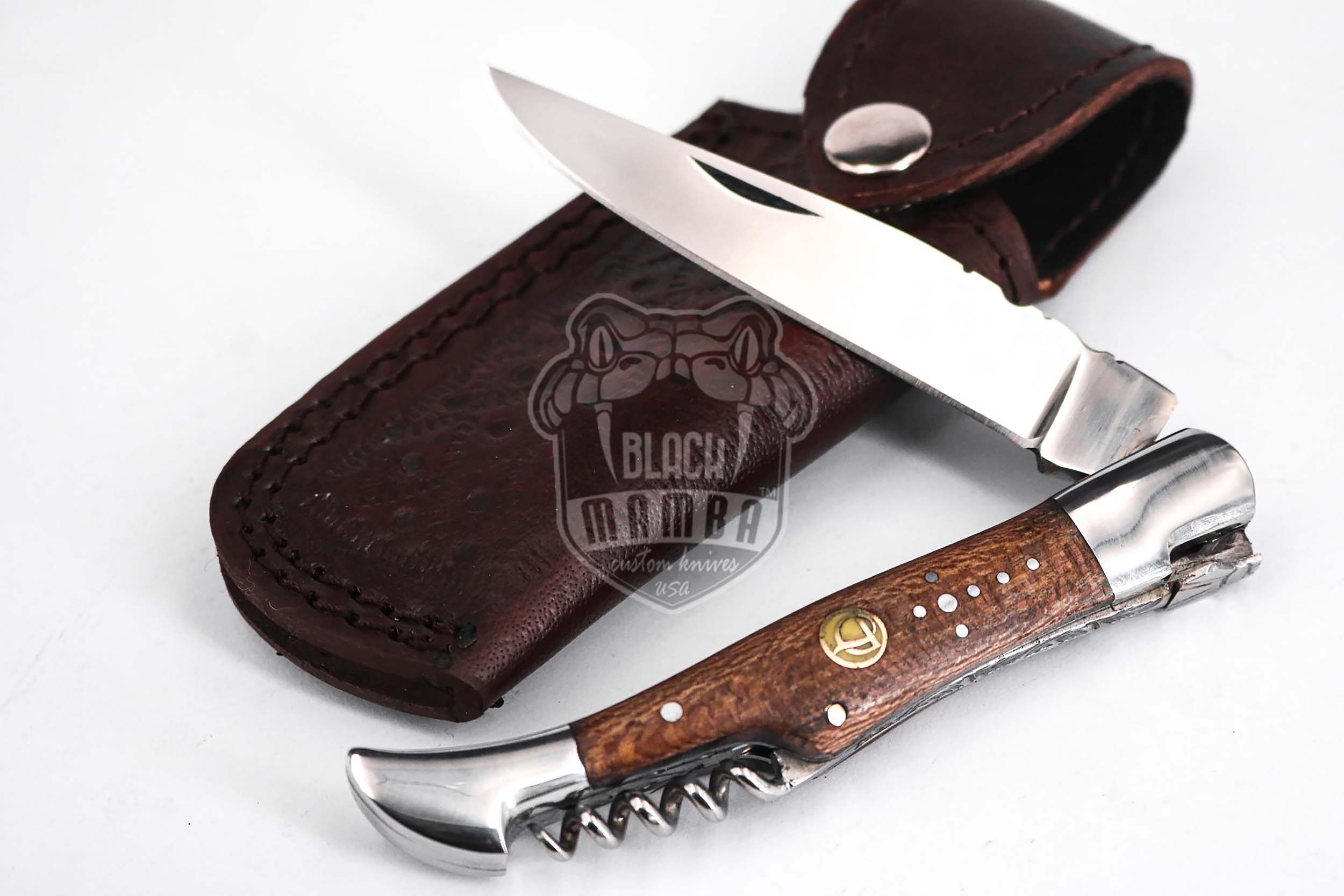
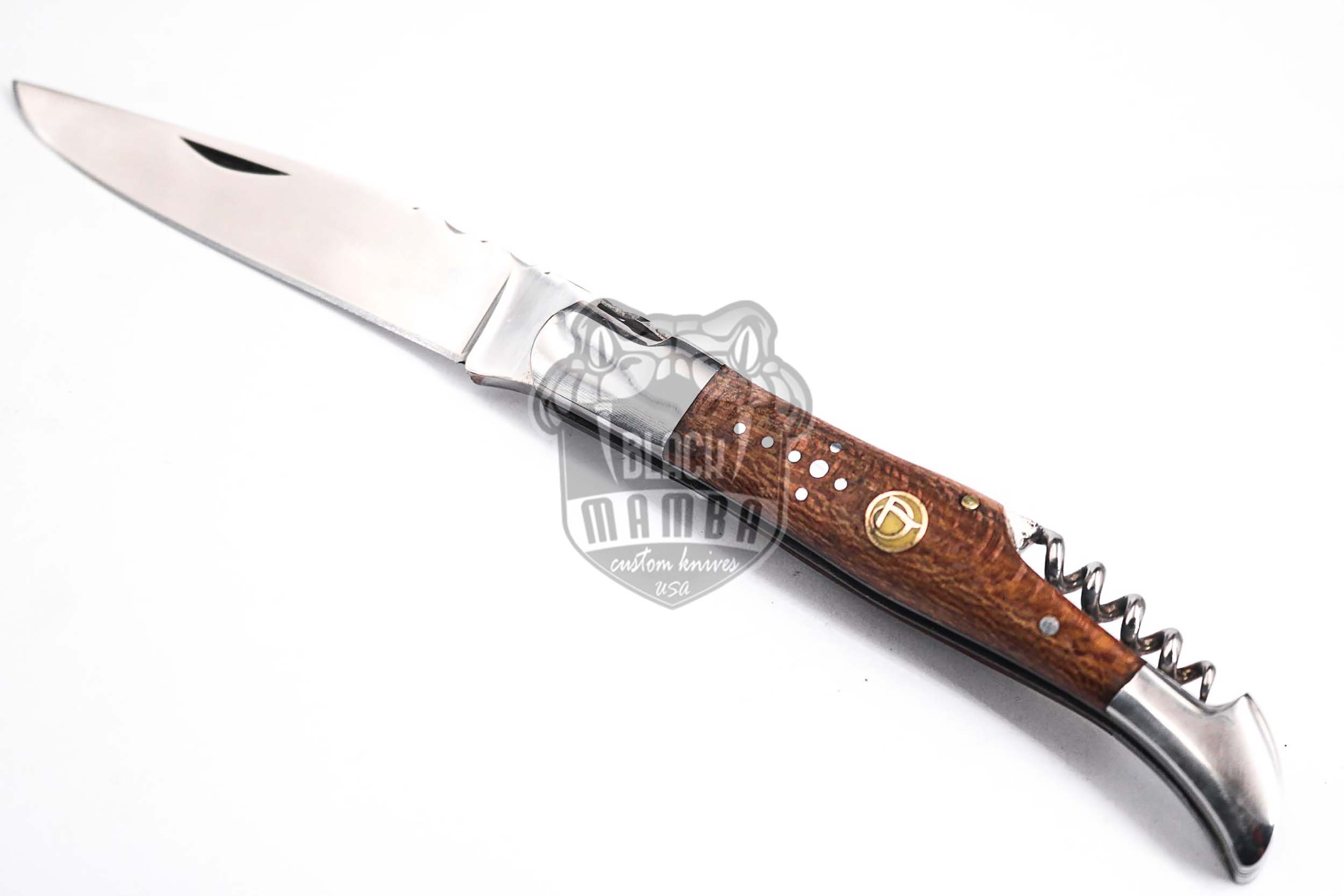
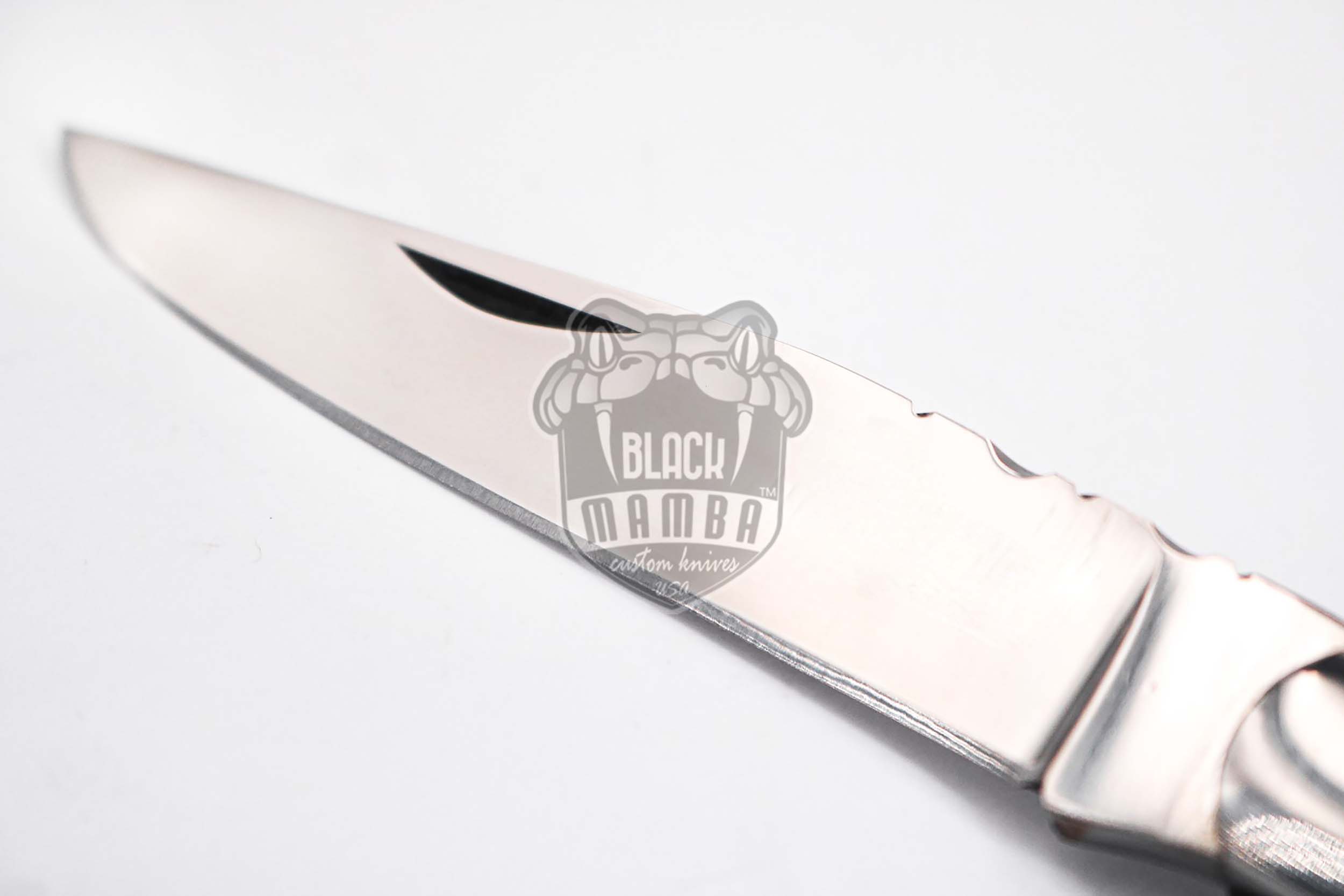
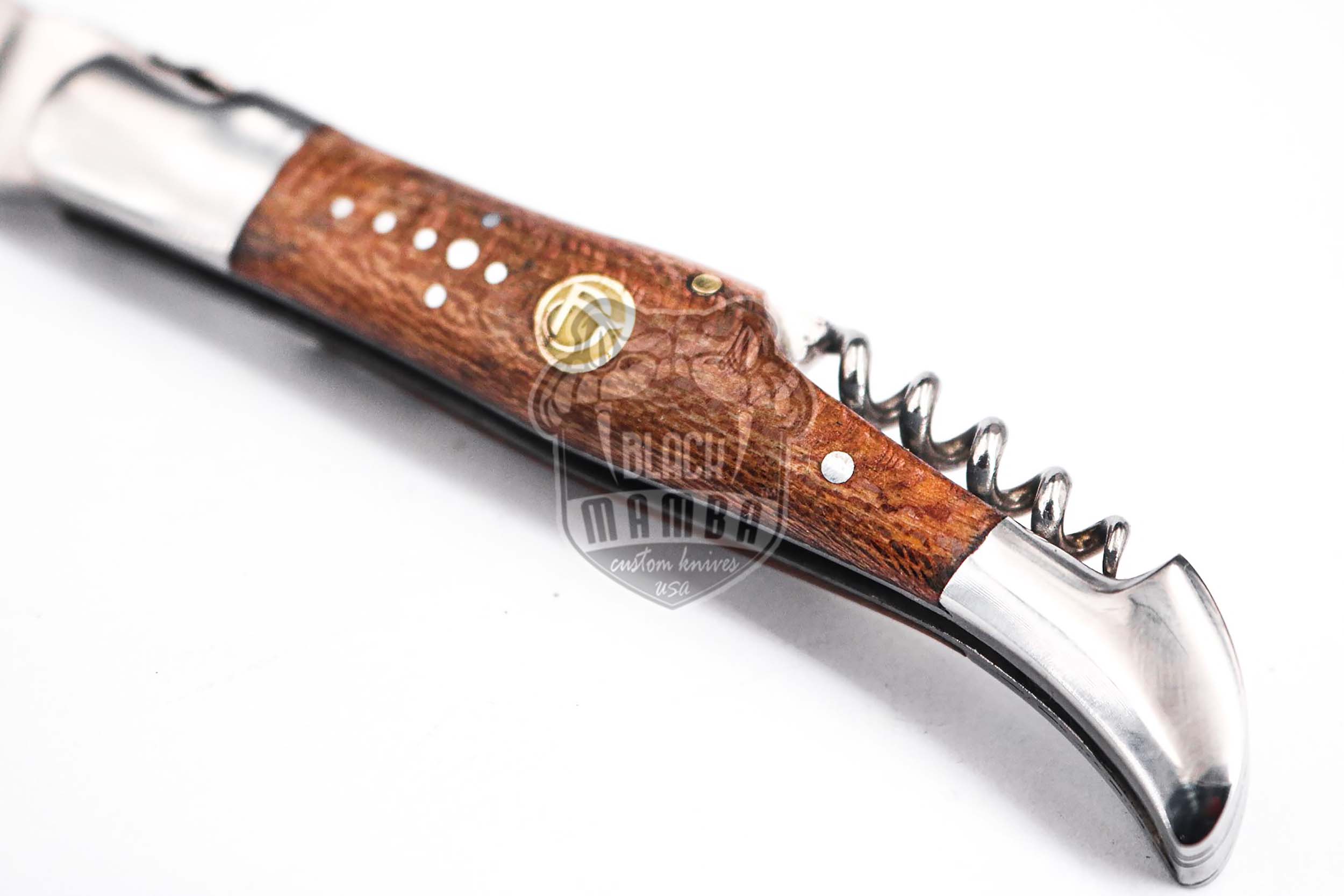
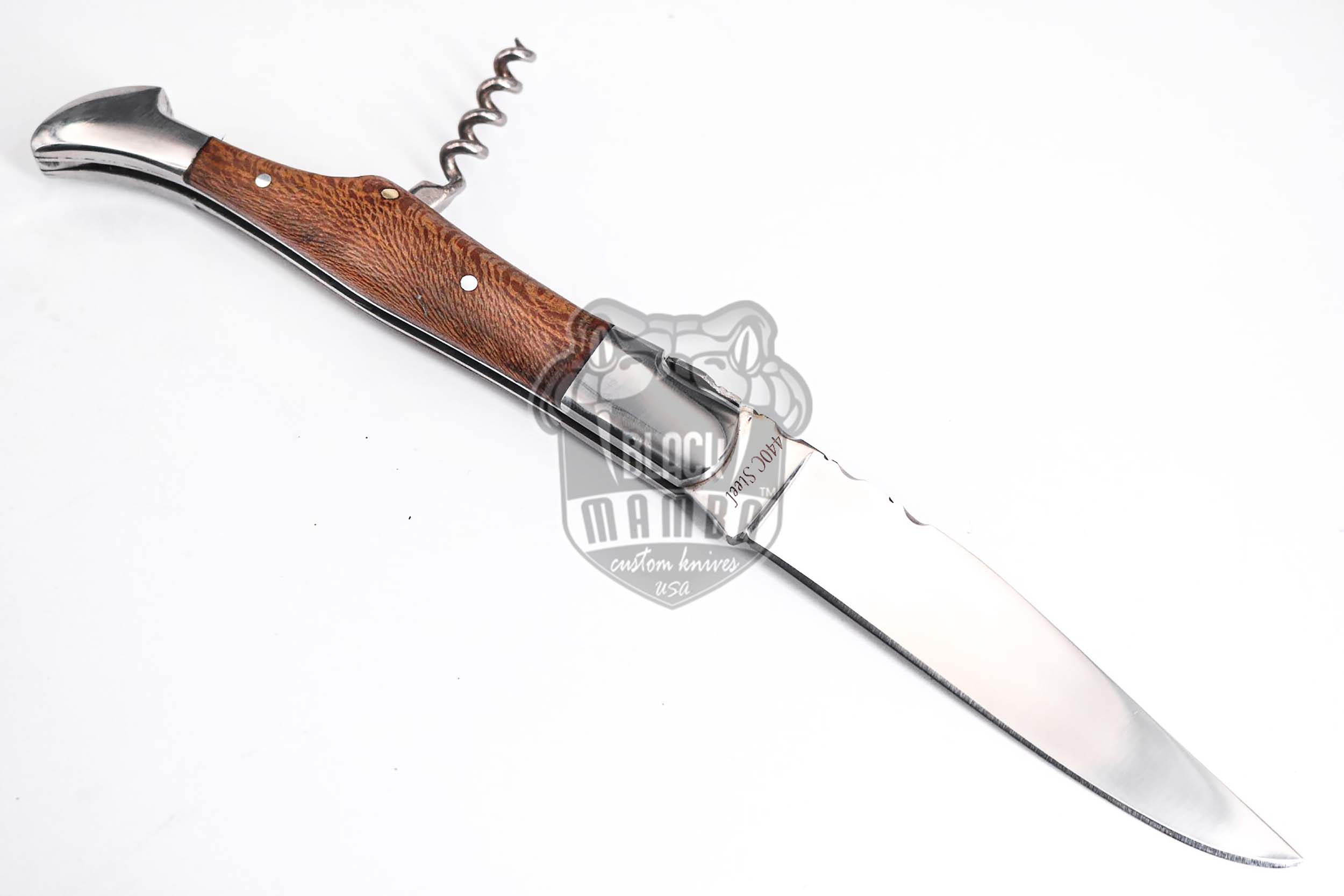
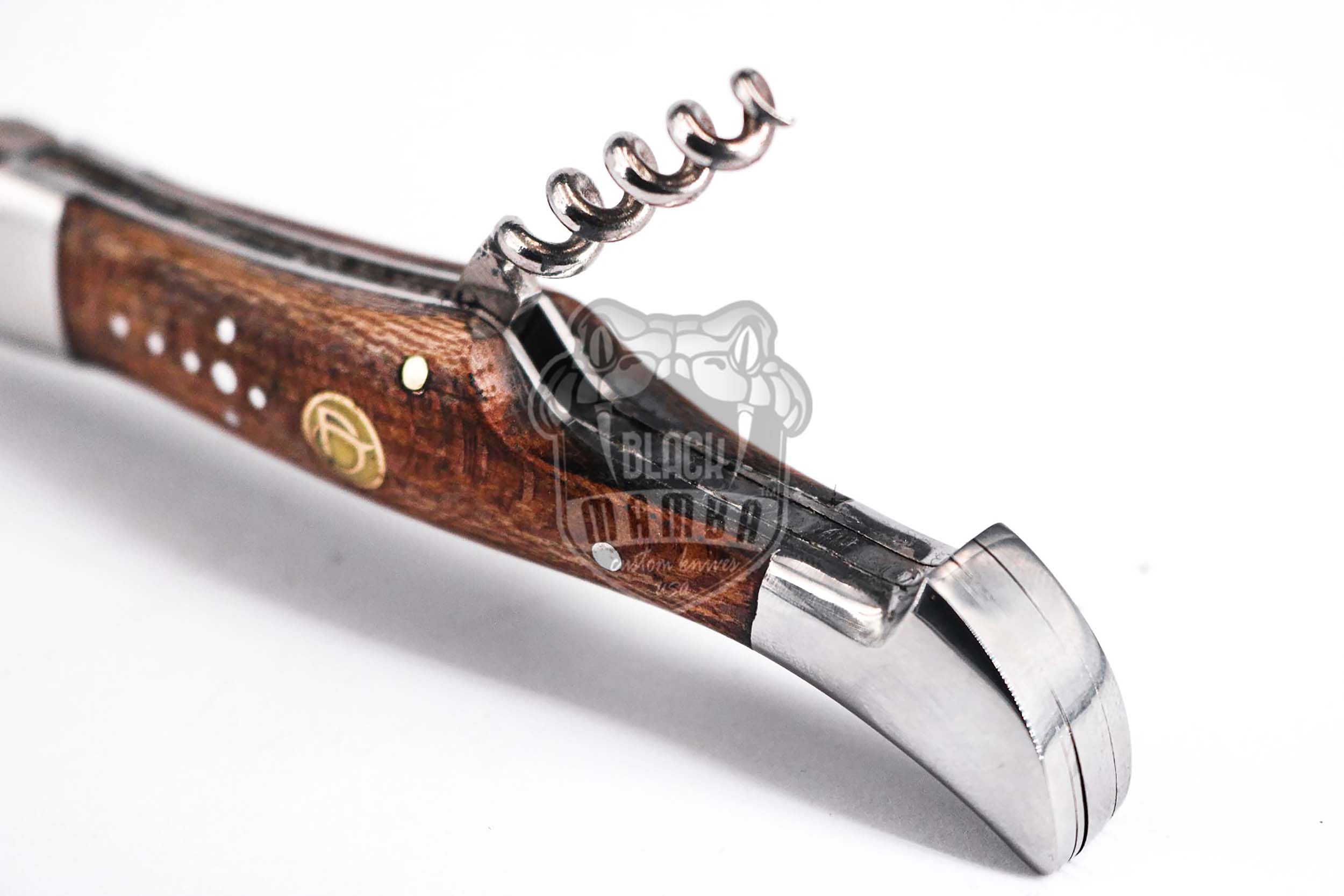
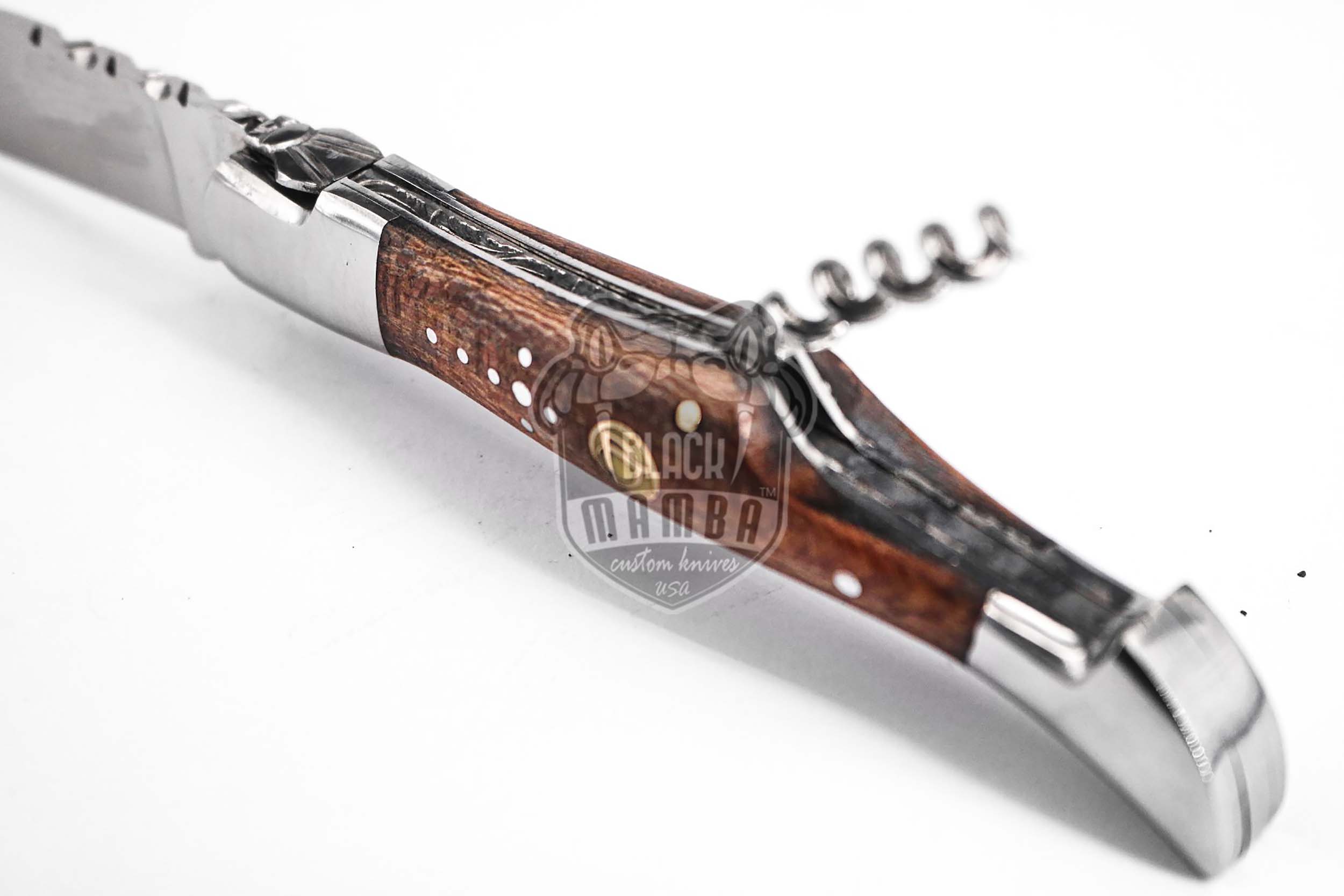
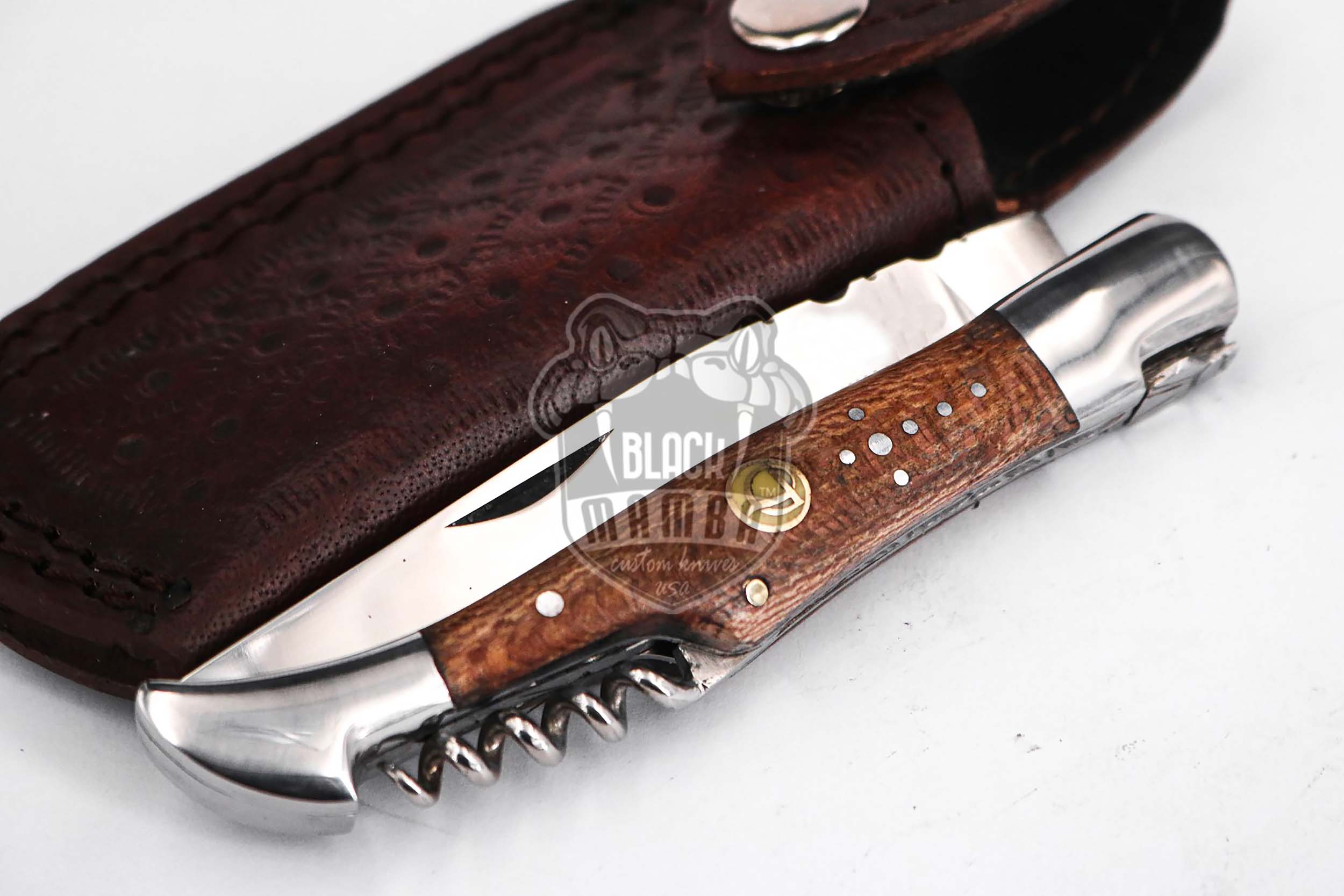
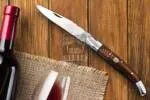
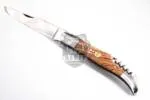
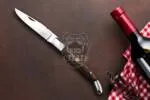
Dark burl on the handle, a corkscrew on the back, and a blade polished bright enough to mirror the wine.
| Overall length | 10 inches |
| Blade length | 4.5 inches |
| Handle length | 5.5 inches |
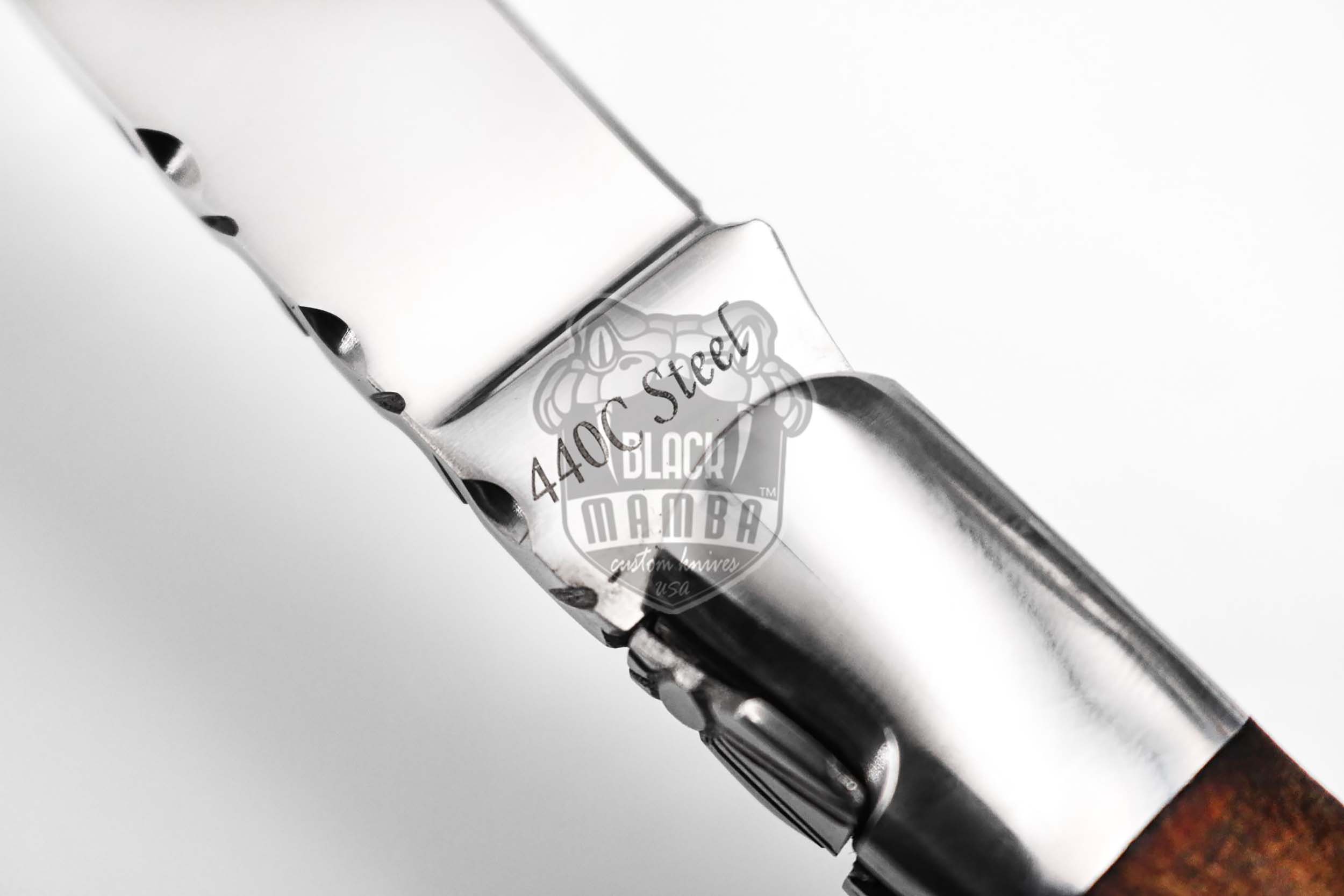
| Steel | High carbon steel |
| Hardness | 58–60 HRC, oil tempered |
| Handle | Wood |
| Included | Hand-stitched leather sheath |
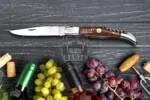
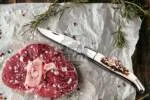
Use it for: the bottle and the board. Open the wine, then cut the cheese and the sausage with the same knife. It drops into a coat pocket at 3.5 ounces and opens to 10 inches, with a 4.5 inch working edge.
The burl
Burl is not normal timber. It forms where a tree grows a dense knotted mass in response to injury, and the grain inside runs in every direction at once instead of lengthwise. That is what produces the mottled, swirling figure on this handle, reddish brown with darker eyes scattered through it. Because the fibers interlock, burl is unusually resistant to splitting along a line — useful in a handle that gets dropped. It darkens and gains depth with handling, and after a few years of dinners the high points where your fingers sit will be noticeably glossier than the rest. Burl is heavier than plain timber of the same volume, which is why this one carries more weight to the rear than the straight-grained versions do. You feel that as balance rather than bulk: shut, it sits back in the palm; open, the tip stays light. That is the correct way round for a knife you work one-handed while the other hand holds a bottle.
Spring tension
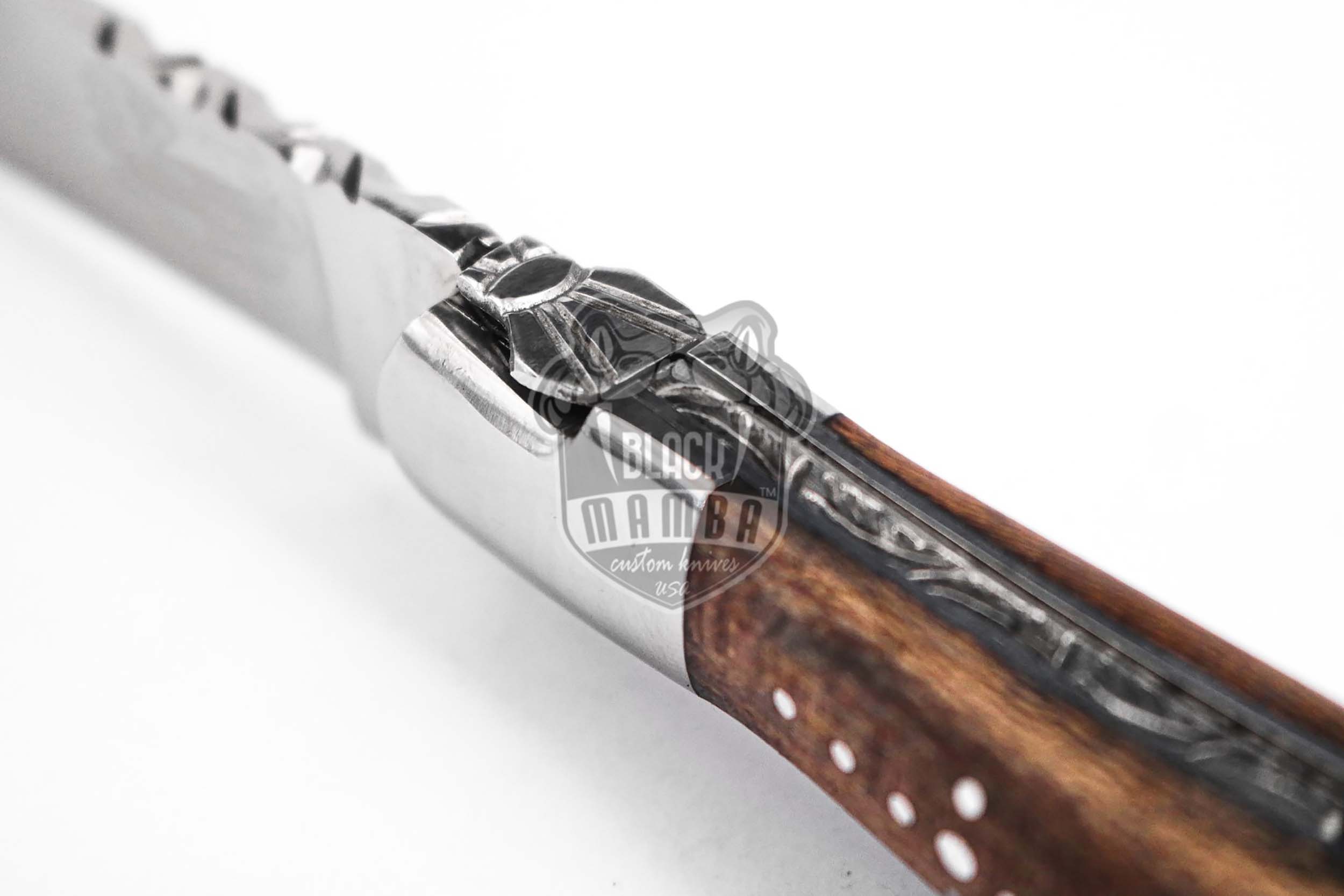
There is no lock and there is no need for one at this size. The backspring bears on a flat cut into the tang, and the geometry means force applied to the spine of the open blade pushes the tang harder into the spring rather than out of it. It is a two hundred year old solution that works because a table knife is never asked to pry.
The bee
At the rear of the spine, a small bee is formed where the spring finishes. On this knife it sits in polished brass against the dark burl, which is about as much contrast as the pattern allows. It gives your thumb something to register against when you are opening the blade one-handed.
Care: keep it dry. Wipe the blade after cutting anything acidic, and never leave the knife closed and wet, because water sits in the well between the liners and takes days to leave. Oil the pivot occasionally. Burl takes a light rub of mineral oil well if it ever looks dry, and it should never go anywhere near a dishwasher.
FAQs
Will the handle figure match the photograph? The pattern will, the exact swirl will not. Burl is unique to each block.
Is the corkscrew usable or decorative? Usable. It is a working worm on its own pivot.
How is it shipped? With a hand-stitched leather sheath, from Memphis, Tennessee.
Brush up on honing versus sharpening, read how to clean a pocket knife, or check the parts of a knife before you buy.
Model: BMK-620

Chloe S. (verified owner) –
: These Laguiole Steak Knives have elevated my dining experience. They’re sharp, elegant, and feel like a piece of art in my hand.
Jackson R. (verified owner) –
I’m impressed with the attention to detail in these handmade Steak Knives. They cut through steak effortlessly and add a touch of luxury to meals.
Zoe M. (verified owner) –
These pocket-sized Laguiole Steak Knives are a game-changer for picnics and outdoor dining. They’re compact and perform exceptionally well.
Lucas G. (verified owner) –
As a steak enthusiast, I can’t recommend these knives enough. They make each cut precise, and the overall design is exceptional.
Jonathan White –
So happy I finally pulled the trigger on this one. Balance in hand is perfect for detail work at the cutting board. No hesitation recommending this to anyone looking.
Barbara Thomas –
My husband was speechless when I showed them this knife.
Luis Torres –
This knife completely won me over the moment I picked it up. Ordered from Black Mamba Knives before and the quality stays consistent every time.
Dennis Cruz –
Genuinely totally impressed with how this turned out.
Eric Myers –
Showed up right on time and looked even better than the photos. This will not be my last order from this seller. You can tell it’s real American craftsmanship out of Memphis. Shipping was quick too.
Michael Lopez –
This is exactly what I wanted and then some. Has become my main prep knife in the kitchen since it arrived. This is the kind of purchase that makes online shopping worth it.