
Description
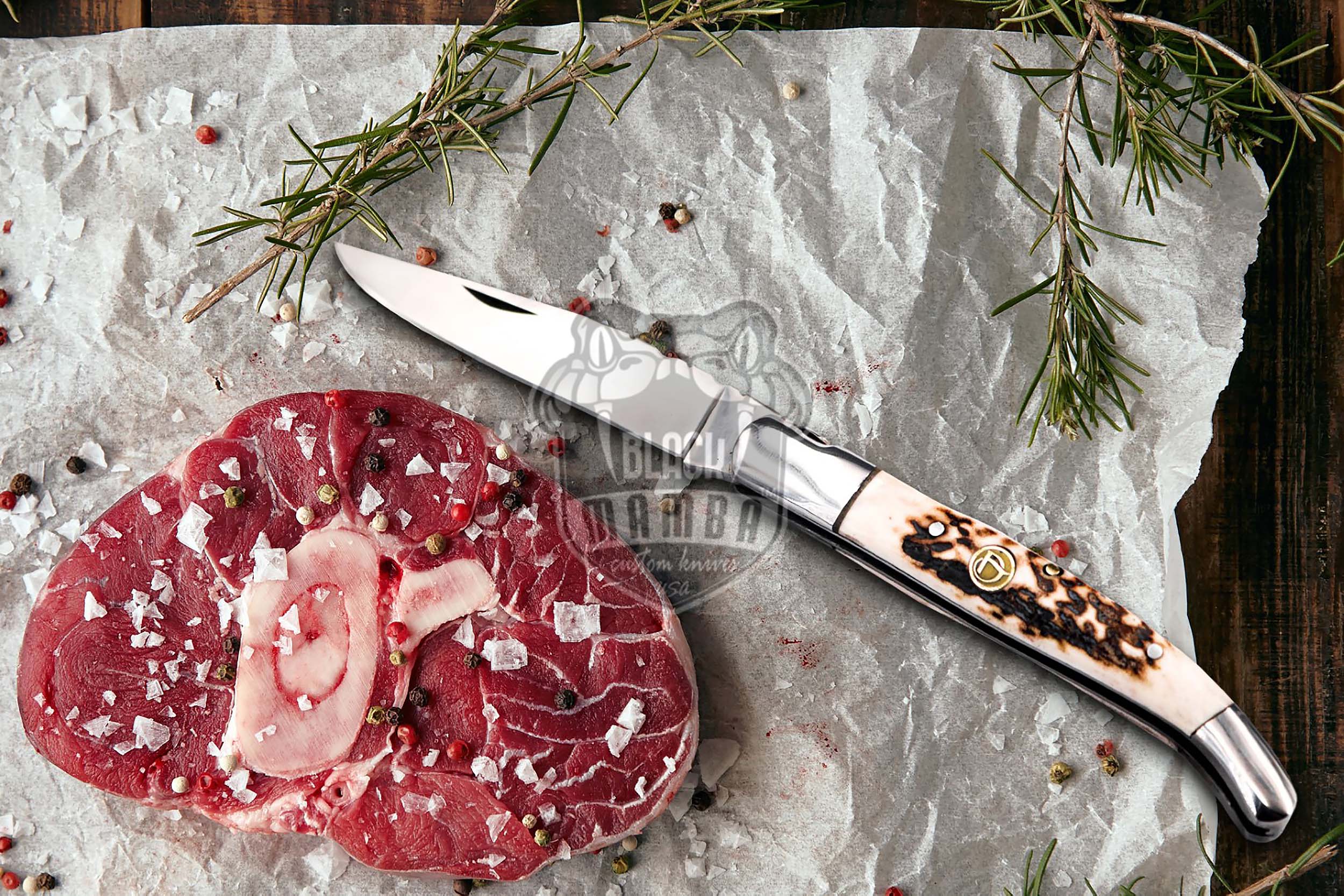
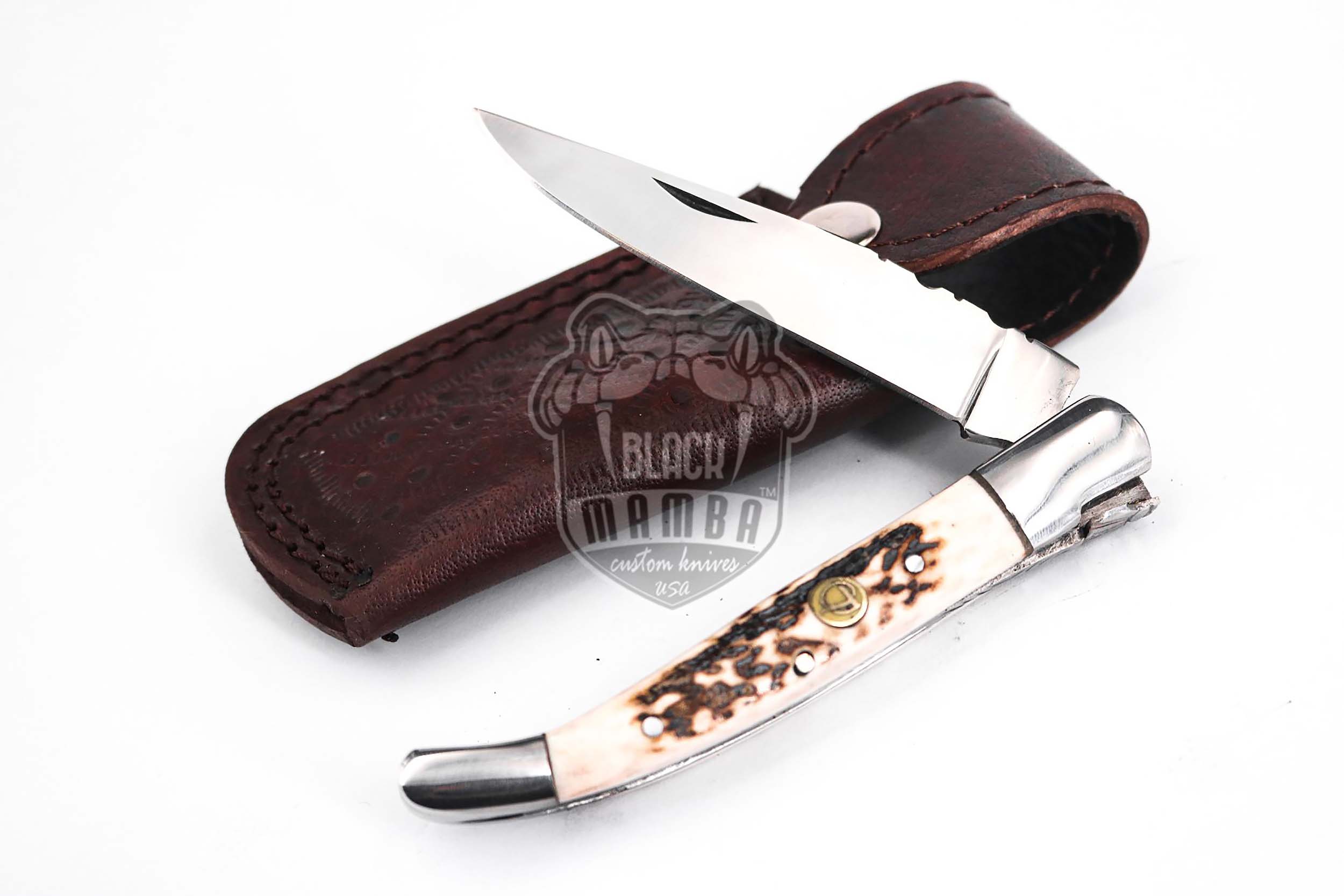
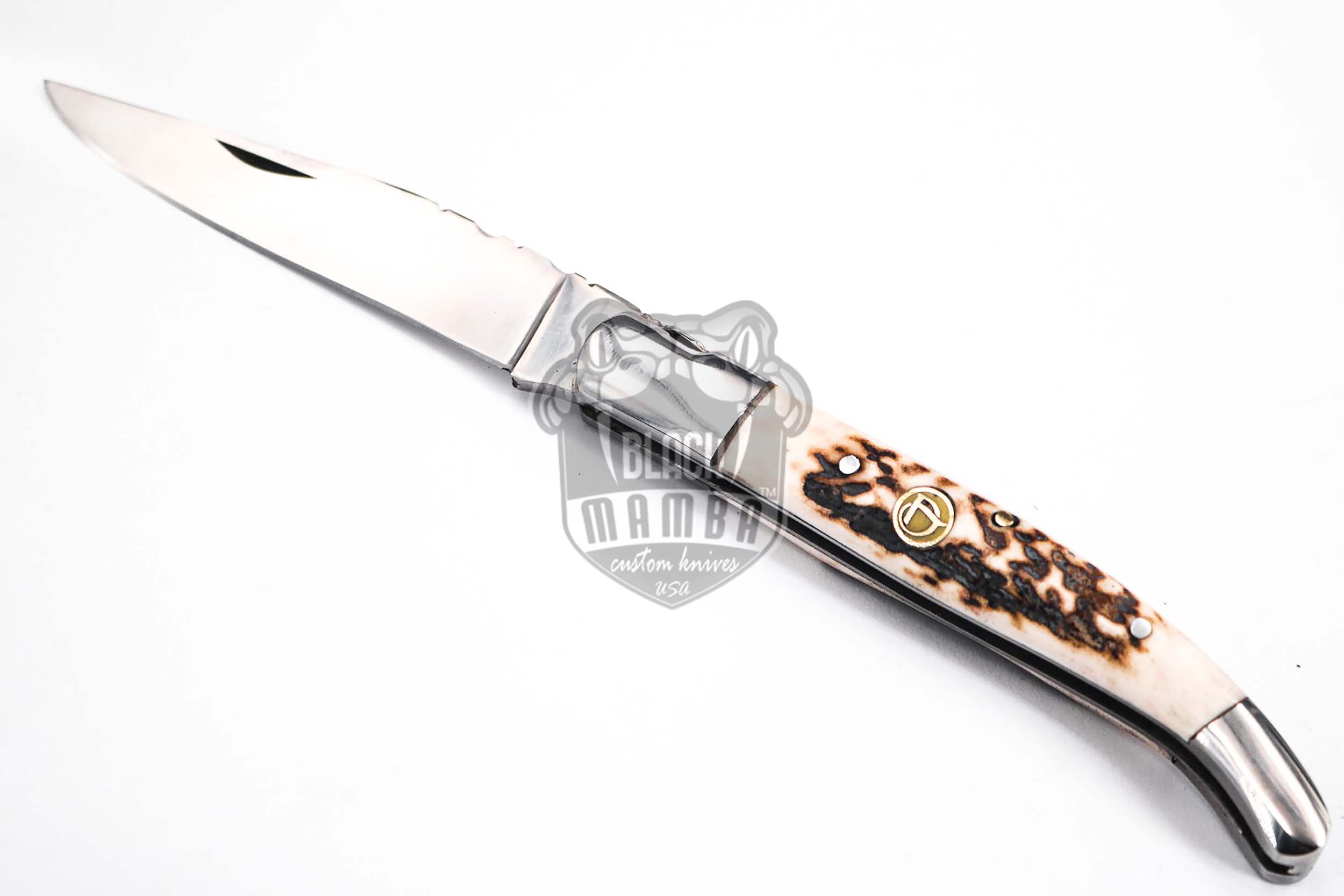
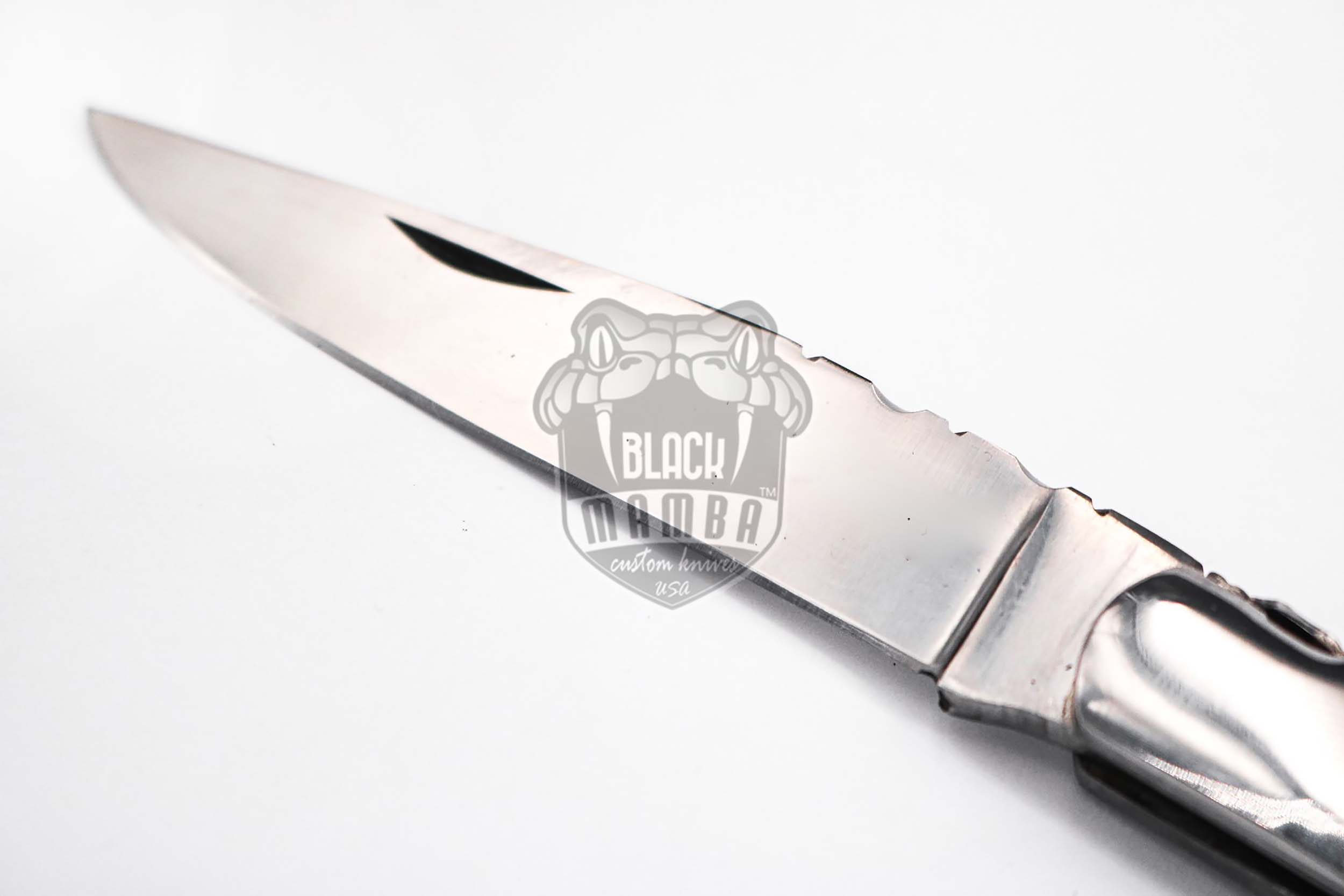
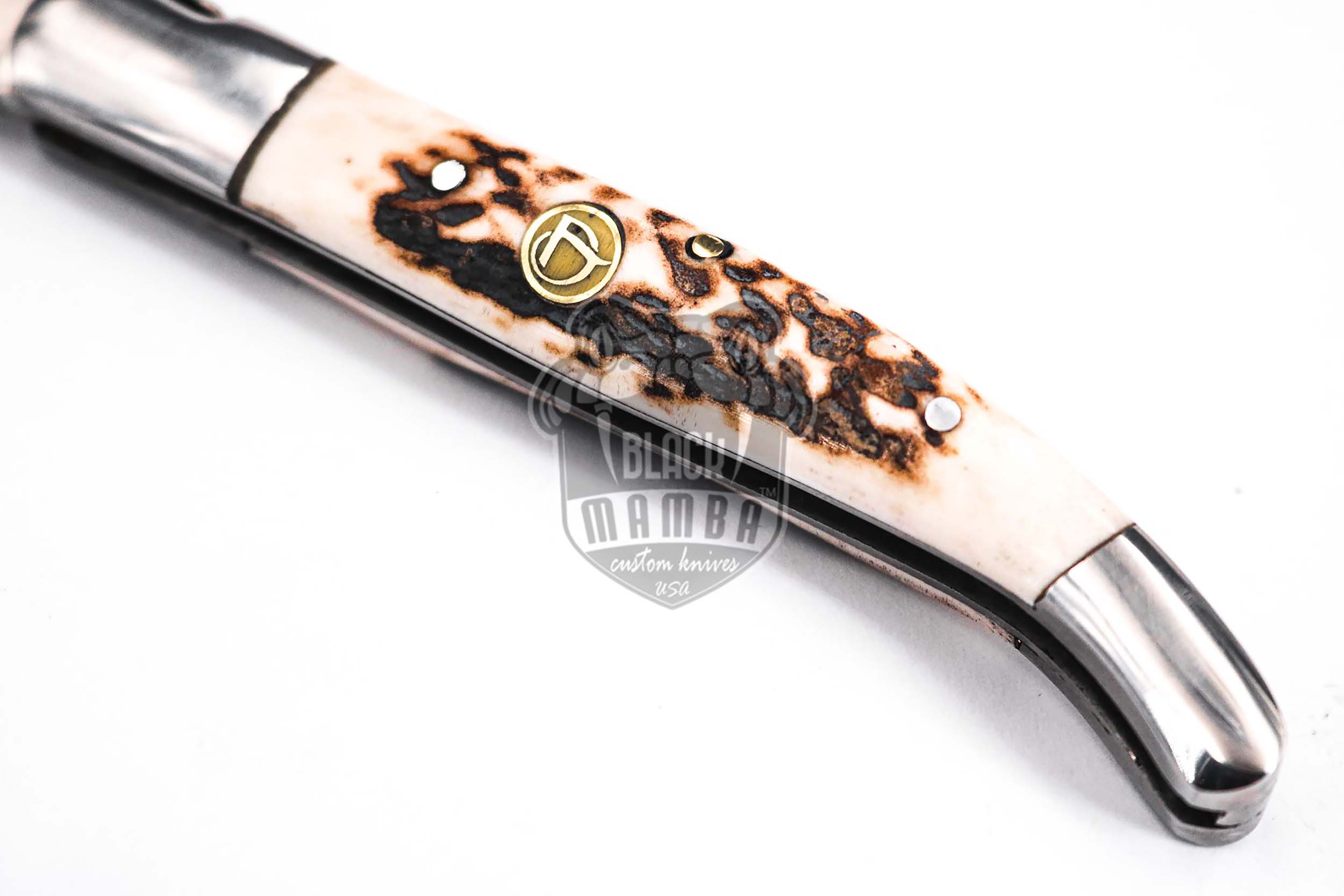
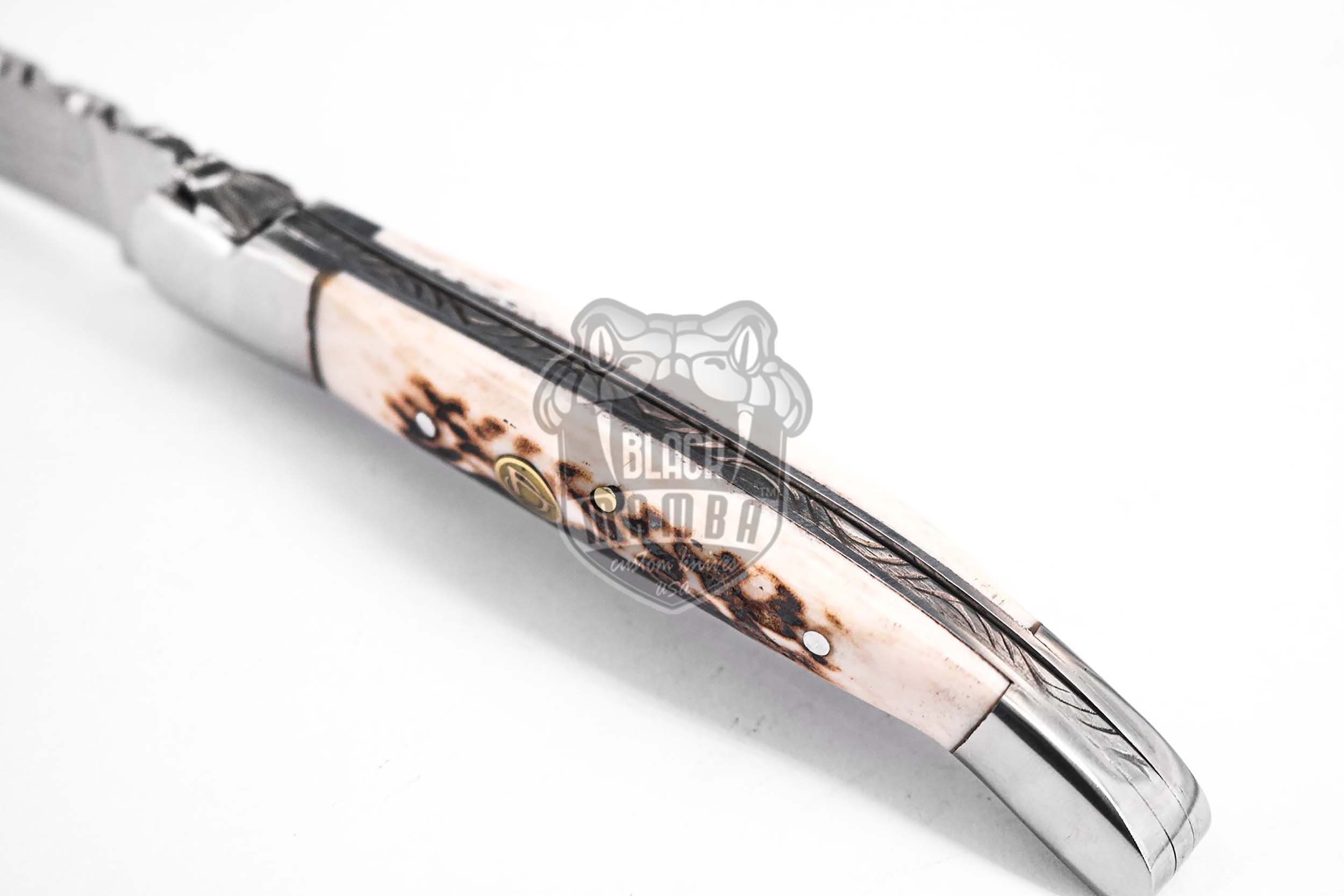
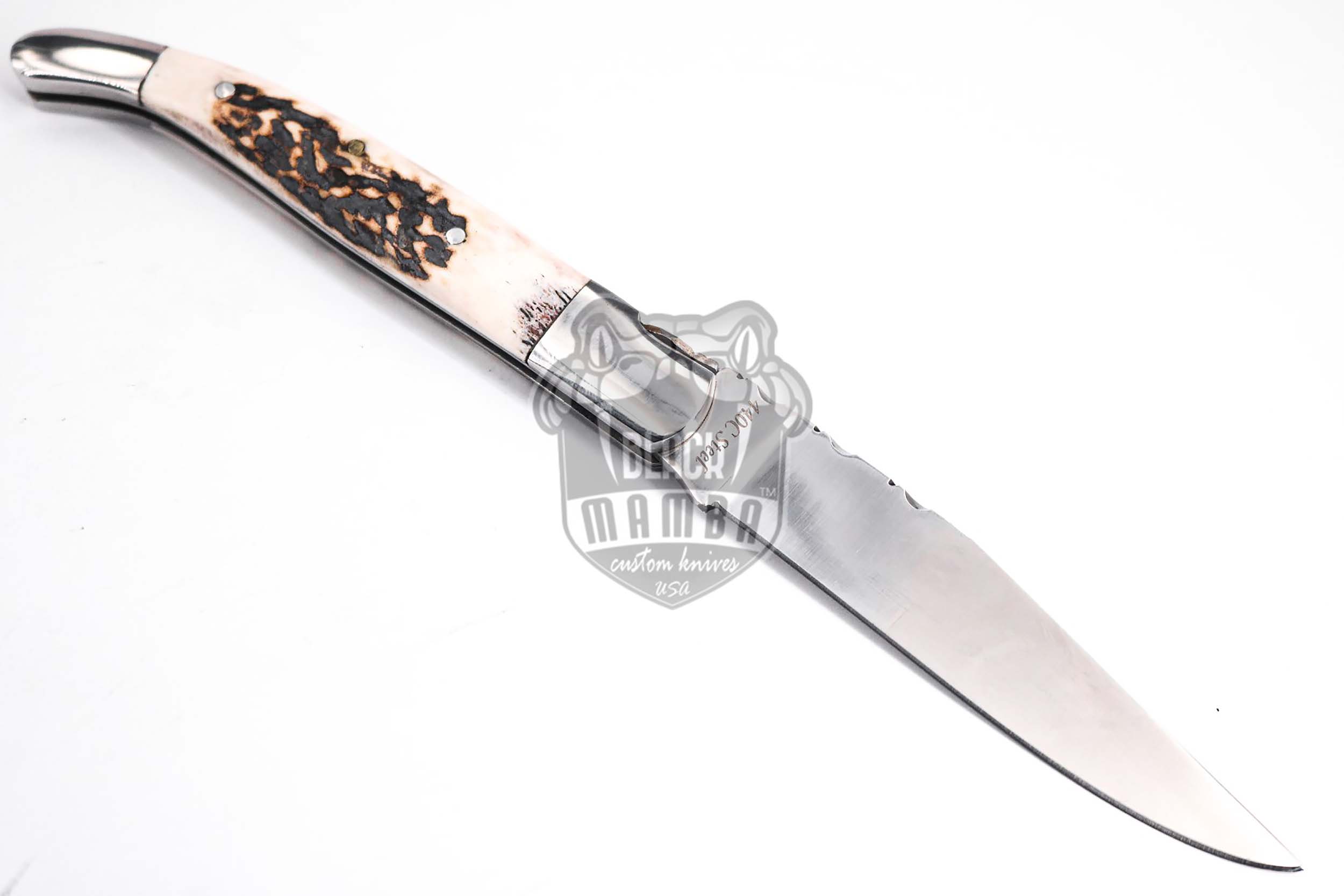
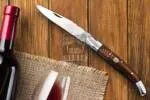
Pale bone-cream horn blotched with dark bark, a slim polished blade, and the upswept tail of the classic pattern.
| Overall length | 10 inches |
| Blade length | 4.5 inches |
| Handle length | 5.5 inches |
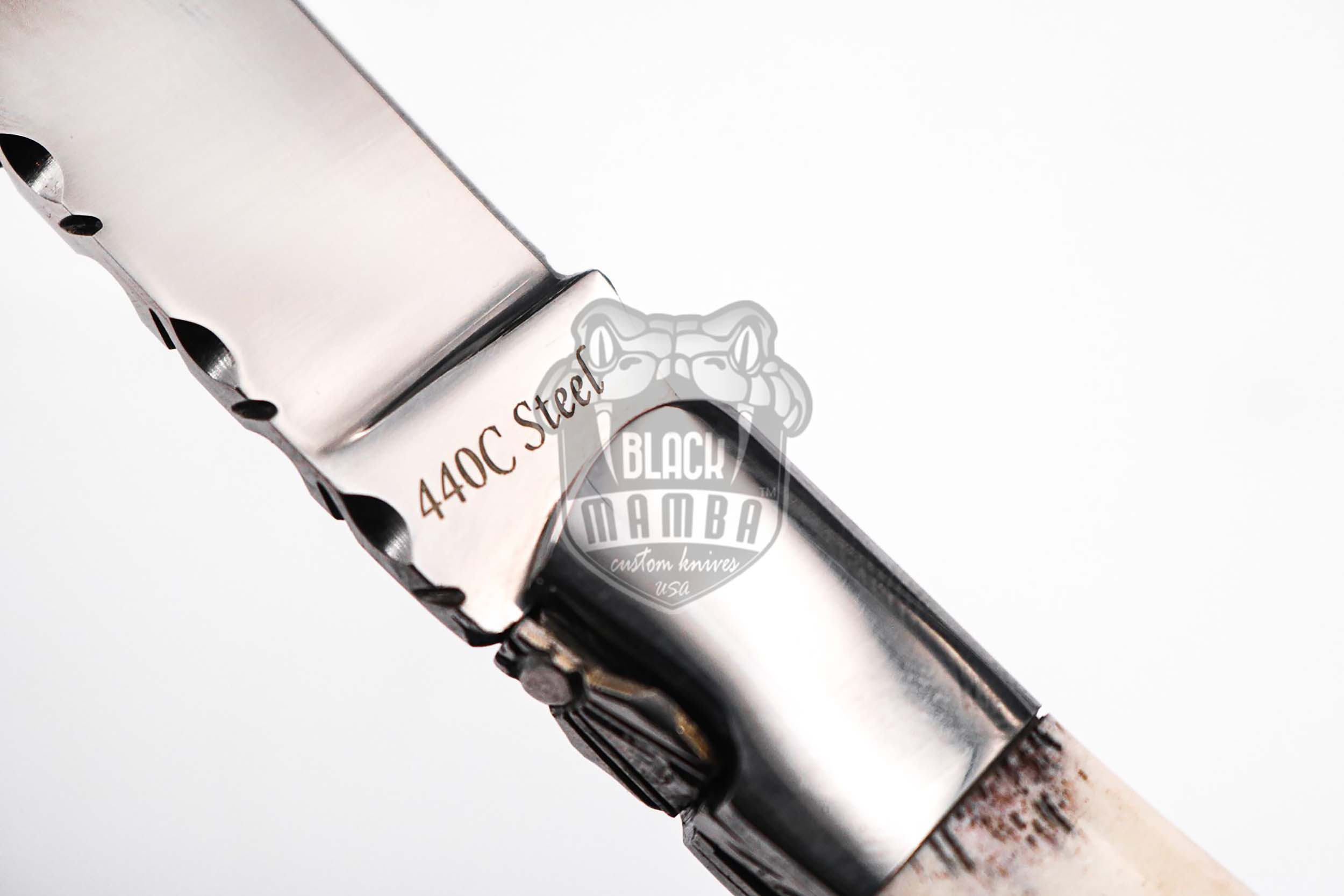
| Steel | High carbon steel |
| Hardness | 58–60 HRC, oil tempered |
| Weight | 3.5 oz |
| Handle | Ram Horn |
| Included | Hand-stitched leather sheath |
Bought for: steak, specifically. This is the folder people order when they have decided their table deserves better than a serrated block knife, and it is the one we photograph beside a ribeye because that is what it does. Ten inches from end to end, 4.5 of those an edge, all of it under four ounces.
Cutting a rested steak
A good steak is rested so the juices redistribute, and a bad knife undoes that in one stroke. Serrations puncture and drag, breaking the cut face open along a line of small tears, and the plate fills. A plain edge this thin severs cleanly, so the slice comes away with a smooth face and holds what is in it. You will also find you stop pressing. Let the weight and the edge do it and the meat parts under the blade rather than under your arm.
The handle
Natural horn, pale as old bone across most of the scale with irregular dark patches where the weathered outer surface has been left in place. It is a hard, slightly porous material with a faint texture you can feel with a thumbnail, and that texture is what keeps the knife in your hand once there is butter on your fingers. It ages: the pale areas warm toward ivory over a decade of use and the polished areas under your fingertips take on a low shine. The dark patches are the hardest part of the material and the pale ground is fractionally softer, so with enough years the surface develops a very shallow relief you can feel with a fingertip before you can see it.
The spring, and the bee at its end
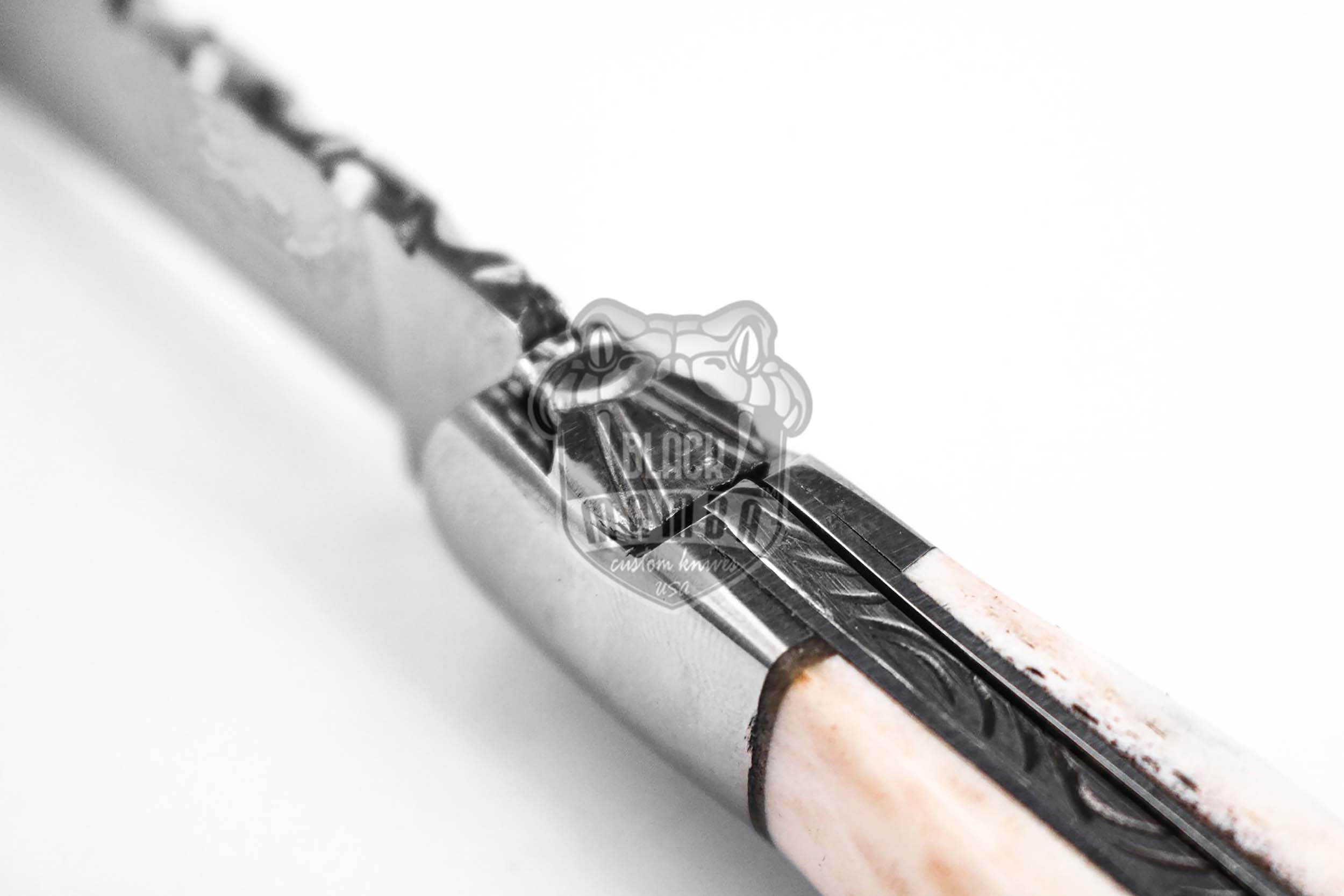
One flat spring runs under the spine and does everything. It holds the blade firmly open, it pulls it firmly closed, and its rear end is forged into the small bee that identifies the pattern. There is no lock and none is needed for table work. Close it with your fingers behind the spine, out of the path of the edge.
Care: towel the blade off at the end of every meal, and dry the horn by hand instead of letting it air. Do not soak it and do not put it in a dishwasher — heat and detergent are the two things natural horn will not survive. A drop of oil in the joint twice a year is plenty. Put it away shut and dry.
FAQs
Does the handle vary? Yes, considerably. Every piece of natural horn is patterned differently.
Does it fold? Yes, it is a folding slip joint, not a fixed blade.
Is a sheath supplied? Yes, stitched by hand in leather.
Read our blade shapes guide, keep it running with the right knife oil, or browse knife gifts if you are buying for someone else.
Model: BMK-614



Lisa M. (verified owner) –
I’m a steak enthusiast, and I have to say, these Laguiole knives are a steak lover’s dream. They feel solid and well-crafted in your hand, and the precision of the blades is impressive. Definitely a must-have for any steak lover!
Michael B. (verified owner) –
These knives are a great value for the quality you get. The wooden handles are comfortable to hold, and the serrated blades cut through steak effortlessly. I’ve used them several times, and they still look brand new.
Emily R. (verified owner) –
I bought these Laguiole steak knives for a dinner party, and they were a hit! Not only do they look stunning on the table, but they also perform exceptionally well. My guests were impressed, and so was I.
John P. (verified owner) –
I’ve been using these knives for a few weeks now, and I must say, they make dinner time feel more special. The design is elegant, and the blades are sharp and durable. A great addition to our dining experience.
Sarah T. (verified owner) –
These knives are absolutely fantastic! I was searching for high-quality steak knives, and these Laguiole knives exceeded my expectations. They have a nice weight to them and cut through steaks like butter. I highly recommend them!
Gary Ortiz –
This exceeded what I pictured in my head before ordering. Love it.
Jose Kelly –
My whole family passed this knife around at dinner just to look at it. You can tell it’s real American craftsmanship out of Memphis. Shipping was quick too. 10/10 would buy again.
Ruth Richardson –
No regrets on this purchase at all. Edge geometry makes thin slicing so much easier than my old knife. This is exactly why I keep coming back to this seller.
Jonathan Walker –
The moment I saw this in person I knew it was a keeper. Not my first order from Black Mamba Knives and it won’t be my last. Edge geometry makes thin slicing so much easier than my old knife. Already thinking about what to order next from this maker. Proud to support American made goods out of Memphis with this purchase.
Justin Miller –
This knife looks even better in person than in the listing photos. Balance in hand is perfect for detail work at the cutting board. This is my new favorite in the collection.
Stephanie Kelly –
So happy I finally pulled the trigger on this one. Edge geometry makes thin slicing so much easier than my old knife. This store nailed it with this one.