
Description
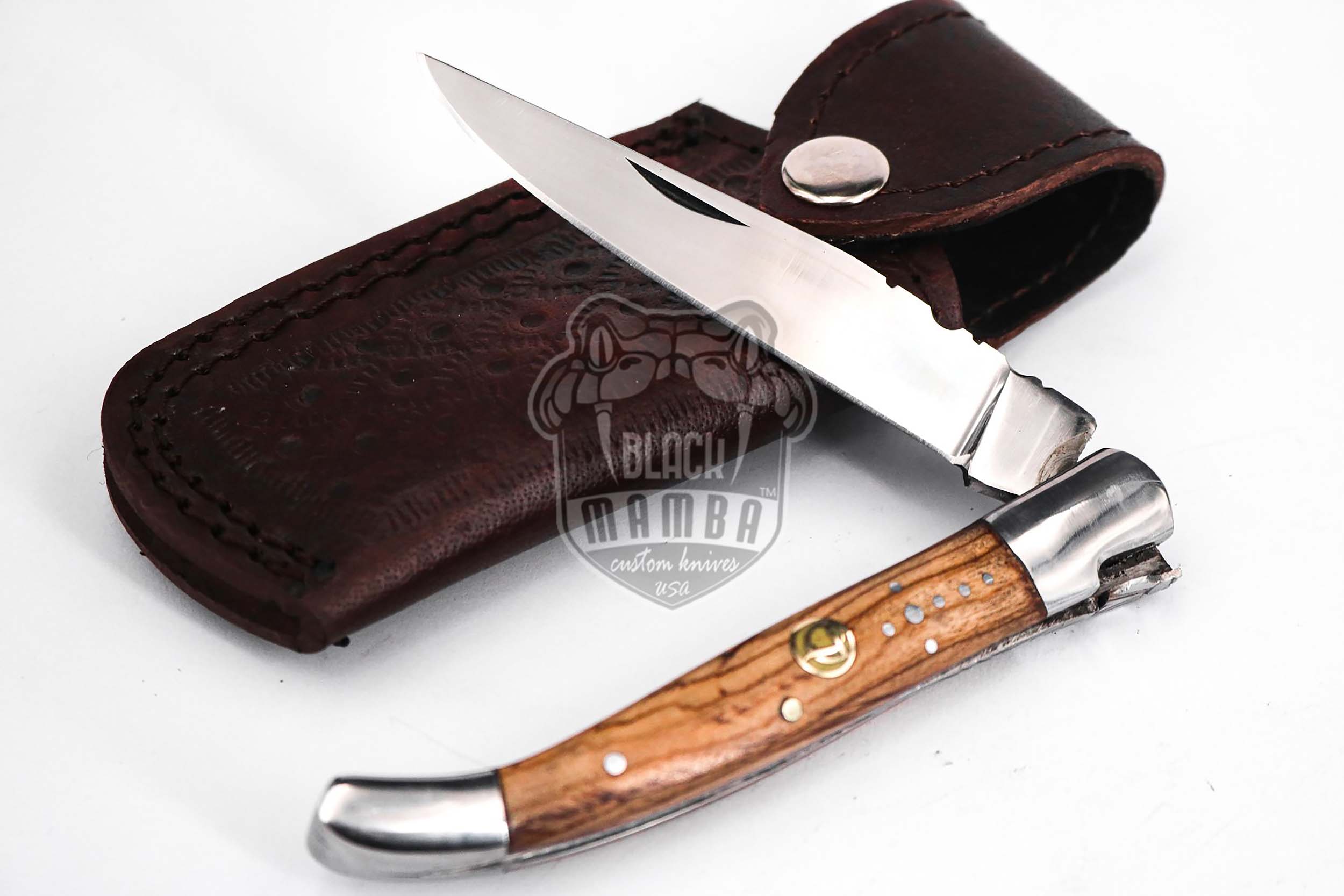
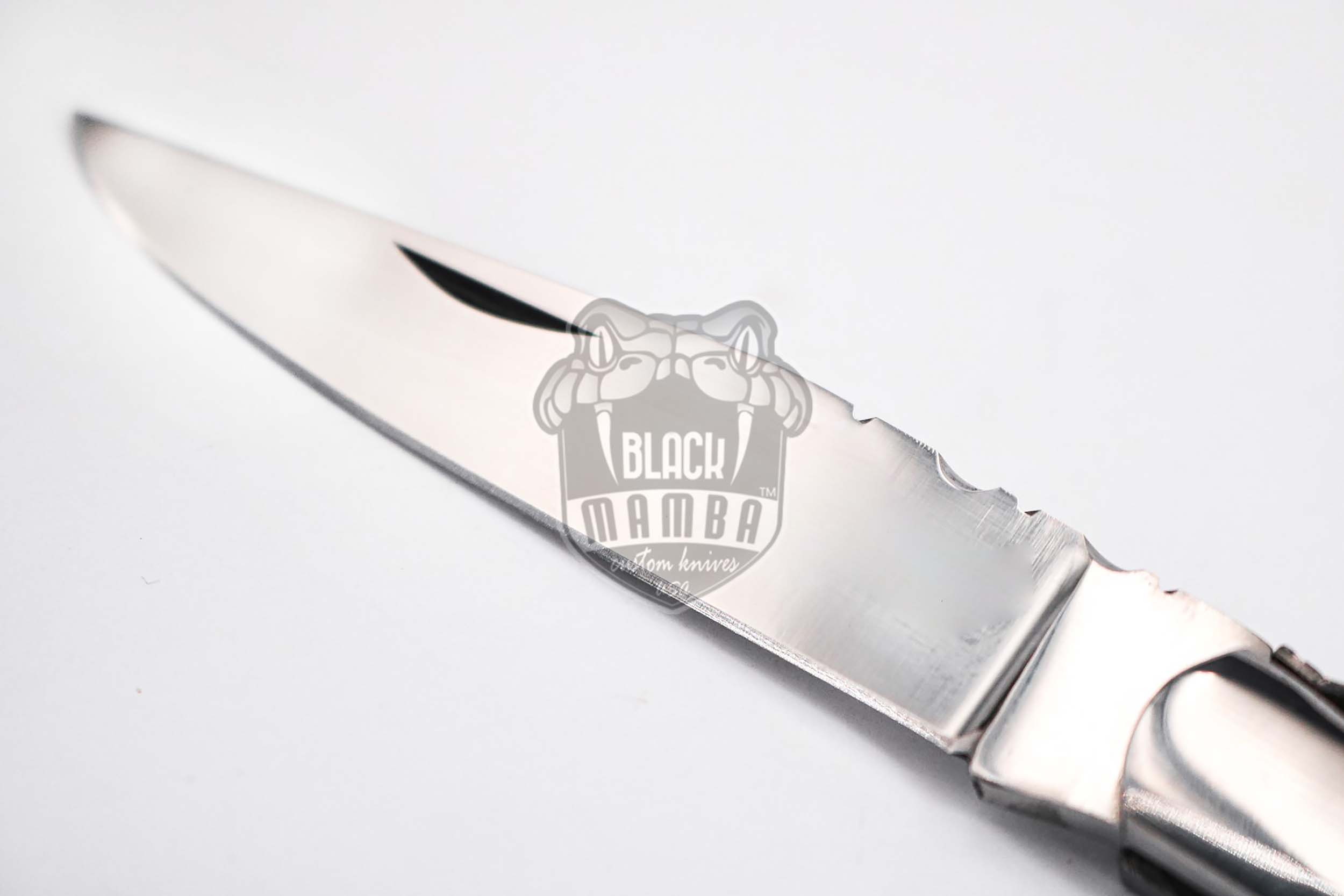
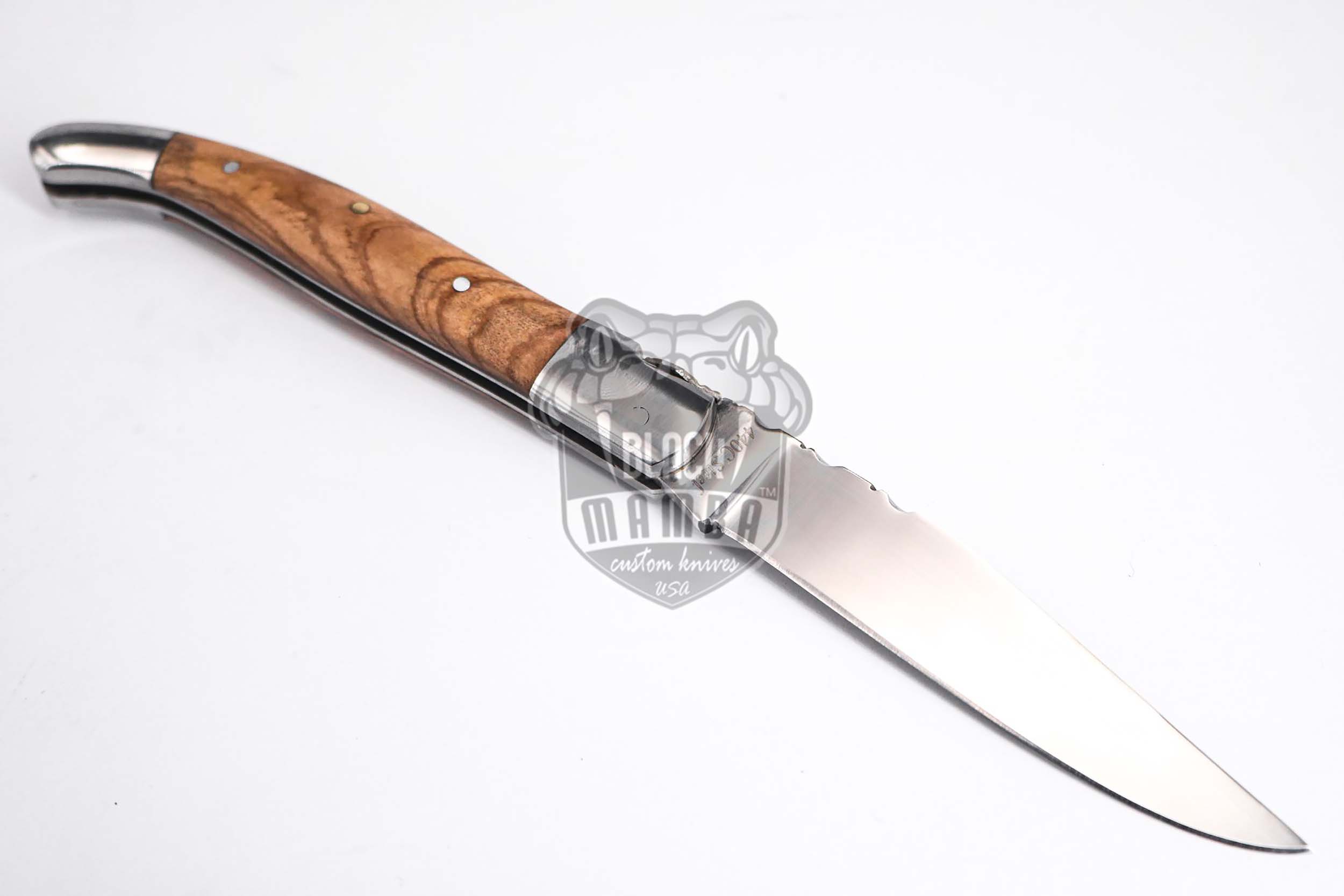
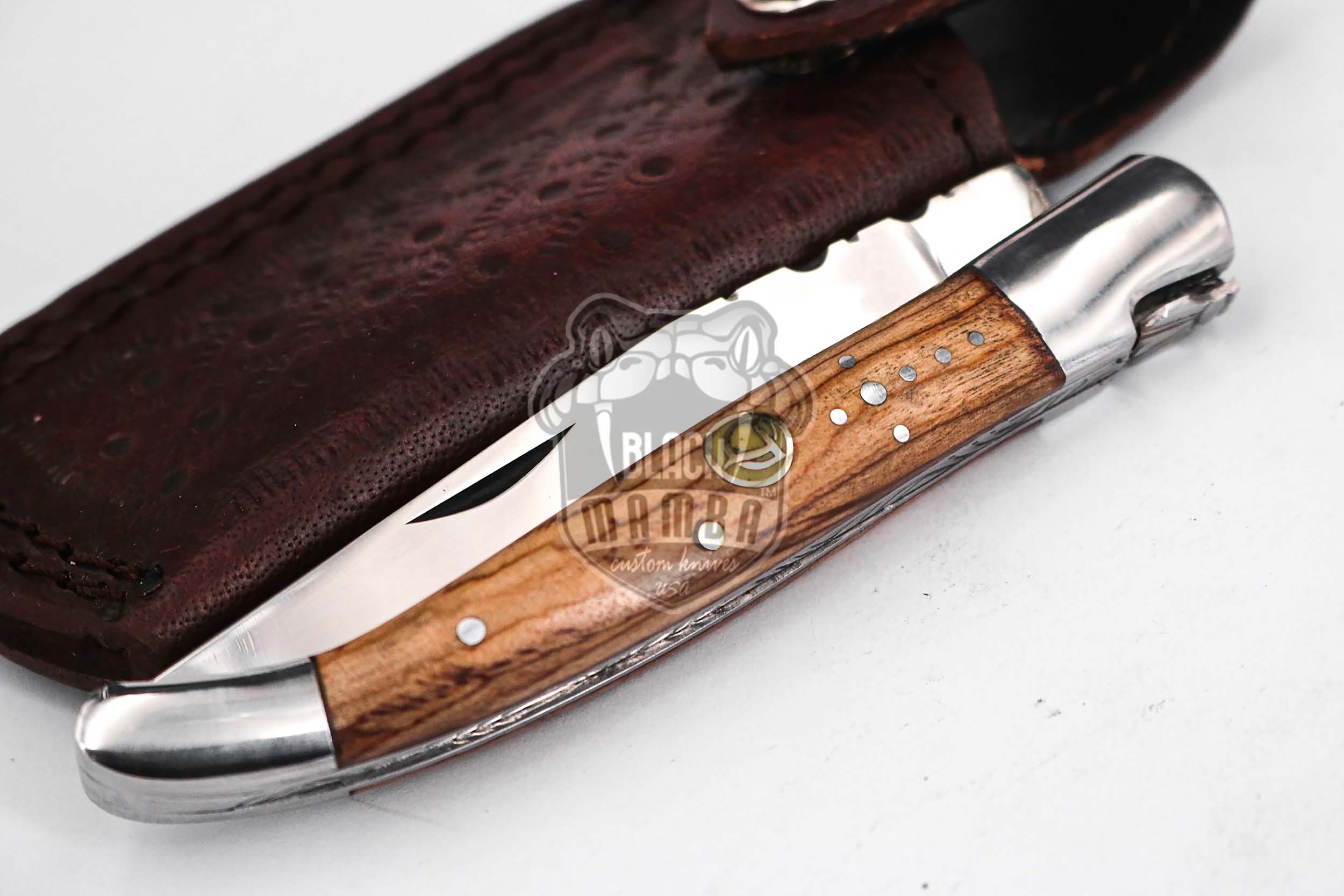
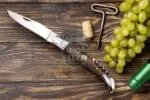
A folding Laguiole on warm, straight-grained timber, supplied with a stitched leather belt pouch rather than a flat slip.
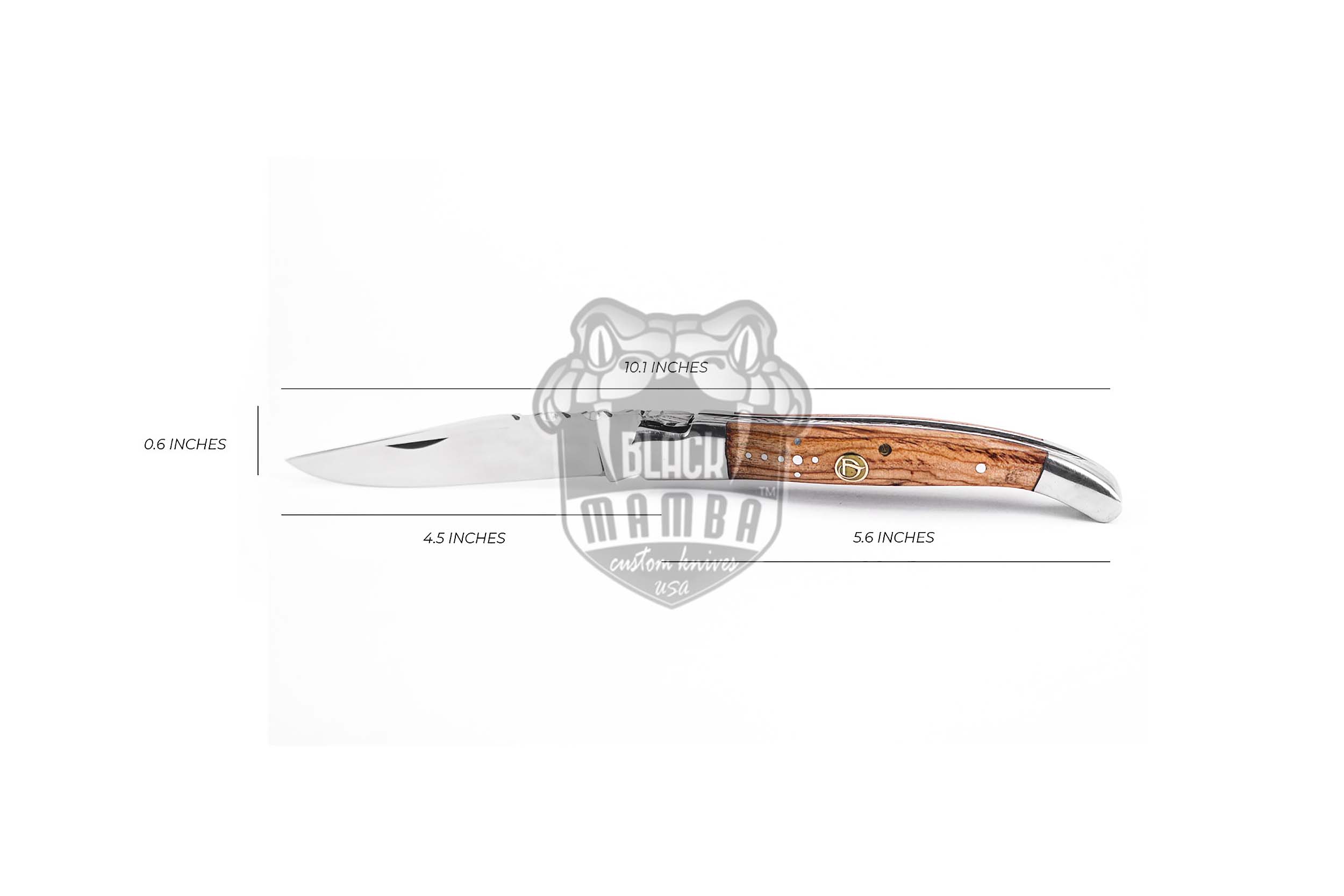
| Overall length | 10 inches |
| Blade length | 4.5 inches |
| Handle length | 5.5 inches |
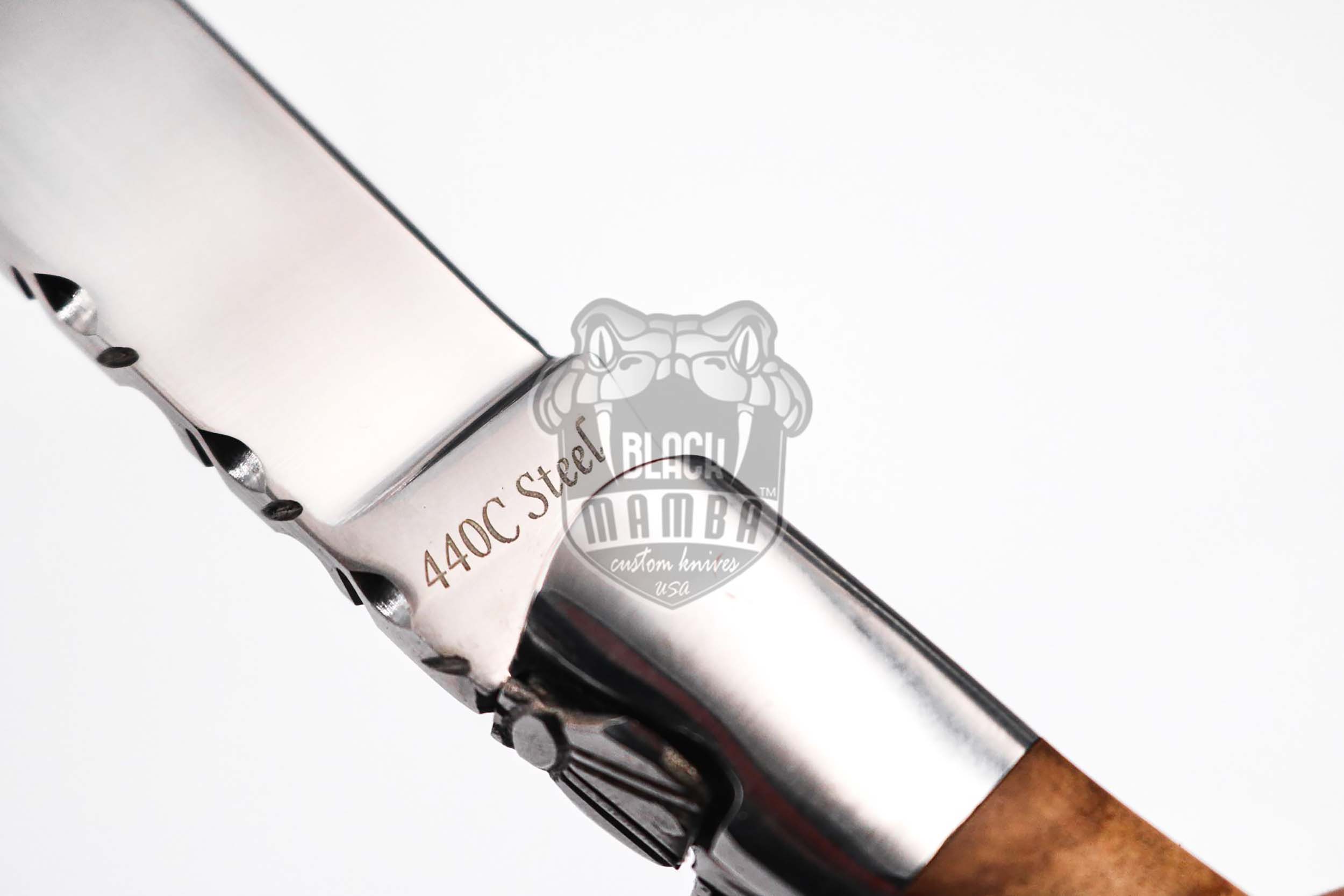
| Steel | High carbon steel |
| Hardness | 58–60 HRC, oil tempered |
| Handle | Wood |
| Included | Hand-stitched leather sheath |
Made for: carrying. The pouch has a snap flap and a belt loop, so this is the Laguiole you take to a picnic, a tailgate or a vineyard rather than the one that lives in a drawer. A 4.5 inch blade opens to 10 inches overall and folds back down to something that disappears on a belt.
Closing it properly
The spring on this pattern is stiff by design. Open the blade and you feel it snap past center and settle; there is no play at all once it is out. Closing takes a deliberate push, and the correct technique is to hold the handle in your palm with your fingers along the spine, not wrapped around the closing path of the edge. That habit is worth learning in the first five minutes rather than the hard way.
The timber
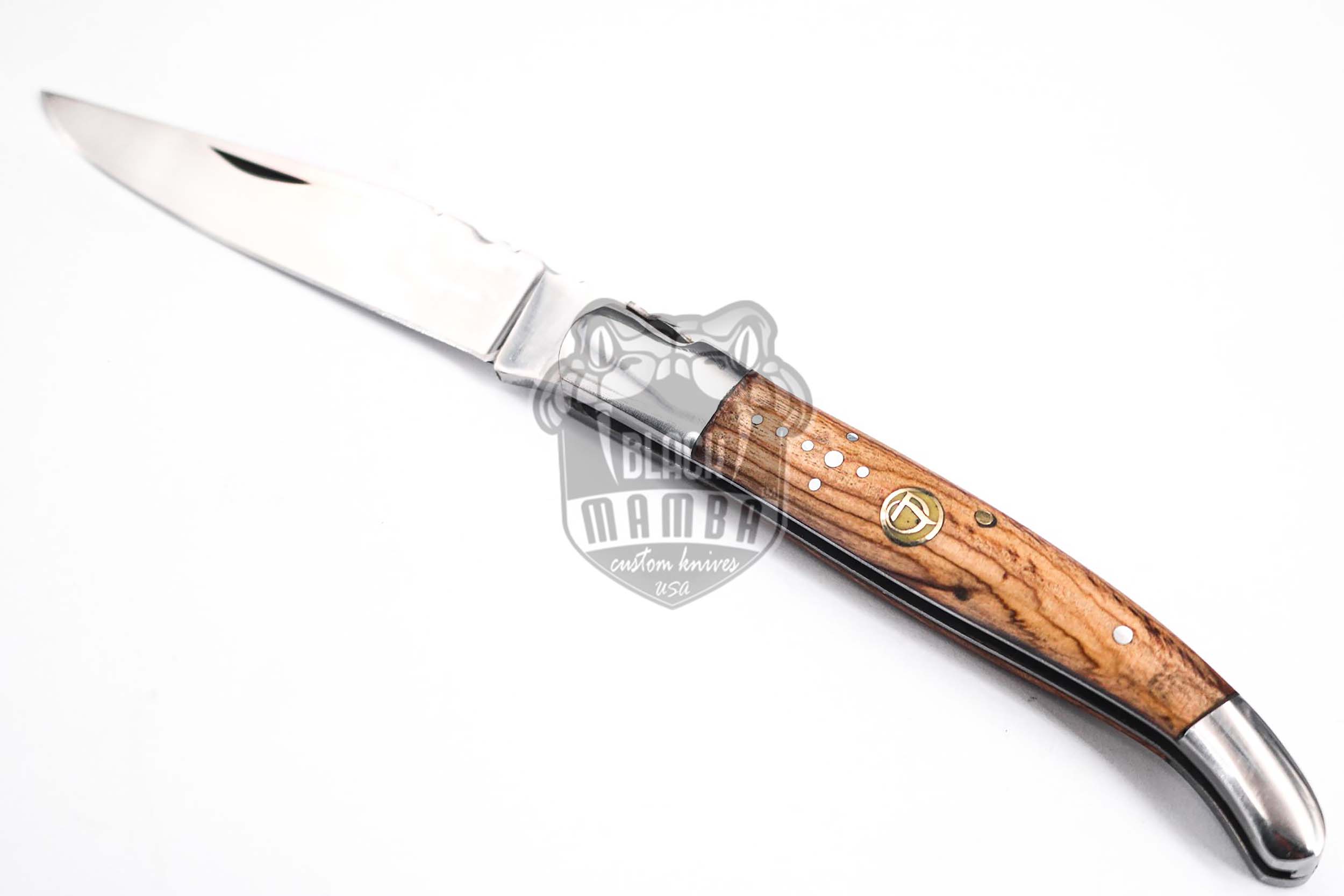
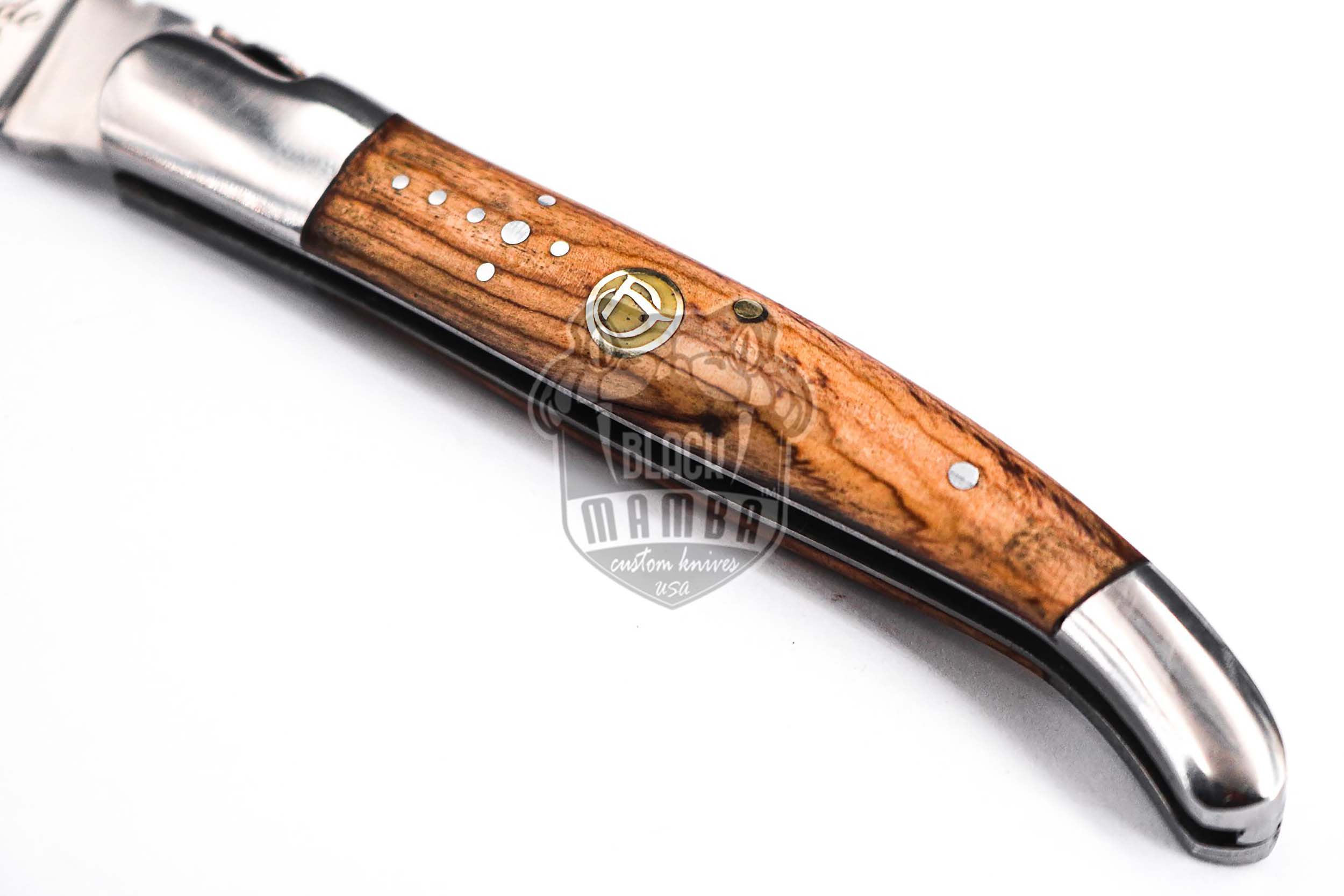
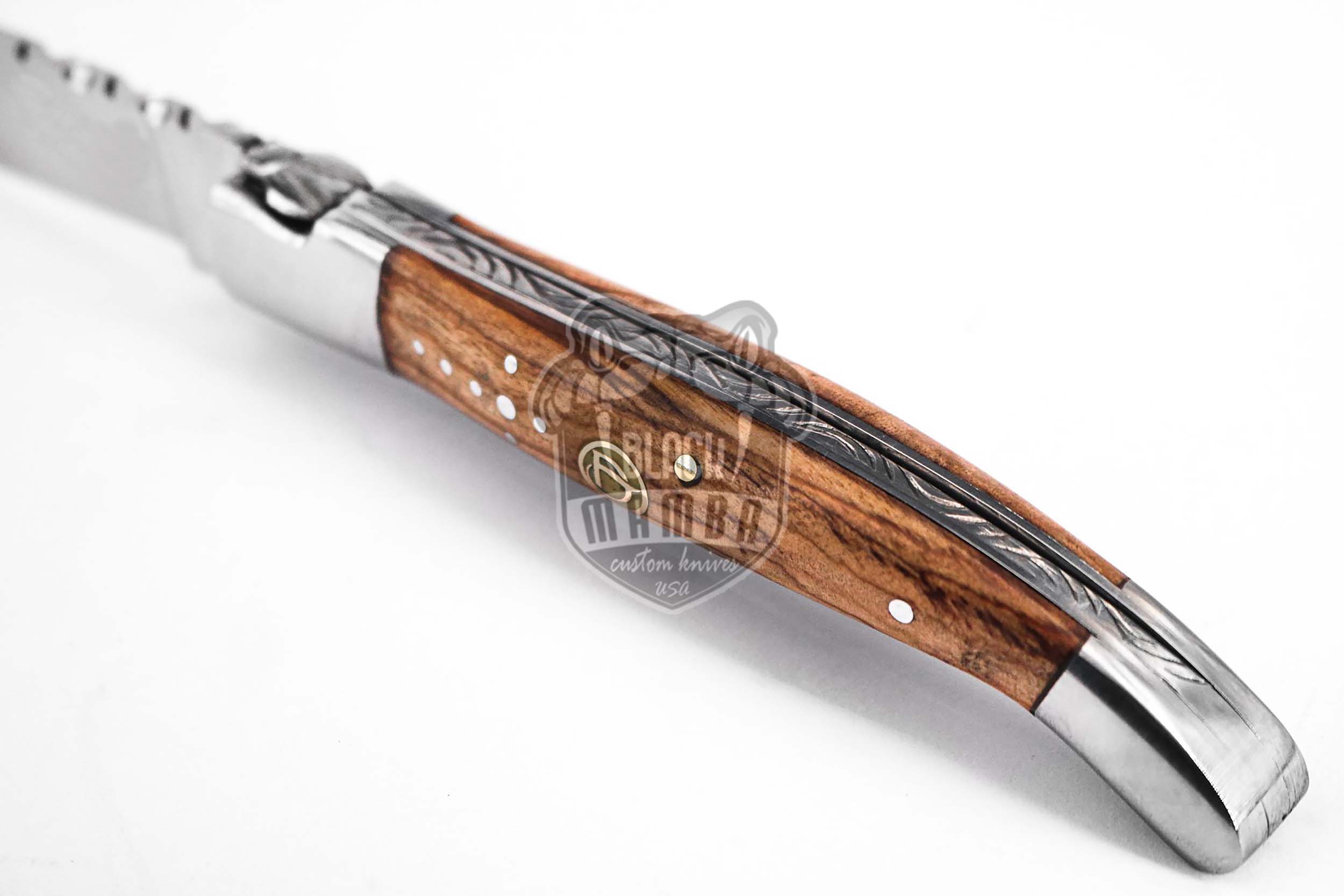
The grip is wood, not horn — you can read the parallel grain lines running the length of the handle in the photograph, warm brown and evenly figured. Wood behaves differently at a table than horn does. It grips better when your hands are greasy, it is more forgiving of a knock against a plate, and it will slowly darken where your thumb rests. What it will not tolerate is a dishwasher; heat and detergent lift the finish and raise the grain in a single cycle. A wooden handle also stays at room temperature. Steel and horn both feel cold when you first pick them up and timber never does, which is a small thing that matters at a table laid outdoors in spring.
The bolsters
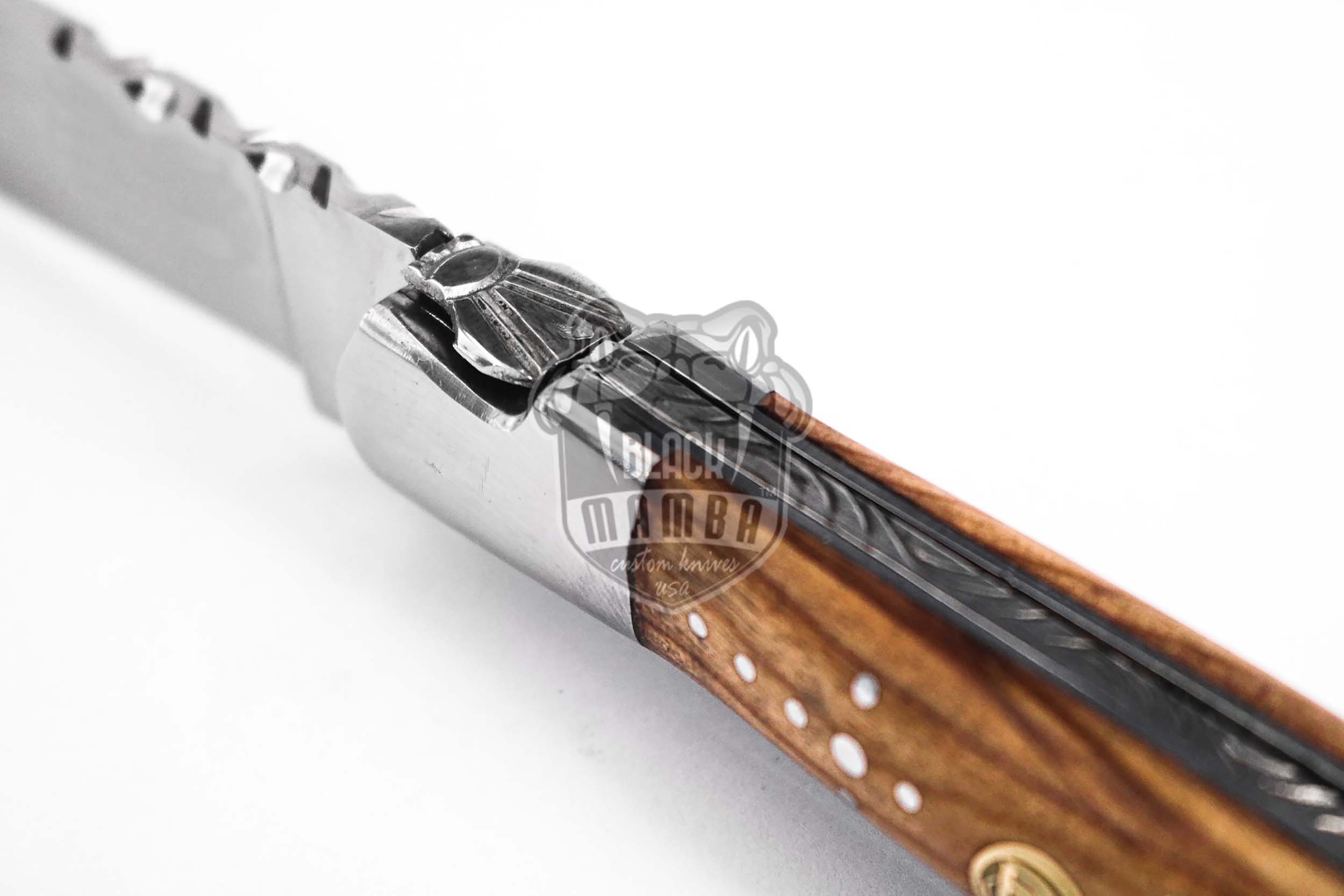
Polished steel caps both ends of the handle. The front bolster carries the pivot and takes the load every time the blade swings, and the rear one is shaped into the upswept tail that stops the shut knife sliding off a sloped surface. Between them sits the spring, and set at its rear is the small bee that marks the pattern.
Care: towel the steel off before it returns to the pouch, and air the pouch separately if it has been rained on. A wet pouch left to dry around the knife is the usual culprit behind blade spotting. A drop of light oil on the pivot restores a stiff action. Keep the handle away from radiators and direct sun.
FAQs
Does the pouch come with it? Yes, hand-stitched leather with a snap closure.
Is the edge plain or serrated? Plain, and hand-finished on stones before dispatch.
Where is it made? Forged and assembled in our Memphis, Tennessee workshop.
Read the Laguiole pattern explained for the pattern’s background, honing versus sharpening for edge upkeep, and hand forged versus factory knives for how these are built.
Model: BMK-622




Samuel C. (verified owner) –
I purchased these pocket-sized Laguiole Steak Knives for my camping trips, and they’ve been a game-changer. Compact and reliable!
Chloe P. (verified owner) –
These knives are a cut above the rest. They’re not just utensils; they’re works of art that elevate the dining experience.
Ethan R. (verified owner) –
These Laguiole Steak Knives have transformed my cooking. They’re sharp, well-balanced, and a joy to use in the kitchen.
Ava S. (verified owner) –
I was skeptical at first, but these handmade Steak Knives exceeded my expectations. They’re reliable and make meal prep effortless.
Sarah Allen –
Didn’t think a knife at this price could feel this premium. Edge held up great through a full week of daily cooking. Edge geometry makes thin slicing so much easier than my old knife. Zero complaints from me on this purchase.
Alexander Hughes –
This knife looks even better in person than in the listing photos. Good to know real Memphis craftsmen are behind this, and shipping was quick too. Edge held up great through a full week of daily cooking. Highly recommend this one.
Rebecca Torres –
Got this as a hunting trip and it exceeded what I expected. Slices through everything like butter, no sawing needed. Worth every penny.
Eric Thompson –
Ordered late at night on a whim and woke up glad I did. Slices through everything like butter, no sawing needed. Handle stays comfortable even after prepping a big meal. Would not hesitate to order again.
Donna Mitchell –
This knife has quickly become my favorite piece in the collection. Cleans up easy and hasn’t shown any rust or staining. If you’re on the fence just get it. You won’t regret it.
Peter Castillo –
Bought this on a whim and it turned out to be one of my favorite purchases recently. Slices through everything like butter, no sawing needed. Worth every penny.
Travis Bailey –
This knife has quickly become my favorite piece in the collection. Has become my main prep knife in the kitchen since it arrived. Slices through everything like butter, no sawing needed. Exactly the kind of quality that keeps me coming back.
Angela Ross –
Exceptional craftsmanship on this one. Has become my main prep knife in the kitchen since it arrived. Handle stays comfortable even after prepping a big meal. Edge geometry makes thin slicing so much easier than my old knife. This maker nailed it with this one.
Cynthia Baker –
My whole family passed this knife around at dinner just to look at it. Already thinking about what to order next from this maker. You can tell it’s real American craftsmanship out of Memphis. Shipping was quick too.
Craig Stewart –
This knife has quickly become my favorite piece in the collection. Edge held up great through a full week of daily cooking. Balance in hand is perfect for detail work at the cutting board. Handle stays comfortable even after prepping a big meal. Love it. Every piece I’ve gotten from Black Mamba Knives has been solid.
Timothy Parker –
My buddy was speechless when I showed them this knife. Balance in hand is perfect for detail work at the cutting board. Can’t say enough good things about this purchase.