
Description
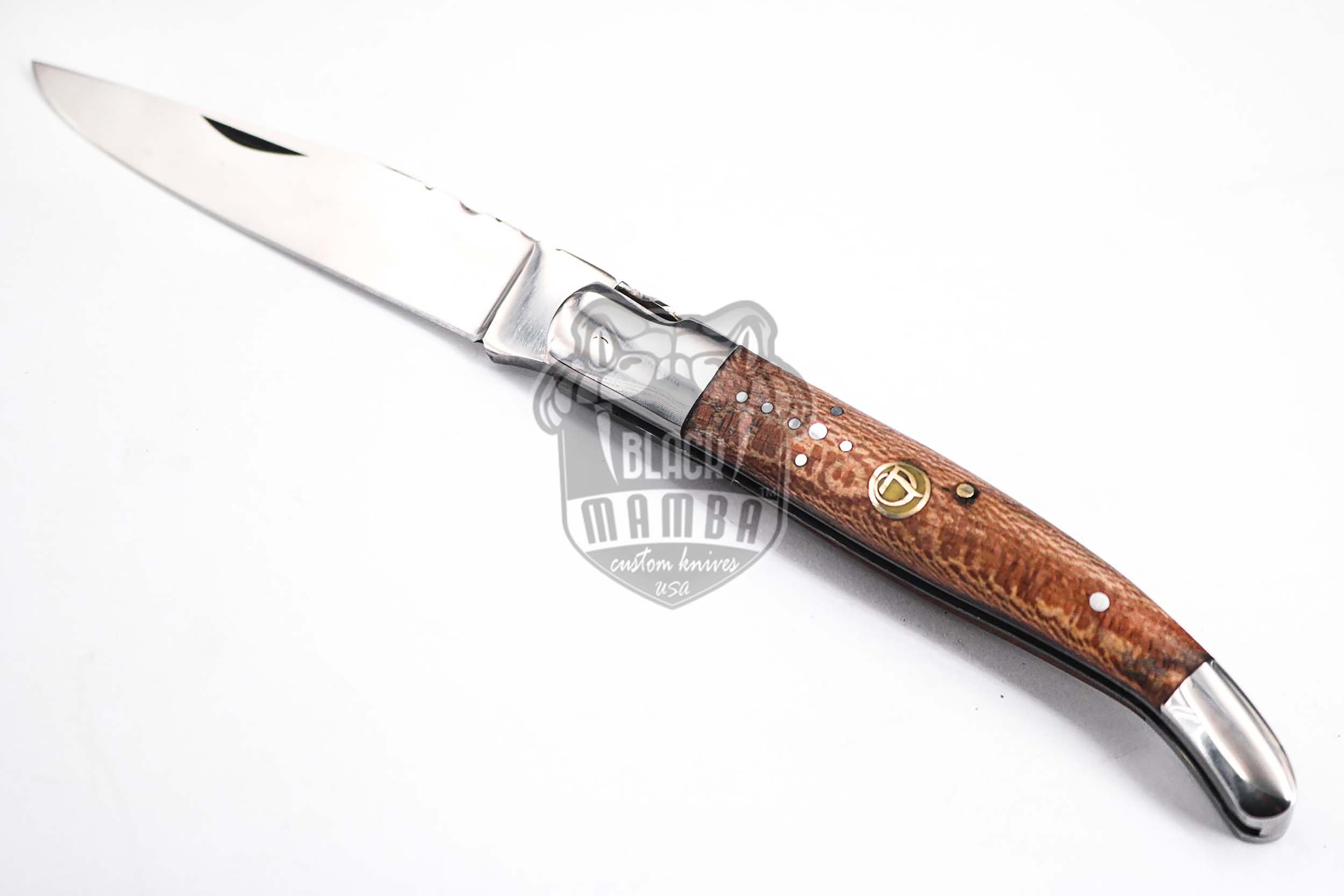
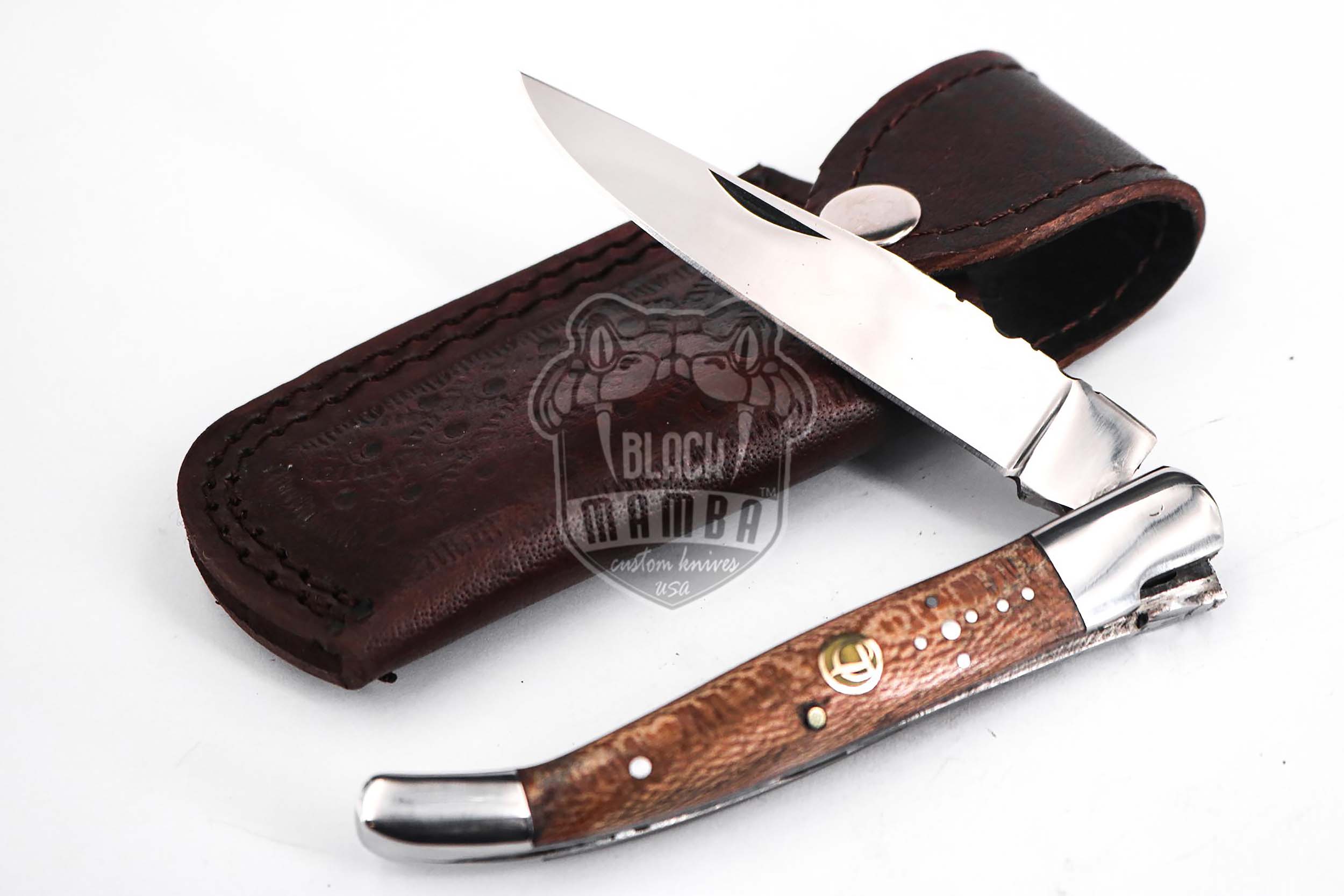
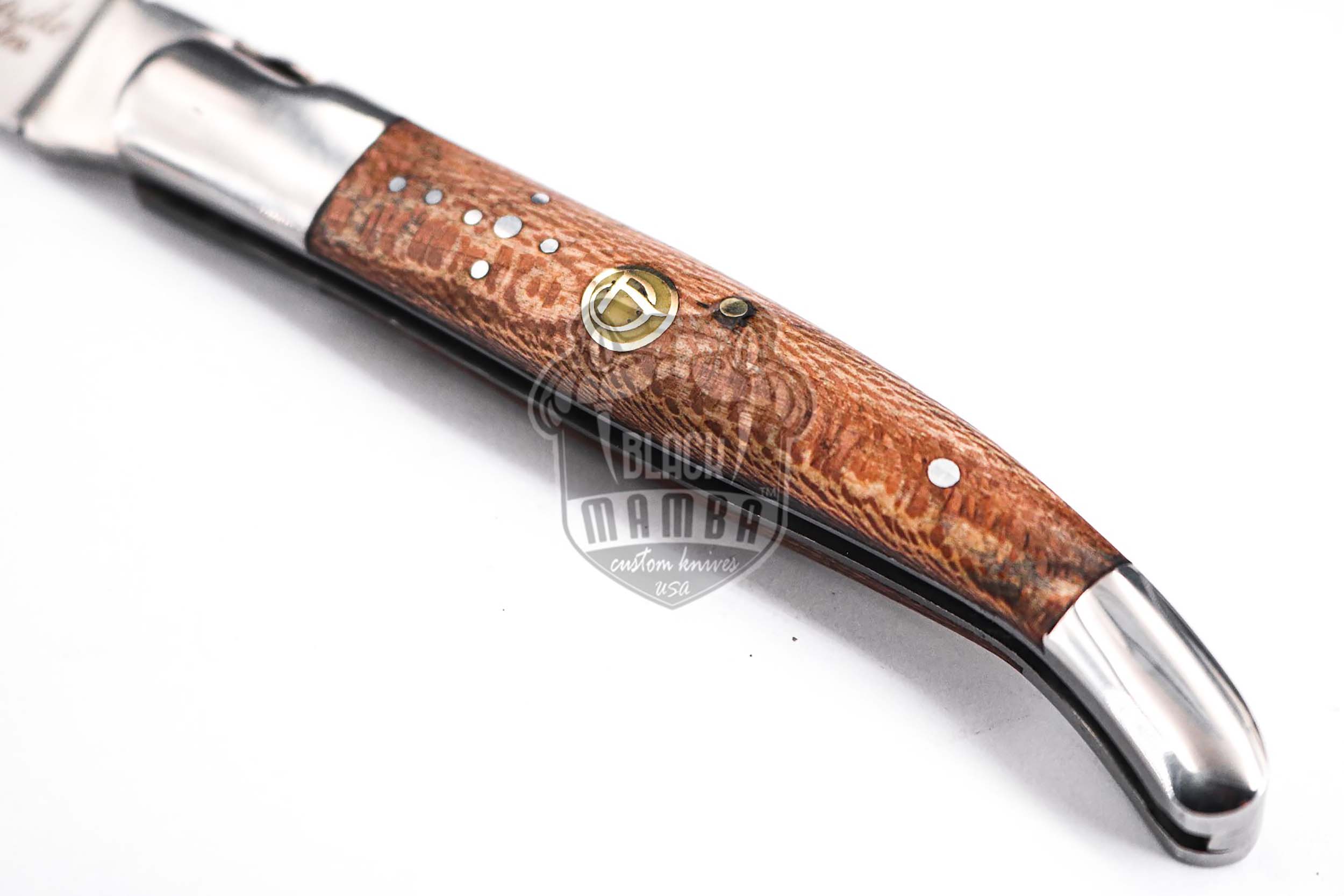
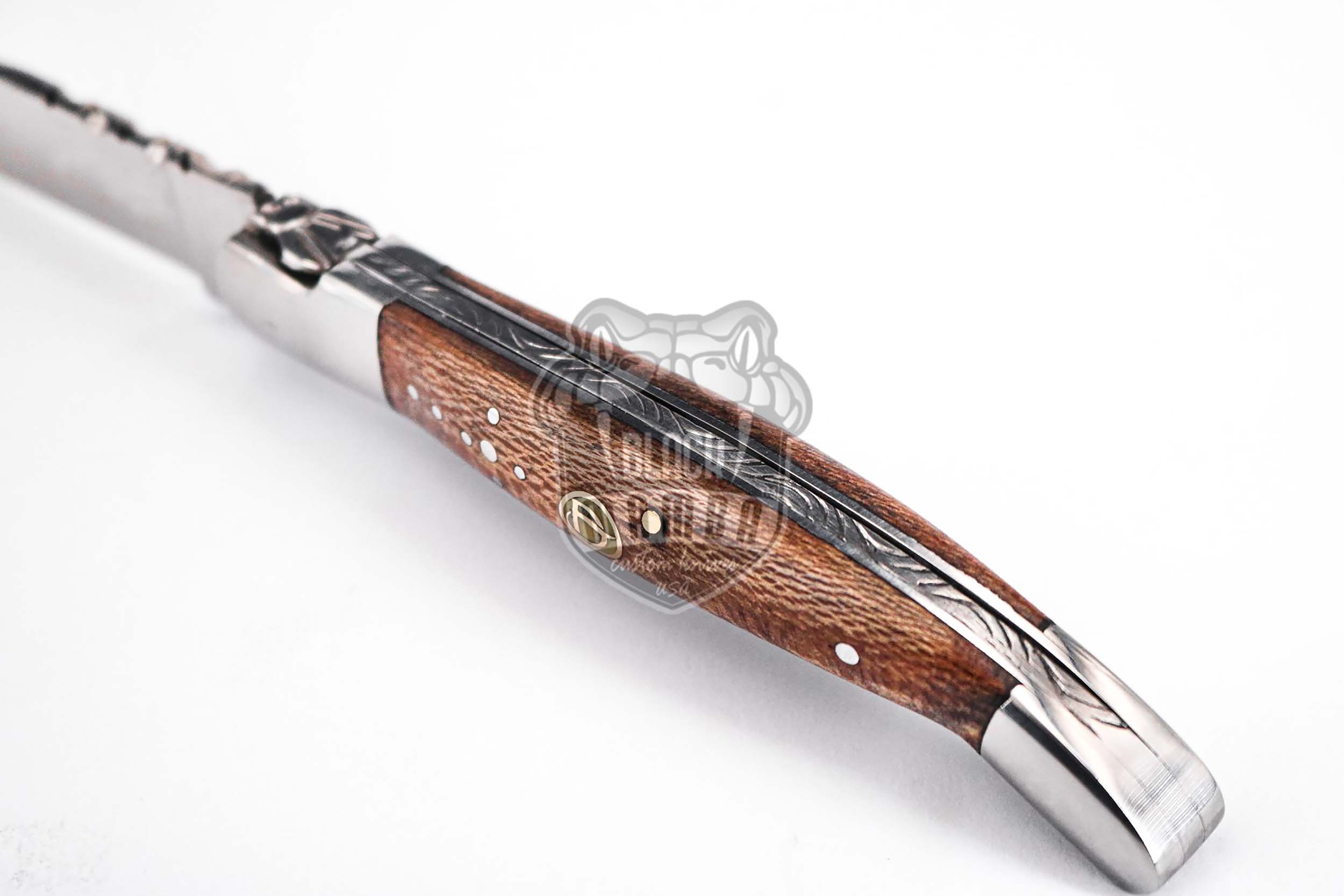
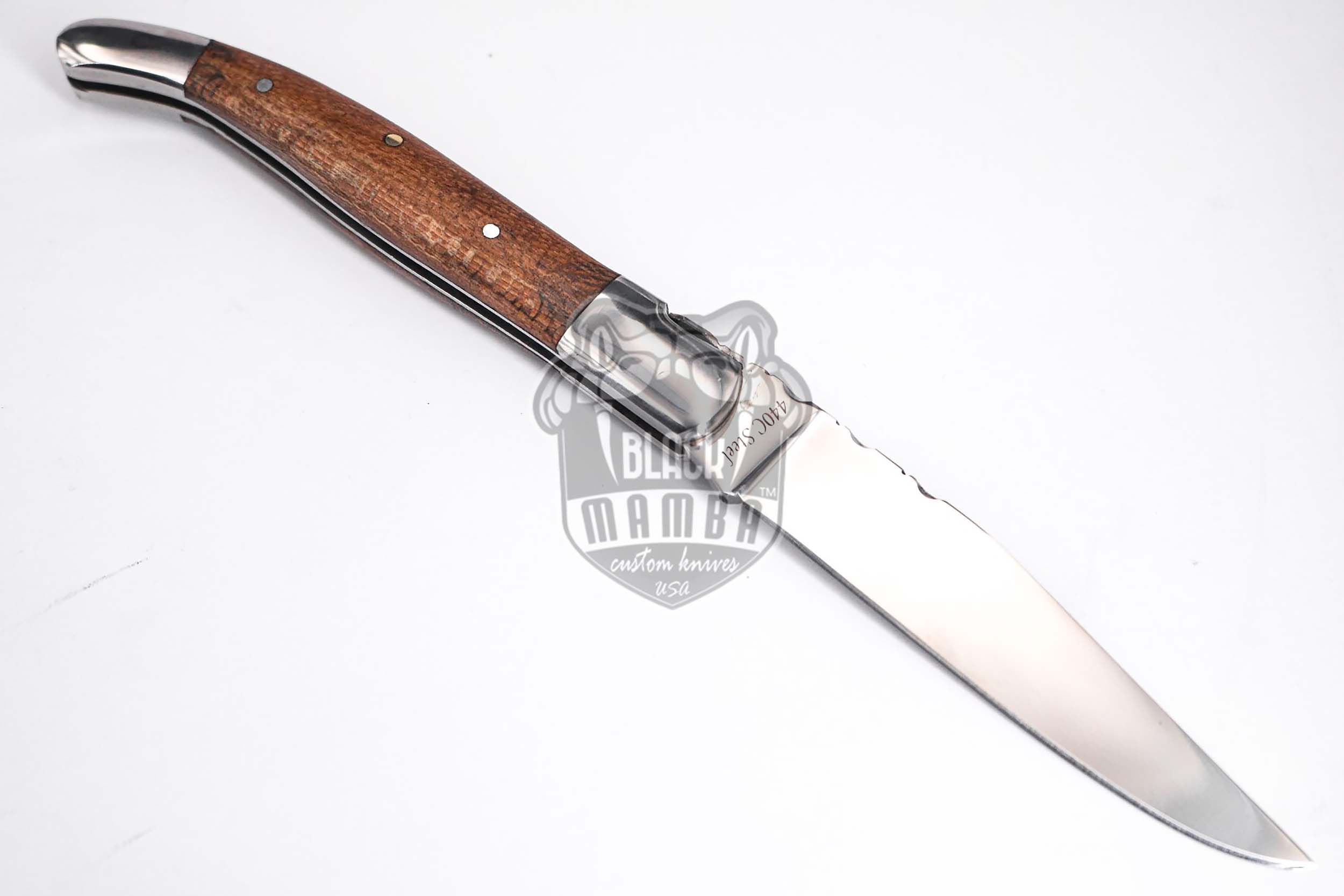
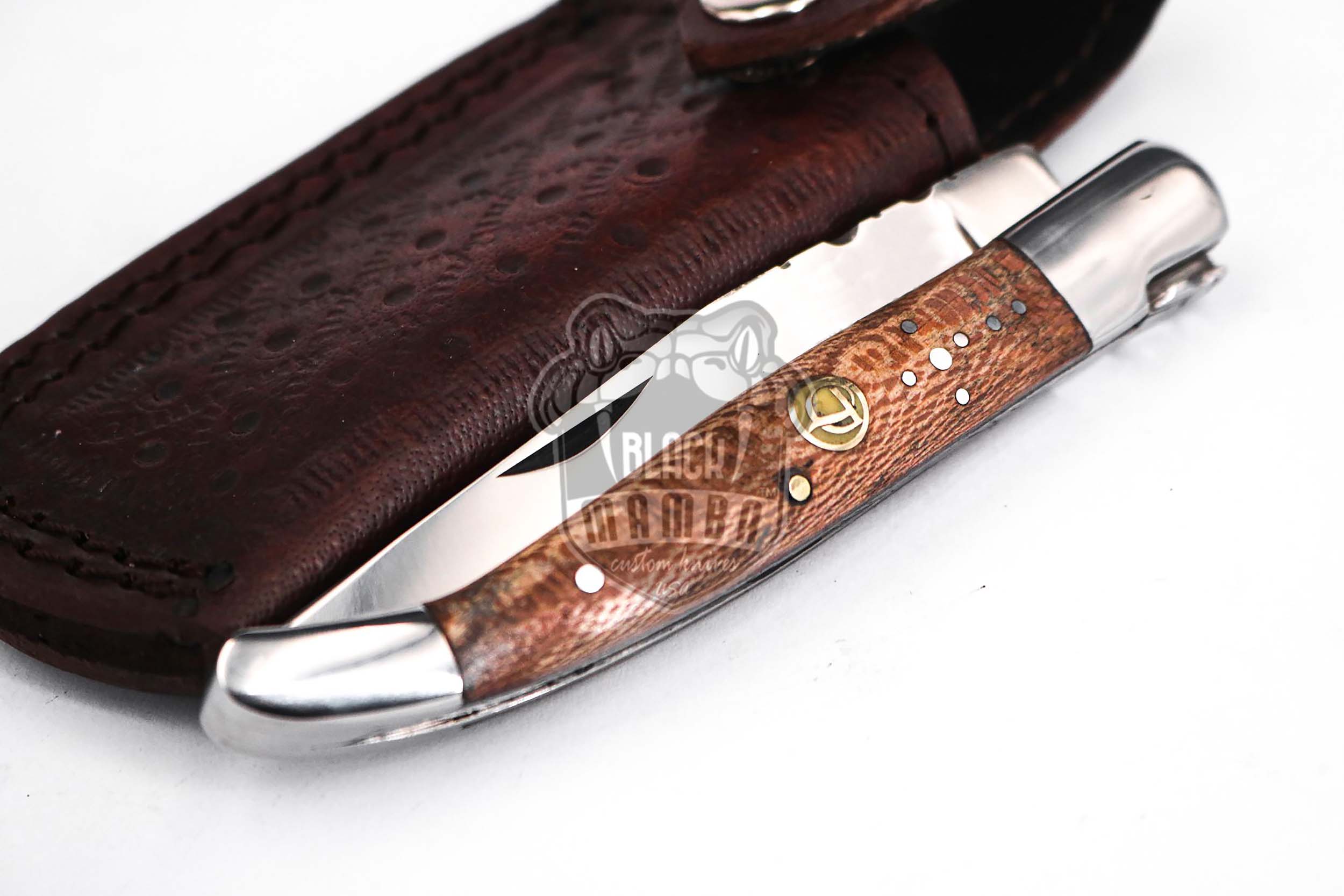
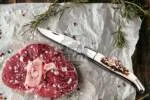
A speckled, lacy timber handle on a plain slip-joint Laguiole — no corkscrew, just the blade and the spring.
| Overall length | 10 inches |
| Blade length | 4.5 inches |
| Handle length | 5.5 inches |
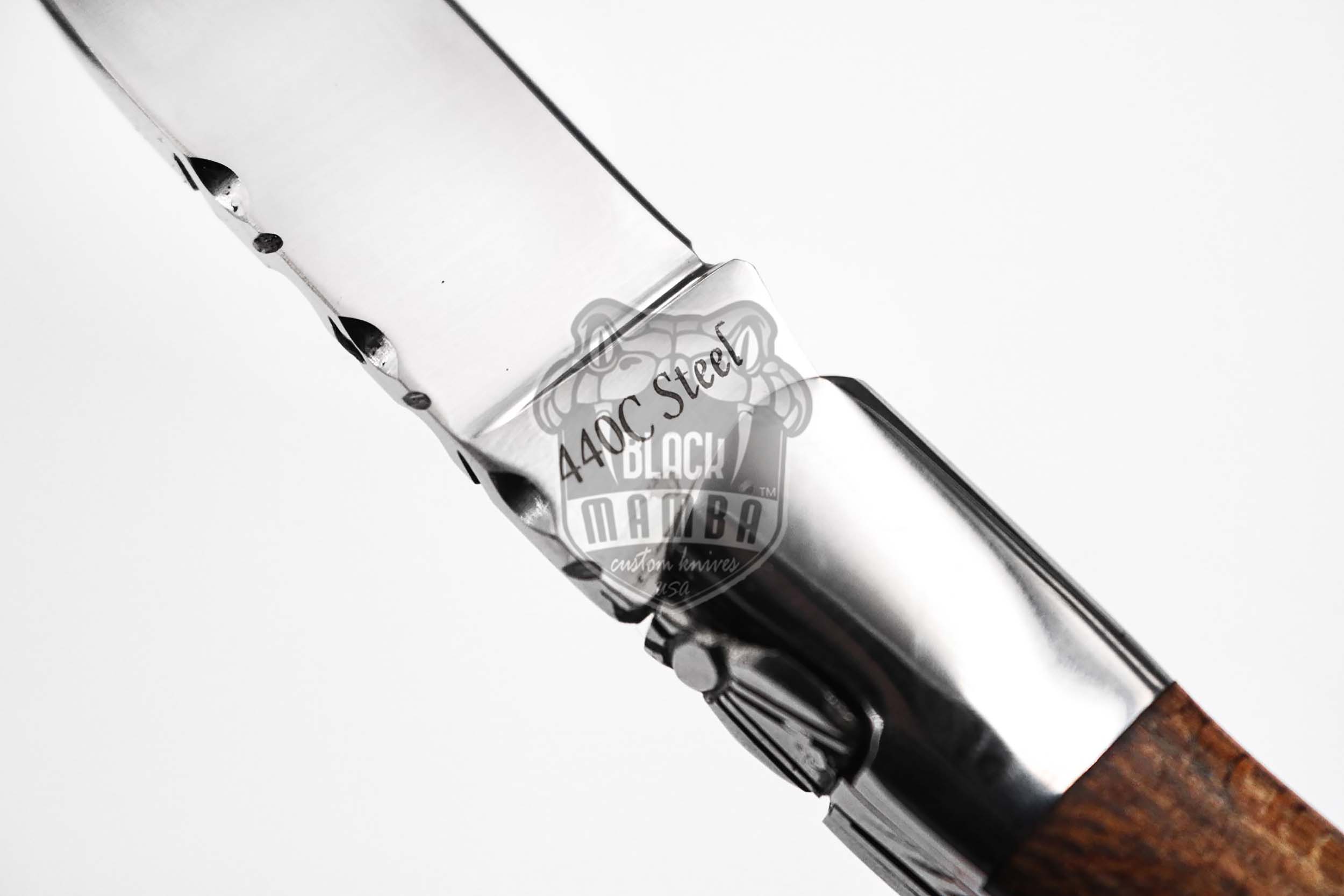
| Steel | High carbon steel |
| Hardness | 58–60 HRC, oil tempered |
| Handle | Wood |
| Included | Hand-stitched leather sheath |
Its job: cutting at the table and nothing else. Leaving the corkscrew off makes the knife simpler, slimmer in the hand and easier to clean, which is the argument for this version over the sommelier layout. A 4.5 inch edge, 10 inches open, 3.5 ounces on the scale.
Reading the handle
The figure on this one is fine and speckled, a scatter of small dark flecks across a warm russet ground, running the full length of the scale. That flecking is the ray structure of the timber cut at an angle, and it means the surface catches light from one direction and goes flat from another. Turn the knife on the table and the handle changes. Practically, a busy figure like this hides the small marks that a plain handle would show. There is no filler in it and no dye. You are looking at the timber’s own coloring, taken through progressively finer grits and burnished rather than coated, so the fingers meet timber directly rather than a film laid over the top of it.
Why no lock is the right answer
The spring is the entire mechanism. It presses down on the tang, holds the blade open under tension, and holds it shut the same way. Nothing to fail, nothing to jam with crumbs, nothing to teach a guest before they use it. What it asks in return is that you close the knife deliberately with your fingers clear of the edge, and that you do not use it to pry anything.
What the bee does
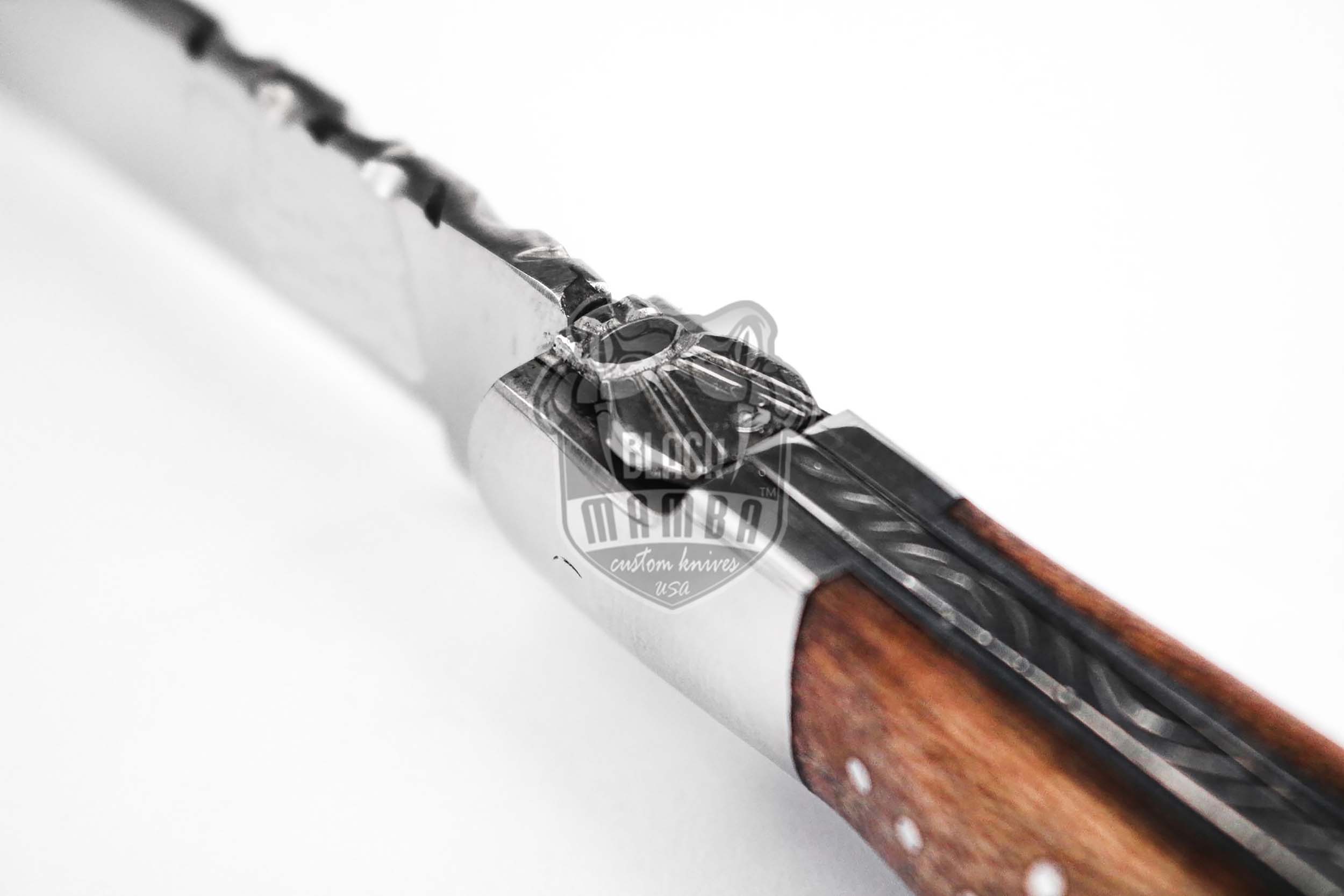
The forged bee sits at the end of the spring where it exits the handle. It is not a separate piece pinned on afterward — it is shaped as part of the spring line, which is why it looks continuous with the spine when the knife is closed. It is also the fastest way to tell a Laguiole from any other slip joint at a glance.
Care: hand wash the blade, dry it straight away, and let the pivot drain with the knife open before you close it. Do not soak it. A drop of light oil where the tang meets the spring keeps the action smooth and stops any squeak. The timber only needs an occasional wipe; if it ever looks pale and dry, mineral oil on a cloth restores it.
FAQs
Does it come with a corkscrew? No. This is the blade-only version of the pattern.
Can I buy several to match? Yes, though each handle differs, which most people prefer in a set.
Anything else supplied? A hand-stitched leather sheath, and nothing you do not need.
Read our pocket knife cleaning guide, understand pocket knife bevels explained, and see how to store knives for the long term.
Model: BMK-619



Scarlett M. (verified owner) –
These pocket-sized Laguiole Steak Knives are a fantastic find. They’re compact, sharp, and the wooden handles provide a comfortable grip.
Samuel L. (verified owner) –
The quality of these handmade Steak Knives is second to none. They’re built to last, and I can tell they’ve been crafted with care.
Mia H. (verified owner) –
These Laguiole Steak Knives are a cutlery masterpiece. They add a touch of sophistication to my dining table, and they’re incredibly sharp.
Oliver D. (verified owner) –
These knives have quickly become my favorite kitchen tool. They’re comfortable to hold, easy to clean, and they slice through meat effortlessly.
Liam K. (verified owner) –
These handmade Steak Knives are simply exceptional. They’re a testament to fine craftsmanship and a must-have for any steak aficionado.
Sofia A. (verified owner) –
I love the versatility of these pocket-sized Laguiole Steak Knives. They’re not only great for steak but also for outdoor picnics and BBQs.
Xavier Rivera –
Perfect gift. Perfect quality. No complaints. Already thinking about what to order next from this company.
Carlos Brown –
This turned out to be way better than I thought it would be. Shipping was fast and everything arrived well packaged.
Henry Fox –
This knife is really solid. No question about it. Already telling my friends to check this out.
Gary Green –
Mostly happy with this one, just a small gripe or two. Handle feels good, just a little heavier than I expected. Minor nitpicks aside, good quality knife.
Paul Miller –
Ended up ordering a second one after how happy I was with the first. Edge held up great through a full week of daily cooking. This is why Black Mamba Knives is my go to for anything knife related. Balance in hand is perfect for detail work at the cutting board. Can’t say enough good things about this purchase.
Sharon Freeman –
Genuinely seriously impressed with how this turned out. Handle stays comfortable even after prepping a big meal. Balance in hand is perfect for detail work at the cutting board. Cleans up easy and hasn’t shown any rust or staining. Definitely bookmarking this store for future orders.
Anthony Lopez –
This knife completely won me over the moment I picked it up. Happy customer here, through and through.
Andre Garcia –
Kept picking this knife up just to admire it after it arrived. Edge held up great through a full week of daily cooking. Edge geometry makes thin slicing so much easier than my old knife. Love it.
Stephen Martin –
This showed up faster than expected and looked incredible. Already telling my friends to check this out.
Melissa Lopez –
This knife completely won me over the moment I picked it up. Slices through everything like butter, no sawing needed. Handle stays comfortable even after prepping a big meal. Edge geometry makes thin slicing so much easier than my old knife. Exactly the kind of quality that keeps me coming back.
Betty Cruz –
This knife is a genuine work of art. Cleans up easy and hasn’t shown any rust or staining. Can’t say enough good things about this purchase.
Kyle Ramirez –
This knife is outstanding. No question about it. Exactly the kind of quality that keeps me coming back.
Linda Clark –
This turned out to be way better than I thought it would be. So worth it.
DeShawn Peterson –
Best knife I’ve ever owned. Hands down. Black Mamba Knives’ attention to detail is honestly unmatched. Cleans up easy and hasn’t shown any rust or staining. Can’t say enough good things about this purchase.
Betty Ruiz –
Nice piece for the price. Cuts well though it needed a quick touch up on the edge. Still very happy with it and would recommend. Appreciate that this is made stateside in Memphis, delivery was solid too.
Christopher Fox –
This knife has quickly become my favorite piece in the collection. This is my third order from Black Mamba Knives and they never disappoint. Has become my main prep knife in the kitchen since it arrived. Beyond happy with how this turned out.
Harold Richardson –
Ordered late at night on a whim and woke up glad I did. Edge geometry makes thin slicing so much easier than my old knife. Already telling my friends to check this out.
Sergio King –
My brother was speechless when I showed them this knife. Slices through everything like butter, no sawing needed. Already added a few more items from this store to my cart.