
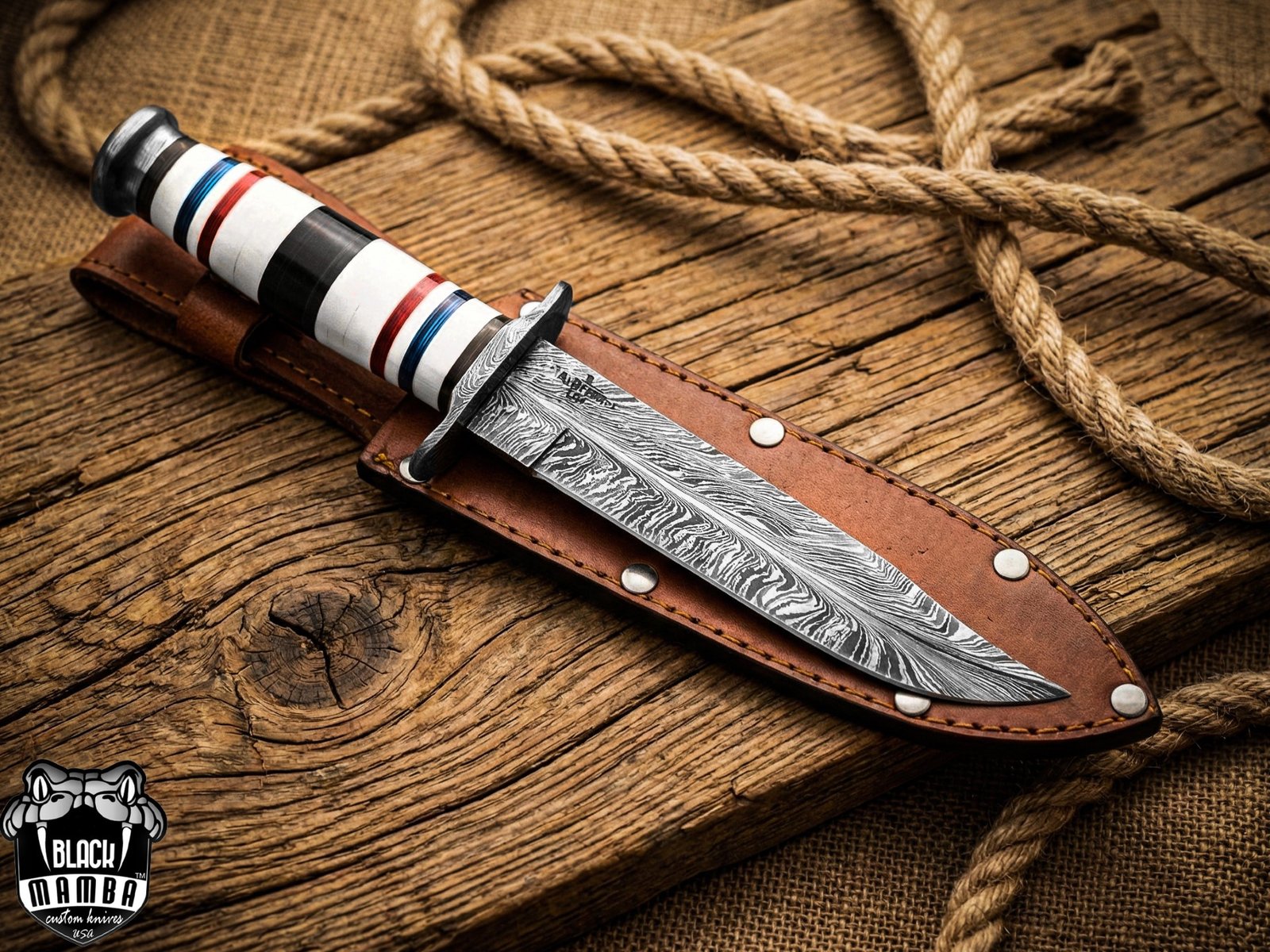
Description
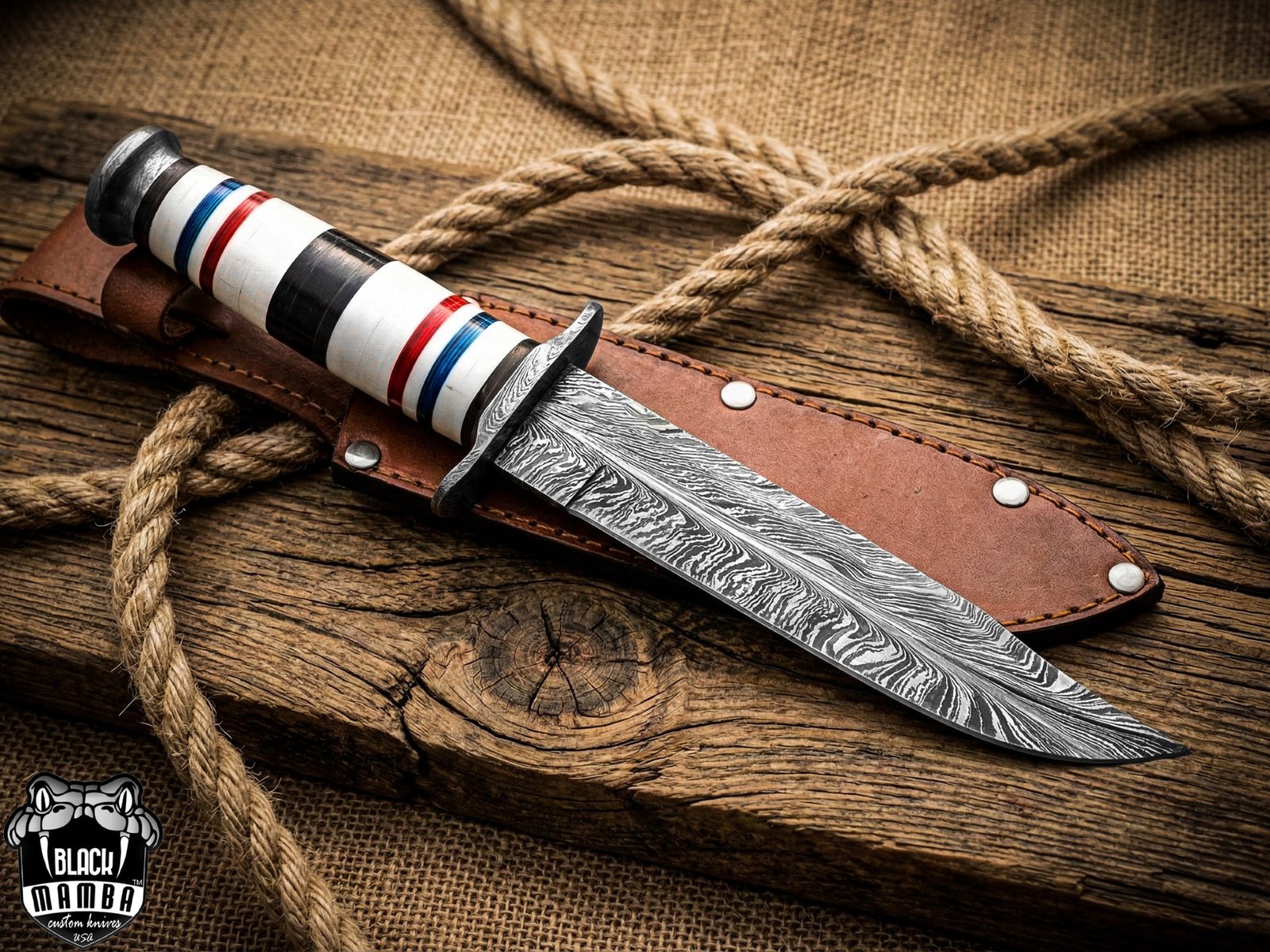
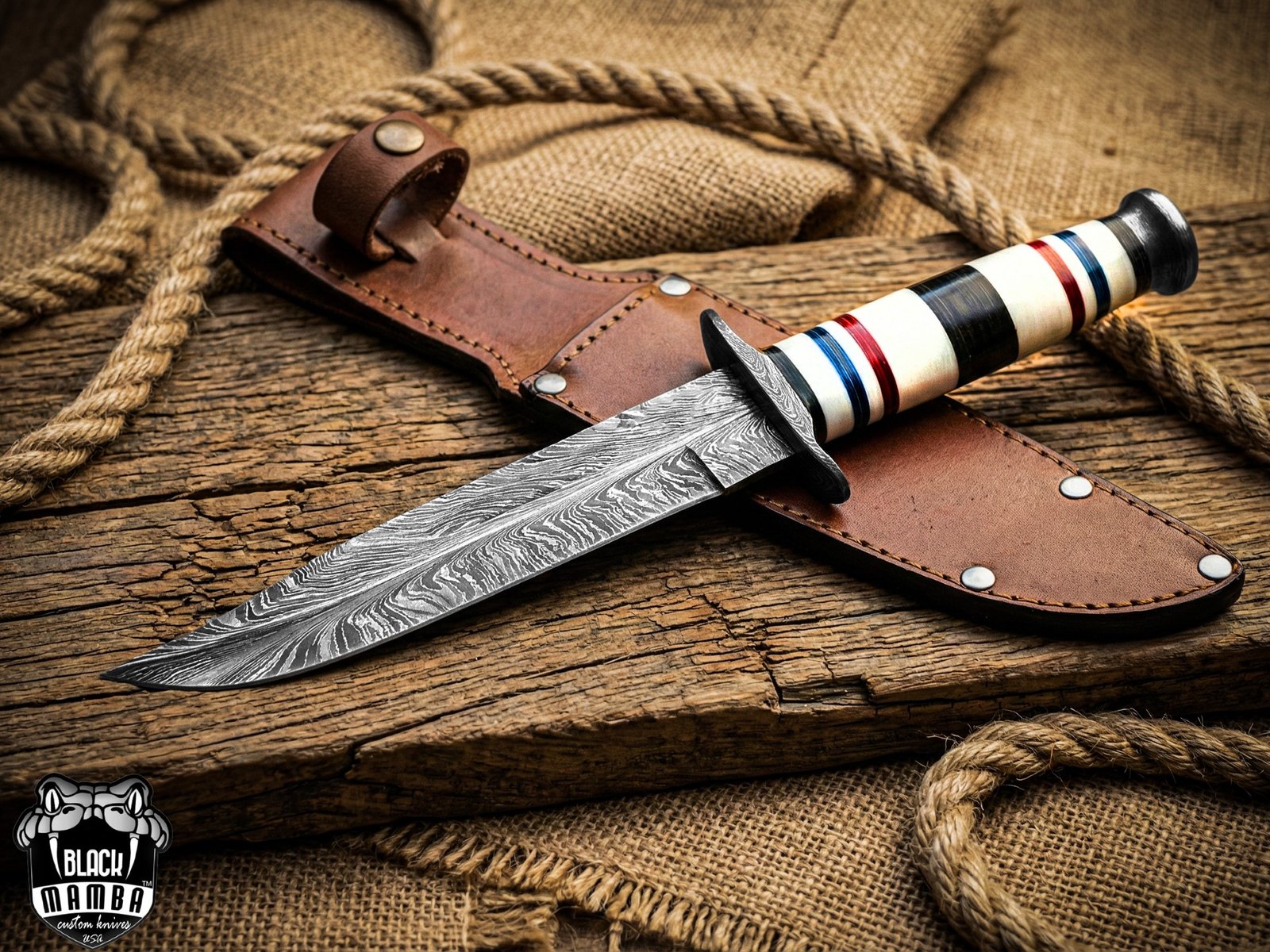
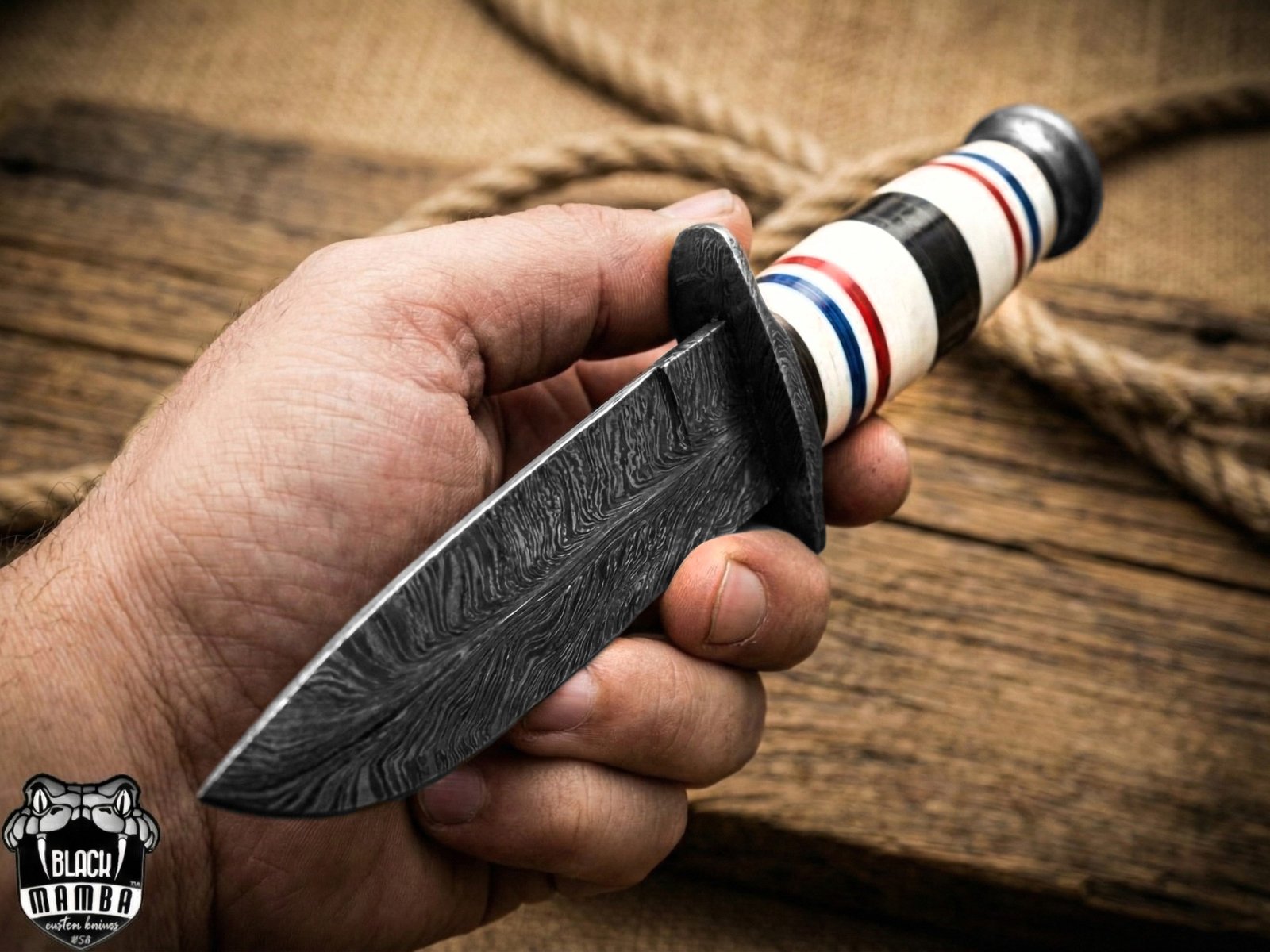
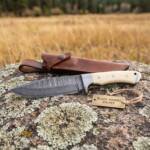
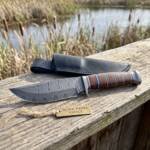
A seven-inch blade on a twelve-inch knife, at thirteen ounces. Those proportions come straight from the fighting knives issued in the 1940s, and they have not needed changing since.
| Overall length | 12 inches |
| Blade length | 7 inches |
| Handle length | 5 inches |
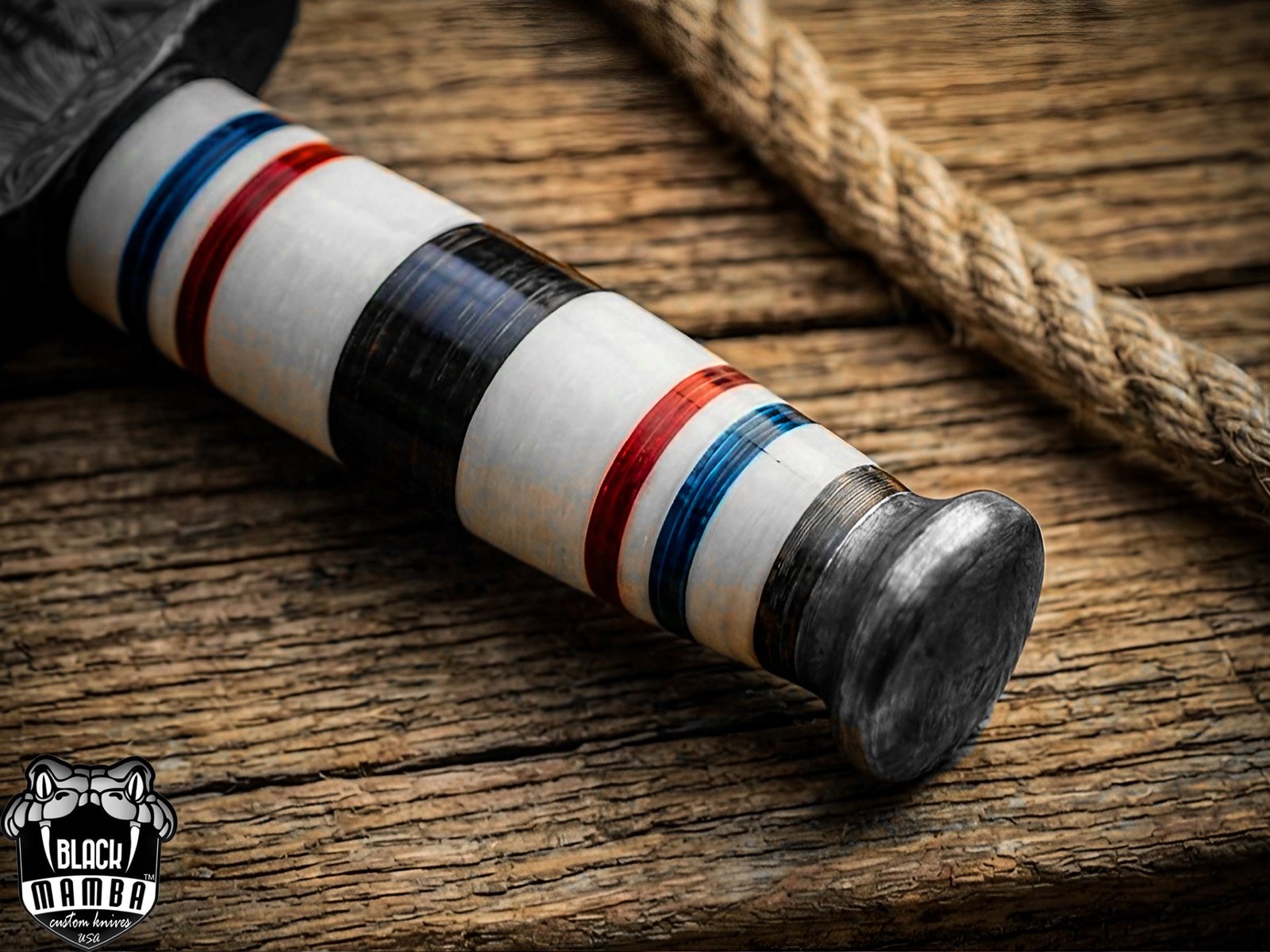
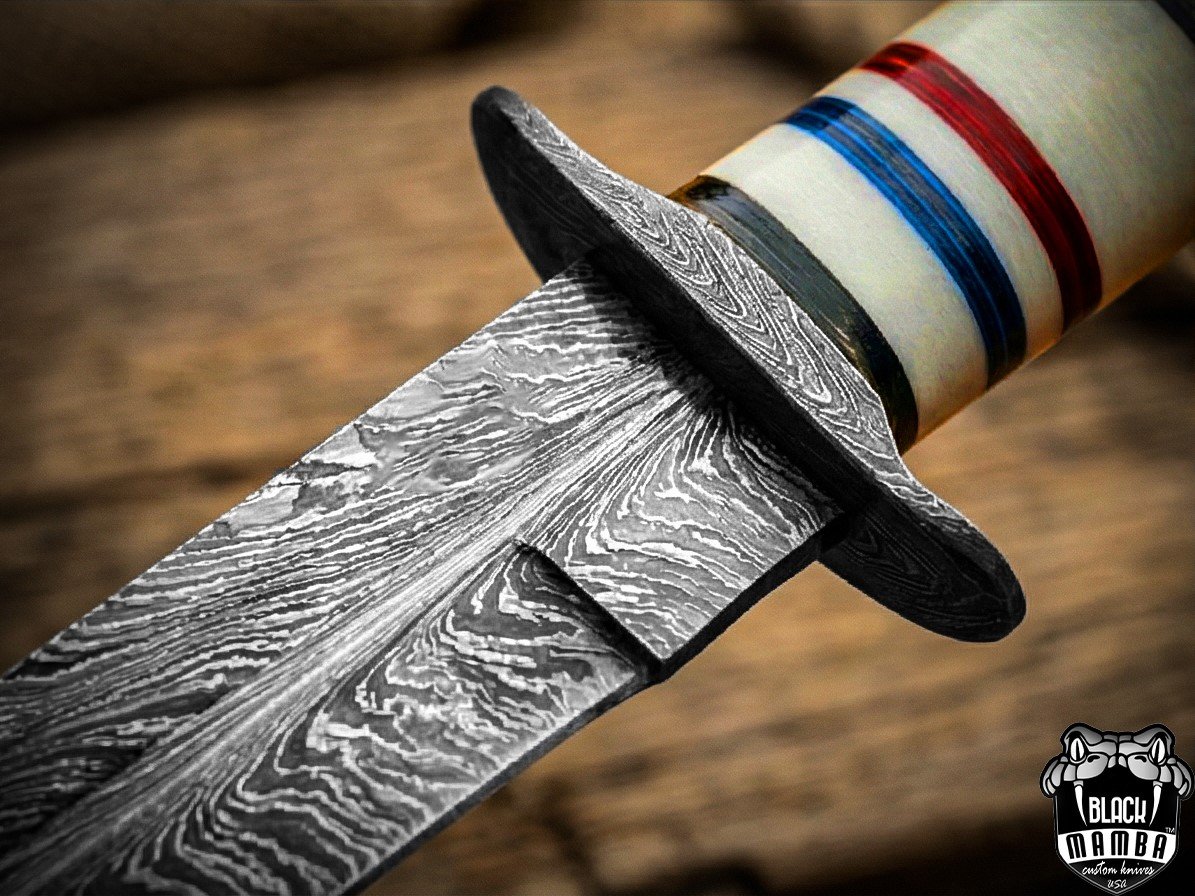
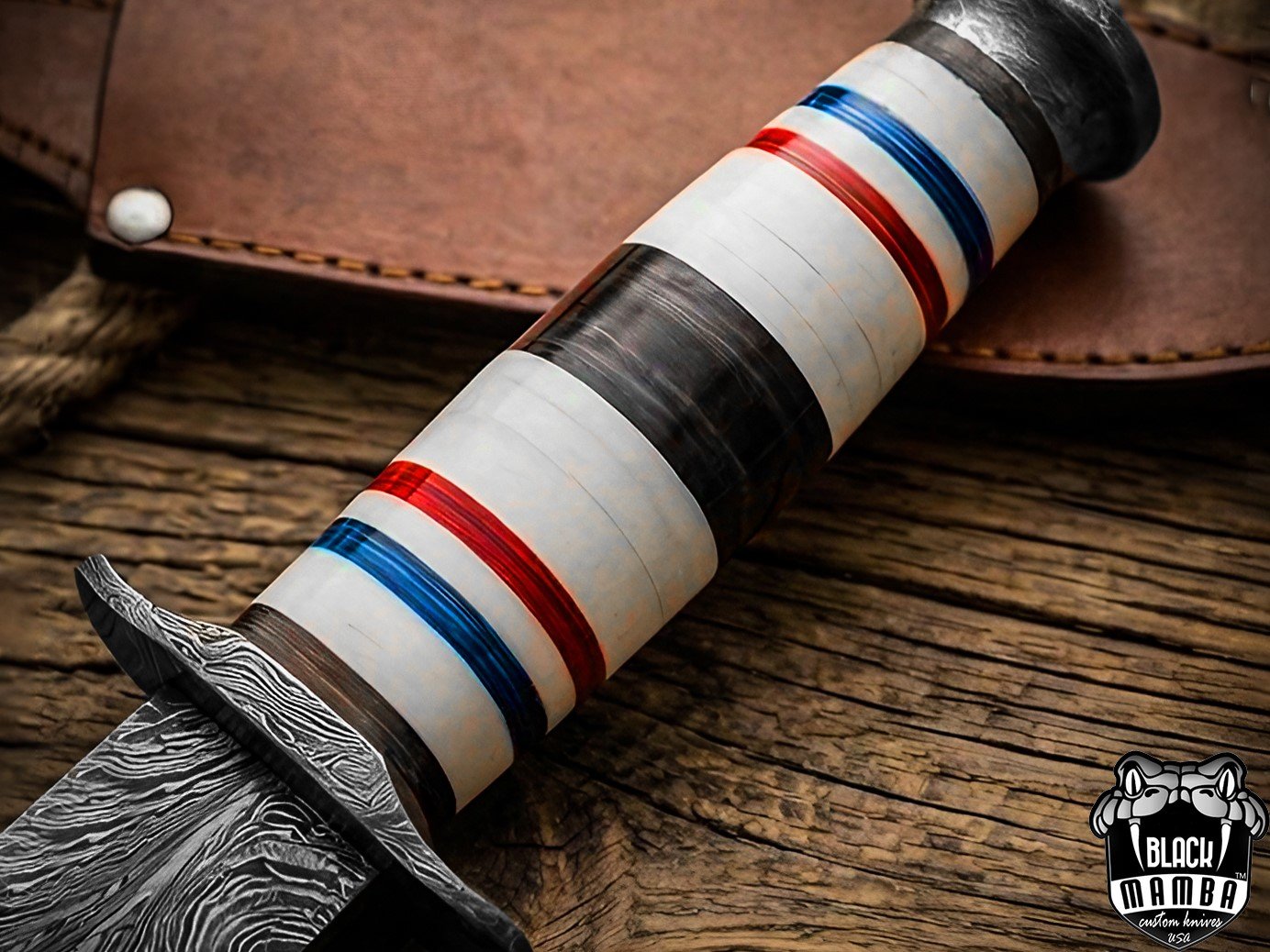
| Handle | Stacked fiber washers |
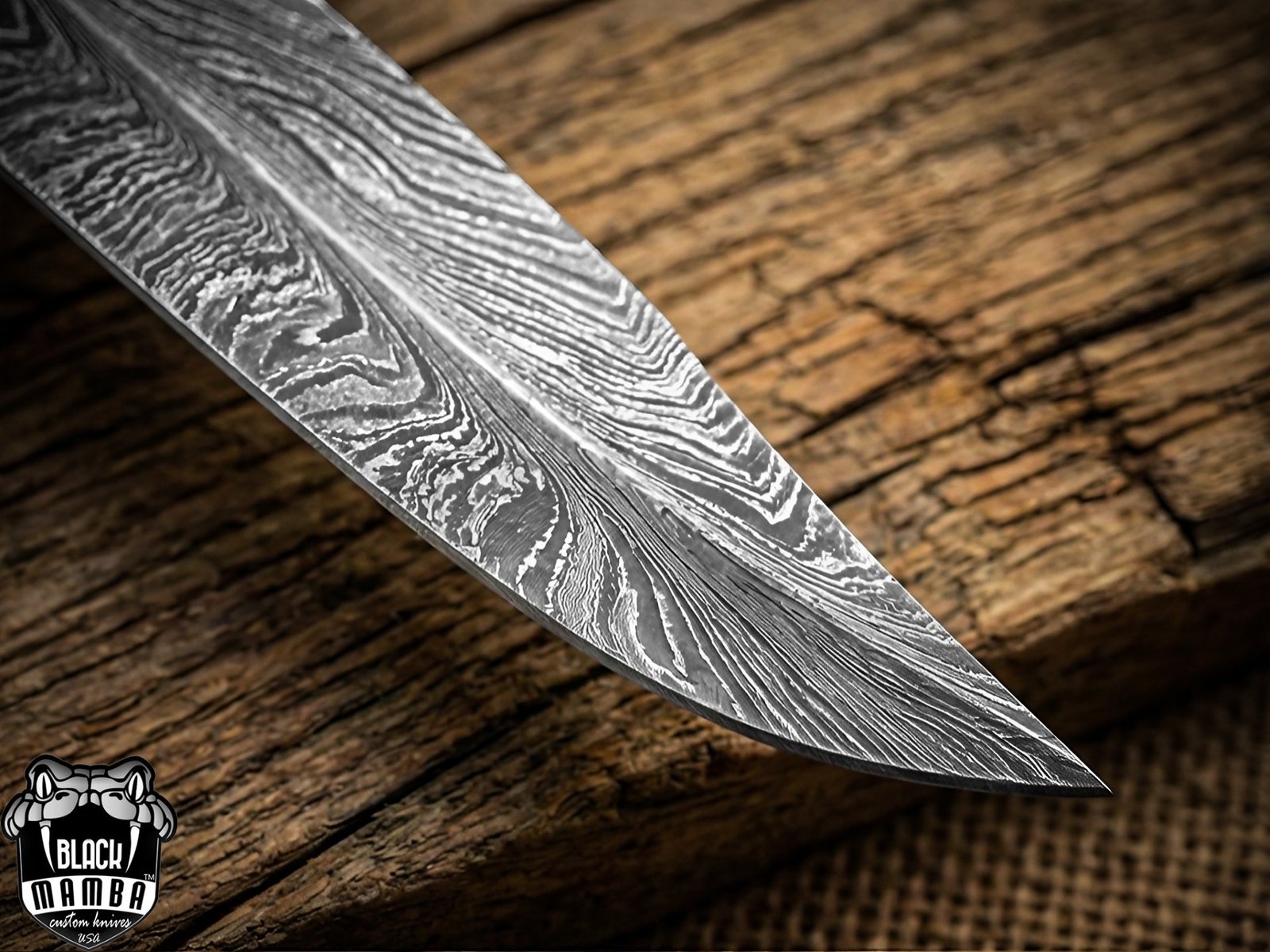
| Steel | 1095 + 15N20 Damascus, 352 layers |
| Hardness | 58–60 HRC, oil tempered |
| Weight | 13 oz |
| Included | Hand-stitched leather sheath |
Its job: everything a camp knife gets asked to do. Splitting kindling with a baton, opening crates, staking out a tarp, prepping food on a tailgate, field work on game. Seven inches is enough blade to be useful against wood and enough tip to do close work without switching knives.
Why this profile lasted
The long clip point does two things at once. The straight portion of the edge gives you a flat run for push cuts and batoning. The swept tip gives you a fine point for piercing and for opening up an animal without cutting into the gut. It is a compromise shape, so it beats nothing outright: a dedicated skinner peels hide faster, a machete clears brush faster. What it does is refuse to be useless at any of it, which is why it stayed in service for eighty years. The guide to the KA-Bar pattern goes into where the geometry came from.
Thirteen ounces in the hand
That is heavy for a seven-inch blade and light for a chopper. Held at the ricasso it feels neutral, which is why the point stays controllable. Held at the butt it feels blade-heavy, which is exactly the bias you need while batoning the spine with a stick. It will not tire your wrist over an afternoon. It will also not chop like the forward-angled kukri in the same series, which puts twice the mass behind the edge and gives up all the finesse to get it.
Rust is the real enemy
The specs list 1095 and 15N20, both plain carbon steels. Neither resists corrosion. Sweat is the usual culprit rather than water, so wipe the blade down after you handle it on a hot day, and do it before you put the knife away rather than the next morning. Blood and sap need washing off the same day. If you store it for a season, oil it and keep it out of the leather. A blade that has gone gray is fine and stays that way; a blade with orange pitting has been left wet.
Things people ask
Will it baton? Yes. It is full tang and the spine takes a strike. Do not baton through a knot.
Is it issued military equipment? No. It is a civilian knife made on the military pattern in Memphis, Tennessee.
Does it come sharp? Yes, sharpened and ready to use. It will still want a strop after the first hard session. See our military knife buying guide for what to look for.
Model: SL-026
Kimberly Watson –
Can’t stop showing this off to everyone who comes over. Came in a nice gift box which made it feel even more special. Shipping was fast and everything arrived well packaged.
Walter Hernandez –
This knife is top notch. No question about it. Highly recommend this one.
Jamal Castillo –
Knew this knife was special the second I opened the box. Would send this as a gift again in a heartbeat.
Aaron Bishop –
The moment I saw this in person I knew it was a keeper. Edge retention has been great even after regular use in the field. Can’t recommend this enough.
Wayne Gonzalez –
This is hands down one of the best knives I’ve bought online. Took it out camping right away and it handled everything I threw at it. This is my third order from Black Mamba Knives and they never disappoint. Steel has a gorgeous pattern that looks different in every light. This is exactly why I keep coming back to this maker.
Hunter Perez –
I collect knives and this one is amazing.