
Description
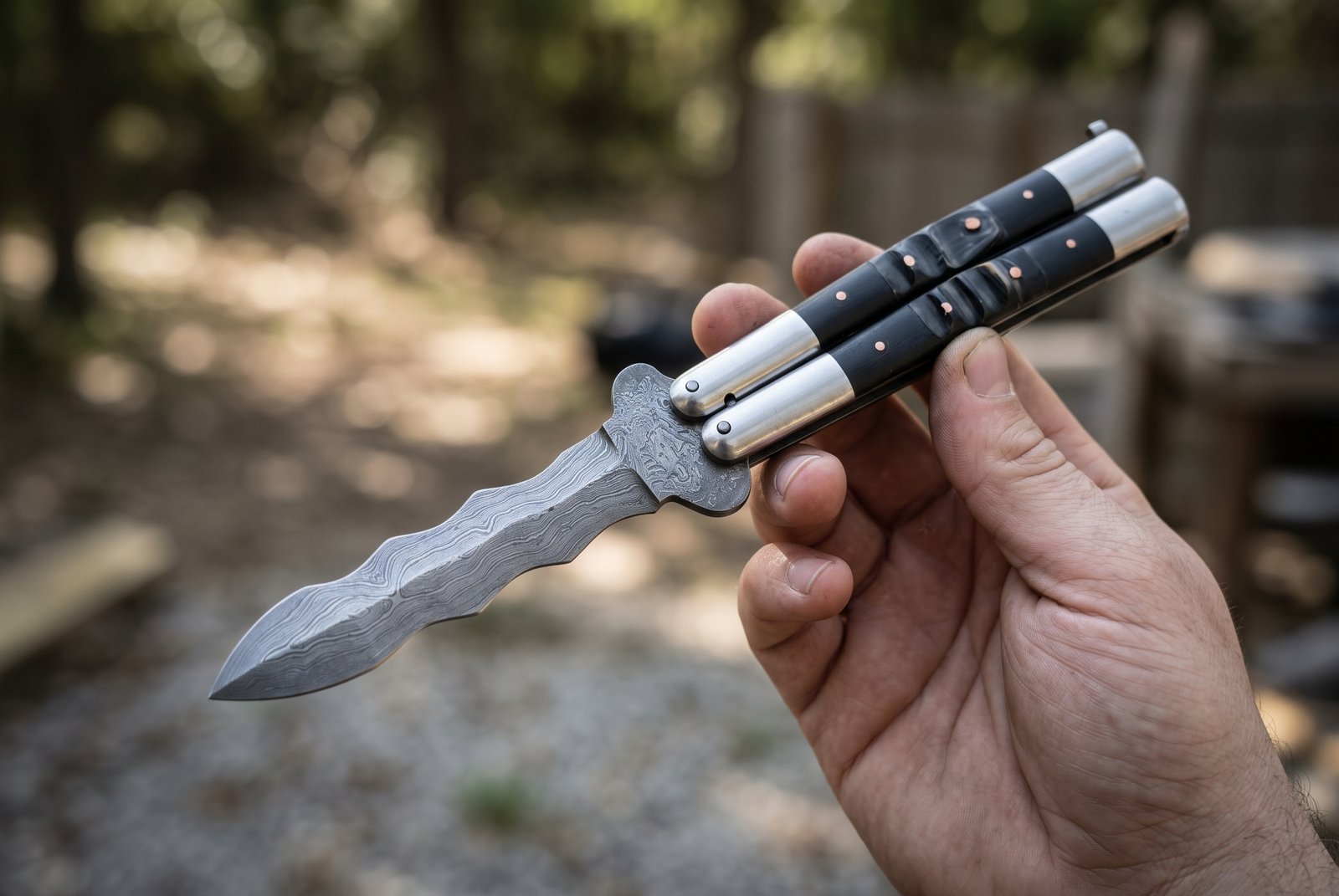
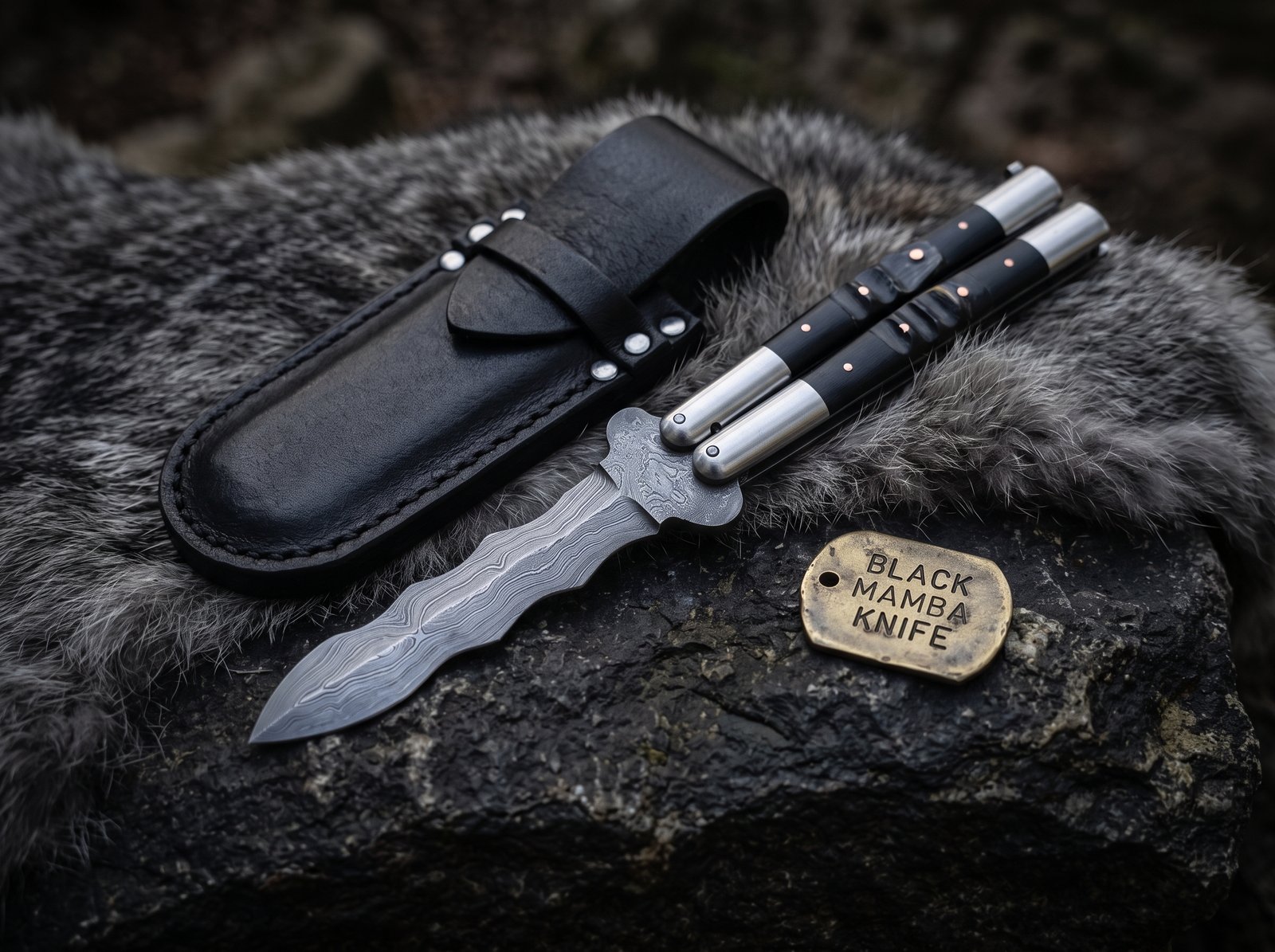
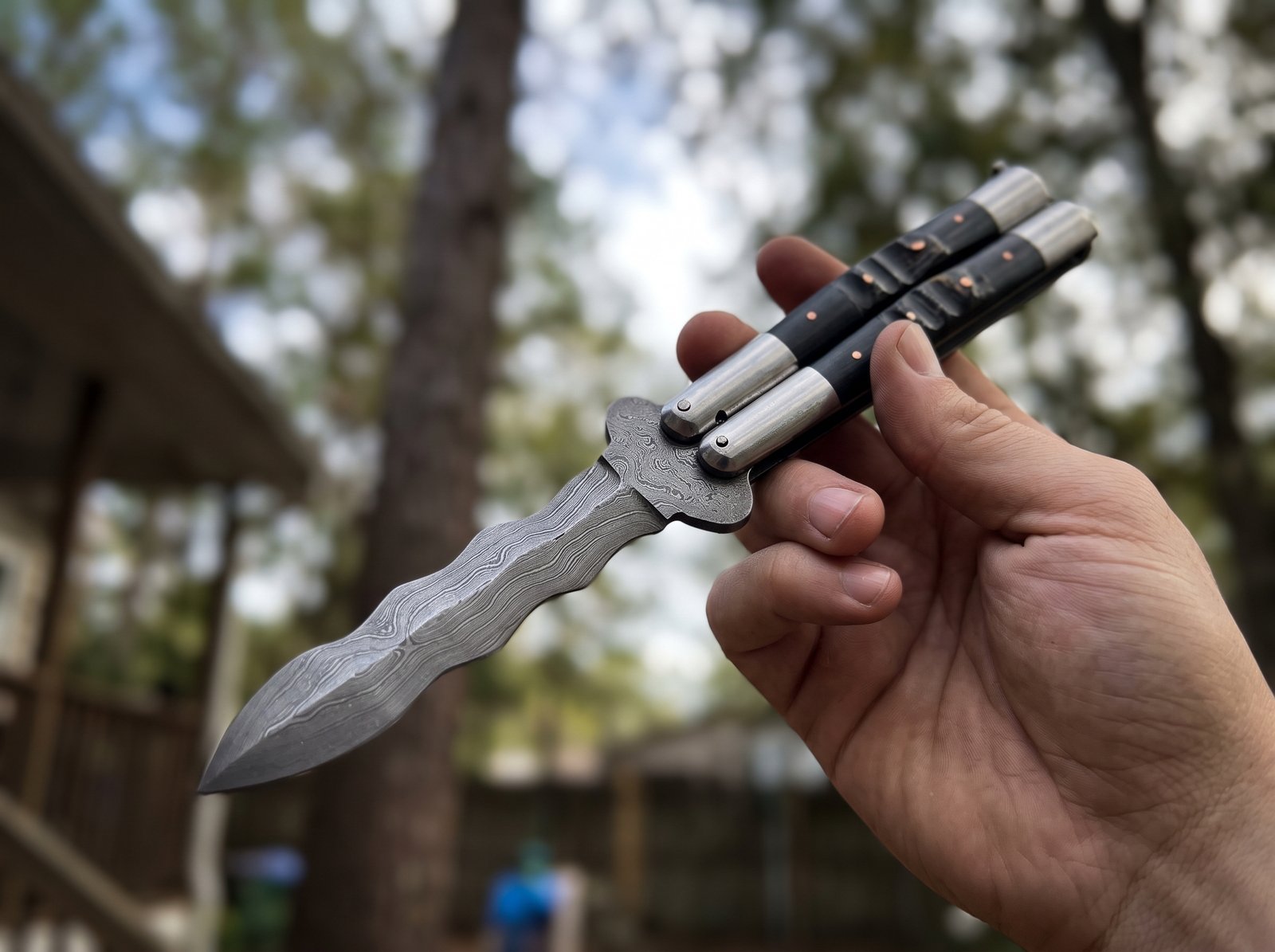
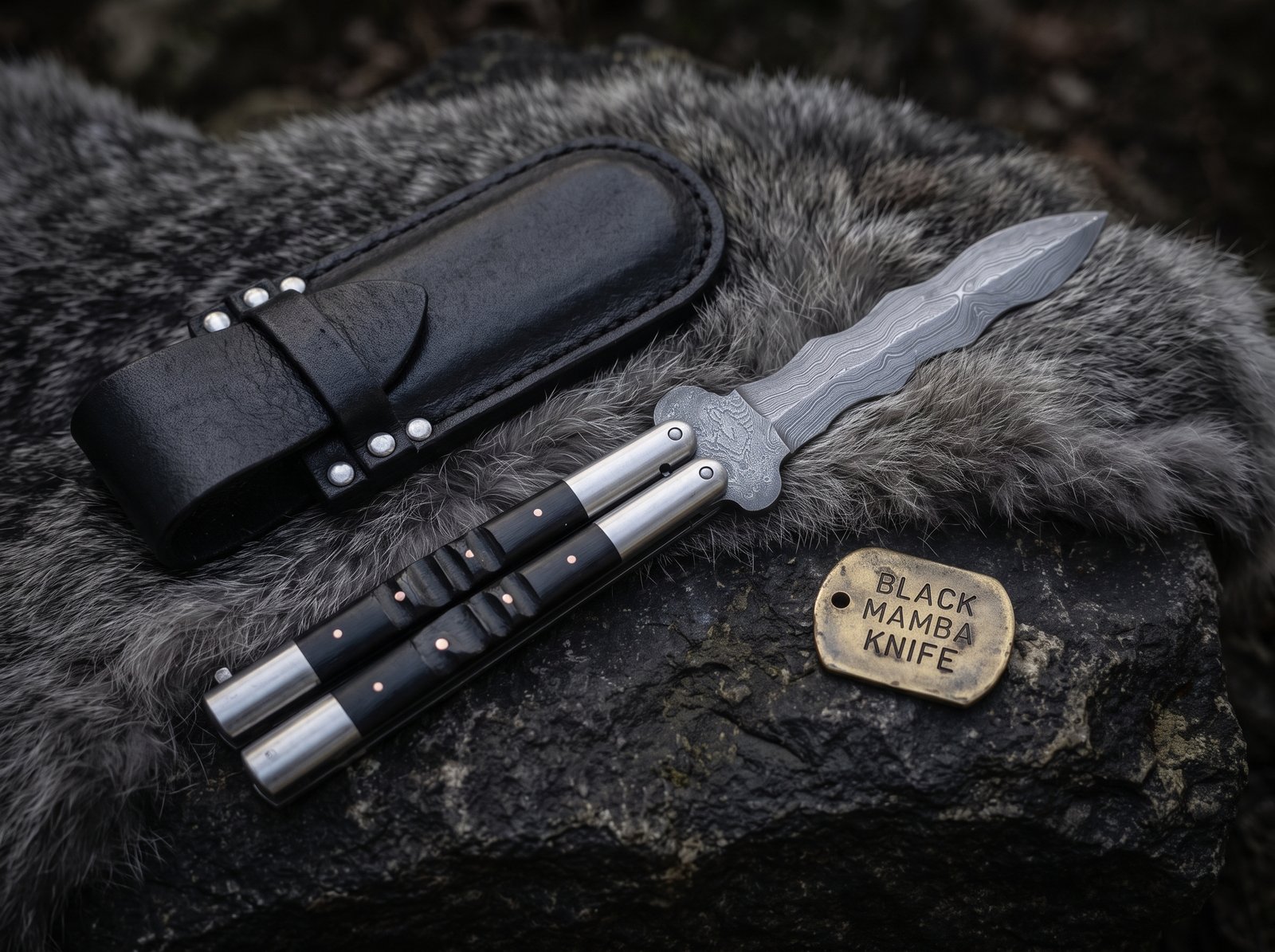
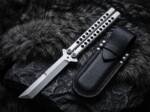
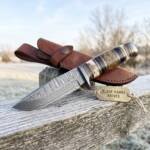
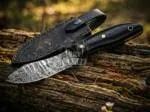
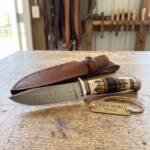
This is the serpentine one. The blade waves along its full length before it settles into a symmetrical spear point, and it is cut from a genuinely layered billet, so the flowing bands in the steel run with the curves instead of across them. Handles are polished steel bolsters carrying near-black water buffalo horn, pinned with copper.
| Overall length | 9.1 inches |
| Blade length | 4.4 inches |
| Handle length | 4.7 inches |
| Steel | 1095 + 15N20 Damascus, 352 layers |
| Hardness | 58–60 HRC, oil tempered |
| Handle | – Stainless Steel with Water Buffalo Horn Inserts |
Water buffalo horn behaves like a fingernail
That is not a turn of phrase. Horn and fingernail belong to the same material family, keratin, and the practical consequences follow from it. Horn is tough and very slightly flexible where bone is brittle and simply breaks. It takes a polish down to a deep near-black shot through with brown and gray streaking that belongs to that one animal and no other. And it gives moisture up to dry air, so a knife left in a heated room all winter can develop fine surface checking on the panels. A drop of mineral oil worked in with a cloth once or twice a year prevents that outright. If the horn gets soaked, let it dry in its own time and never speed it along with heat.
Two different corrosion stories in one knife
The blade is layered carbon, oil tempered into the mid-to-high fifties on the Rockwell scale. The frame around it is stainless. A decade from now the handles will look much as they do on the day they arrive and the blade will not, unless you have been paying attention to it. That mismatch catches people out, which is why it is worth reading what actually happens to layered steel over time before you decide where in the house it is going to live. Nothing here is delicate. It simply is not uniform, and the two halves want different things from you.
The horn sits in a channel, it is not the structure
The panels are set into the steel frame rather than forming it, which is the arrangement balisong handle construction favors for a good reason: a knock off a tabletop lands on metal, not on the organic material. Copper pins hold each panel and are peened flush by hand. Whoever fits them also cleans up the boundary where horn meets steel, because that seam is the first thing a buyer runs a thumbnail over.
Sharpening a waved edge
Plan for it. A bench stone reaches the high points of the curves and nothing else, so the hollows need a rod or the corner of a stone worked patiently. Most owners of this model touch up the crests and leave the rest alone for years, which is perfectly reasonable on a knife that spends its life rotating rather than cutting rope.
Made in Memphis
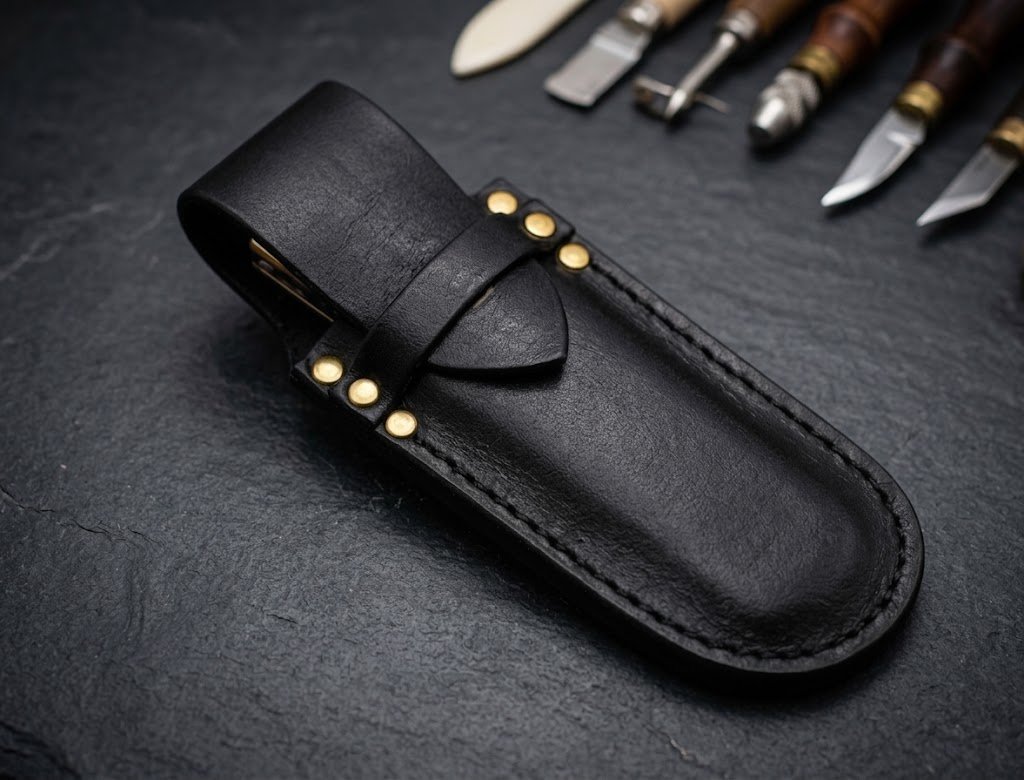
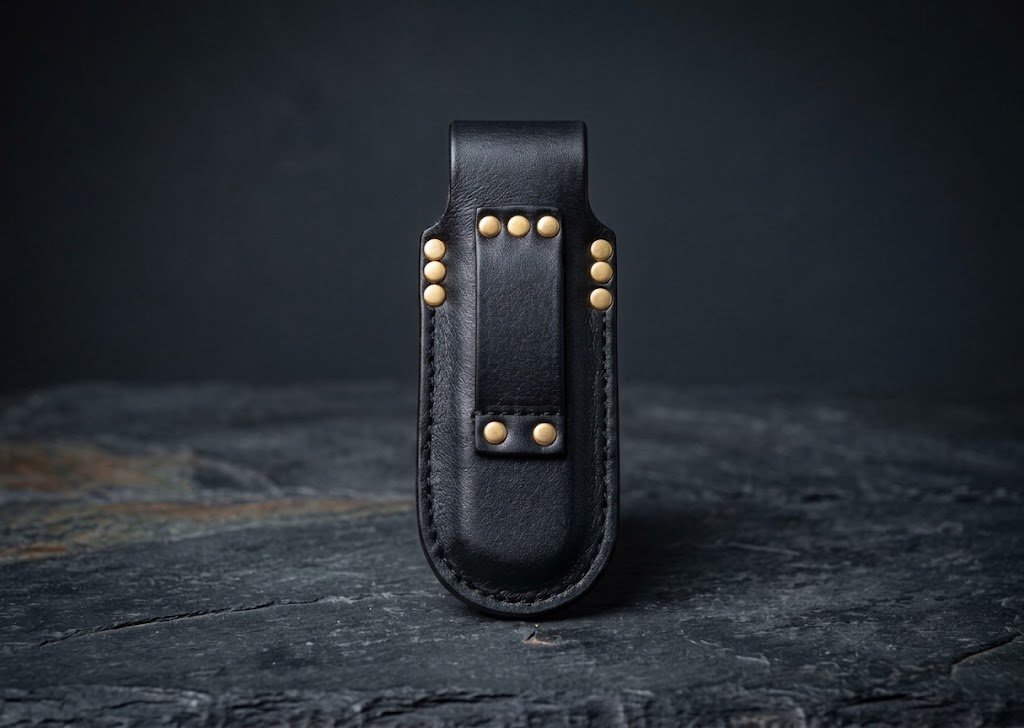
Ground, hardened, fitted, sharpened and function-tested in Tennessee, then sent out with a hand-sewn black leather carrier, riveted and strap-closed. If pale panels appeal more than dark ones, the same frame is offered with bone inserts. Local law on this style is worth ten minutes of your time before you buy. The guarantee runs for life either way.
Model: BMK-414
Looking for more styles? Take a look at the full Filipino balisong collection.

Oliver K. (verified owner) –
I’m impressed with the meticulous attention to detail on the steel butterfly knife I got from this shop. It’s not just a tool; it’s a piece of art that I’m proud to own.
Sophia L. (verified owner) –
The steel butterfly knife I purchased here is visually stunning and incredibly functional. It’s now my preferred tool for various tasks. Highly recommended!
Ava C. (verified owner) –
This store is a must-visit for butterfly knife enthusiasts. The knife I received is a masterpiece in steel, and it has quickly become a cherished item in my collection.
Daniel S. (verified owner) –
I’ve been collecting knives for years, and this store ranks among my favorites. The steel butterfly knife I purchased here is a shining example of craftsmanship and excellence.
Wayne Sanchez –
This turned out to be way better than I thought it would be. This is my new favorite in the collection.
Eric Collins –
Couldn’t ask for a better balisong honestly. Cool knowing this was handmade right in Memphis and shipped out fast. Comes with a nice pouch which is a nice touch. Can’t wait to see what else this seller has to offer.
Andre Kelly –
My skepticism about ordering online disappeared the second this arrived. Latch snaps shut clean every time. Love it.
Olivia Myers –
This is exactly what I wanted and then some. This is my new favorite in the collection.
Patricia Hughes –
Not going to lie. This exceeded my expectations by a lot. Weight is perfectly balanced for flipping. No hesitation recommending this to anyone looking.
Amanda Cook –
My husband was speechless when I showed them this balisong.