
Description
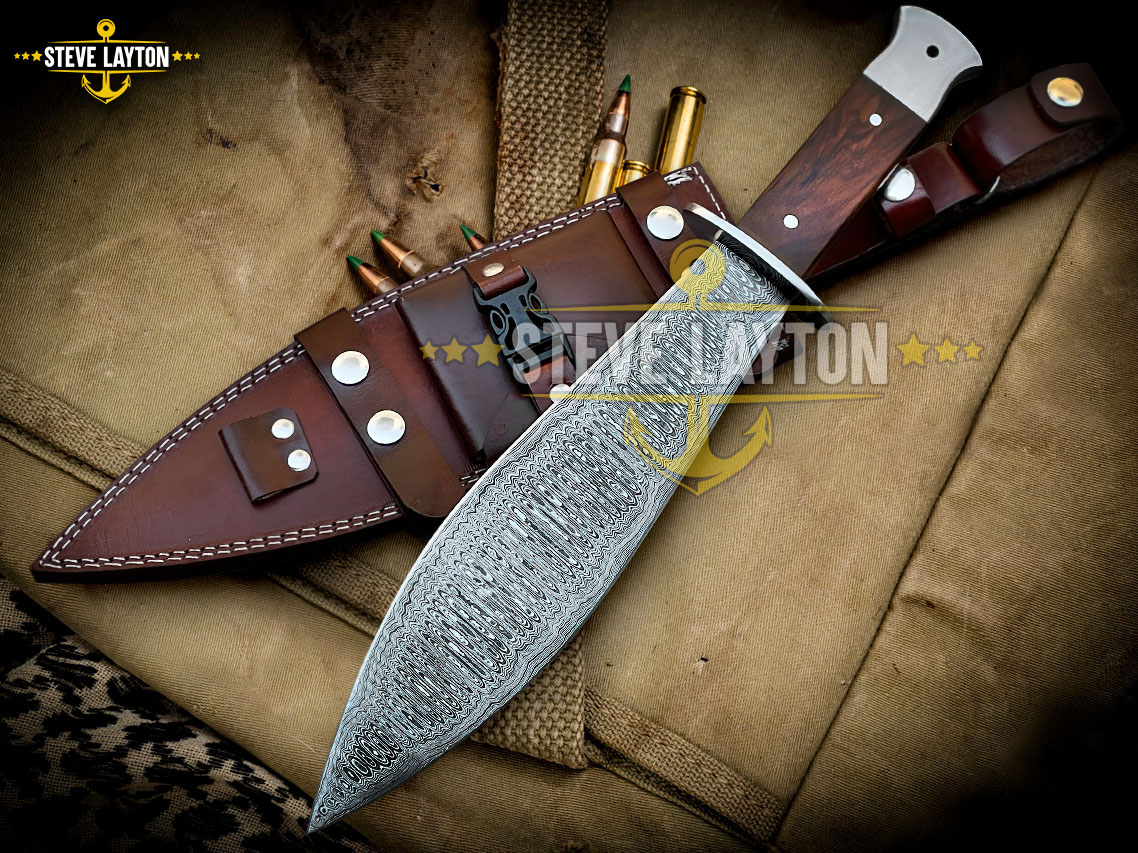
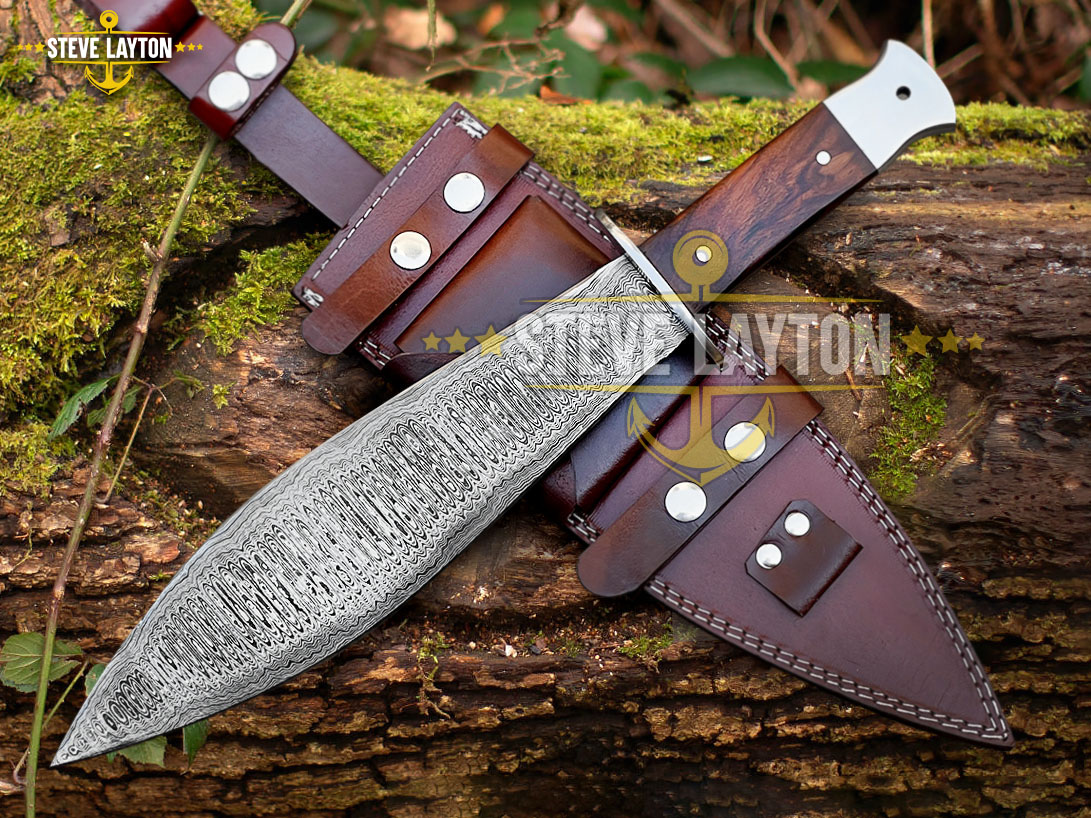
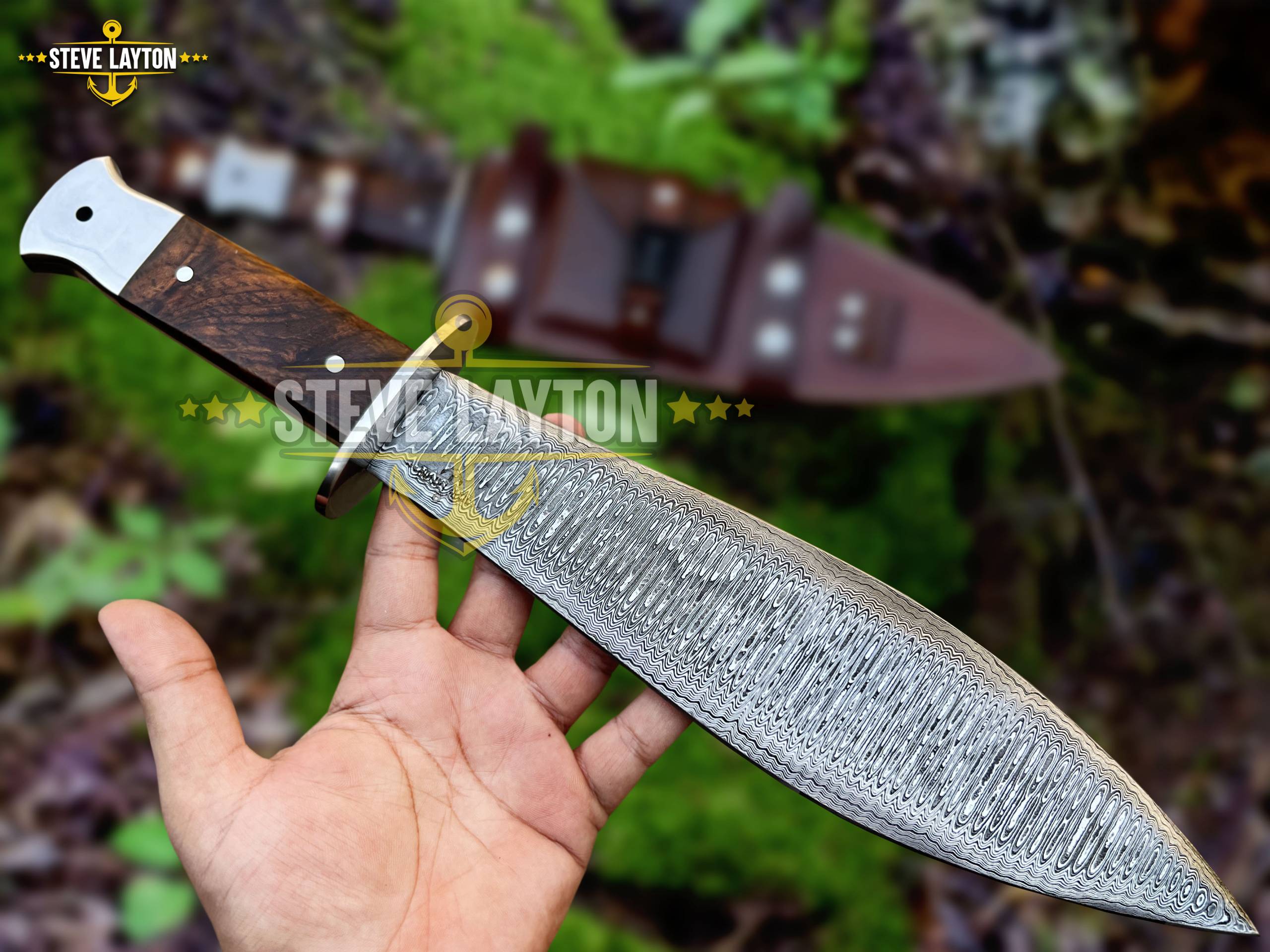
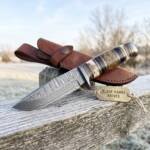
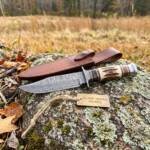
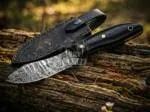
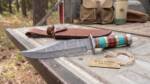
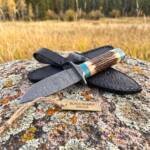
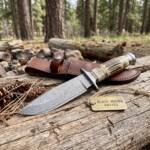
Steve Layton draws these patterns; we forge them. The Ranger Large is the biggest of his dagger designs that we produce, a six-inch symmetrical blade on a five-inch grip, and fifteen ounces of it. That mass is the point of the design and also the main reason some buyers should choose something else.
| Overall length | 11 inches |
| Blade length | 6 inches |
| Handle length | 5 inches |
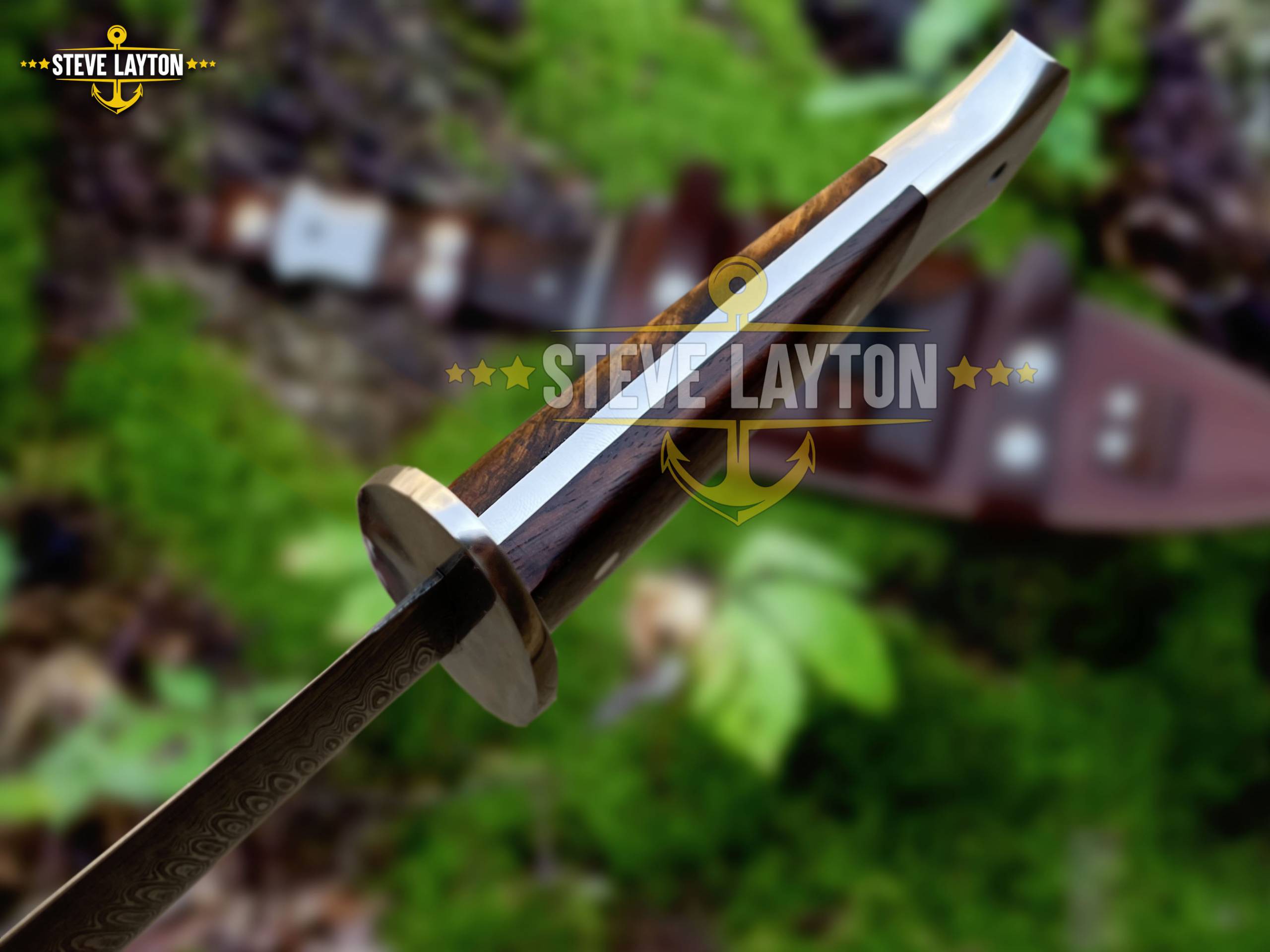
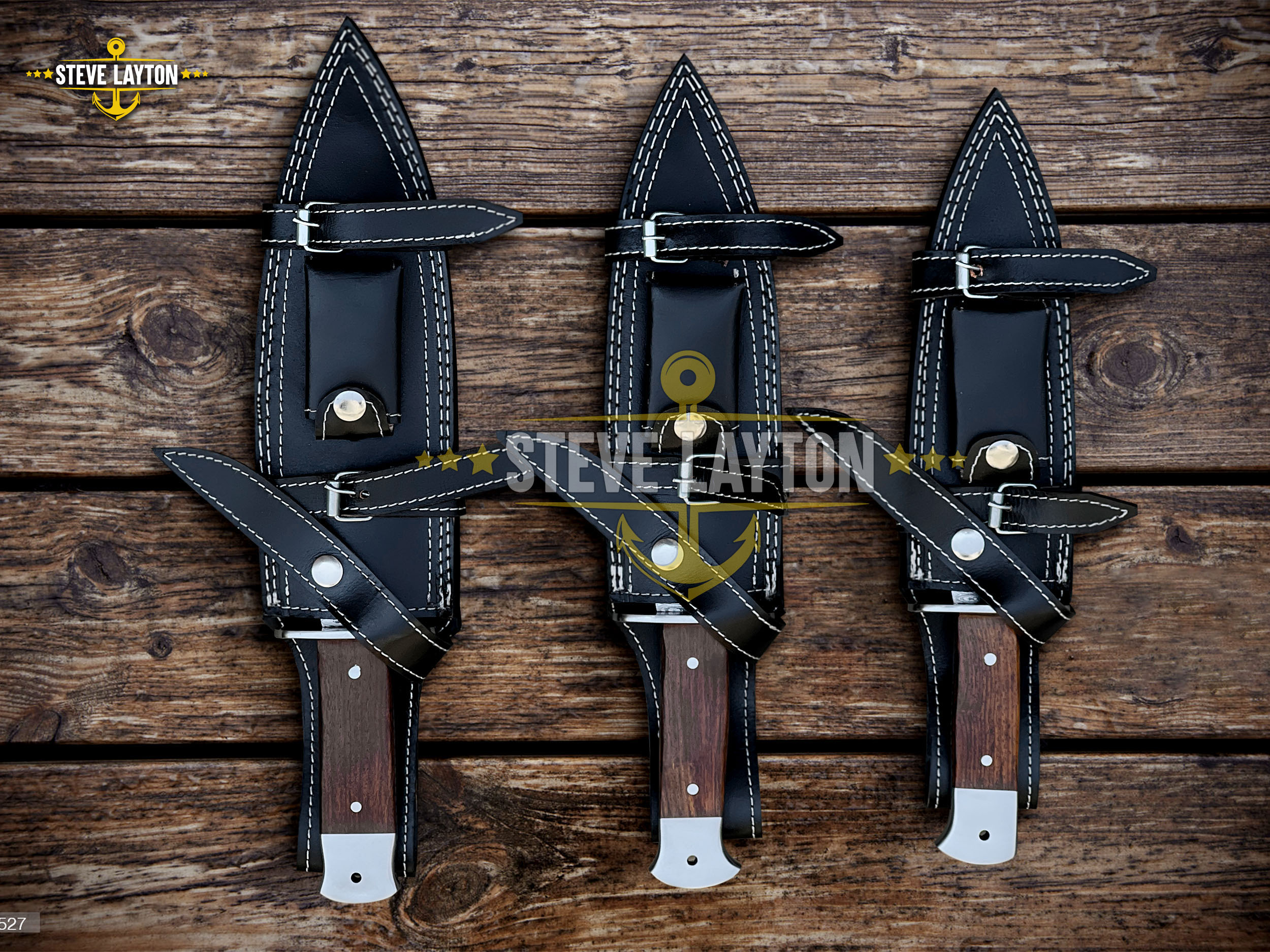
| Handle | Reddish brown hardwood scales with a polished steel bolster and butt cap |
| Steel | 1095 + 15N20 Damascus, 352 layers |
| Hardness | 58–60 HRC, oil tempered |
| Weight | 15 oz |
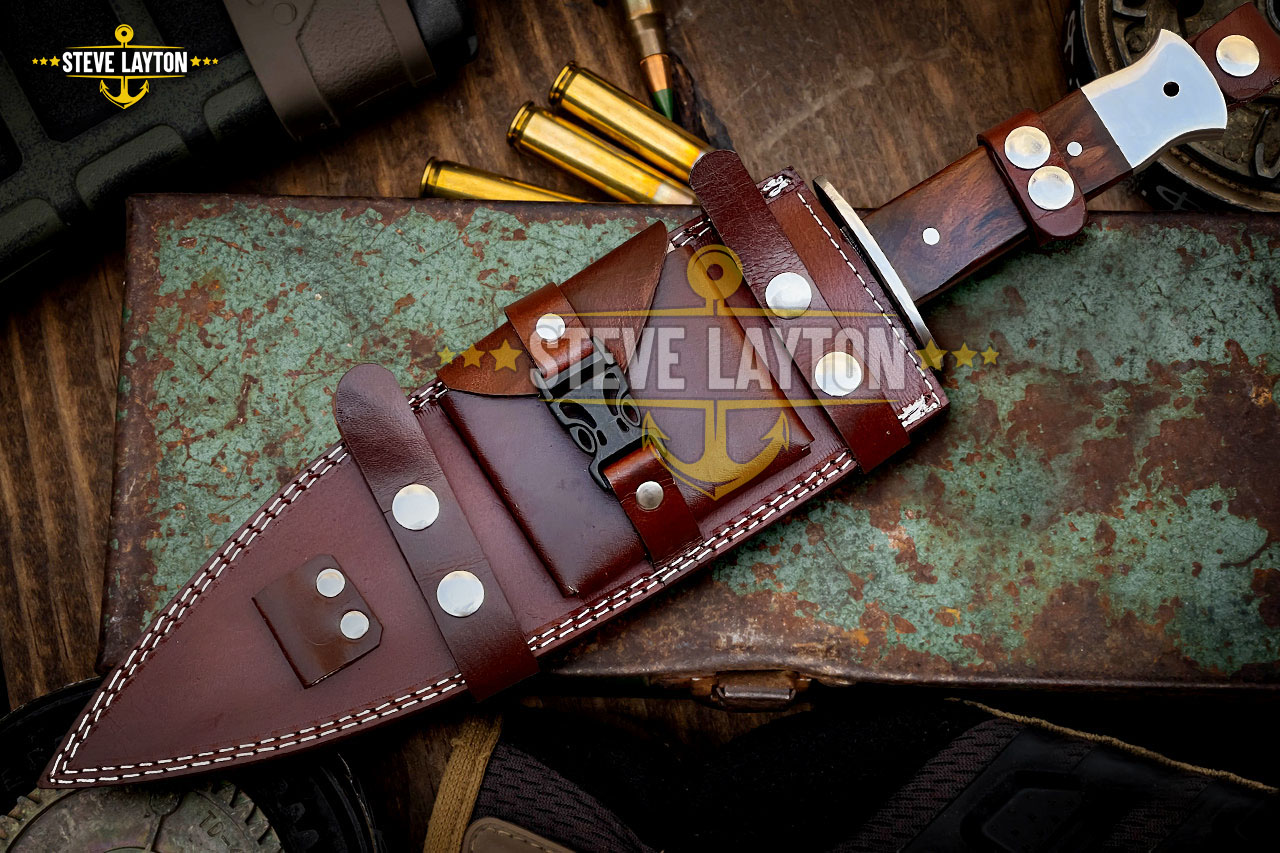
| Included | Hand-stitched leather sheath |
Built for: collectors of military-pattern blades, and anyone who wants a display piece with real heat treatment behind it. A dagger is a thrusting shape. Two symmetrical edges meeting at a centered point make it excellent at penetration and mediocre at nearly everything a hunter actually does. You cannot lay a spine on a cutting board, you cannot baton it, and skinning with a double edge means the second edge is always somewhere you did not plan for.
Who should skip this one
If you are shopping for a working field knife, this is the wrong purchase and we would rather say so now. Buy a single-edged drop point instead. This is a dagger in the historical sense, and it earns its place on a rack or among service-pattern reproductions. Read knife vs dagger if the distinction is new to you.
What fifteen ounces feels like
Heavy. Held at the guard the balance falls slightly forward, which is what a thrusting blade wants and what makes it tiring to hold point-up for any length of time. On a belt you will notice it. In a display stand you will not, and the extra stock in the tang is why the piece feels solid rather than hollow.
Keeping it right
Two edges means twice the surface to dry, and the center ridge traps water if you rinse it under a tap. Take a cloth down both faces, then along the ricasso where blade meets guard. That seam is where corrosion starts on every dagger we have seen come back to us. A pass of oil once a month is enough in a heated house and more often if you live somewhere humid. Use the leather for carrying, not for storing. Sharpening a symmetrical dagger takes patience because there are four bevels to match rather than two, and a guided rig helps here more than it does on an ordinary knife.
FAQs
Is this an authorized military reproduction? No. It borrows the visual language of service daggers. There are no unit markings, no issue stamps, and no claim of historical provenance.
How does it compare with the kukri in the same series? Completely different job. The Leatherneck USMC kukri is a chopper with a forward-weighted curve, while this is a point-first design with no chopping ability whatsoever.
Does the pattern run all the way through? Yes. The layers are forge-welded through the full thickness, so sharpening exposes fresh pattern rather than wearing it away.
Model: SL-027B
Paul Gonzalez –
Best knife I’ve ever owned. Hands down. This has quickly replaced my old go to knife for field dressing. Every piece of the fit and finish looks hand checked before it shipped. Handle has a great grip even with wet or gloved hands. This is going straight into my daily rotation.
Henry Price –
Absolutely beyond happy by this knife. Steel has a gorgeous pattern that looks different in every light. Zero complaints from me on this purchase.
Elizabeth Foster –
Nice piece for the price. Handle looks great though it’s a little smaller than I imagined. Solid pickup even with the small issues.
Amanda Anderson –
My father in law couldn’t stop talking about this after I unboxed it.
Linda Watson –
Perfect gift. Perfect quality. No complaints. Weight and balance make it feel like a real working knife not some cheap import. Handle feels amazing and the balance is perfect. Love it.
Dennis Castillo –
No regrets on this purchase at all. I keep coming back to Black Mamba Knives because it’s always this good. Weight and balance make it feel like a real working knife not some cheap import. Good to know real Memphis craftsmen are behind this, and shipping was quick too. This company just earned a repeat customer.
Alan Martinez –
Photos don’t do this knife justice at all. Pommel and guard are solid, no wobble anywhere on the knife. This is exactly why I keep coming back to this store.
Aaron Cruz –
Best knife I’ve ever owned. Hands down. Blade holds a razor edge right out of the box. Came in a nice gift box which made it feel even more special. Sheath snaps shut securely and doesn’t feel flimsy at all. Love that this comes out of Memphis and still ships worldwide this quickly. Not my first order from Black Mamba Knives and it won’t be my last. Highly recommend this one.
Emma Martinez –
So happy I finally pulled the trigger on this one. Weight and balance make it feel like a real working knife not some cheap import. Edge retention has been great even after regular use in the field. Pommel and guard are solid, no wobble anywhere on the knife. Would not hesitate to order again.
Margaret Freeman –
This is hands down one of the best knives I’ve bought online. Love it. Love that this comes out of Memphis and still ships worldwide this quickly.
Olivia Campbell –
Showed up right on time and looked even better than the photos. Every piece of the fit and finish looks hand checked before it shipped. Pommel and guard are solid, no wobble anywhere on the knife. This is going straight into my daily rotation.
Jose Williams –
Been eyeing this knife for months and it did not disappoint. Handle has a great grip even with wet or gloved hands. Leather sheath is thick and well stitched. Not the cheap stuff you usually get. Blade holds a razor edge right out of the box. Will definitely order again for another one.
Kevin Young –
This blade came razor sharp right out of the box. Came in a nice gift box which made it feel even more special. Took it out camping right away and it handled everything I threw at it. Blade holds a razor edge right out of the box. Highly recommend this one.
Alexander Martin –
Showed up right on time and looked even better than the photos. Sheath snaps shut securely and doesn’t feel flimsy at all. Pommel and guard are solid, no wobble anywhere on the knife. Love it.
Natalie Johnson –
Ordered late at night on a whim and woke up glad I did. Blade holds a razor edge right out of the box. Every piece I’ve gotten from Black Mamba Knives has been solid. Highly recommend this one.
Gary Campbell –
This knife has already earned a permanent spot in my collection. Edge retention has been great even after regular use in the field. This company nailed it with this one.
Sergio Martin –
Genuinely blown away with how this turned out. Pommel and guard are solid, no wobble anywhere on the knife. Shipping was fast and everything arrived well packaged.
Antoine Sanchez –
Showed up right on time and looked even better than the photos. Handle feels amazing and the balance is perfect. Pommel and guard are solid, no wobble anywhere on the knife. Fit and finish is museum quality. You can tell real craftsmen made this by hand. This company clearly takes pride in their work. Black Mamba Knives is quickly becoming my go to shop for knives.
Malik Hill –
It’s okay. Not great not bad.
Logan Hill –
My skepticism about ordering online disappeared the second this arrived. Sheath snaps shut securely and doesn’t feel flimsy at all. Would not hesitate to order again.
DeShawn Jimenez –
Set my expectations low going in and this blew right past them. Proud to support American made goods out of Memphis with this purchase. Couldn’t be happier with this.
Joshua Williams –
So happy I finally pulled the trigger on this one. Highly recommend this one.
Eric Fox –
Didn’t think a knife at this price could feel this premium. Weight and balance make it feel like a real working knife not some cheap import. Beyond happy with how this turned out.