
Description
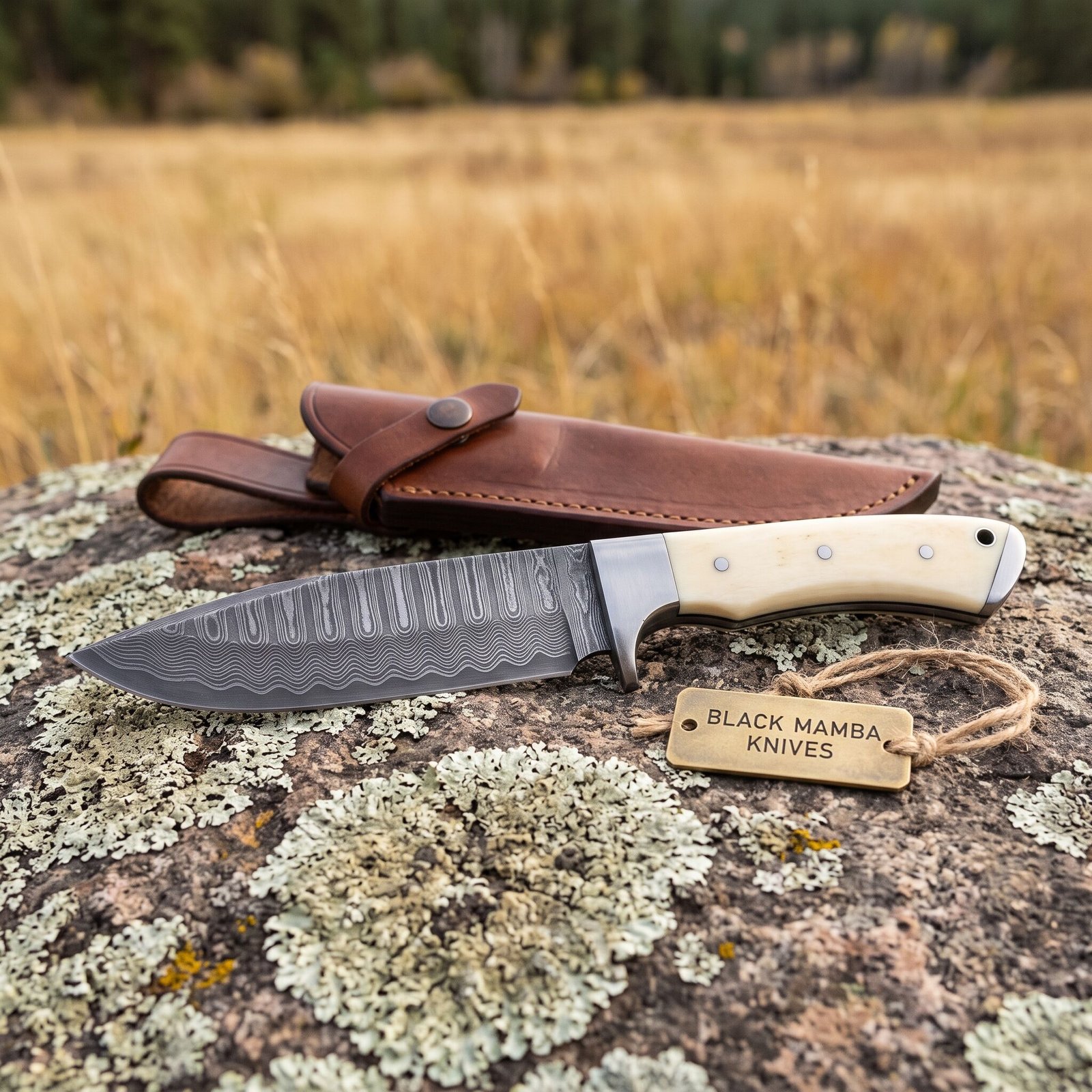
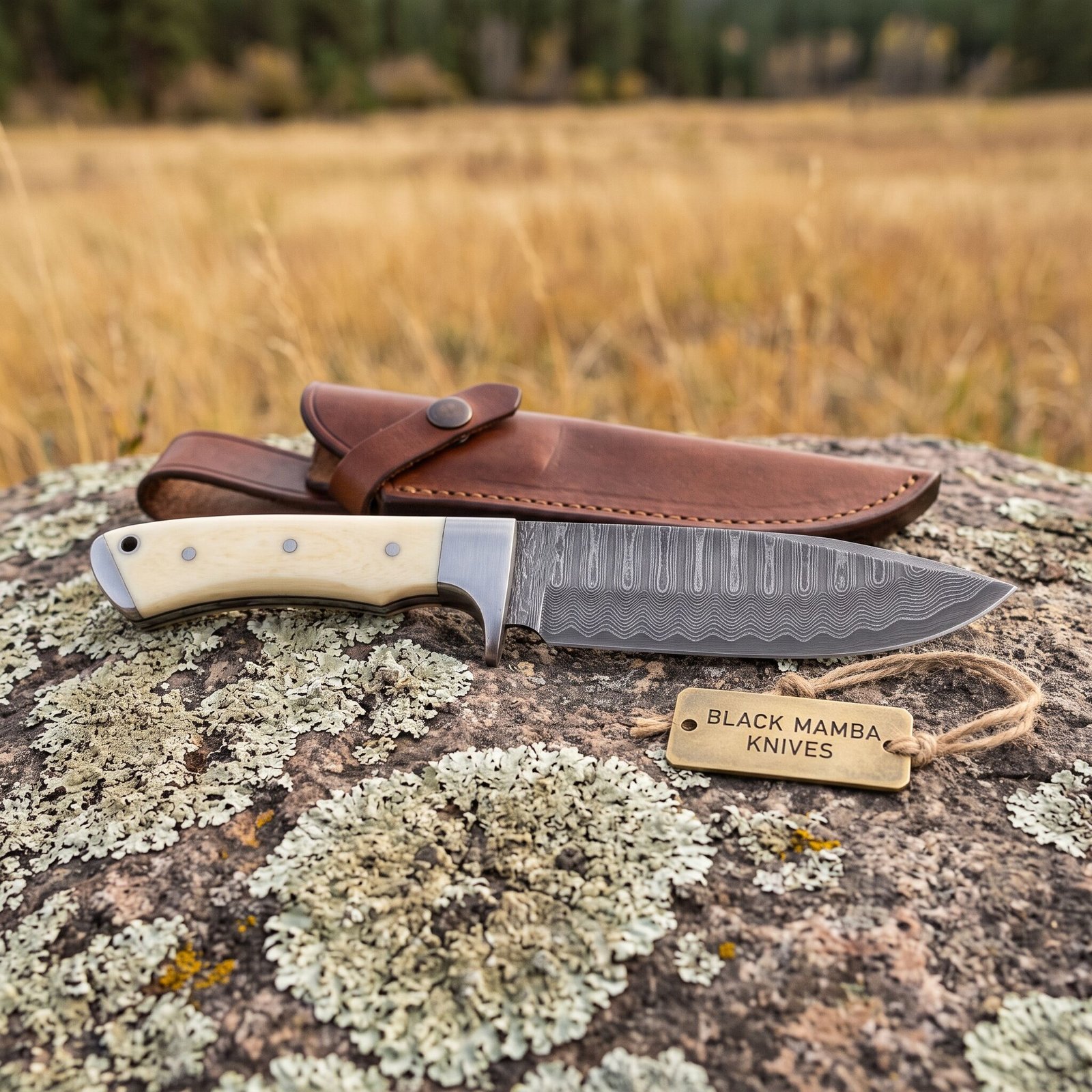
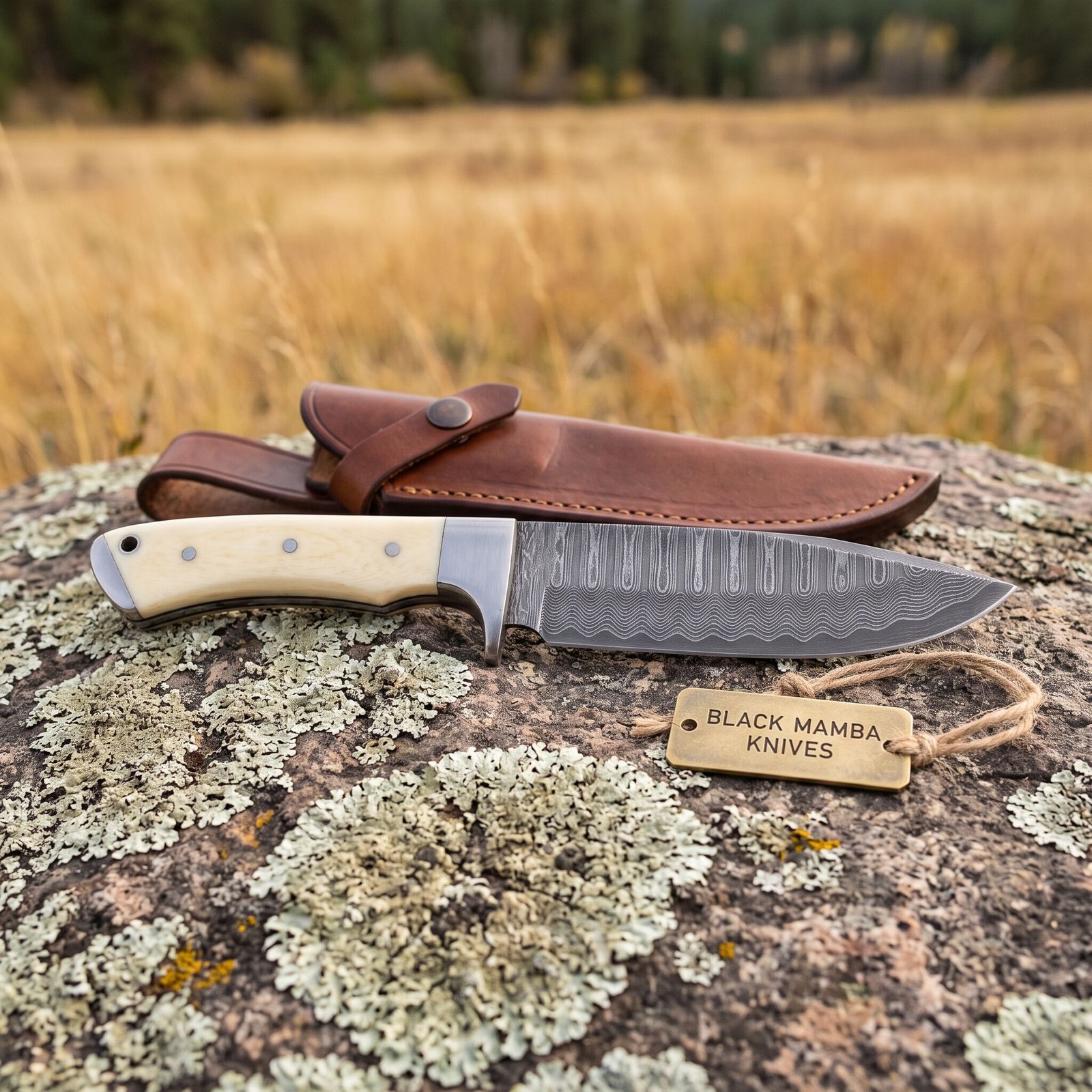
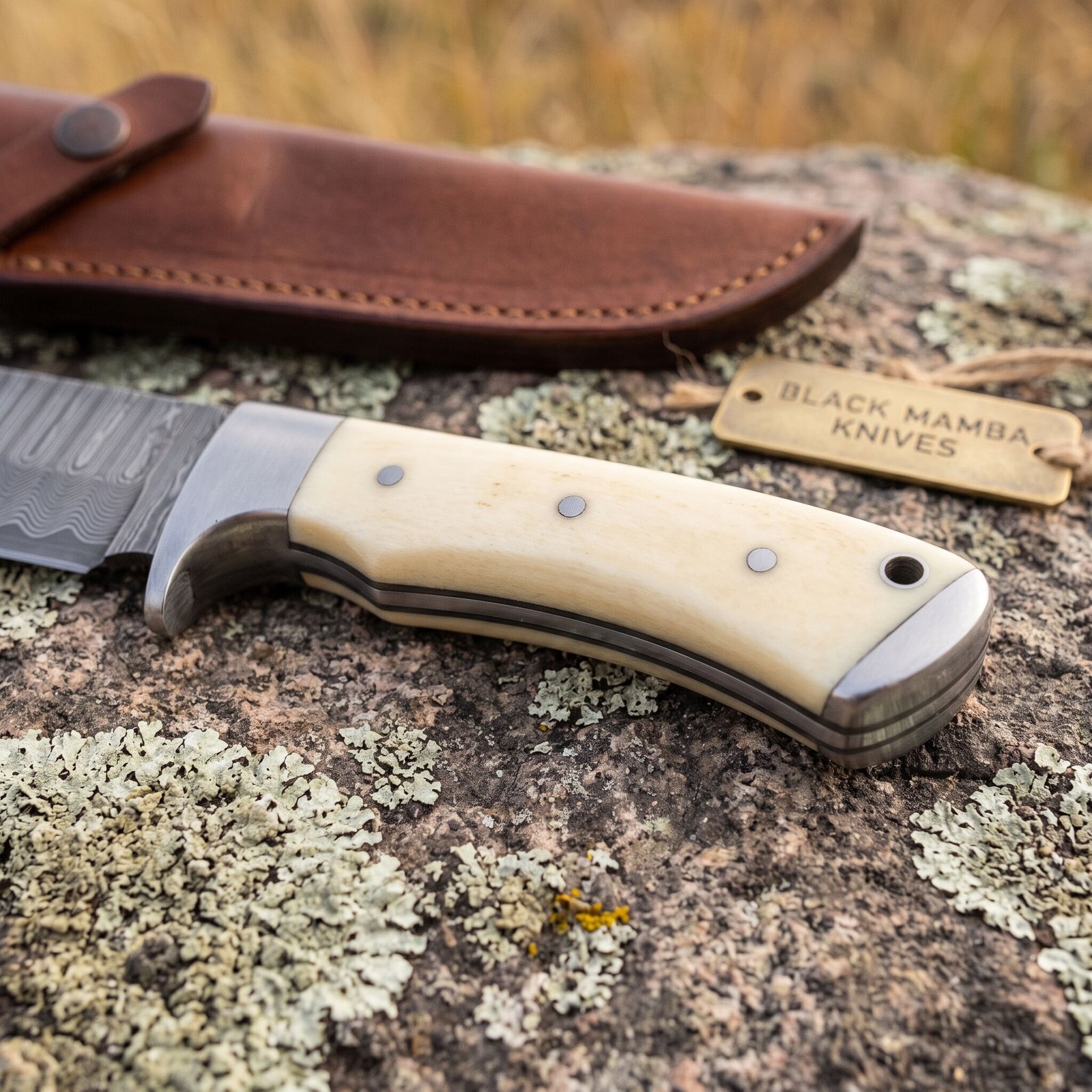
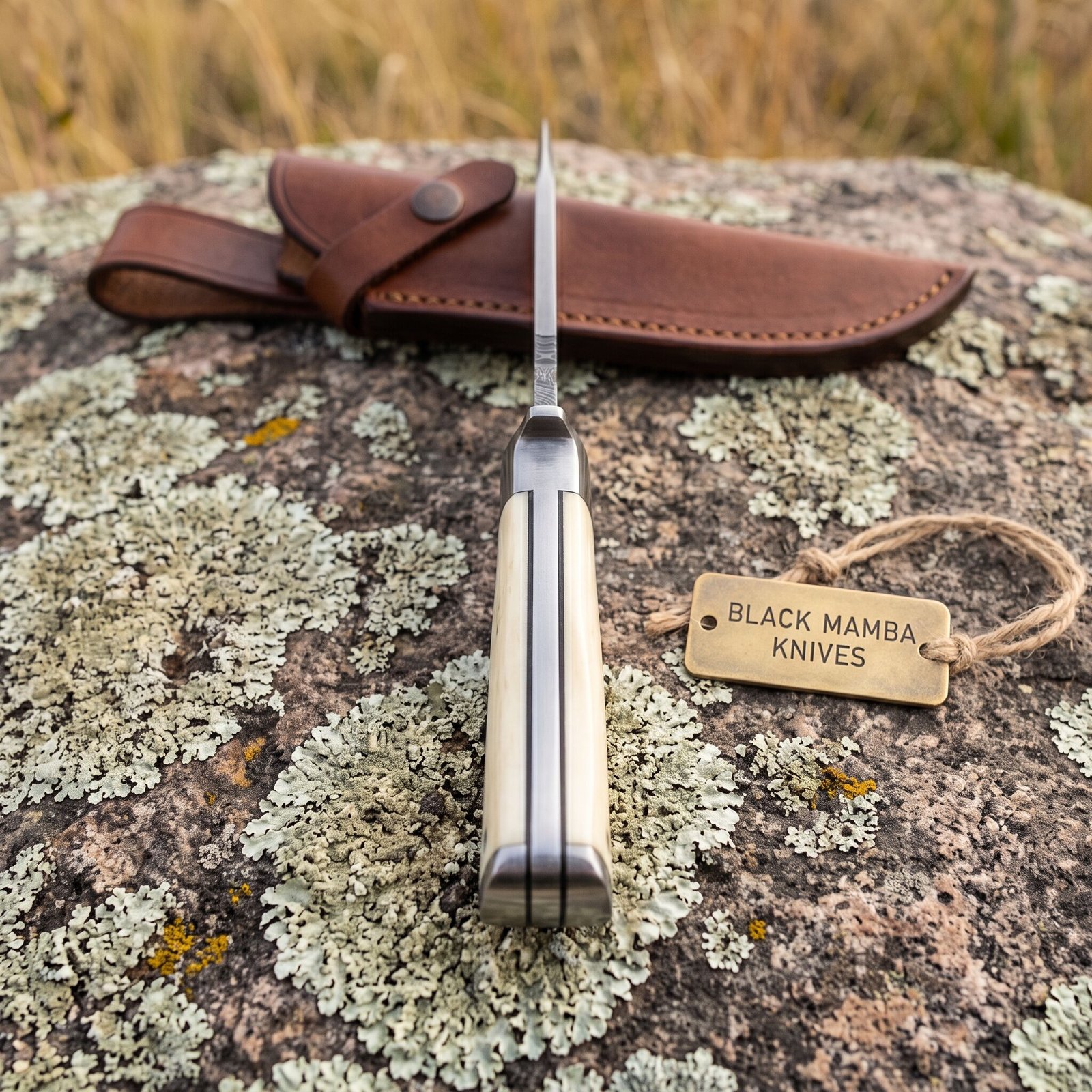
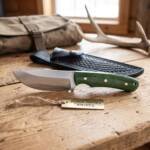
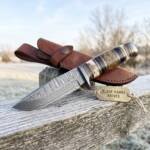
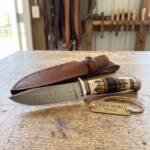
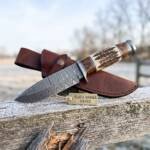
Six inches of blade on an eleven inch knife gives this one plenty of edge to work with. The Great White is built long and lean rather than thick and heavy, and at nine ounces it does not punish you for carrying it.
| Overall length | 11 inches |
| Blade length | 6 inches |
| Handle length | 5 inches |
| Knife type | Drop point fixed blade hunting knife |
| Steel | 1095 + 15N20 Damascus, 352 layers |
| Pattern | Layered Damascus pattern, forged and acid etched |
| Hardness | 58 to 60 HRC, oil tempered |
| Guard | Steel bolster and steel butt cap |
| Handle | Cream bone scales with three pins |
| Weight | 9 oz |
| Included | Hand stitched brown leather sheath |
Built for: big game work where you need reach inside a carcass, camp kitchen duty, and anyone who prefers a longer blade for the confidence it gives on a single pulling stroke.
The case for a long, light blade
Most knives this length weigh a good deal more. Keeping it at nine ounces means the balance sits near your hand instead of out at the tip, and the practical effect is that long cuts stay straight without effort. You get more edge in contact with what you are cutting, so you make fewer passes. The cost is chopping ability. There is not enough mass here to drive through wood, and swinging a thin blade at a branch is a good way to bend it.
Where it disappoints
It is awkward in a small pack, it does not fit a normal belt sheath comfortably under a jacket, and the length makes it a poor choice for anyone who mostly cuts small things. Detail work near the tip is fine; detail work near the handle means you have seven inches of sharp steel hanging past your knuckles. Newcomers to fixed blades are usually happier starting at four or five inches, and a compact Damascus skinner is the sensible alternative.
Care: a long thin blade in carbon steel has one real vulnerability, which is a bent tip from lateral force, and one nuisance, which is surface rust down the length of the flat. Support the blade when you cut, never twist it in a bind, and dry the whole thing including the tang shoulder where the guard meets the steel. A wipe of oil the length of the blade takes fifteen seconds and prevents nearly every problem owners report.
FAQs
What angle should I sharpen it to? Keep the factory bevel. A long blade needs stone technique more than it needs a new angle, and sharpening on a whetstone covers the stroke.
Is it a fighting knife or a hunting knife? It is shaped and ground for game and camp work. See the hunting knife comparison for how the length affects that.
Will the etch wear off the flat? Where your hand and the sheath rub it, gradually, yes. The pattern goes through the steel, so a re-etch brings it back.
Model: BMK-110
Isabella T. (verified owner) –
“This Damascus knife has added elegance to my culinary adventures. It’s sharp, well-balanced, and a pleasure to work with.”
Ethan W. (verified owner) –
“As a culinary enthusiast, I appreciate the beauty and performance of this Damascus knife. It’s a joy to use in the kitchen.”
Mia E. (verified owner) –
“I bought this Damascus knife as a gift, and the recipient couldn’t be happier. It’s both functional and a piece of art.”
Samuel P. (verified owner) –
“The Damascus knife I received is a game-changer in my kitchen. It’s incredibly sharp and versatile. A fantastic purchase!”
Cindy Hughes (verified owner) –
Ava J. (verified owner) –
“I purchased a Damascus knife for my son, who’s a budding chef. He’s impressed with its precision and performance.”
Emily H. (verified owner) –
“This Damascus knife is a kitchen masterpiece. It’s not only sharp but also beautifully crafted. A true work of culinary art!”
Emily H. (verified owner) –
“I’ve owned many knives, but this Damascus knife is a cut above the rest. It’s become an essential tool in my kitchen.”
Joseph Salomon (verified owner) –
Great knife and awesome craftsmanship
Shane Martinez –
Honestly one of my better purchases in a while. Blade geometry makes it glide through cuts with barely any effort. Couldn’t be happier with this.
Stephanie Clark –
Can’t stop showing this off to everyone who comes over. Handle has a great grip even with wet or gloved hands. Took it out camping right away and it handled everything I threw at it. Cool knowing this was handmade right in Memphis and shipped out fast. Beyond happy with how this turned out.
Amy Brooks –
Superb quality for the price point. Came in a nice gift box which made it feel even more special. Will definitely order again for another one.
Wayne Collins –
This knife has quickly become my favorite piece in the collection. Not my first order from Black Mamba Knives and it won’t be my last.