

Description
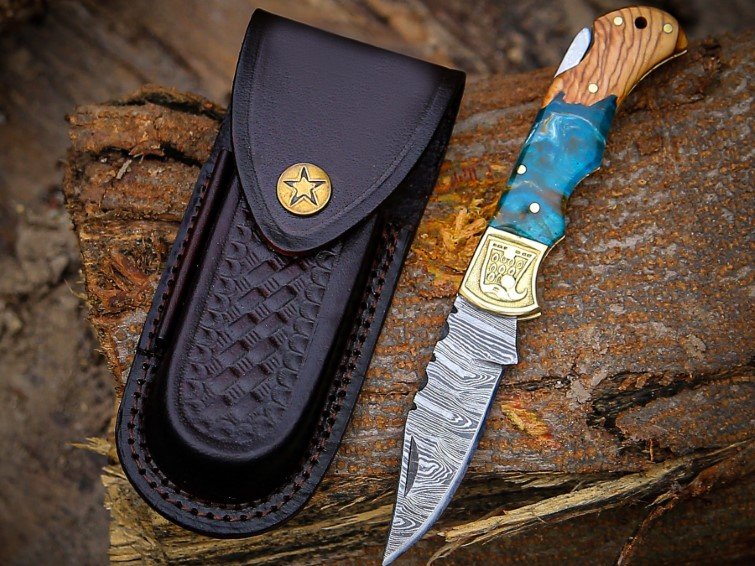
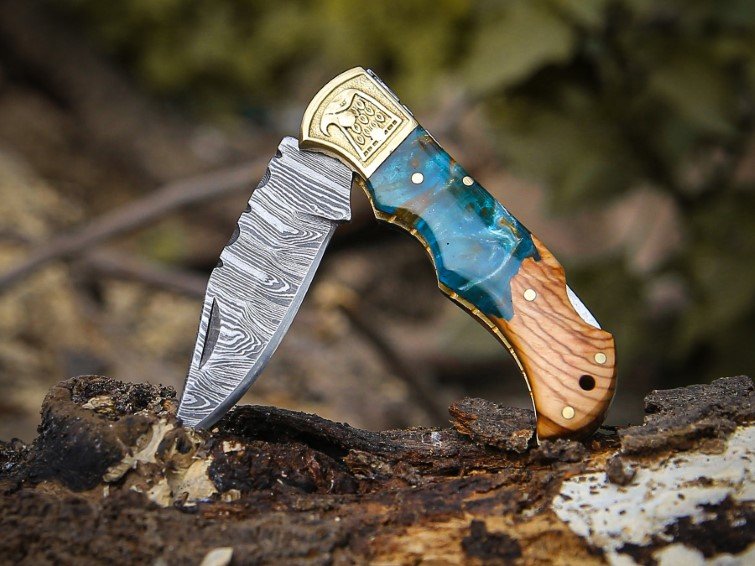
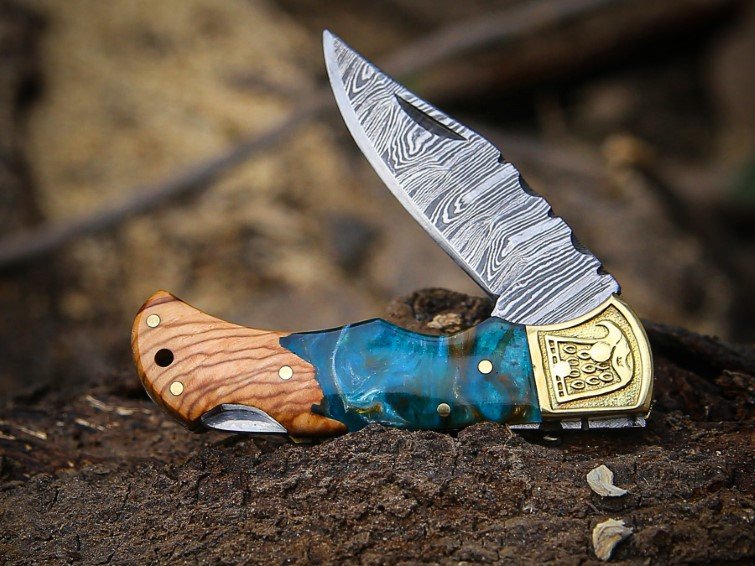
The Azure Fang is named for the handle, not the blade. Olive wood is cast into a stormy blue resin and cut so the two materials meet in an irregular tideline down the middle of the grip, which means the piece that ships to you is genuinely the only one of its shape. Behind it sits a hand-forged Damascus blade with filework along the spine and an engraved brass bolster carrying a small shield motif.
| Overall length | 7 inches |
| Blade length | 3 inches |
| Handle length | 4 inches |
| Handle | Olive wood cast in blue resin |
| Steel | 1095 + 15N20 Damascus |
| Hardness | 58–60 HRC, oil tempered |
| Included | Hand-stitched leather sheath |
A hybrid handle: olive wood set in resin
Olive wood is full of voids, reversing grain and bark inclusions. That is what makes it beautiful and what makes it structurally unreliable on its own. Casting it into resin fills the voids and locks the grain, which is the entire reason hybrid scales exist. What you end up holding is a handle where the wood figure appears to float in a translucent field, and no two blanks cut from one block look alike. It is also genuinely waterproof in a way an oiled wood scale is not, so there is no swelling, no checking and nothing to re-oil.
The brass bolster will change
Hand-engraved brass is the one material on this knife that refuses to stay as it arrives. Skin oils and air darken it toward a warm brown, and the recesses of the engraving go dark first, which is exactly what makes engraved brass legible from across a room after a year of carry. If you want it bright, a soft cloth and a little metal polish bring it back in under a minute. Most owners stop bothering after the first few months.
Proportions
Four inches of handle behind a three-inch blade is a generous ratio, weighted toward grip rather than edge, which suits controlled work and larger hands. Pocket grit eventually finds the pivot, and a proper pivot flush restores the action without taking anything apart. The blade is high-carbon Damascus, so the standard carbon-steel routine applies here as it does to our fixed blades. For a comparable handle built around dyed abalone instead of olive, see the abalone resin folding knife.
Detail work on the blade
Look along the spine and you will find hand-cut filework, a row of small scallops that catch light and give a thumb somewhere positive to sit. There is a thumb notch at the ricasso and a shallow fuller pushed into the flat. None of that is stamped. It is done one cut at a time with a file and a graver, which is where the hours in a knife at this price actually go, and it is the reason two of these placed side by side never match perfectly.
Grind and edge
The bevel is ground thin, taken to a fine finish and stropped before it leaves the bench, so it will shave paper out of the box. Pattern-welded steel of this kind sharpens easily on almost any stone you own, which is the quiet advantage of simple high-carbon layers over a modern powder alloy. Re-etching is possible years down the line if you ever wear the contrast off, and we will do it for you.
Sheath, carry and origin
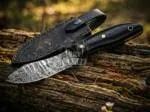
A dark brown leather belt pouch with a basketweave stamp and a brass snap comes in the box, deep enough that the knife will not walk out of it while you are moving. There is a lanyard hole through the butt of the handle. Everything from the forge welding to the last pass on the strop happens at our Memphis shop, and it is guaranteed for as long as you own it against faults in how we built it.
Model: BMK-897
Reviews
There are no reviews yet.