
Description
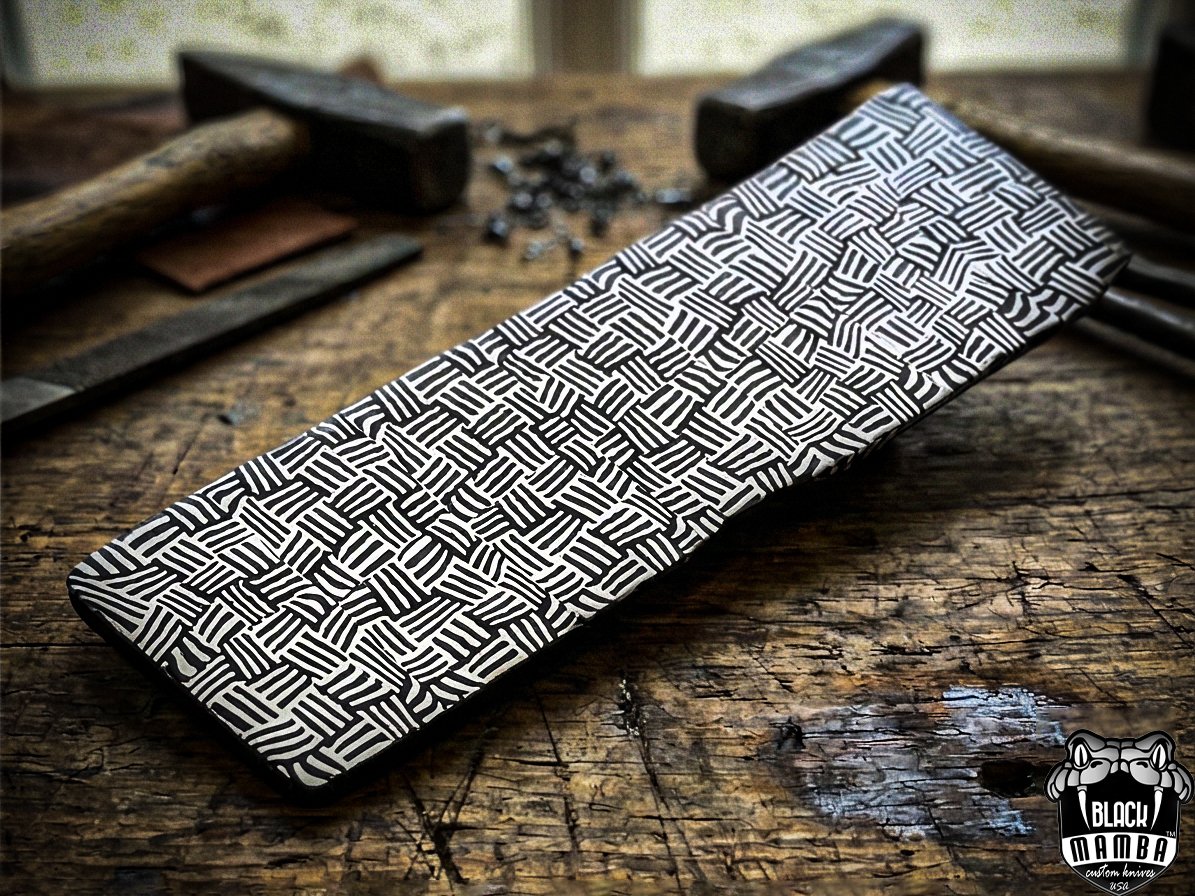
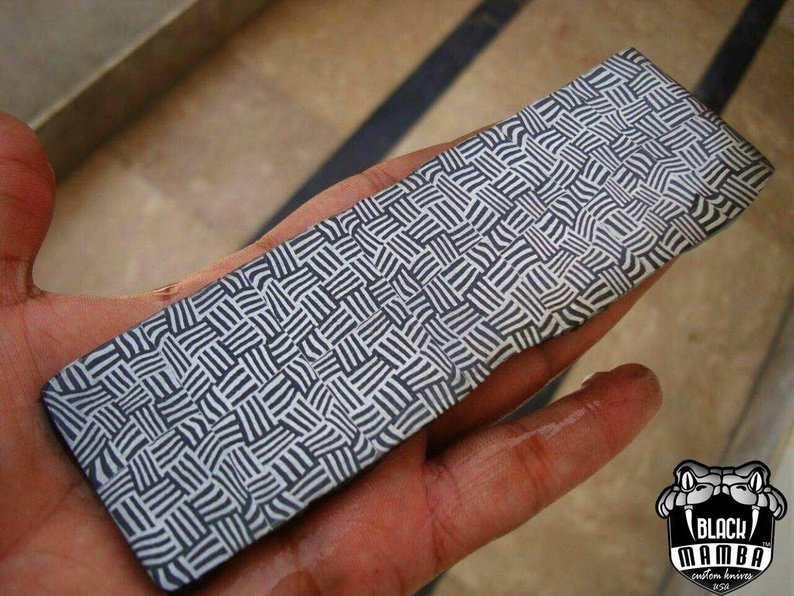
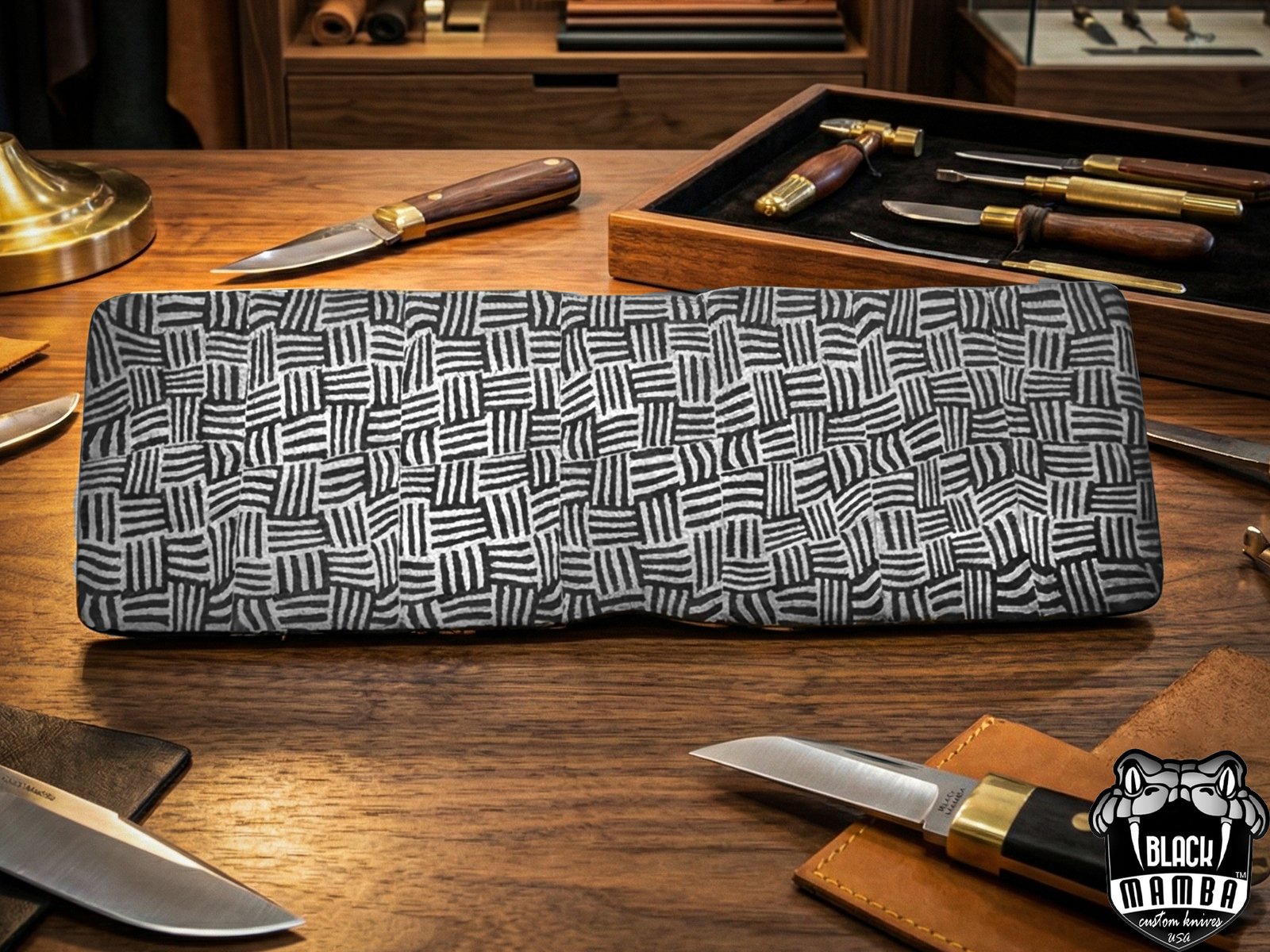
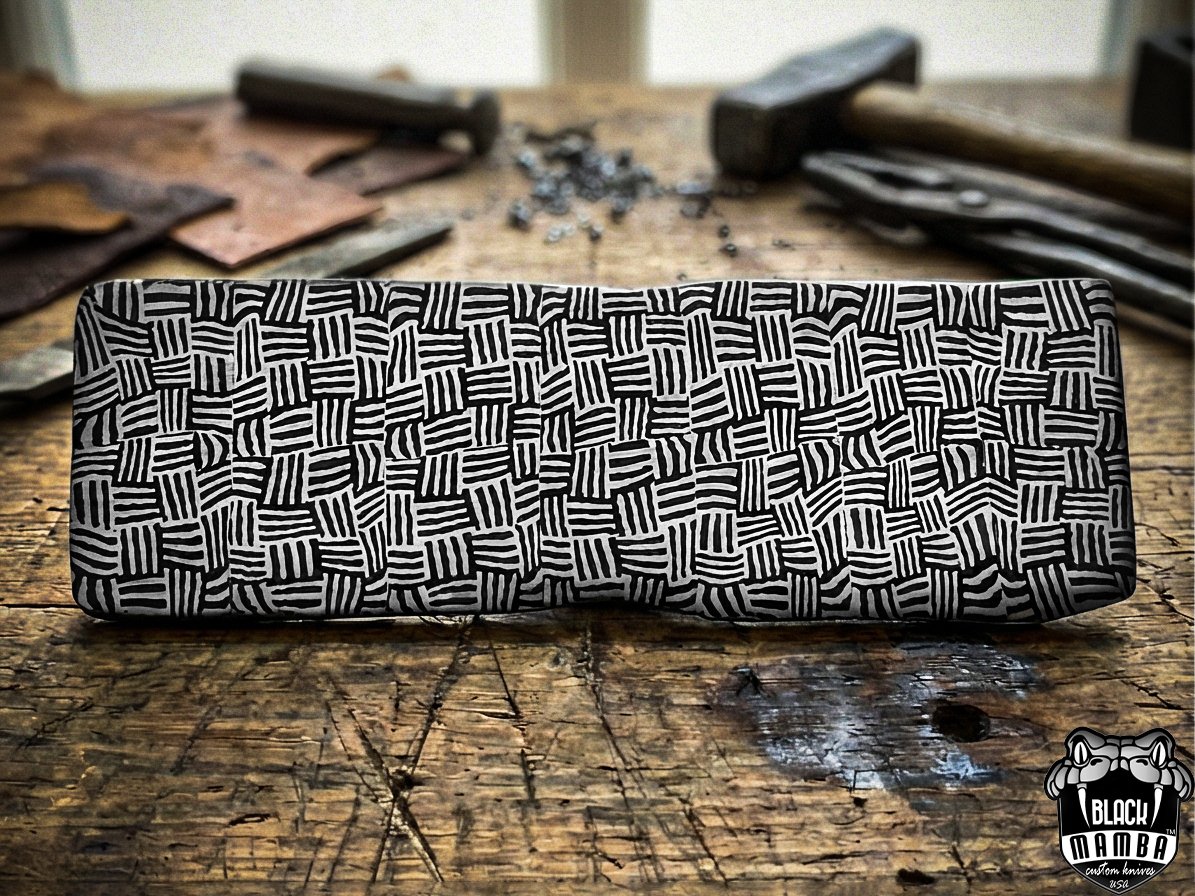
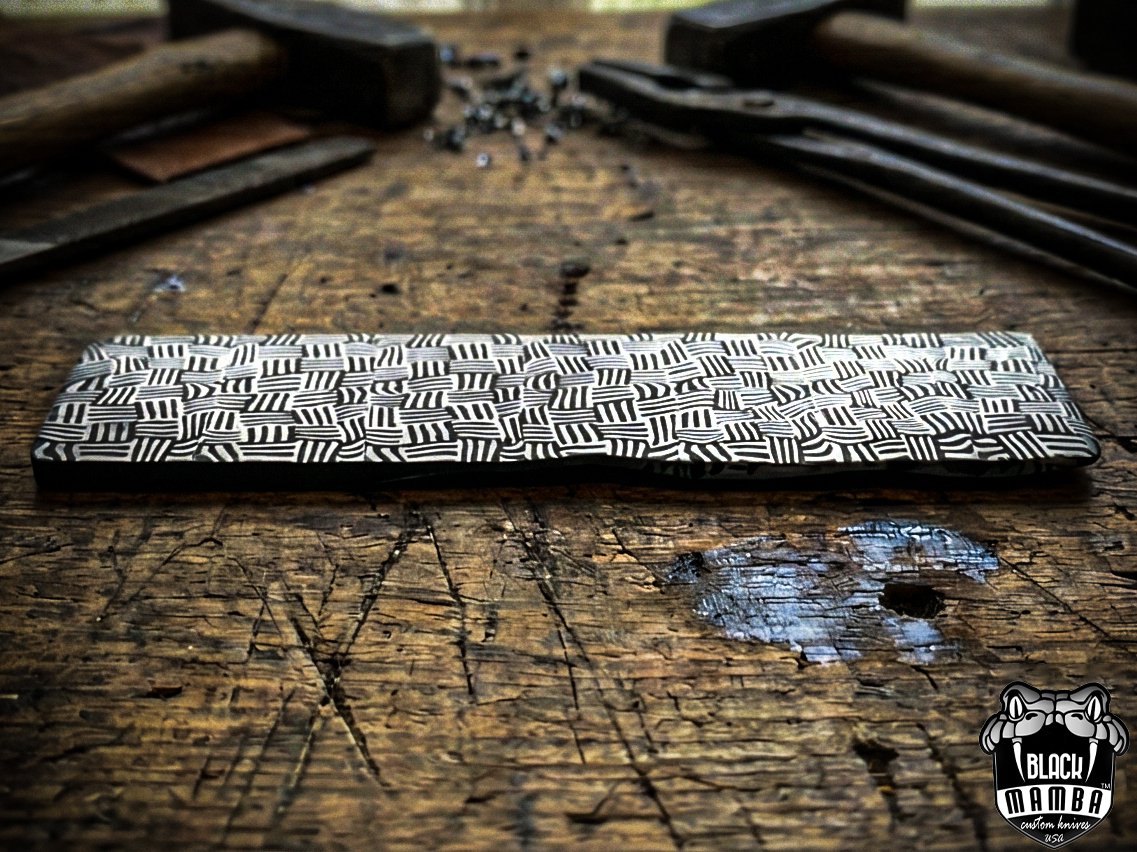
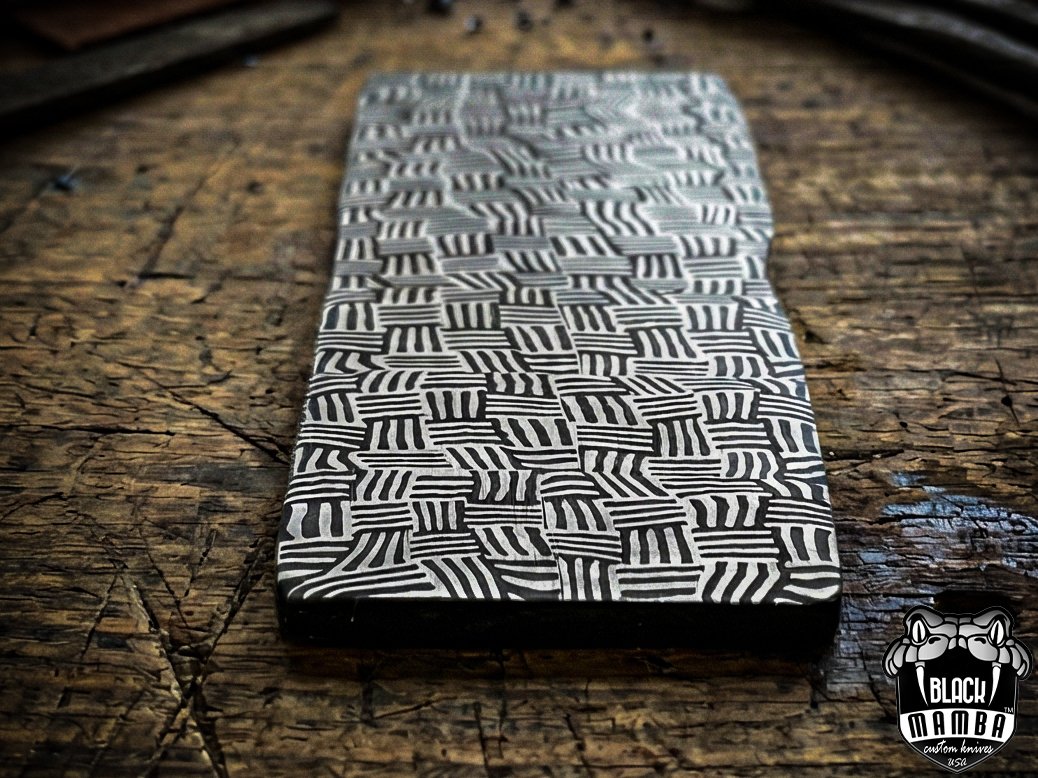
This is stock, not a finished knife. You get one bar of mosaic-pattern Damascus, twelve inches long, an inch and a half wide and five millimeters thick, already forge-welded and ready for you to cut, grind and heat treat yourself.
| Overall length | 12 inches |
| Steel | 1095 + 15N20 Damascus, 352 layers |
| Hardness | 58–60 HRC, oil tempered |
| Included | Hand-stitched leather sheath |
Built for: smiths and knifemakers who want to skip the billet stage and begin at profiling. Anyone working by stock removal can go straight to the bandsaw. Anyone with a forge can draw it out, taper it, or fold it further for a tighter pattern. It is also a sensible first Damascus project, because the expensive and temperamental part, getting a clean weld across hundreds of layers, has already been done for you.
What you can realistically get out of it
At this section, the bar has enough material for one full-tang hunter of roughly seven or eight inches overall, or two small neck-knife blanks, or a folder blade with plenty spare for a bolster set. It is too thin for a chopper and too narrow for a wide-bellied skinner unless you forge it out first. Plan your layout before cutting; there is no second bar carrying the same pattern.
The pattern is the risk
Mosaic patterning is directional. Where you place a grind decides what surfaces after etching, and a bevel taken deeper on one side than the other will show up as an asymmetric design. Grind conservatively, etch a test corner in dilute ferric chloride before committing, and remember that the layers run through the full thickness. You cannot polish the pattern off, but you can certainly grind past the part of it you liked. How Damascus steel is made explains what is happening inside the bar.
Heat treatment is on you
The bar arrives soft enough to work. The hardness figure quoted above is what this steel combination reaches when treated properly, not a condition the bar ships in. Normalize before hardening, quench fast in warm oil, and temper to your target without leaving it overnight. Skip the normalizing step and expect warp.
Storage before you use it
Bare high-carbon stock rusts on a shelf faster than a finished blade does, because there is no etch, no oil film and a great deal of exposed surface. Oil the bar when it arrives, and keep it off concrete floors and out of unheated garages. Surface rust is not fatal, since it grinds away, but deep pitting between the layers will show in your finished etch.
FAQs
Is this the same steel you use in your own knives? Yes, the identical combination and layer count that goes into blades such as the BMK-131 Damascus bowie.
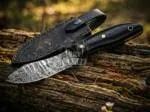
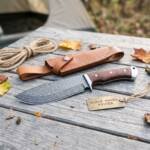
Will my bar look like the photograph? The family of pattern will match. The exact arrangement will not, because that is decided at the anvil.
Do I need a forge to use it? Not if you work by stock removal. Yes, if you intend to alter the profile or the thickness.
Model: BMK-804A
Michael Lewis –
This knife completely won me over the moment I picked it up. Blade holds a razor edge right out of the box. Even the small details in the damascus pattern are crisp and clean. Every piece I’ve gotten from Black Mamba Knives has been solid. 10/10 would buy again.
Gregory Richardson –
No regrets on this purchase at all. Fit and finish is museum quality. You can tell real craftsmen made this by hand. Already thinking about what to order next from this seller. I keep coming back to Black Mamba Knives because it’s always this good.
Anthony Foster –
Feels way more premium than the price suggests. Leather sheath is thick and well stitched. Not the cheap stuff you usually get. Handle has a great grip even with wet or gloved hands. Even the small details in the damascus pattern are crisp and clean. This maker clearly takes pride in their work.
Jennifer Myers –
Ordered late at night on a whim and woke up glad I did. Every piece of the fit and finish looks hand checked before it shipped. Nice to support a Memphis based knife maker, shipping was fast even internationally. Edge retention has been great even after regular use in the field. This is why Black Mamba Knives is my go to for anything knife related. Blade holds a razor edge right out of the box. Would send this as a gift again in a heartbeat.
Kenneth Morgan –
No regrets on this purchase at all. Even the small details in the damascus pattern are crisp and clean. Black Mamba Knives has earned a repeat customer with this one. Edge retention has been great even after regular use in the field. Blade holds a razor edge right out of the box. Zero complaints from me on this purchase.
Diego Ruiz –
Wasn’t expecting to be this impressed but here we are. Already added a few more items from this seller to my cart.
Rebecca Flores –
Didn’t think a knife at this price could feel this premium. Fit and finish is museum quality. You can tell real craftsmen made this by hand. If you’re on the fence just get it. You won’t regret it.