
Description
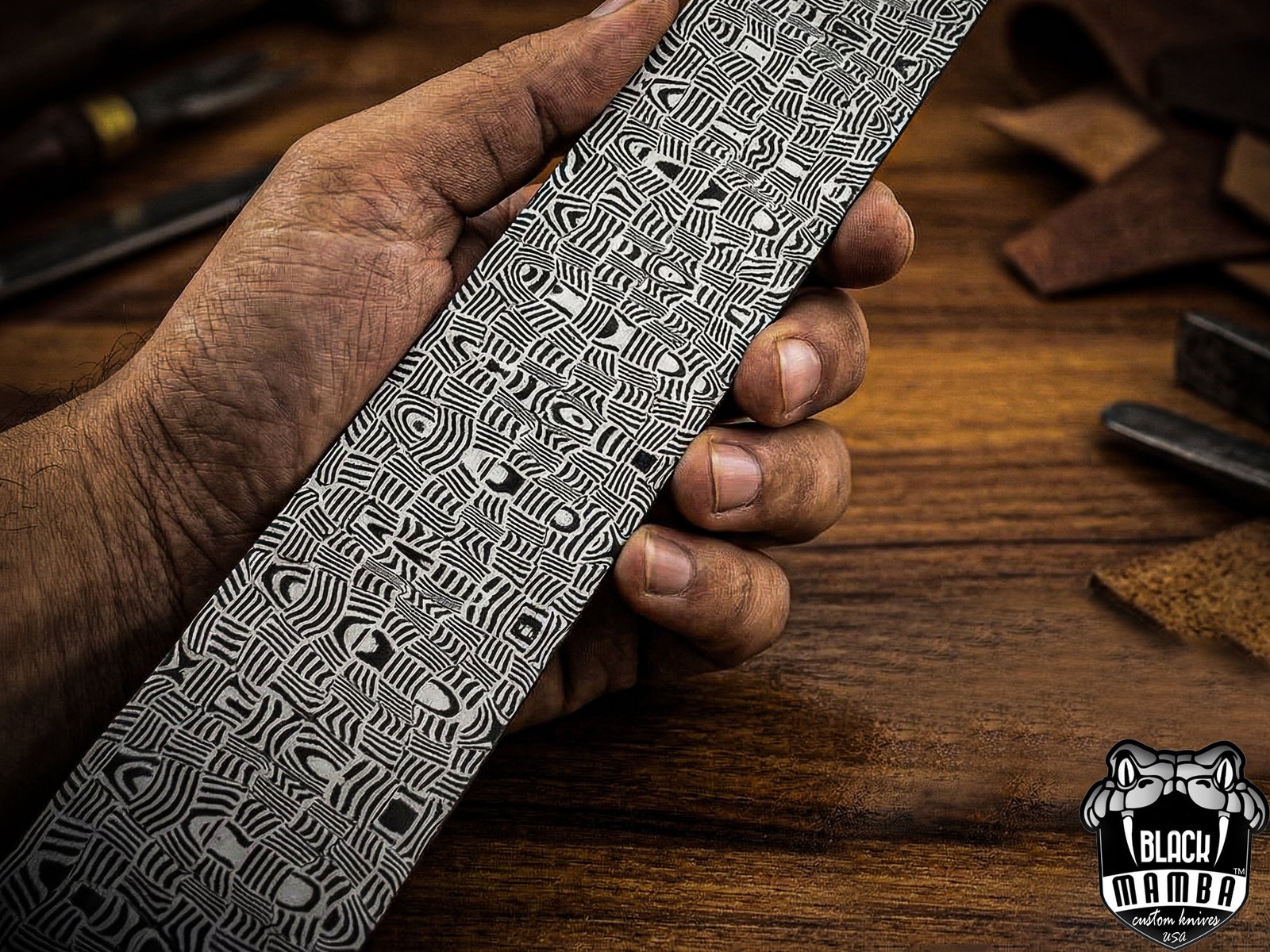
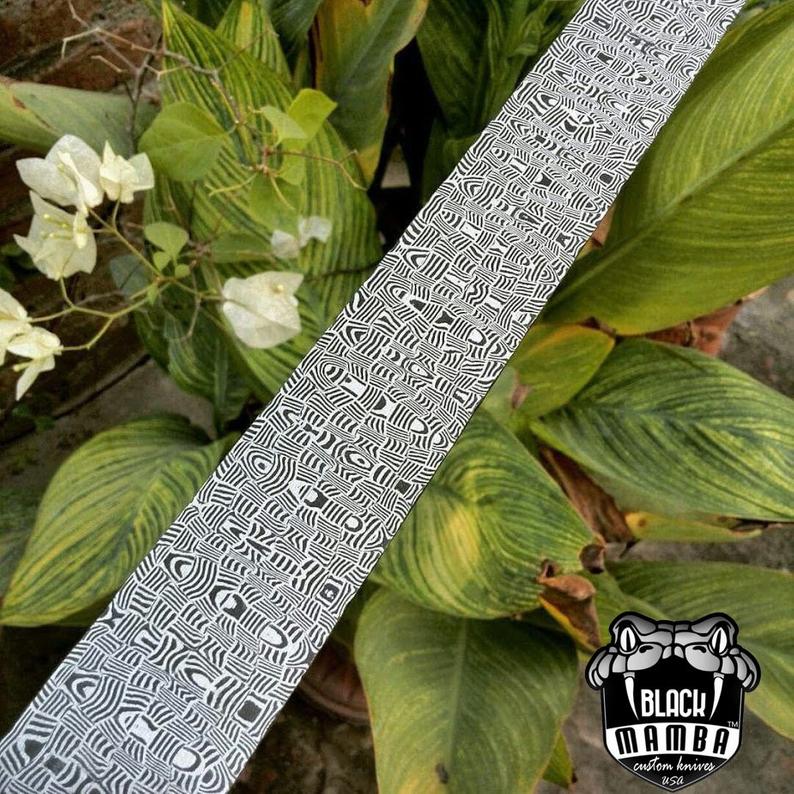
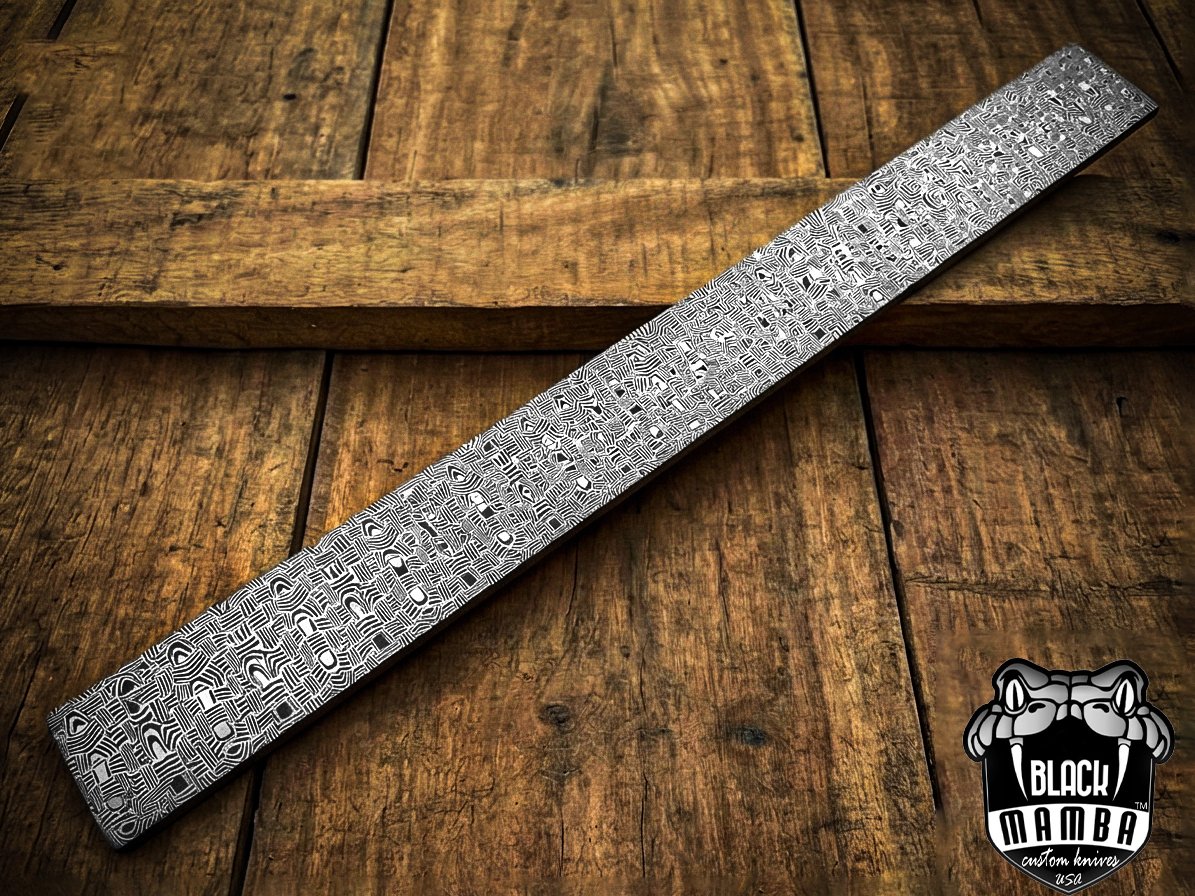
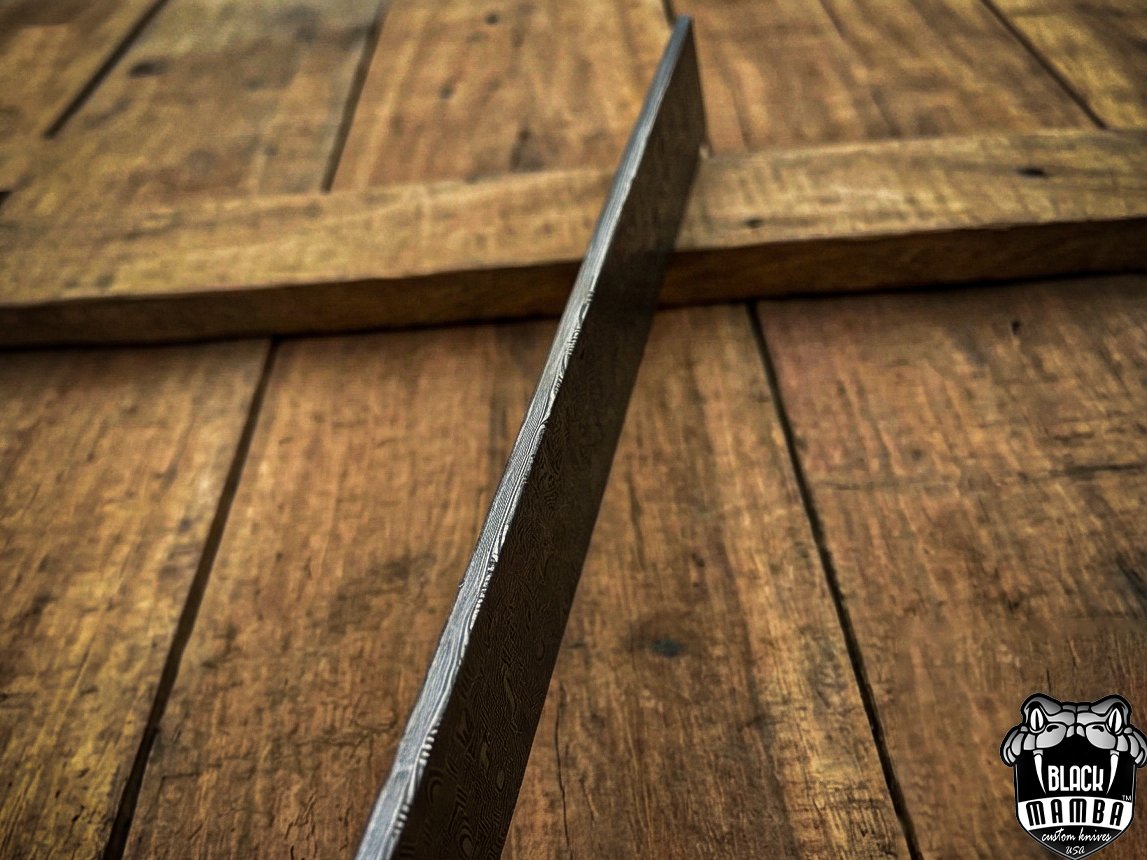
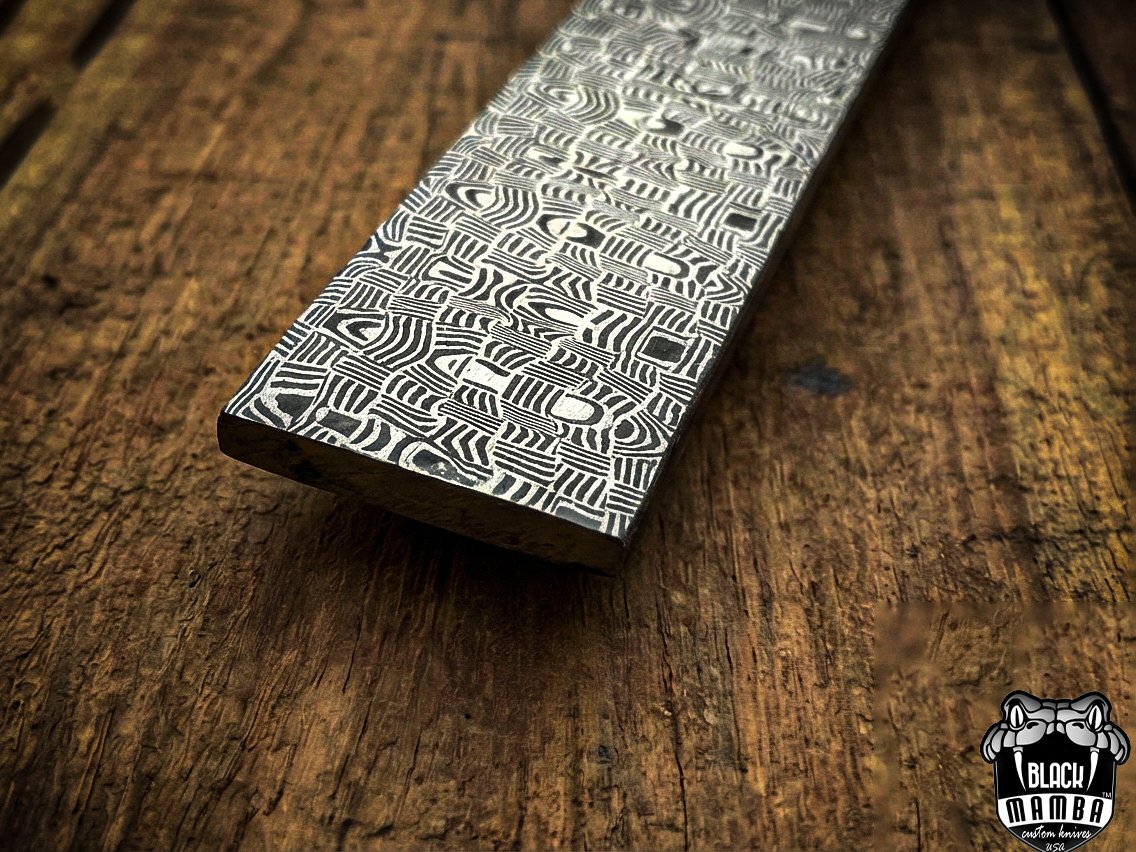
This is stock, not a finished knife. Twelve inches of mosaic Damascus bar, already forge-welded, already etched, waiting for somebody with a forge and a grinder to decide what it becomes.
| Overall length | 12 inches |
| Steel | 1095 + 15N20 Damascus, 352 layers |
| Hardness | 58–60 HRC, oil tempered |
| Included | Hand-stitched leather sheath |
Who this is for: bladesmiths, hobbyist forgers and jewelers who want a mosaic pattern they did not have to weld up themselves. Buying billet skips the part of the process that ruins most beginners — stacking, sealing and setting a clean weld without delamination — and lets you spend your time on grinding and heat treat instead.
What actually arrives
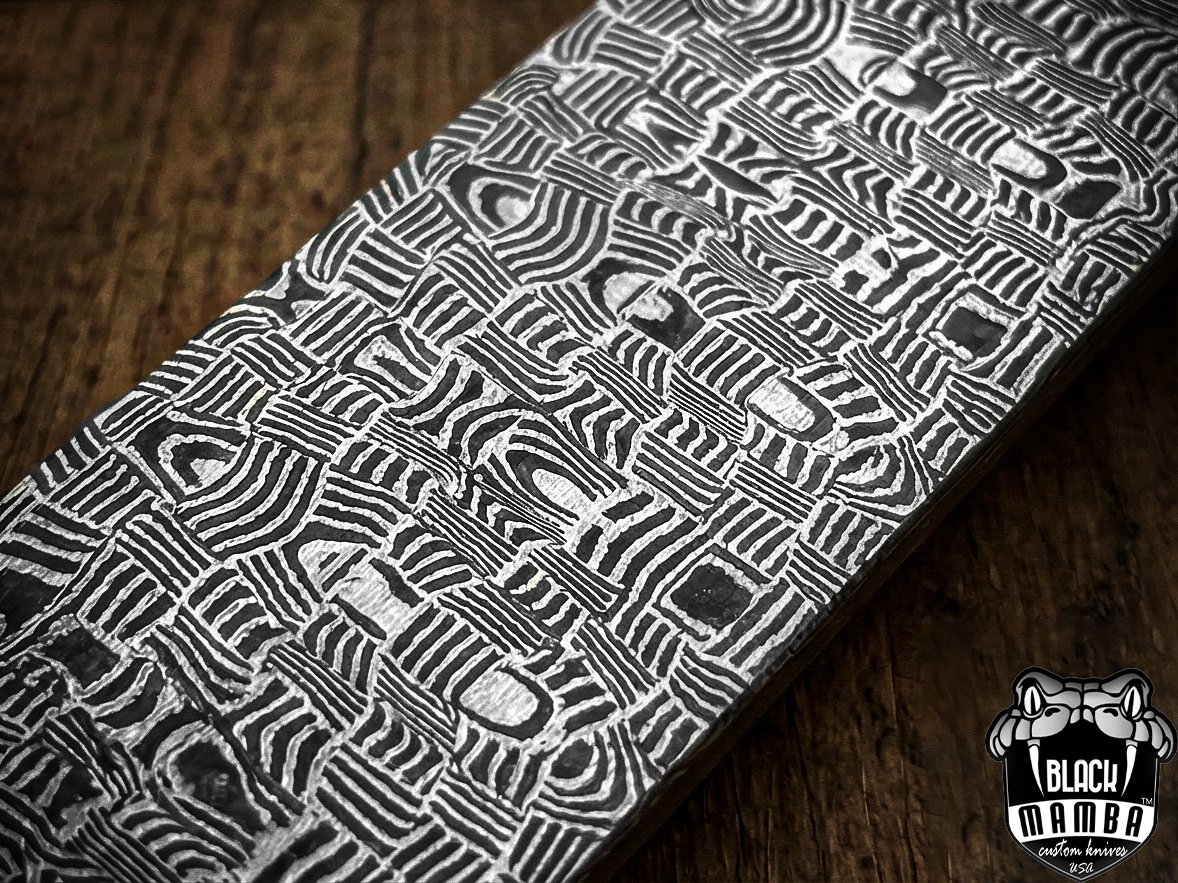
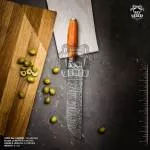
One bar, 12 inches long and 5 mm thick, etched so the pattern is visible on the faces. The etch is there so you can see what you bought and plan your layout. It is not a finish. You will grind through it the moment you start shaping, and you will re-etch at the end to bring the pattern back up.
The mosaic pattern and how to lay it out
This is a mosaic billet, meaning the pattern repeats as discrete tiled motifs across the bar rather than flowing as continuous bands. That changes how you plan a piece. On a flowing pattern you can start your layout anywhere. On a mosaic you want to place the tang and the spine so the motifs land where they will still be visible after grinding, because a distal taper eats pattern from the tip and a deep bevel eats it from the edge. Chalk the outline on the etched face before you cut, and cut a little proud of your line.
What you can get out of 12 inches
At this length and thickness a single bar comfortably yields one full-size fixed blade of six or seven inches, or two smaller neck knives or paring blades, or a set of bolsters and guards with enough left for a ring blank. At 5 mm you are already close to finished spine thickness for a hunting knife, so there is little forging down required if you would rather stock-remove the whole thing.
Care before you work it: keep the bar dry and lightly oiled in storage, because bare etched carbon steel freckles in a humid shop inside a week, and pitting below your finish grind is pattern you do not get back. Store it flat, not leaning, and keep it off concrete floors, which sweat. Wipe the oil off with acetone before you weld, forge or heat treat it.
Questions from smiths
Can I forge it, or is it stock removal only? Either. It forges normally at welding and forging heat. Keep your heat even across the bar so the layers move together, and avoid soaking it long at high heat, which will blur the pattern boundaries you paid for.
Do I need to re-etch after grinding? Yes. Finish your grind, take it to your final grit, then etch in dilute ferric chloride and neutralize. The pattern comes back sharper than it arrived.
Is the pattern all the way through? Yes, it is pattern-welded through the full 5 mm, not a surface treatment. Our guide on how Damascus steel is made covers the forge-welding sequence, what 352 layers actually means explains the count, and checking a pattern is genuine shows what to look for before you buy billet anywhere.
Model: BMK-804B
Sophia Rivera –
This knife has already earned a permanent spot in my collection. Blade geometry makes it glide through cuts with barely any effort. This is going straight into my daily rotation.
Kevin Bishop –
This is exactly what I wanted and then some. Handle feels amazing and the balance is perfect. This is my new favorite in the collection.
Christine Mitchell –
This company clearly knows what they’re doing with quality like this. Every piece I’ve gotten from Black Mamba Knives has been solid. Shipping was fast and everything arrived well packaged. Good to know real Memphis craftsmen are behind this, and shipping was quick too.
Joseph Sanders –
Genuinely super impressed with how this turned out. Sheath snaps shut securely and doesn’t feel flimsy at all. If you’re on the fence just get it. You won’t regret it.