
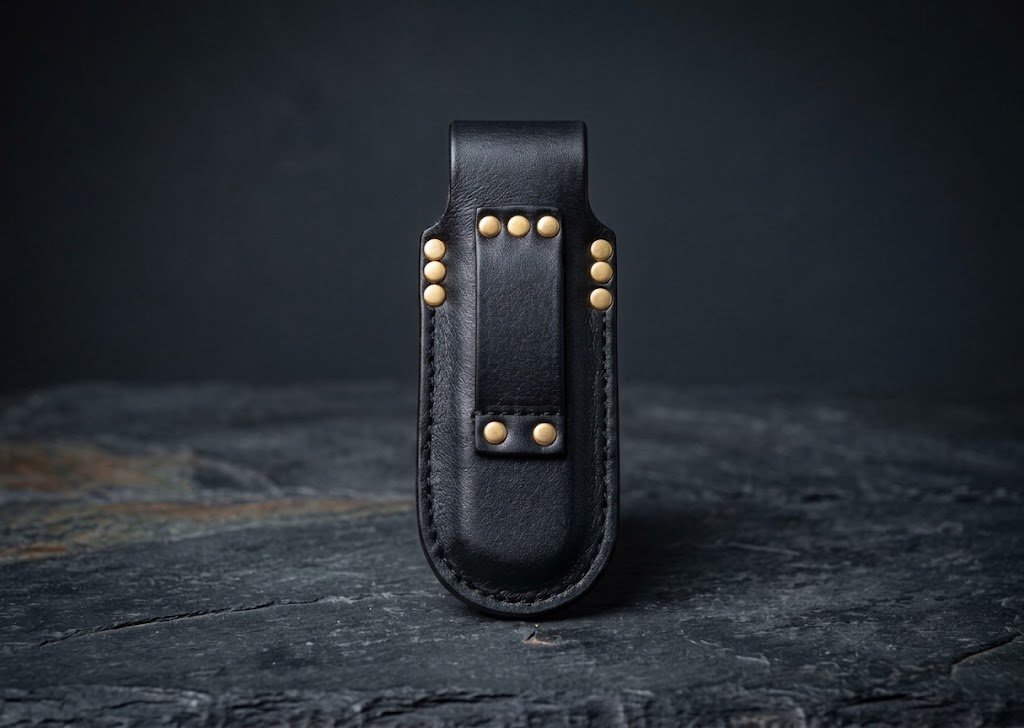
Description
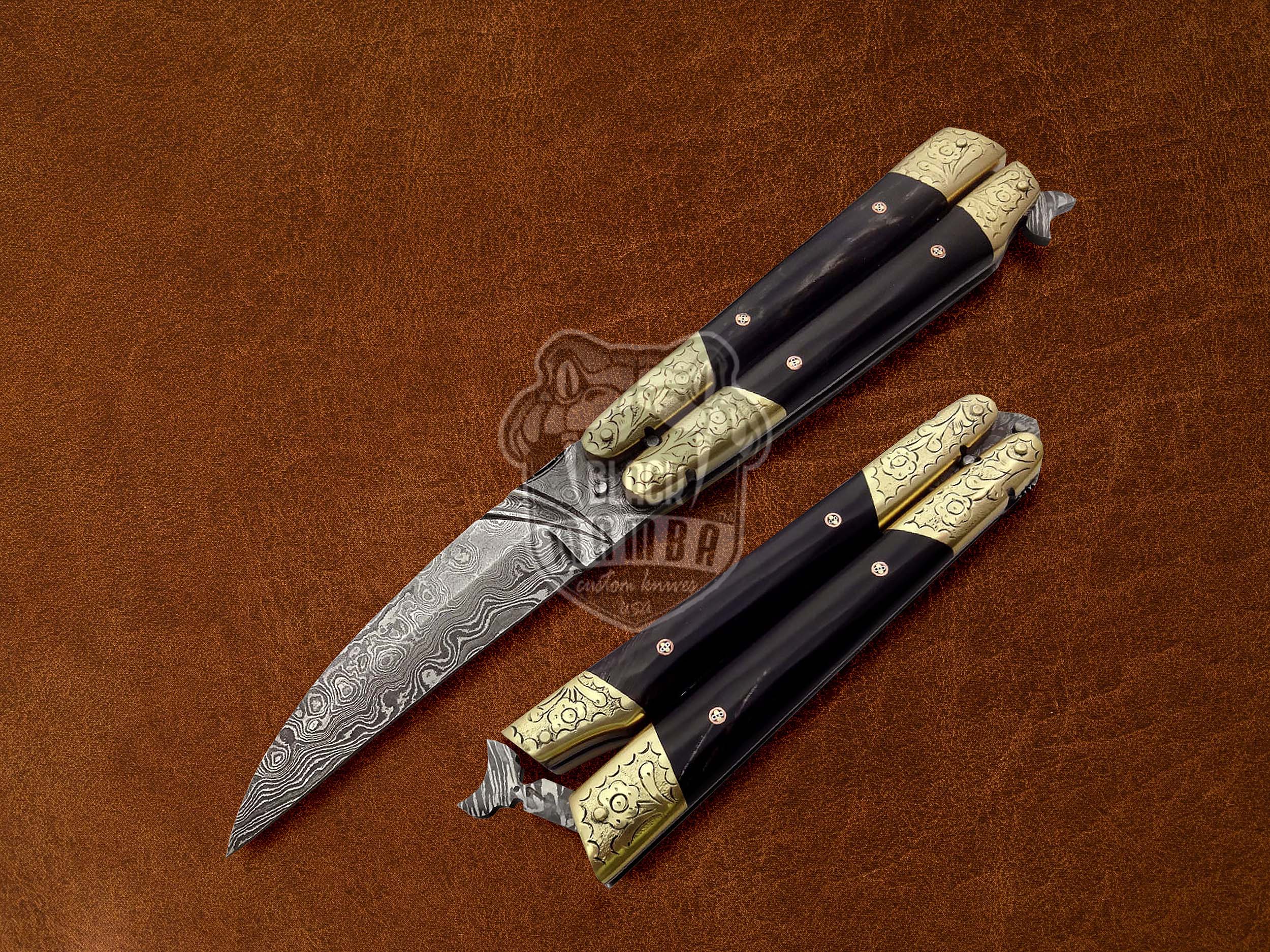
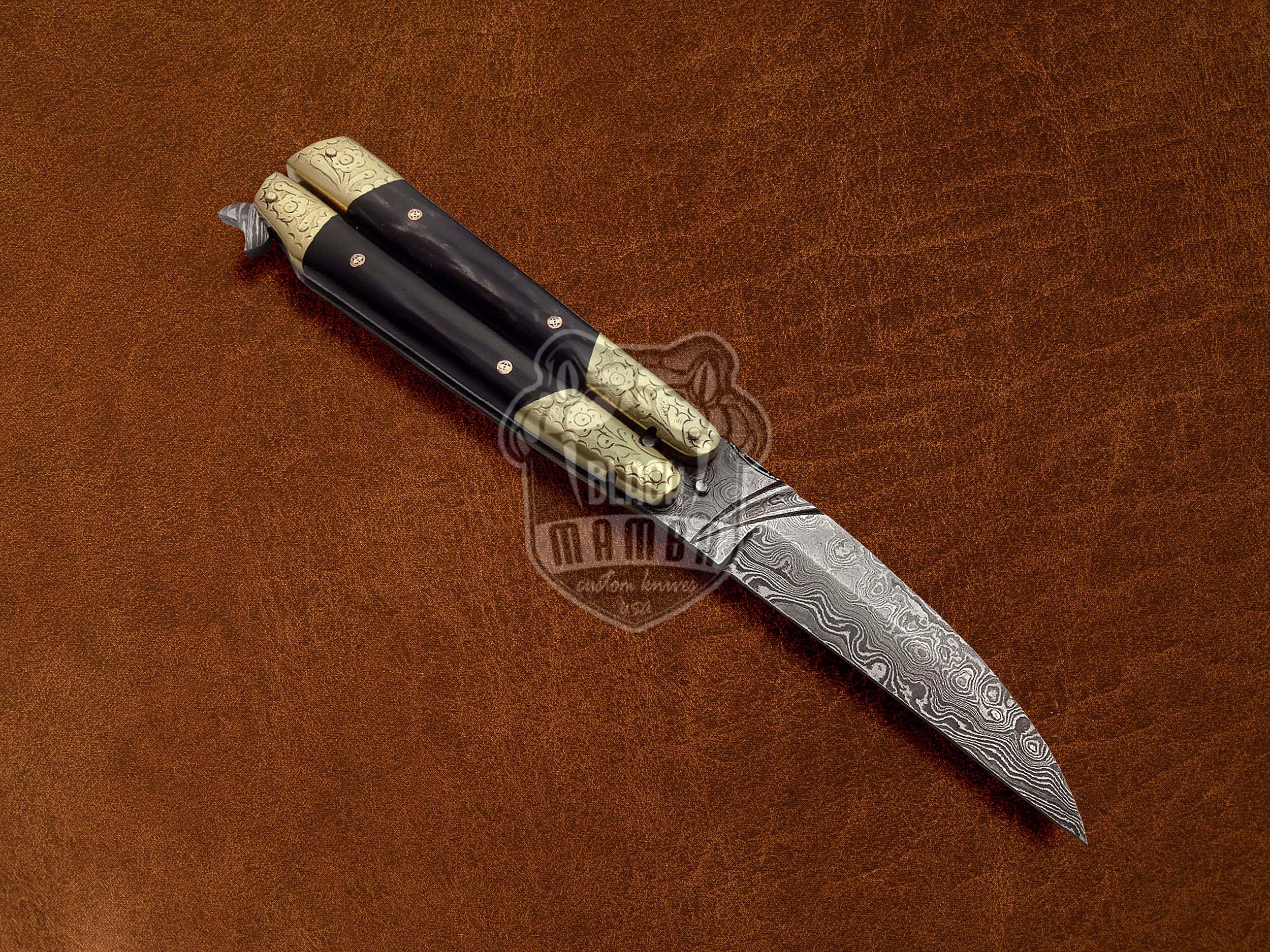
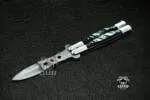
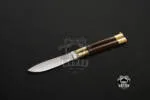
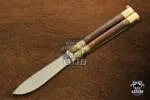
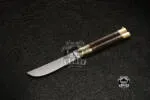
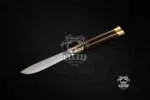
Water buffalo horn against hand-engraved brass, on an eight-inch traditional Filipino frame with a forge-welded blade. The BMK-2009 is built for someone who wants ornament on the metal and a natural material where the hand actually sits, and it is one of the more durable knives in our Ultra Line for exactly that reason. Made in Memphis.
| Overall length | 8 inches |
| Blade length | 3.5 inches |
| Handle length | 4.5 inches |
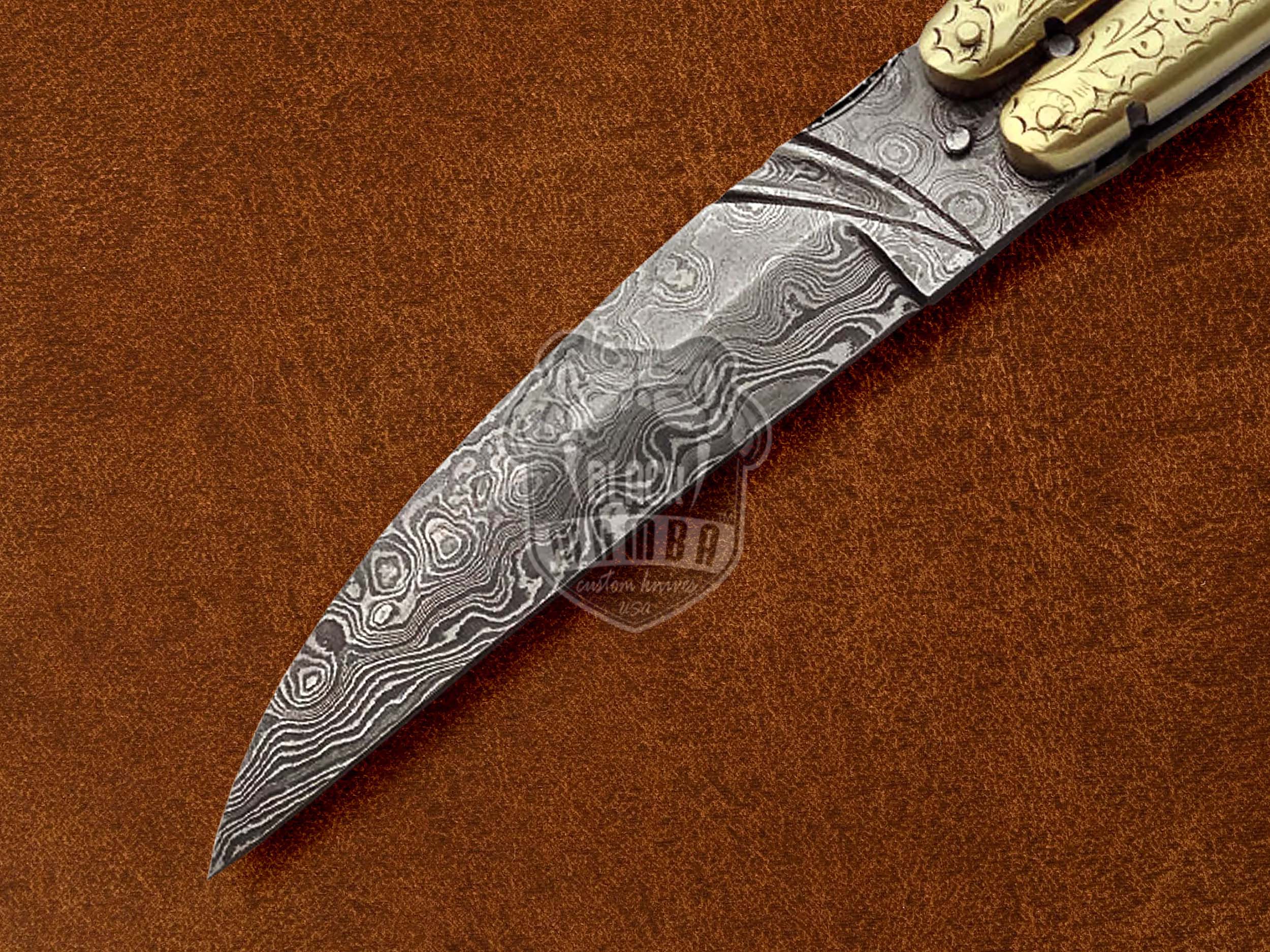
| Steel | 1095 + 15N20 Damascus, 352 layers |
| Hardness | 58–60 HRC, oil tempered |
| Weight | 7.23 oz |
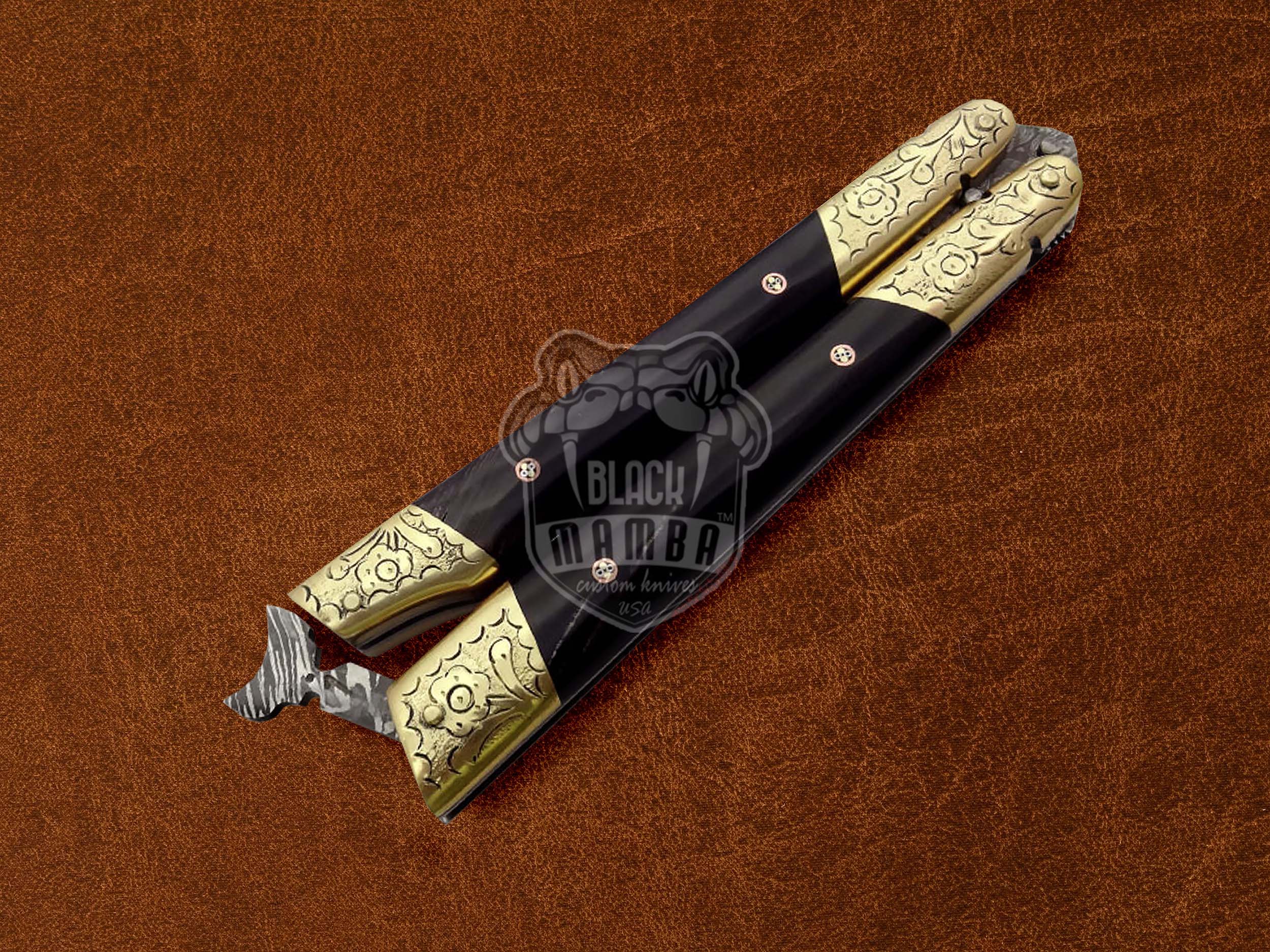
| Handle | Brass And Buffalo Horn Handle |
Buffalo horn is not one color
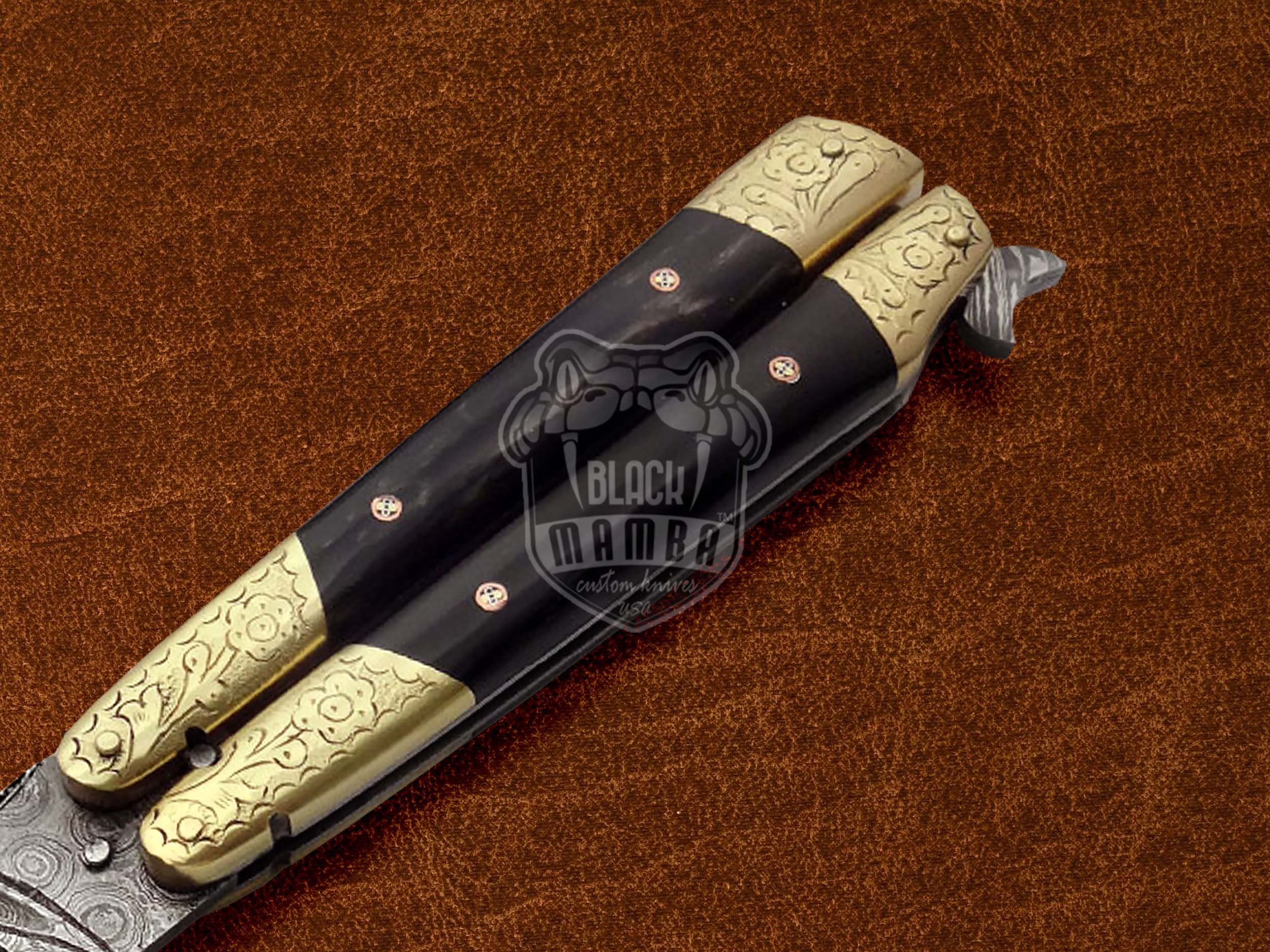
Water buffalo horn reaches the bench as a curved sheath. It has to be split, flattened under heat, and cut into panels. Because the raw horn is thick at the base and translucent near the tip, panels taken from different parts of the same horn look nothing alike: some are solid gunmetal gray-black, some carry amber windows you only notice with a light behind them. We do not sort for uniformity, so your pair may be matched or may not be.
Heat is the enemy, not water
That flattening step explains everything about how horn behaves afterwards. The material has been persuaded out of its natural curve, and enough heat will persuade it back. Car interiors, radiators, and a sunny windowsill in August are the three ways owners cup a horn panel. Water is barely a threat by comparison, so wipe it and move on. Somewhere with a stable room temperature is all this handle asks, and it will then outlast you.
How the engraving and the horn divide the work
The brass carries every cut of ornament and the horn carries none. That is deliberate. Engraved horn goes muddy, because the material has no reflectivity down inside a cut, so the scroll is placed where it can catch light. It also puts the harder material out at the ends of the handles, which is where a balisong actually lands when it gets dropped.
Against bone, against stainless
Horn dents and springs back a little; camel bone in this same series chips and stays chipped. If your flipping happens over a tiled floor, horn is the more forgiving material. For the same horn at a third of the price, on a plainer stainless frame, see the carabao horn insert build.
Blade, grind and heat treat
The billet is 1095 alternated with 15N20, forge welded and drawn out on our own anvil, ground to a flat bevel with a belly toward the point, then hardened in oil and tempered back to the high fifties. The acid etch afterwards is what makes the two alloys read as light and dark bands. This is not a stainless blade and it does not behave like one: dry it, keep a thin film of oil on the flats, and never leave it shut away damp.
How it swings, and where it is made
At 7.23 ounces on an eight-inch frame the mass sits back in the handles, so rotations are steady rather than quick and the knife settles firmly at the end of a roll. That is a forgiving character for controlled flipping and a slow one for anything airborne. Everything from the forge weld to the last stroke of the graver happens under one roof in Tennessee, and it ships protected with a lifetime warranty. Check your local ownership rules before you order.
Model: BMK-2009
Want a different handle or blade? Browse all of our balisong knives for sale.
Michaela S. (verified owner) –
“I’m very happy with my purchase from this website. The knife I received is beautifully made and is a standout piece in my collection.”
Natalie P. (verified owner) –
“I recently added a knife from here to my collection, and it’s quickly become a favorite. The craftsmanship is top-notch, and it’s a joy to use.”
Daniel C. (verified owner) –
“I’m thoroughly impressed with the knife I purchased. The attention to detail is incredible, and it’s a unique addition to my knife collection.”