
Description
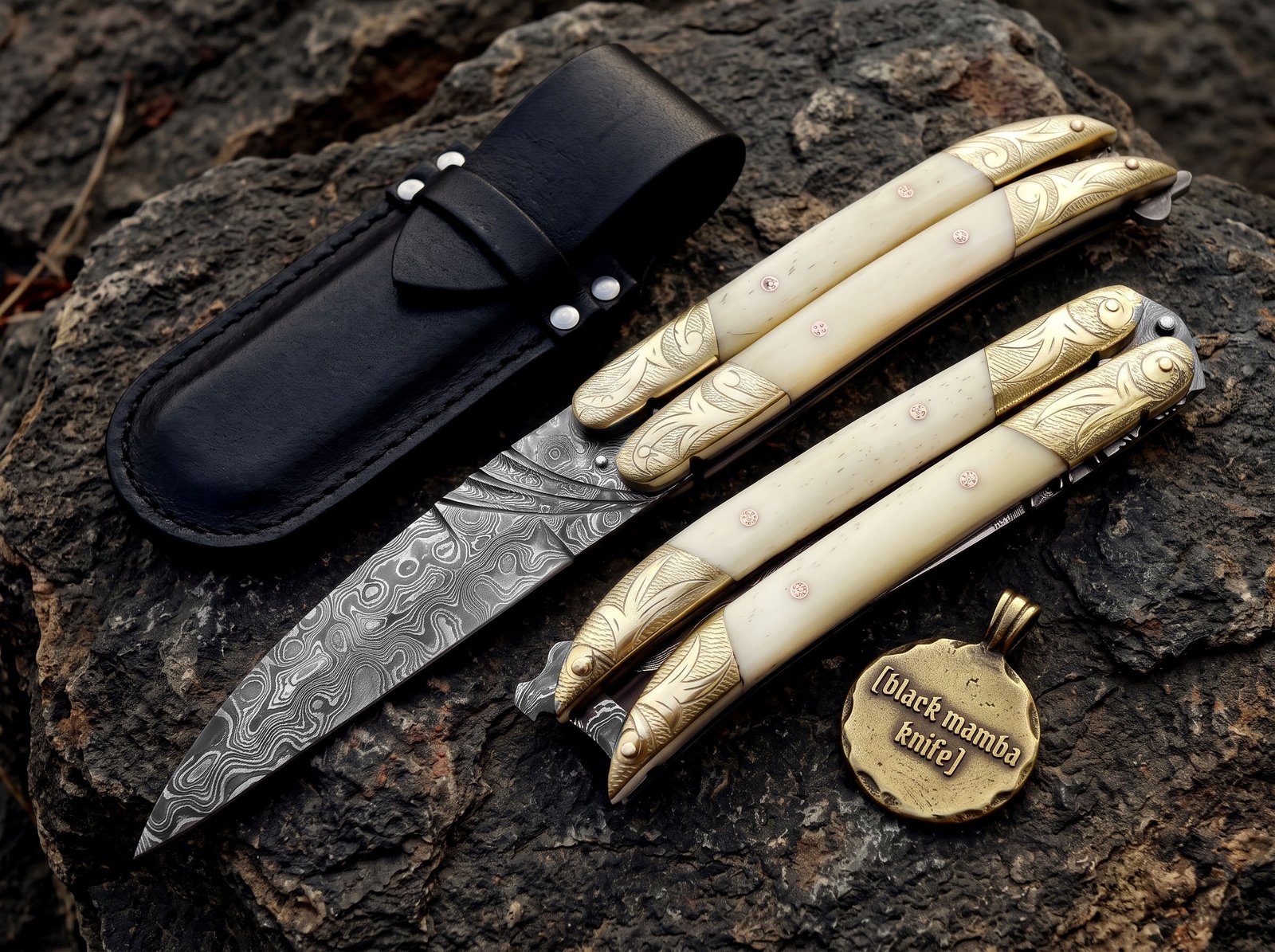
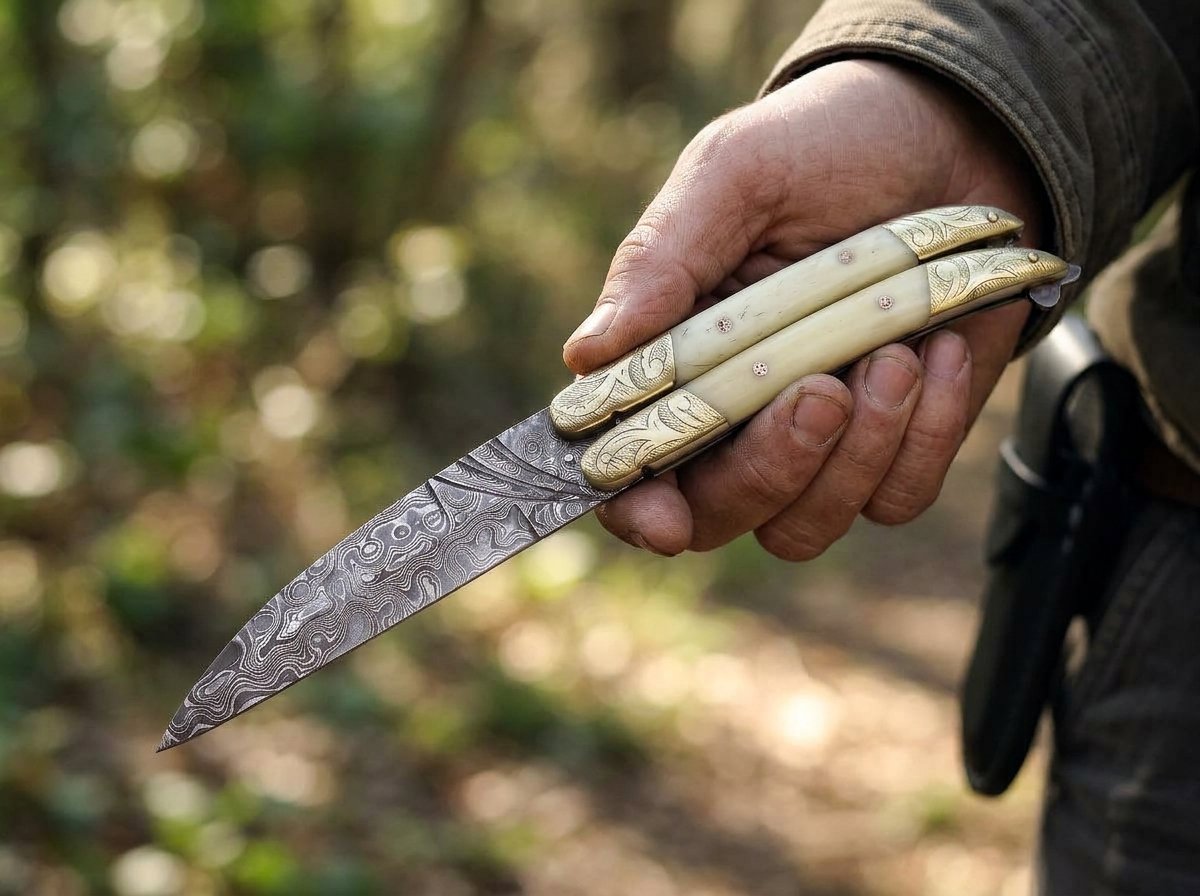
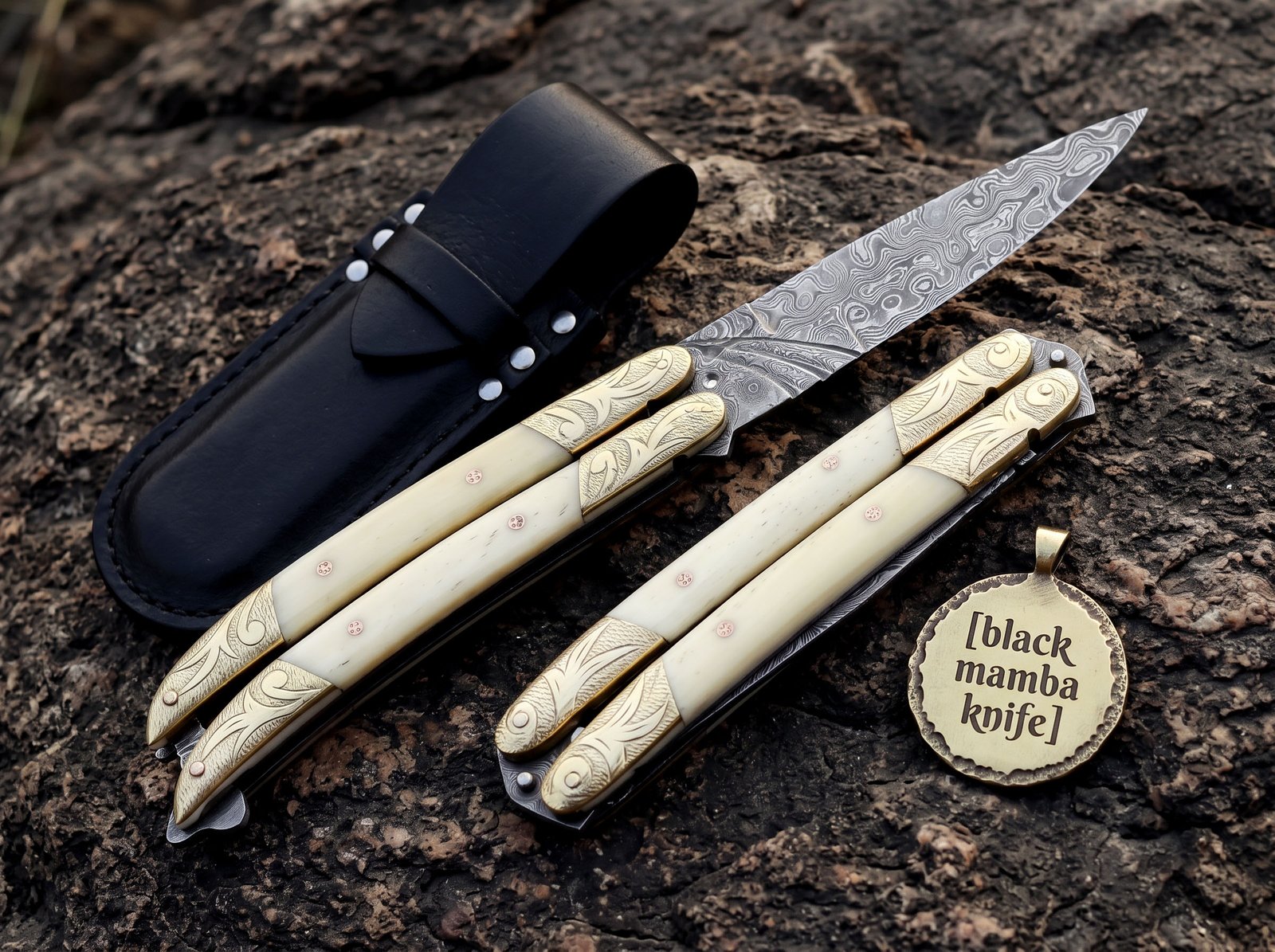
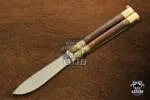
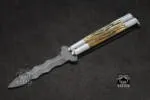
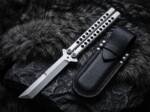
Camel bone scales framed in scroll-engraved yellow brass, on a Damascus balisong whose blade carries a broad swirling pattern rather than a tight one.
| Overall length | 8 inches |
| Blade length | 3.5 inches |
| Handle length | 4.5 inches |
| Steel | 1095 + 15N20 Damascus, 352 layers |
| Hardness | 58–60 HRC, oil tempered |
| Weight | 7.23 oz |
| Handle | Brass Engraved With Camel Bone Handle |
Often bought as: a gift, usually for someone who collects rather than someone who flips, because this is a knife that photographs and displays better than it hides in a pocket.
Camel bone is not a substitute for ivory
It is its own material, and a better one for this job than most people expect. Camel bone is denser than cattle bone, takes a high polish without going glassy, and carries faint natural speckling and fine dark lines through the cream ground. Those marks are the giveaway that it is real: uniformly white, unblemished scales are usually synthetic. Here it is left in long unbroken panels down each handle, pinned with small copper rivets and framed top and bottom by brass, so the bone is the largest single surface on the knife.
Engraving cut, not stamped
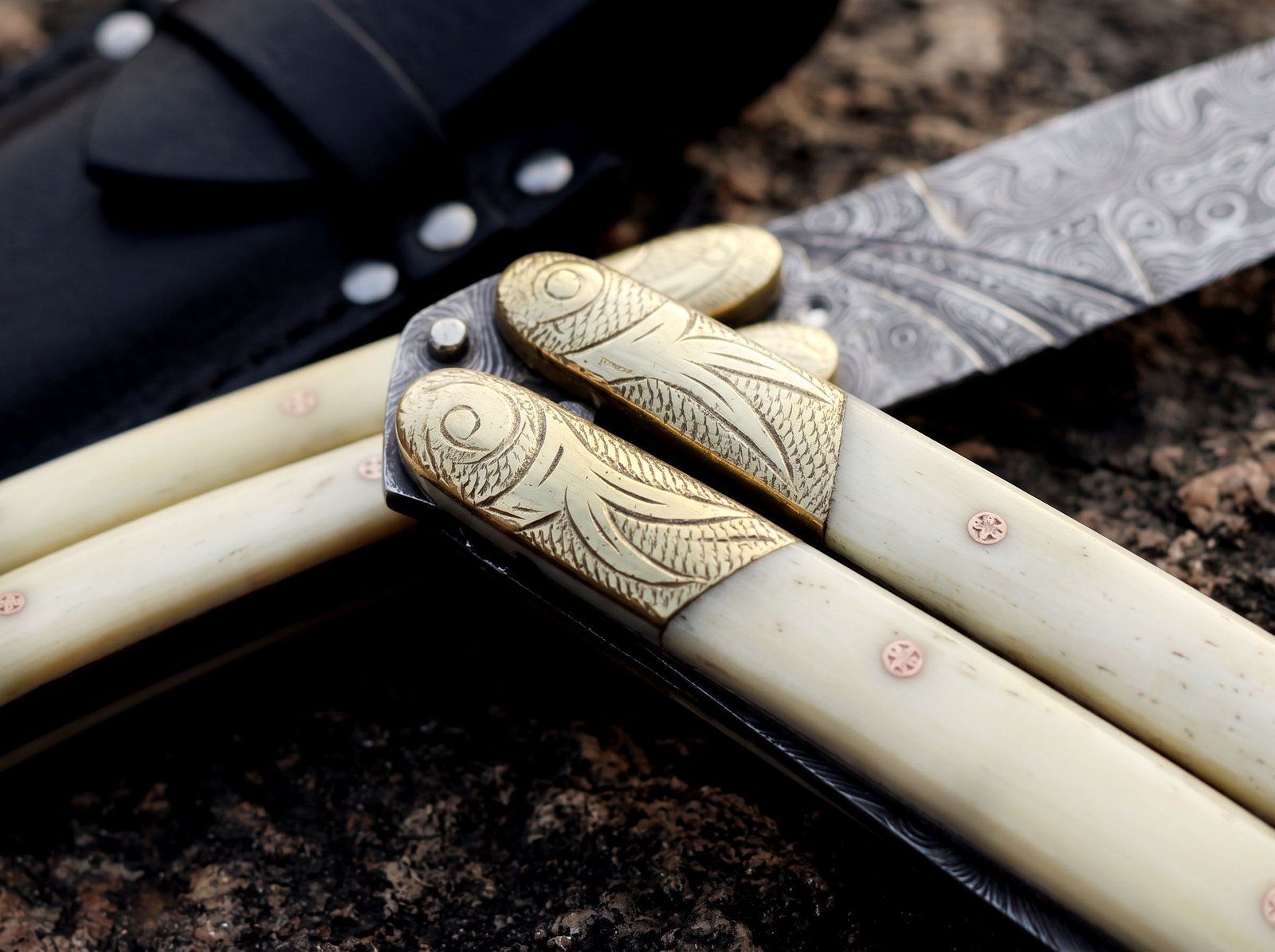
The brass bolsters carry a deep foliate scroll worked in relief, with fish-scale texturing in the backgrounds and a sculpted profile at the bite end. It is cut into the brass, which is why the recesses hold shadow so strongly under a light and why the raised scrollwork will brighten with handling while the low ground stays dark. Stamped decoration goes the opposite way and flattens out. The blade is a long spear point with a wide ricasso, and the 352 layers read as broad wandering swirls across the flat rather than fine rings. Our note on what a layer count actually means explains why the same count can look so different from knife to knife.
Looking after bone and carbon steel
These two materials want opposite things, which is the only complication. Neither 1095 nor 15N20 is stainless, so the blade takes a wipe and the barest smear of oil once you have finished with it. The bone wants no oil at all; it will absorb it and stain unevenly, and the marks do not come out. Apply oil to a cloth, then to the steel only. Keep it off sunny windowsills and away from radiators, because bone checks when it dries too fast. A dry cloth on the scales and the brass is the whole job. Whether a pattern justifies that much fussing is a reasonable thing to ask, and we take it up in are Damascus knives worth it.
Questions
Will my pattern match the photograph? No two do. The swirl is set when the billet is forged.
Is it sharpened? Yes, the Live Blade arrives with a working edge. Pick the Trainer Blade option on this page for a blunt, unsharpened one.
What is the copper-handled one? That is the BMK-2005 in brass and copper.
Model: BMK-2004
Want a different handle or blade? Browse all of our balisong knives for sale.
Oliver K. (verified owner) –
“I received my order promptly, and the knife I got exceeded my expectations. The blade is sharp, and the overall design is elegant. I’m a happy customer.”
Olivia G. (verified owner) –
“I’m a knife enthusiast, and this store offers some extraordinary pieces. The knife I got is both functional and visually stunning. Highly recommended for collectors.”
William R. (verified owner) –
“I received my order in perfect condition, and the knife I bought is exceptional. It’s clear that a lot of thought goes into the design and craftsmanship.”
Mia B. (verified owner) –
“I bought a knife from this website, and it’s a real beauty. The craftsmanship is impeccable, and it’s a unique addition to my knife collection.”
Emily H. (verified owner) –
“This store is a hidden gem for knife lovers. The knife I received is a masterpiece. The balance, design, and sharpness are all top-notch.”
Jacob L. (verified owner) –
“The knife I purchased is a true work of art. The design is intricate, and the quality is top-notch. I can’t wait to showcase it to my friends.”
Robert Miller –
This balisong has quickly become my favorite piece in the collection. Beyond happy with how this turned out.
Megan Richardson –
Honestly one of my better purchases in a while. Nice to support a Memphis based knife maker, shipping was fast even internationally. Telling everyone I know to check this maker out.
Alexander Anderson –
This is hands down one of the best knives I’ve bought online. Pivots feel dialed in with zero blade play. This is the kind of purchase that makes online shopping worth it.
Gregory Green –
Genuinely beyond happy with how this turned out. This flips cleaner than knives twice the price. Pivots feel dialed in with zero blade play. Definitely bookmarking this seller for future orders.
Jerry Cox –
So happy I finally pulled the trigger on this one. Not my first order from Black Mamba Knives and it won’t be my last.