
Description
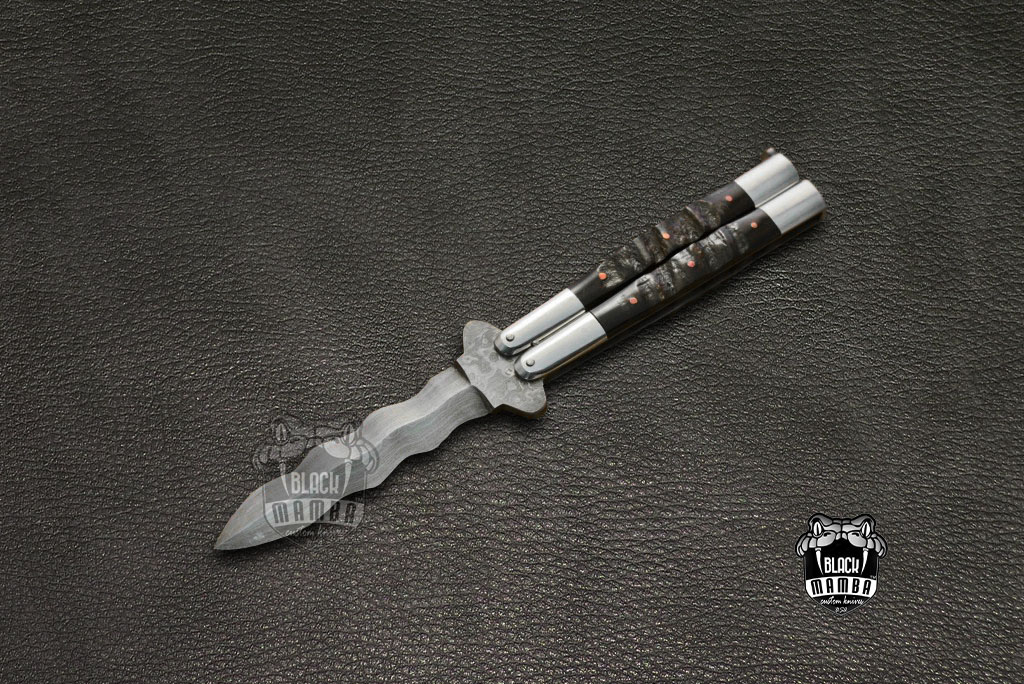
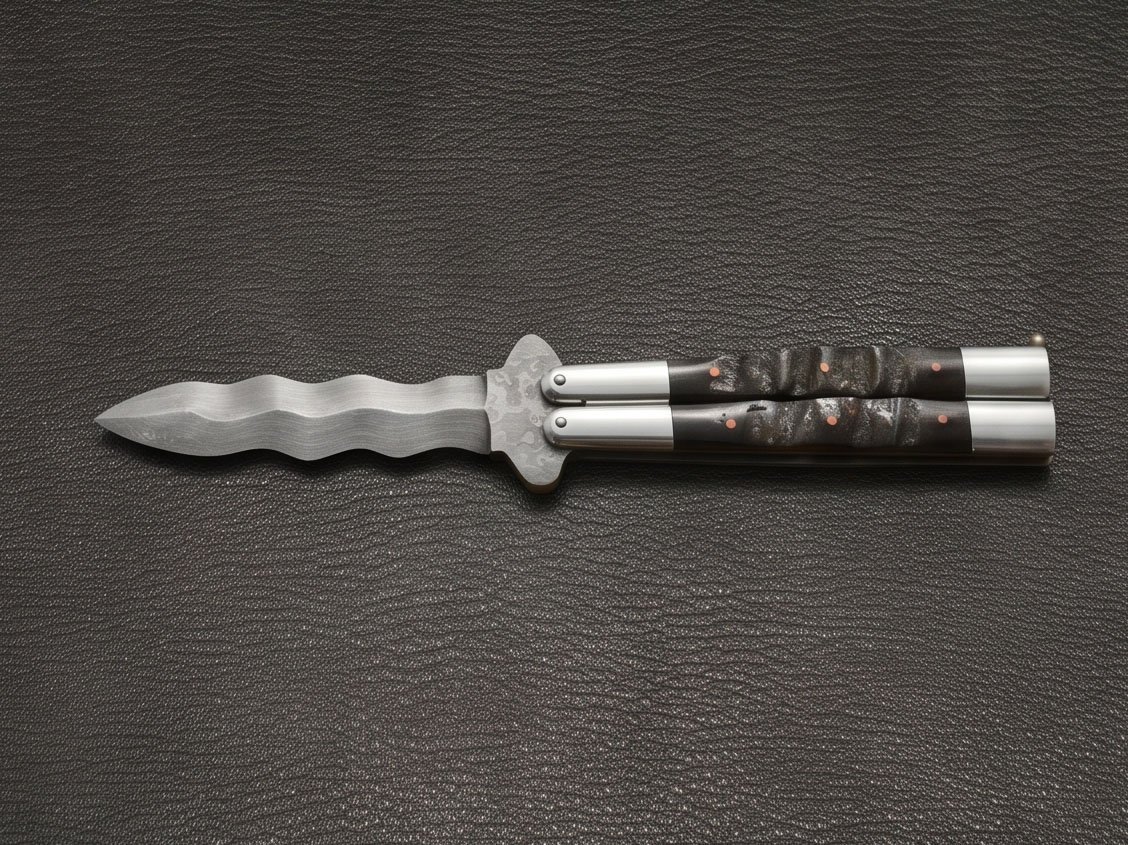
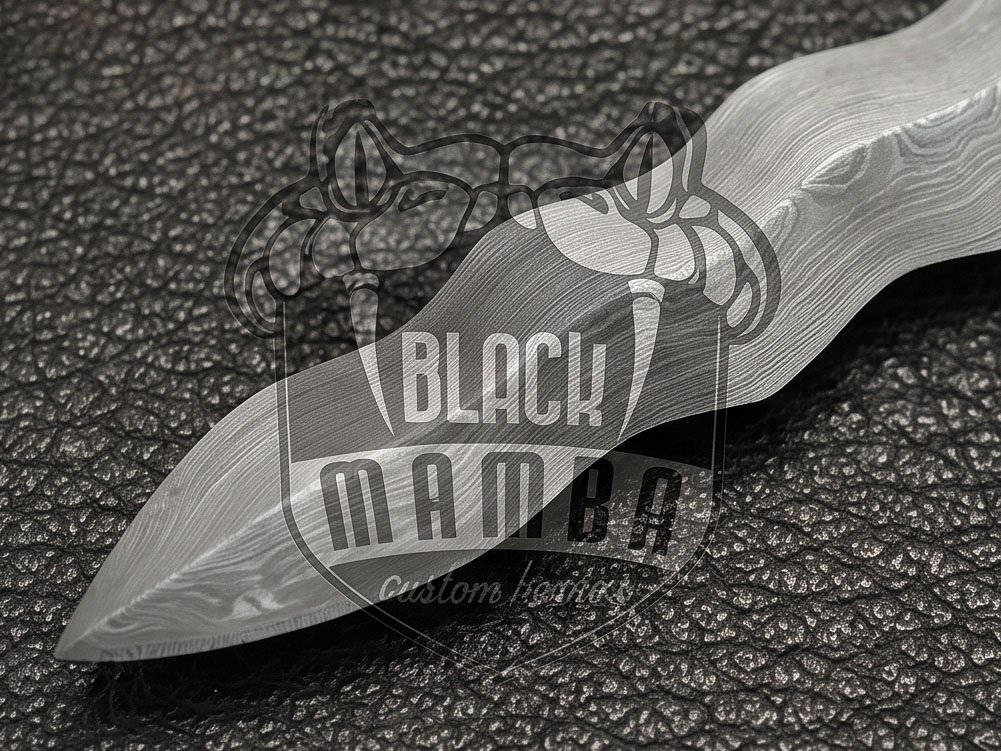
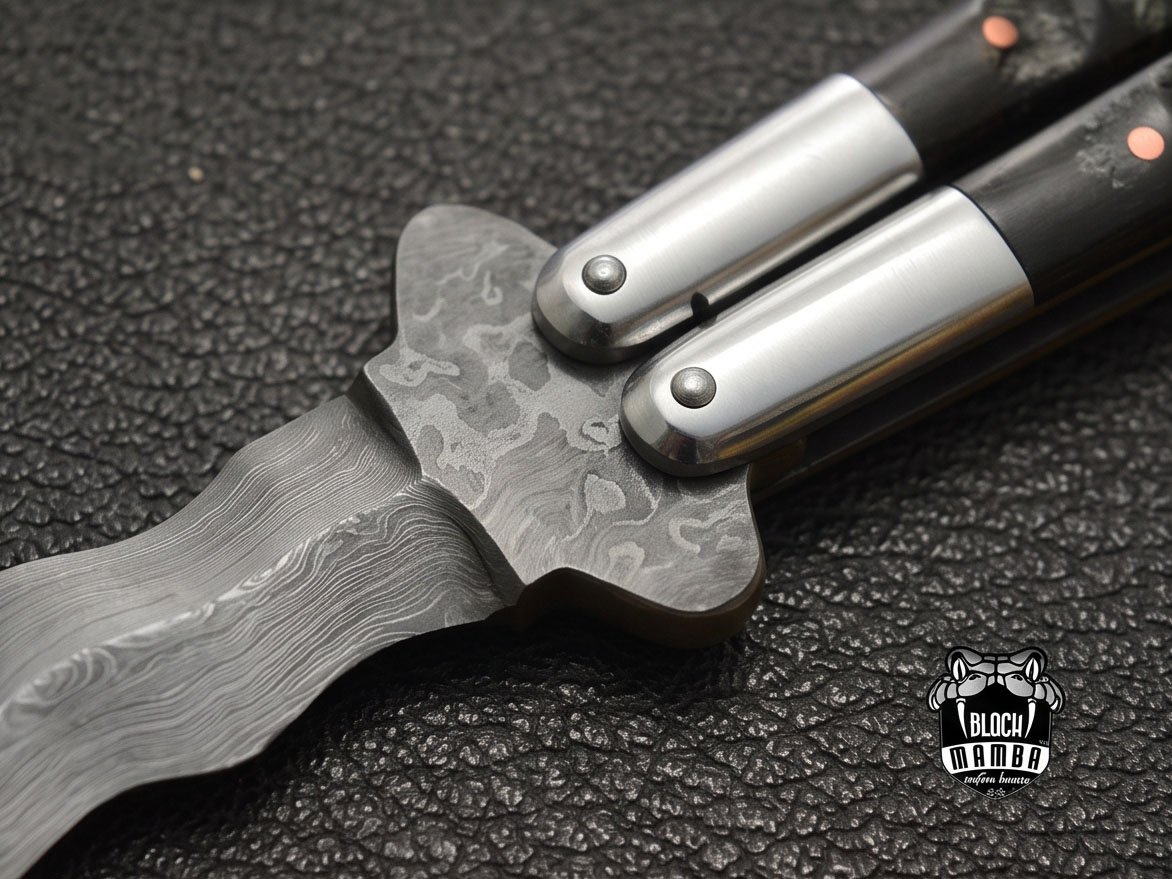
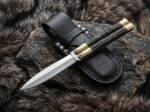
Dark horn in stainless handles, a flared ricasso, and a pattern-welded blade ground into a serpentine edge. Nine inches open, and quieter in the hand than it looks in a photograph.
Who it is for: a collector who wants pattern-welded steel in a shape that is not a plain straight blade. The wave and the flare are both forged features, not machining, and they are the reason the price sits where it does.
| Overall length | 9.1 inches |
| Blade length | 4.4 inches |
| Handle length | 4.7 inches |
| Steel | 1095 + 15N20 Damascus, 352 layers |
| Hardness | 58–60 HRC, oil tempered |
| Handle | – Stainless Steel with Carabao Horn Inserts |
The flared ricasso
Behind the edge the steel widens into a shaped flare before it meets the pivots. That area shows the tightest, most disturbed part of the pattern, because it is where the billet was worked hardest during forging. It also gives the blade a wider shoulder at the pivot, which makes the tang stiffer than a plain parallel-sided balisong blade. Look at that section first when the knife arrives. It tells you more about how the steel was moved than the flats do.
Dark horn
The inserts are horn, which is a natural material and behaves like one. Dark horn ranges from deep brown to near black with lighter grain lines running through it, and no two sets match. Horn takes a polish from handling alone and gets richer looking with years of use. Its weakness is dryness. Long stretches in a heated room can make it shrink very slightly at the edges where it meets the metal. Occasional oil prevents that entirely.
Sharpening a wavy edge
This is the practical thing to understand before you buy. A serpentine edge cannot be sharpened flat on a bench stone, because the stone only ever touches the outermost curves. It needs a round rod or a tapered ceramic that can follow the edge into the hollows. Once you have the right tool it is straightforward and no slower than a plain edge. Without one it is genuinely difficult, and people who try to force it on a flat stone end up flattening the wave.
Care and common questions
Beneath the etch this is carbon steel, so it must go away dry with the barest smear of oil across it. Let it sit in open air instead of pressed up against leather. The stainless handles and the horn need nothing beyond a wipe.
Will it develop spots? Only if it is left damp. Dry storage prevents it entirely.
Can the pattern be refreshed? Yes. A re-etch after years of polishing brings the contrast back.
Is it a flipper or a display piece? Both work, but the wavy edge is unforgiving of a bad catch.
Do Damascus knives rust answers the question people actually worry about, and what a layer count means is useful when comparing patterned blades. For a plain D2 blade in a brass frame instead, see the ebony and brass balisong.
Model: BMK-418
Still comparing? Our full range of butterfly knives for sale is one click away.
Olivia B. (verified owner) –
The steel butterfly knife I purchased here is visually stunning and incredibly functional. It’s now my preferred tool for various tasks. Highly recommended!
Samuel M. (verified owner) –
This shop is a hidden treasure for knife enthusiasts. The butterfly knife I obtained here is a testament to quality and craftsmanship. It has quickly become one of my prized possessions.
Emily M. (verified owner) –
The precision in the craftsmanship of the steel butterfly knife I received is truly remarkable. It’s not just a tool; it’s a functional work of art that I’ll cherish.
Emily M. (verified owner) –
I’ve been collecting knives for years, and this store ranks among my favorites. The steel butterfly knife I purchased here is a shining example
Benjamin B. (verified owner) –
I’m impressed with the meticulous attention to detail on the steel butterfly knife I got from this shop. It’s not just a tool; it’s a piece of art that I’m proud to own.