
Description
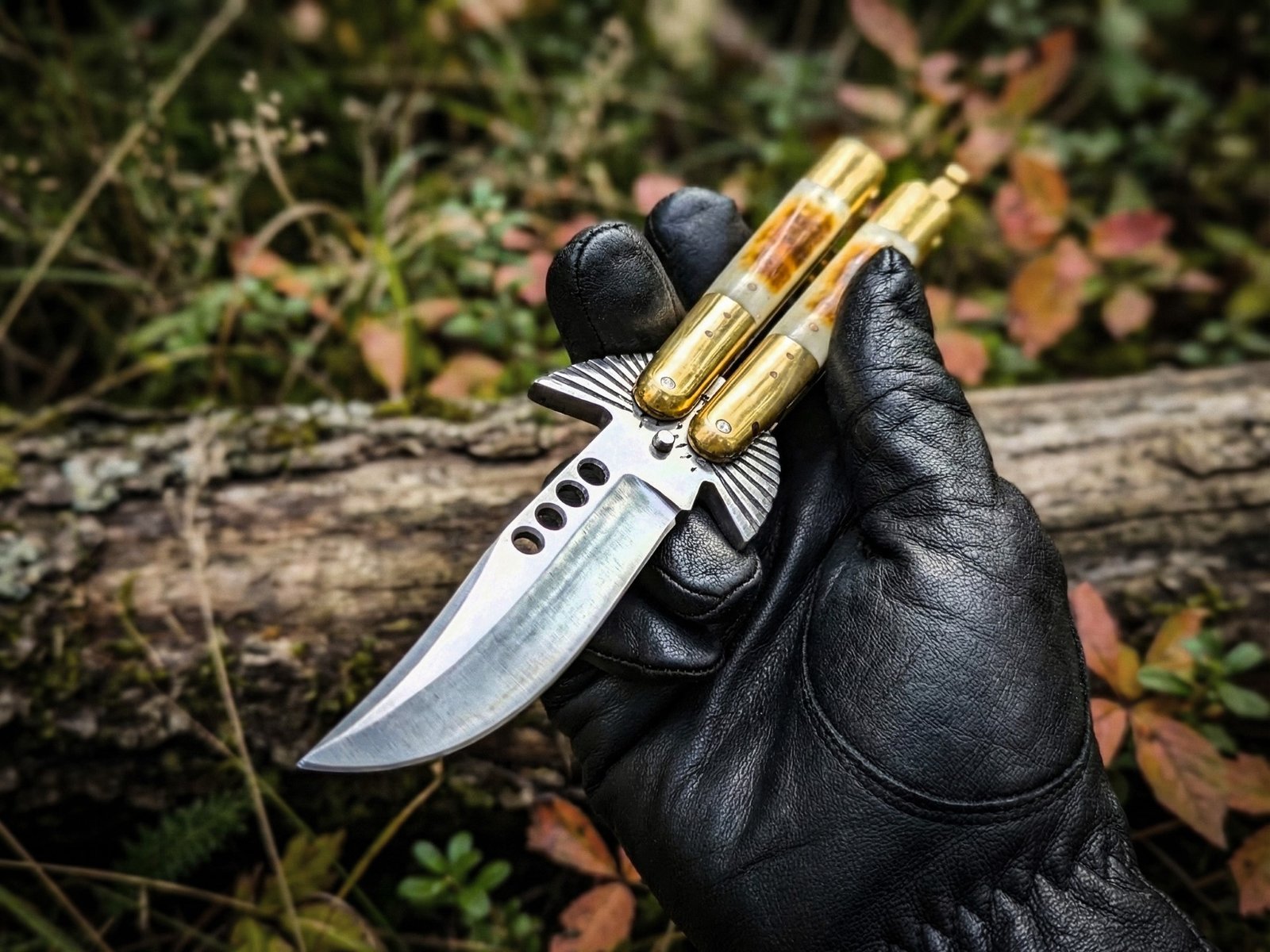
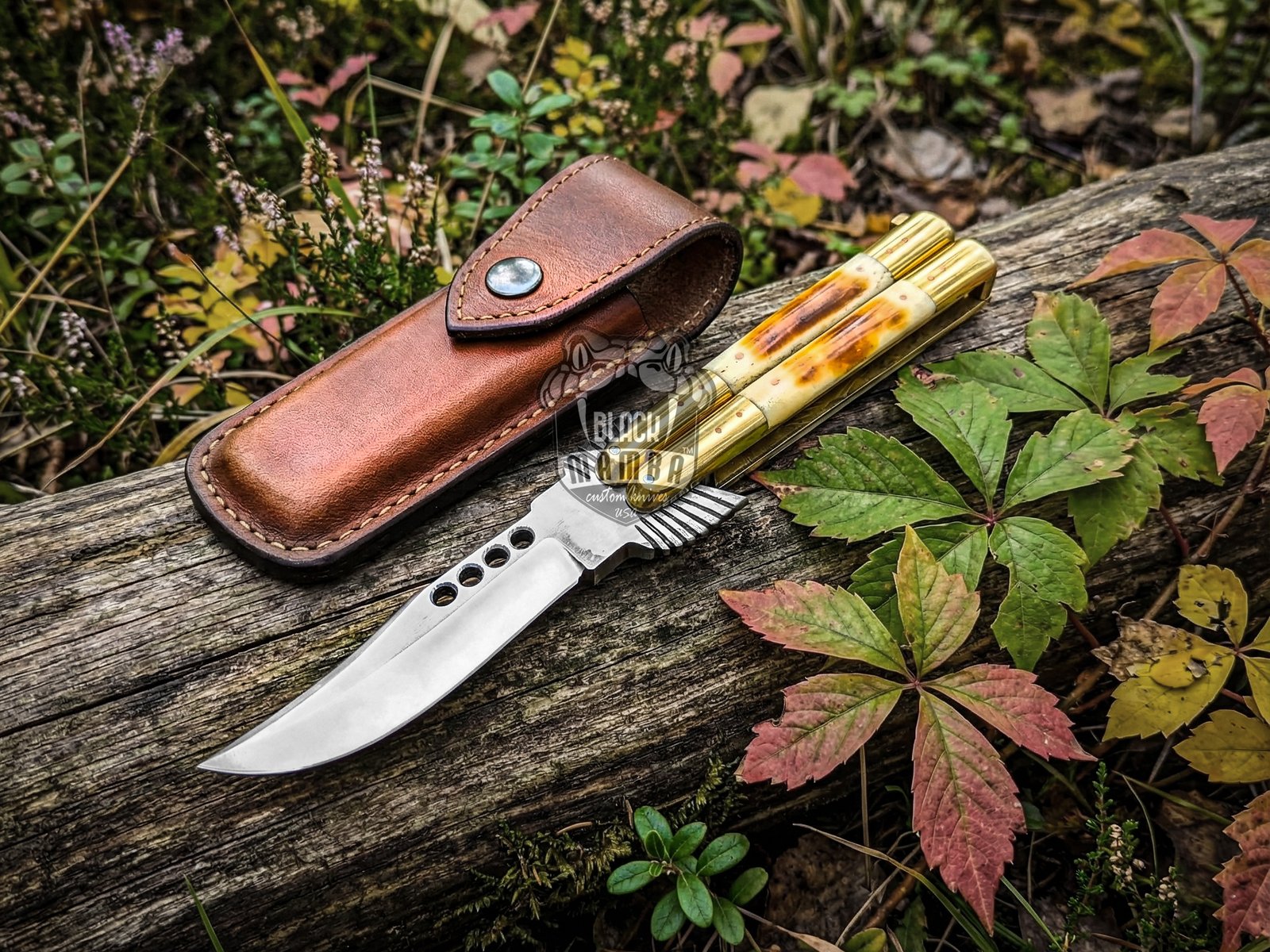
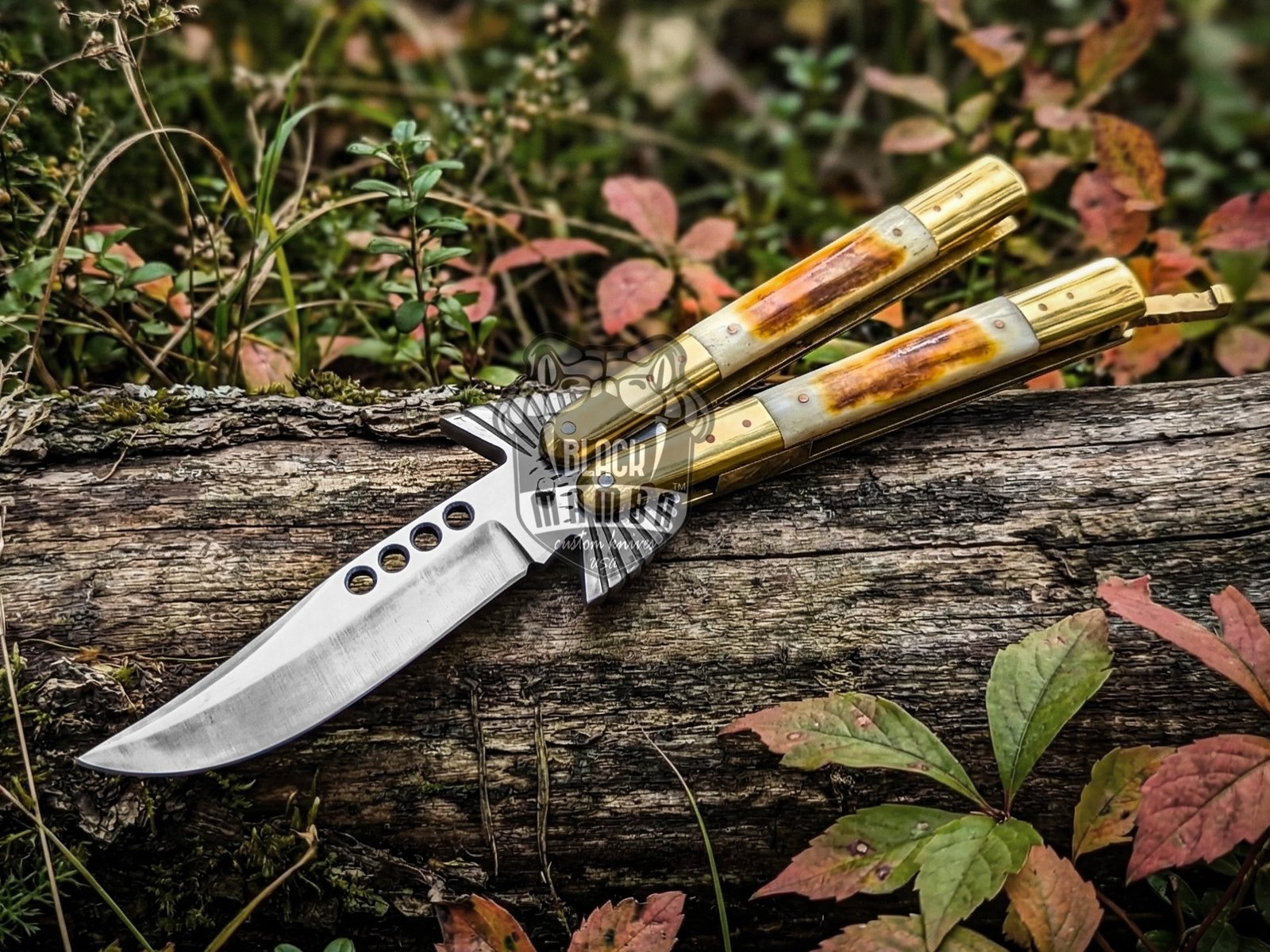
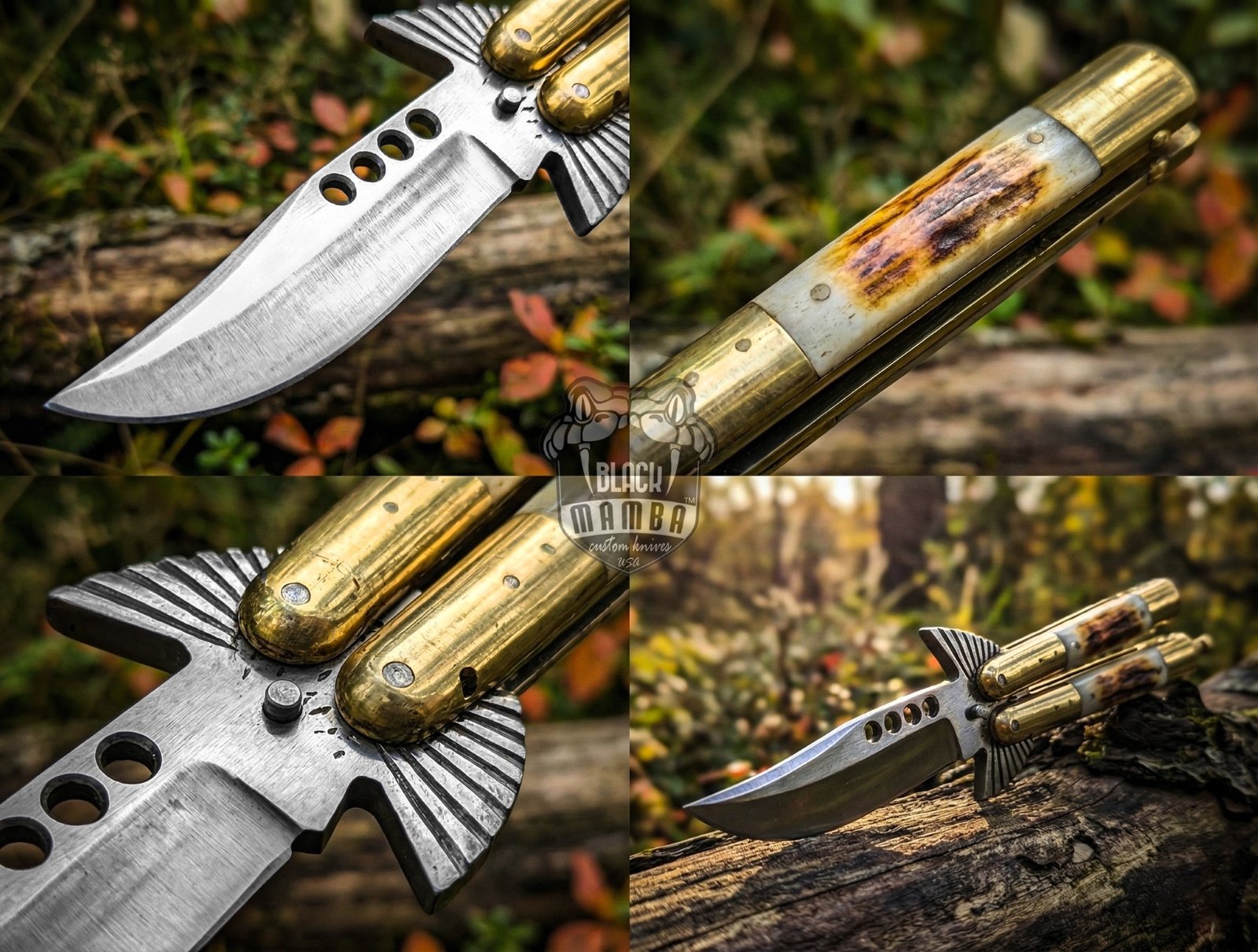
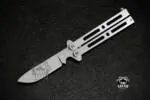
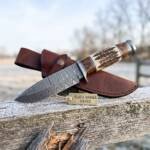
Bone panels, long brass bolsters and a satin D2 blade with a swept clip point, three lightening holes drilled through the flat and a fluted fan cut into the ricasso. This is a traditional-looking flipper built on a modern tool steel, and the combination is deliberate rather than accidental.
| Overall length | 11 inches |
| Blade length | 5 inches |
| Handle length | 6 inches |
| Steel | D2 tool steel |
| Handle | Bone & Brass Bolster |
What the bolsters are actually for
Bolsters are the brass blocks at each end of the handle, and on a balisong they are structural rather than ornamental. The pivot end absorbs every load the knife takes when a handle swings out and stops dead. Putting brass there and bone in between means the metal handles the stress and the panel material only has to look right and feel right in the palm. It is the older way of building these, and it is the reason bone panels survive on a knife of this length. The construction breakdown shows where the pins and pivot sit relative to those blocks.
Bone at eleven inches
Panels on a knife this long give a wide, flat gripping surface instead of the narrow strip you get on the nine-inch models. Bone is warm to hold in a way brass never manages, which matters in cold weather and matters more the longer a session runs. It is harder than most of the woods used here and will not compress under a pin, though it can chip at a corner if the knife lands on stone. The colour is not uniform, either: expect creamy white through to amber mottling, varying panel to panel, because that is what the material does.
Against the all-metal version
The all-brass build of this same frame is $278 and feels appreciably heavier for the identical measurements. Take that one if you want momentum doing the work for you. Take this one if you would rather hold something warmer for longer and accept a slightly less eager knife in exchange.
The blade profile
A clip point with a gentle recurve through the belly, ground satin rather than mirrored so it does not throw glare under a lamp. The three holes through the flat pull a little weight forward of the pivot, which shifts the balance back toward the handles and makes the knife feel quicker than its length suggests. The fluted section at the ricasso is cut by hand and is the one piece of decoration on an otherwise plain blade.
What D2 asks in return
Roughly eleven to twelve percent chromium means this steel tolerates humidity far better than plain carbon, holds a working edge for a long time, and is nobody’s idea of stainless. Leave it damp and it will spot. Bring it back with diamond or silicon carbide abrasives rather than a tired ceramic rod, because the same carbides that keep the edge alive are what make it stubborn on a soft stone.
Sheath and legality
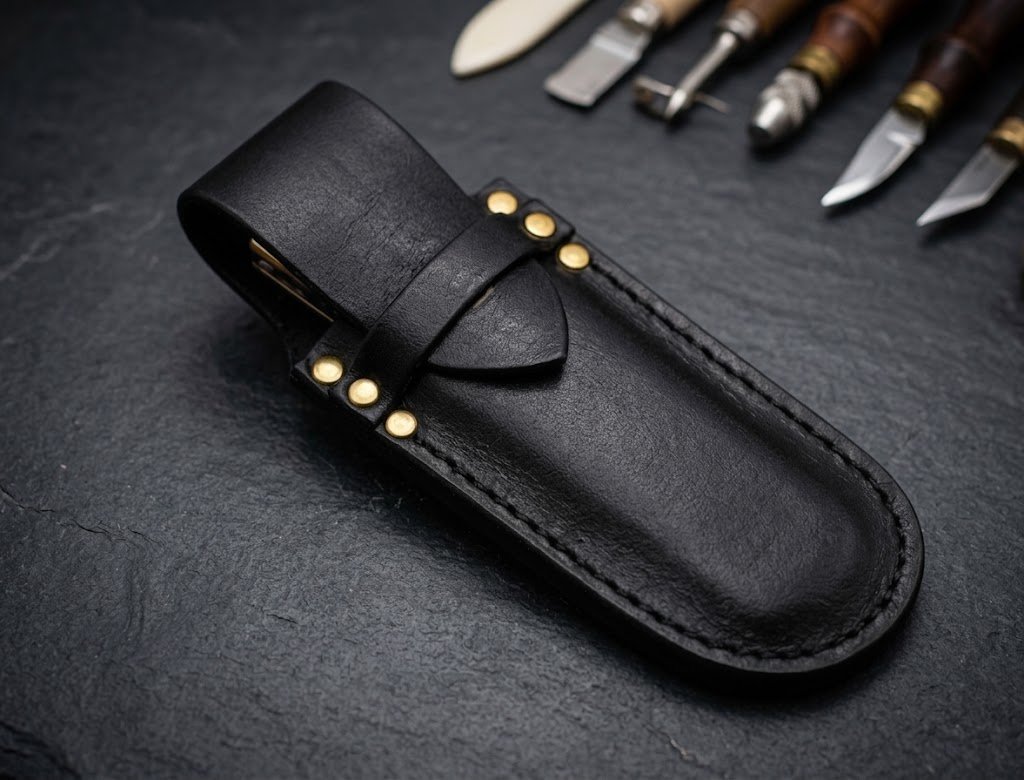
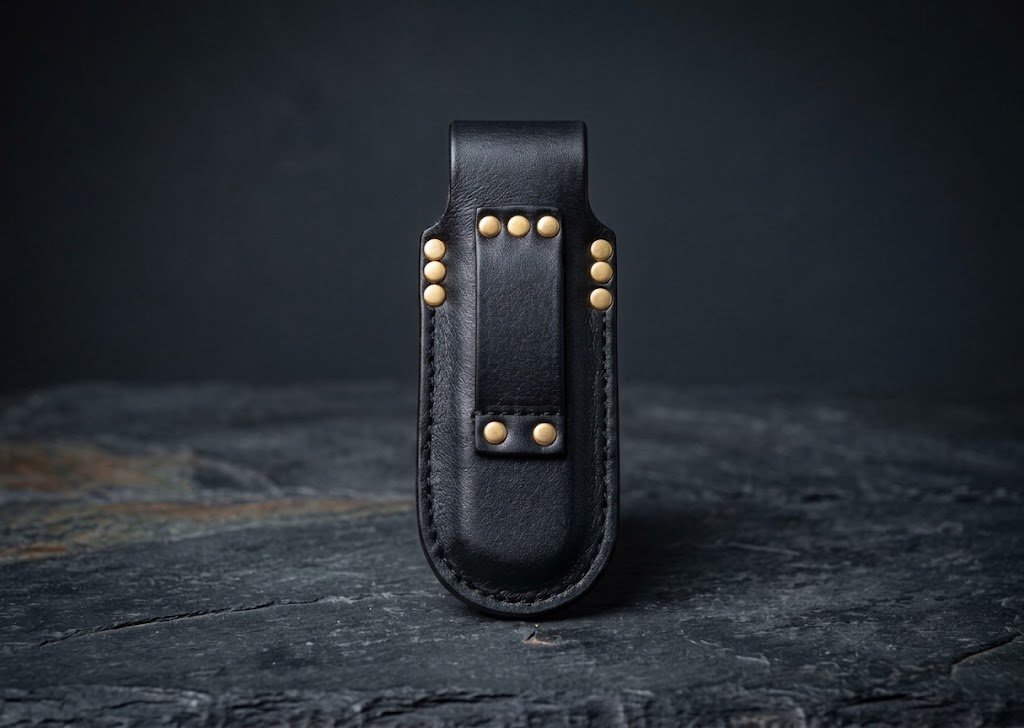
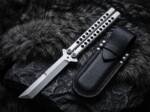
A stitched black leather belt sheath is included, sized to this frame. Before ordering, check what your state or country permits, because balisong rules differ widely and that responsibility sits with the buyer rather than with us.
Built in Memphis
Blade profiling, heat treatment, bolster fitting, panel shaping, pivot fit and the last pass on the strop are all done at our Tennessee bench. Nothing about this knife is dropped in from a catalogue of parts, which is why the two handles close with the same weight of sound and the sharpened edge never touches the bone panels when the handles are shut. Covered for life on our workmanship.
Model: BMK-714
Want a different handle or blade? Browse all of our balisong knives for sale.
Malik Ruiz –
Wanted to like this more than I actually do. Latch didn’t line up quite right at first. Black Mamba Knives usually does better than this in my experience. Shipped from the US but still took longer than expected. Pivots felt loose right out of the box. Might work for someone less picky than me.
Nancy Reed –
Really happy with this balisong overall. Would order again despite the minor gripes. Good to see it’s made in the USA in Memphis, shipping was quick too. Been ordering from Black Mamba Knives for a while now and this fits the pattern.
Colton Hayes –
My dad was speechless when I showed them this balisong. Pivots feel dialed in with zero blade play. So worth it.
Alexander Long –
Five stars isn’t even enough honestly. Latch snaps shut clean every time. 10/10 would buy again.
Stephen Peterson –
Showed up right on time and looked even better than the photos. Weight is perfectly balanced for flipping. Pivots feel dialed in with zero blade play. This flips cleaner than knives twice the price. Shipping was fast and everything arrived well packaged.
Roger Harris –
The moment I saw this in person I knew it was a keeper. Action is smooth right out of the box, no break in needed. This is exactly why I keep coming back to this company.
Logan Cook –
My skepticism about ordering online disappeared the second this arrived. Can’t recommend this enough.
Angela Thomas –
Got this for a wedding gift and now I want one for myself too. Latch snaps shut clean every time. This seller just earned a repeat customer.
Jerome Bishop –
Perfect gift. Perfect quality. No complaints. Cool knowing this was handmade right in Memphis and shipped out fast.
Margaret Kim –
This blade came razor sharp right out of the box. Already planning my next pickup from this company.
Malik Turner –
My skepticism about ordering online disappeared the second this arrived. 10/10 would buy again.
Michelle Jimenez –
Mostly happy with this one, just a small gripe or two. Blade is sharp but not quite razor sharp out of the box. Action is good though it needed a little tightening on the pivots. Good product. Just not quite perfect.
Kenneth Brooks –
Set my expectations low going in and this blew right past them. This flips cleaner than knives twice the price. Would send this as a gift again in a heartbeat.
Matthew Martin –
Does the job but I wasn’t blown away. Wouldn’t say no to it but wouldn’t rave about it either.
Dustin Wood –
Ordered late at night on a whim and woke up glad I did. This flips cleaner than knives twice the price. This one’s a keeper for sure.
Emma Ruiz –
So happy I finally pulled the trigger on this one. Blade came shaving sharp straight out of the box. Already telling my friends to check this out.
Betty Ross –
Ordering again from this seller the second I finish writing this review. Couldn’t be happier with this.
Scott Harris –
This turned out to be way better than I thought it would be. Bushings feel buttery smooth after just a bit of use. Worth every penny.
Craig Foster –
This blade came razor sharp right out of the box. Handles have a great grip even during fast flips. Already thinking about what to order next from this shop.
Jerry Cruz –
No regrets on this purchase at all. Weight is perfectly balanced for flipping. Would not hesitate to order again.
Hannah Nelson –
This maker clearly knows what they’re doing with quality like this. Action is smooth right out of the box, no break in needed. Exactly the kind of quality that keeps me coming back.
Rafael Murphy –
This balisong punches way above its price point. Already telling my friends to check this out.
Hunter Campbell –
My skepticism about ordering online disappeared the second this arrived. Action is smooth right out of the box, no break in needed. If you’re on the fence just get it. You won’t regret it. Every piece I’ve gotten from Black Mamba Knives has been solid.
Alexander Martinez –
This balisong is a genuine work of art. Handles have a great grip even during fast flips. Action is smooth right out of the box, no break in needed. Blade came shaving sharp straight out of the box. This will not be my last order from this shop.
Mark Allen –
This balisong punches way above its price point. Latch snaps shut clean every time. Pivots feel dialed in with zero blade play. Bushings feel buttery smooth after just a bit of use. Couldn’t be happier with this.