
Description
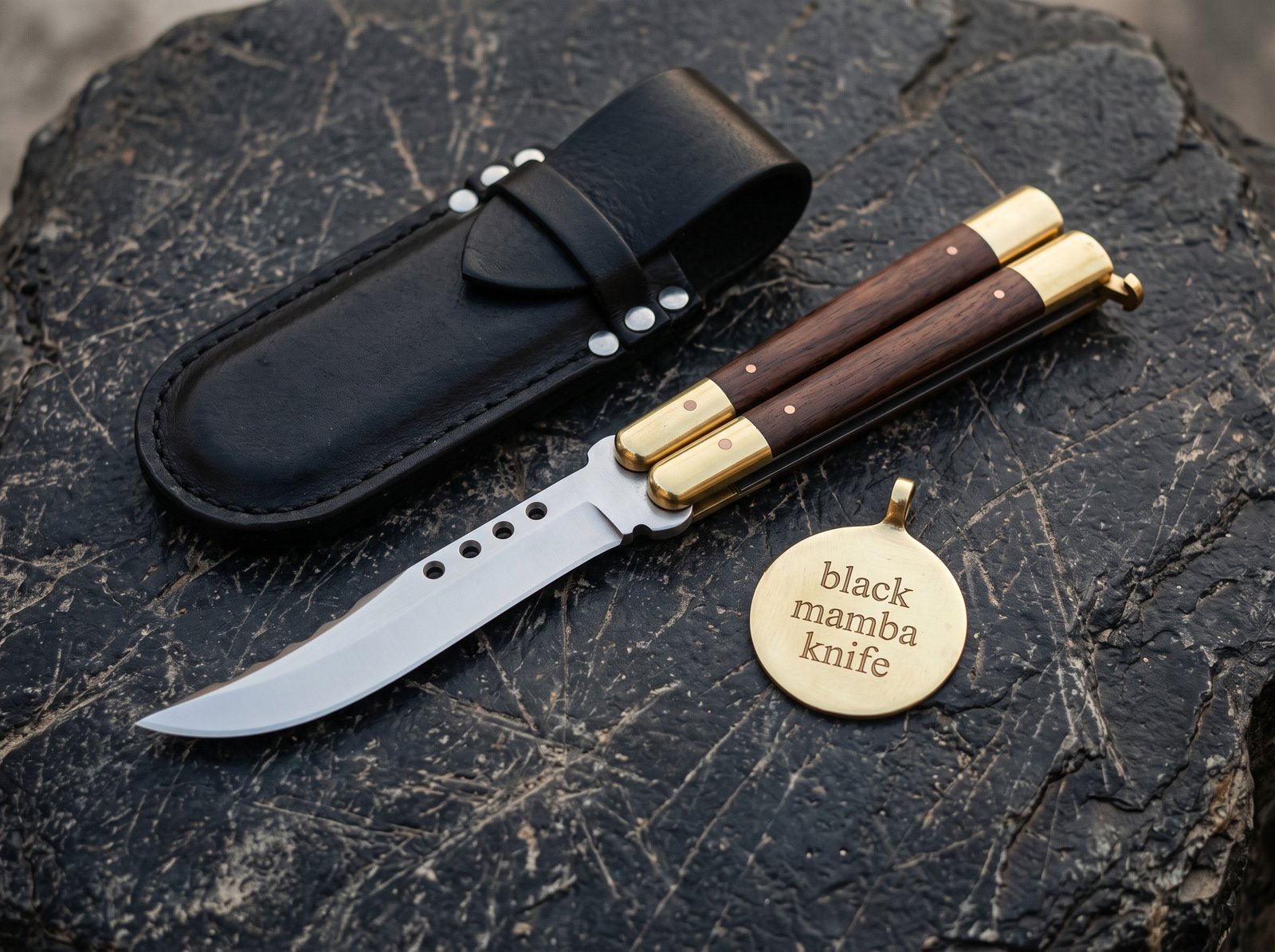
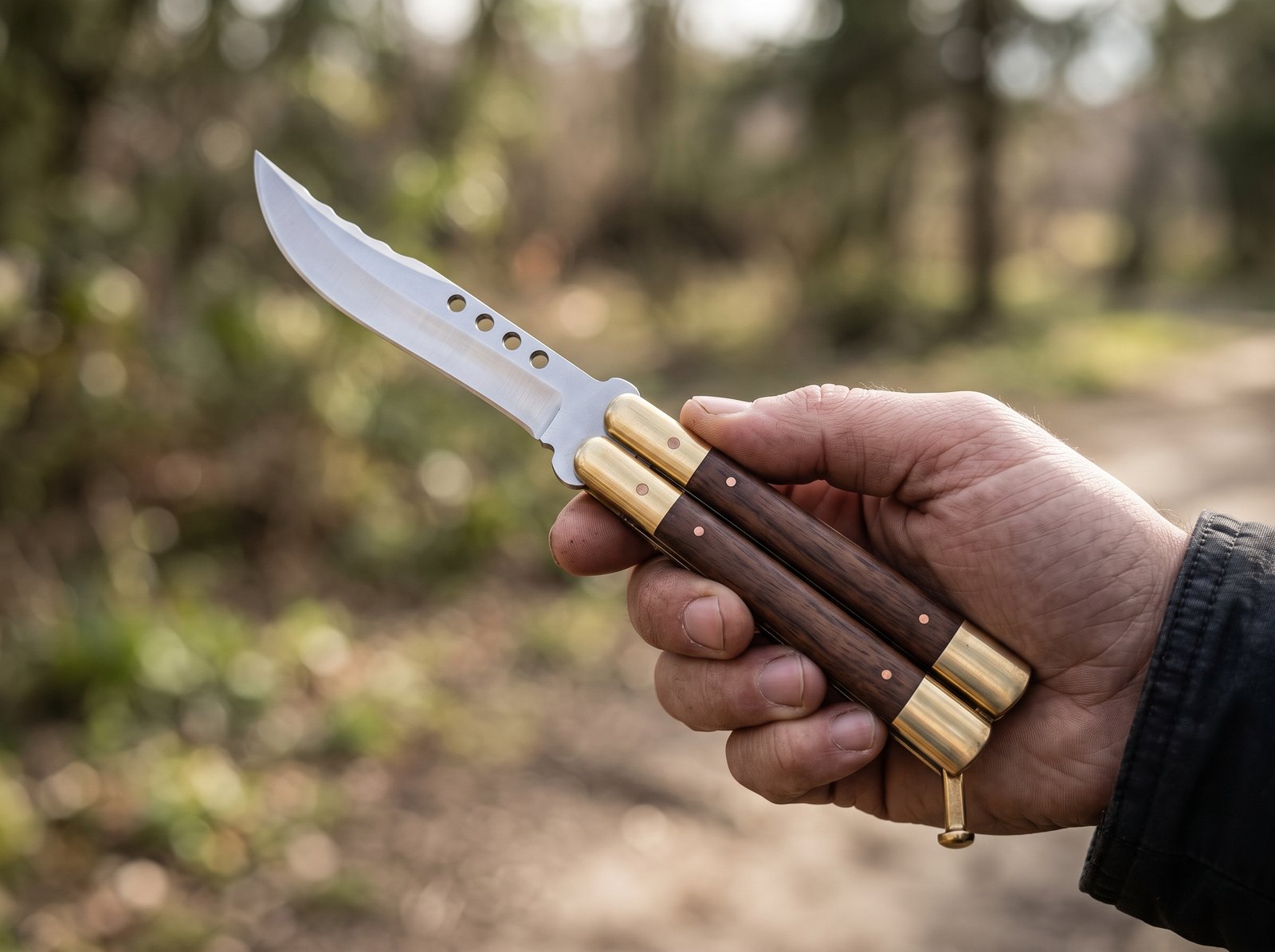
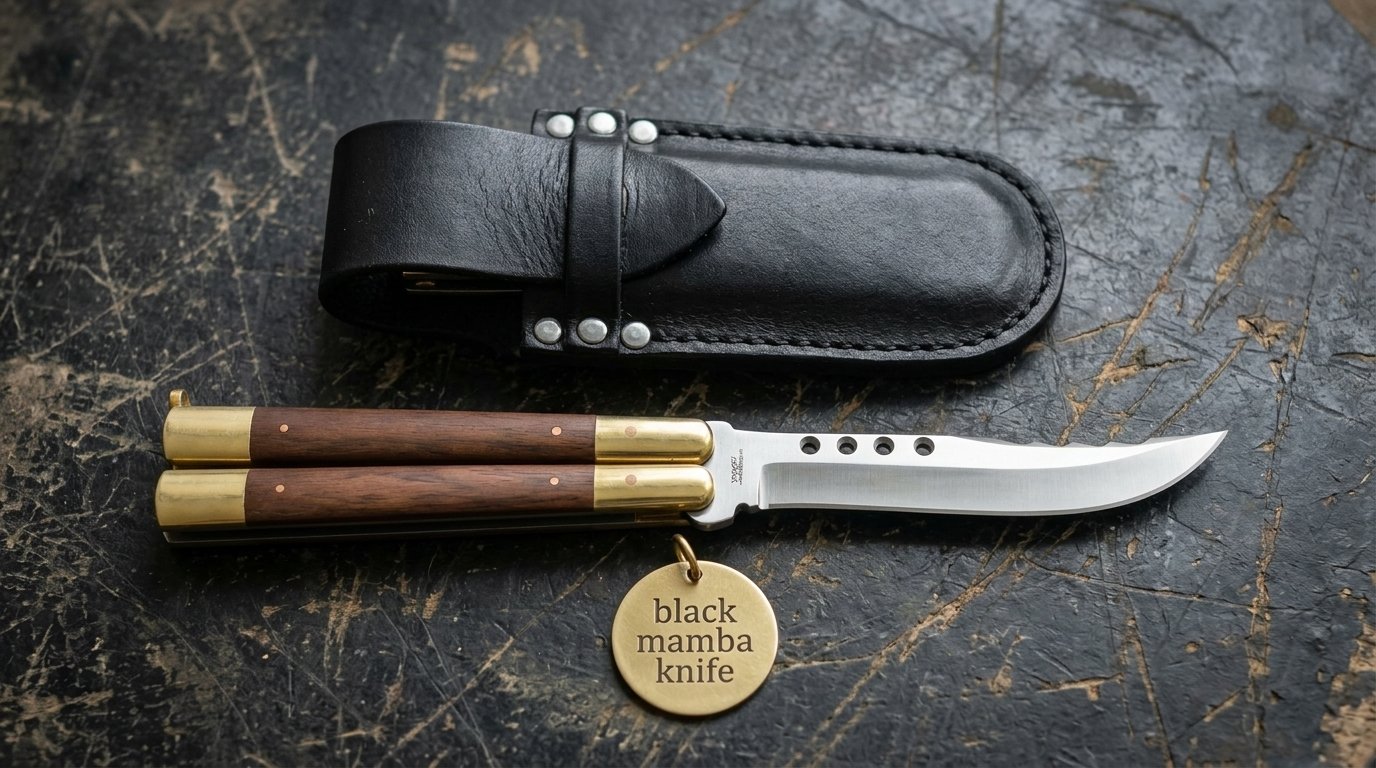
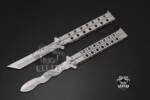
Brass bolsters, dark high grain wood inserts, and a clip point blade with a notched spine and drilled flats. A forged balisong in the old Batangas idiom.
| Overall length | 9.1 inches |
| Blade length | 4.4 inches |
| Handle length | 4.7 inches |
| Steel | High carbon steel |
| Hardness | 58–60 HRC, oil tempered |
| Handle | – Brass with high grains wood Inserts |
Best suited to: someone who wants a knife that looks handmade because it is, and who has no interest in a handle that will still look factory fresh in a decade.
Brass will not stay bright
The bolsters leave here polished. They will not stay that way, and they were never meant to. Brass reacts with the salt on your fingers and turns first honey colored, then a deeper brown in the recesses where a cloth cannot reach. Some owners love that and leave it alone. Others take a little metal polish to it twice a year and bring the shine back in about five minutes. Both are correct. What you cannot do is stop it happening.
The wood, grain by grain
The inserts were chosen for figure, so the stripe running along your palm is real depth in the timber rather than a printed effect. Dense wood like this takes a hand rubbed finish well and picks up a soft gloss from use alone. It moves a little with the seasons, and in very dry indoor heat it can shrink enough that you feel the edge of the brass. A drop of furniture oil once a year, worked in and wiped off, prevents that entirely.
Where it falls short
High carbon steel was picked here for the way it hardens and sharpens, not because it is convenient. It will spot if you leave it wet. The spine notches are decorative on a knife this size and add nothing functional, so if you want a clean spine you will not find it here. And a wood and brass handle is heavier and more slippery when wet than a textured synthetic, which matters if your hands sweat when you practice.
Sharpening and care
Carbon steel is the friendly half of this equation. It takes a keen edge quickly on almost any stone and does not fight back, so a beginner can maintain it without special equipment. Sharpening on a whetstone walks through the angle and the stroke. Keep water off the wood while you work, dry everything before it goes away, and the knife will outlive you.
Asked before ordering
Why does a handmade knife cost more than a factory one? Because a person ground, fitted and finished it. Hand forged against factory made covers what the money buys.
Can I refinish the wood myself? Yes. Fine abrasive paper and an oil finish restore it without disassembly.
Is there a version with horn? The ram horn insert model uses the same blade with a translucent natural handle.
Model: BMK-449
Still comparing? Our full range of butterfly knives for sale is one click away.
Ava C. (verified owner) –
The steel butterfly knife I received from this shop is an exquisite piece of craftsmanship. It’s both a functional tool and a work of art. I’m thrilled with my purchase.
Mia L. (verified owner) –
I’m impressed with the attention to detail on the steel butterfly knife I got from this shop. It’s not just a tool; it’s a piece of art that I’m proud to own.
Oliver F. (verified owner) –
The steel butterfly knife I purchased here is visually stunning and incredibly functional. It’s now my go-to tool for various tasks. Highly recommended!
Emily S. (verified owner) –
This shop is a hidden gem for knife enthusiasts. The butterfly knife I obtained here is a testament to quality and craftsmanship. It has quickly become one
Katherine Williams –
Really solid quality for the price point. Can’t recommend this enough.
Linda Allen –
This turned out to be way better than I thought it would be. Latch snaps shut clean every time. If you’re on the fence just get it. You won’t regret it.
Jennifer Campbell –
My wife couldn’t stop talking about this after I unboxed it. Action is smooth right out of the box, no break in needed. Definitely bookmarking this seller for future orders.