
Description
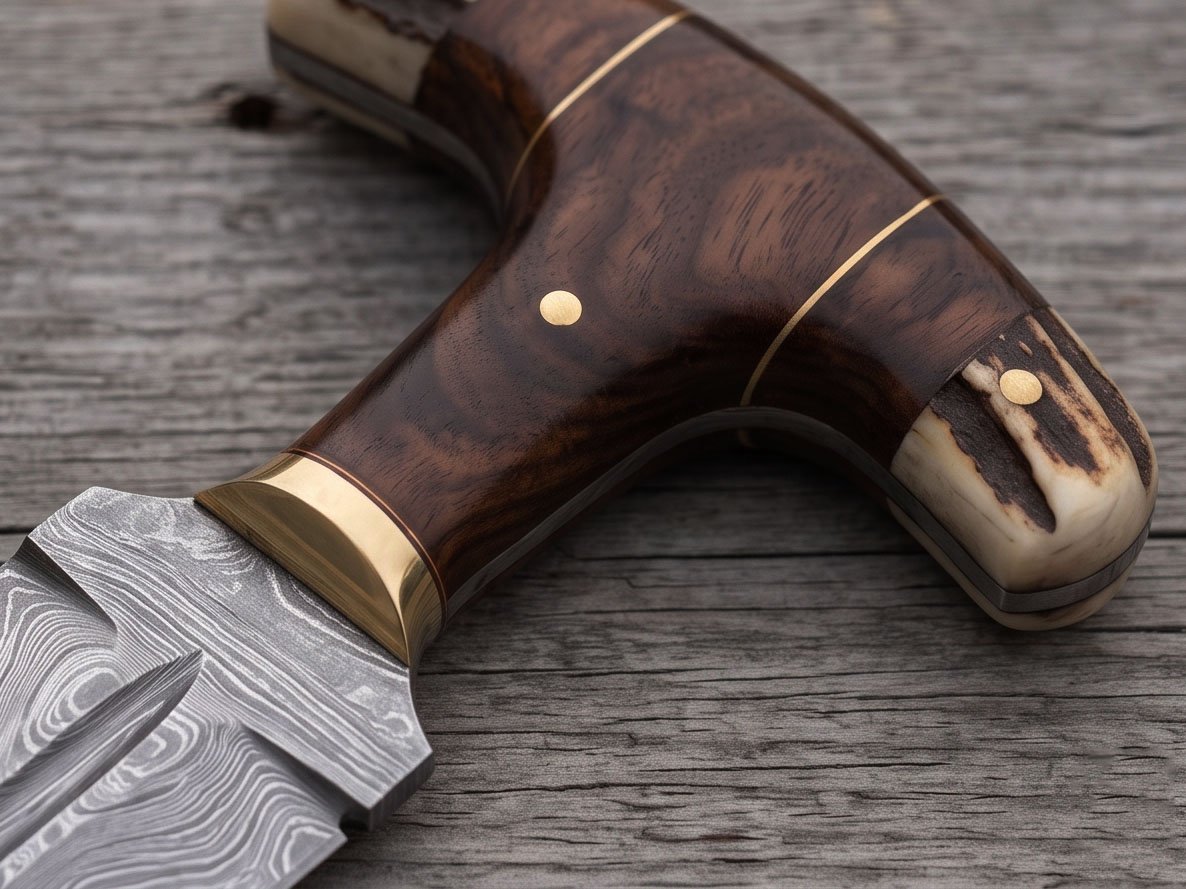
A handle built out of three materials
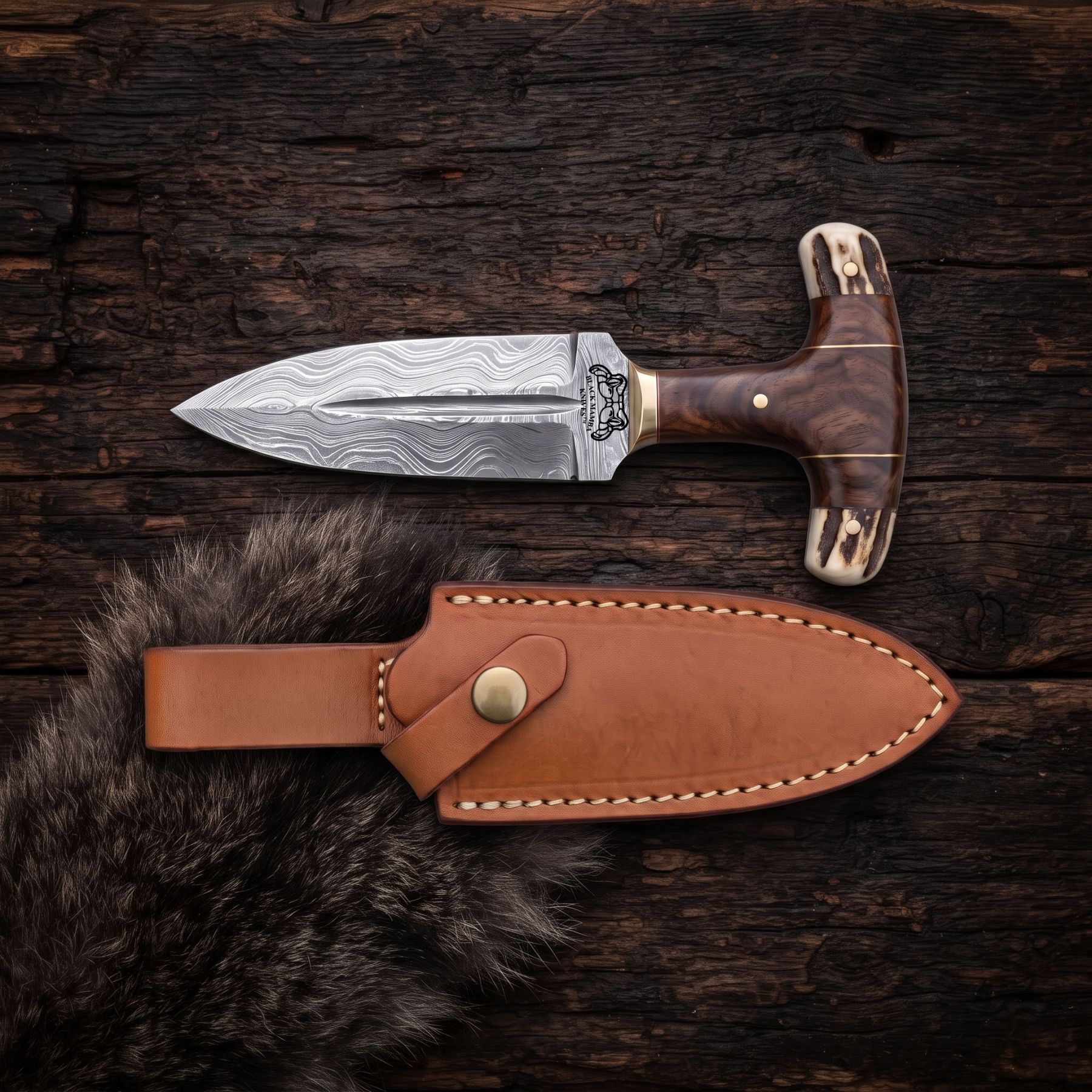
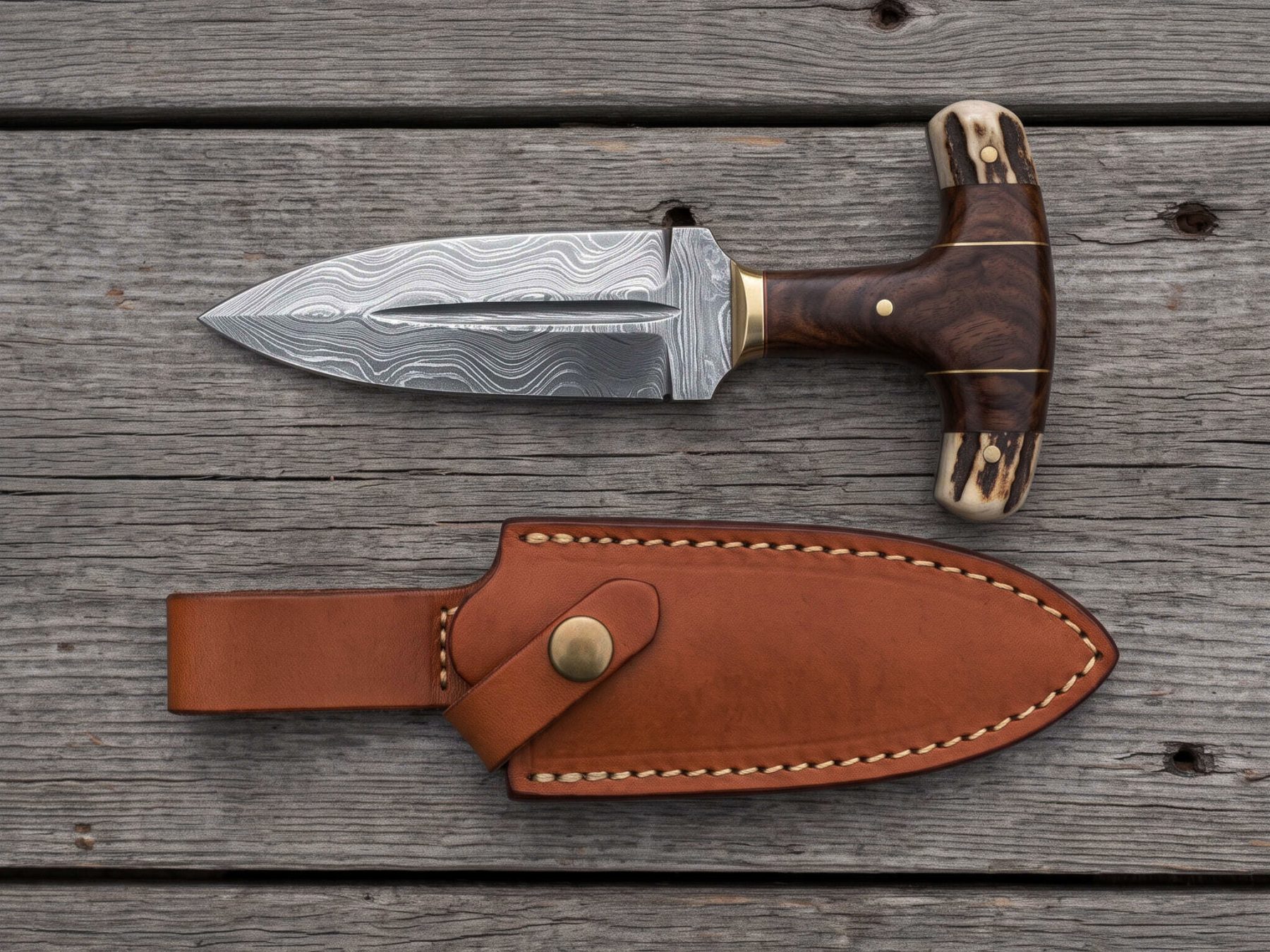
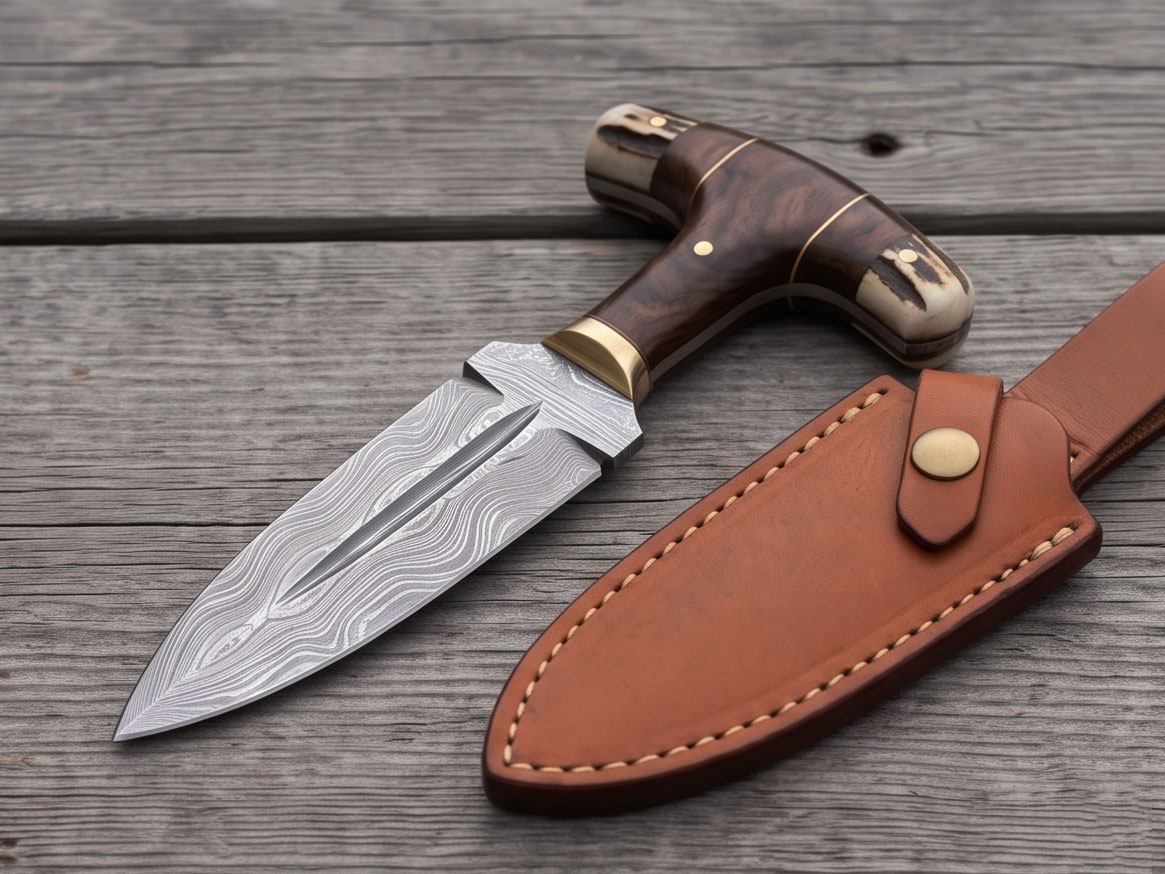
Most push daggers we make use one handle material and let the steel do the talking. The Stagwedge does the opposite. The crossbar is stag antler at both ends — the real thing, naturally shed and cut to show the pitted, ridged outer bark that no synthetic has ever convincingly copied — with a block of figured walnut let in between them, thin light spacers marking the joints, and a solid brass bolster closing the front against the ricasso. Four materials, five glue lines, and every one of them has to land flush or the whole thing looks wrong.
Antler is not a uniform material. One piece is chalky, the next is dense as bone, and the crown end behaves differently from the beam. Fitting it means working to the piece in front of you rather than to a drawing, which is why no two of these come out identical and why they take longer at the bench than a pair of flat scales ever would.
| Overall Length | 7 inches |
|---|---|
| Blade Length | 4 inches |
| Handle Width | 3.5 inches (T-grip) |
| Blade Steel | Hand-forged Damascus, acid etched |
| Blade Finish | Acid etched Damascus |
| Blade Style | Double-edged spear point, center fuller |
| Handle Material | Genuine stag antler with walnut center and white spacers |
| Bolster | Solid brass |
| Fittings | Brass pin, fiber spacers |
| Tang | Full tang |
| Sheath | Handmade tan leather sheath with brass stud and belt loop (included) |
The forged blade
Damascus, hand-forged from layered high and low carbon bars, etched so the banding stands proud, and ground as a symmetrical double edge with a shallow fuller on each side. The brass bolster hides the transition from tang to handle and adds a little weight right where your fingers close, which settles the balance back into the palm.
People ask constantly whether pattern-welded steel is genuine or a surface print, and it is a fair question given what gets sold online. The short version: real pattern welding goes all the way through the bar, so it survives sharpening and regrinding. If you want to learn to tell for yourself, our guide to spotting forged Damascus versus a printed pattern lists the tells.
Full tang, and why it matters here
The steel runs the entire width and depth of the T, so the crossbar is not glued onto a stub. On a push dagger this is not a detail you can compromise on — all the load runs backward through the grip into the heel of your hand, and a partial tang under that geometry is asking for trouble. The difference between full and partial tang construction is worth understanding before you buy any fixed blade, from anyone.
Sheath
Tan leather, wet-molded to this blade, saddle stitched, brass snap on the retaining strap and a fixed loop for a belt. It carries point-down and flat, which is the only comfortable way to wear a knife shaped like this one.
Looking after antler and carbon steel
Antler is stable and does not need feeding, though a wipe with a barely-oiled cloth keeps the bark from drying pale. Do not soak it and do not put it near heat. The walnut center is happy with a rub of paste wax once a year. The steel is the part that needs attention: dry it thoroughly after handling, keep a whisper of oil on the flats, and store it outside its sheath. Fingerprints on etched Damascus turn into faint gray shadows if you leave them for weeks, so a quick wipe before it goes in the drawer saves work later.
Where the law stands
Push daggers are singled out for restriction in a fair number of US states and cities and are prohibited in much of the world outside the US. This is one of the few patterns where the rules genuinely are stricter than for a comparable belt knife. Check your own jurisdiction before ordering — we cannot do that for you and the obligation sits with the buyer.
Questions
Where does the antler come from? Shed antler, collected rather than taken from an animal. Deer drop and regrow it annually.
Will the color match the photograph? Roughly, not exactly. Antler ranges from cream to tobacco brown, walnut varies, and the etch on each billet reads differently. Yours will share the dimensions and the build.
Can I still sharpen it normally? Yes. Treat each edge as its own job, hold a consistent angle, and finish with a few light strokes on a strop.
Something less ornate? The Rosethorn in figured rosewood uses the same blade with a simpler handle.
From our shop to yours
Every stage happens in Memphis, Tennessee: forging, grinding, heat treat, handle fitting, sharpening and the leather. Every piece is warranted for life should a material fault or a mistake at the bench ever show up, and it will be boxed for gifting if you mention that when you order.
Model: BMK-1197


Kenneth Sullivan –
Best knife I’ve ever owned. Hands down. Every piece of the fit and finish looks hand checked before it shipped. Can’t wait to see what else this maker has to offer.
Matthew Hunt –
Perfect gift. Perfect quality. No complaints. Came in a nice gift box which made it feel even more special. Steel has a gorgeous pattern that looks different in every light. Can’t say enough good things about this purchase.
Zachary Cole –
This knife looks even better in person than in the listing photos. Black Mamba Knives is quickly becoming my go to shop for knives. Fit and finish is museum quality. You can tell real craftsmen made this by hand. This is the kind of purchase that makes online shopping worth it.
Thomas Patel –
This is one of those purchases that just makes you smile. Even the small details in the damascus pattern are crisp and clean. Blade geometry makes it glide through cuts with barely any effort. Can’t wait to see what else this shop has to offer.