
Description
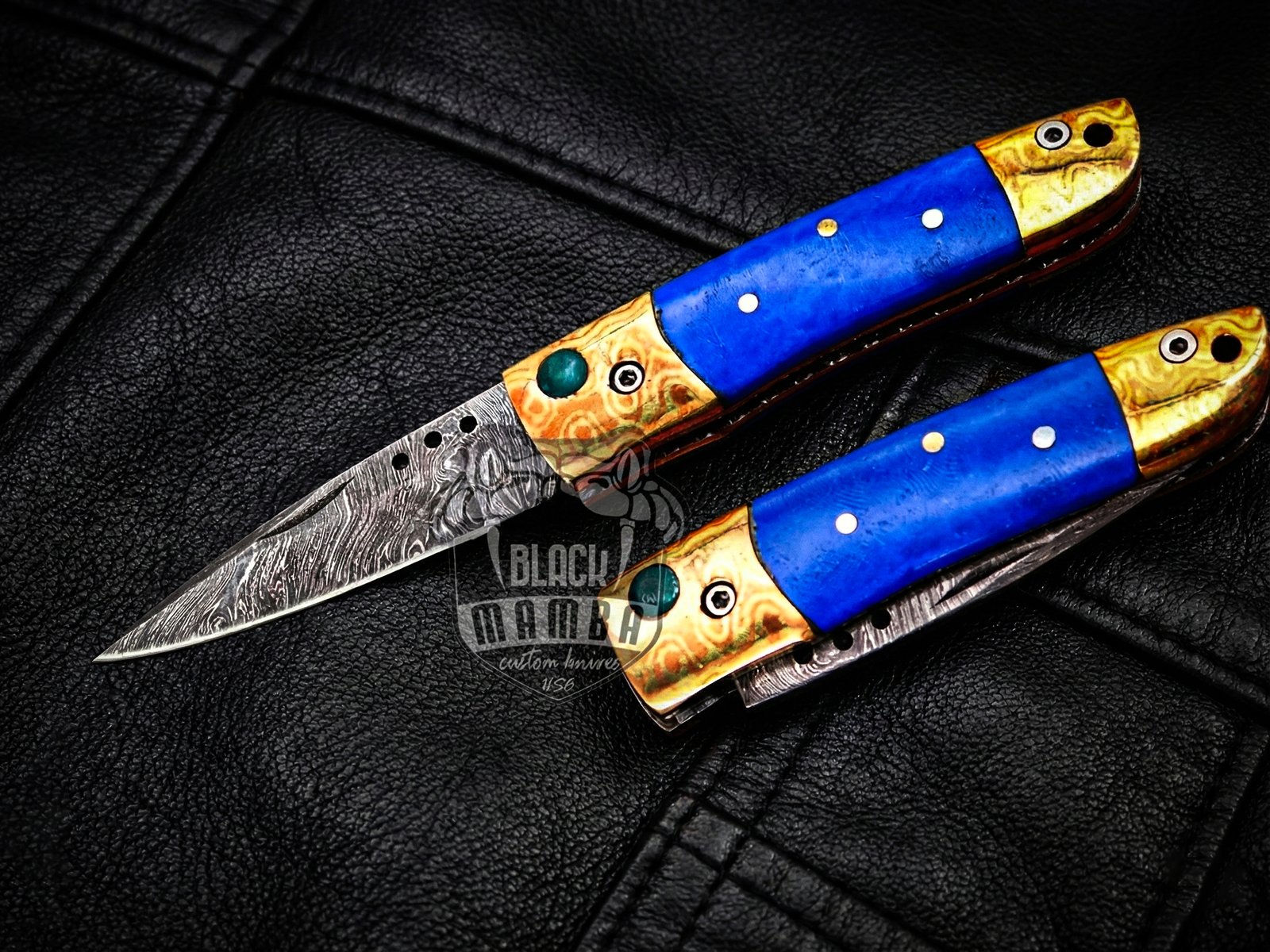
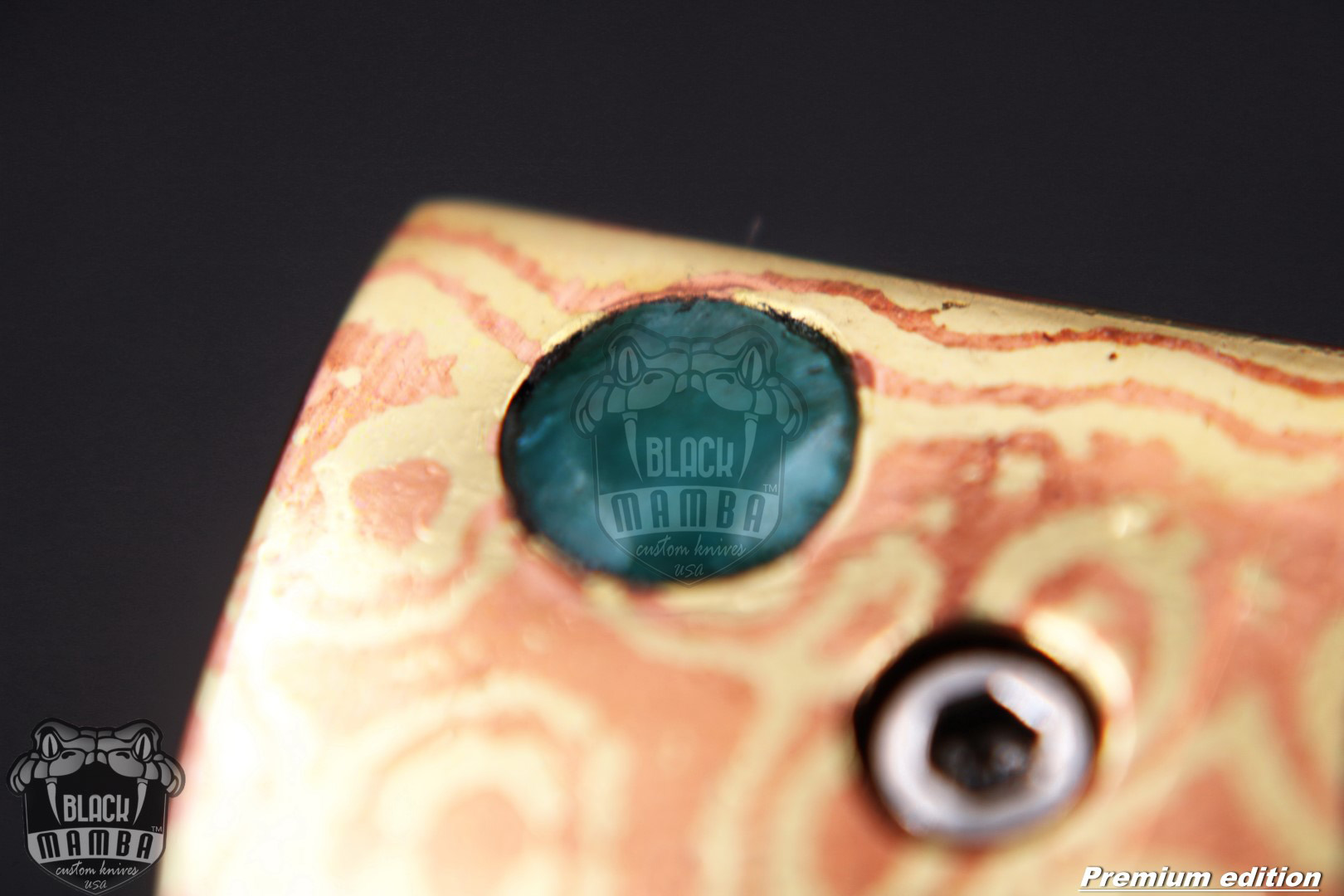
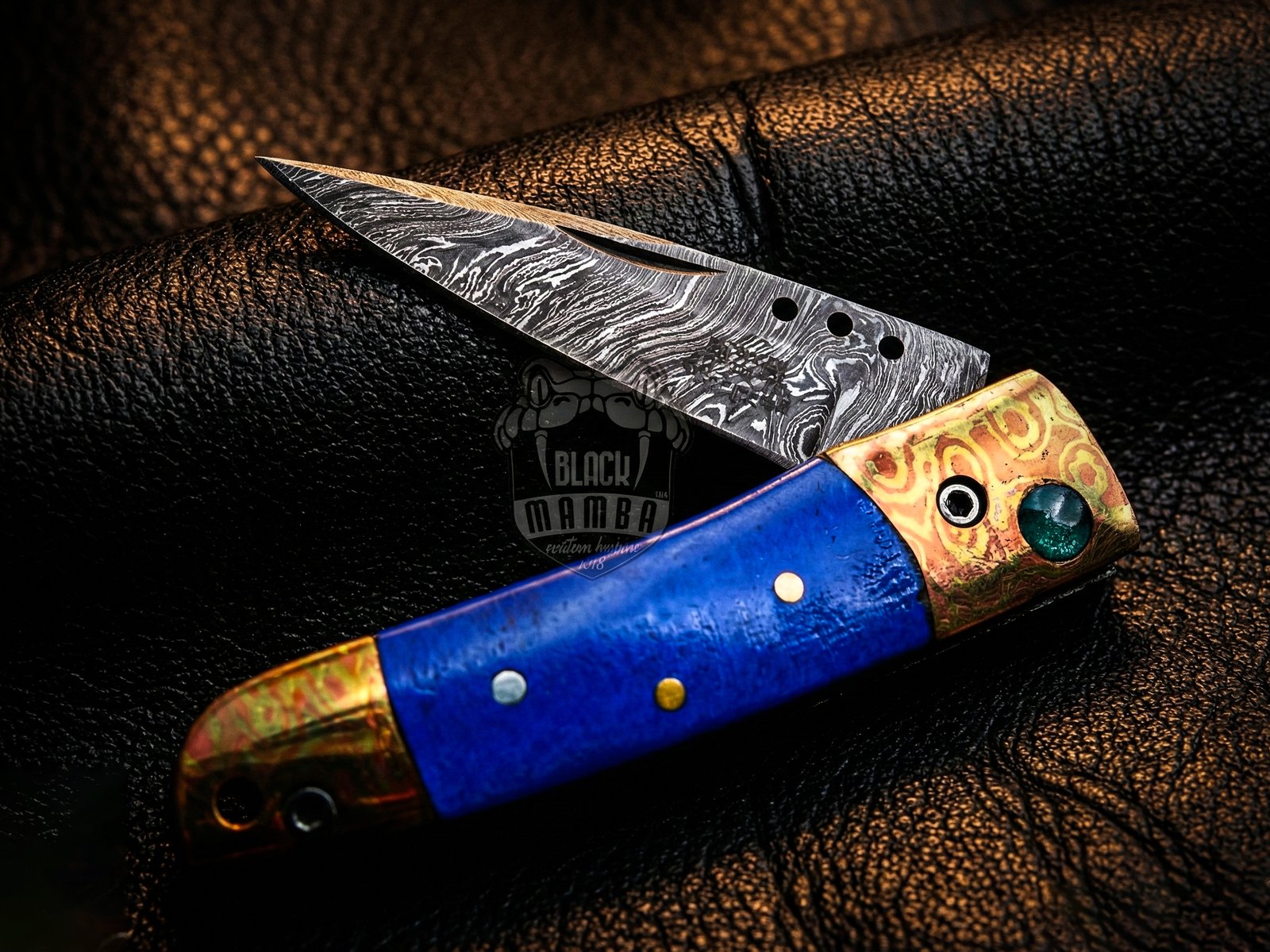
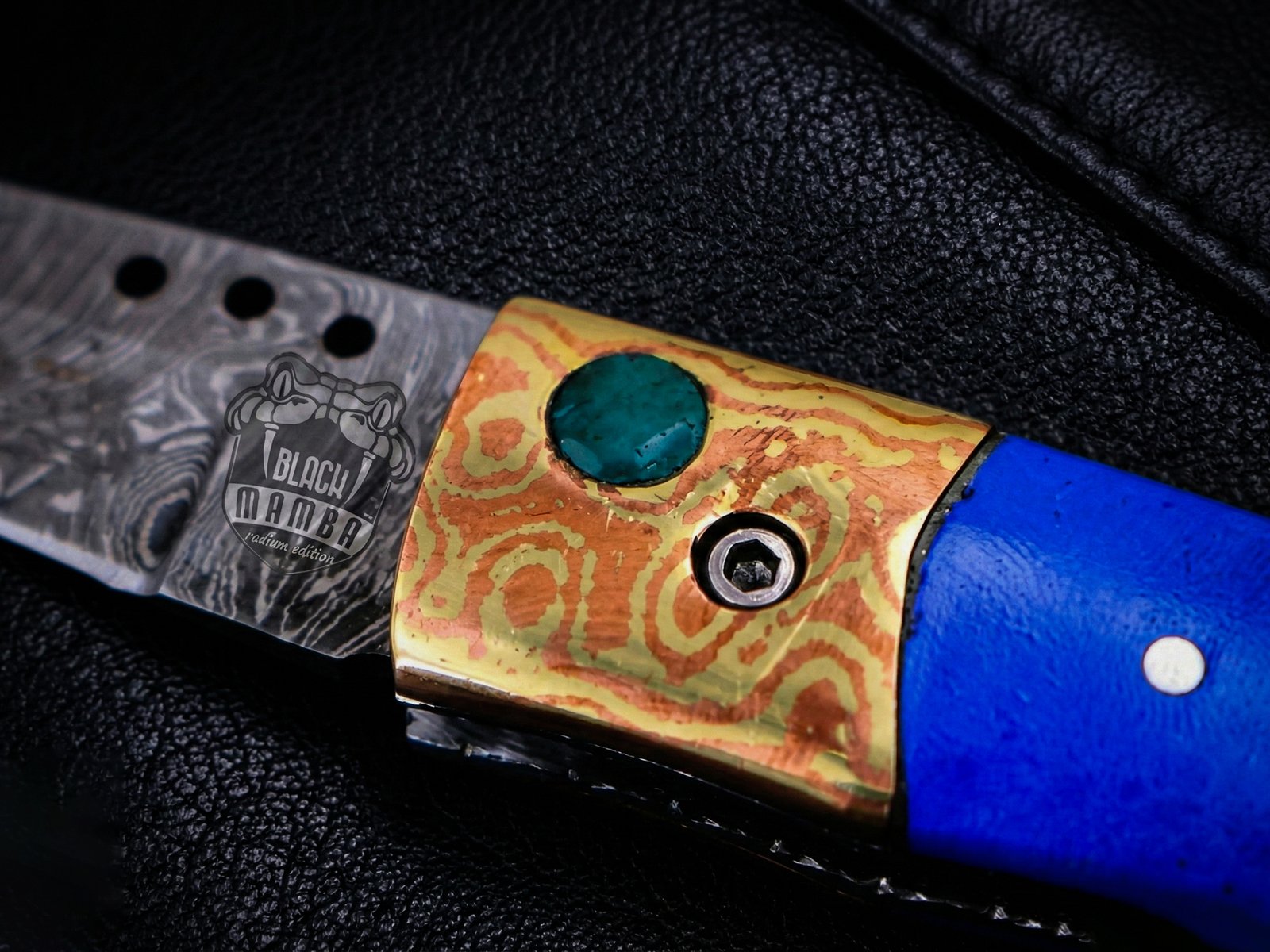
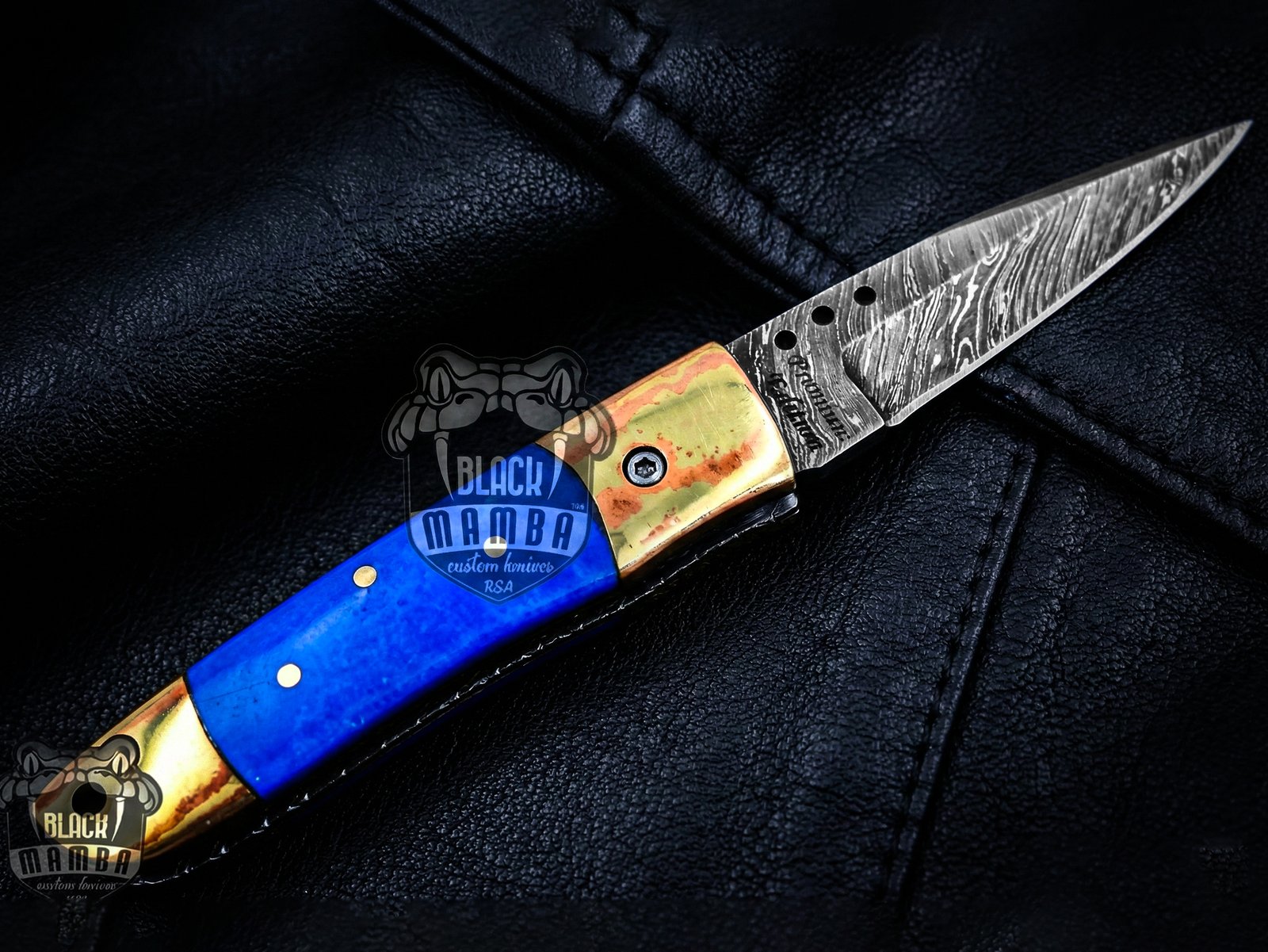
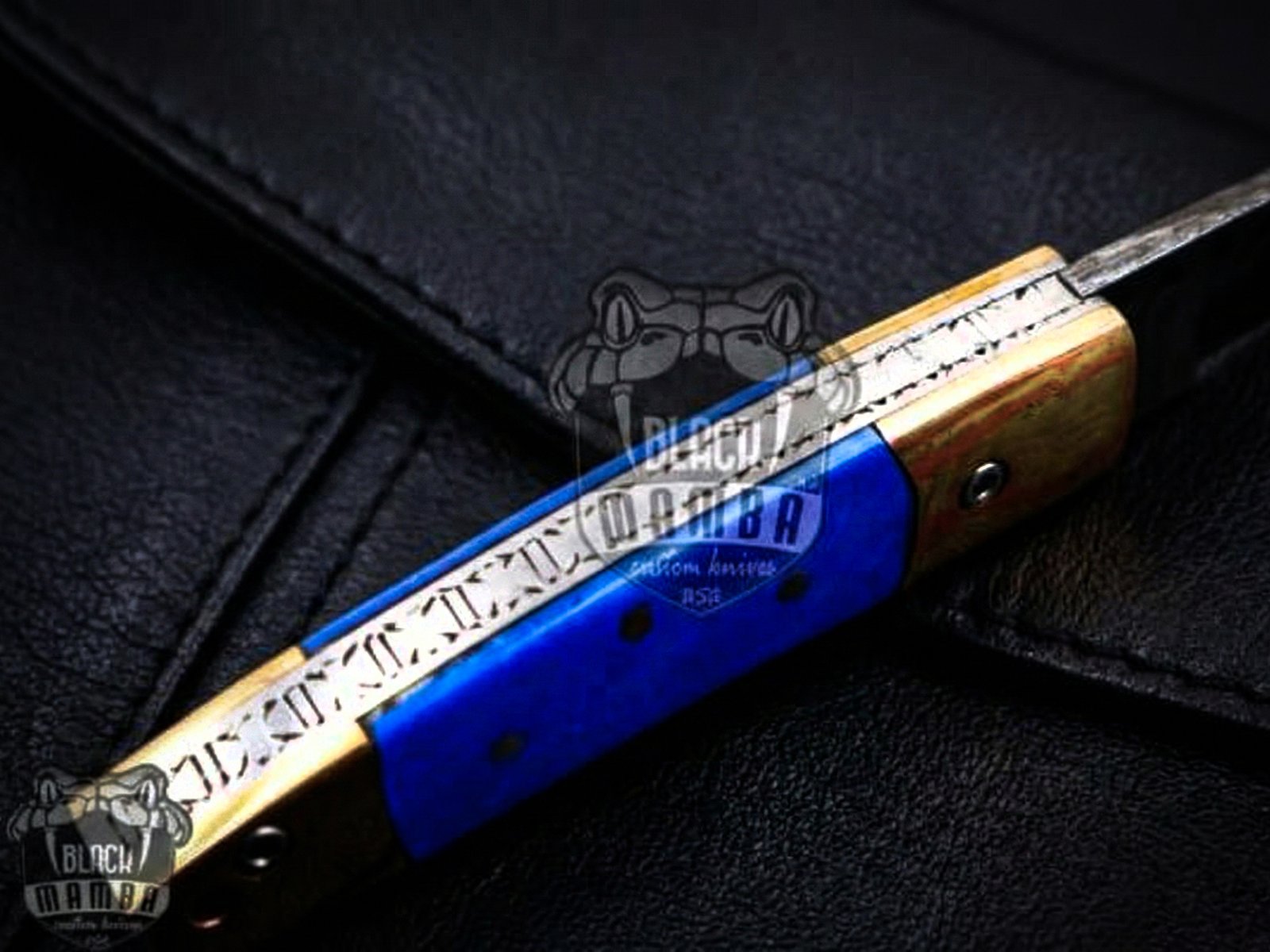
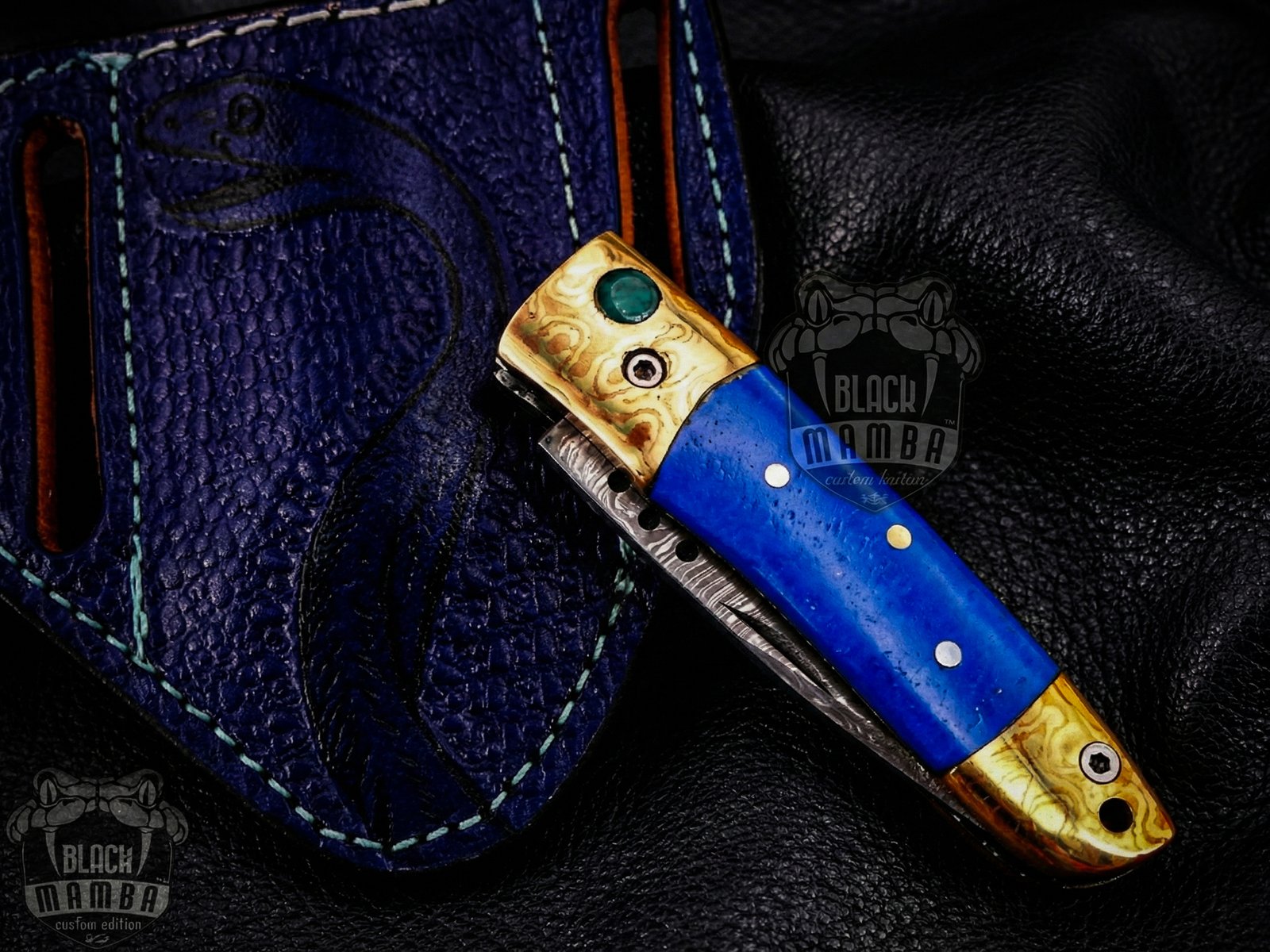
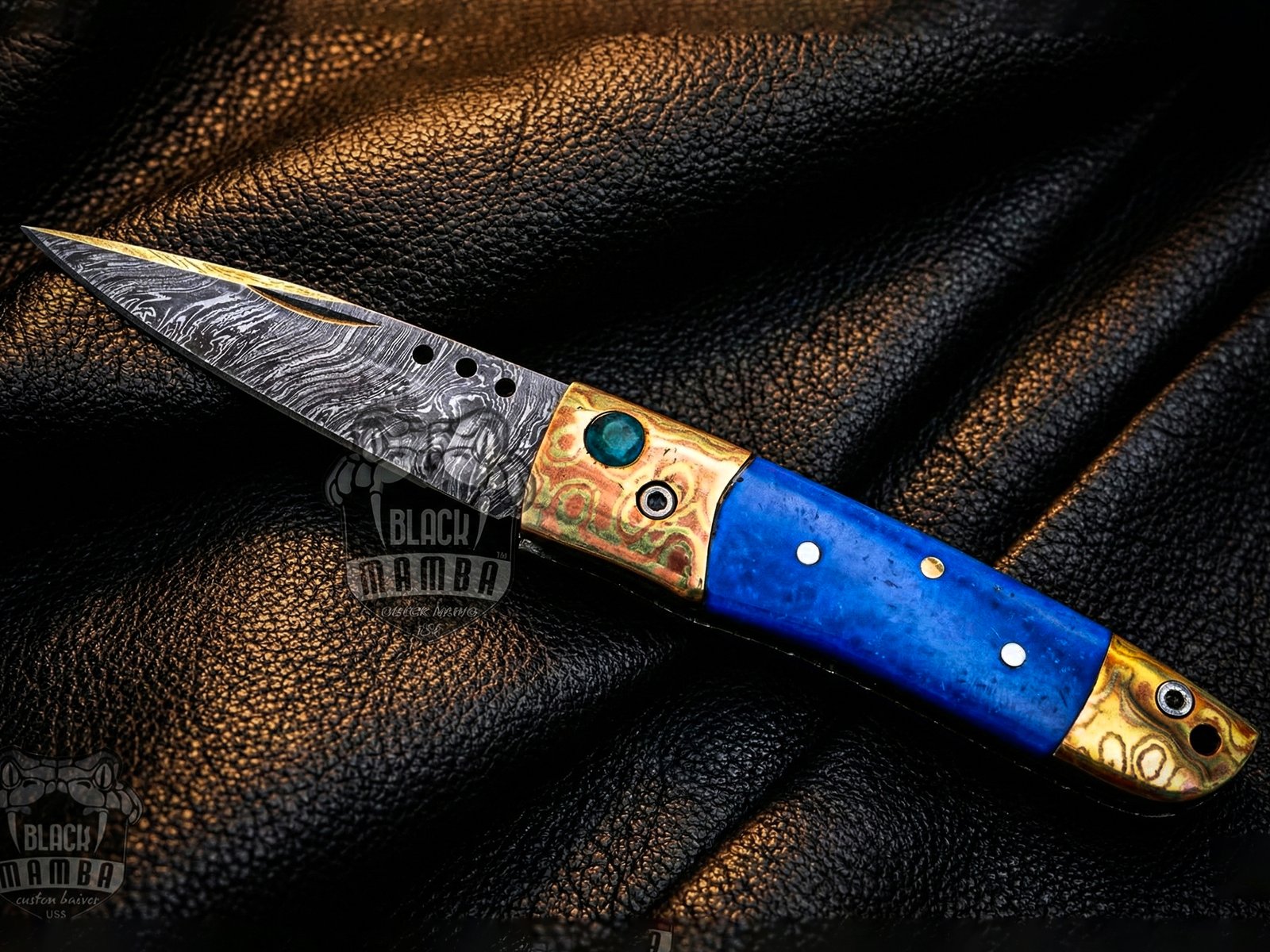
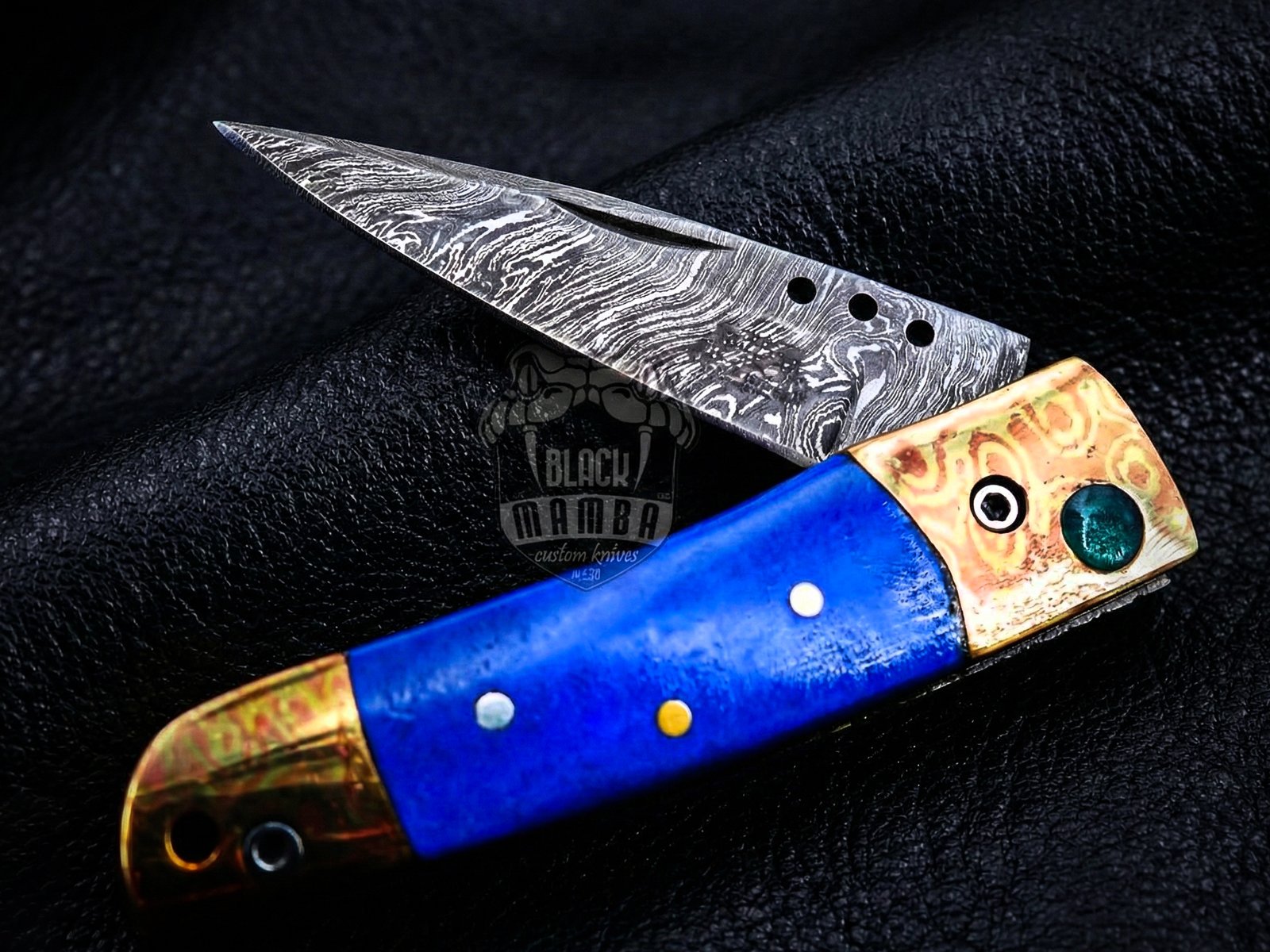
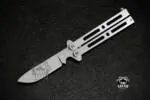
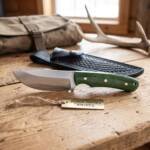
The Poseidon is the most decorated folder that leaves this shop. Mokume bolsters with their own swirled grain, a deep blue scale between them, and a green stone set into the metal near the pivot.
| Steel | 1095 + 15N20 Damascus, 352 layers |
| Handle | Blue lapis panel with mokume gane bolsters |
| Hardness | 58–60 HRC, oil tempered |
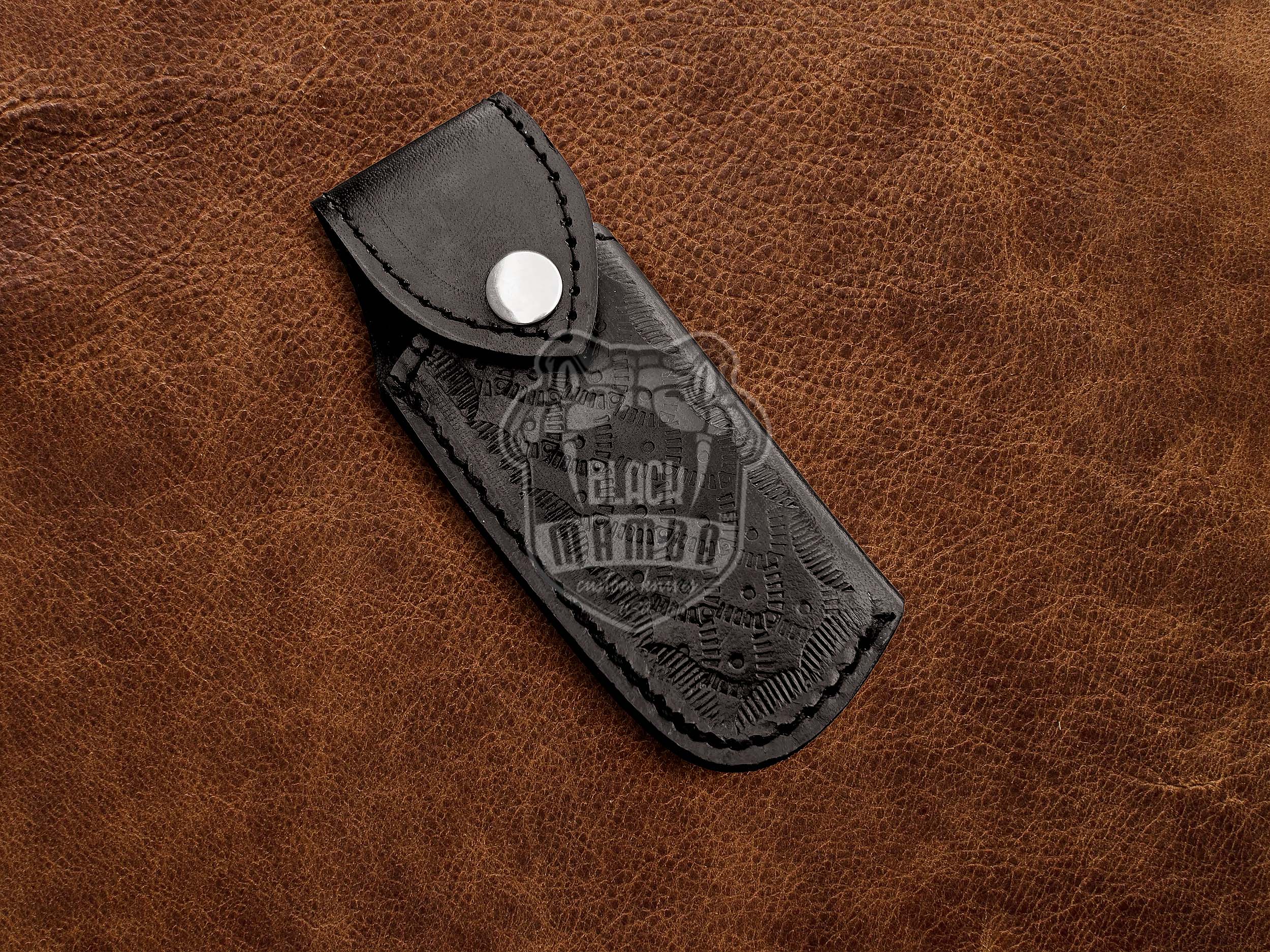
| Included | Hand-stitched leather sheath |
This one is for: the collector, or the person buying a milestone gift. It is a working folder at three inches closed and it opens and cuts like one, but nobody buys it because they needed something to open boxes.
Mokume gane, and why it looks like that
Mokume is a laminate of dissimilar non-ferrous metals — traditionally copper alloys — forge welded, then carved into and flattened so the buried layers surface as a pattern. It is the same idea as pattern-welded steel applied to soft metal, and it is slow, wasteful work: a lot of the billet ends up on the floor. The result is that no two bolsters on any two knives match, and the pattern goes all the way through rather than sitting on the surface.
A three inch closed folder
Closed at three inches, this lives in a coin pocket without announcing itself. That is small for the price bracket, and deliberately so — the knife is meant to be carried and shown rather than displayed on a shelf. The scale material and the stone inlay mean it is not the knife to take somewhere it will get bounced off concrete.
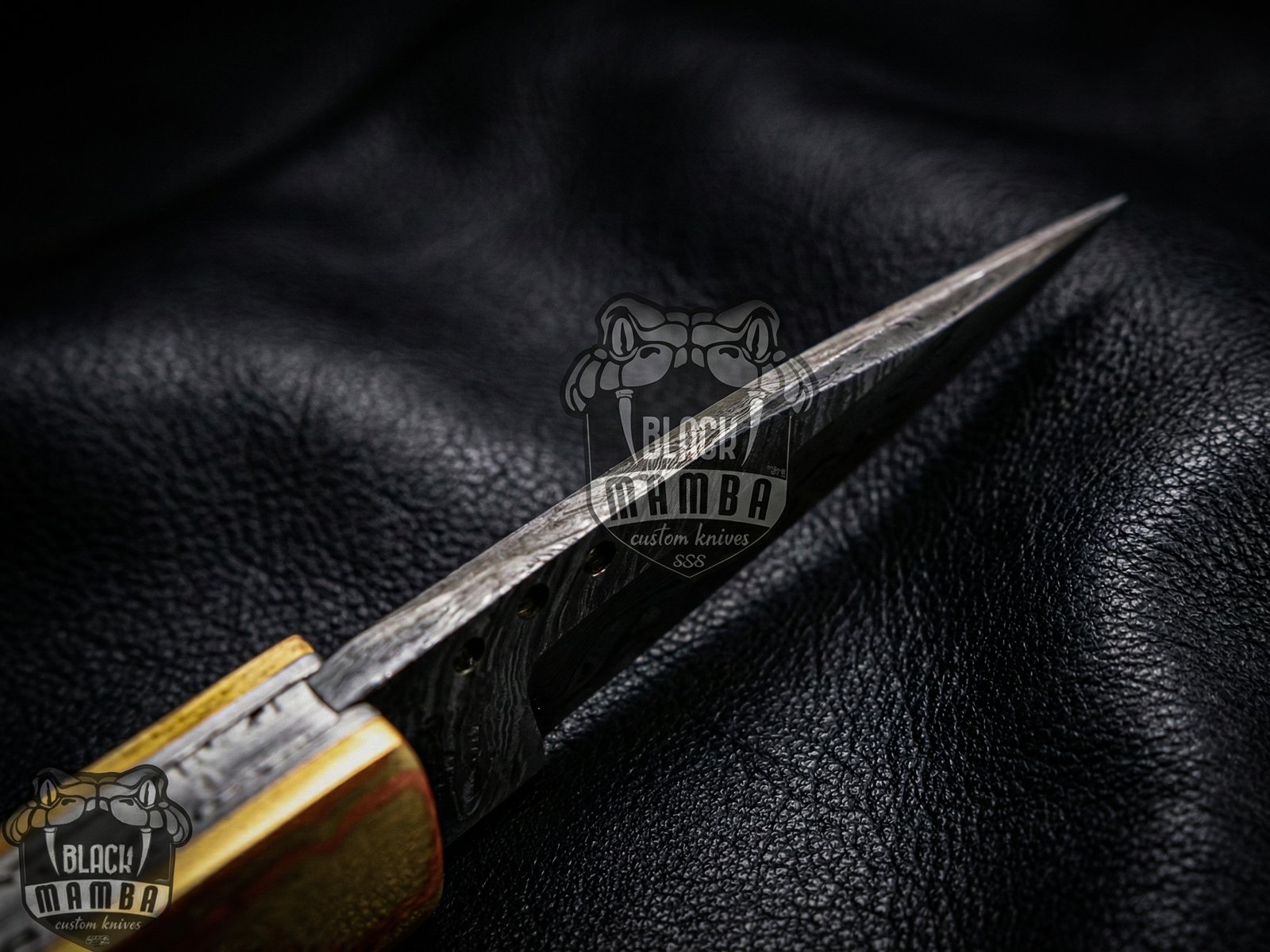
Damascus on a short blade
A short blade shows pattern differently. There is less surface, so the layering reads tighter and more compressed than it does on a seven inch bowie, and it is more sensitive to how the etch was timed. It also means sharpening removes proportionally more of the visible pattern edge over time, so keep to a fine stone and take less metal off. If you want to see how a printed pattern differs, our note on real versus printed Damascus shows what to look for.
Care and storage: A folder collects lint, dust and skin oil in the pivot, and that is what stiffens the action long before the blade ever dulls. Flush it, dry it, and then set a single drop of thin oil on the pivot. Keep water away from the stone inlay and the mokume, which will discolor if it sits wet. The blade itself is high-carbon and wants oiling before storage. The method is in how to clean a pocket knife.
Collector questions
Will each one look the same as the photograph? No, and it should not. Mokume and pattern-welded steel are both random within a range. Expect the same materials and layout, not an identical pattern.
Is it meant to be carried? It can be. Many owners keep it for occasions and carry something plainer daily — a straightforward option is the Fallen Damascus folder.
Does the mokume tarnish? It darkens over time, unevenly, which brings the pattern up. Polish will reverse it if you want it bright.
Model: Bmk-1011
Liam B.: (verified owner) –
“I appreciate the craftsmanship in this pocket knife. It’s evident that it’s made with care and attention to detail. It’s a valuable tool in my collection.”
JOHN BUCKI (store manager) –
. I just received the knife and I am very impressed, exquisite craftsmanship my friend. Definitely going to be ordering another one from you guys soon, a fixed blade this time though.
Sophia G.: (verified owner) –
“This pocket knife has been my trusted companion on countless adventures. It’s reliable, sharp, and the Damascus pattern is simply mesmerizing.”
William P.: (verified owner) –
“I’m a long-time customer of Black Mamba Knives, and this Damascus folding pocket knife lives up to their reputation for quality. It’s an exceptional product.”
Laura Vance –
Got this as an anniversary gift and it exceeded what I expected. Weight and balance make it feel like a real working knife not some cheap import. This is exactly why I keep coming back to this seller.
Mary Gomez –
This knife is a genuine work of art. This has quickly replaced my old go to knife for field dressing. Proud to support American made goods out of Memphis with this purchase. This is my new favorite in the collection.
Jerome Jones –
Genuinely really impressed with how this turned out. Weight and balance make it feel like a real working knife not some cheap import. Black Mamba Knives has earned a repeat customer with this one. Already added a few more items from this shop to my cart.
Jacob Anderson –
Good quality knife for the price. Good to see it’s made in the USA in Memphis, shipping was quick too. Blade quality is solid. Arrived a bit less sharp than expected but a few passes on a strop fixed it. Blade holds up well, edge retention could be slightly better. Good product. Just not quite perfect.
Ruth Williams –
Ordered late at night on a whim and woke up glad I did. Handle feels amazing and the balance is perfect. Handle has a great grip even with wet or gloved hands. Even the small details in the damascus pattern are crisp and clean. This one’s a keeper for sure.