

Description
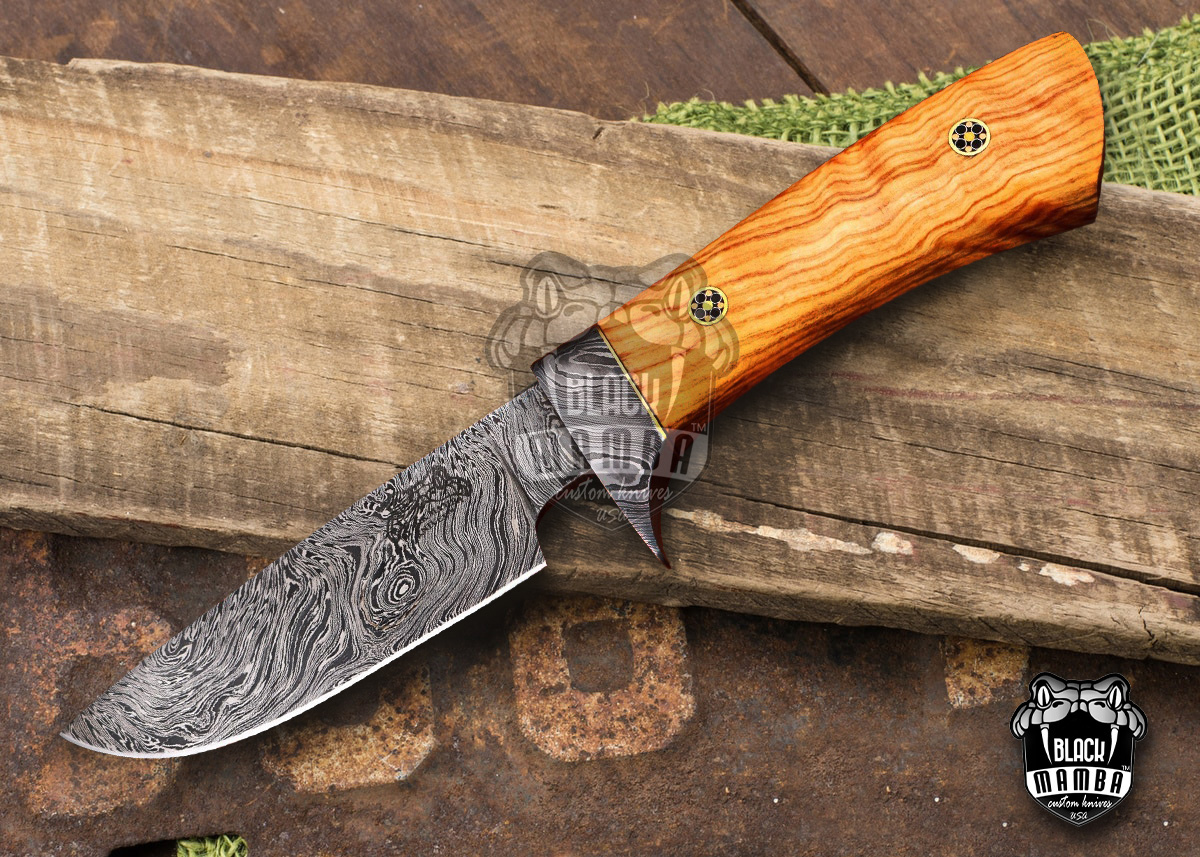
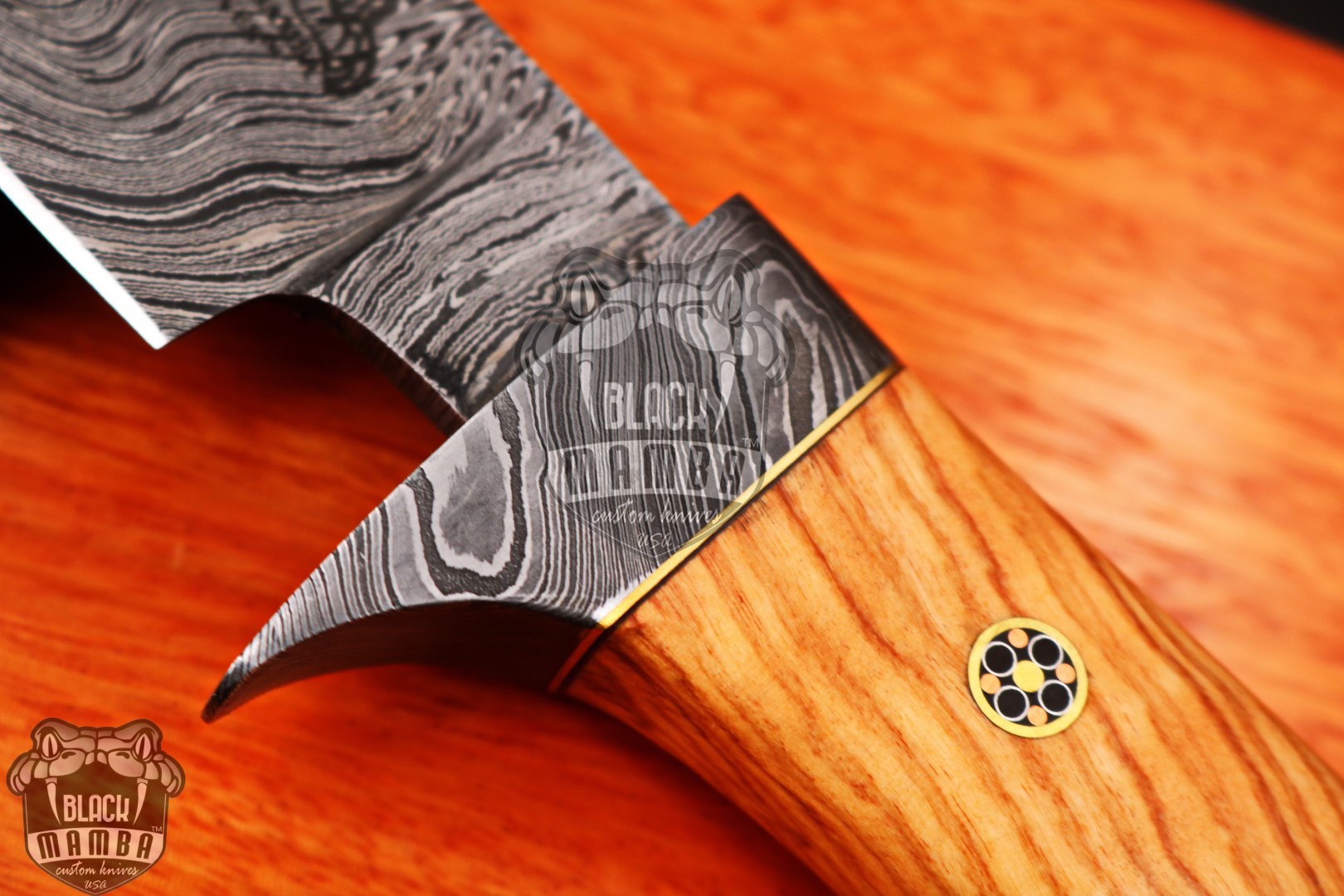
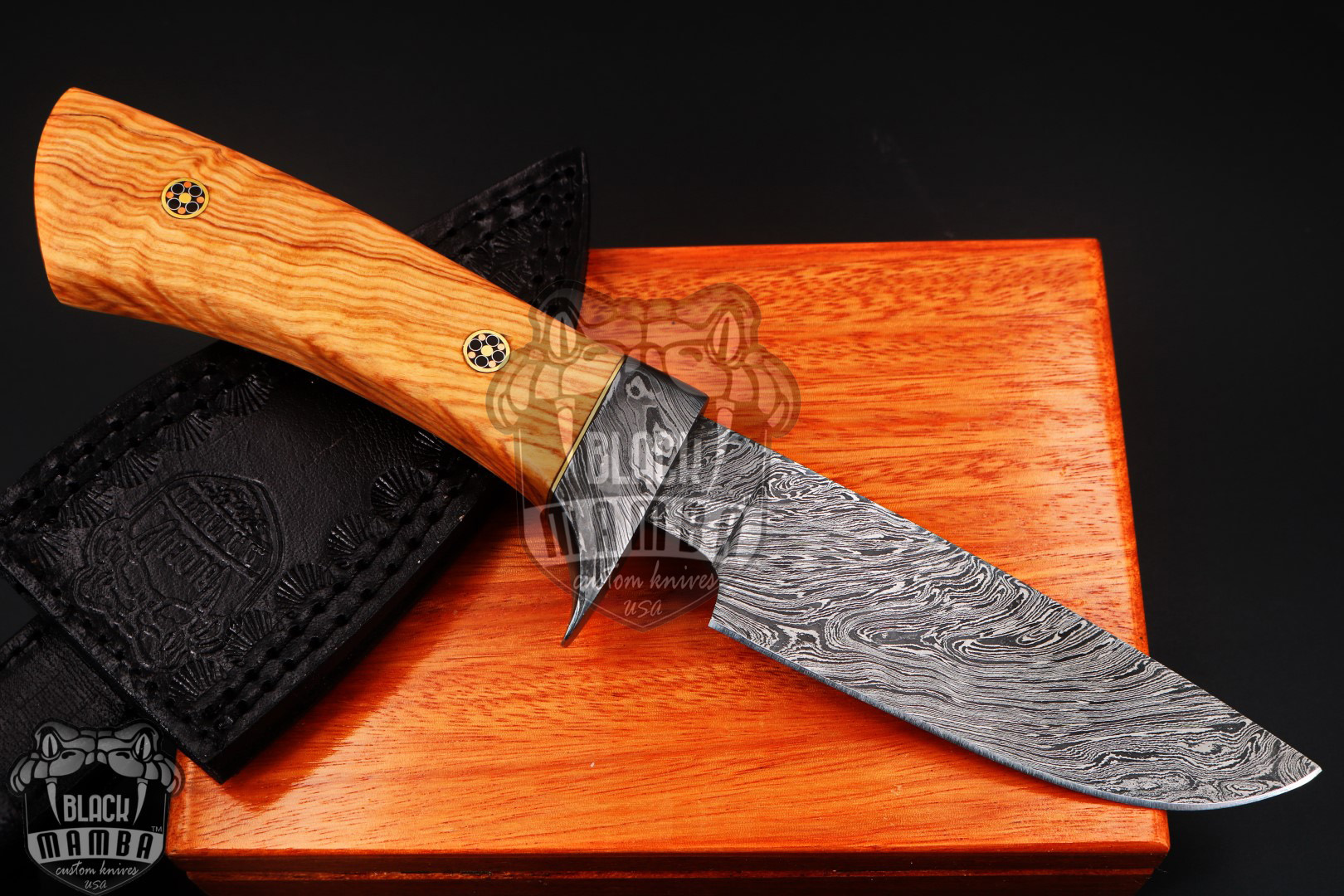
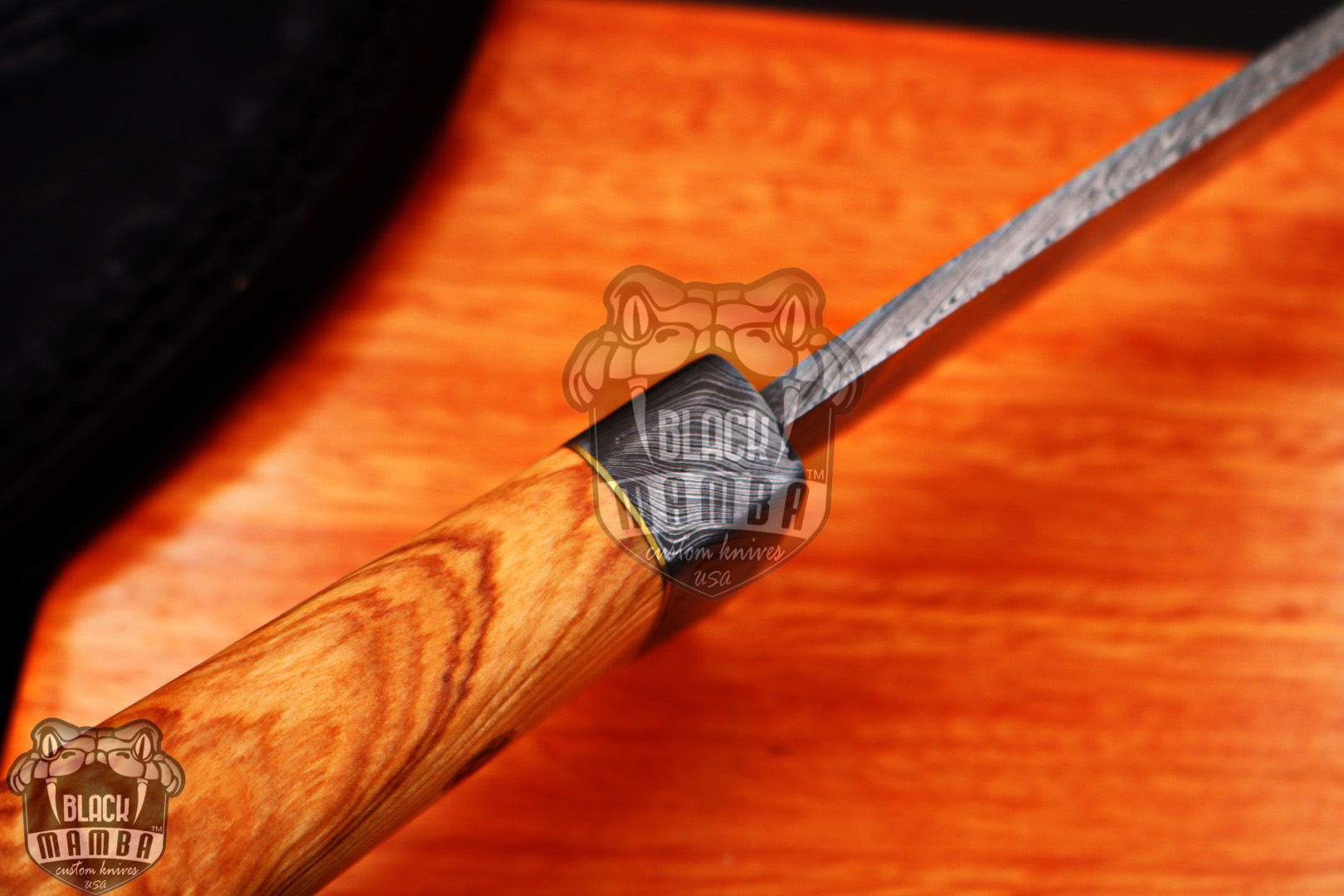
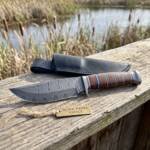
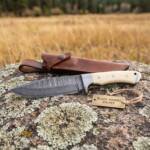
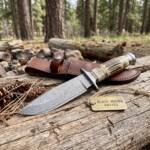
The Burmese Pythons is a compact fixed-blade hunter with a deep sharpening notch at the ricasso and a figured hardwood grip the color of amber.
| Steel | 1095 + 15N20 Damascus, 352 layers |
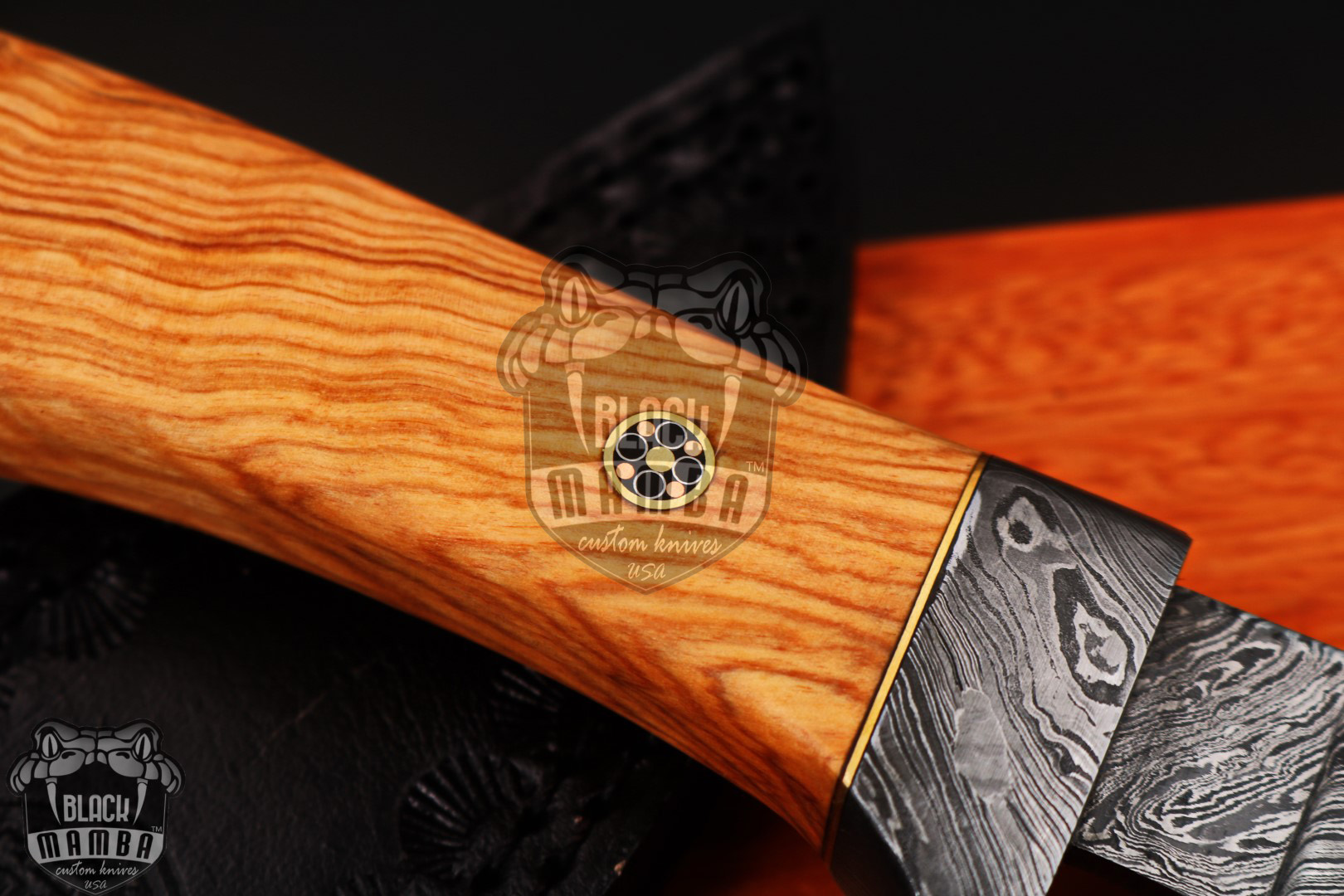
| Handle | Figured hardwood with a Damascus bolster |
| Hardness | 58–60 HRC, oil tempered |
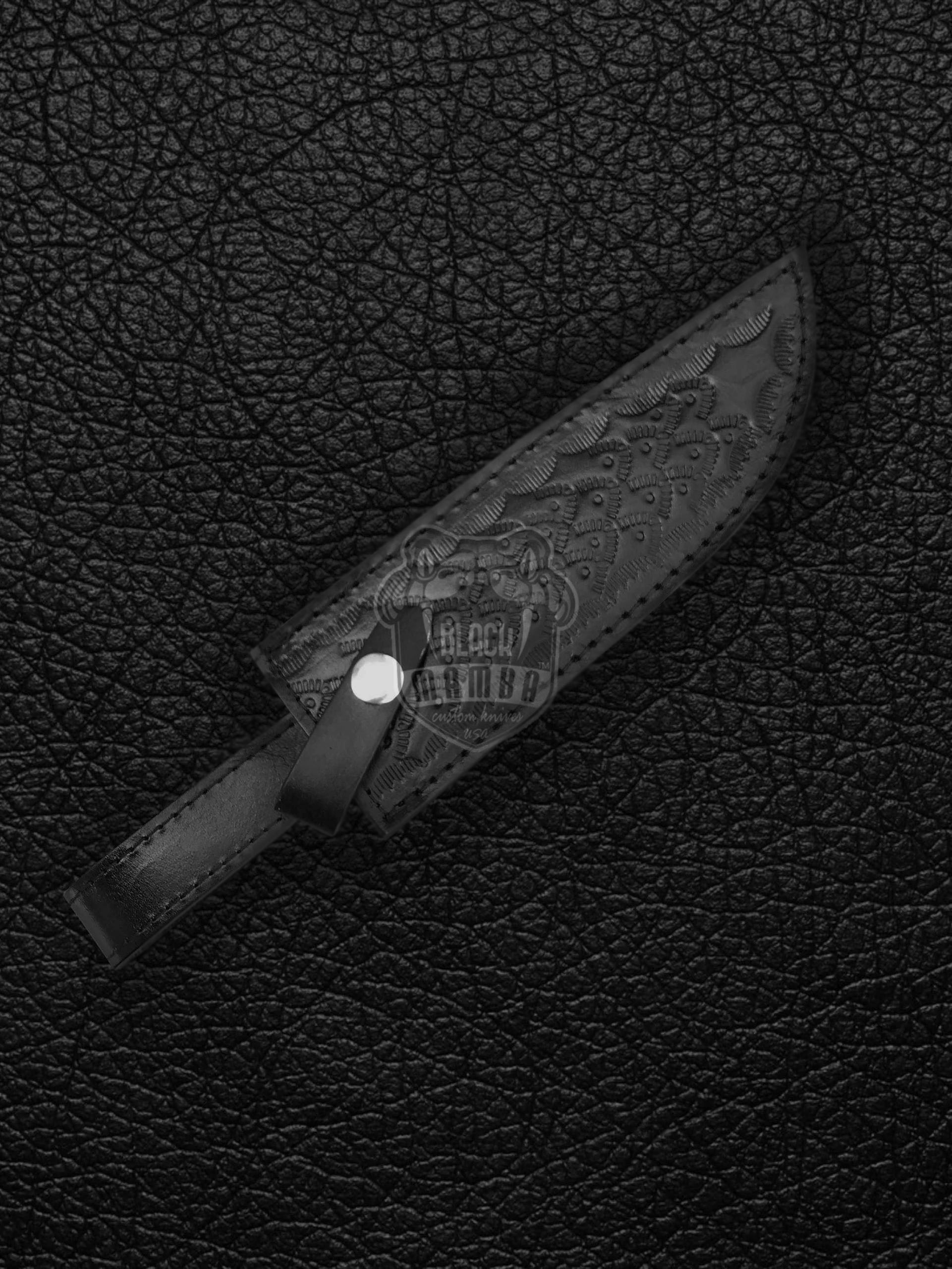
| Included | Hand-stitched leather sheath |
Best in the hands of: someone who wants one knife on the belt for a day outdoors. There is no folding mechanism to clog, no pivot to loosen, and nothing to fail when your hands are cold. The handle swells slightly toward the butt so it does not slide forward when it is wet, and the Damascus bolster gives the grip a positive front stop.
Care: a fixed blade lives in leather, and leather holds moisture, so store this one out of the sheath if it is going into a cupboard for the winter. Dry the carbon steel after every outing and oil it. The hardwood is figured and open-grained, and it drinks whatever you put on it, so use a wax rather than a heavy oil or the grip will stay tacky.
Reading the forged pattern
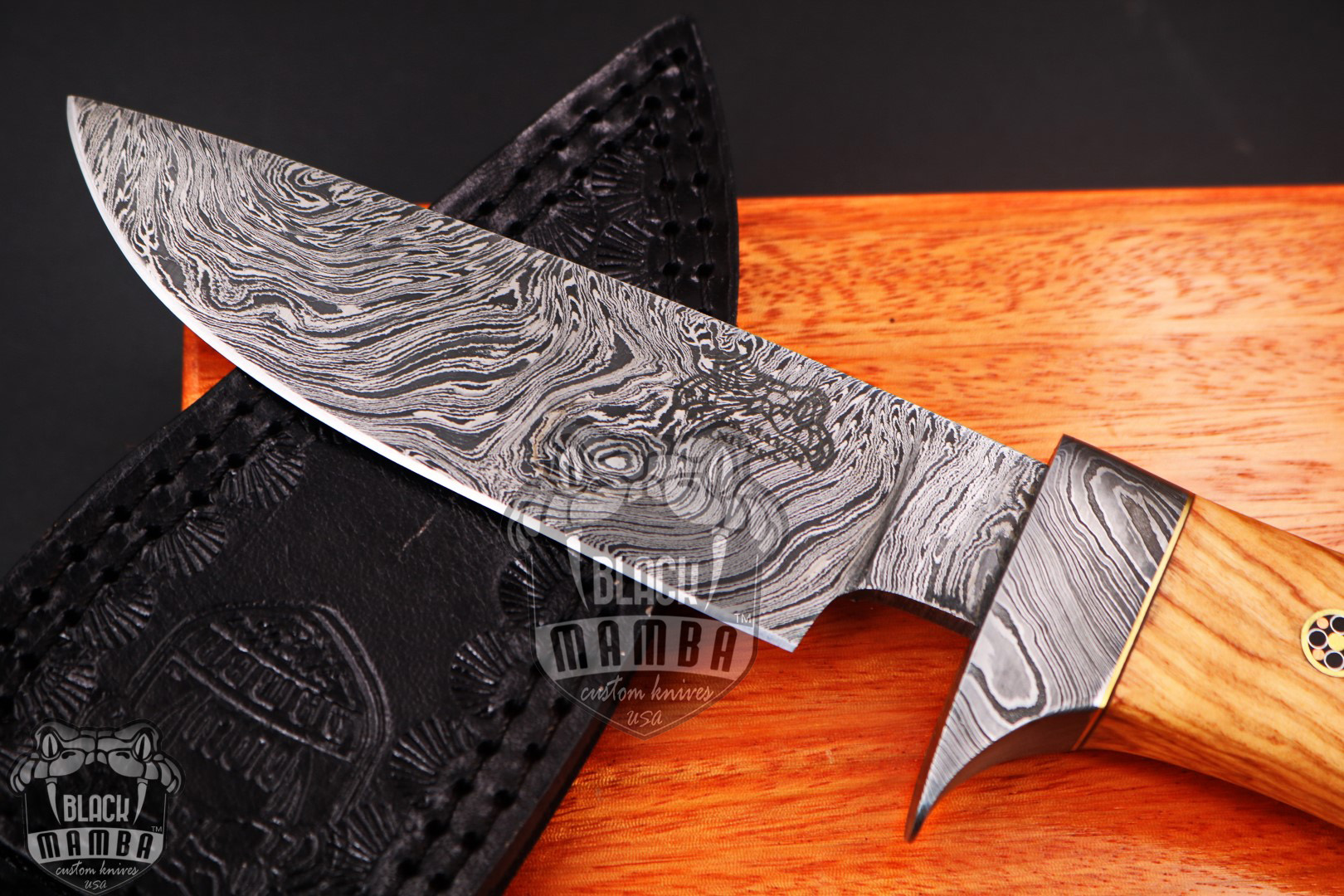
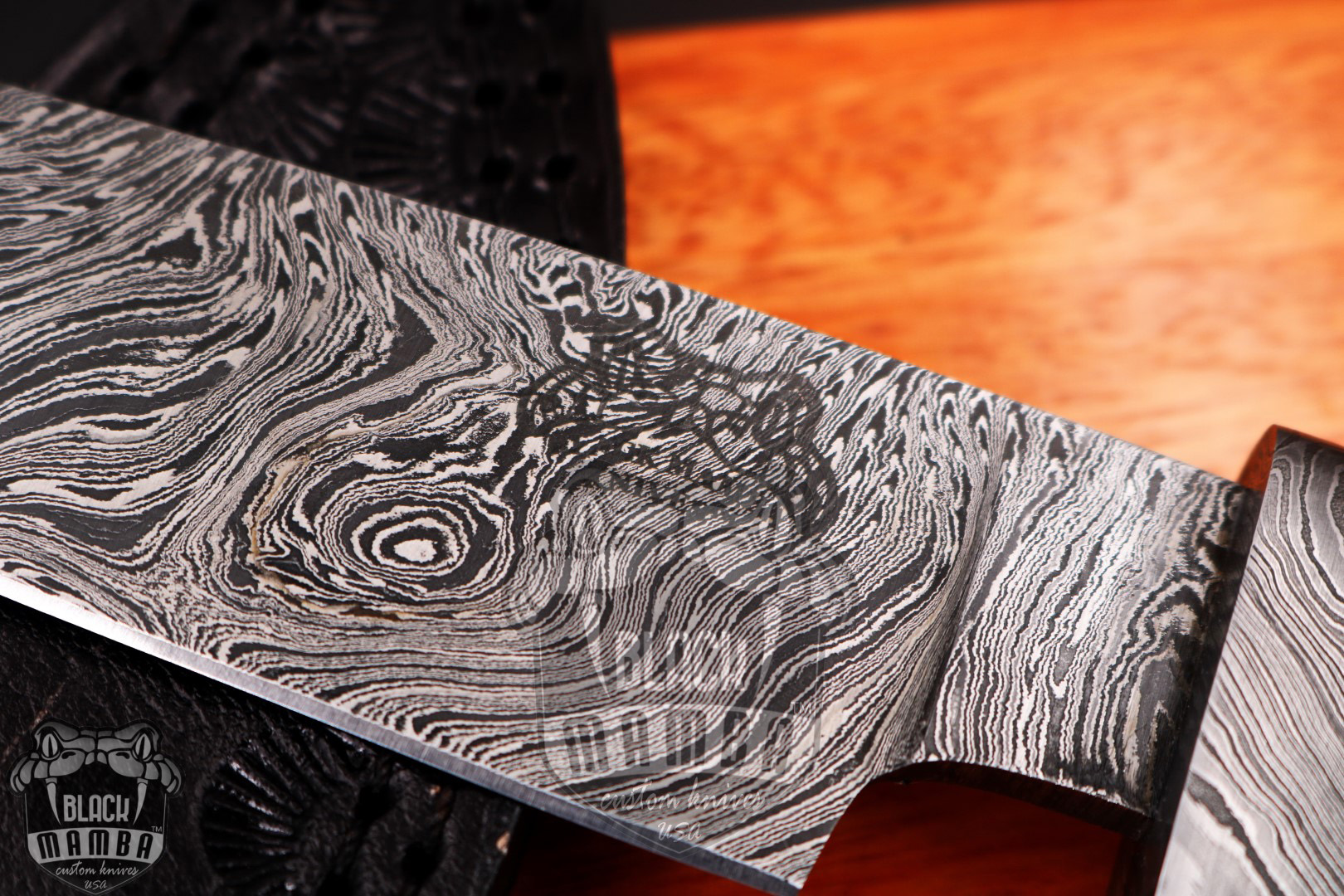
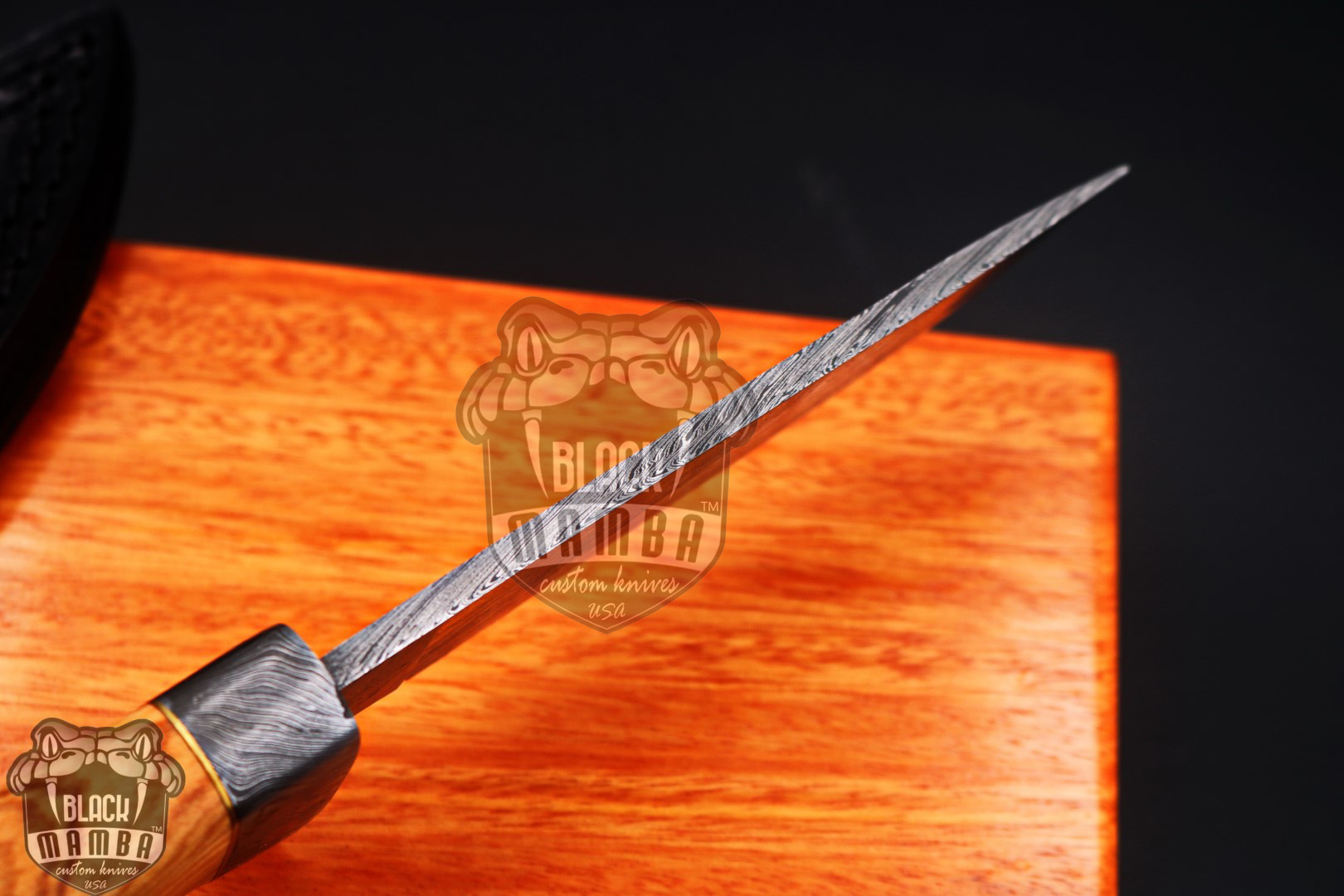
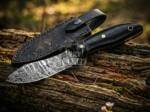
The banding on this blade runs in tight, tangled swirls rather than parallel lines, which is what a twisted billet looks like after it is flattened and ground. The pattern is not a surface treatment. Grind the blade thinner over years of sharpening and the same pattern is still there underneath. Damascus steel patterns explained puts names to the common ones.
The notch behind the edge
The choil at the base of the edge is not decoration. It gives a sharpening stone somewhere to run out, so you can take the edge all the way back to the ricasso without rolling a burr into the bolster. It also gives you a place to choke up when you need close control on a small cut. Knives without one develop a stubborn dull patch right at the heel, because a stone cannot reach in there without fouling the bolster, and that patch is exactly where you apply the most force. Half an inch of relief solves a problem that otherwise gets worse every time the knife is sharpened.
Fixed blade against a tracker
This is a slim knife that skins and slices. A tracker is the opposite argument: mass, a chopping section and a spine designed for a baton. If that is closer to your use, the Moss Talon D2 tracker knife shows what the other end of the range looks like, and knife blade shapes explained covers why the profiles diverge.
FAQs
Why does the specification list fewer rows than other knives? We publish only measurements we have verified on the bench for this model. Anything not listed, ask us and we will measure it.
Is leather part of the order? Yes, stitched by hand and cut to this blade.
Does the pattern wear off? No. It goes through the steel.
Model: BMK-171
Emily M. (verified owner) –
“I was looking for a unique and high-quality knife, and I found it here. The Damascus pattern on the blade is stunning, and the knife feels great in my hand. Superb customer service too!”
David S. (verified owner) –
“I’m an avid cook, and I can’t say enough about the Damascus knife I purchased. It’s not only sharp but also well-balanced. It’s become an essential tool in my kitchen.”
Thomas (verified owner) –
Everything from this shop is incredible
Samantha Green –
This knife has quickly become my favorite piece in the collection.
Amanda Anderson –
Knew this knife was special the second I opened the box. Edge retention has been great even after regular use in the field. Already added a few more items from this seller to my cart.
Natalie Perez –
No regrets on this purchase at all. Came in a nice gift box which made it feel even more special. Highly recommend this one.
Margaret Jefferson –
Didn’t think a knife at this price could feel this premium.
Hunter Castillo –
Honestly one of my better purchases in a while. Leather sheath is thick and well stitched. Not the cheap stuff you usually get. Would not hesitate to order again.
DeShawn Murphy –
This showed up faster than expected and looked incredible. I keep coming back to Black Mamba Knives because it’s always this good. This has quickly replaced my old go to knife for field dressing. Love it.
Blake Allen –
This is exactly what I wanted and then some. Made in the USA right in Memphis, and it shipped worldwide without any long wait.
Sharon Reyes –
Really happy with this knife overall. Handle looks great though it’s a little smaller than I imagined. Would buy from this shop again.
Deborah Coleman –
Perfect gift. Perfect quality. No complaints. Came in a nice gift box which made it feel even more special. Edge retention has been great even after regular use in the field. This is my new favorite in the collection.
Olivia Jackson –
Couldn’t ask for a better knife honestly. Edge retention has been great even after regular use in the field. Sheath snaps shut securely and doesn’t feel flimsy at all. You can tell it’s real American craftsmanship out of Memphis. Shipping was quick too. Can’t wait to see what else this seller has to offer.
Antonio Jimenez –
Incredible craftsmanship on this one. Steel has a gorgeous pattern that looks different in every light. This is my third order from Black Mamba Knives and they never disappoint. This is the kind of purchase that makes online shopping worth it.
Douglas Rivera –
This thing is a beast in the best way. Every piece of the fit and finish looks hand checked before it shipped. Weight and balance make it feel like a real working knife not some cheap import. Would send this as a gift again in a heartbeat.
Dustin Jefferson –
Solid knife. Glad I ordered it.
Raymond Cooper –
It’s so so. Not great not bad. Blade edge needed some sharpening out of the box. It’s okay for the price.
Amy Castillo –
This is hands down one of the best knives I’ve bought online. This is why Black Mamba Knives is my go to for anything knife related. This shop clearly takes pride in their work.
Jessica Jackson –
Can’t stop showing this off to everyone who comes over. Proud to support American made goods out of Memphis with this purchase. Weight and balance make it feel like a real working knife not some cheap import. This has quickly replaced my old go to knife for field dressing. Handle feels amazing and the balance is perfect. Definitely bookmarking this store for future orders.
Jerry Thompson –
Set my expectations low going in and this blew right past them. Came in a nice gift box which made it feel even more special. Telling everyone I know to check this seller out.
Dustin Ramirez –
It’s alright. Not great not bad. Handle material felt a bit different than pictured. It’s fine but I expected a little more for the price. Could go either way on recommending this.
Larry Cox –
Happy with this one for the most part. Handle looks great though it’s a little smaller than I imagined. Would buy from this shop again.
Richard Sanders –
Ordered late at night on a whim and woke up glad I did. Handle feels amazing and the balance is perfect. I keep coming back to Black Mamba Knives because it’s always this good. No hesitation recommending this to anyone looking.
Emma Long –
Can’t stop showing this off to everyone who comes over. Every piece I’ve gotten from Black Mamba Knives has been solid. Zero complaints from me on this purchase.
Malik Morris –
This showed up faster than expected and looked incredible. Handle feels amazing and the balance is perfect. Would not hesitate to order again. Every piece I’ve gotten from Black Mamba Knives has been solid.