

Description
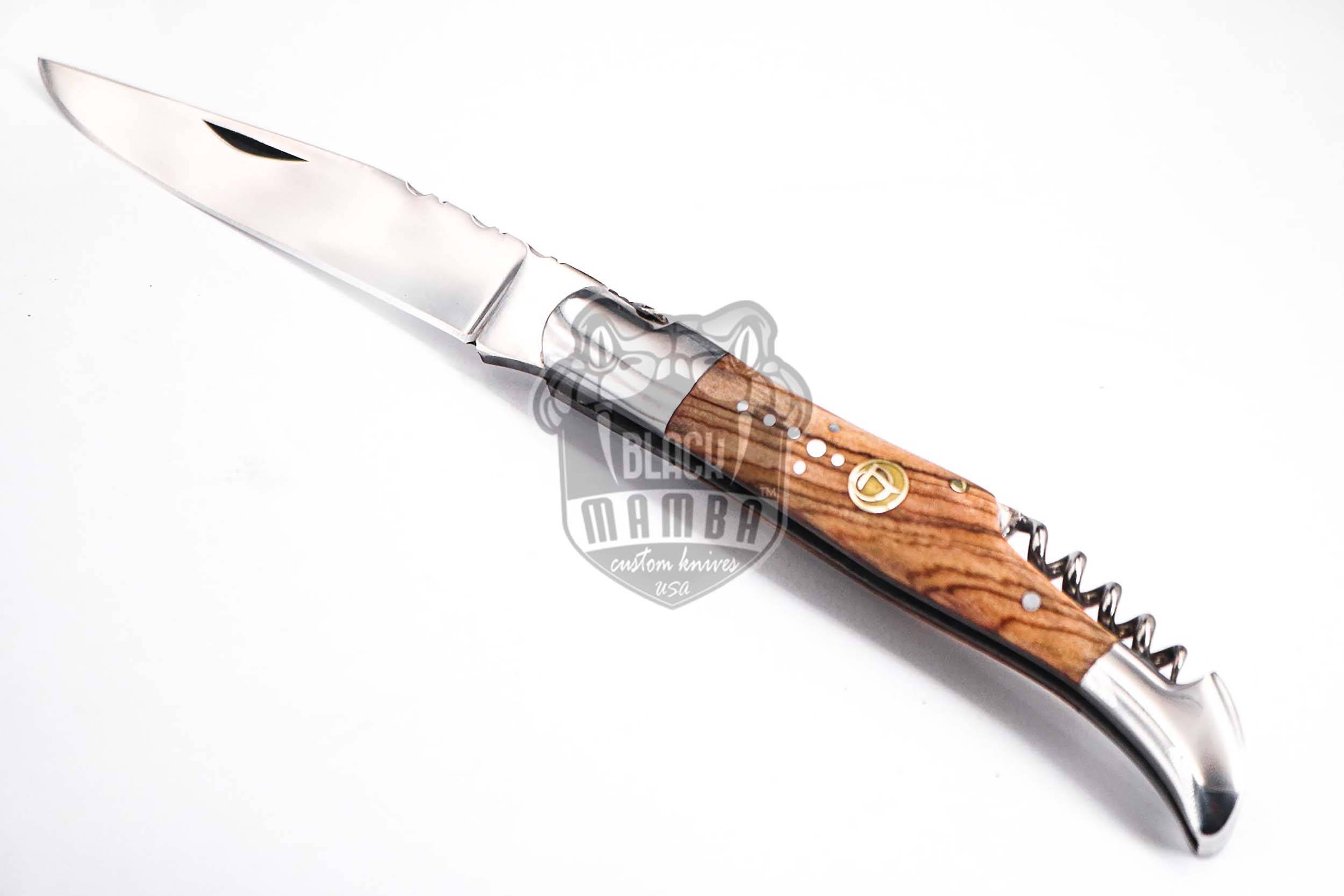
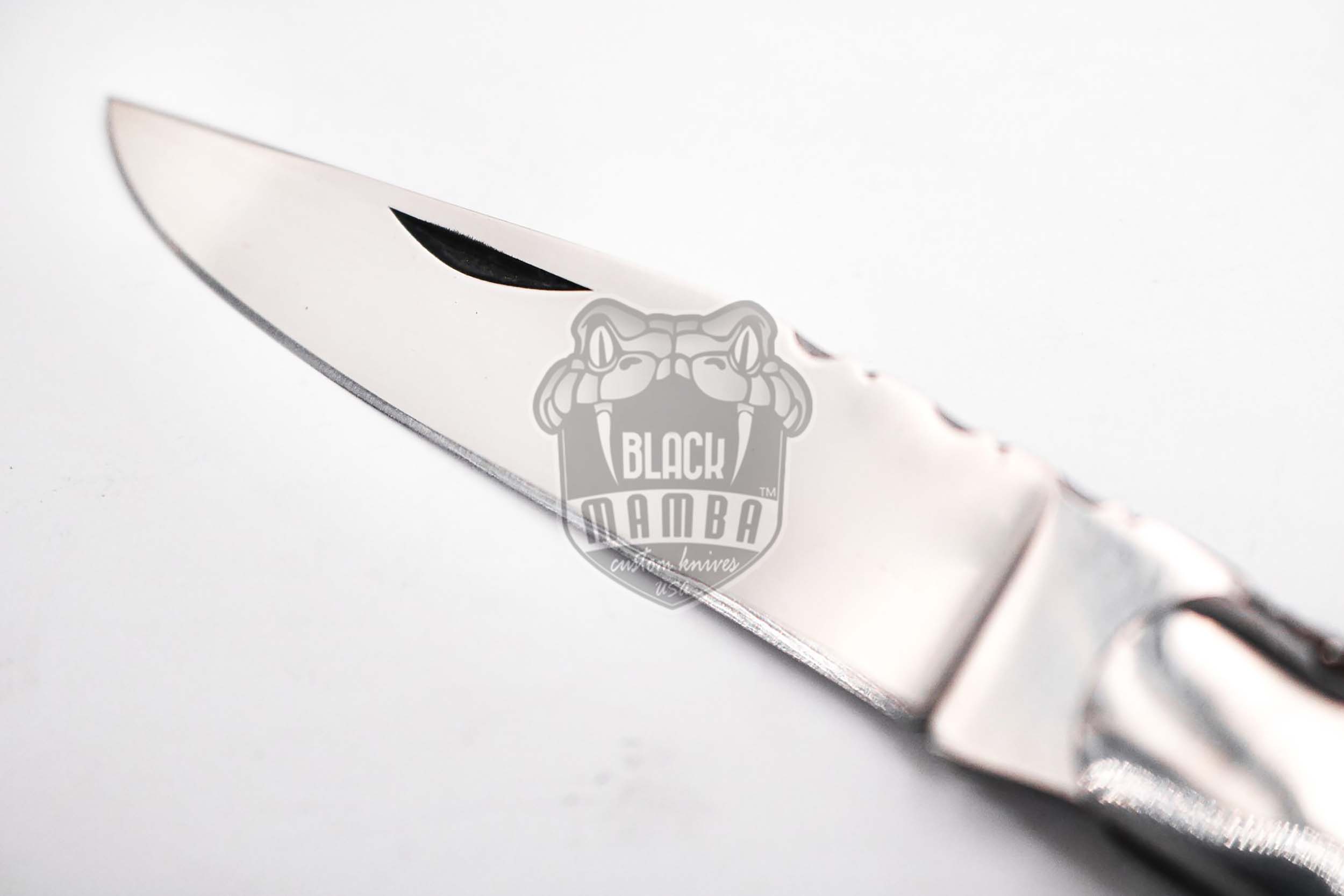
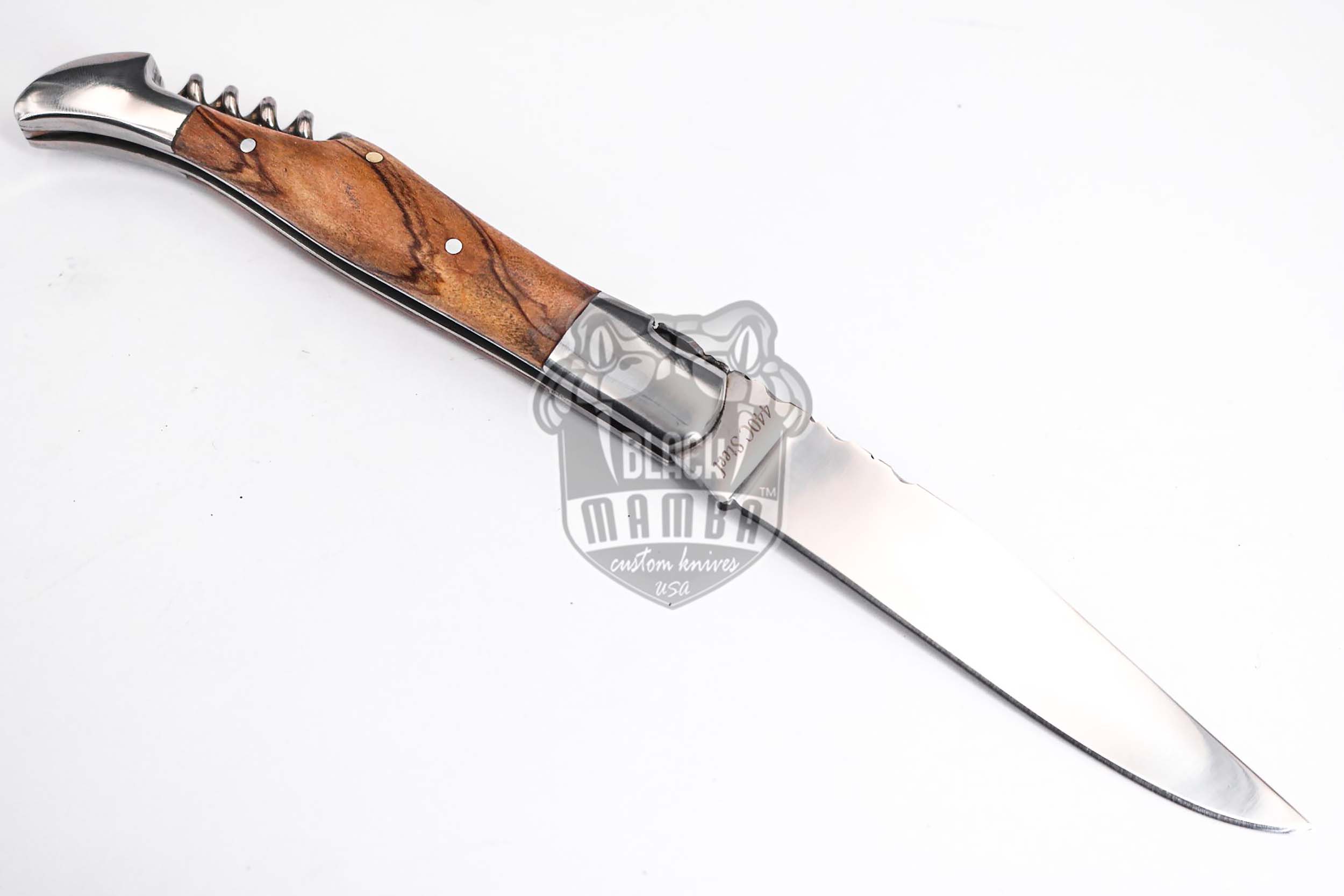
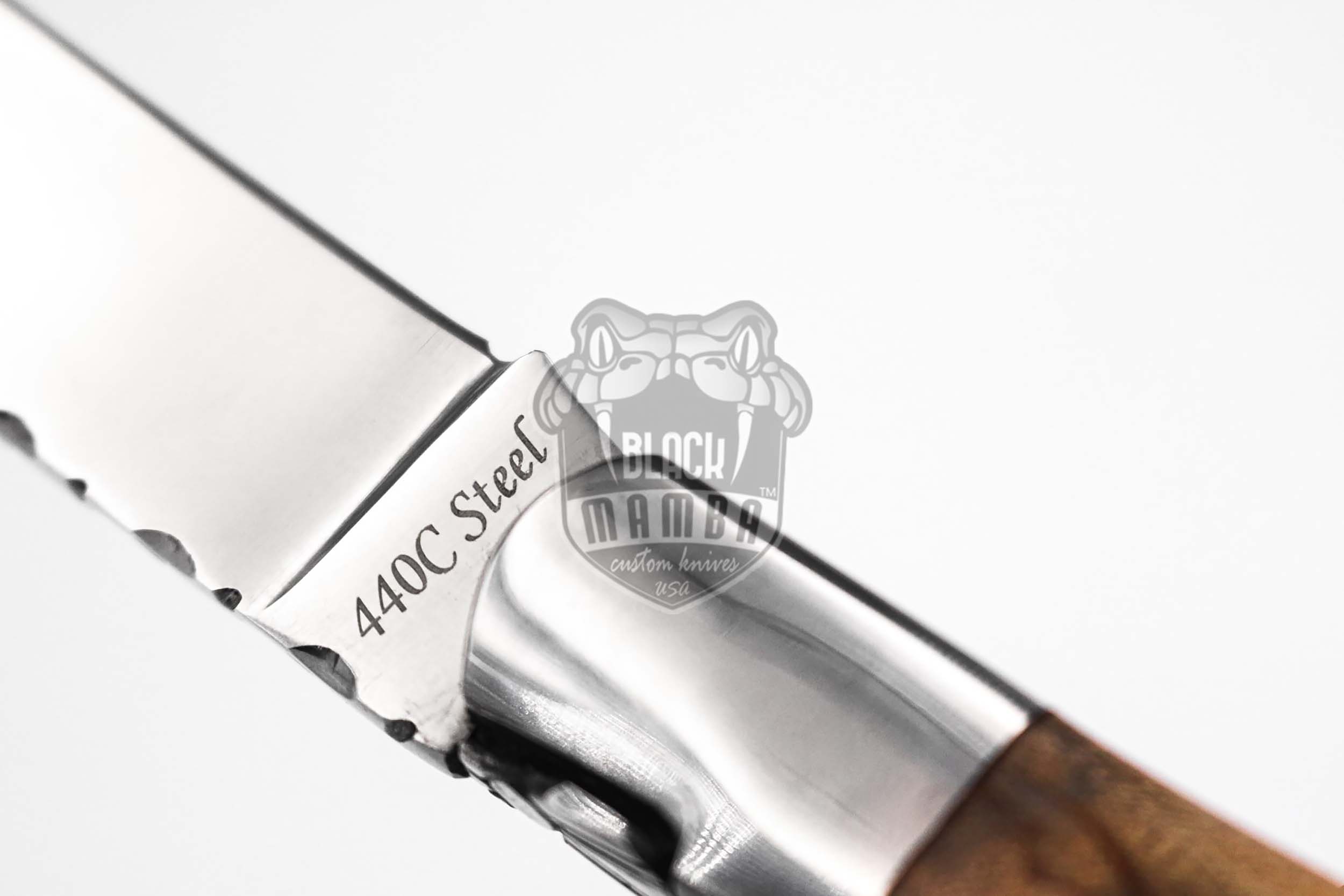
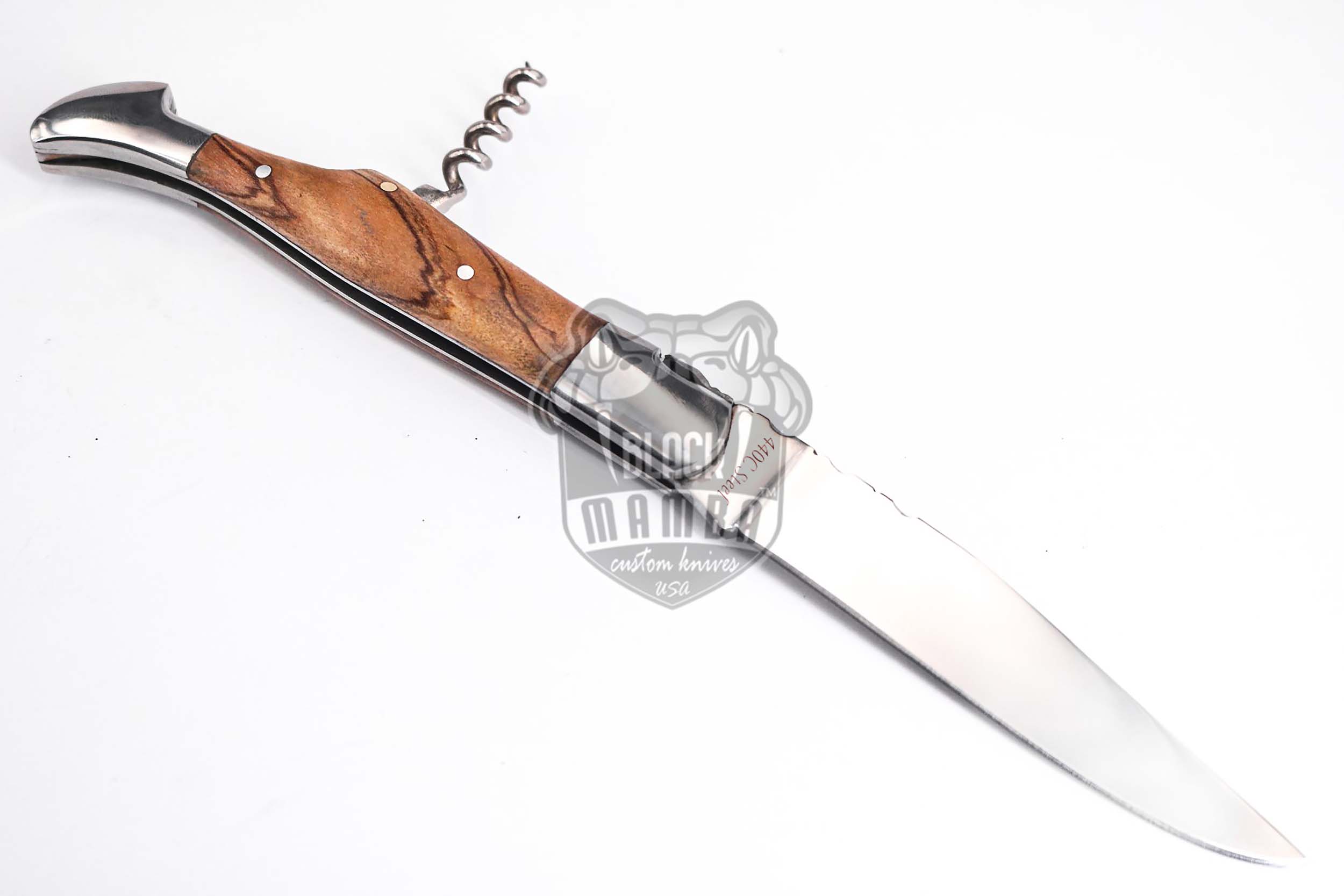
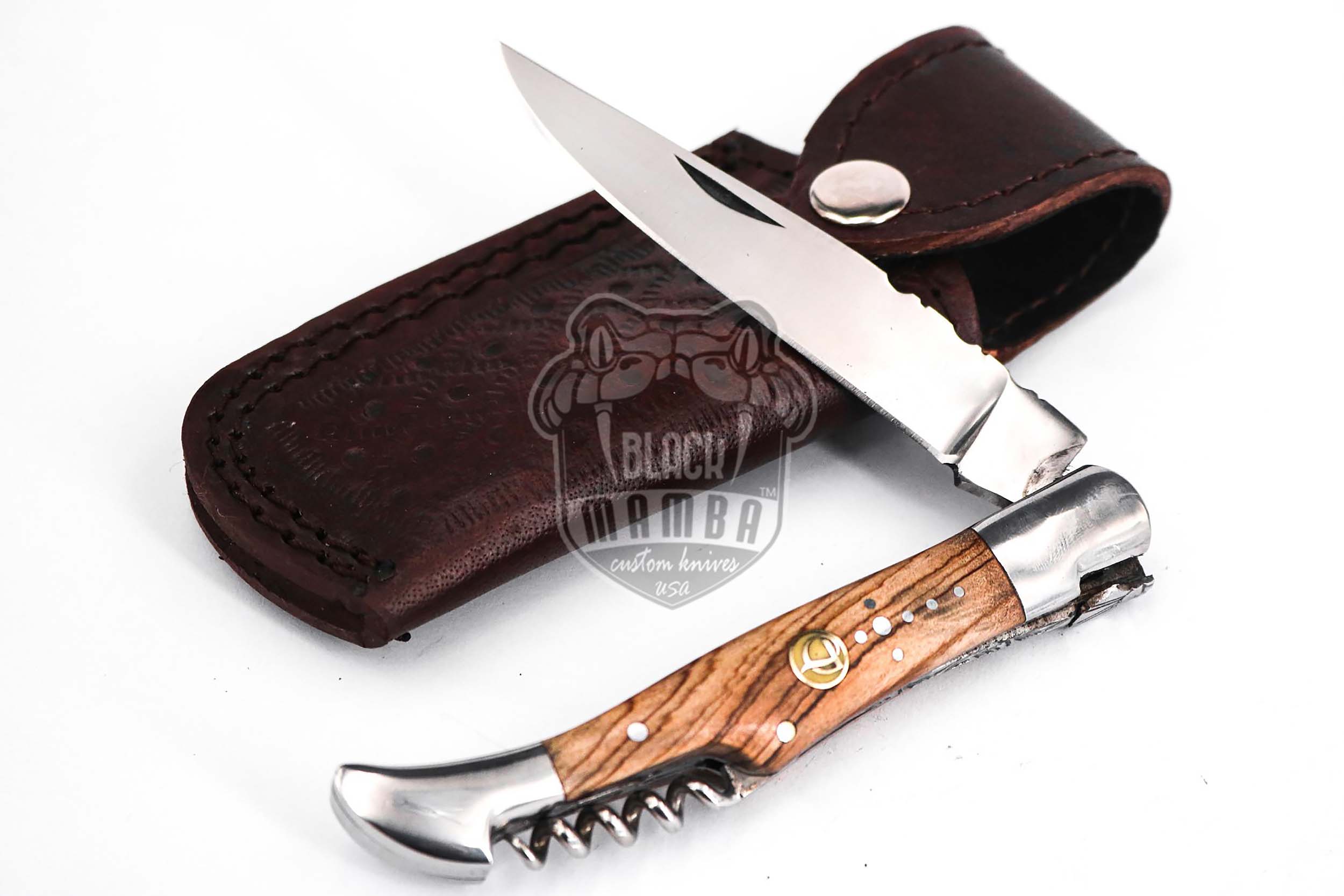
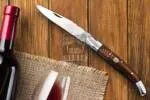
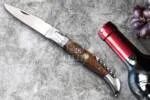
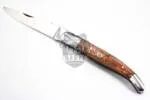
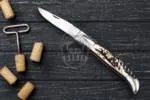
The Louvre pattern pairs a pale, streaked timber handle with a corkscrew and a long, fine clip point.
| Overall length | 10 inches |
| Blade length | 4.5 inches |
| Handle length | 5.5 inches |
| Steel | High carbon steel |
| Hardness | 58–60 HRC, oil tempered |
| Handle | Wood |
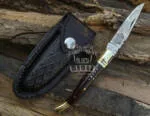
| Included | Hand-stitched leather sheath |
At its best: a table set for six where the knives are meant to be looked at. Light-colored handles read very differently against linen than dark ones do, and this one is the brightest in the range. It is still a working folder: a 4.5 inch edge, a corkscrew, and 3.5 ounces closed.
What a plain edge does to steak
Serrations tear. Each tooth punctures, drags, and the fibers between the punctures pull apart rather than part cleanly. On a rested steak that means more juice on the plate and less in the meat. A plain edge like this one severs the fibers in a single line, so the cut face stays sealed and the slice holds together on the fork. The second advantage is that you can sharpen it back to new. No serrated table knife is ever as good as it was.
The handle timber
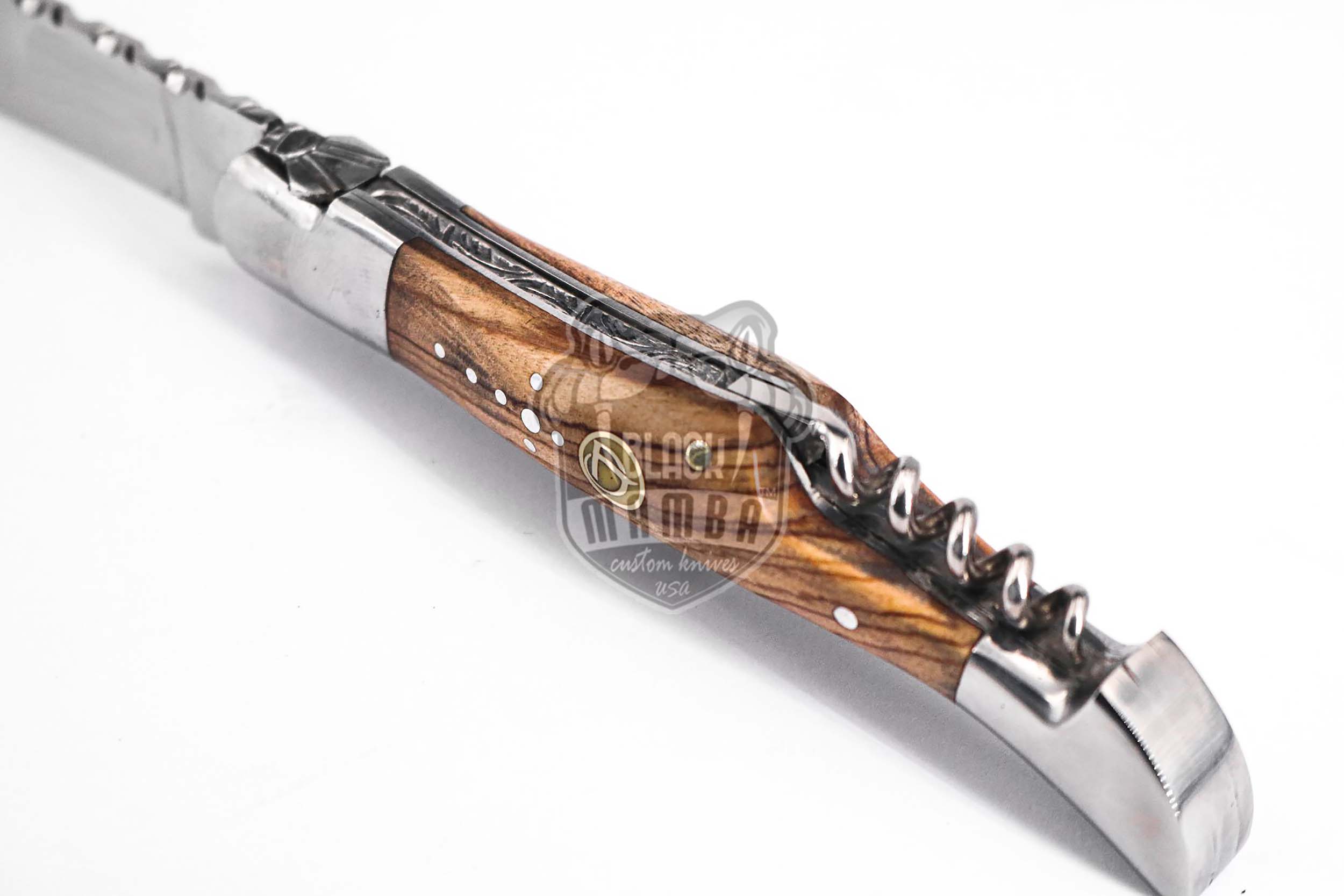
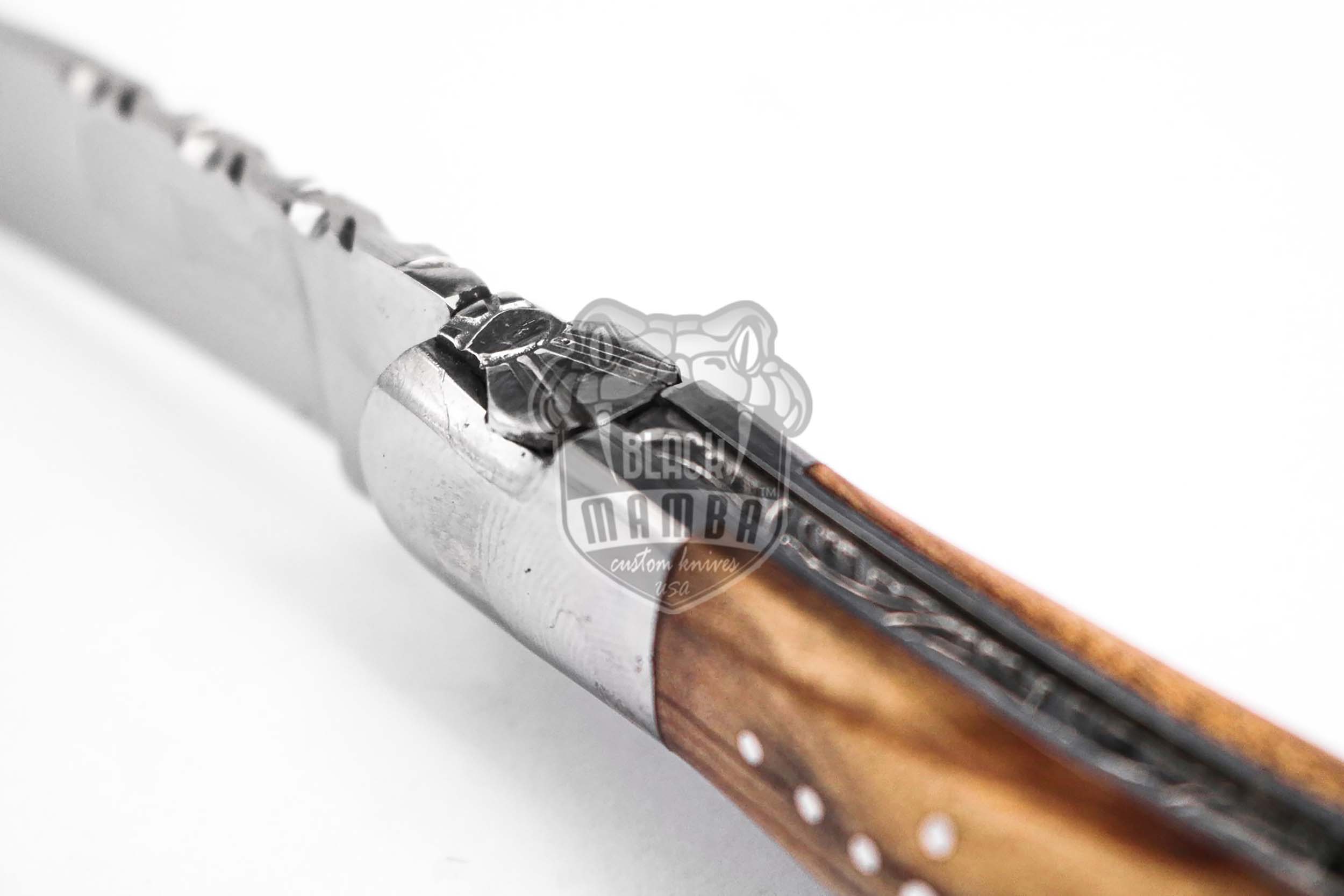
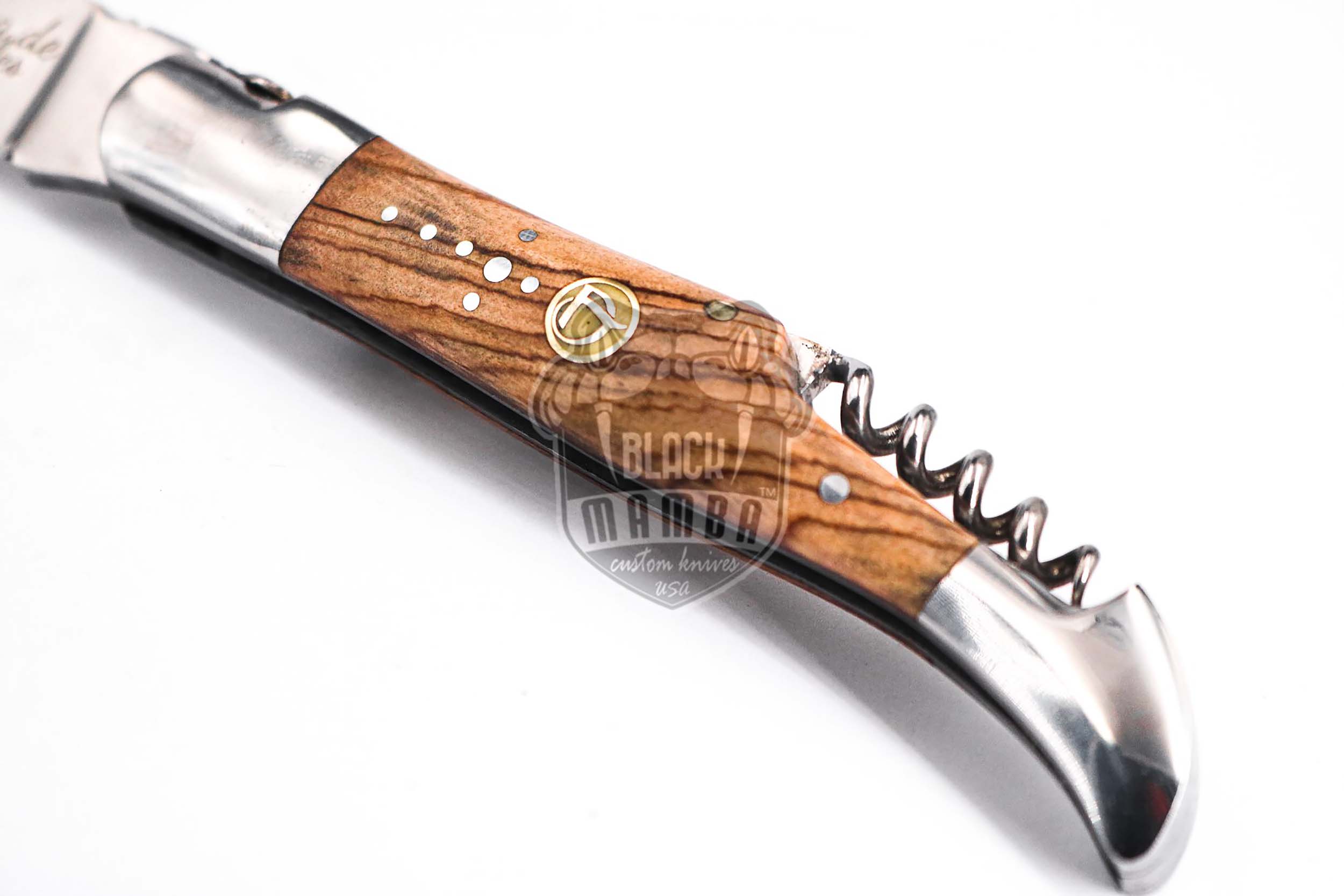
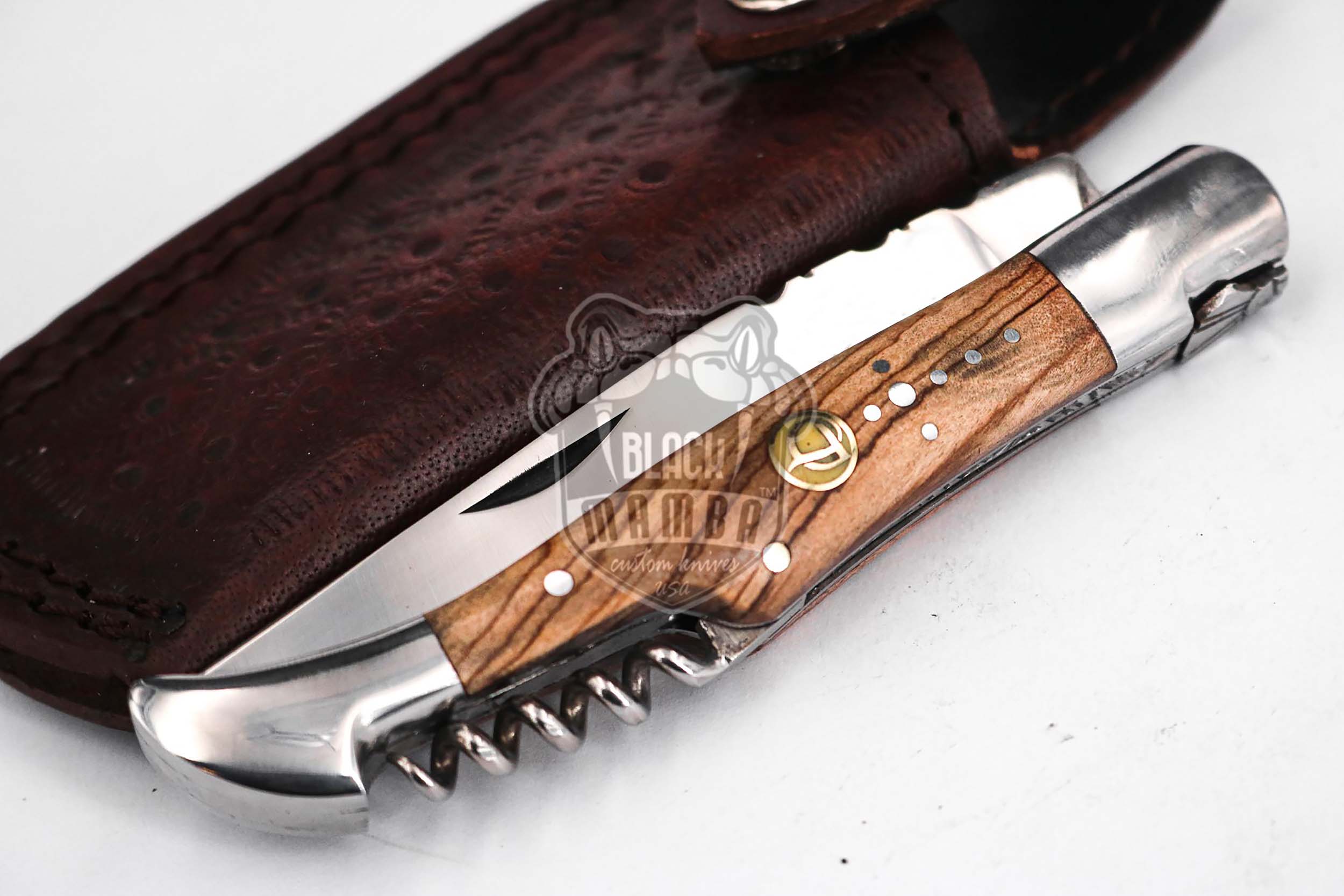
The wood here is pale gold shot through with darker olive streaking, which is why no two of these handles pair up. The streaks are the mineral lines in the grain and they run right through the block rather than sitting in a stain on the surface. Pale timber shows a mark sooner than dark timber does, so this is the one to keep off the wet part of the counter. If it ever does pick up a stain, very fine abrasive paper followed by a wipe of oil will lift it out, because there is no lacquer film to break through first. Nothing on this handle is sitting on the surface.
The corkscrew and the spring
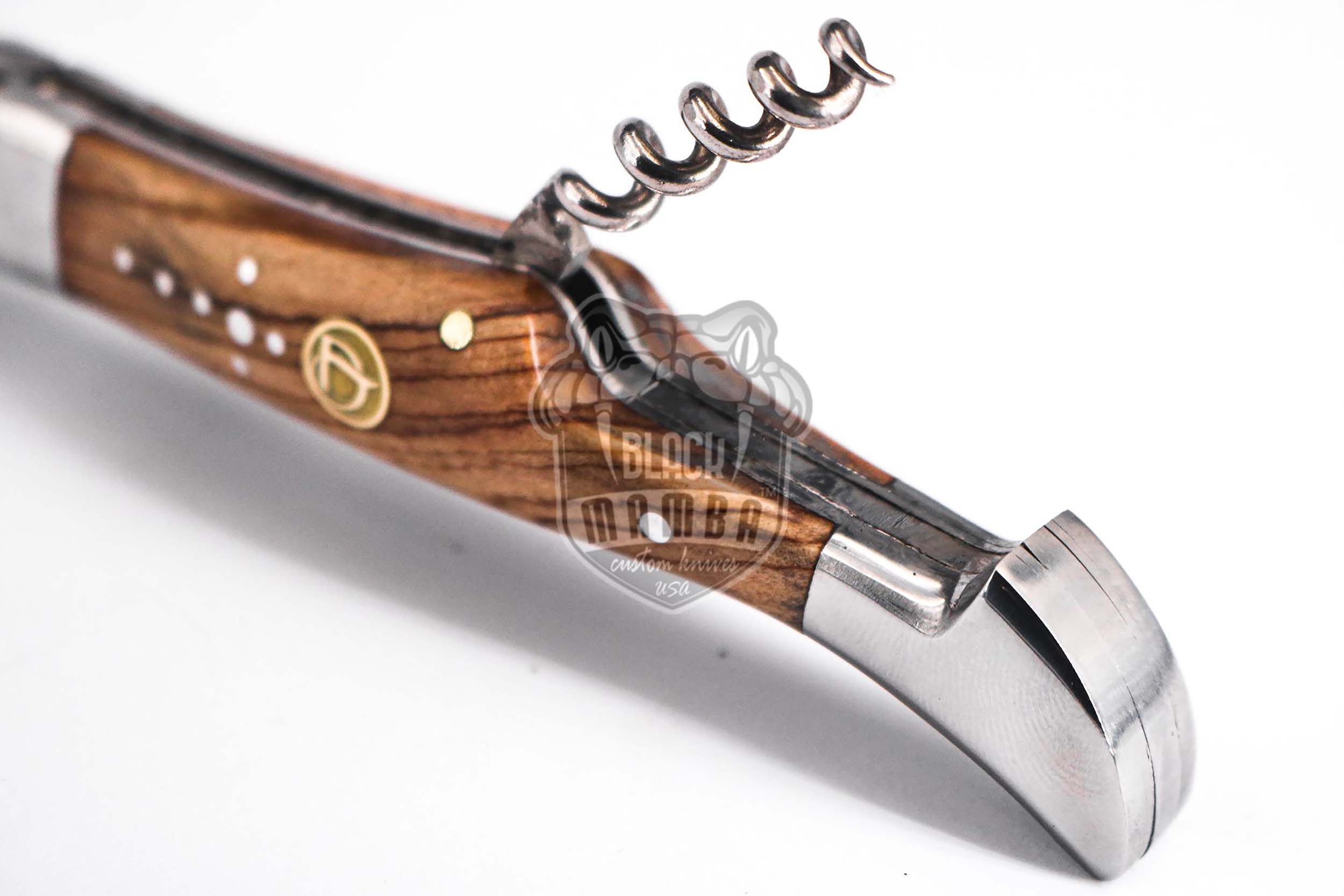
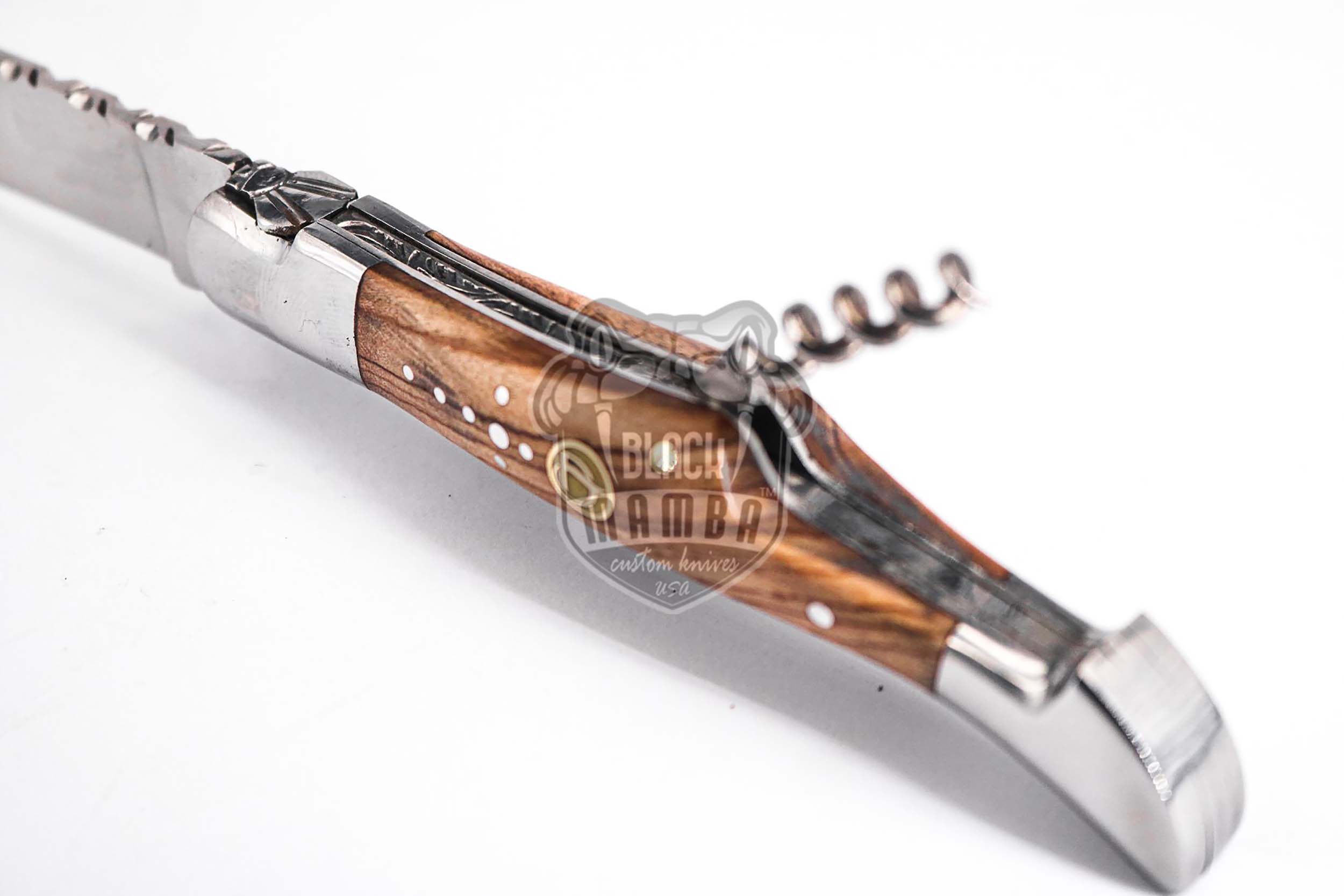
Blade and worm pivot from opposite ends and share the handle between them. Both are held by spring tension, and the arc of that spring is what forms the visible spine of the closed knife. The bee sits where the spring terminates at the rear, standing slightly proud so your thumb can find it without looking.
Care: hand wash only, and dry the blade the moment it comes out of the water. Do not soak the handle; pale wood shows a water ring permanently. If the pivot gets gritty from crumbs and cork dust, a rinse with the blade held open and a drop of oil afterward will free it. Keep it shut, keep it dry, and keep it out of direct sun, which bleaches pale timber over years.
FAQs
Can it go in the dishwasher? No. It will ruin the handle and the pivot.
How do I re-edge it? A fine stone or a ceramic rod at a shallow angle. It takes very little.
Is a set available? These are sold individually, so you can mix handle materials across a set.
Read our knife sharpening guide, learn what different blade shapes do differently, or see our knife gift guide if this is a present.
Model: BMK-621


Benjamin M. (verified owner) –
I received these knives as a gift, and they’ve quickly become my favorite. They’re a joy to use and add a touch of elegance to my dinners.
Mia G. (verified owner) –
These pocket-sized Laguiole Steak Knives are a game-changer for outdoor dining. They’re compact, easy to carry, and incredibly sharp.
Liam H. (verified owner) –
I’ve had these handmade Steak Knives for a while now, and they’ve never disappointed. They’re durable, sharp, and have a timeless design.
Samuel C. (verified owner) –
I purchased these pocket-sized Laguiole Steak Knives for my camping trips, and they’ve been a game-changer. Compact and reliable!
Olivia R. (verified owner) –
These Laguiole Steak Knives are a cut above the rest. The craftsmanship is impeccable, and they make slicing steak a breeze.
Ronald Freeman –
My whole family passed this knife around at dinner just to look at it. Has become my main prep knife in the kitchen since it arrived. Would send this as a gift again in a heartbeat.
Anthony Gutierrez –
This is exactly what I wanted and then some. Has become my main prep knife in the kitchen since it arrived. 10/10 would buy again.
Jamal Kelly –
Incredible quality for the price point. Slices through everything like butter, no sawing needed. Already planning my next pickup from this shop. Every piece I’ve gotten from Black Mamba Knives has been solid.
Christine Murphy –
No regrets on this purchase at all. Happy customer here, through and through.