
Description
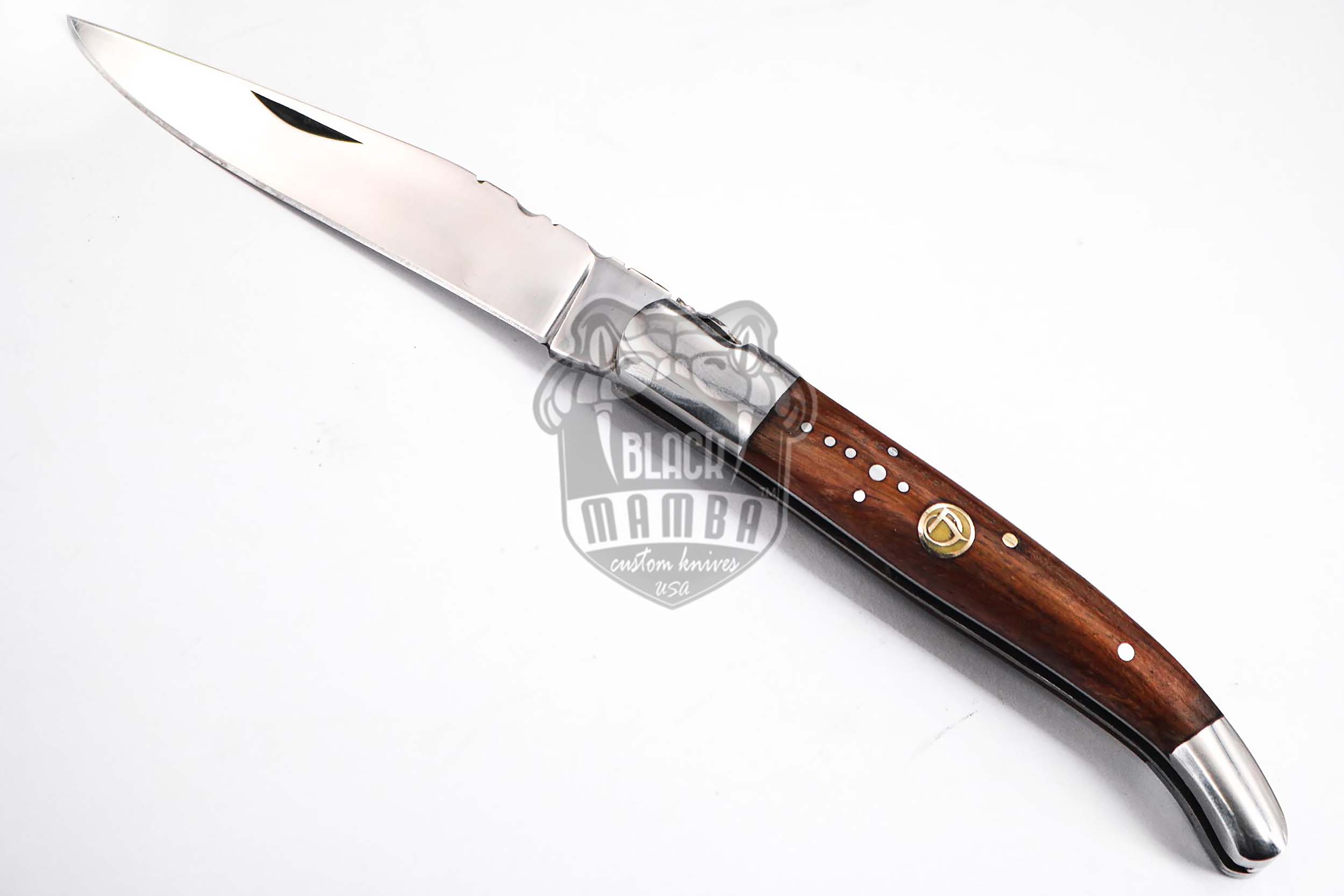
This is the Laguiole we point people to when they ask what American forging looks like applied to a French pattern.
| Overall length | 10 inches |
| Blade length | 4.5 inches |
| Handle length | 5.5 inches |
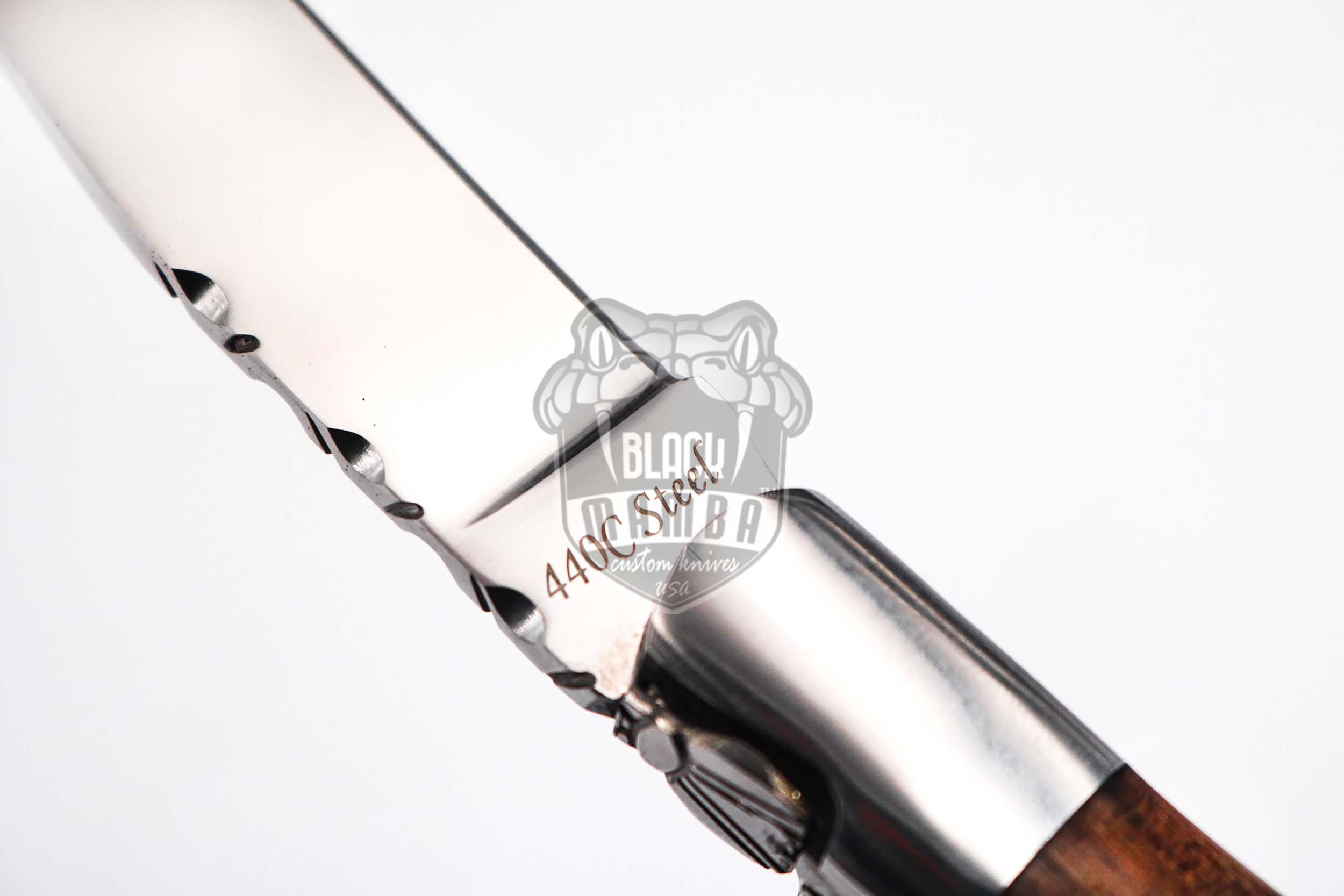
| Steel | High carbon steel |
| Hardness | 58–60 HRC, oil tempered |
| Weight | 3.5 oz |
| Handle | Wood |
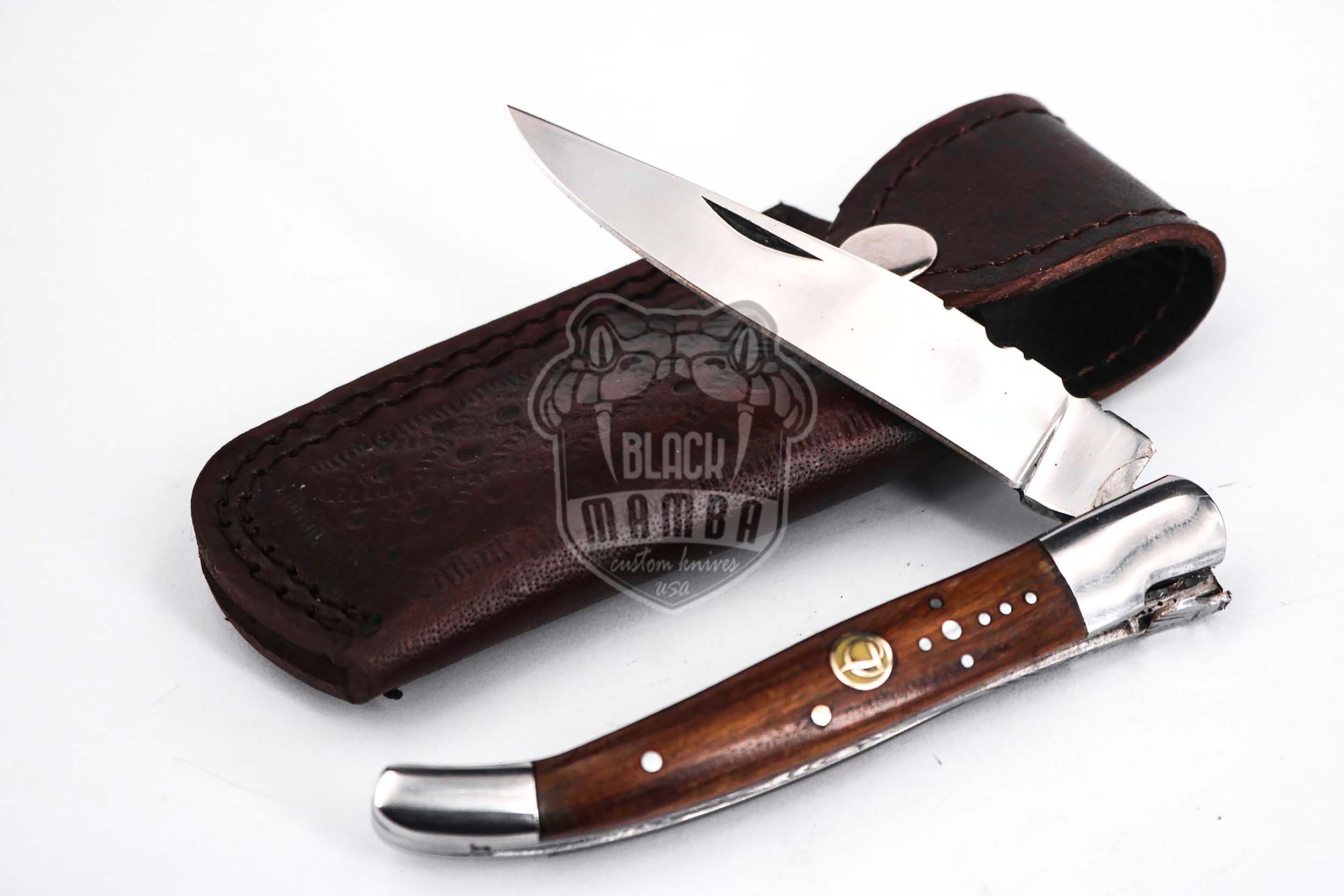
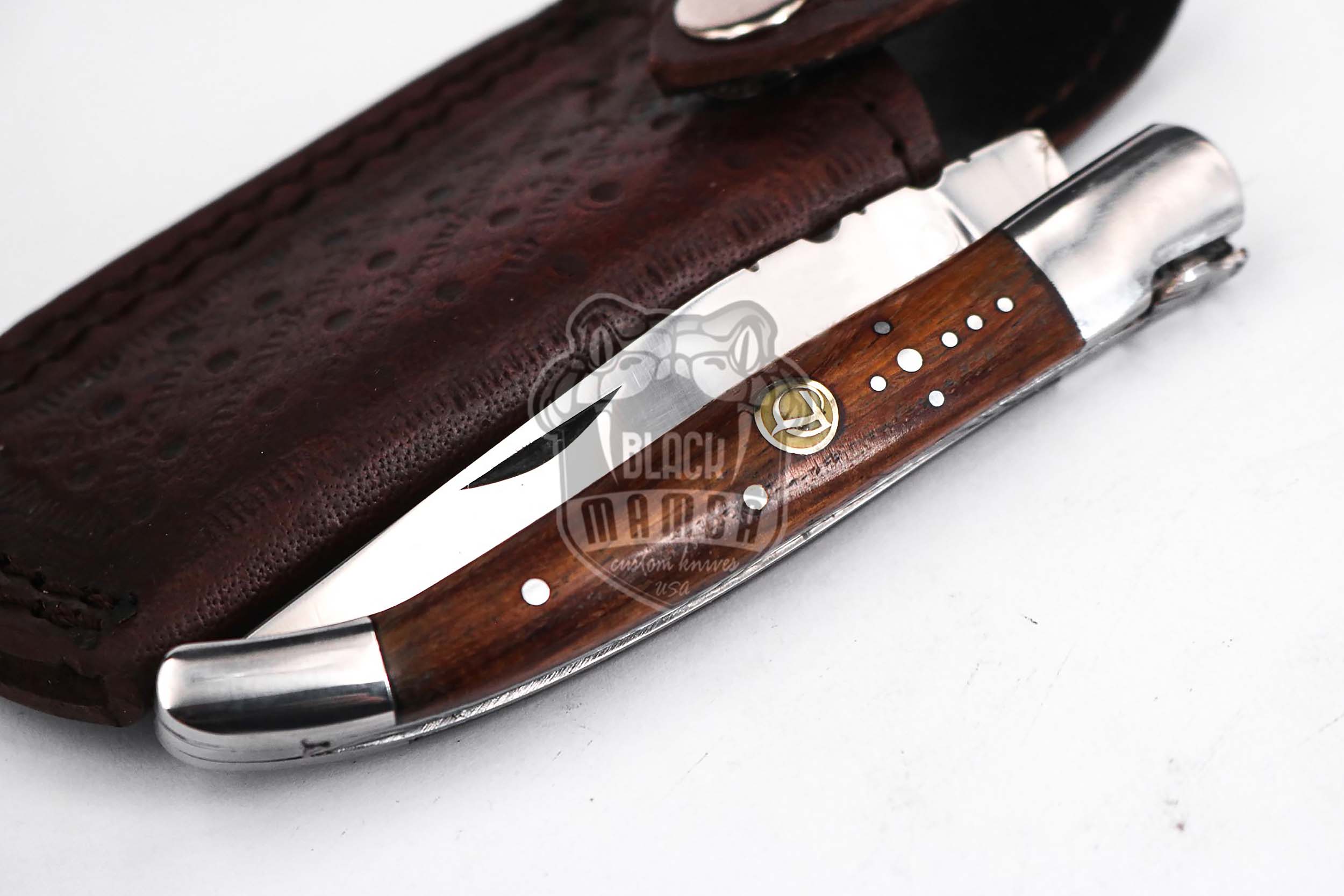
| Included | Hand-stitched leather sheath |
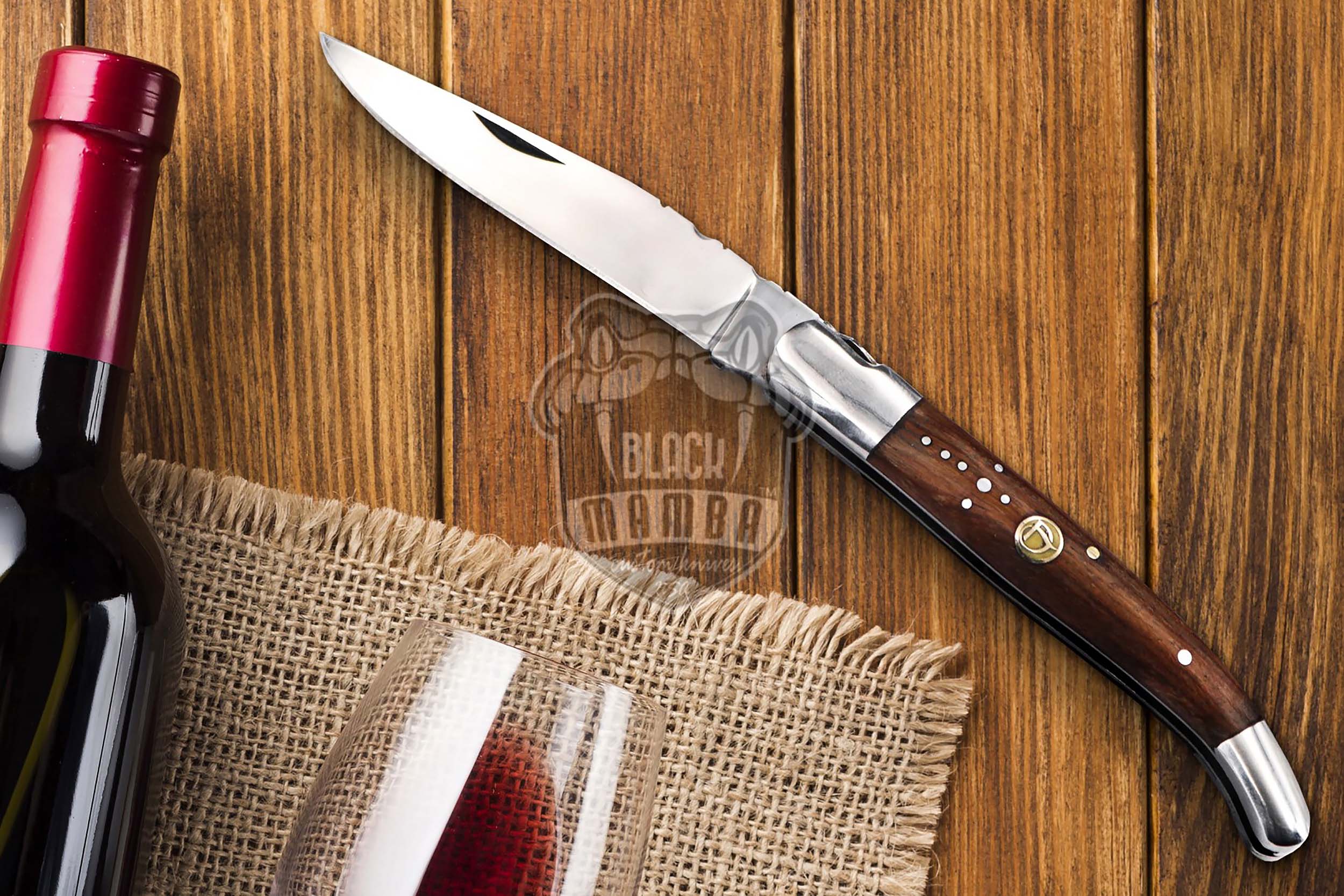
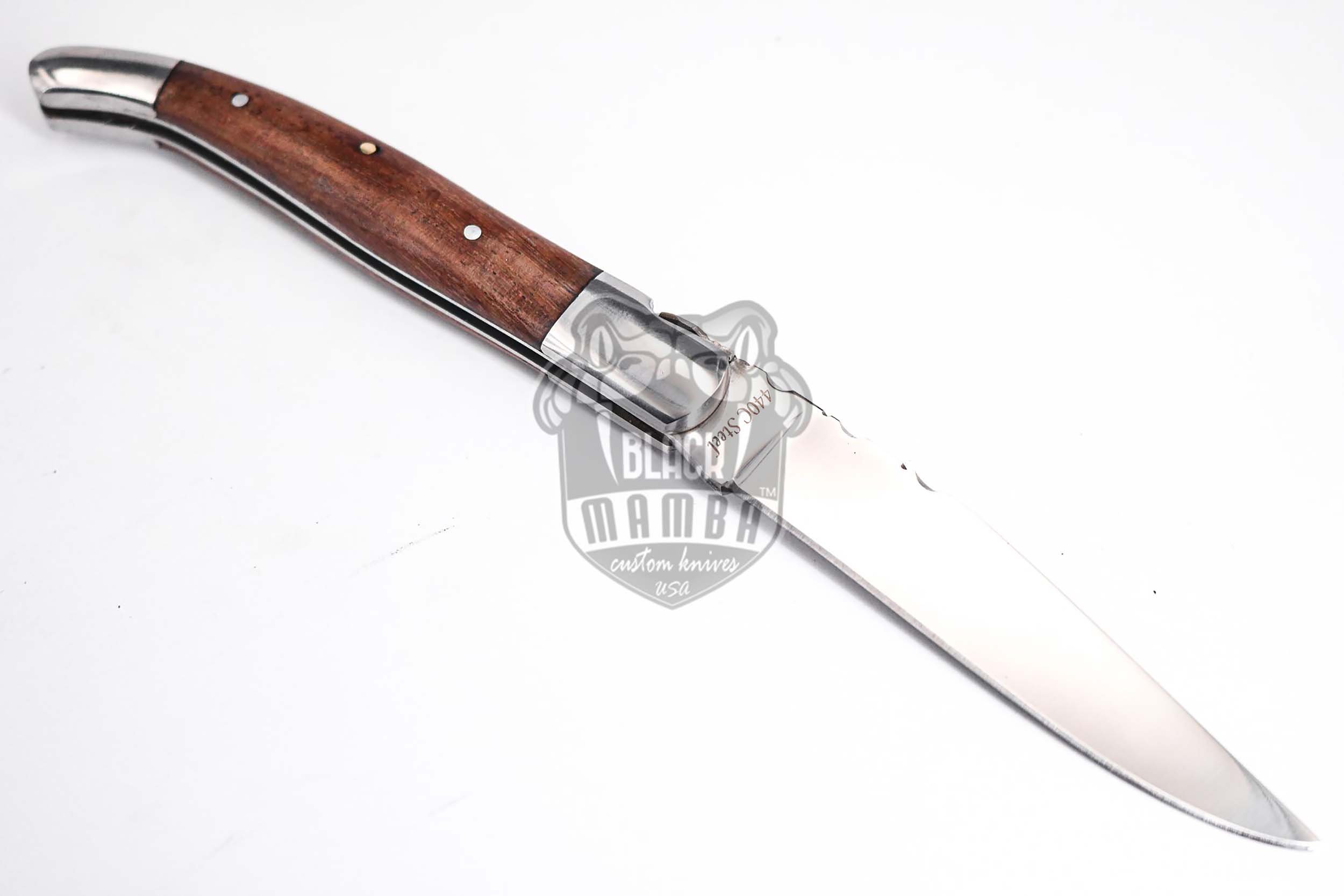
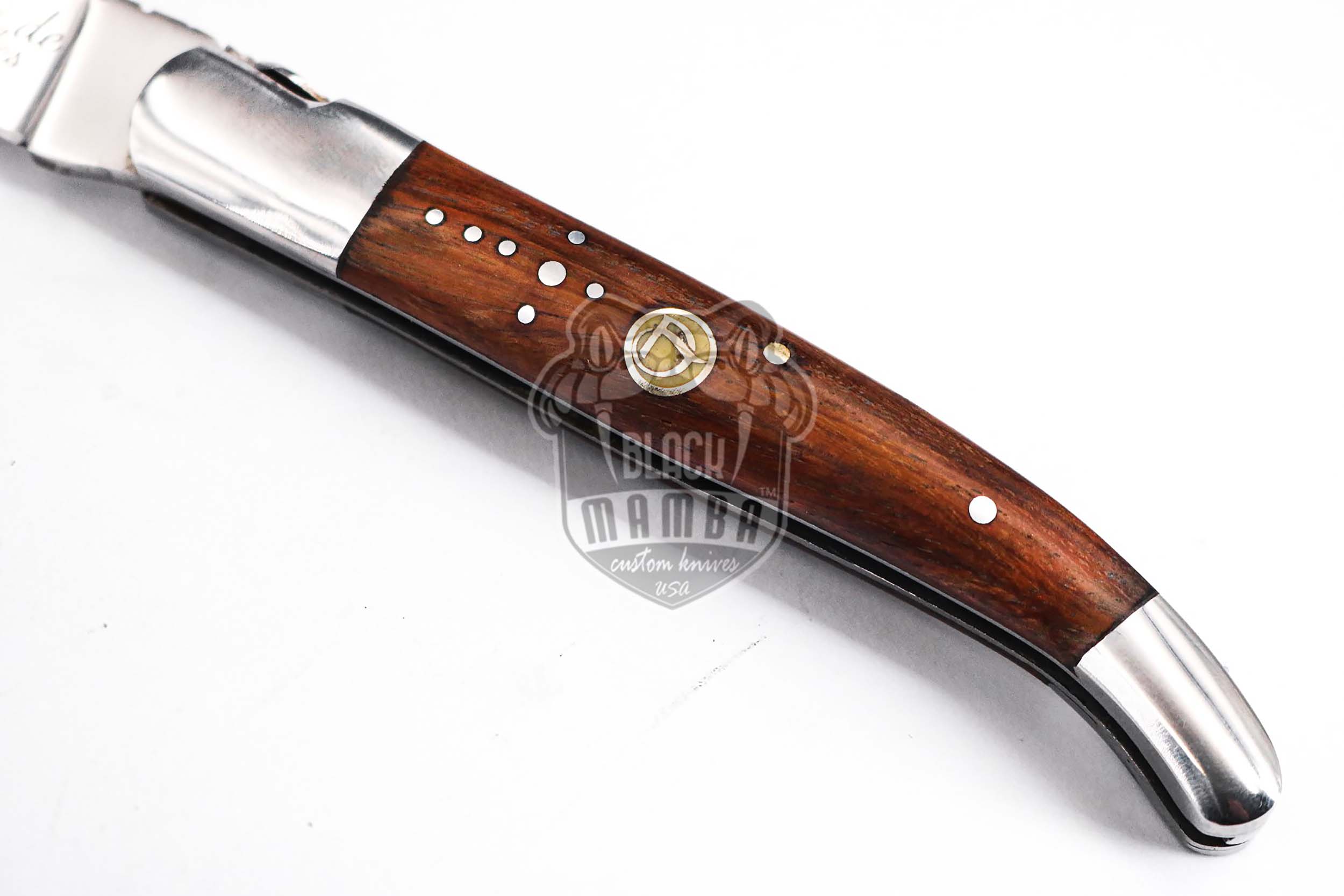
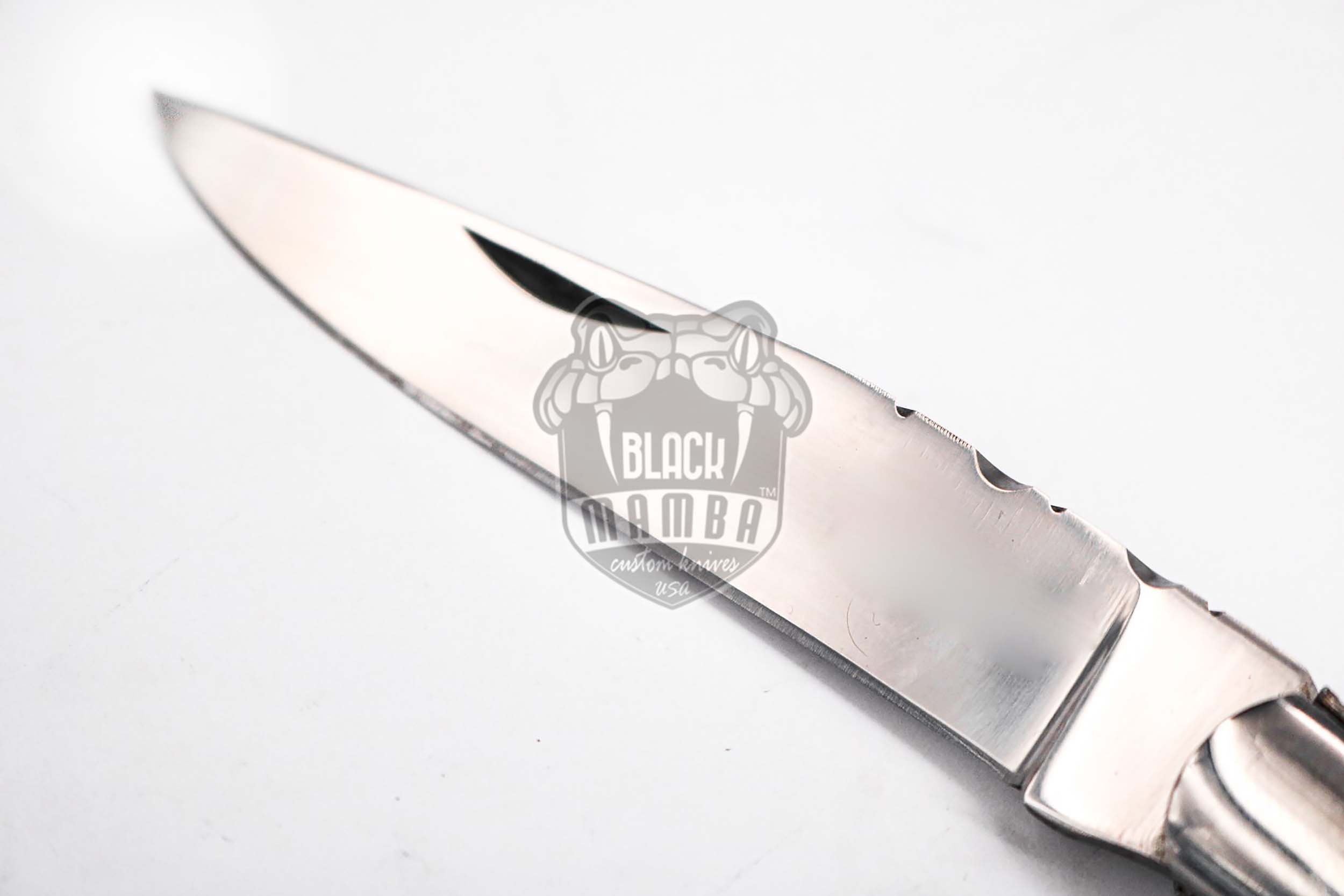
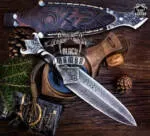
The case for it: a steak knife that is made rather than assembled. The pattern is French and two centuries old; the forging, grinding, fitting and finishing happen in our Memphis workshop. Overall it measures 10 inches, the plain edge 4.5 of them, and it weighs 3.5 ounces.
Forged, not stamped
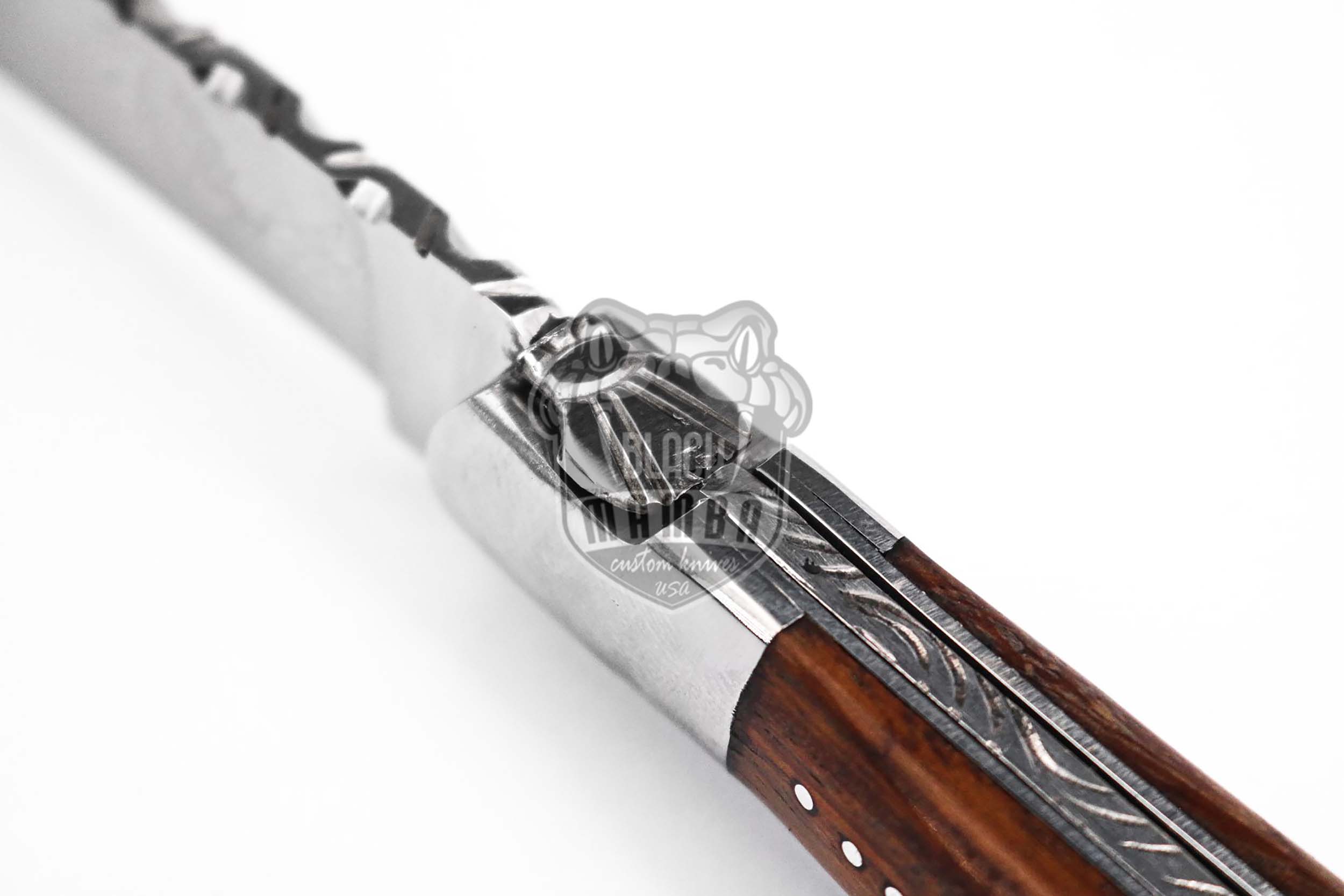
A factory table knife starts as a blank punched from sheet and ends as a blank with an edge on it. This one starts as bar stock, is brought to heat, moved under a hammer, normalized, hardened and tempered in oil, then ground and fitted by hand to a spring that is fitted to that blade and no other. The reason the action on a hand-fitted slip joint feels different is that the tang and the spring were finished as a pair. Swap them between two knives and neither works properly. Each one is forged, hardened and tested in the same building by the same small group of people, and that traceability is the only reason we are willing to put a lifetime warranty behind a moving part.
The handle
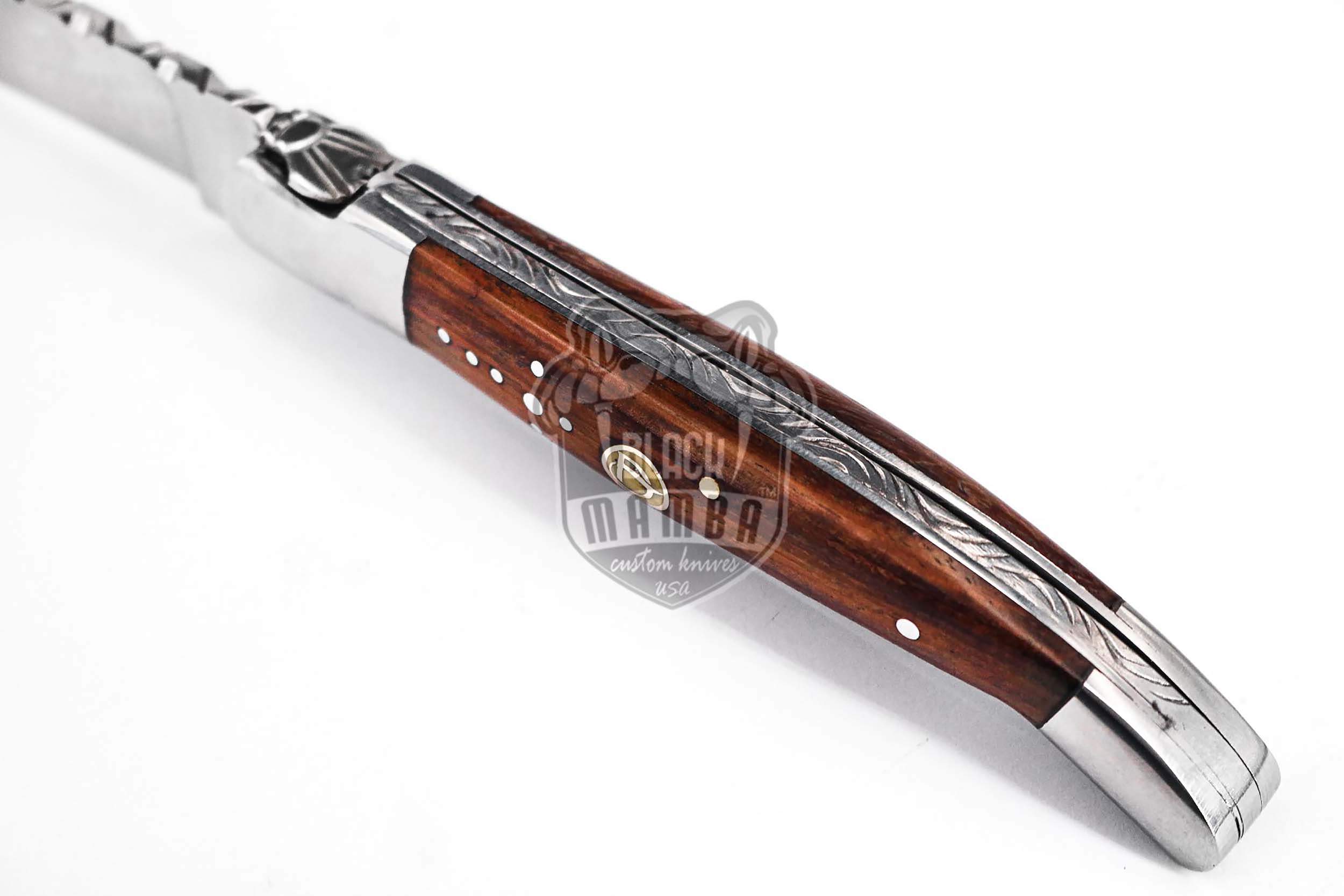
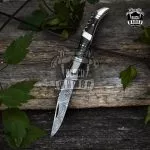
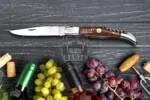
Rich reddish-brown timber with a tight, close grain and a faint stripe running the length of the scale. Dense hardwood like this takes a burnished polish straight off the buffing wheel rather than needing a thick film finish, which is why it feels like wood in the hand instead of feeling like varnish. Over years at a table it deepens toward oxblood and the areas under your fingers go glossy. It is the material that ages most visibly of anything in this range.
A plain edge against a plate
Serrated table knives exist because a blunt one still saws. A sharp plain edge does not need to saw, so it goes through a rested steak in one pull with no tearing and no noise against the china. It also means you control depth — you can cut a slice thin enough to share rather than hacking off a chunk. The condition for all of that is keeping it sharp, which takes a few passes on a fine stone once or twice a year.
Care: dry the blade after use, keep the pivot clean, and put a drop of light oil in the joint occasionally. Hand wash only. Store it closed and dry rather than in the leather, which holds moisture against steel.
FAQs
Does it lock? No, it is a slip joint held by spring tension.
Is it genuinely made in the USA? Yes, forged and finished in Memphis, Tennessee.
Is it sold as a set? Individually, so you can build a set with mixed handles.
Read hand forged versus factory, see our American made knives, or start with the complete Laguiole guide.
Model: BMK-613
Buying for groomsmen? This knife also comes as a matched set of 6, 15% less than buying six singly, and each one can carry its own engraved name.

Ethan S. (verified owner) –
I love the compact design of these pocket-sized Steak Knives. They’re practical, stylish, and a great conversation starter at dinner parties.
Zoe K. (verified owner) –
These Laguiole Steak Knives are a game-changer for steak lovers. They make every meal feel special, and the balance in hand is excellent.
Christopher B. (verified owner) –
These handmade Steak Knives exceeded my expectations. They’re not just functional; they’re also a work of art. A fantastic addition to my kitchen.
Ava R. (verified owner) –
I received these knives as a gift, and I’m so impressed. They’re beautiful and functional, making them a perfect present for any food enthusiast.
George Campbell –
Genuinely blown away with how this turned out. Has become my main prep knife in the kitchen since it arrived. Balance in hand is perfect for detail work at the cutting board. This is the kind of purchase that makes online shopping worth it.
David Morgan –
This blade came razor sharp right out of the box. Handle stays comfortable even after prepping a big meal. Love it.
Ashley Green –
This knife is a genuine work of art. Highly recommend this one.
Mark Williams –
Not going to lie. This exceeded my expectations by a lot. Slices through everything like butter, no sawing needed. Great buy overall.
Carlos Wood –
Showed up right on time and looked even better than the photos. Cleans up easy and hasn’t shown any rust or staining. If you’re on the fence just get it. You won’t regret it.
Donald Brown –
Wasn’t expecting to be this impressed but here we are. Cleans up easy and hasn’t shown any rust or staining. This is why Black Mamba Knives is my go to for anything knife related. Already telling my friends to check this out.
Miguel Thompson –
Not going to lie. This exceeded my expectations by a lot. Edge held up great through a full week of daily cooking. Exactly the kind of quality that keeps me coming back.
Dustin Coleman –
Honestly one of my better purchases in a while. Handle stays comfortable even after prepping a big meal. Will definitely order again for another one.
Gary Cruz –
Everyone who’s seen this knife has asked where I got it. Slices through everything like butter, no sawing needed. Handle stays comfortable even after prepping a big meal. This is going straight into my daily rotation.