
Description
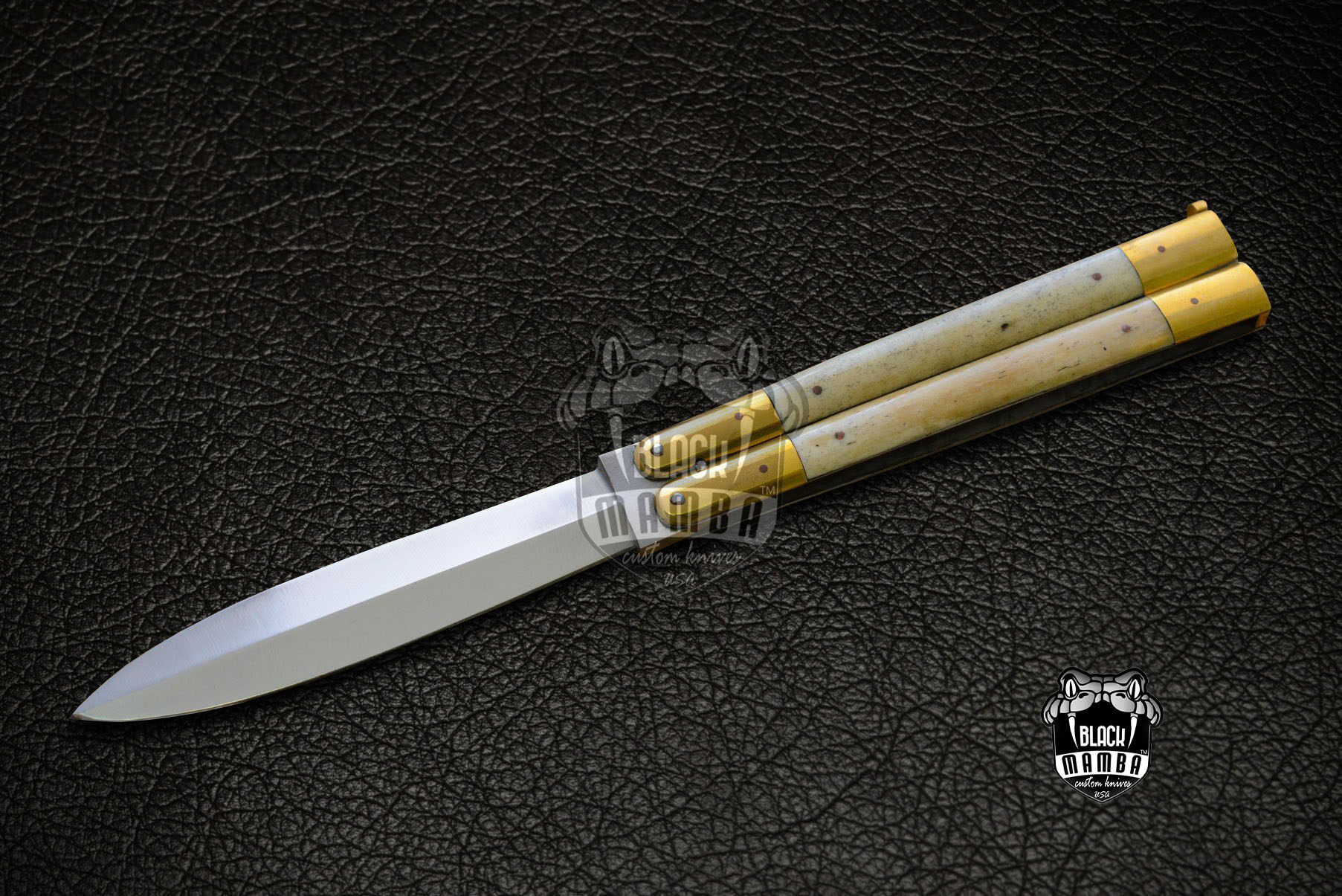
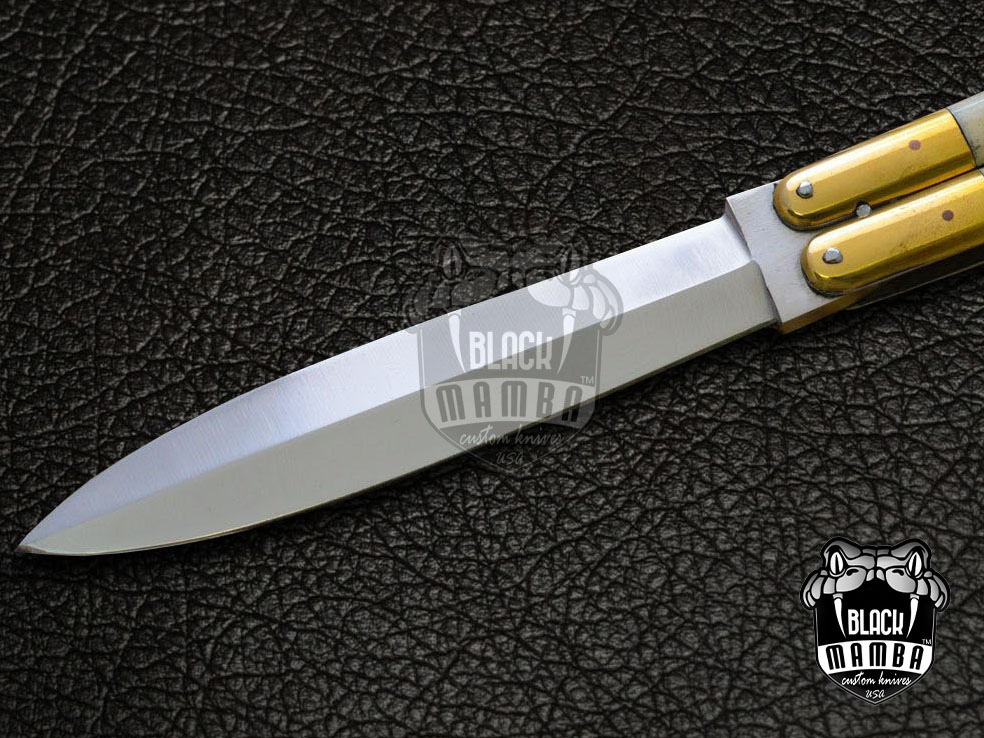
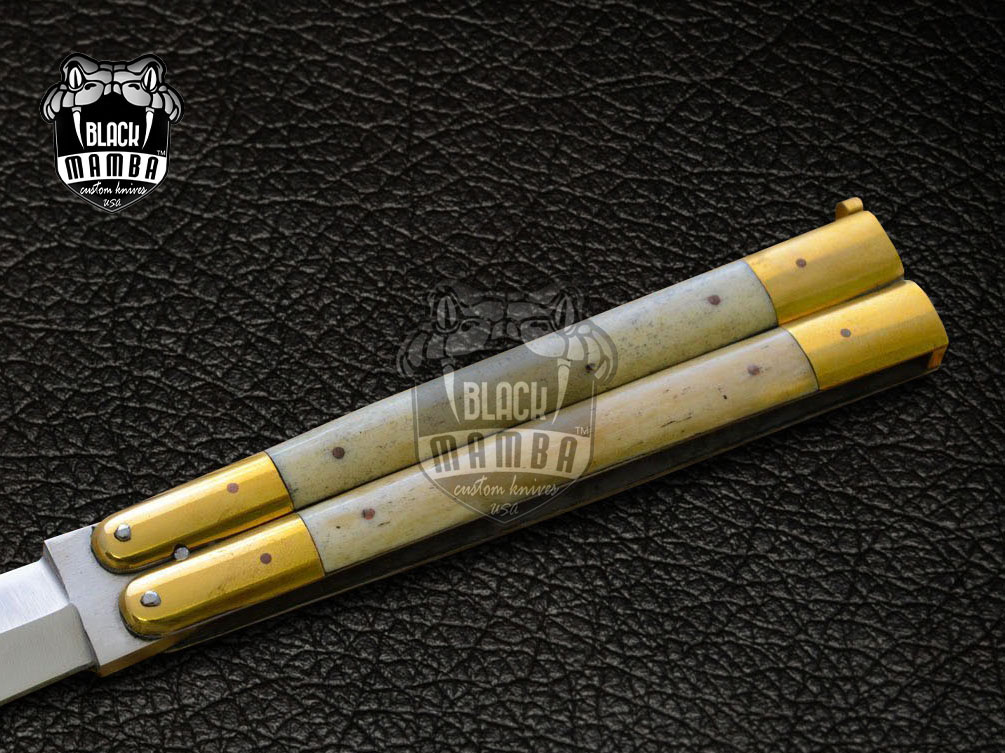
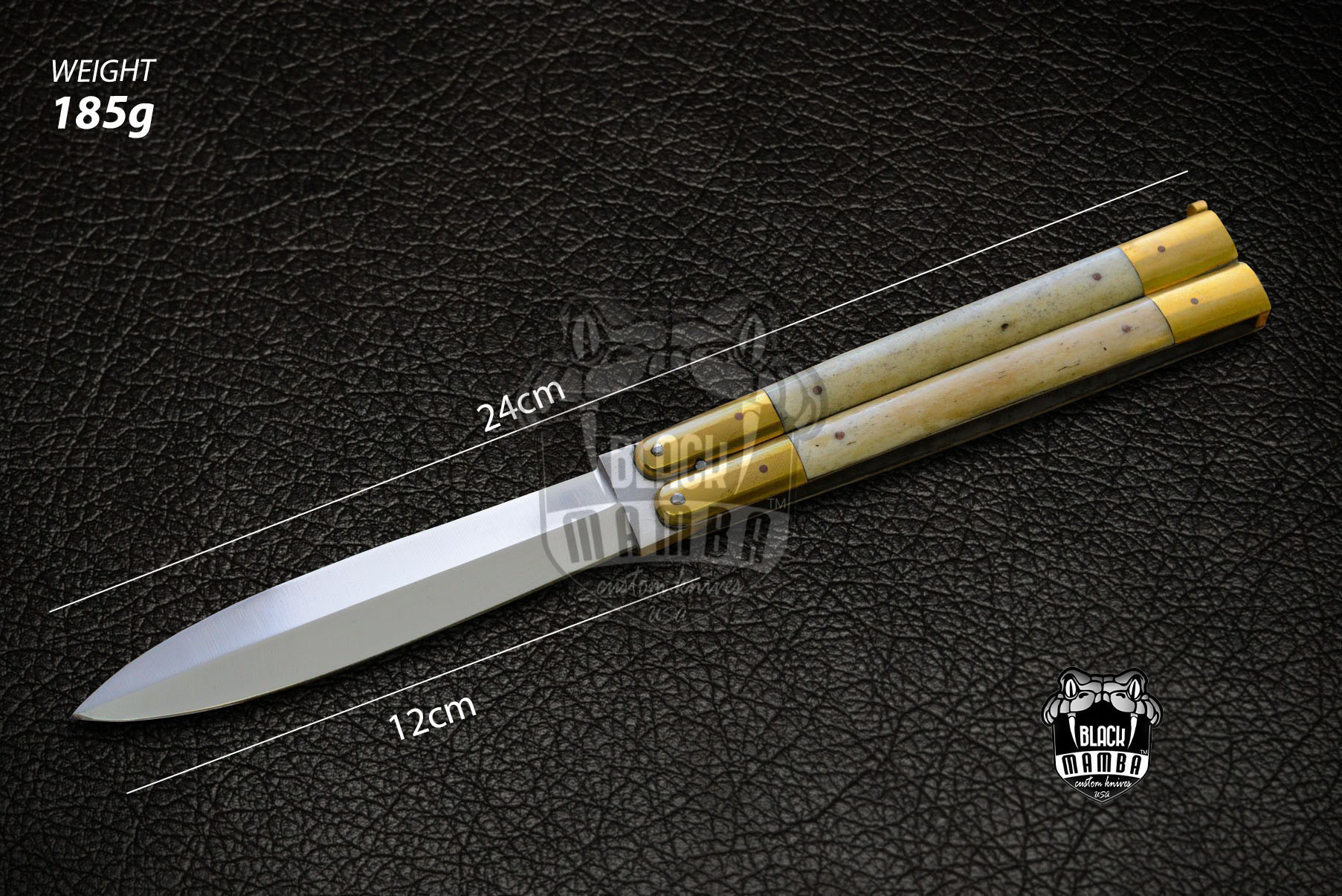
Brass handles with bone inserts and a D2 blade in a long slender point. Cream against yellow metal, and a steel chosen for edge holding rather than looks.
| Overall length | 9.1 inches |
| Blade length | 4.4 inches |
| Handle length | 4.7 inches |
| Steel | D2 tool steel |
| Handle | – Brass with Bone Inserts |
Chosen by: flippers who care more about how long the edge lasts than about how the blade looks. D2 is a tool steel and it is the practical choice in this lineup, sitting between a simple carbon steel and a stainless in both corrosion resistance and stubbornness on a stone.
Care: D2 holds around twelve percent chromium. That is enough to shrug off damp far more readily than simple carbon steel, and not enough to earn the word stainless. In practice it means you can be forgetful once without paying for it, and forgetful for a fortnight and you will find spots. Wipe it and oil the pivots. Bone is the easiest handle material there is to look after: it does not need feeding, it does not swell, and warm soapy water on a cloth cleans it. It can chip if the knife lands on a hard floor on the handle end, and a chip in bone cannot be sanded out invisibly the way a mark in wood can.
What D2 is actually like to own
D2 holds an edge notably longer than 440C or a simple high carbon steel. The price you pay is at the sharpening stone, where it is slow and demands a decent abrasive; a worn stone will polish it rather than cut it. It is also slightly more brittle than a tough carbon steel, so the very tip of a slender point like this one is the part to protect. How D2 compares to Damascus, 440C and VG10 is the clearest summary of the tradeoff, and working it on a whetstone is worth reading before your first attempt.
Bone as a handle material
Bone has been used on folding knives for centuries because it is hard, dimensionally stable and takes a good polish. It is cooler to the touch than wood and slightly slicker when wet, which matters more on a working knife than on a flipper. The color is not uniform. Natural bone carries faint darker striations and small pores, and over years of handling it takes on a warmer ivory tone rather than staying stark white.
Weight and balance
Brass handles put the mass in your hand rather than in the blade, which gives a settled, deliberate feel through transitions. This is a knife that rewards smooth technique over speed. If you like the bone but would rather have a simpler steel that sharpens in half the time, the same handle in carbon steel is the direct comparison.
Points to check
Is the bone dyed? No. The cream tone is natural, which is why there is variation between pieces.
Does D2 need special stones? Diamond or a good ceramic works best. A soft natural stone will struggle with it.
How thin is the point? Slender, and it is the first thing that will bend or chip if the knife is dropped tip-down. Flip over something soft while you are learning.
Model: BMK-467
Want a different handle or blade? Browse all of our balisong knives for sale.

Mia F. (verified owner) –
The precision in the craftsmanship of the steel butterfly knife I received is truly remarkable. It’s not just a tool; it’s a functional work of art that I’ll cherish.
Emily G. (verified owner) –
This store is a must-visit for butterfly knife enthusiasts. The knife I received is a masterpiece in steel, and it has quickly become a cherished item in my collection.
Michael Billy (verified owner) –
Blown away. Amazed. Masters of there craft. World class craftsmanship. Thank you
Michael Watson –
The moment I saw this in person I knew it was a keeper. Action is smooth right out of the box, no break in needed. Bushings feel buttery smooth after just a bit of use. This is the kind of purchase that makes online shopping worth it.
Alexander Smith –
Kind of disappointing given the price tag. Latch didn’t line up quite right at first. On the fence about ordering here again.
Michelle Ruiz –
Feels way more premium than the price suggests. Pivots feel dialed in with zero blade play. This one’s a keeper for sure.
Wyatt Ruiz –
No regrets on this purchase at all. Pivots feel dialed in with zero blade play. Bushings feel buttery smooth after just a bit of use. Blade came shaving sharp straight out of the box. This company just earned a repeat customer.
Brenda Ramos –
Genuinely super impressed with how this turned out. Nice to support a Memphis based knife maker, shipping was fast even internationally. Latch snaps shut clean every time. This shop clearly takes pride in their work.
Shane Williams –
This balisong is a genuine work of art. Bushings feel buttery smooth after just a bit of use. Pivots feel dialed in with zero blade play. Can’t wait to see what else this company has to offer.