
Description
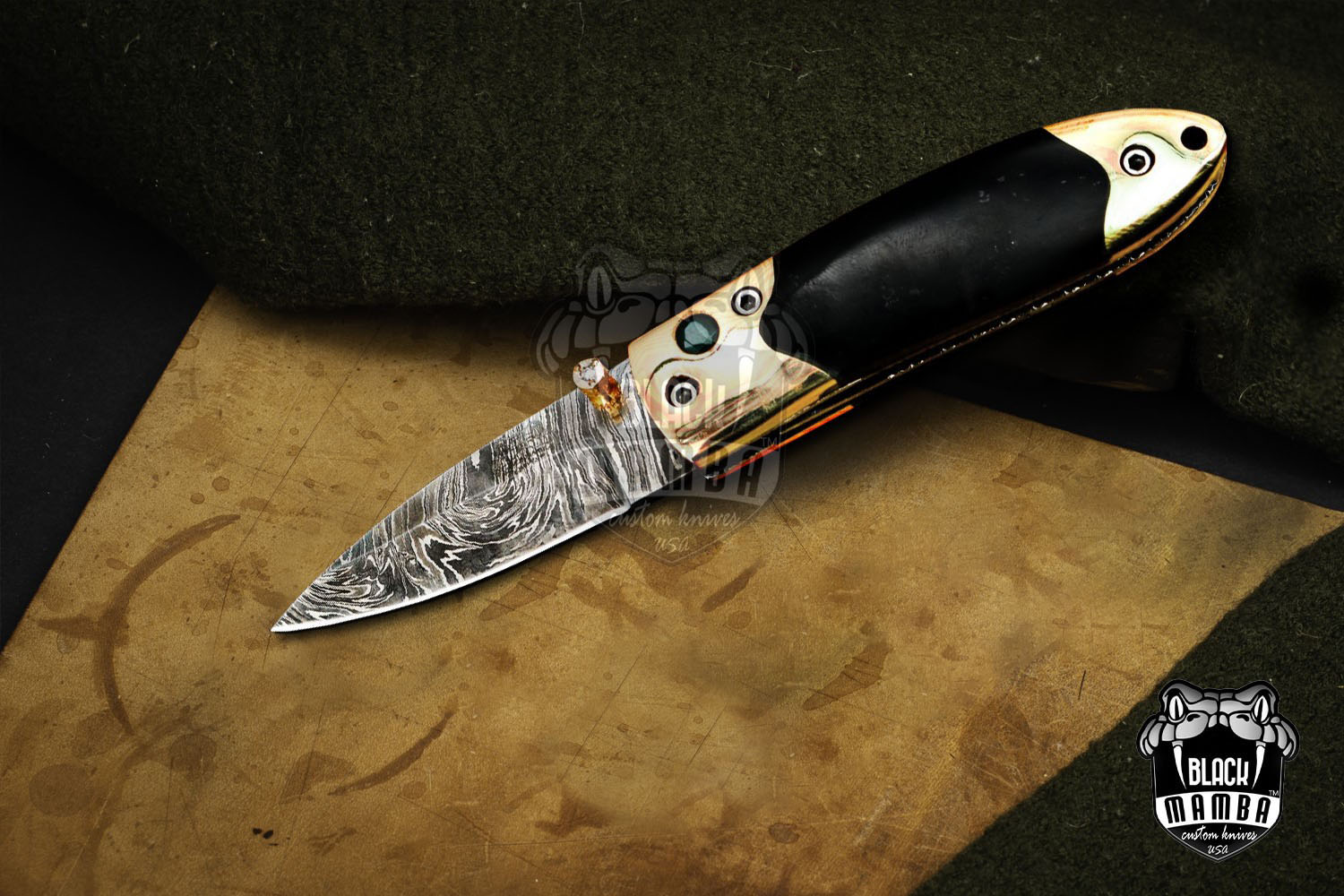
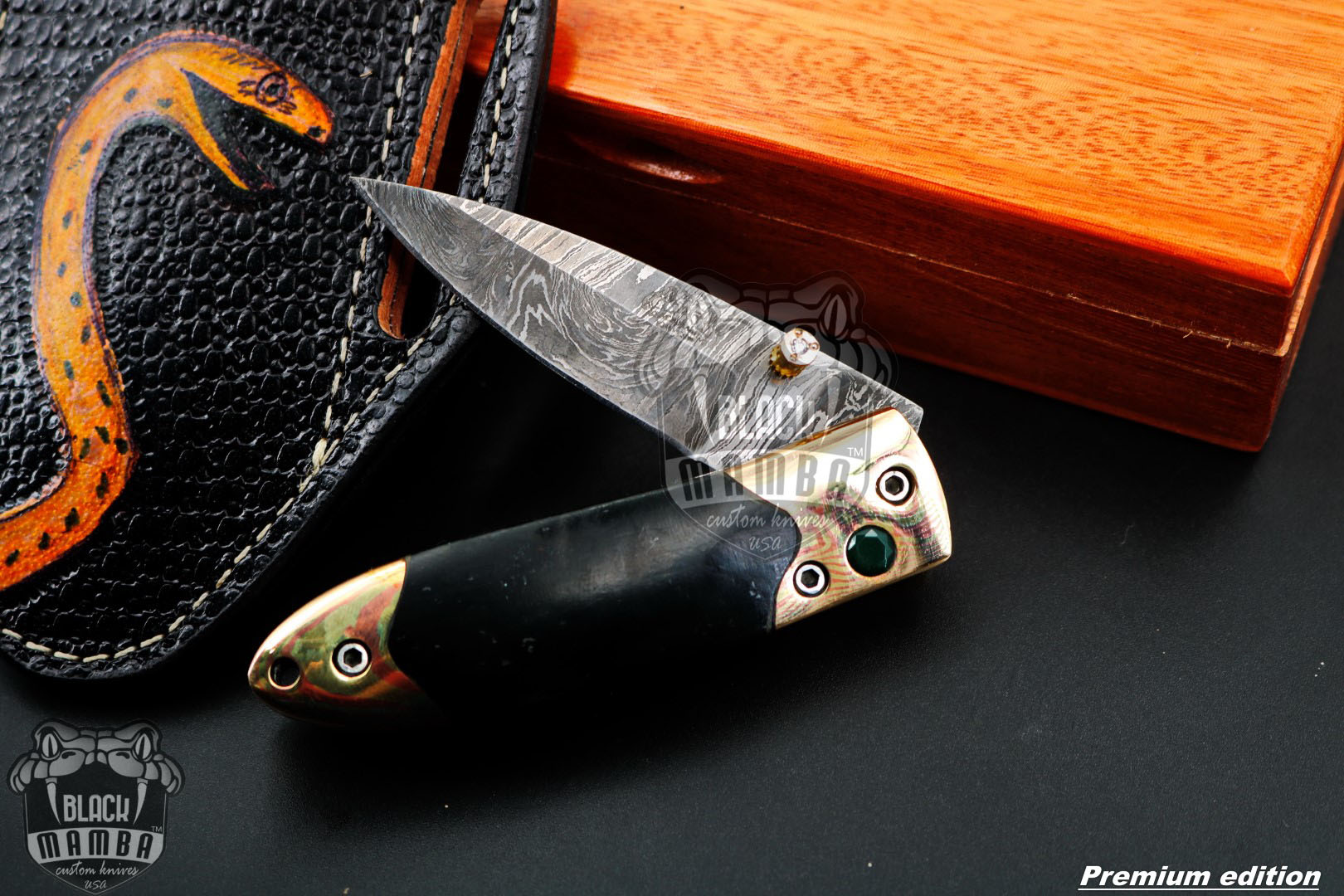
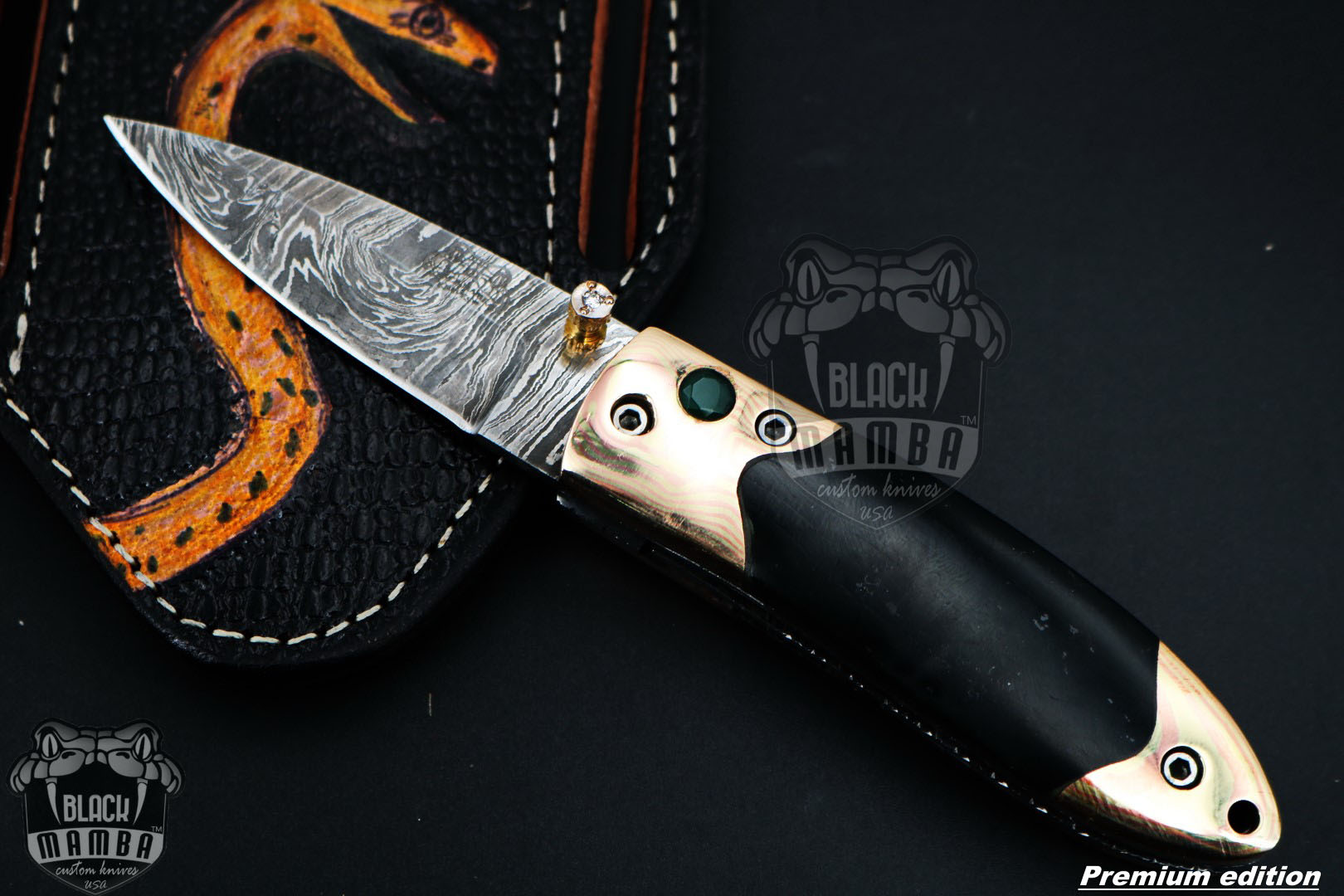
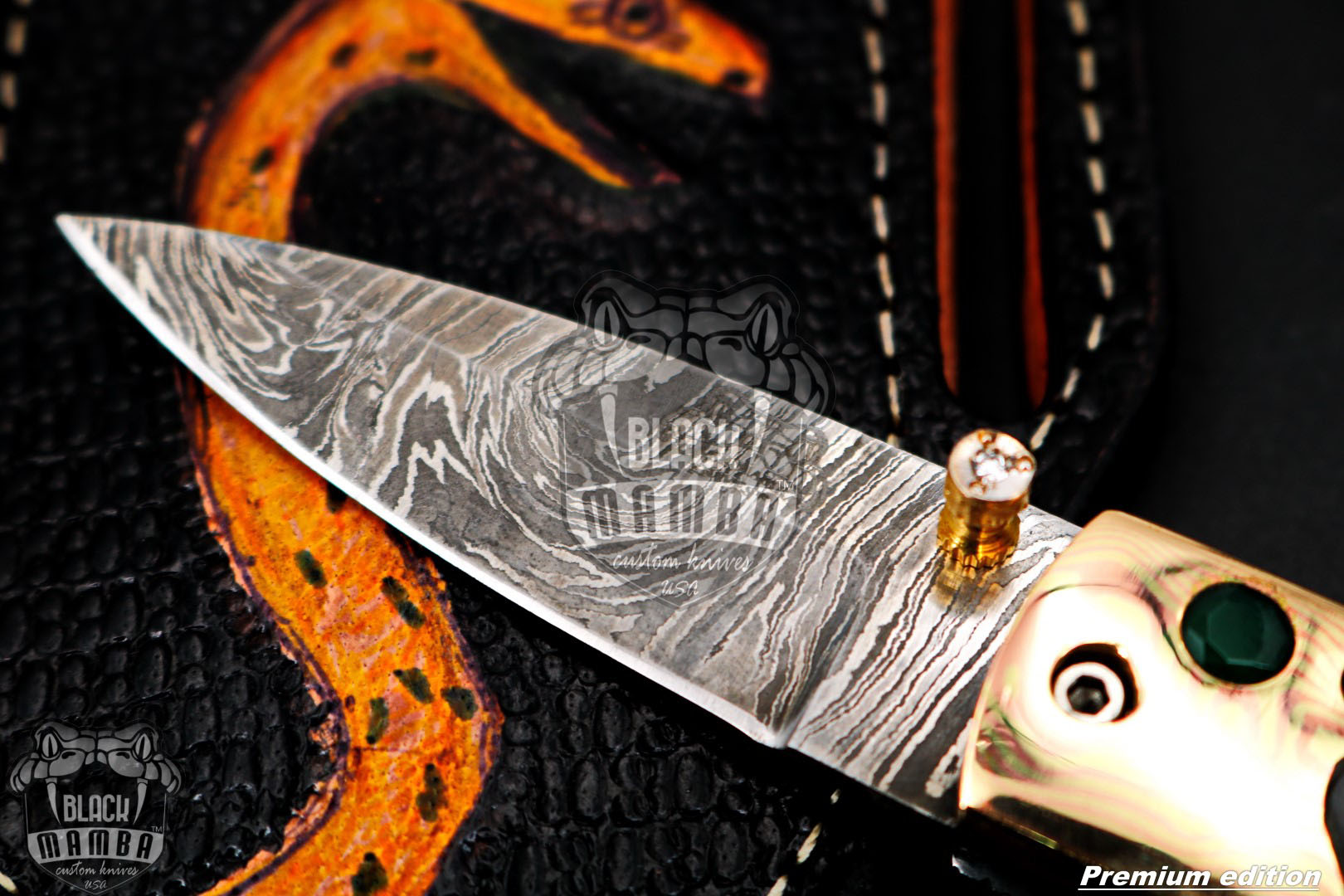
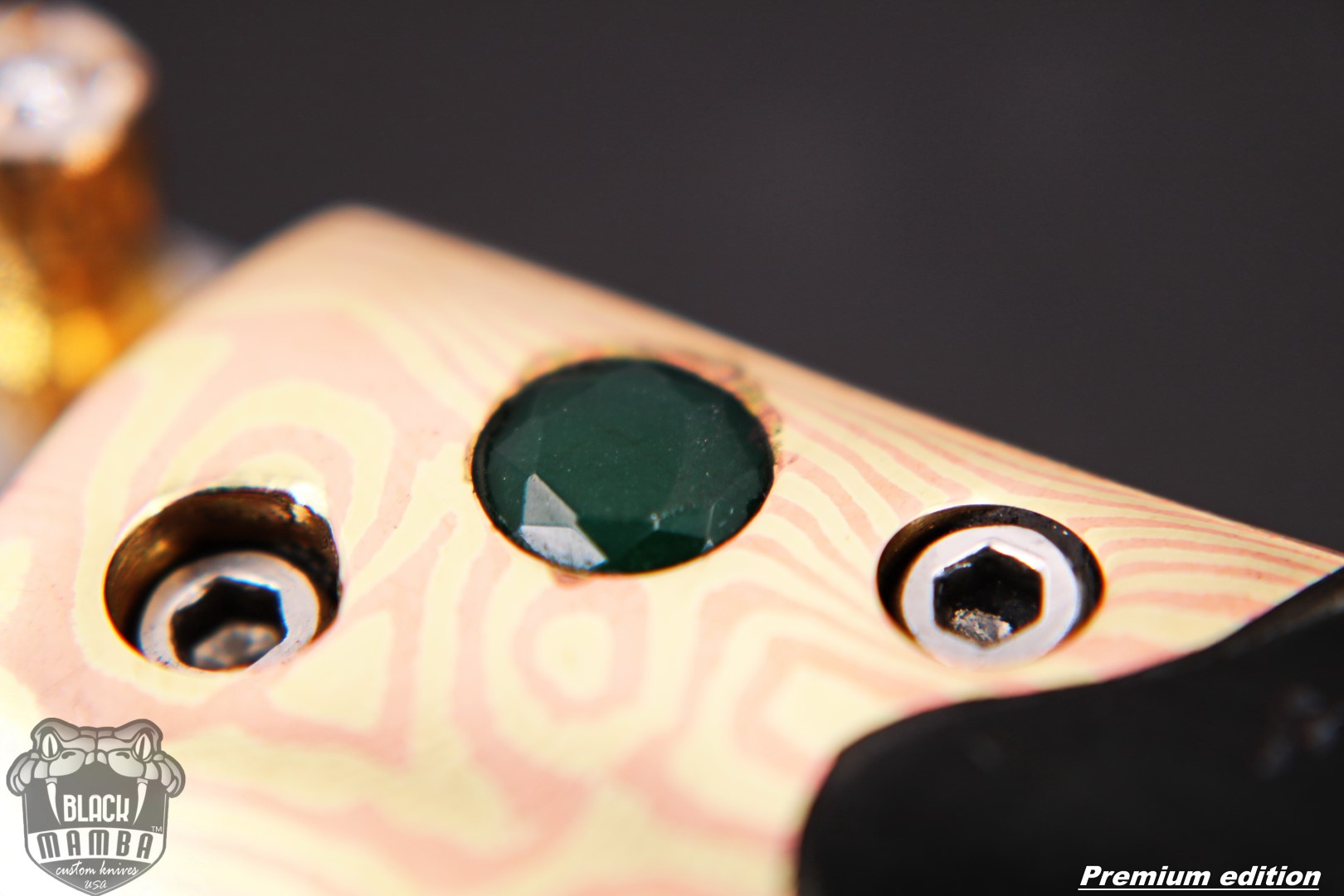
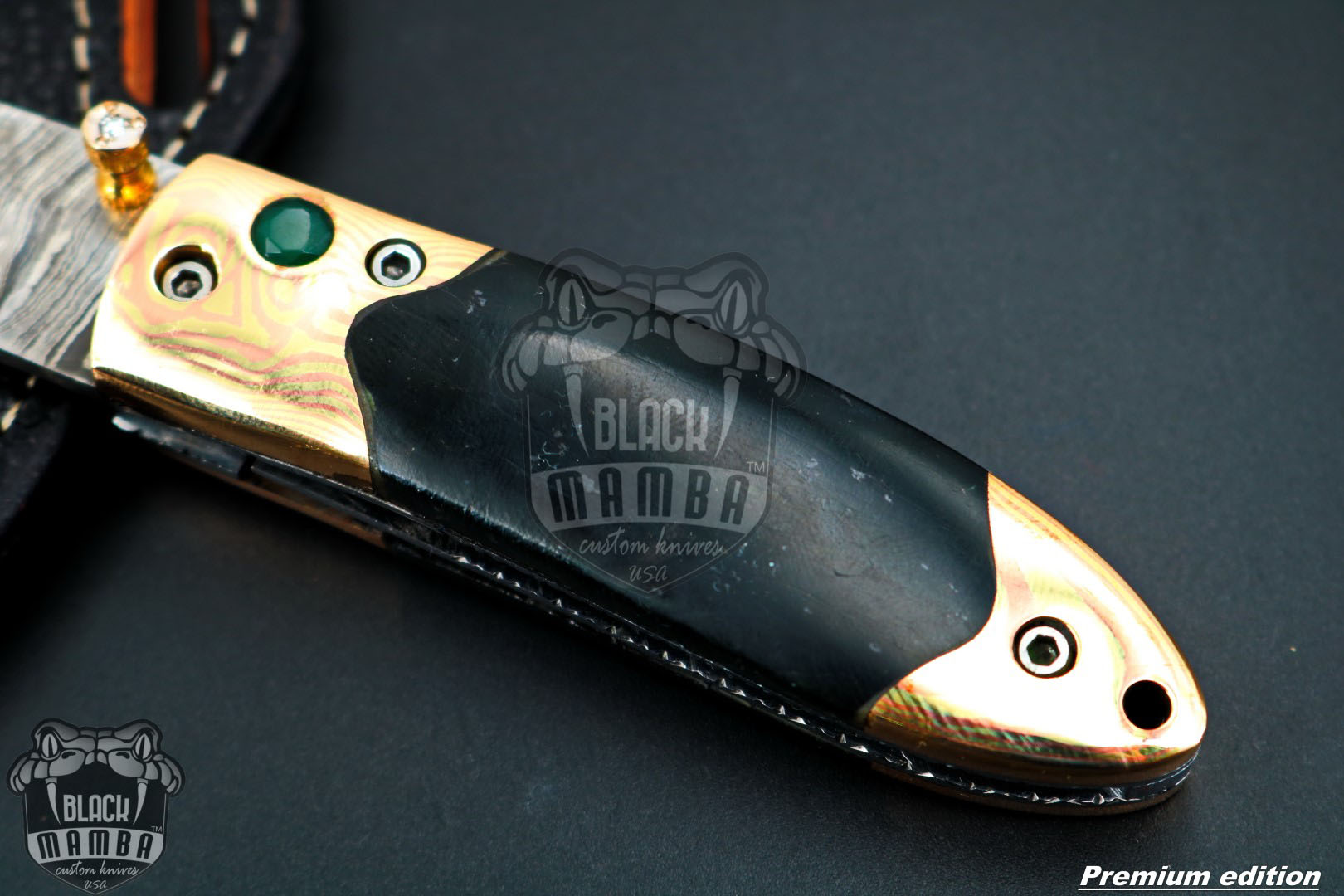
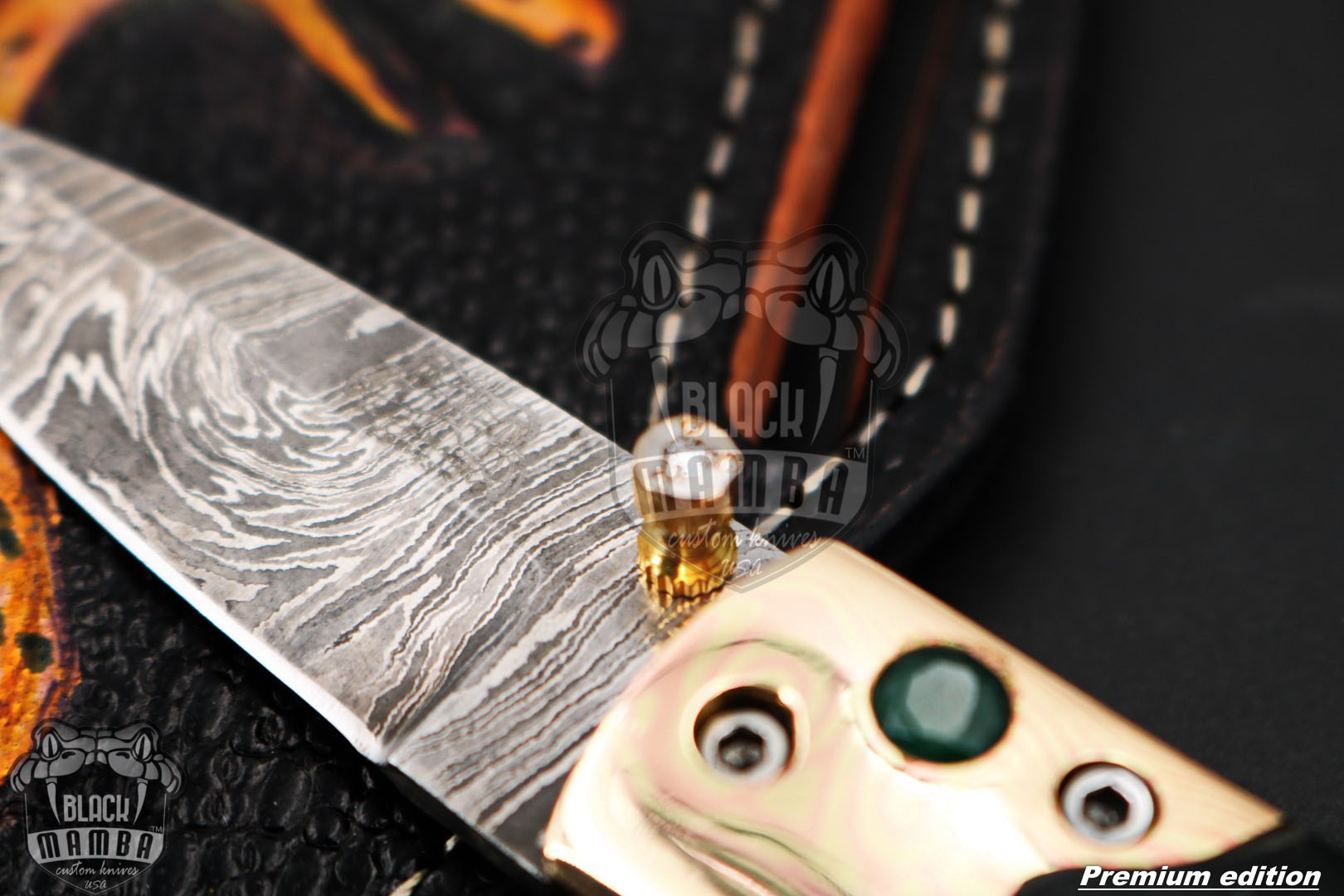
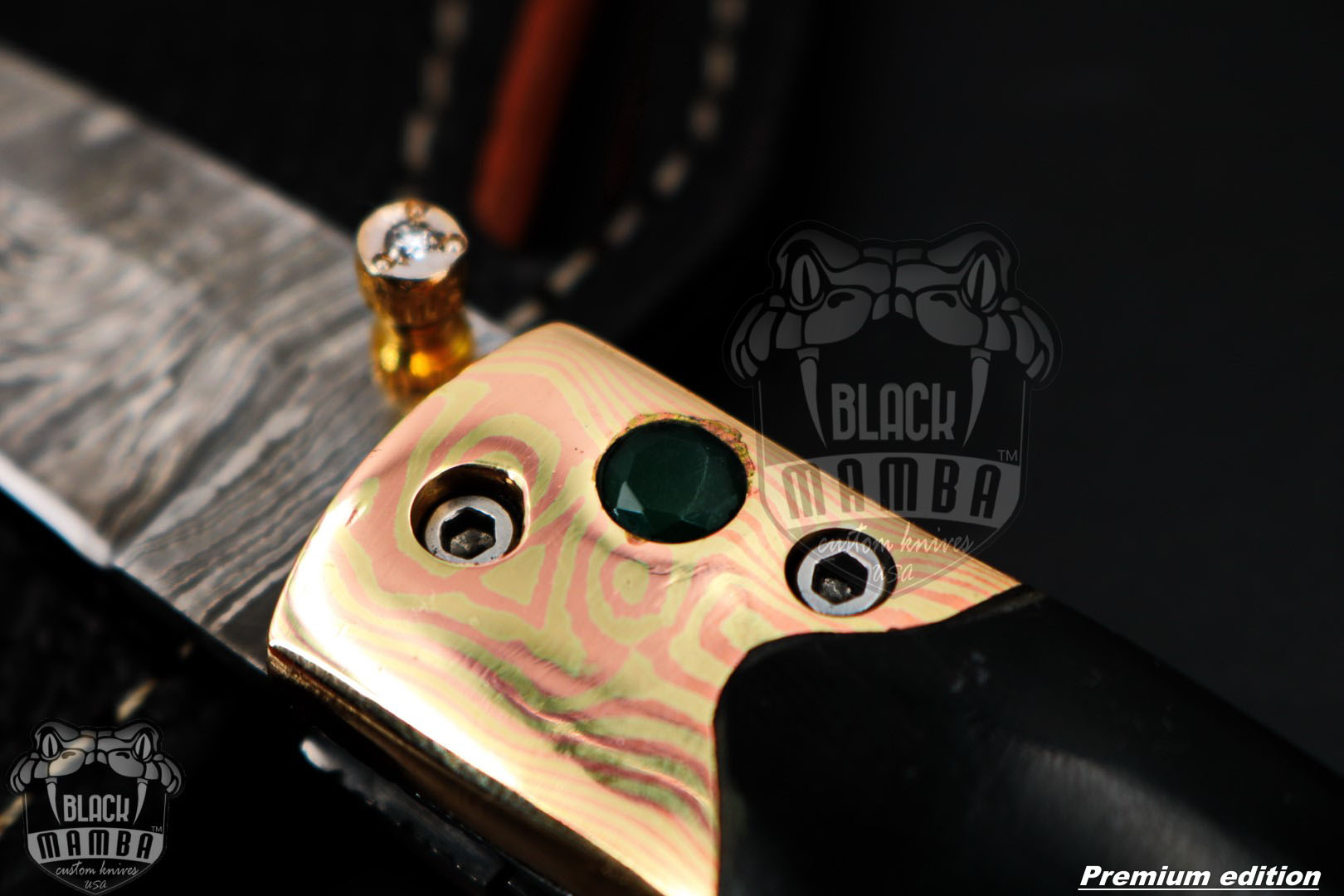
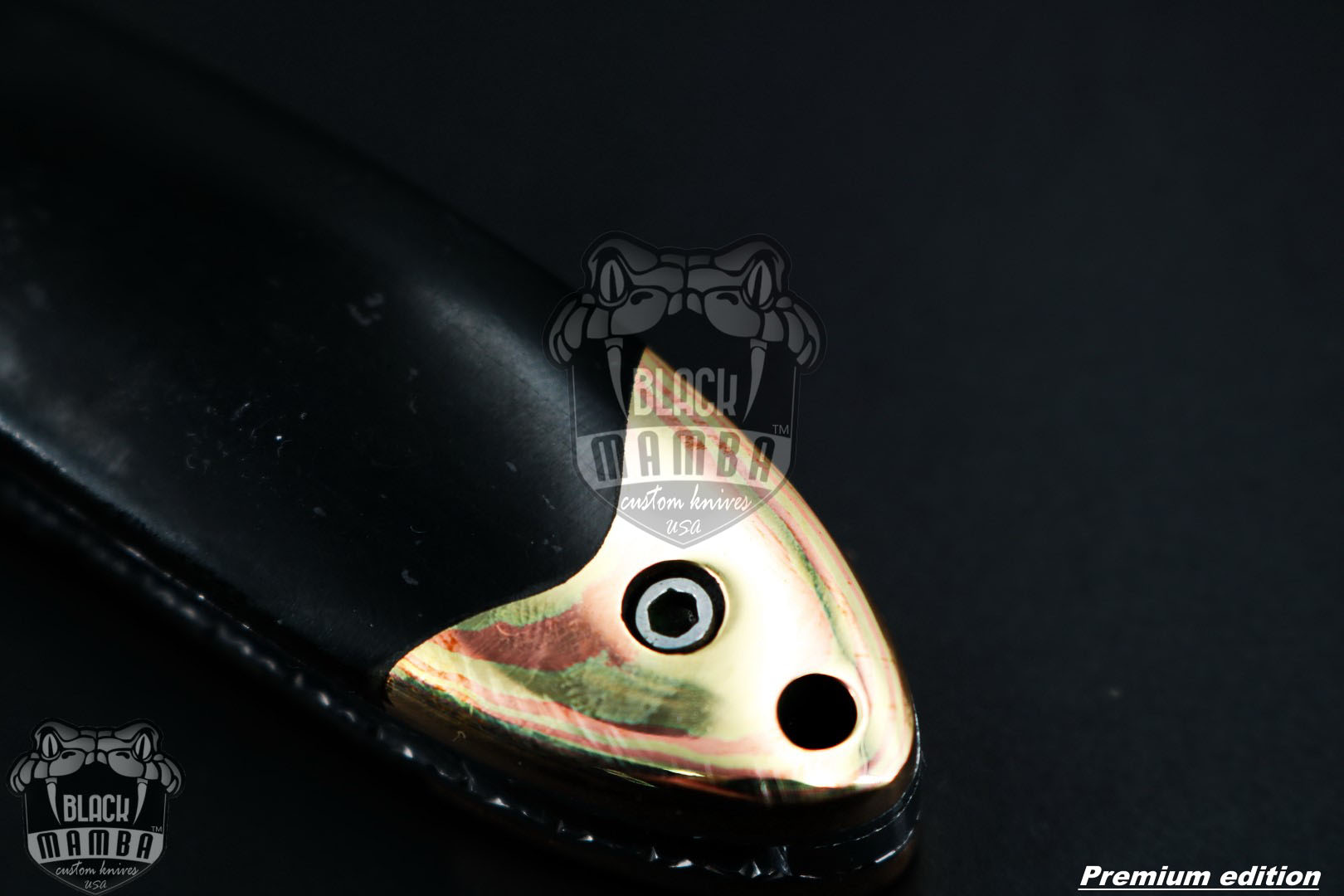
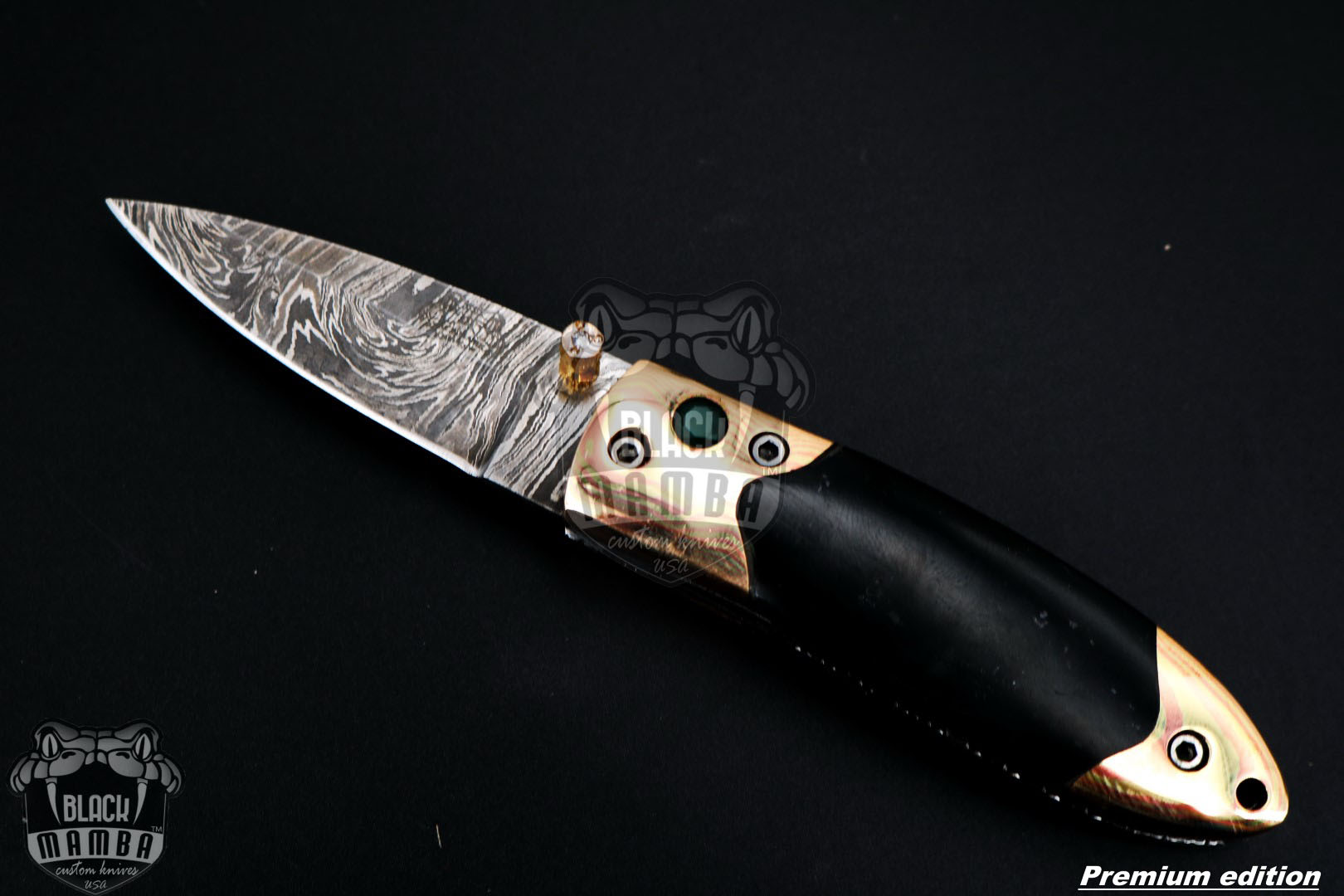
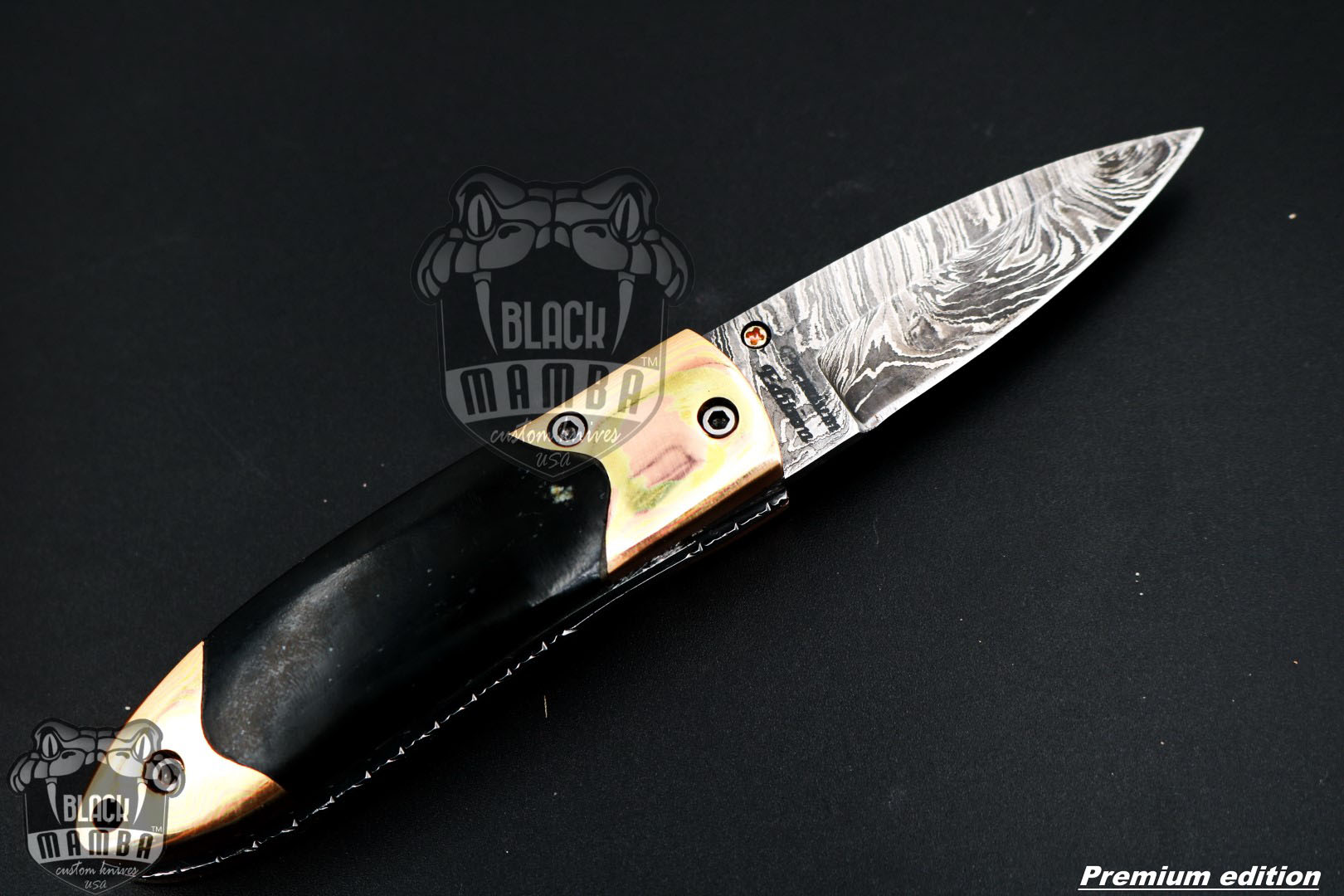
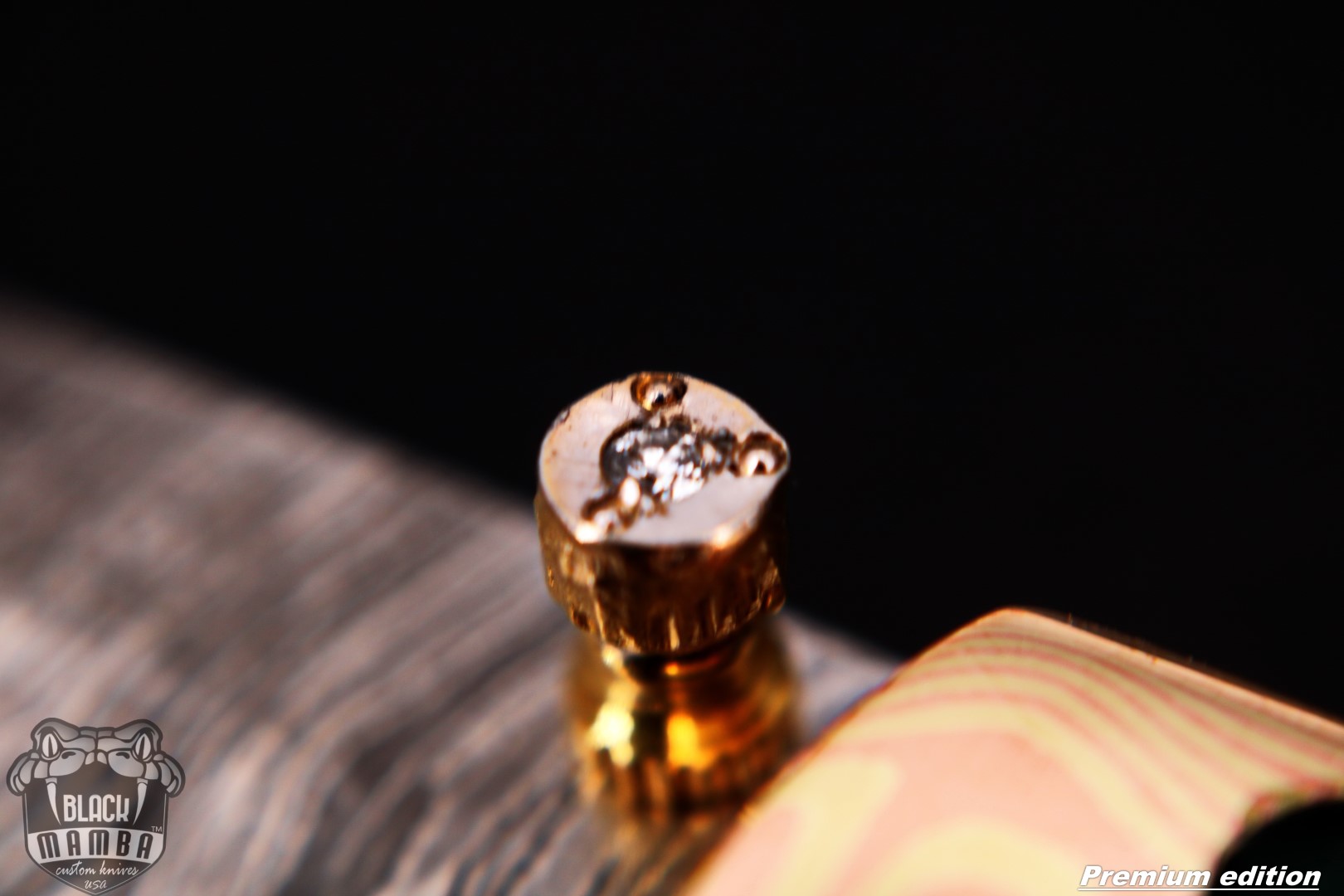
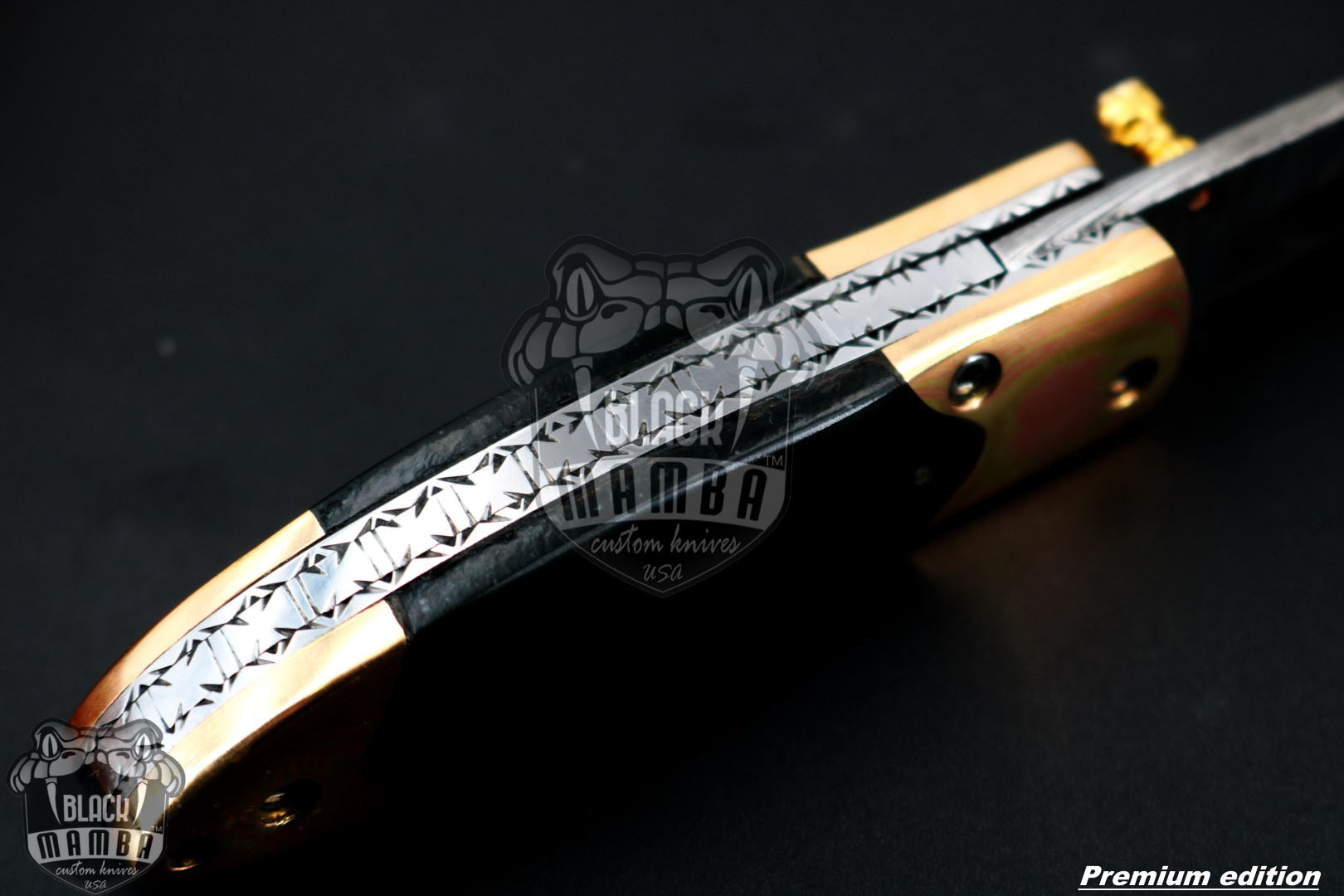
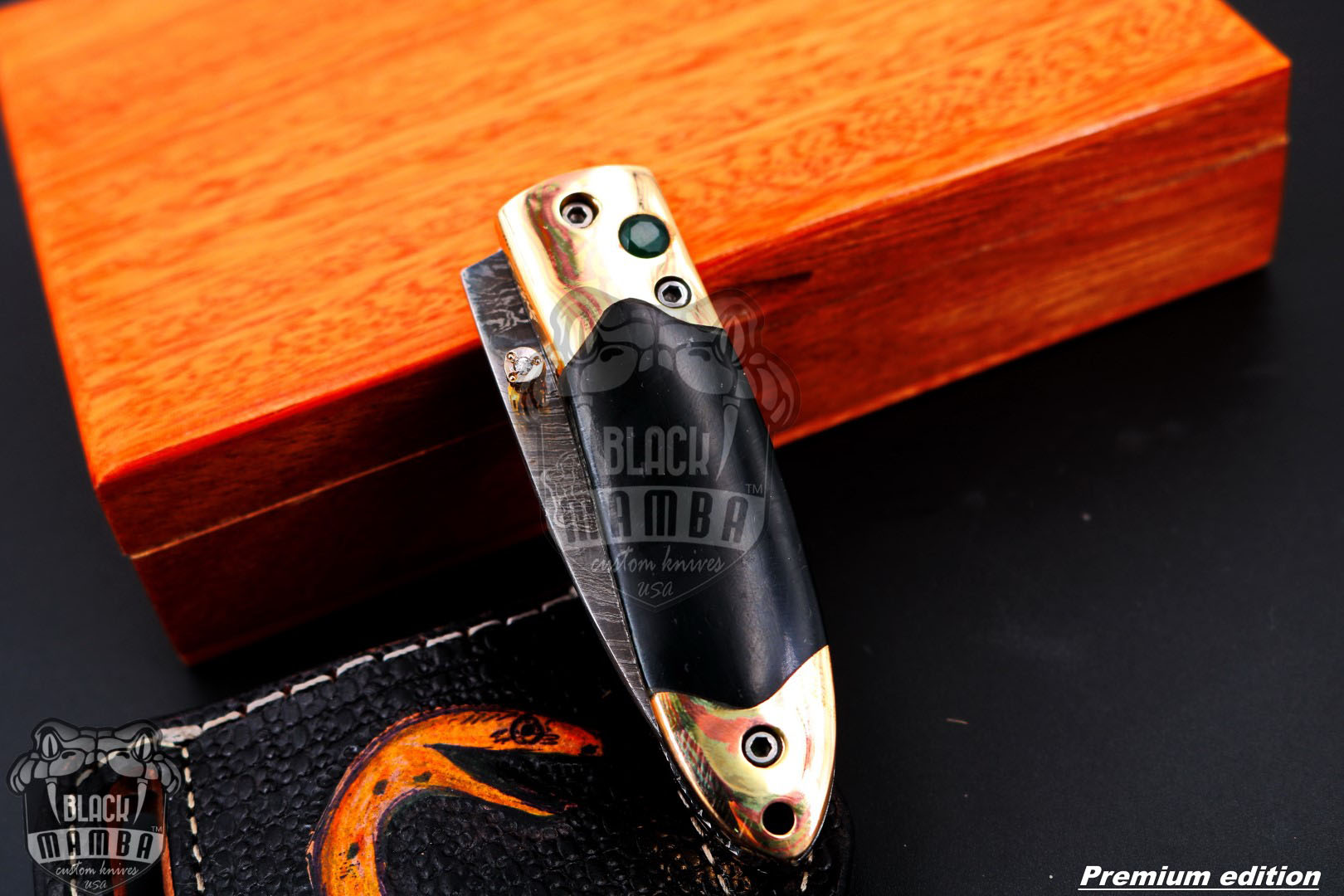
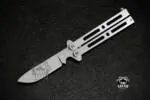
Two mokume bolsters, a black stone panel set between them, and three stones: green in the front bolster, clear at the thumb stud, dark at the butt.
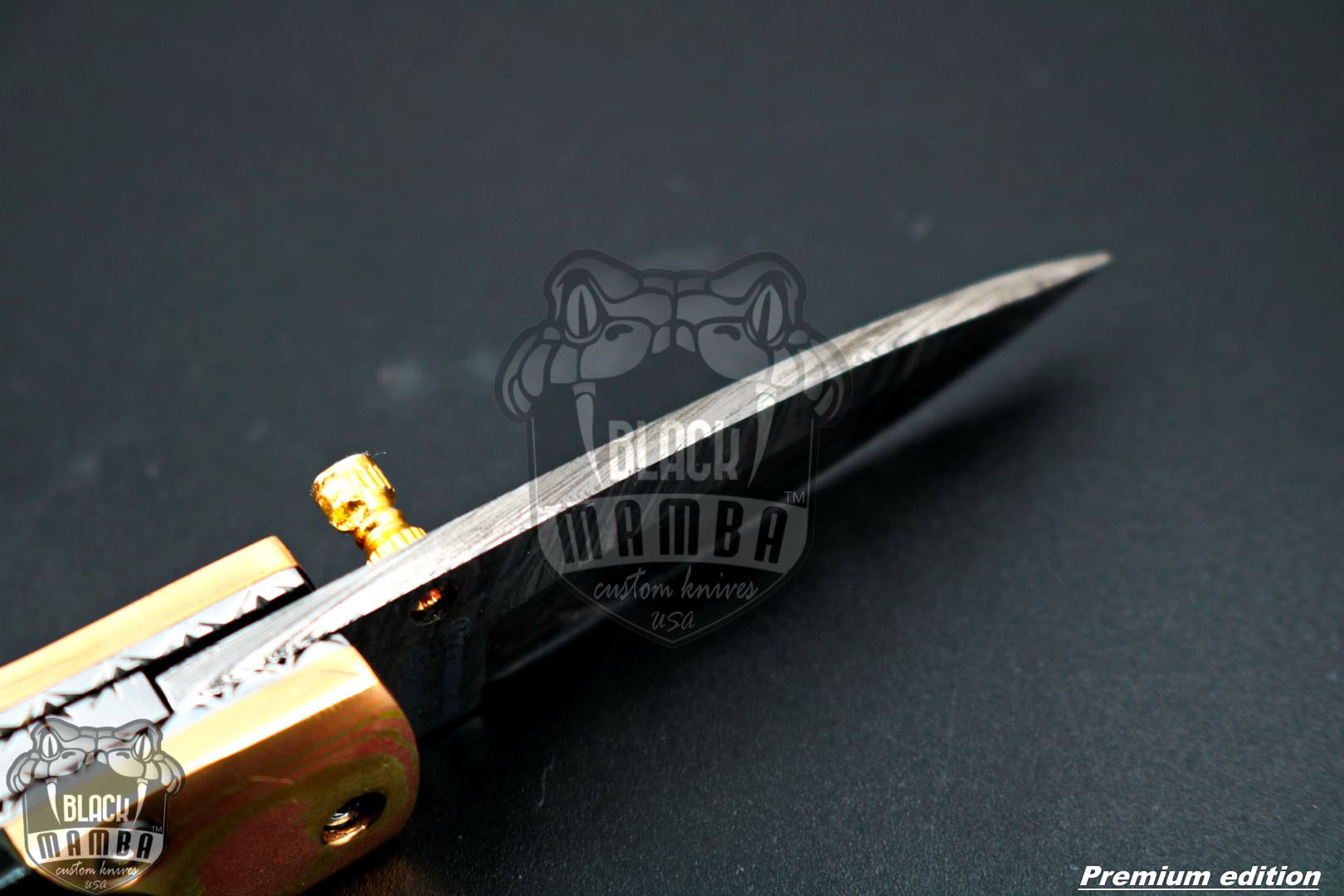
| Steel | 1095 + 15N20 Damascus, 352 layers |
| Handle | Black jade panel with mokume gane bolsters |
| Hardness | 58–60 HRC, oil tempered |
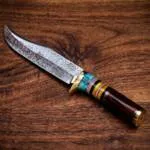
| Pattern | Wind & Mix twist Fire pattern feather rain drop ladder Damascus Blade |
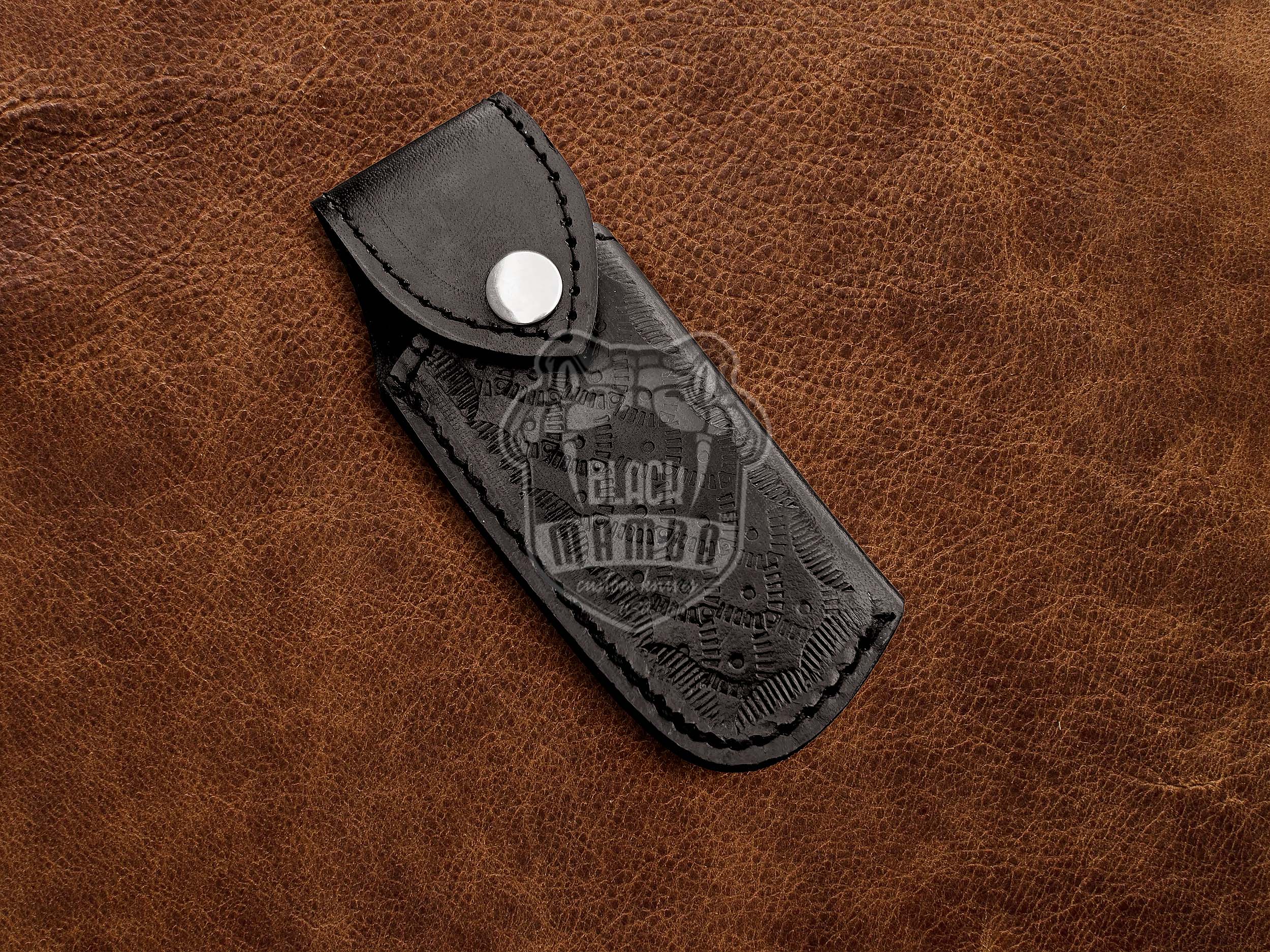
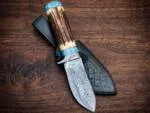
| Included | Hand-stitched leather sheath |
Where it belongs: a collection, a display case, and a jacket pocket on the days that warrant it. This is jewelry that happens to cut, and it is priced and finished as jewelry rather than as a tool.
Care: treat it the way you would treat a set ring. The stones sit in bezels, and bezels move if the knife lands on tile. Clean it with a dry soft cloth and nothing more aggressive than that — no ultrasonic bath, no solvent, and above all no abrasive polish, because mokume gets its contrast from a surface etch that polishing flattens out in seconds. It is high carbon steel behind that etch, so dry it if it gets damp, close it dry, and put it away outside the sheath rather than inside it.
What mokume actually is
Layers of non-ferrous metal forged together and then etched so the different alloys read as different colors. The result looks like wood grain in metal, which is where the name comes from. Two things follow from that. The first is that no two bolsters can match, because the pattern depends on where the file cut through the stack. The second is that the effect lives on the surface, so it wears with handling and it disappears entirely if you polish it.
The stones, and what they change
Set stones make this a knife you carry deliberately. The one at the thumb stud is the one you will feel, because your thumb rides on it every time you open the blade, and it is smoother and colder than a steel stud. The green stone in the bolster and the dark stone at the butt are there to be looked at. None of them make the knife cut better and none of them are load-bearing, which is exactly why a knock is the thing to avoid.
Is a folder at this price worth it
Not on cutting performance. A plain forged folder at a fifth of the price will cut just as well, and our Fallen everyday folder is that knife. What you are buying here is hours: the bolster fit, the stone settings, the etch on both the blade and the mokume, and the fact that all of it was done by hand on one bench. Our guide to Damascus pricing breaks down where the money goes.
Questions about this piece
Will the stones come loose? Not under normal handling. Bezel settings are secure. Dropping it onto something hard is the risk, not carrying it.
Can I polish the bolsters if they dull? No, and this is the one thing that will damage it. Polishing lifts the etch and the pattern goes flat and gray.
How do I know the blade pattern is forged rather than printed? Look at the edge bevel. A forged pattern continues into it; a printed one stops at the shoulder. Our guide on telling real Damascus from a printed pattern shows what to look for.
Model: Bmk-1017
Amanda Rodriguez –
Absolutely seriously impressed by this knife. Can’t say enough good things about this purchase. Not my first order from Black Mamba Knives and it won’t be my last.
Joseph Coleman –
Kept picking this knife up just to admire it after it arrived. Handle feels amazing and the balance is perfect. Shipping was fast and everything arrived well packaged.
David Hunt –
This is hands down one of the best knives I’ve bought online. Handle has a great grip even with wet or gloved hands. This is exactly why I keep coming back to this maker.
Douglas Coleman –
This knife has quickly become my favorite piece in the collection. Handle has a great grip even with wet or gloved hands. This company nailed it with this one.
Donna Alvarez –
Was nervous ordering something like this online but so glad I did. Steel has a gorgeous pattern that looks different in every light. Highly recommend this one.
Carol Adams –
Kept picking this knife up just to admire it after it arrived. Blade geometry makes it glide through cuts with barely any effort. 10/10 would buy again.
Nicholas Garcia –
Bought this on a whim and it turned out to be one of my favorite purchases recently. Pommel and guard are solid, no wobble anywhere on the knife. Worth every penny.
Wyatt Castillo –
This thing is a beast in the best way. Pommel and guard are solid, no wobble anywhere on the knife. Black Mamba Knives has earned a repeat customer with this one. Can’t say enough good things about this purchase.