
Description
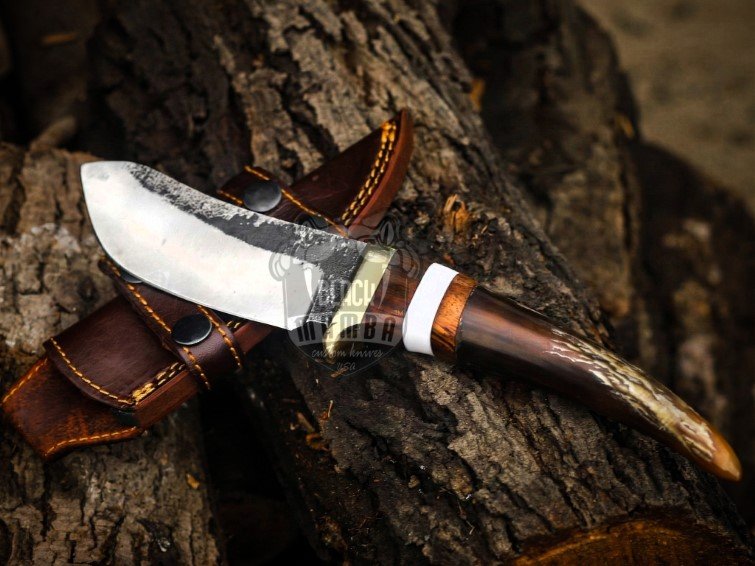
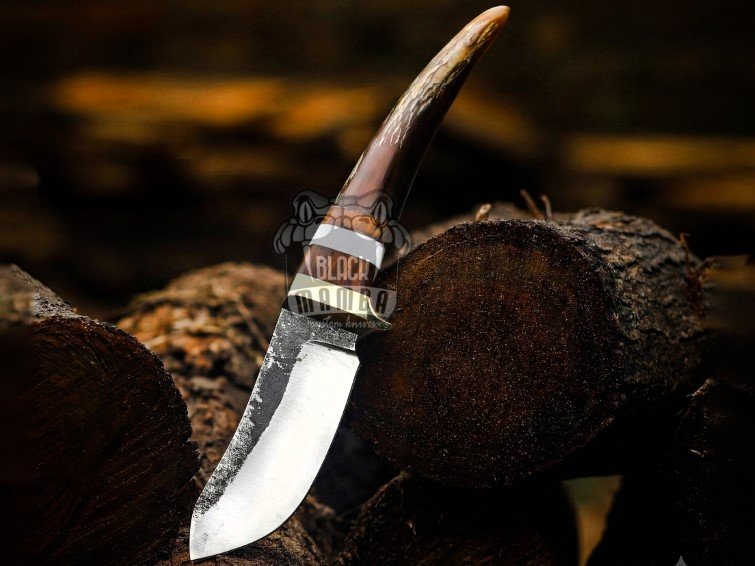
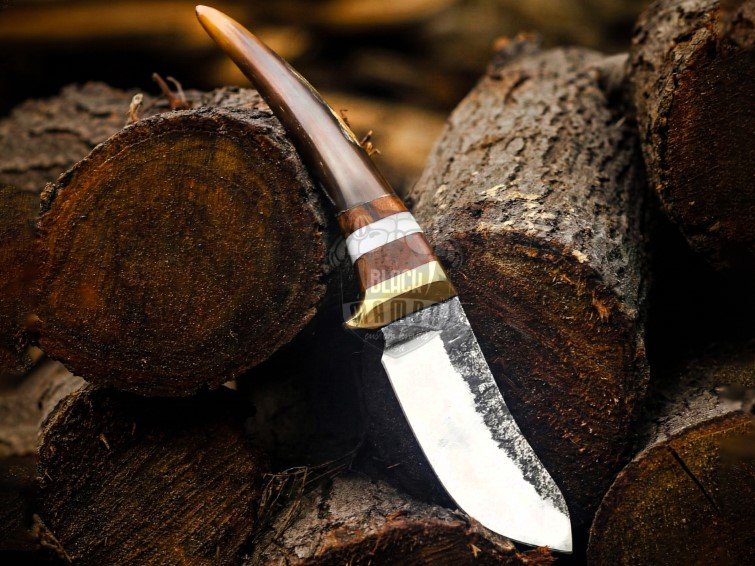
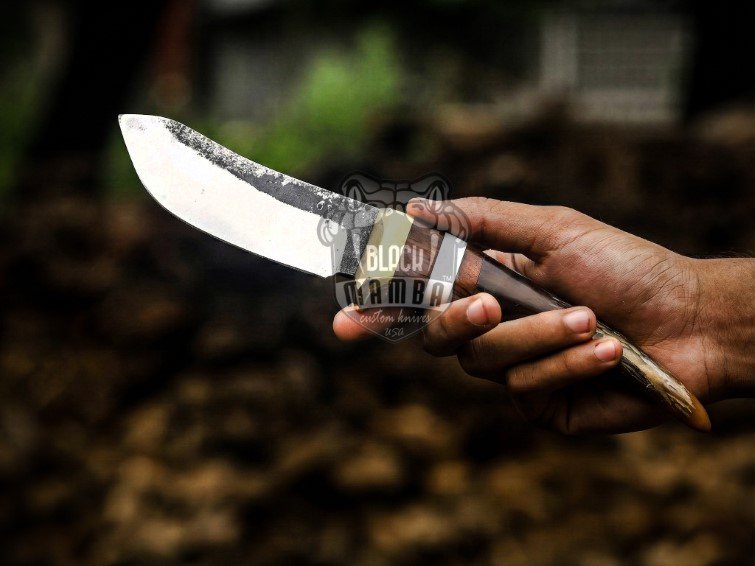
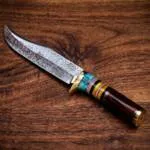
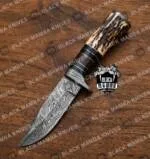
Six inches of handle behind four inches of blade is an unusual ratio, and it is the first thing you notice picking up the Ronin Edge.
| Overall length | 10 inches |
| Blade length | 4 inches |
| Handle length | 6 inches |
| Steel | Hand-forged high-carbon steel |
| Handle | Lamb Horn & Natural Wood Handle | Brass Clip |
| Included | Hand-stitched leather sheath |
Built for: people who want a lot of grip. A long handle suits large hands, gloved hands, and any technique where you slide back for reach or forward for control. It also makes the knife awkward to carry discreetly.
The handle-heavy ratio, and who it suits
Blade-forward knives feel eager and cut aggressively. This one does the opposite: the balance sits behind your hand, so the tip feels light and the whole knife feels steady. For carving, whittling and any job where you brace a thumb on the spine and push, that is exactly right. For chopping it is useless, because there is no mass out front to do the work. Judged as a controlled-cutting tool it makes complete sense. Judged as a camp chopper it will disappoint you.
Horn behaves like a fingernail
Lamb horn is keratin, the same material as a fingernail, and it acts like one: hard, slightly flexible, sensitive to swings in humidity. Every piece is a different mix of cream, gray and near-black, with the darker areas usually the denser. Over years horn can develop fine surface checks if it dries out, and can warp slightly. Paired here with natural wood, you have two organic materials with different expansion rates sitting against each other, which is why the joint between them is worth a glance every so often.
Brass ages faster than anything else here
The brass clip goes dull within weeks and brown within a year, well before the wood or the horn changes noticeably. That is normal and it is reversible: brass polish and thirty seconds returns it. Whether you bother is taste; left alone it settles into the look most collectors prefer.
Care: the blade is plain forged carbon steel that will rust given the chance, so it lives or dies on being kept dry and lightly oiled. It will darken into a gray patina over time, and that patina is protective. Do not scrub it back to bright unless you plan to keep up the oiling. Horn and wood want the same things: no water, no heat, no solvents. Wipe them dry, and once a year work in a little paste wax, which also slows the horn from drying out. If rust does appear, our guide to taking rust off a blade covers doing it without wrecking the finish.
FAQs
Is a patina a problem? No. A stable gray oxide layer actively slows red rust, and some owners force one deliberately with vinegar or mustard. What you do not want is orange, flaky and pitted.
Which steel exactly? Our sheet records it as hand-forged high-carbon steel without naming a grade, so we will not quote a number. In practice it sharpens easily, takes a keener edge than most stainless, and rusts if neglected. Our steel chart shows where that sits against named grades.
Is there a folding version of this idea? Not of this model, but a Laguiole folder gives you the same long-handle, small-blade proportions in something pocketable.
Model: BMK-695

Patricia Sanders –
Best knife I’ve ever owned. Hands down. This is why Black Mamba Knives is my go to for anything knife related.
Henry Taylor –
Kind of not great given the price tag. Handle had some rough edges that needed sanding down myself. Blade arrived with a couple small nicks in the edge. On the fence about ordering here again.
Betty Harris –
Five stars isn’t even enough honestly. Ordered from Black Mamba Knives before and the quality stays consistent every time.
Benjamin Ramirez –
So happy I finally pulled the trigger on this one. Took it out camping right away and it handled everything I threw at it. Edge retention has been great even after regular use in the field. Blade geometry makes it glide through cuts with barely any effort. This is going straight into my daily rotation.