

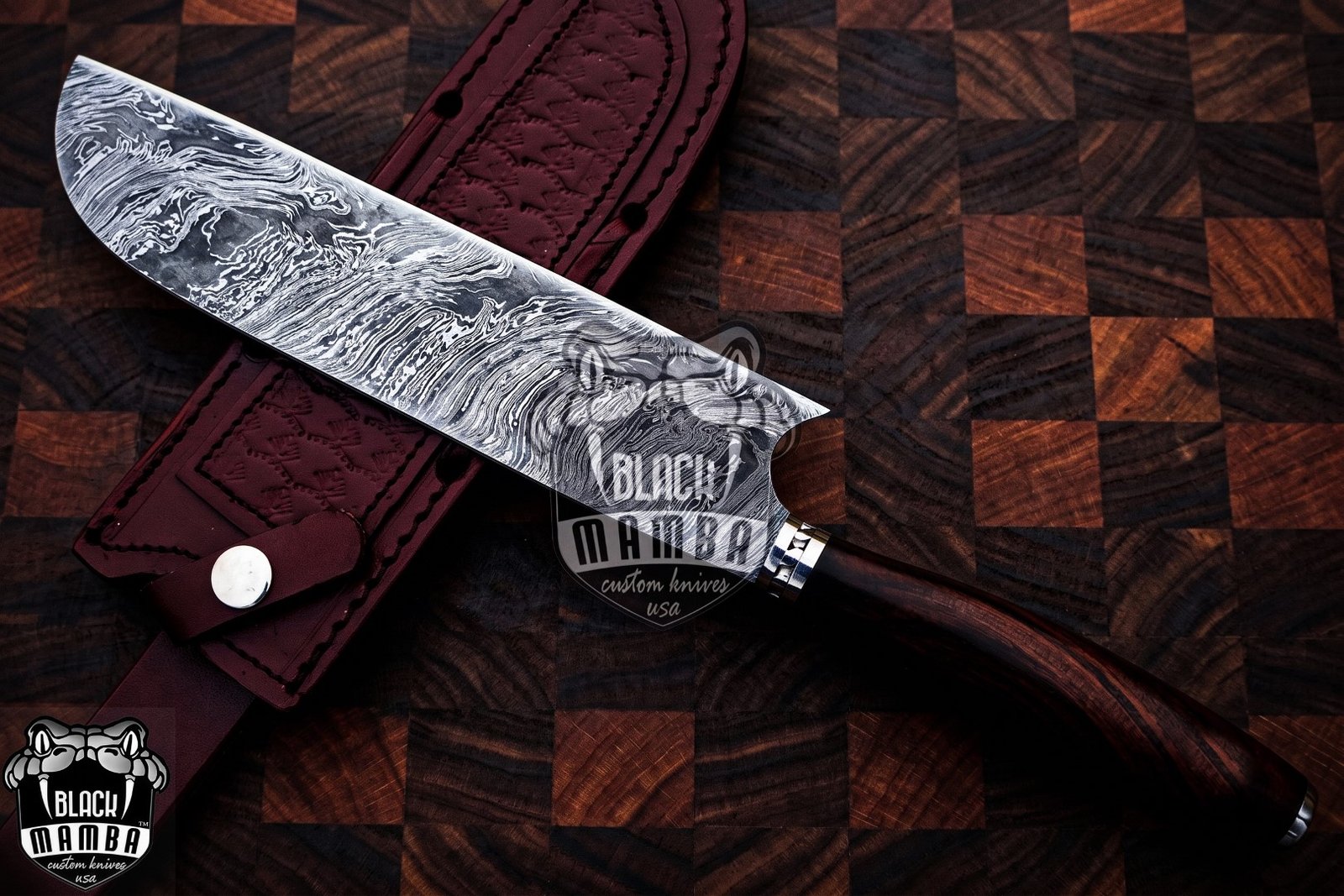
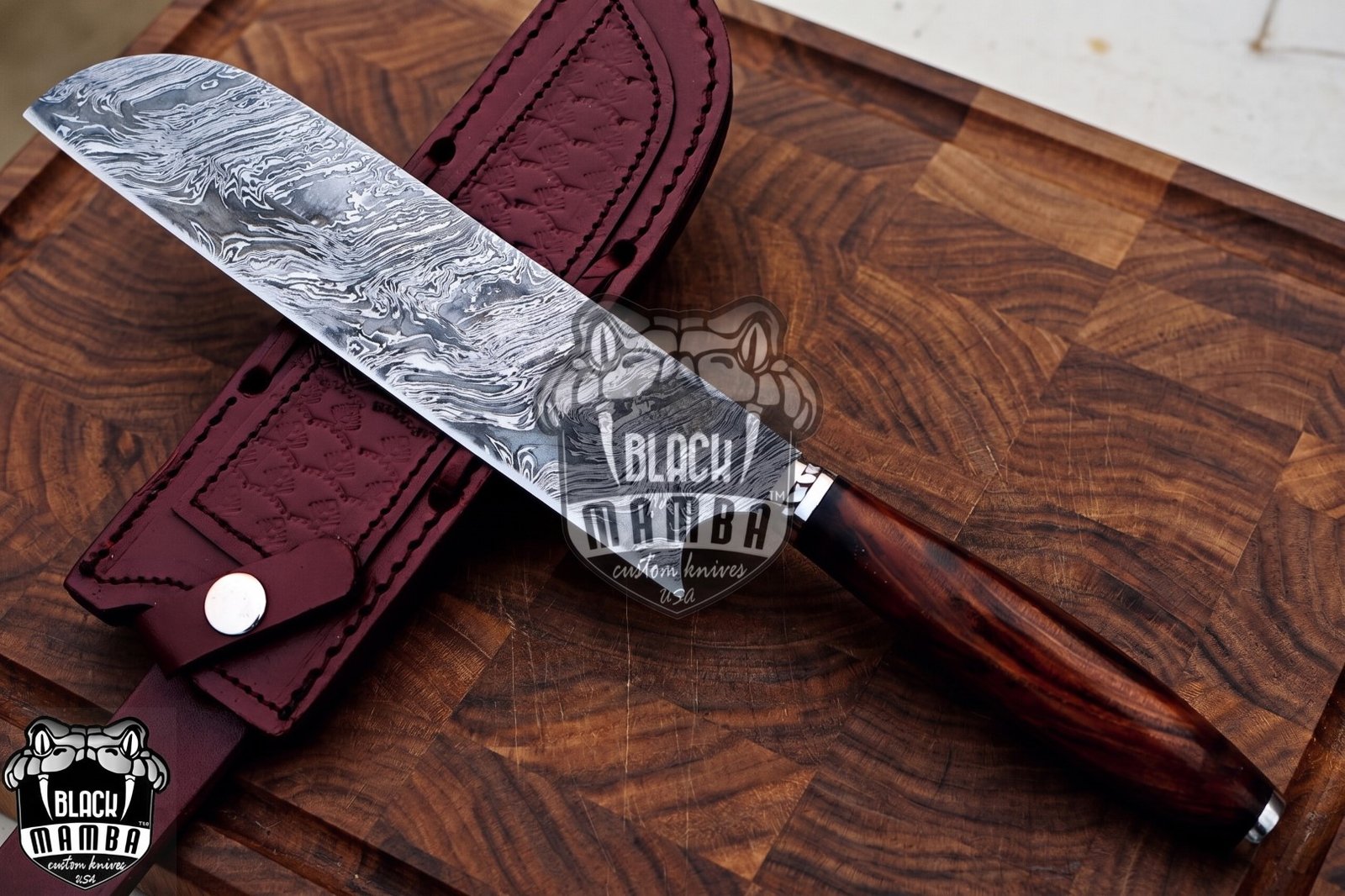
Description
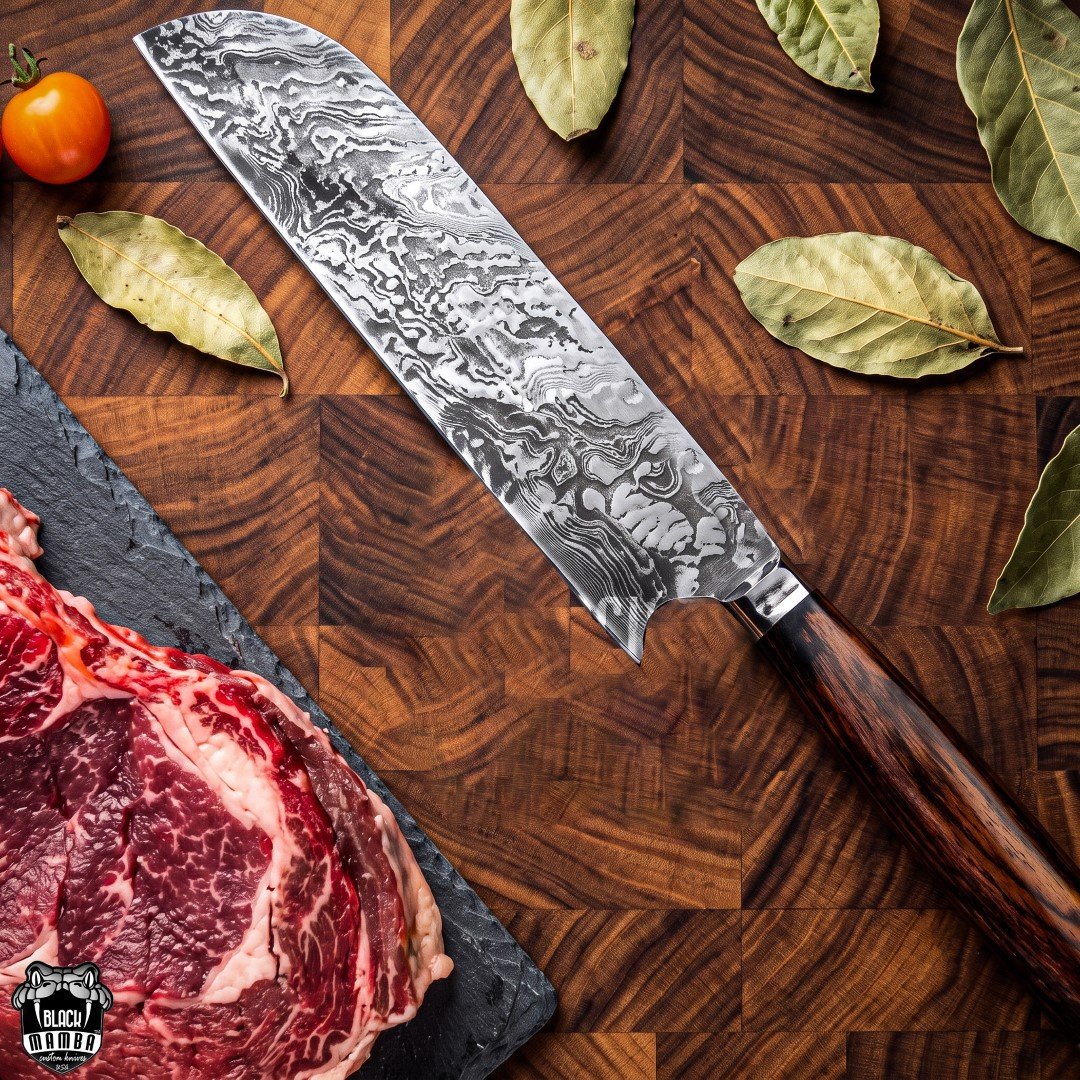
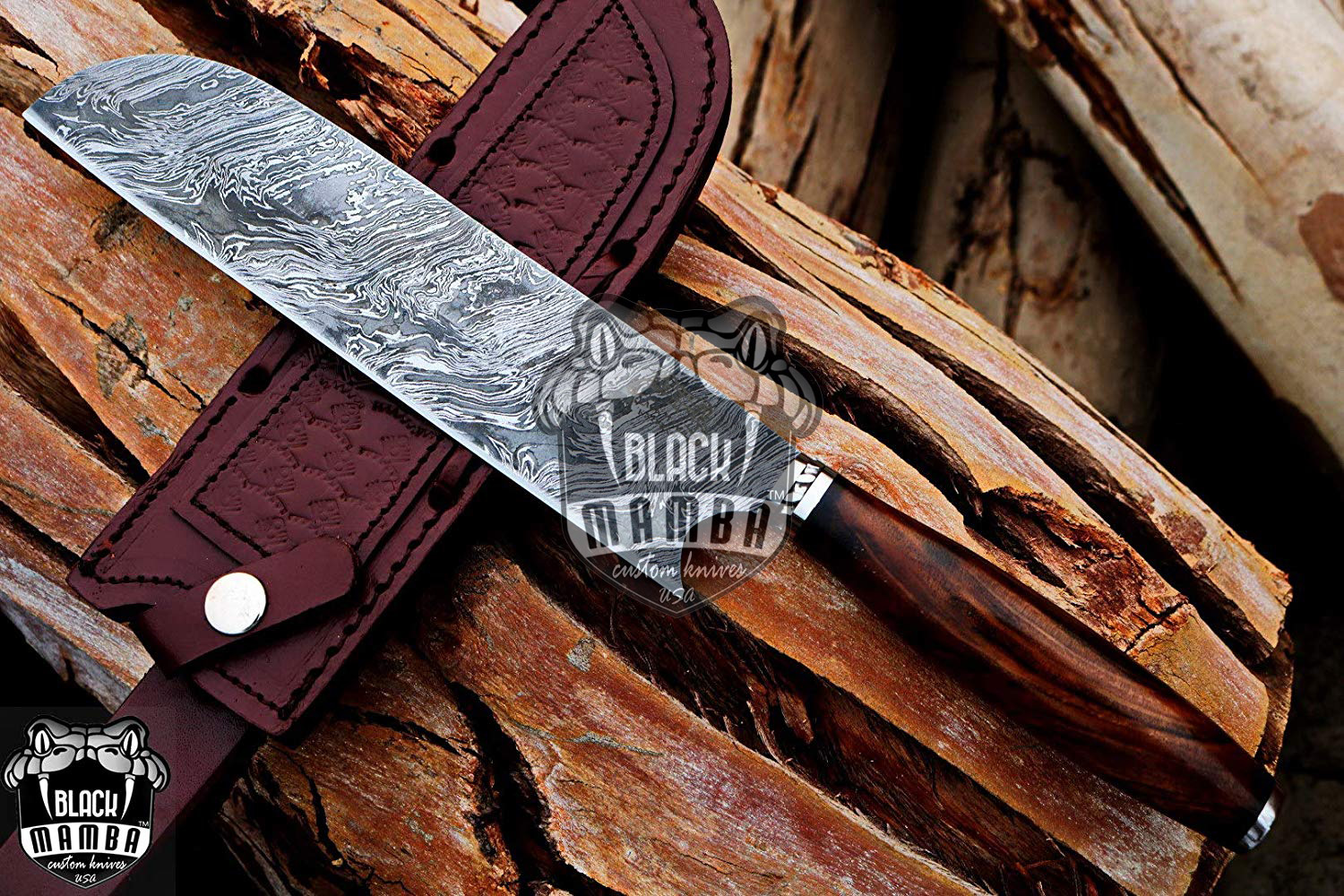
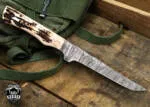
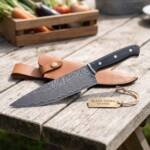
An eight-inch chef blade at nine ounces, on a five-inch handle. Those three numbers together describe a knife that is meant to be used every day rather than admired on a rack.
| Overall length | 13.5 inches |
| Blade length | 8.2 inches |
| Handle length | 5.3 inches |
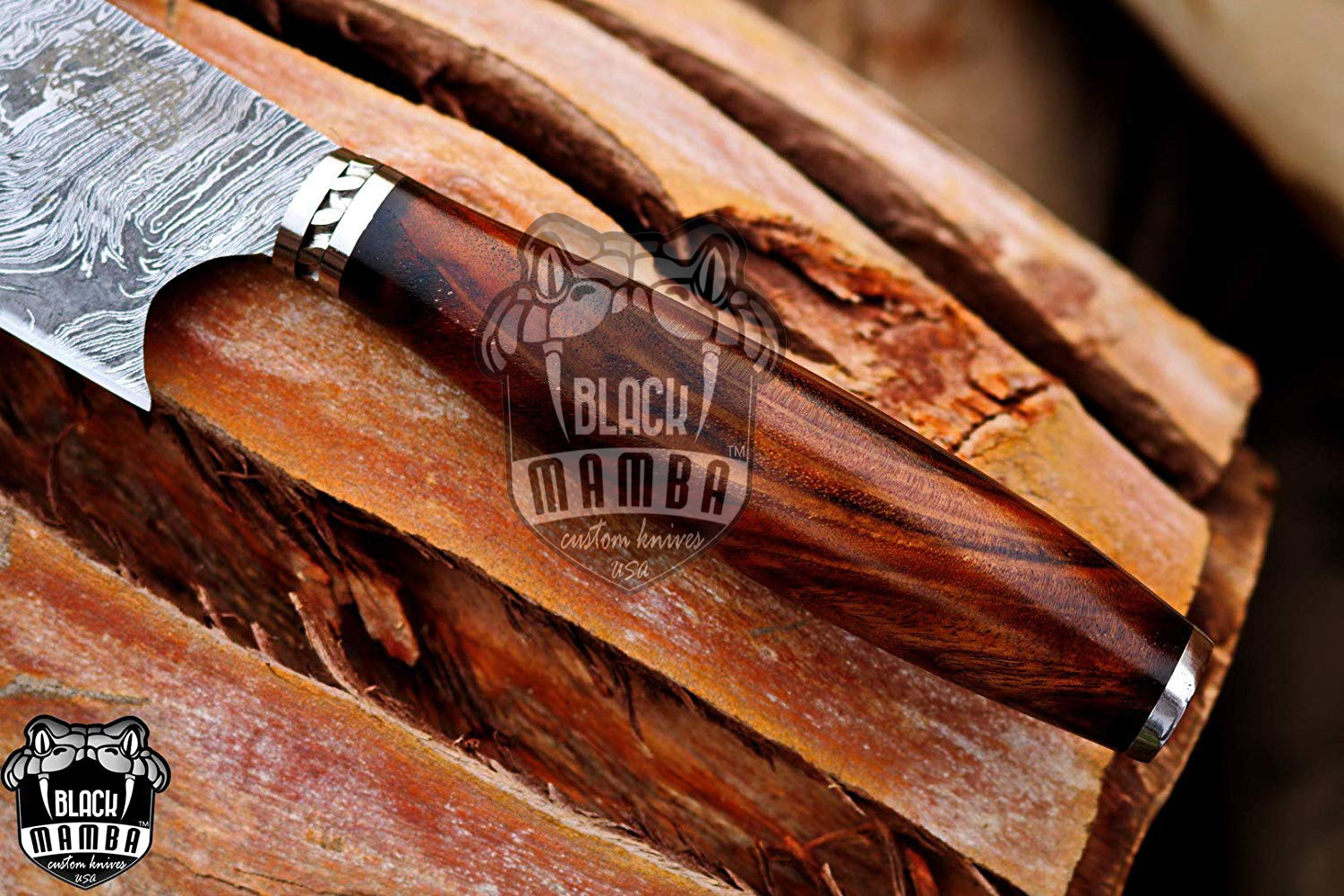
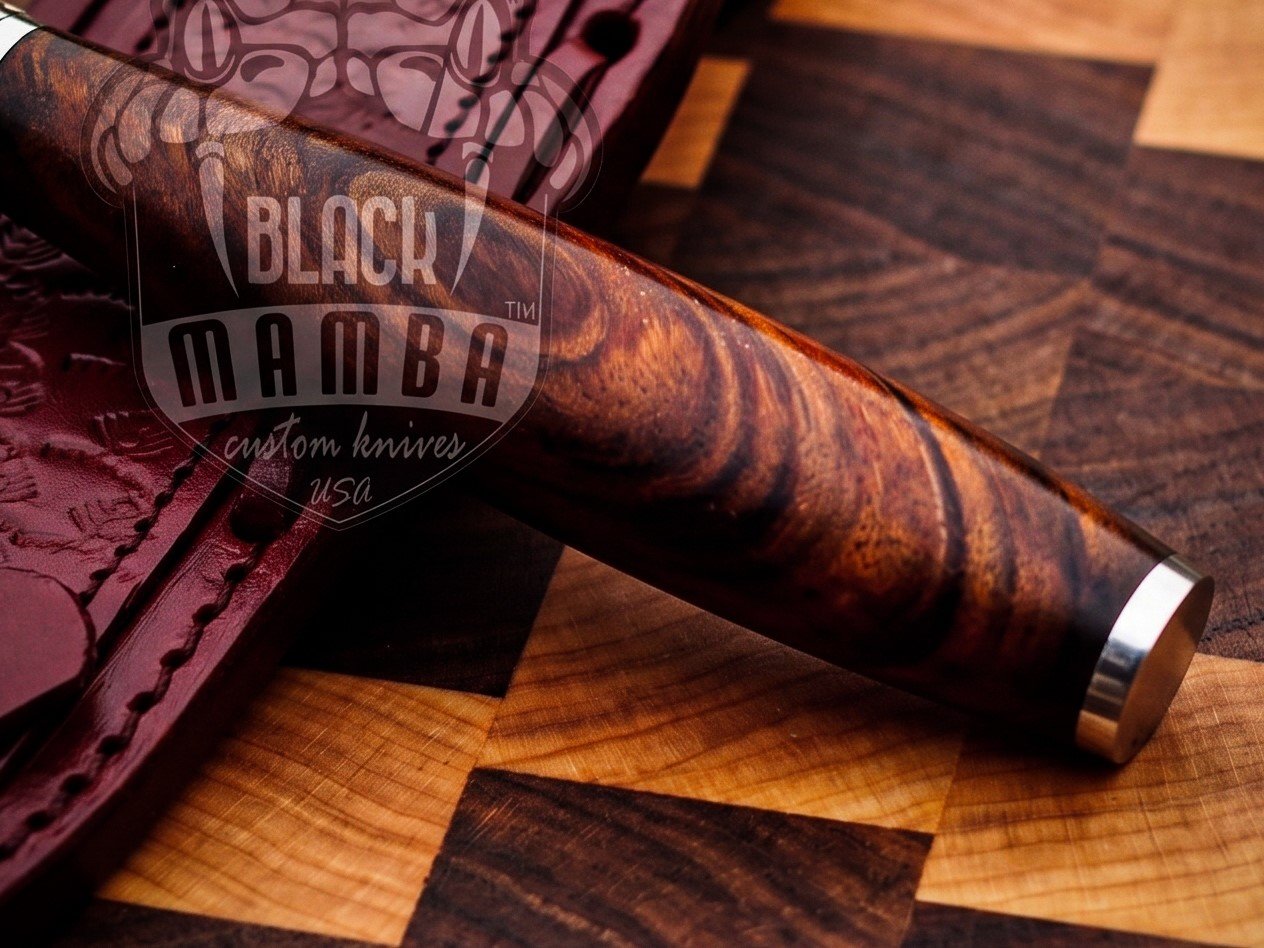
| Handle | Figured rosewood with a black spacer and stainless steel bolster |
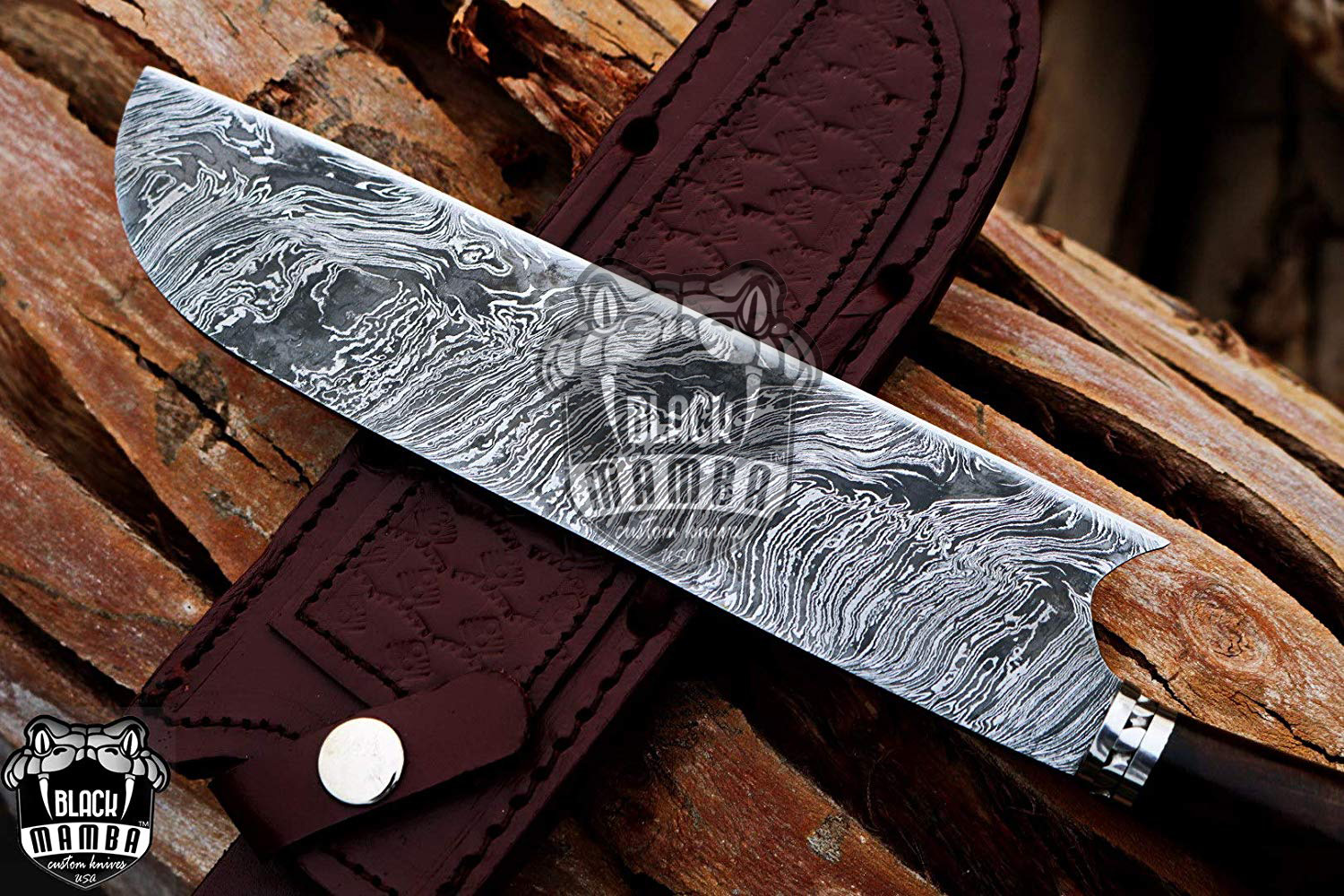
| Steel | 1095 + 15N20 Damascus, 352 layers |
| Hardness | 58–60 HRC, oil tempered |
| Weight | 9.1 oz |
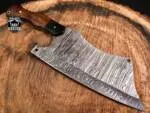
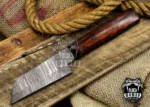
| Pattern | Wind & Mix twist Fire pattern Damascus Blade, Extreme custom Brass File-work |
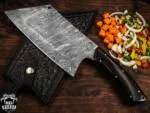
| Included | Hand-stitched leather sheath |
On the board: the everyday cooking work. Dicing onions, breaking down a chicken, slicing a roast, running through a board of vegetables. Eight inches is the length most professional kitchens settle on because it clears a full onion in one stroke and still fits a domestic board. Nine ounces is enough weight to fall through soft produce and light enough to hold all evening.
Rocking, and where it stops
A chef profile has a curved belly so you can rock the tip on the board and let the edge come down through the food in a sweep. That is what makes it fast on herbs and aromatics. It also means the edge is only flat for part of its length, so if you cut with a straight up-and-down chop you will leave uncut strands at the heel. That is a technique problem, not a knife problem, but it is worth knowing before you buy. Cooks who chop rather than rock are usually happier with a cleaver profile.
Balance and the five-inch handle
The handle is long enough for a pinch grip, where your thumb and forefinger sit on the blade itself just ahead of the bolster and the remaining fingers wrap the handle. That grip is the difference between controlling a chef knife and wrestling one, and it needs a handle that leaves room behind the pinch. Five inches does. Held that way the balance falls close to your fingers, so the tip stays light and the knife pivots where you want it to.
Carbon steel in a wet kitchen
This is the part that puts some cooks off, and it should be said plainly. A high-carbon Damascus blade will stain. Tomato, lemon, vinegar and raw onion all mark it within minutes if you leave the blade sitting. The habit that solves it is rinsing and drying between tasks rather than at the end. Do that and the knife develops an even gray tone and stops reacting. Neglect it and you get patchy discoloration and eventually pitting. If pitting has already started, our rust removal guide covers the fix. Never leave it in a sink and never put it in a dishwasher.
Practical questions
What angle should I sharpen it to? A shallow one, around fifteen degrees per side. The chef knife bevel guide explains why.
Is there a heavier version? The Fugu chef knife runs an ounce heavier on a slightly shorter blade if you prefer more mass.
Which board should I use? End-grain wood or soft plastic. Glass and stone will chip the edge on the first pass.
Model: BMK-113-W

Ashley Hiller (store manager) –
I bought this originally for my dad for Christmas but when I showed it to my husband he was so impressed he kept it for himself! I should probably say that my husband is a Chef and has access to all kinds of knives but was incredibly impressed with this ones craftsmanship! I ordered another one for my dad.
Amelia P. (verified owner) –
“This Damascus knife has become an essential part of my kitchen. It’s sharp, durable, and adds a touch of sophistication to my cooking.”
Amelia P. (verified owner) –
“I purchased a Damascus knife for my daughter, who’s a culinary student. She says it’s the best gift ever and uses it in all her cooking experiments.”
Lucas H. (verified owner) –
“I’m a collector, and this Damascus knife is a prized addition to my collection. It’s a blend of artistry and functionality that I admire.”
Daniel O.: (verified owner) –
“The Damascus knife I received as a gift has quickly become the star of my kitchen. Its sharpness and the artistry of its blade patterns make it a constant source of inspiration in my culinary adventures.”
Emily V.: (verified owner) –
“I’m an outdoor enthusiast, and my Damascus knife is an indispensable tool on my outdoor excursions. Its sharpness and durability make it the ideal companion for various tasks in the wilderness.”
Lily R. (verified owner) –
“The Damascus knife I received is truly remarkable. It’s beautifully crafted and incredibly sharp, making every meal prep a breeze.”
Olivia T.: (verified owner) –
“I’m a competitive chef, and my Damascus knife is my secret weapon in the kitchen. Its sharpness and precision give me the edge I need to create award-winning dishes.”
Charlotte K. (verified owner) –
“I bought a set of Damascus knives for my restaurant, and my chefs love them. They’re sharp, reliable, and add elegance to our kitchen.”
Samuel R.: (verified owner) –
“I purchased a Damascus knife for my son, who is a culinary student, and he’s been thrilled with its performance. It’s not just a knife; it’s a piece of functional art that has ignited his passion for cooking.”
Mason D. (verified owner) –
“I’ve used many knives in my career, but this Damascus knife is top-tier. It’s become an extension of my hand, and I can’t imagine working without it.”
Jessica W.: (verified owner) –
“I’m a barbecue aficionado, and my Damascus knife is a must-have for perfecting my smoked meats. Its sharpness ensures clean and precise cuts, adding an extra layer of finesse to my BBQ creations.”
William L.: (verified owner) –
“I’m an outdoor enthusiast, and my Damascus knife is a trusty companion on my hiking and camping trips. Its sharpness and durability make it an essential tool for various tasks in the great outdoors.”
Emily S.: (verified owner) –
“The Damascus knife I received as a gift has elevated my cooking game. Its sharpness and the intricate patterns on the blade make it a true work of culinary art.”
Steven Davis –
This knife punches way above its price point. Handle stays comfortable even after prepping a big meal. Cleans up easy and hasn’t shown any rust or staining. This seller clearly takes pride in their work.
James Mitchell –
This is exactly what I wanted and then some. Love that this comes out of Memphis and still ships worldwide this quickly. Cleans up easy and hasn’t shown any rust or staining. Edge geometry makes thin slicing so much easier than my old knife. This maker nailed it with this one.
Jeffrey Johnson –
Ordering again from this maker the second I finish writing this review. Edge held up great through a full week of daily cooking. Great buy overall.
Jennifer Flores –
Nice piece for the price.
Adam Hunt –
This knife has quickly become my favorite piece in the collection. Edge held up great through a full week of daily cooking. Would not hesitate to order again.
Susan Phillips –
Ended up ordering a second one after how happy I was with the first. Has become my main prep knife in the kitchen since it arrived. Balance in hand is perfect for detail work at the cutting board. Already thinking about what to order next from this shop.