


Description
A steak knife that grew up on a ranch
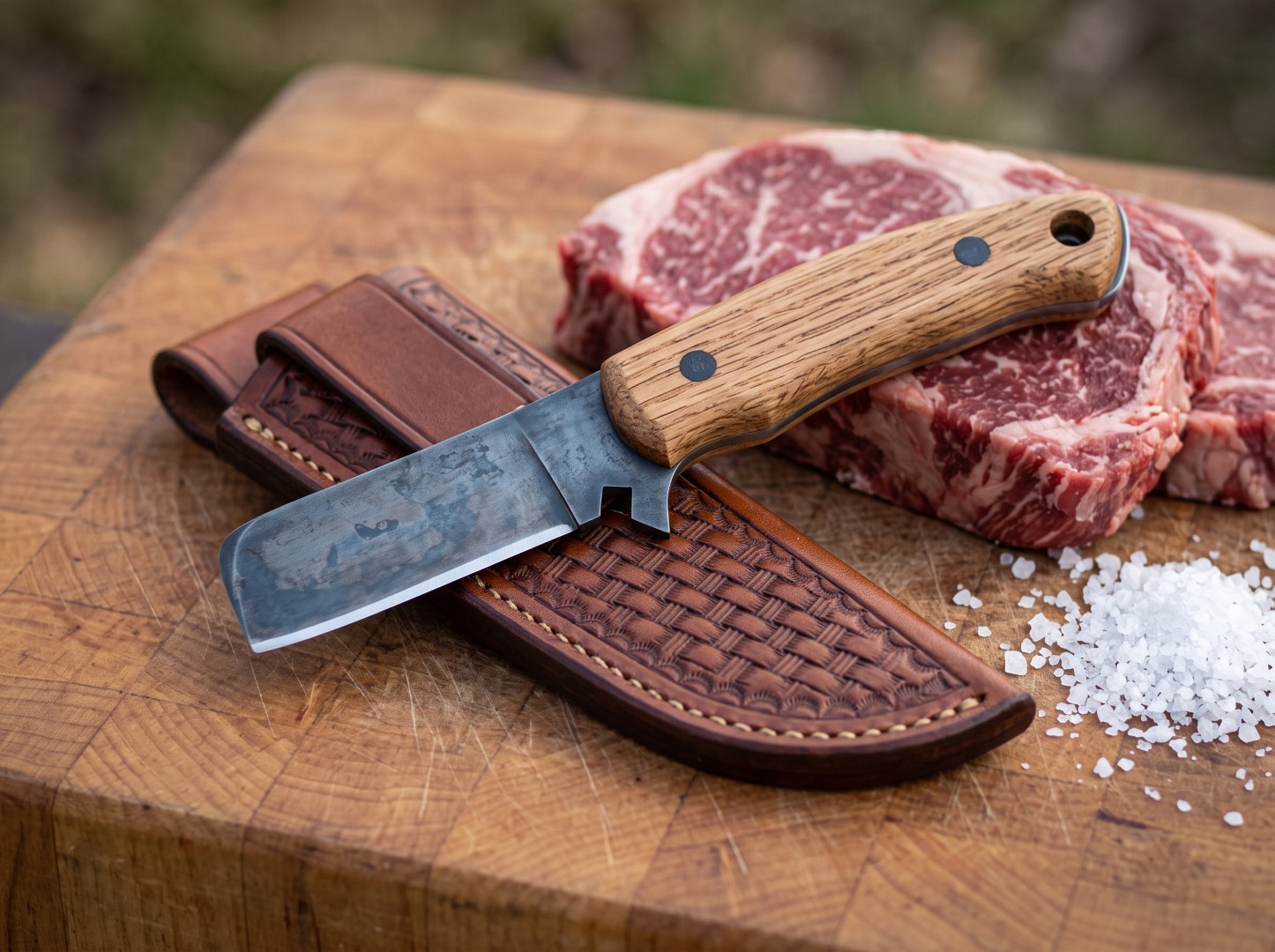
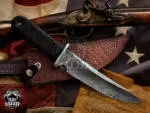
Of all the bull cutters we build, this is the one that keeps ending up next to a plate. The straight edge and the squared-off front make it a genuinely excellent knife for beef, because a sheepsfoot cuts against a board with its whole length rather than rocking on a curve, and the blunt nose means you can set it down on a table without gouging anything. That it also happens to be a proper ranch tool is a bonus.
| Overall Length | 7.5 inches |
|---|---|
| Blade Length | 3.5 inches |
| Handle Length | 4 inches |
| Blade Steel | High carbon spring steel, acid etched |
| Blade Finish | Mottled slate blue-gray etch with polished bevel |
| Blade Style | Sheepsfoot bull cutter with notched choil |
| Handle Material | Oak wood |
| Fittings | Acid etched pins, lanyard hole |
| Tang | Full tang |
| Sheath | Handmade basketweave tooled leather belt sheath (included) |
Acid etched spring steel
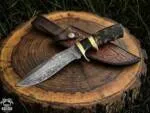
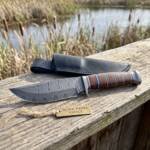
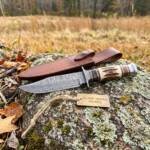
The blade is hand forged high carbon spring steel that has then been etched rather than polished. The result is a mottled slate blue-grey surface, cloudy in places and almost silver in others, with the bevel taken bright so the edge line reads clearly against the darker flat. This is not a coating and it will not chip off. It is the steel’s own surface, chemically darkened, and it gives you a head start against corrosion because an etched carbon blade already carries a stable layer where bare steel would be raw.
Hardness is set for a working knife rather than a display piece. It will take a shaving edge off a stone in a couple of minutes and it will lose that edge faster than a stainless blade would, which is the trade every carbon steel user makes knowingly. If the vocabulary is unfamiliar, our knife steel chart puts the common alloys side by side.
Oak, and why we used it
The handle is oak, pale golden brown with the open pore structure that gives the species its grip. Oak is unfashionable in knife making because it is not exotic and it is not stabilised burl, but it is hard, it is stiff, it wears smooth rather than fuzzy, and it holds a pin without crushing. The scales are shaped with a slight coke-bottle waist and a generous lanyard hole through the butt. The pins are etched to match the blade rather than left bright.
The sheath
Basketweave tooled leather, stamped by hand square by square, dyed a warm russet and sewn with cream thread. Basketweave is the traditional Western tooling pattern and it is done here because it belongs on this knife, not because it is quick. Every knife, sheath and stamp is finished at our bench in Memphis, Tennessee.
Looking after the etch
Leave the finish alone. The instinct with a mottled blade is to polish it back to bright, and doing so removes exactly the layer that is protecting it. Wash the blade with warm water and a cloth after food, dry it properly, and let the surface darken further with use; that is the finish maturing, not failing. A smear of paste wax on the flats once a season is more than enough, and the oak takes the same treatment. If you want the fuller argument about which oils and waxes actually help and which are marketing, we compared them. For a lighter-coloured handle in the same family, look at the rosewood Lariat Rose.
Model: BMK-1146
Diego Morris –
This ring has quickly become my favorite piece in the collection. Pattern in the metal catches the light beautifully. Black Mamba Knives’ attention to detail is honestly unmatched. This is exactly why I keep coming back to this store.
George Moore –
Feels way more premium than the price suggests. Black Mamba Knives is quickly becoming my go to shop for knives.
Aaron Nelson –
Didn’t think a ring at this price could feel this premium. Fits perfectly and the damascus pattern looks amazing in person. Can’t recommend this enough.
Edward Lewis –
This is hands down one of the best knives I’ve bought online. Gets compliments every time I wear it. Detail on this ring is incredibly crisp for something handmade. Already telling my friends to check this out. Black Mamba Knives’ attention to detail is honestly unmatched.
Wyatt Murphy –
This company clearly knows what they’re doing with quality like this. This is the kind of purchase that makes online shopping worth it.
Jamal Phillips –
Phenomenal quality for the price point. Gets compliments every time I wear it. Exactly the weight and finish I wanted. Feels substantial without being bulky. Proud to support American made goods out of Memphis with this purchase. Fits perfectly and the damascus pattern looks amazing in person. Already planning my next pickup from this store.