
Description
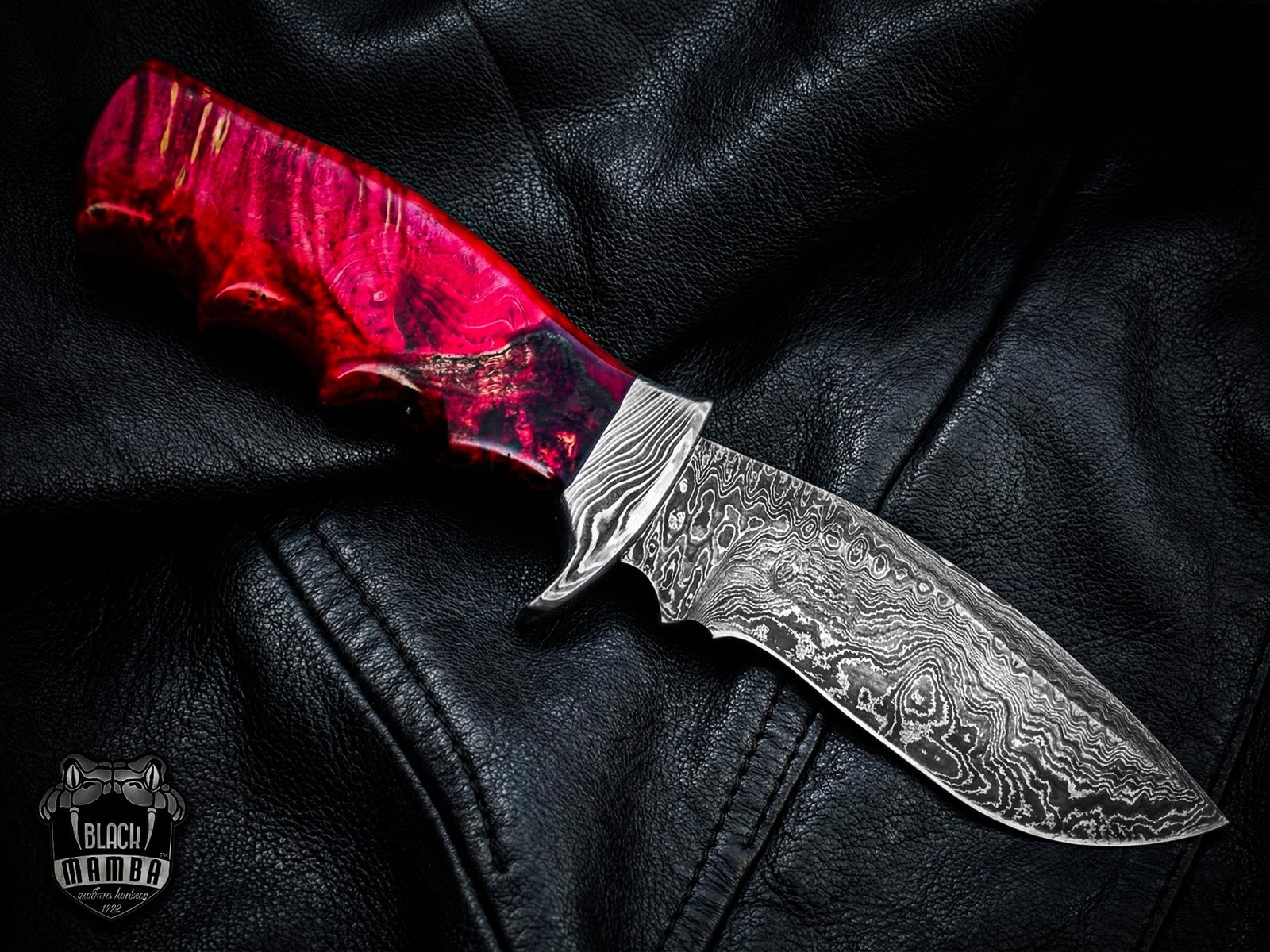
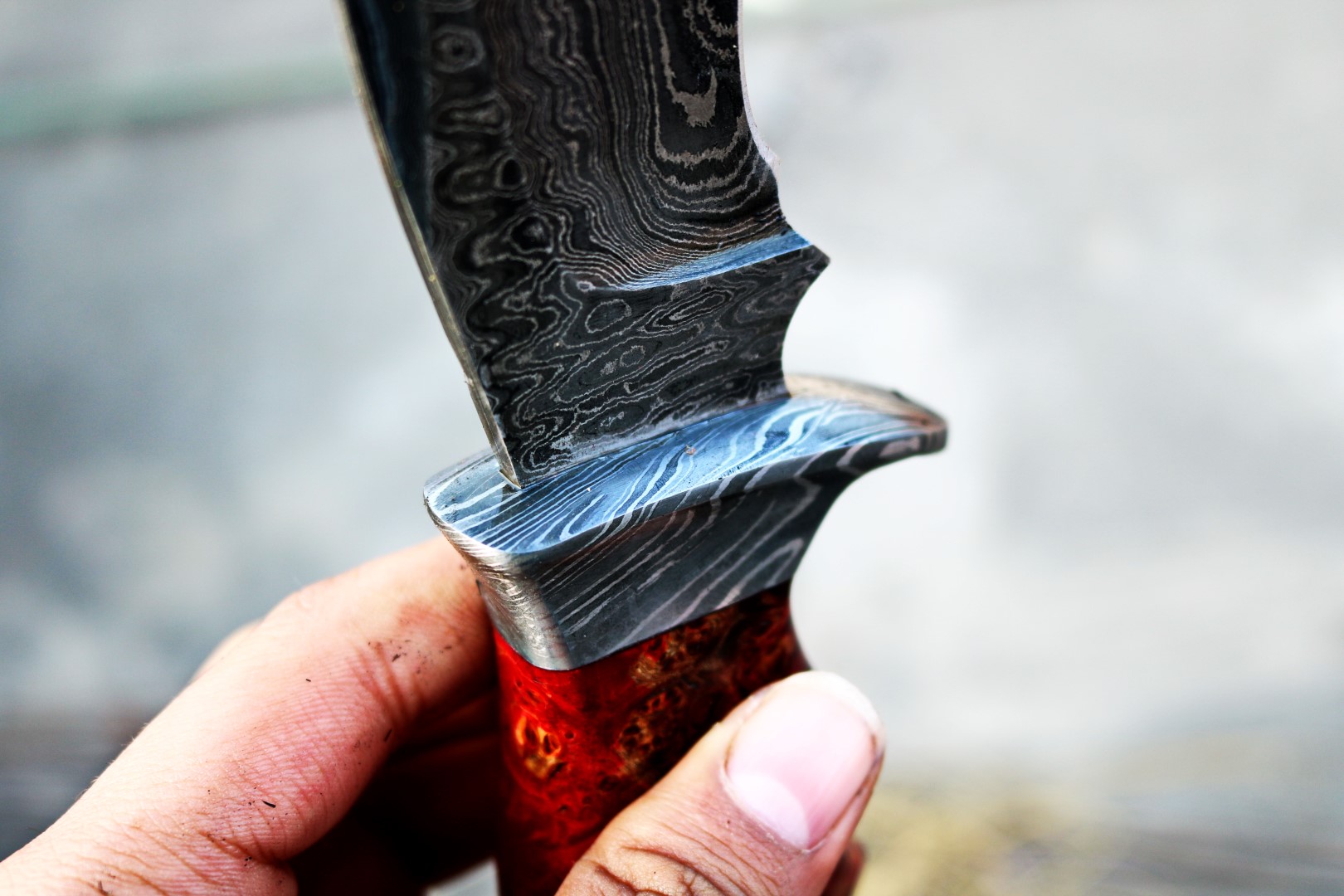
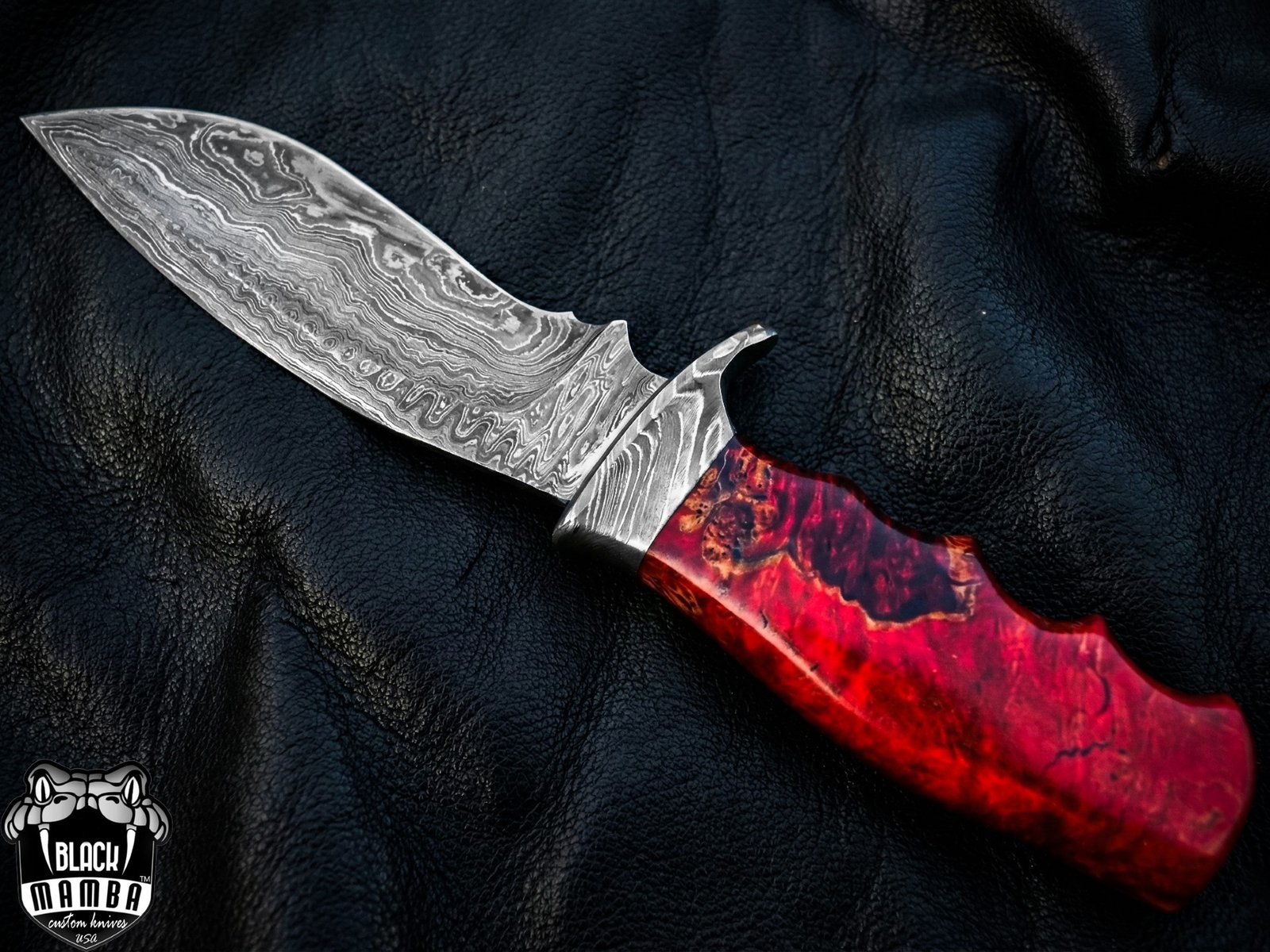
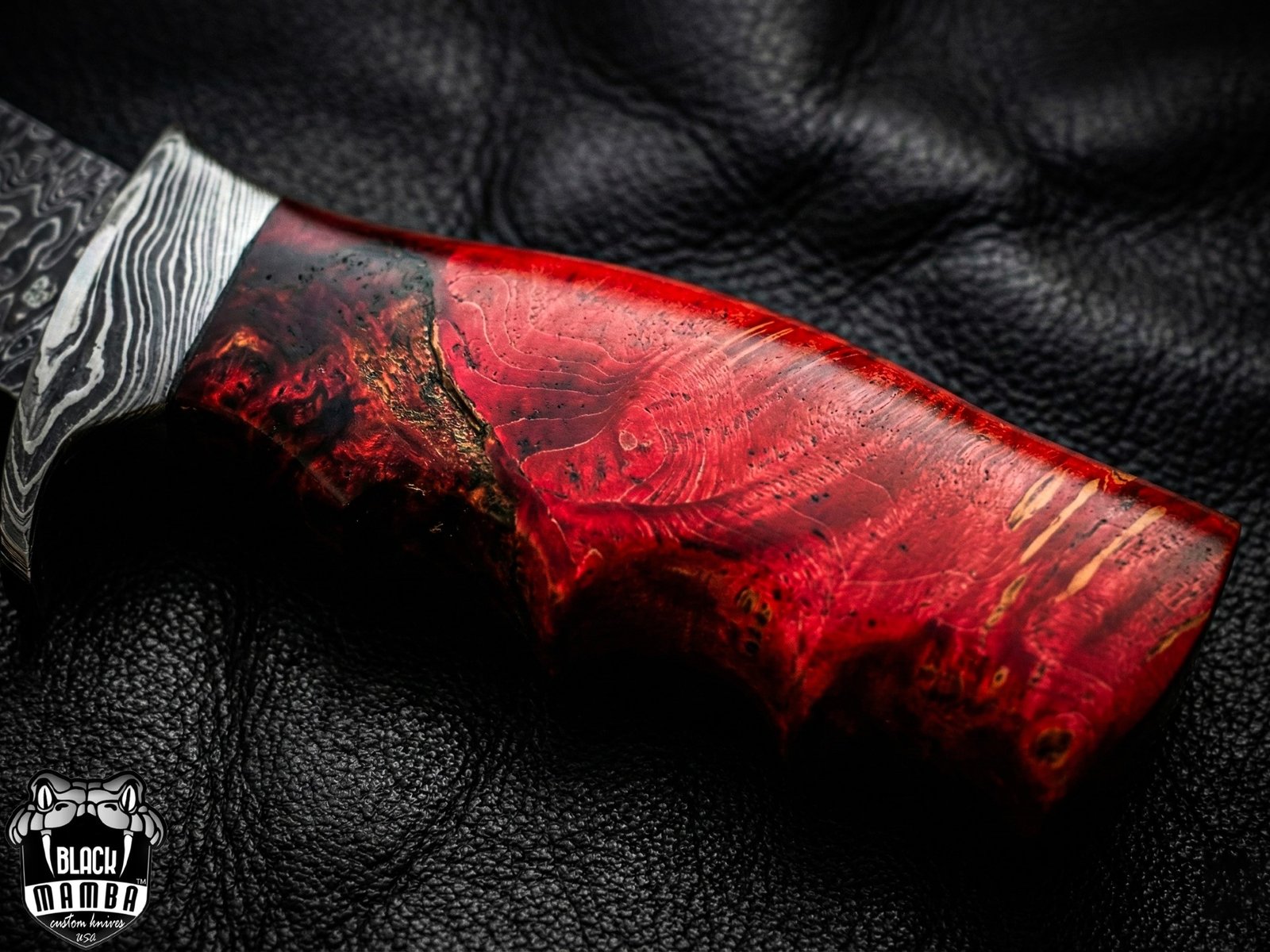
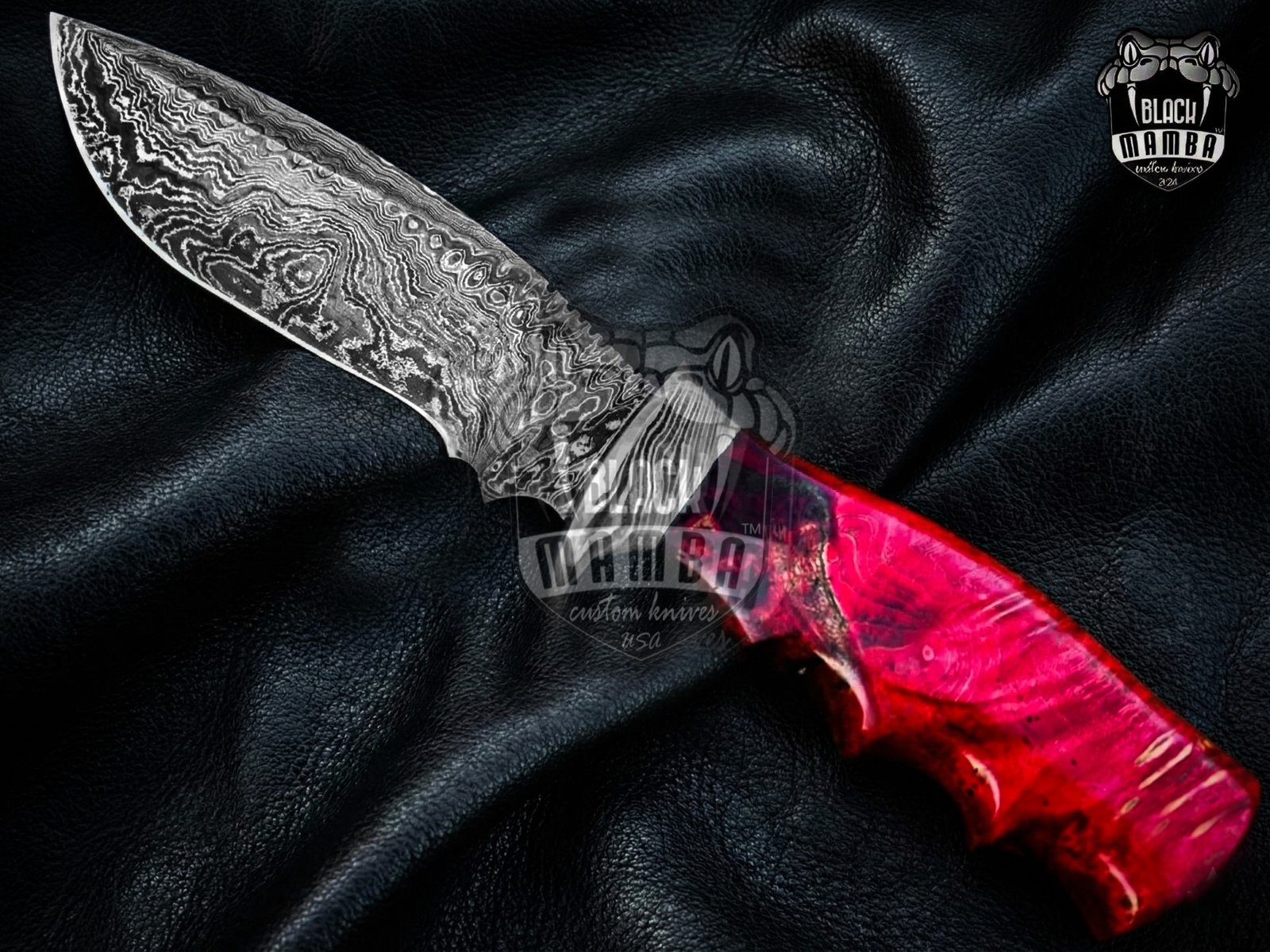
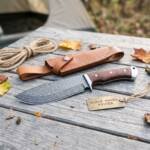
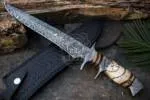
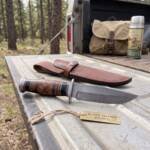
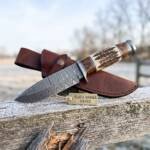
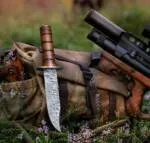
The Redback earns its name at the handle. The scales are stabilized burl in a deep crimson that runs almost black where the figure is tightest, and the Damascus bolster in front of them is forged from the same billet as the blade.
| Overall length | 12 inches |
| Blade length | 7 inches |
| Steel | 1095 + 15N20 Damascus, 352 layers |
| Handle | Stabilized crimson burl wood with a Damascus bolster |
| Hardness | 58–60 HRC, oil tempered |
| Weight | 12 oz |
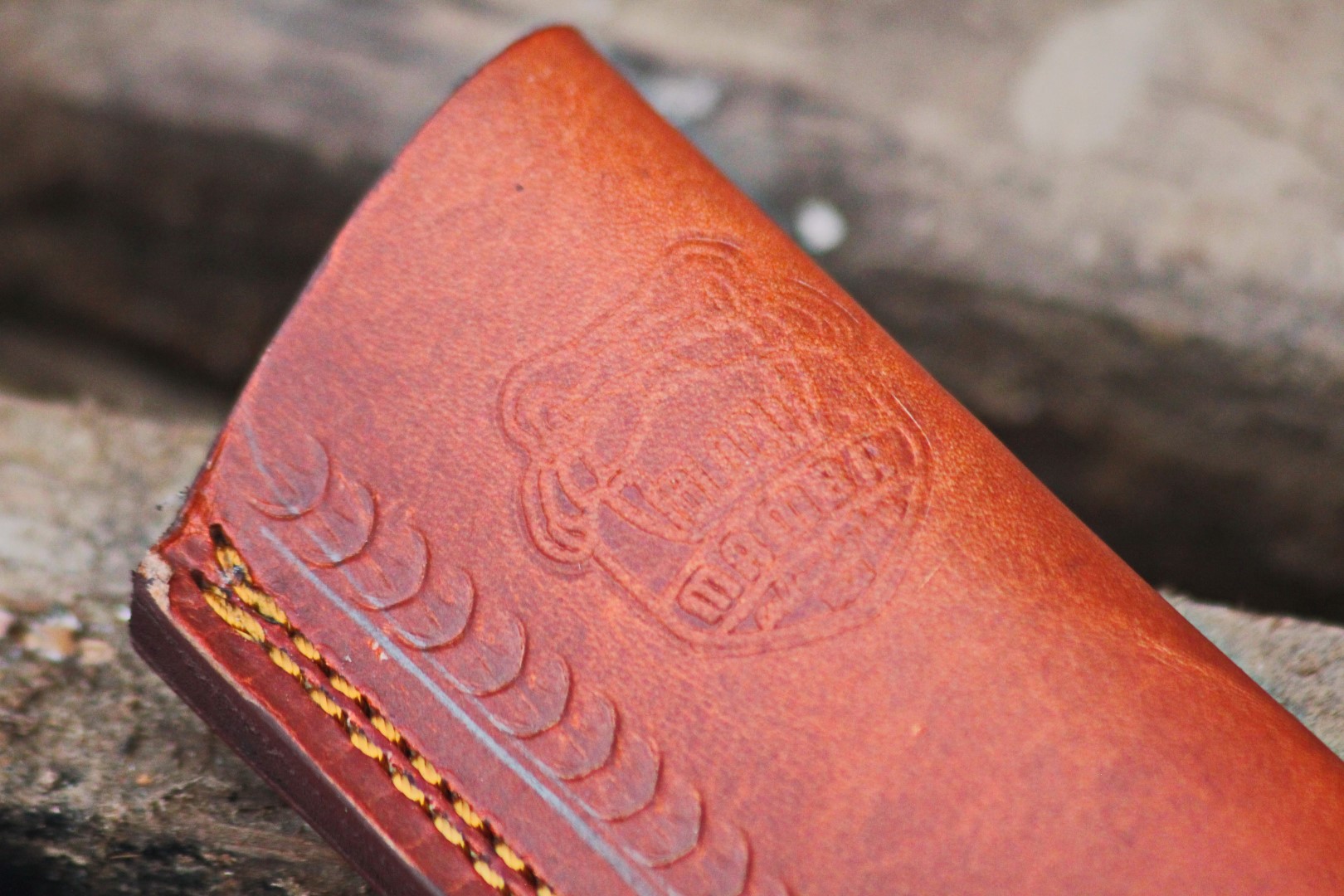
| Included | Hand-stitched leather sheath |
Where it earns its keep: field work on large game, and a display case the rest of the year. Seven inches of blade at twelve ounces gives you the mass to work through a joint and the belly to skin without changing knives, and the finger notch cut into the ricasso lets you choke right up for the fine cuts near the end of the job.
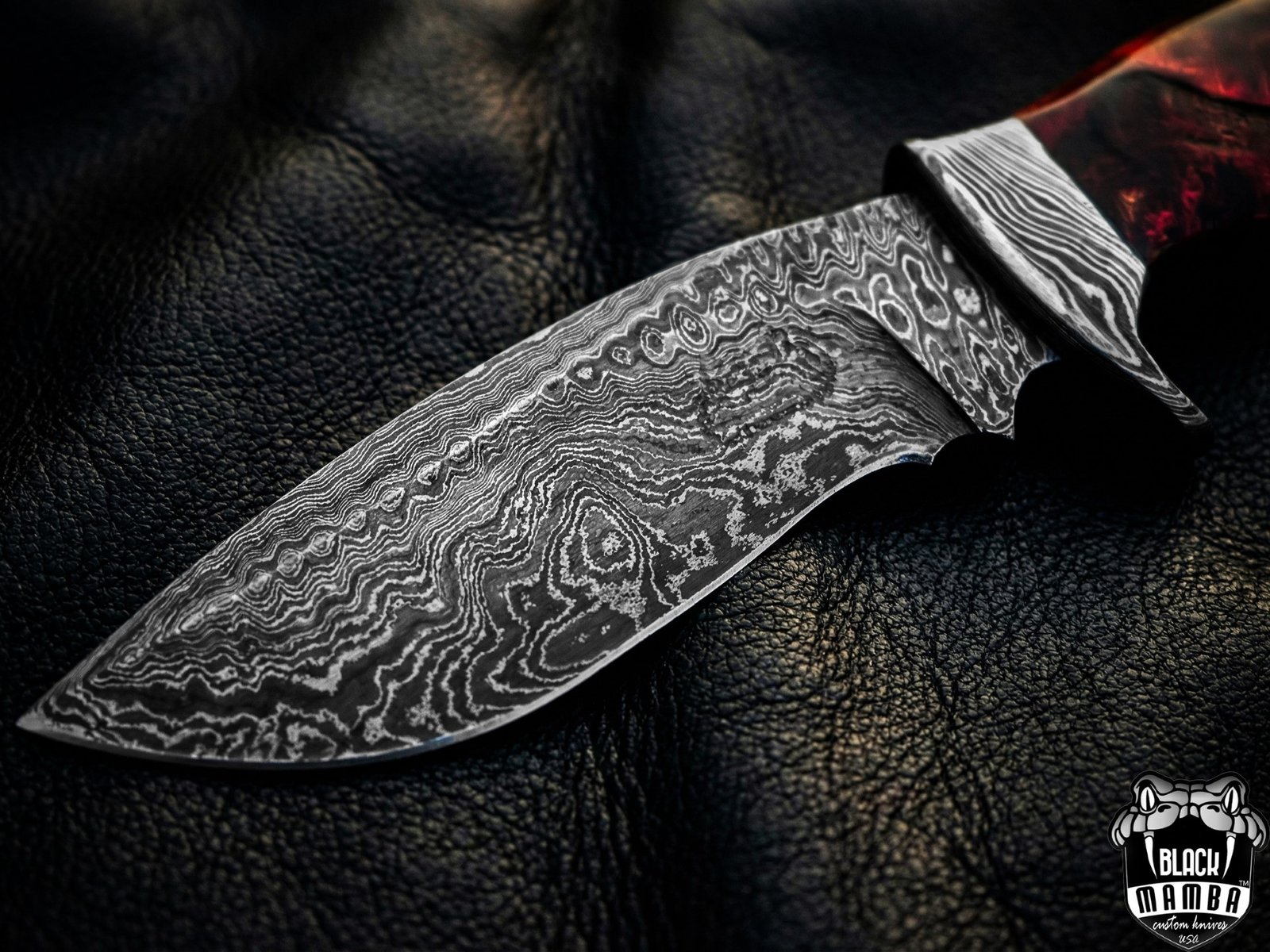
The pattern is pool and eye, not straight ladder
Look closely at the flat and you will see closed loops and concentric rings rather than parallel lines. That comes from cutting into the surface of the billet before the final flattening, so the deeper layers get dragged up into the plane and print as circles. It is more work than a ladder pattern and it is why the figure changes as it crosses onto the bolster, which was drawn from a different part of the same bar.
Stabilized burl is not just dyed wood
Burl is the chaotic grain that forms where a tree has been injured, which is what produces the swirl. Raw burl is too soft and too porous to be a knife handle, so it is put under vacuum with resin until the voids fill, then cured. Stabilizing is what lets it take dye all the way through instead of only on the surface, and it is why a scratch on this handle will not show a pale line underneath.
Weight where you want it
Twelve ounces sounds heavy on paper. In the hand the Damascus bolster puts a good share of that mass behind the guard rather than out at the tip, so the knife feels balanced near your index finger and does not fight you on long cuts.
Care: the etched pattern is the thing to protect. That contrast exists because acid ate the 1095 layers faster than the 15N20 ones, and anything acidic will keep doing it unevenly — citrus, blood and marinade left on the blade will bleach patches of the figure. Rinse and dry the blade the same day you use it. A lightly oiled cloth over the flats is enough between uses. Never store this one in its leather sheath long term, because vegetable-tanned leather holds moisture directly against the steel.
Questions about the Redback
Can the pattern wear off? No — it goes through the full thickness of the steel. A heavy polish can flatten the contrast, and re-etching brings it back. Damascus knife care and sharpening covers this properly.
Will my handle look like the photo? The color will. The figure will not, because no two burl blanks run the same way.
Is this too nice to actually hunt with? That is your call, but it was built as a working knife. Our Damascus hunting knife guide is a fair place to decide, and the Yuma style bowie is a comparable size if you want a second opinion on shape.
Model: BMK-1004-LQ Redback
Ethan D. (verified owner) –
“I purchased a Damascus knife for my wife, and she’s thrilled. It’s not just a gift; it’s a statement piece in our kitchen.”
Ava C. (verified owner) –
“I bought a Damascus knife as a gift for my father, a seasoned chef. He couldn’t be happier with its performance and the beauty of the blade.”
Benjamin G. (verified owner) –
“The craftsmanship on this Damascus knife is exceptional. The intricate pattern on the blade is not only visually appealing but also a testament to its quality.”
Emily R. (verified owner) –
“I’m amazed by the Damascus knife I purchased. It’s razor-sharp and feels like an extension of my hand in the kitchen. It’s become my go-to knife.”
Logan King –
My wife couldn’t stop talking about this after I unboxed it. Edge retention has been great even after regular use in the field. Sheath snaps shut securely and doesn’t feel flimsy at all. This is the kind of purchase that makes online shopping worth it.
Olivia Phillips –
This turned out to be way better than I thought it would be. Cool knowing this was handmade right in Memphis and shipped out fast.
Joseph Baker –
This blade came razor sharp right out of the box. Would send this as a gift again in a heartbeat.
Malik Edwards –
My coworker couldn’t stop talking about this after I unboxed it. This will not be my last order from this store.
Logan Brooks –
My whole family passed this knife around at dinner just to look at it. Took it out camping right away and it handled everything I threw at it. Edge retention has been great even after regular use in the field. Already thinking about what to order next from this maker.
Larry Hayes –
This knife punches way above its price point. Came in a nice gift box which made it feel even more special. This store nailed it with this one.
Jose Adams –
This is one of those purchases that just makes you smile. Every piece of the fit and finish looks hand checked before it shipped. This has quickly replaced my old go to knife for field dressing. Already telling my friends to check this out.
Nicholas Martinez –
This is the kind of knife you show off without even meaning to. Took it out camping right away and it handled everything I threw at it. Zero complaints from me on this purchase.
Joseph Wood –
I collect knives and this one is top notch. Leather sheath is thick and well stitched. Not the cheap stuff you usually get. Even the small details in the damascus pattern are crisp and clean. Worth every penny.
Jonathan Marsh –
This turned out to be way better than I thought it would be. Proud to support American made goods out of Memphis with this purchase. Fit and finish is museum quality. You can tell real craftsmen made this by hand. Exactly the kind of quality that keeps me coming back.
Amanda Jones –
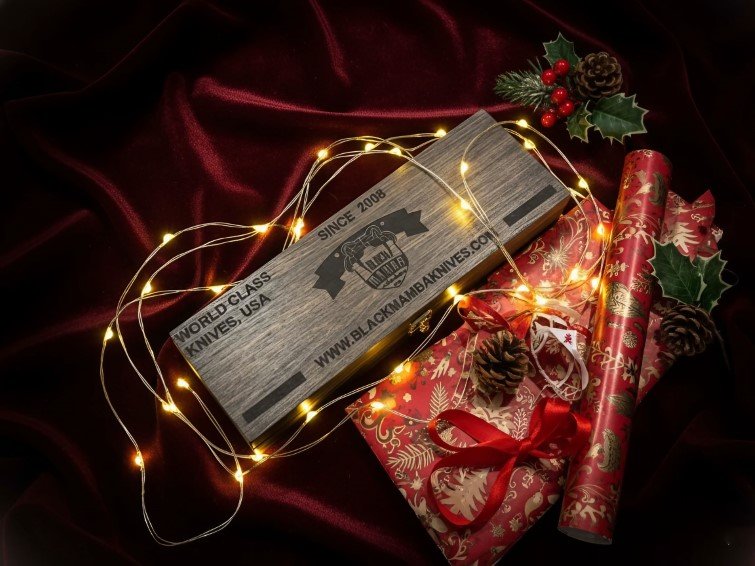
This knife punches way above its price point. Came in a nice gift box which made it feel even more special. Every piece of the fit and finish looks hand checked before it shipped. Happy customer here, through and through.