
Description
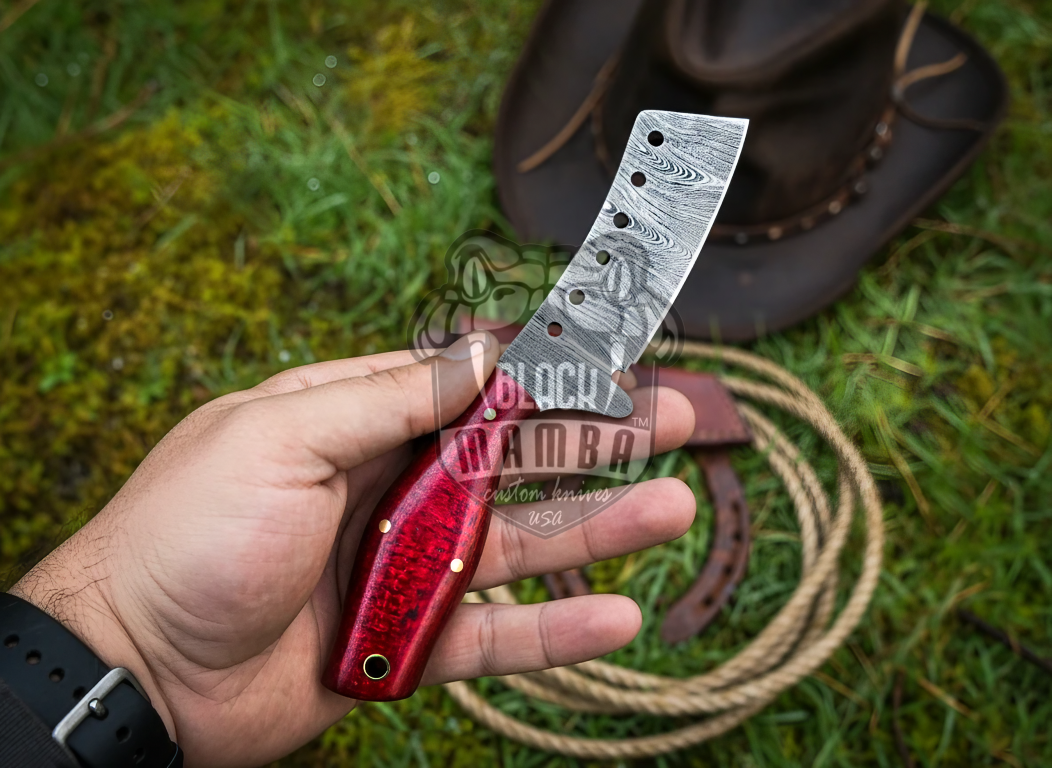
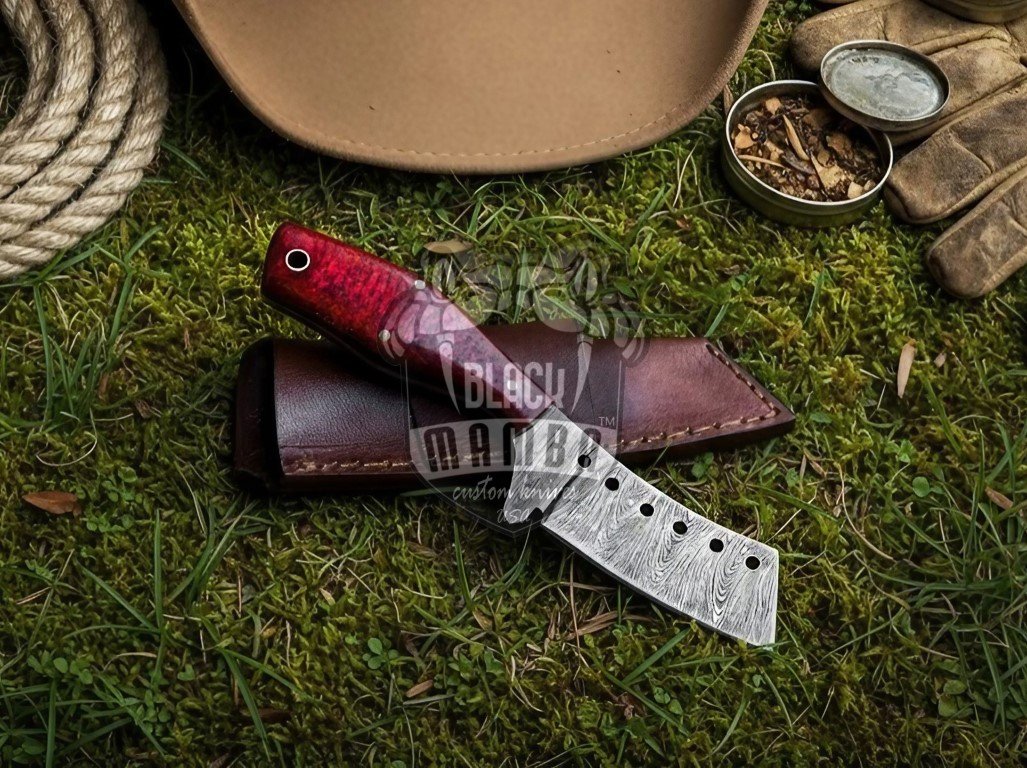
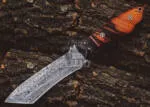
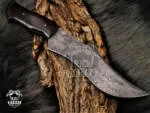
A cowboy bull cutter with a broad twist-pattern Damascus blade and six holes drilled straight through it.
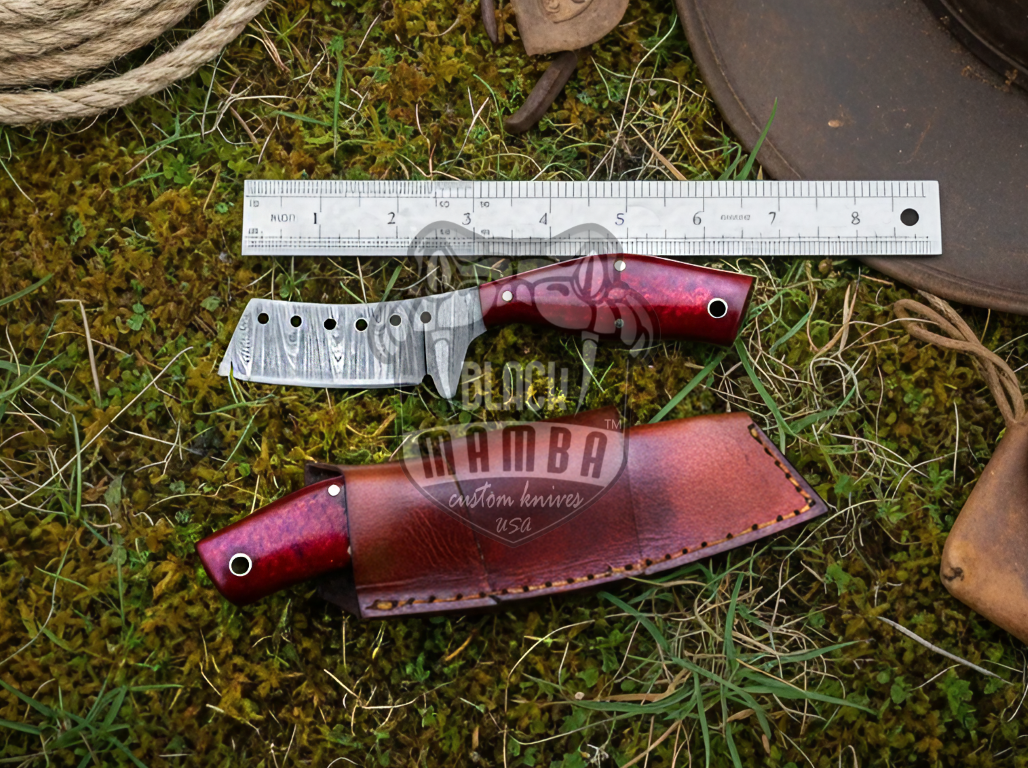
| Overall length | 7 inches |
| Blade length | 3.5 inches |
| Handle length | 3.5 inches |
| Steel | 1095 + 15N20 Damascus |
| Hardness | 58–60 HRC, oil tempered |
| Weight | 1 oz |
| Handle | Red Color Micarta and Brass Pipe along with Brass pins |
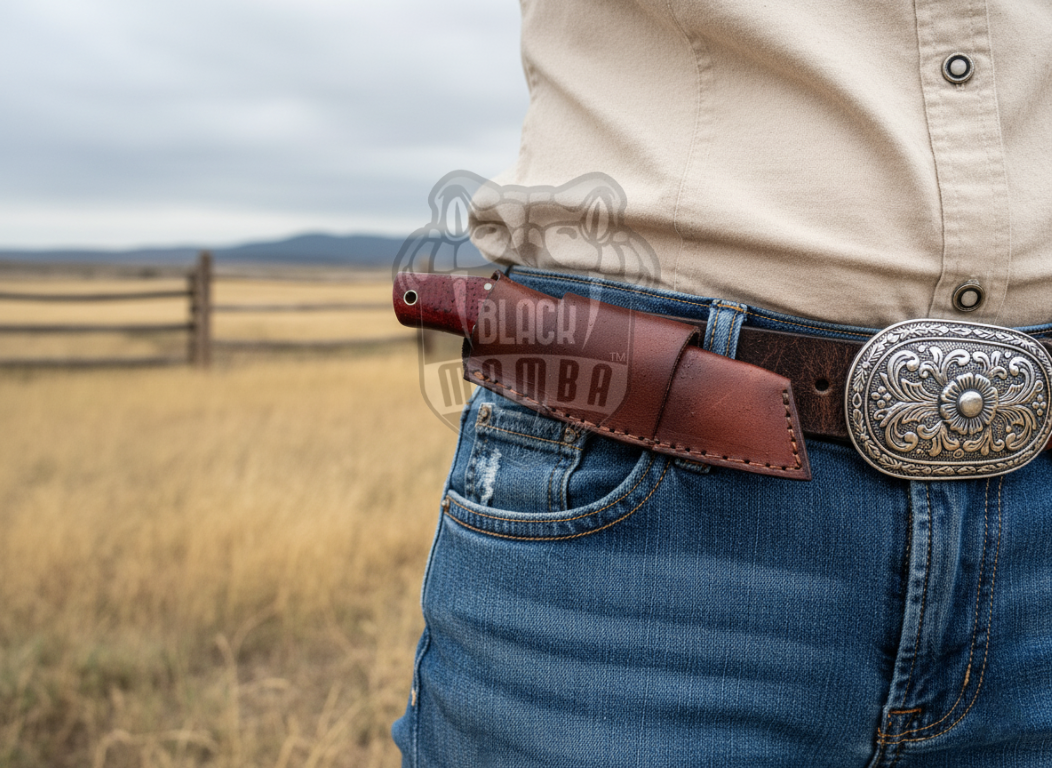
| Included | Hand-stitched leather sheath |
Where it fits: ranch work and the belt of anyone who does it. The wide blade and squared tip give you a cutting edge that stays where you put it, and the profile is the traditional one that has been used on cattle work for a century.
Care: Dry it, then run an oiled cloth over the flat once a month and through the six holes while you are there. Those holes trap water and nobody thinks to check them. Keep it out of the sheath between jobs.
FAQs
What is a bull cutter used for? It is a ranch pattern: a broad, deep blade with a squared tip and a curved edge, made for cattle work where you want a lot of edge and no point to snag.
Why are there holes in the blade? Six drilled holes reduce weight through the widest part of the blade and give it its look. The full-tang spine is untouched, so nothing is given up in strength.
What is the handle? Red micarta, pinned with brass, with a brass-lined lanyard hole through the butt. It shrugs off blood, water and disinfectant without swelling or lifting.
The twist pattern
Twist Damascus is made by heating the billet and turning it along its length before it is drawn out and flattened, which pulls the layers into the long diagonal waves you can see running from spine to edge here. It is one of the harder patterns to keep even across a blade this wide. Our page on how Damascus steel is made walks through the process.
Why micarta
Micarta is linen or canvas set in resin and then ground to shape. It is effectively immune to moisture, mild solvents and being dropped, and it grips better when your hands are wet than when they are dry. The red is dyed through, not surface coated, so a scratch does not show a different color underneath. It polishes slowly with years of handling.
The profile in use
The squared tip is the point of the design. There is nothing to catch, nothing to break off, and the full depth of the blade stays in contact through a long cut. It is a poor choice for piercing and an excellent one for everything else a ranch knife does. You use it with your whole hand rather than your fingertips, and the depth of the blade keeps your knuckles clear of the cutting surface. That is not a side effect of the shape, it is the reason for it. If you want the same pattern with a natural handle, the Buckhorn stag bull cutter is the same tool in antler, and blade shapes explained puts it next to the alternatives.
Model: BMK-884
Caleb Perez –
Wasn’t expecting to be this impressed but here we are. Handle feels amazing and the balance is perfect. Already thinking about what to order next from this shop.
Ashley Evans –
Not going to lie. This exceeded my expectations by a lot. Even the small details in the damascus pattern are crisp and clean. Would send this as a gift again in a heartbeat.
Margaret Alexander –
My skepticism about ordering online disappeared the second this arrived. Handle feels amazing and the balance is perfect. Even the small details in the damascus pattern are crisp and clean. Already thinking about what to order next from this store. Love that this comes out of Memphis and still ships worldwide this quickly.
Brandon Peterson –
This knife has already earned a permanent spot in my collection. Steel has a gorgeous pattern that looks different in every light. Blade geometry makes it glide through cuts with barely any effort. This is going straight into my daily rotation.
Hunter Chavez –
This blade came razor sharp right out of the box. Even the small details in the damascus pattern are crisp and clean. No hesitation recommending this to anyone looking.
Antoine Ortiz –
This knife punches way above its price point.